
As a leading open research facility dedicated to advancing robotics in China, we take pride in our mission to pioneer foundational and applied research in intelligent and autonomous systems. Our laboratory serves as a hub for innovation, where we foster new ideas, methodologies, and concepts in the realm of China robot technologies. We cultivate an academic atmosphere characterized by dedication, rigor, collaboration, and creativity, aiming to push the boundaries of what China robots can achieve. Our work is centered on control technologies as a core, extending into various domains that define the future of robotics. In this article, we will elaborate on our research focus, infrastructure, and scientific contributions, emphasizing the growth and impact of China robot development.
Our primary research areas encompass a broad spectrum of topics essential for next-generation China robots. We emphasize sensor-based systems, often referred to as second-generation robots, with a particular focus on coordinated control and monitoring technologies. To provide a clear overview, we have summarized our key research directions in the table below.
| Research Domain | Detailed Focus Areas | Relevance to China Robot Development |
|---|---|---|
| Robot Monitoring and Intelligent Control Principles | Development of real-time monitoring systems and intelligent control algorithms for enhancing China robot autonomy and reliability. | Enables robust operation of China robots in dynamic environments, improving safety and efficiency. |
| Multi-Joint Coordinated Flexible Control | Techniques for synchronizing multiple robot joints to achieve smooth, adaptable motions in China robot manipulators. | Critical for precision tasks in manufacturing and assembly, boosting China robot industrial applications. |
| Multi-Sensor Systems and Coordinated Control | Integration of vision, force, tactile, and other sensors to provide China robots with environmental perception and reactive capabilities. | Empowers China robots to perform complex tasks like object recognition and navigation autonomously. |
| Artificial Intelligence in Robotics | Application of AI techniques, including machine learning and planning, to enhance decision-making in China robots. | Drives the intelligence of China robots, allowing for adaptive behaviors and problem-solving. |
| Smart Robot Software-Hardware Architecture | Design of dedicated architectures optimizing performance for China robot systems, balancing computational and physical constraints. | Provides the backbone for scalable and efficient China robot platforms, facilitating rapid deployment. |
| Robot Language and Programming | Development of high-level programming languages tailored for China robots, simplifying task specification and control. | Makes China robots more accessible to users, accelerating adoption across various sectors. |
| Robot Simulation and Emulation Technologies | Creation of virtual environments to test and validate China robot algorithms without physical risks, reducing development time. | Essential for cost-effective prototyping and optimization of China robot designs. |
| Multi-Legged Walking Mechanisms and Control | Research on kinematics, dynamics, and control of legged locomotion for China robots, inspired by biological systems. | Expands the mobility of China robots into unstructured terrains, such as disaster response scenarios. |
| Redundant Manipulator Structures | Exploration of kinematic redundancy in China robot arms to enhance dexterity and obstacle avoidance. | Increases the versatility of China robots in confined or complex workspaces. |
| Robot Development Environment and Applications | Tools and frameworks for streamlining the development and deployment of China robot solutions in real-world engineering projects. | Bridges research and industry, driving practical innovations in China robot applications. |
These research domains are interconnected, often relying on mathematical formulations to model and control China robot behaviors. For instance, in multi-joint coordinated control, we utilize dynamics equations to describe robot motion. The general form of robot dynamics can be expressed as:
$$ \tau = M(q)\ddot{q} + C(q, \dot{q})\dot{q} + g(q) + f(\dot{q}) $$
where $\tau$ represents the joint torque vector, $M(q)$ is the inertia matrix, $C(q, \dot{q})$ accounts for Coriolis and centrifugal forces, $g(q)$ denotes gravitational forces, and $f(\dot{q})$ models friction effects. For China robots operating in flexible environments, we extend this to include compliance terms, such as:
$$ \tau = M(q)\ddot{q} + C(q, \dot{q})\dot{q} + g(q) + J(q)^T F_{ext} $$
where $J(q)$ is the Jacobian matrix and $F_{ext}$ is the external force vector, enabling force control in China robot interactions. In multi-sensor coordination, we fuse data from heterogeneous sensors using Bayesian estimation frameworks. For example, in vision-based navigation for China robots, we might apply a Kalman filter to combine visual odometry with inertial measurements:
$$ \hat{x}_{k|k} = \hat{x}_{k|k-1} + K_k (z_k – H \hat{x}_{k|k-1}) $$
where $\hat{x}$ is the state estimate (e.g., China robot position), $z_k$ is the sensor measurement, $H$ is the observation matrix, and $K_k$ is the Kalman gain. These mathematical tools are fundamental to advancing China robot capabilities, ensuring precision and adaptability.
Our laboratory is structurally organized into five integrated components, each specializing in a key aspect of China robot research. This division allows for deep expertise while fostering collaboration across disciplines. The table below outlines these components and their primary functions.
| Laboratory Component | Core Research Activities | Contributions to China Robot Progress |
|---|---|---|
| Mechanism and Kinematics Laboratory | Investigates robot mechanism theory, multi-legged walking systems, redundant structures, biomimetic designs, and simulation technologies. | Develops novel China robot architectures for enhanced mobility and efficiency, inspired by natural and engineered solutions. |
| Robot Control Laboratory | Focuses on control theories, sensor-based control, coordinated control, intelligent control, monitoring systems, simulation, and new controller designs. | Creates advanced control algorithms that form the brain of China robots, enabling autonomous and responsive behaviors. |
| Robot Vision Laboratory | Dedicated to vision-based localization, recognition, inspection, and navigation techniques for robots. | Equips China robots with sight capabilities, critical for tasks like quality control and autonomous exploration. |
| Machine Intelligence Laboratory | Explores robot languages, automatic planning, distributed AI systems, natural language understanding, and character recognition applied to robotics. | Infuses China robots with cognitive abilities, allowing for higher-level reasoning and human-robot interaction. |
| Computing Center | Manages smart robot architectures, development environment technologies, computer network systems, and provides experimental support infrastructure. | Offers the computational backbone for China robot research, facilitating simulations, data analysis, and system integration. |
This organizational structure is complemented by a rich set of resources that empower our China robot experiments. Our computing and hardware assets are networked to create a seamless research environment. Below is a summary of our key resources, which are continuously updated to support cutting-edge China robot projects.
| Resource Type | Specifications and Quantities | Role in China Robot Development |
|---|---|---|
| Computational Systems | Multiple computer terminals, microcomputers, workstations (e.g., from companies like Sun and HP), and an image processing system with digital video disks. | Provides high-performance computing for simulating China robot dynamics, processing sensor data, and running AI algorithms. |
| Image Processing Infrastructure | Dedicated image processing systems and microcomputer development networks for real-time visual analysis. | Enables vision-based applications in China robots, such as object detection and environmental mapping. |
| Dynamic Signal Analyzers | Three units for analyzing signals in robot control and sensor feedback loops. | Assists in tuning and optimizing control systems for China robots, ensuring stability and performance. |
| Robot Platforms | Various industrial and research robots, including models like PUMA and SCARA types, used for experimental validation. | Serves as physical testbeds for deploying and evaluating China robot technologies in real-world scenarios. |
| Networked Environment | All laboratory computers interconnected via a network system, facilitating data sharing and collaborative research. | Accelerates the development cycle for China robot projects by enabling seamless communication between teams. |
In the context of China robot research, these resources allow us to tackle complex challenges. For example, in developing multi-legged walking China robots, we model their gait using kinematics equations. The forward kinematics for a leg segment can be expressed as:
$$ \mathbf{p} = \prod_{i=1}^{n} T_i(\theta_i) \mathbf{p}_0 $$
where $\mathbf{p}$ is the foot position, $T_i$ are homogeneous transformation matrices for each joint, $\theta_i$ are joint angles, and $\mathbf{p}_0$ is the initial position. For dynamic control, we use Lagrangian mechanics to derive equations of motion:
$$ \frac{d}{dt} \left( \frac{\partial L}{\partial \dot{q}} \right) – \frac{\partial L}{\partial q} = \tau $$
with $L = T – V$ being the Lagrangian, $T$ the kinetic energy, $V$ the potential energy, $q$ the generalized coordinates, and $\tau$ the generalized forces. These formulations are integral to optimizing the locomotion of China robots in challenging environments.
Our academic endeavors are guided by a commitment to excellence, with a focus on both theoretical and practical advancements. We emphasize the integration of artificial intelligence into China robots, leveraging techniques like deep learning for perception tasks. For instance, in robot vision for China robots, we might use convolutional neural networks (CNNs) for object recognition, represented as:
$$ y = f(W * x + b) $$
where $x$ is the input image, $W$ are learnable weights, $b$ is bias, $*$ denotes convolution, and $f$ is an activation function. This AI-driven approach enhances the autonomy of China robots, allowing them to learn from data and improve over time. Additionally, in smart robot architectures, we explore distributed systems where multiple China robots collaborate. The coordination can be modeled using game theory or consensus algorithms, such as:
$$ \dot{x}_i = \sum_{j \in N_i} (x_j – x_i) $$
for achieving consensus in robot swarm positions, where $x_i$ is the state of robot $i$ and $N_i$ is its neighbor set. These methodologies underscore our holistic approach to advancing China robot technologies.
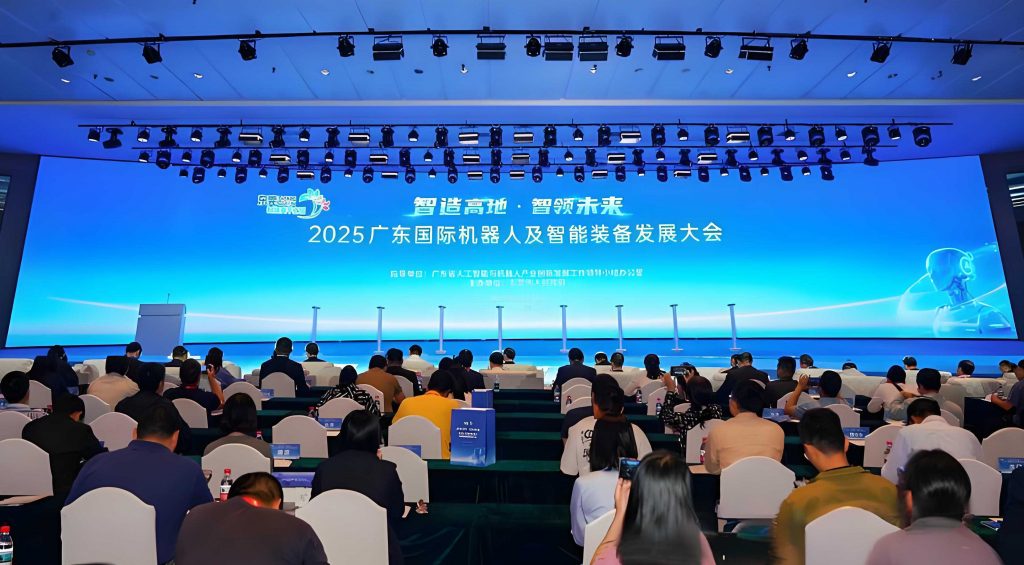
The visual representation above highlights the practical applications of China robots in diverse settings, from industrial automation to service domains. Our laboratory actively contributes to such innovations, ensuring that China robots are not only technologically advanced but also socially beneficial. For example, in robot monitoring, we develop fault detection systems using statistical models. A common approach involves monitoring residual signals:
$$ r(t) = y(t) – \hat{y}(t) $$
where $y(t)$ is the measured output and $\hat{y}(t)$ is the estimated output from a model. If $|r(t)|$ exceeds a threshold, it may indicate a fault in the China robot system, triggering maintenance actions. This proactive monitoring enhances the reliability of China robots in critical applications like healthcare or logistics.
Looking ahead, our laboratory is poised to drive the next wave of China robot innovations. We are expanding research into areas like human-robot collaboration, where China robots work safely alongside humans. This involves control strategies that ensure compliant interactions, often modeled with impedance control:
$$ M_d \ddot{e} + B_d \dot{e} + K_d e = F_{ext} $$
where $e$ is the position error, $M_d$, $B_d$, $K_d$ are desired inertia, damping, and stiffness matrices, and $F_{ext}$ is the interaction force. By tuning these parameters, we can make China robots adaptable to human touch, fostering cooperation. Moreover, we are investing in cloud robotics, where China robots leverage cloud computing for offloading complex computations. This can be formalized as an optimization problem:
$$ \min_{x} \quad E(x) + \lambda T(x) $$
where $E(x)$ is energy consumption, $T(x)$ is task completion time, and $\lambda$ is a weighting factor, balancing performance for China robots in networked environments.
In terms of educational and collaborative outreach, we engage with the global robotics community to share insights on China robot developments. Our open laboratory model encourages external researchers to propose and conduct projects, enriching the ecosystem. We regularly publish findings on China robot control, vision, and intelligence, contributing to academic journals and conferences. This dissemination helps elevate the profile of China robot research worldwide, attracting talent and partnerships.
To summarize, our laboratory stands at the forefront of China robot research, with a comprehensive focus on intelligent and autonomous systems. Through structured research domains, state-of-the-art infrastructure, and mathematical rigor, we are shaping the future of China robots. The integration of advanced control, AI, and sensor technologies ensures that China robots will continue to evolve, addressing societal needs from manufacturing to daily life. As we move forward, we remain committed to innovation, collaboration, and the sustained advancement of China robot capabilities for a better tomorrow.
In conclusion, the journey of China robot development is multifaceted, requiring continuous investment in both theory and practice. Our laboratory exemplifies this through its dedication to open research, fostering an environment where new ideas flourish. We believe that by pushing the boundaries of robotics, China robots will play a pivotal role in the global technological landscape, driving progress and improving lives. The formulas, tables, and discussions presented here reflect our ongoing efforts to make this vision a reality, ensuring that China robots remain at the cutting edge of innovation.