
As an expert deeply immersed in the field of intelligent automation, I have witnessed firsthand the remarkable rise of China robots in revolutionizing logistics. These advanced systems, encompassing a wide array of robotic solutions, are not merely tools but pivotal drivers of efficiency, safety, and flexibility in modern supply chains. The evolution of China robots reflects a broader narrative of technological prowess, where hardware and software innovations converge to create intelligent, adaptable, and cost-effective solutions. In this article, I will delve into the current state and future trajectory of China robots, drawing from extensive industry experience and analysis.
The significance of China robots in logistics cannot be overstated. By enhancing production efficiency, reducing labor costs, and improving operational safety, these robots contribute substantially to the intelligent transformation of the logistics sector. They enable flexible logistics solutions, boost accuracy, lower construction and operational expenses, and address critical issues like labor shortages and high-intensity work. The economic and social benefits are profound. With continuous iterations and maturation in both software and hardware technologies, the application domains for China robots have expanded dramatically, ushering in a new era of change for the entire logistics industry. This progress underscores the growing influence and voice of China robots on the global stage.
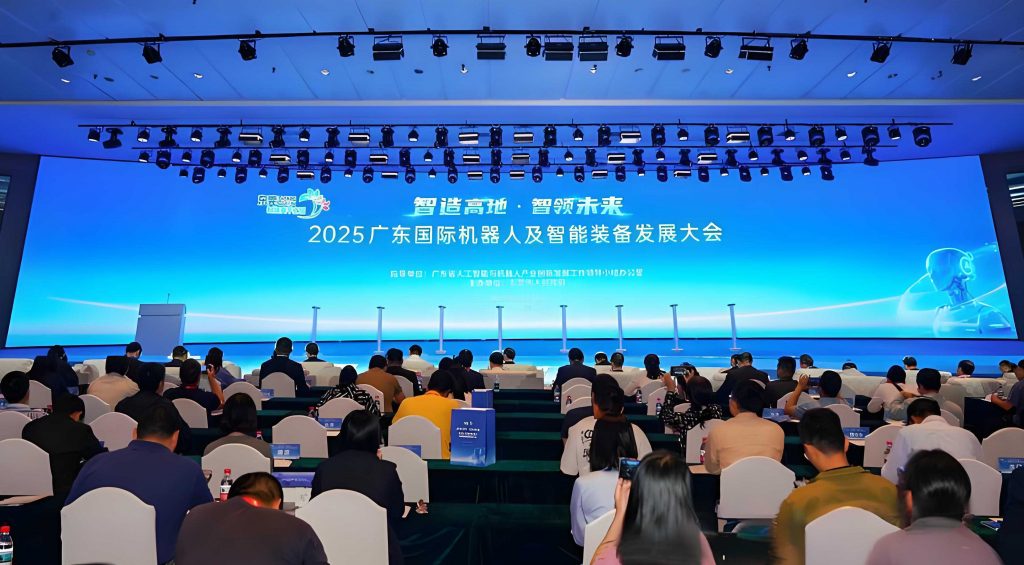
To begin, let’s define China robots in the logistics context. Logistics robots refer to intelligent equipment that utilizes technologies such as mechanical structures, motion control, navigation and positioning, safety obstacle avoidance, vehicle scheduling, software algorithms, and artificial intelligence to autonomously perform tasks like material pickup, handling, storage, retrieval, sorting, distribution, palletizing, loading/unloading, and feeding. The rapid iteration and upgrading of China robots have led to a continuous expansion of their categories, which can be classified from multiple dimensions.
| Dimension | Types | Description |
|---|---|---|
| Function | Transportation, Storage, Sorting, Distribution, Palletizing, Loading/Unloading, Feeding | Based on the primary task performed, such as moving goods or automated order picking. |
| Structural Form | Underride, Transfer, Fork-type, Towing, Composite | Different chassis and mechanism designs suited for various payloads and operations. |
| Object Handled | Pallets, Containers, Coils, Reels, Heavy Loads, Irregular Parts | Categorized by the physical characteristics of the materials being moved. |
| Locomotion Mechanism | Dual Differential Wheel, Single Steering Wheel, Dual Steering Wheel, Multi-Steering Wheel, Mecanum Wheel | Determines mobility and maneuverability in complex environments. |
| Navigation Method | Automatic Guided Vehicle (AGV), Autonomous Mobile Robot (AMR) | AGVs follow predefined paths, while AMRs use dynamic, sensor-based navigation. |
The application areas for China robots are vast, covering factory lines, raw material warehouses, semi-finished/finished product storage, distribution centers, e-commerce fulfillment hubs, inter-plant transport, airports, and ports. Their uses include replacing manual搬运, enabling automated storage and retrieval systems (AS/RS), facilitating “goods-to-person” or “container-to-person” picking, performing high-precision docking with machinery, automating packaging lines, and handling truck loading/unloading. This versatility is a testament to the adaptability of China robots.
From a systems perspective, China robots, despite varied forms, share common architectural components. I will break down the system composition into eight core parts, which have seen increasing localization in China’s supply chain.
| Component | Description | Localization Status in China |
|---|---|---|
| Mechanical Body | Includes chassis, locomotion mechanisms, steering, lifting, transmission, and handling attachments. | Fully localized. |
| Electrical Control System | Processes sensor data (e.g., from LiDAR, cameras) to enable autonomous operation. | Fully localized. |
| Navigation System | Provides real-time positioning and path planning using methods like SLAM or guide paths. | Over 50% localized. |
| Vehicle Control System | Onboard controller (PLC or IPC) for navigation, driving, and task execution. | Fully localized. |
| Safety Protection System | Incorporates safety sensors, emergency stops, and alarms to ensure safe interaction. | Over 50% localized. |
| Communication System | Enables robot-to-control and robot-to-robot interaction via 5G or Wi-Fi. | Fully localized. |
| Power Supply System | Comprises batteries, charging stations, and battery management systems (BMS). | Fully localized. |
| Scheduling System (RCS) | Centralized software for task allocation, path planning, and traffic management of robot fleets. | Fully localized. |
The advancement of China robots is underpinned by several key technologies. These technologies not only enhance performance but also drive the intelligent evolution of logistics systems. Let me elaborate on each with technical details, formulas, and insights.
First, Motion Control Technology is fundamental. It governs the startup, stopping, acceleration, deceleration, and emergency braking of China robots. The core involves generating and following velocity trajectories. The motion controller converts task instructions into motor speeds, which are executed via servo drives. The process can be modeled mathematically. Let \( \mathbf{p}(t) \) represent the robot’s position over time, and \( \mathbf{v}(t) \) its velocity. The Velocity Trajectory Generation (VTG) plans an optimal path from current state \( (\mathbf{p}_0, \mathbf{v}_0) \) to target \( (\mathbf{p}_f, \mathbf{v}_f) \), often minimizing a cost function such as:
$$ J = \int_{t_0}^{t_f} \left( \|\mathbf{a}(t)\|^2 + \rho \cdot \|\mathbf{v}(t) – \mathbf{v}_{ref}(t)\|^2 \right) dt $$
where \( \mathbf{a}(t) \) is acceleration, and \( \rho \) is a weighting factor. Velocity Trajectory Following (VTT) ensures the robot tracks this planned trajectory via feedback control, such as PID:
$$ u(t) = K_p e(t) + K_i \int e(t) dt + K_d \frac{de(t)}{dt} $$
with \( e(t) = \mathbf{v}_{desired}(t) – \mathbf{v}_{actual}(t) \). This precision control is crucial for the smooth operation of China robots.
Second, Environmental Perception Technology enables China robots to understand their surroundings. Through sensors like LiDAR, cameras, and ultrasonics, robots collect data that is processed using algorithms. For instance, object detection can use convolutional neural networks (CNNs), where for an image \( I \), the output is bounding boxes and classes:
$$ \mathbf{Y} = f_{CNN}(I; \theta) $$
with \( \theta \) as learned parameters. Sensor fusion techniques, such as Kalman filtering, integrate data from multiple sources to improve accuracy. The state estimation can be expressed as:
$$ \hat{\mathbf{x}}_{k|k} = \hat{\mathbf{x}}_{k|k-1} + \mathbf{K}_k (\mathbf{z}_k – \mathbf{H}_k \hat{\mathbf{x}}_{k|k-1}) $$
where \( \hat{\mathbf{x}} \) is the estimated state, \( \mathbf{z} \) is measurement, and \( \mathbf{K} \) is the Kalman gain. This perception capability is vital for autonomous navigation and interaction.
Third, Navigation and Positioning Technology determines how China robots move from point A to B. Common methods include magnetic tape, QR codes, laser SLAM, visual navigation, and hybrid approaches. Laser SLAM (Simultaneous Localization and Mapping) is particularly prevalent. It involves building a map while locating the robot within it. The core SLAM problem can be framed as estimating the robot pose \( \mathbf{x}_{1:t} \) and map \( \mathbf{m} \) given observations \( \mathbf{z}_{1:t} \) and controls \( \mathbf{u}_{1:t} \):
$$ P(\mathbf{x}_{1:t}, \mathbf{m} | \mathbf{z}_{1:t}, \mathbf{u}_{1:t}) $$
Solutions often use iterative algorithms like GraphSLAM or filter-based methods. For visual navigation, feature matching between current camera frames and a pre-built map is key. The homography matrix \( \mathbf{H} \) relates image points \( \mathbf{p} \) and map points \( \mathbf{P} \):
$$ \mathbf{p} = \mathbf{H} \mathbf{P} $$
This allows pose estimation. The diversity in navigation methods showcases the flexibility of China robots.
| Method | Principle | Advantages | Limitations |
|---|---|---|---|
| Magnetic Tape | Follows pre-laid magnetic strips. | Low cost, reliable in structured environments. | Inflexible, path changes require physical reconfiguration. |
| QR Code | Scans floor-mounted codes for positioning. | Accurate, easy to deploy. | Requires maintenance of codes, limited to indoor use. |
| Laser SLAM | Uses LiDAR to create and navigate dynamic maps. | High flexibility, no infrastructure needed. | Higher cost, sensitive to reflective surfaces. |
| Visual Navigation | Relies on camera images and visual features. | Low hardware cost, rich environmental data. | Performance depends on lighting and texture. |
| Hybrid Navigation | Combines multiple methods (e.g., LiDAR + vision). | Robust, high accuracy in complex scenarios. | Increased system complexity and cost. |
Fourth, Safety Obstacle Avoidance Technology ensures that China robots operate safely around humans and obstacles. It involves sensing, obstacle classification, path replanning, and action execution. Safety lasers or radar create protective fields. The decision-making can be modeled as an optimization problem where the robot adjusts its path to avoid obstacles while minimizing deviation. If an obstacle is detected at position \( \mathbf{o} \), the robot might modify its planned trajectory \( \mathbf{p}(t) \) to maintain a safe distance \( d_{safe} \), incorporating constraints like:
$$ \|\mathbf{p}(t) – \mathbf{o}\| \geq d_{safe} $$
Advanced systems use predictive algorithms to anticipate dynamic obstacles, enhancing the safety profile of China robots.
Fifth, Hybrid Scheduling Technology allows different brands and models of China robots to work together seamlessly under a unified control system. This is crucial for multi-vendor environments. The scheduling system, or Robot Control System (RCS), uses algorithms to allocate tasks and manage traffic. The task assignment problem can be formulated as a linear programming model to minimize total completion time or maximize throughput. For \( n \) robots and \( m \) tasks, we might minimize:
$$ \sum_{i=1}^{n} \sum_{j=1}^{m} c_{ij} x_{ij} $$
subject to \( \sum_{j} x_{ij} = 1 \) for each task \( j \), and \( \sum_{i} x_{ij} \leq 1 \) for each robot \( i \), where \( c_{ij} \) is the cost of robot \( i \) performing task \( j \), and \( x_{ij} \) is a binary decision variable. This interoperability is a significant strength of China robots ecosystems.
Sixth, Large-Scale Cluster Scheduling Technology enables the coordination of hundreds or thousands of China robots in a single facility. It relies on AI algorithms for optimal task distribution, path planning, and traffic management. The system must handle dynamic changes and avoid deadlocks. Queueing theory models can be applied, where robots are servers and tasks are customers. The average waiting time \( W \) in an M/M/c queue (c servers) is given by:
$$ W = \frac{1}{\mu c – \lambda} \cdot \frac{(\lambda/\mu)^c}{c! \cdot (1-\rho)} \cdot \frac{1}{1-\rho} $$
with arrival rate \( \lambda \), service rate \( \mu \), and utilization \( \rho = \lambda / (c \mu) \). Such models help in designing efficient cluster调度 for China robots.
Seventh, Digital Twin Technology creates virtual replicas of physical China robots and their environments. This allows simulation, optimization, and predictive maintenance. The digital twin continuously updates based on real-time data, enabling what-if analysis. Mathematically, it can be seen as a dynamic system model:
$$ \dot{\mathbf{x}}_v = f(\mathbf{x}_v, \mathbf{u}, t) $$
where \( \mathbf{x}_v \) is the virtual state, and \( \mathbf{u} \) are inputs from the physical system. By comparing \( \mathbf{x}_v \) with actual state \( \mathbf{x}_p \), discrepancies can be identified for proactive interventions, reducing downtime for China robots.
Eighth, Automatic Charging Technology keeps China robots operational with minimal human intervention. Contact charging uses physical connectors, while wireless charging relies on inductive coupling. The efficiency \( \eta \) of wireless power transfer can be expressed as:
$$ \eta = \frac{P_{out}}{P_{in}} = \frac{k^2 Q_1 Q_2}{1 + k^2 Q_1 Q_2} $$
where \( k \) is the coupling coefficient, and \( Q_1, Q_2 \) are quality factors of the coils. Battery management systems (BMS) monitor state of charge (SOC), often estimated using Coulomb counting:
$$ SOC(t) = SOC_0 – \frac{1}{C_{nom}} \int_0^t I(\tau) d\tau $$
with \( C_{nom} \) as nominal capacity and \( I \) as current. This technology ensures uninterrupted operations for China robots.
Ninth, Vehicle Scheduling Technology encompasses the overall fleet management via RCS. It interfaces with upper-level systems like WMS or MES, handling task scheduling, path planning, and traffic control. The path planning for multiple China robots can be solved using algorithms like A* or Dijkstra’s for static environments, or dynamic window approach (DWA) for real-time obstacles. The cost function in DWA includes terms for goal heading, clearance, and velocity:
$$ G(v, \omega) = \alpha \cdot \text{heading}(v,\omega) + \beta \cdot \text{dist}(v,\omega) + \gamma \cdot \text{vel}(v,\omega) $$
where \( v \) and \( \omega \) are linear and angular velocities. This orchestration is key to maximizing the productivity of China robots fleets.
Moving to market dynamics, the landscape for China robots is both competitive and promising. The market size has been growing steadily, fueled by industrial automation, smart manufacturing, and e-commerce logistics. I observe three main player types: dedicated China robots manufacturers (e.g., Geek+, Hai Robotics), traditional forklift companies diversifying into robotics, and logistics system integrators developing in-house robot solutions. This triad creates a vibrant ecosystem where innovation thrives.
| Aspect | China Robots Advantage | Comparative Edge |
|---|---|---|
| Cost-Effectiveness | High performance at lower prices, often 2-3 times cheaper than Western counterparts. | Shorter ROI for customers, making automation accessible. |
| Customization Capability | Strong ability to tailor both hardware and software to specific client needs. | Enables solutions for niche applications, from small-item sorting to heavy-load transport. |
| Rapid Iteration | Fast technology cycles, with navigation methods evolving from magnetic to SLAM to visual in a decade. | Keeps China robots at the forefront of innovation, adapting quickly to market demands. |
| Supply Chain Localization | Most components, from mechanical parts to control systems, are domestically sourced. | Reduces dependency, lowers costs, and accelerates production scalability. |
| Global Influence | Increasing exports and technology recognition worldwide. | Positions China robots as global contenders in logistics automation. |
The software and hardware prowess of China robots has elevated significantly. Software-wise, proprietary RCS, navigation algorithms, and scheduling systems are developed in-house, allowing continuous improvement. Hardware-wise, key components like steering wheels, drives, and controllers are increasingly localized. While navigation sensors like LiDAR once relied on imports, domestic brands now capture over 50% of the market, fostering a resilient supply chain for China robots.
Looking ahead, the future trends for China robots are shaped by several transformative forces. First, Machine Intelligence Based on IoT and AI will deepen. China robots will become more perceptive, cognitive, and autonomous. Integrating IoT for real-time data flow and AI for advanced decision-making, these robots will exhibit human-like wisdom. For example, reinforcement learning can optimize task execution:
$$ \pi^* = \arg\max_\pi \mathbb{E} \left[ \sum_{t} \gamma^t R(s_t, a_t) \right] $$
where \( \pi \) is the policy, \( R \) is reward, and \( \gamma \) is discount factor. This will enable China robots to learn from experience and adapt to dynamic environments.
Second, Large-Scale Cluster Scheduling with Hybrid Capabilities will become standard. As enterprises deploy diverse China robots, unified调度 systems that manage multi-brand fleets will be essential. This requires advanced algorithms for load balancing and conflict resolution, potentially using game theory or swarm intelligence. The goal is to achieve collective efficiency, where the whole system self-optimizes.
Third, Flexible Production in Mass Customization will rely heavily on China robots. In smart factories, these robots enable agile material handling, supporting just-in-time production and high-mix, low-volume runs. The benefits include elevated搬运 efficiency, reduced operational costs, and enhanced safety. The flexibility of China robots allows them to reconfigure quickly for new product lines, making them ideal for modern manufacturing paradigms.
Fourth, International Market Expansion Based on Domestic Supply Chains will accelerate. With mature technologies and competitive advantages, China robots are poised for global outreach. The rich application scenarios in China have served as testing grounds, refining products for worldwide adoption. As core components become fully localized, China robots will gain greater autonomy and competitiveness in international markets, further solidifying their position as leaders in logistics innovation.
In conclusion, the journey of China robots in logistics is a testament to relentless innovation and strategic development. From advanced motion control to intelligent scheduling, these robots embody the convergence of multiple technologies, driving efficiency and transformation across industries. The market landscape favors China robots due to their cost-effectiveness, customization, and rapid evolution. As IoT, AI, and digital twins evolve, China robots will become even smarter and more integrated, reshaping global logistics networks. The future is bright, with China robots at the forefront, ready to tackle the challenges of an automated, connected world. Their continued ascent will not only benefit local industries but also set new benchmarks worldwide, demonstrating the power of technological advancement in shaping the future of logistics.