
The global industrial robotics industry is undergoing a period of unprecedented transformation, and at the epicenter of this shift lies China. The nation’s transition from the “world’s factory” to a high-tech manufacturing powerhouse has created a surge in demand for automation. According to an article published in a Chinese engineering journal, the annual growth rate of industrial robot demand in China has been hovering around 30%. This burgeoning market has attracted all major international robotics giants to establish production and R&D footprints within the country, creating a competitive landscape that is both fiercely challenging and rich with potential for domestic players. For emerging China robots enterprises, the central question is how to leverage this historic opportunity to achieve sustainable growth against the backdrop of intense global competition.
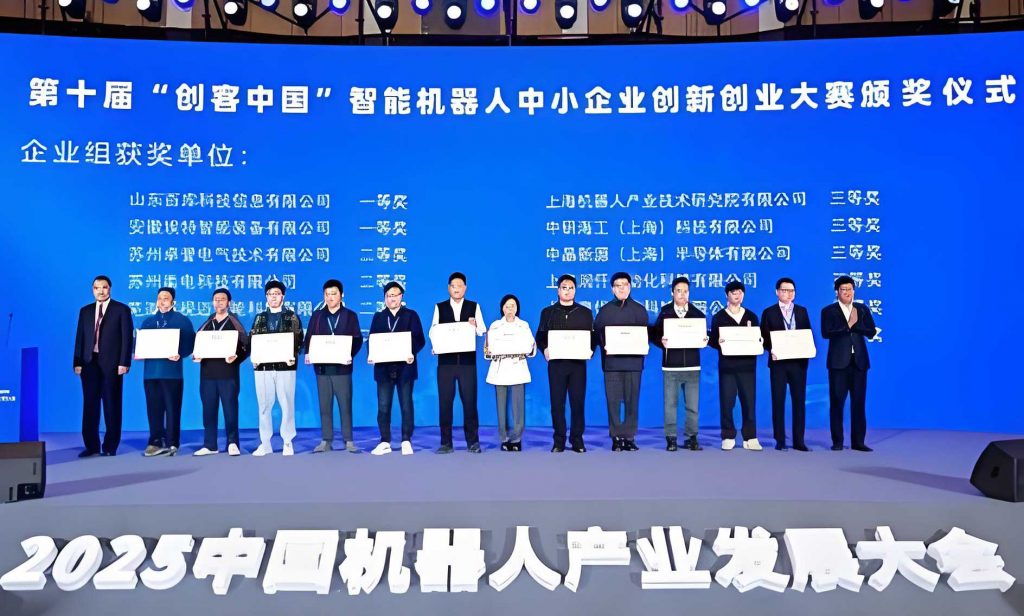
The demand drivers for industrial automation in China are profound and structural. Decades of economic growth have significantly increased labor costs, eroding the traditional advantage of cheap manpower. Concurrently, demographic shifts, including an aging population, are leading to a tightening labor market. These factors have pushed automation from a “nice-to-have” to a “must-have” for a vast spectrum of small and medium-sized enterprises (SMEs) that previously considered robots cost-prohibitive. On a strategic level, national policies like “Made in China 2025” explicitly aim to upgrade the manufacturing base through advanced technologies, including intelligent robotics. The market data is compelling. The International Federation of Robotics (IFR) has historically predicted China to become the world’s largest market for industrial robots. This projection is underpinned by growth figures showing sales soaring year-over-year. The convergence of economic necessity and top-down policy support has unequivocally ushered in what industry observers term “the spring” for the China robots market.
This explosive demand, however, is set against the backdrop of a global industry dominated by established players. The technological foundation for modern industrial robots was laid decades ago in the United States and later perfected in Japan and Europe. Countries like Japan and Germany implemented consistent government policies and funding, leading to unparalleled maturity in core component technologies. The precision reducers (RV and harmonic), high-performance servo motors and drives, and sophisticated controllers that form the heart of a robot are areas where Japanese and European suppliers maintain a significant lead. This has allowed companies like ABB, FANUC, Yaskawa (Motoman), and KUKA to establish global brands and achieve economies of scale that are difficult to match. For them, robotics is a strategic industry central to maintaining manufacturing supremacy.
The development trajectory for China robots has been different. Domestic research began in the 1970s but was largely confined to academic institutes and state laboratories, focusing on prototype development rather than industrial commercialization. While this yielded advanced theoretical knowledge, a persistent gap remained between research and viable, reliable, cost-competitive mass production. Even with significant state investment through various national plans, the emergence of a large-scale, globally competitive indigenous robot manufacturer has been elusive. The market share tells a stark story: despite hundreds of companies now engaged in the sector, domestic manufacturers collectively supplied only a small fraction of the robots installed in China. A key bottleneck remains the reliance on imported core components, which inflates costs and hinders the ability of domestic OEMs to compete on price and performance with international brands.
The central challenge for China robots companies is thus encapsulated in a critical equation: how to capture value in a high-growth market while facing a significant technological and scale deficit. We can frame a simplified model of this challenge:
$$ \text{Competitiveness Gap} = \frac{(T_{f} + S_{f} + B_{f})}{(T_{d} + S_{d} + B_{d})} $$
Where:
- $T_{f}$ = Technology level of foreign incumbents
- $S_{f}$ = Scale and supply chain maturity of foreign incumbents
- $B_{f}$ = Brand strength and global footprint of foreign incumbents
- $T_{d}$ = Technology level of domestic Chinese firms
- $S_{d}$ = Scale and supply chain maturity of domestic Chinese firms
- $B_{d}$ = Brand strength and market trust of domestic Chinese firms
For a China robots company to succeed, the denominator $(T_{d} + S_{d} + B_{d})$ must grow rapidly to close the gap represented by the numerator.
| Aspect | Global Incumbents (e.g., ABB, FANUC) | Emerging China Robots Companies |
|---|---|---|
| Core Technology | Mastery of precision reducers, servos, controllers. Vertically integrated or with dedicated supply chains. | Heavy reliance on imported core components. Developing domestic alternatives but with gaps in reliability and precision. |
| Production Scale | Mass production with globalized supply chains, leading to lower unit costs. | Limited scale, often bespoke or small-batch production, resulting in higher unit costs. |
| Software & Ecosystem | Mature proprietary programming environments (e.g., RAPID, KRL), simulation tools, and extensive application libraries. | Often dependent on open-source or licensed platforms. Application-specific software is a developing area. |
| Market Position | Dominant share in automotive, electronics, and other high-end sectors. Global service networks. | Initially focused on lower-complexity tasks, general industry, and SMEs. Stronger local service presence. |
| Cost Structure | High initial robot cost offset by reliability and total cost of ownership (TCO) in complex applications. | Potential for lower initial cost, but TCO may be affected by performance or uptime concerns. |
Strategic Opportunities for China Robots Enterprises
Despite the formidable challenges, the environment for China robots is ripe with strategic opportunities that can be leveraged for a competitive foothold.
1. The Unparalleled Domestic Market Depth: China’s vast and diverse manufacturing sector presents a testing ground and initial market that no other country can offer. While foreign robots dominate in standardized, high-volume sectors like automotive, there exists a “long tail” of applications in SMEs across ceramics, furniture, food processing, metal fabrication, and packaging. These applications often require customization, flexibility, and cost sensitivity that can be addressed more nimbly by local players. The market growth can be modeled as:
$$ D_{t} = D_{0} \times (1 + g_{s} + g_{p})^{t} $$
Where $D_{t}$ is total demand at time $t$, $D_{0}$ is baseline demand, $g_{s}$ is the growth rate from structural factors (labor cost, demographics), and $g_{p}$ is the growth rate from policy impetus.
2. Policy Tailwinds and Strategic Support: The Chinese government’s explicit focus on indigenous innovation in advanced manufacturing provides direct and indirect support. This can come in the form of R&D subsidies, tax incentives for purchasers of domestic robots (similar to policies for electric vehicles), and national projects that prioritize local suppliers. This policy framework effectively lowers the barrier to entry and adoption for China robots.
3. Integration and Application Engineering Prowess: Success in robotics is not solely about the arm itself but the complete solution – the integration of the robot with end-effectors, vision systems, and production line logistics. Chinese companies have a deep understanding of local industry processes and pain points. By excelling in application engineering and providing turnkey solutions for specific, underserved niches, they can build customer loyalty and create de facto standards.
4. The “Latecomer Advantage” and Technology Sourcing: The global ecosystem for robotics components and software is more accessible than ever. While developing core components from scratch is difficult, strategic partnerships, licensing, and acquisitions can accelerate technology absorption. Furthermore, the rise of open-source robotics frameworks (ROS-Industrial) and more accessible simulation tools lowers the software development barrier.
| Opportunity Vector | Description | Potential Strategic Action |
|---|---|---|
| Market Niches | Underserved SMEs and non-traditional sectors with unique requirements. | Develop cost-effective, easy-to-deploy robotic cells for specific verticals (e.g., palletizing for small warehouses, polishing for sanitary ware). |
| System Integration & Service | High-margin, sticky business based on deep process knowledge. | Build strong SI teams focused on 3C electronics, new energy (battery, PV), or logistics. Offer comprehensive lifecycle services. |
| Component Localization | Reducing cost and supply chain risk for the domestic industry. | Focus R&D on breaking bottlenecks in one key component (e.g., RV reducer or servo drive) to become a national supplier. |
| Collaborative Robots (Cobots) | A faster-growing segment where application knowledge is still evolving. | Leverage understanding of Chinese workshop layouts and safety norms to design cobots suited for local SME environments. |
Confronting the Core Challenges: A Path Forward
To convert opportunities into sustainable market share, China robots enterprises must develop clear strategies to address their fundamental weaknesses.
1. Overcoming the Technology Gap in Core Components: This remains the most critical bottleneck. The performance, reliability, and cost of reducers, servo systems, and controllers directly determine the robot’s capabilities. A multi-pronged approach is necessary:
- Focused Breakthroughs: Instead of trying to master all components simultaneously, concentrating R&D resources on achieving parity in one or two areas (e.g., harmonic drives or mid-range servo motors) can create viable domestic alternatives.
- Academia-Industry-Research Collaboration: Establishing closer, commercially-driven links between universities (with strong mechatronics research) and companies is vital to translate theoretical advances into industrial-grade products. The model should shift from “publish a paper” to “solve a reliability problem.”
- Strategic Overseas M&A and Partnerships: Acquiring or forming deep technical partnerships with specialized component manufacturers abroad can provide a faster track to advanced technology.
2. Achieving Scale and Cost Competitiveness: Without scale, unit costs remain high. The strategy must involve:
- Design for Manufacturability (DFM): From the outset, robot design should prioritize simplification, standardization, and ease of assembly to enable cost-effective production at increasing volumes.
- Building a Localized Supply Chain: Fostering a cluster of qualified domestic suppliers for structural parts, cables, connectors, and eventually core components is essential for long-term cost control and supply chain resilience.
- Leveraging Government Procurement & Pilot Projects: Early adoption through state-supported projects can provide the initial volume needed to move down the learning curve and improve production processes.
The relationship between cost, volume, and experience can be approximated by the experience curve concept:
$$ C_{n} = C_{1} \times n^{-b} $$
Where $C_{n}$ is the cost of the $n$th unit, $C_{1}$ is the cost of the first unit, $n$ is the cumulative volume, and $b$ is the experience index. For China robots firms, accelerating the accumulation of $n$ is crucial to drive down $C_{n}$.
3. Building Trust and Brand Equity: Overcoming the perception that domestic robots are inferior requires a concerted effort on quality and reliability.
- Relentless Focus on Quality: Implementing rigorous testing protocols (MTBF – Mean Time Between Failures), stringent quality control, and gathering extensive field data to drive continuous improvement is non-negotiable.
- Creating Success Stories: Securing reference customers in demanding applications and publicly showcasing their success builds credibility more effectively than any advertisement.
- Developing Robust Support Networks: Providing prompt, effective technical support and maintenance services across China is a key competitive advantage over global players whose support may be more centralized.
4. Talent Acquisition and Retention: The competition for robotics talent—mechanical engineers, control theorists, software developers, and application engineers—is global and intense. Companies must create attractive environments for top talent, offering challenging projects, competitive compensation, and clear career paths to stem the flow to multinationals or overseas.
| Strategic Pillar | Short-Term (1-3 years) | Medium-Term (3-7 years) | Long-Term (7+ years) |
|---|---|---|---|
| Technology & Product | Excel in system integration for niche markets. Use licensed or partnership-sourced core tech. Launch cobots and simple SCARAs. | Achieve in-house design of 1-2 core components. Develop proprietary middle-ware for key verticals. Expand into 6-axis articulated robots. | Establish full-stack technology capability. Lead in emerging areas (AI-vision integration, mobile manipulation). Global IP portfolio. |
| Market & Sales | Deep penetration in 2-3 specific Chinese industrial verticals. Build a reputation for great service and customization. | Become a market leader in chosen domestic verticals. Expand to adjacent sectors and Southeast Asian markets. | Compete directly with global brands in standardized segments in China. Establish significant presence in key international markets. |
| Operations & Supply Chain | Establish rigorous quality control. Begin DFM processes. Cultivate local non-core part suppliers. | Build automated production lines for high-volume models. Qualify domestic sources for some core sub-components. | Possess vertically integrated production for key technologies. Global, resilient supply chain network. |
In conclusion, the journey for China robots enterprises is one of navigating a paradox: operating in the world’s most vibrant market while competing with its most entrenched incumbents. The path to success does not lie in a head-on assault on the high-end fortress of global giants but in a strategic, patient campaign. It requires leveraging intrinsic advantages—deep market knowledge, responsive service, and policy support—to build beachheads in specialized applications. Concurrently, it demands a relentless, long-term commitment to mastering core technologies, building scale, and cultivating quality and brand trust. The formula for a competitive China robots champion involves a synergistic combination:
$$ \text{Success} = (\text{Application Innovation} \times \text{Policy Leverage}) + \int_{0}^{t} (\text{R\&D Intensity} + \text{Quality Culture}) \, dt $$
Where the integral over time represents the cumulative, non-negotiable investment in technical depth and operational excellence. By executing this dual-track strategy—dominating niches today while building fundamental strength for tomorrow—Chinese industrial robotics companies can transform the current challenge of foreign dominance into a future of global leadership, solidifying their role in the “new industrial revolution” unfolding within and beyond their borders.