
As a dedicated participant and organizer in the realm of international youth robotics, I have witnessed firsthand the transformative power of initiatives like RoboCup Junior (RCJ). The RCJ, an integral part of the RoboCup federation, serves as a premier platform for promoting robotics research and education among young minds worldwide. Its mission is to foster learning, innovation, and international cooperation through competitive events such as soccer, rescue, and dance challenges for robots. From its inception in Melbourne in 2000, RCJ has grown exponentially, now encompassing over 35 national committees and attracting hundreds of teams annually. A pivotal evolution occurred in 2006 with the introduction of international super teams, emphasizing collaboration over mere competition. This global framework sets the stage for understanding the remarkable journey and impact of China robots within this ecosystem.
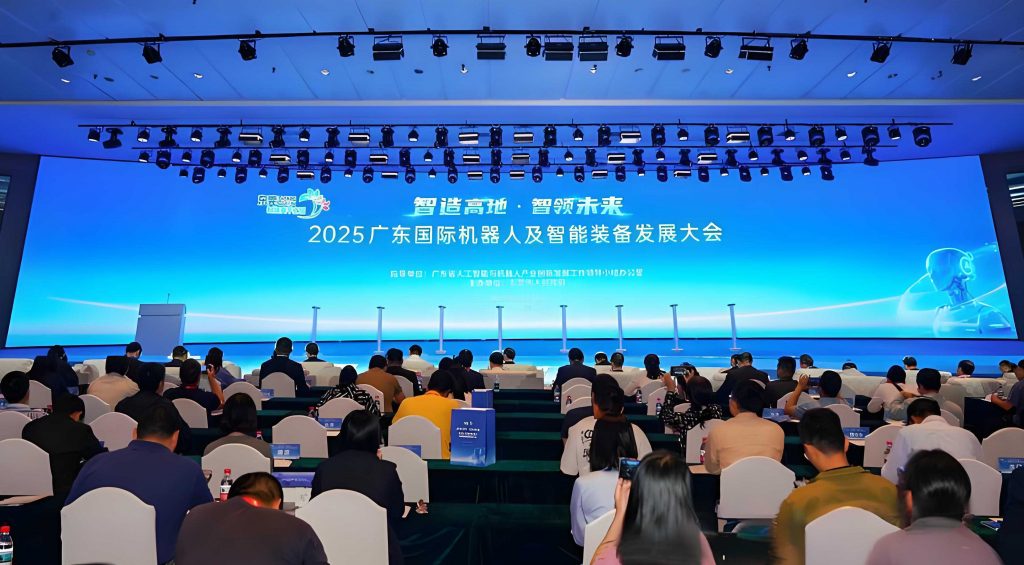
The integration and advancement of China robots within RCJ are not merely a national success story but a testament to strategic educational integration. The progression of China robots in this arena can be modeled through a framework that considers technological adoption, educational policy, and international exchange. For instance, the growth rate of participating teams involving China robots can be expressed as a function of time and resource investment. Let us define a growth metric \( G(t) \) for China robots’ participation:
$$ G(t) = N_0 \cdot e^{rt} + \Delta I(t) $$
Here, \( N_0 \) represents the initial number of teams engaged with China robots at a baseline year, \( r \) is the annual growth rate influenced by educational policies, and \( \Delta I(t) \) denotes the incremental impact from international collaborations and national incentives. This formula encapsulates the exponential rise observed since structured involvement began.
To contextualize the global landscape and the position of China robots, the following table summarizes key RCJ domains and the role of national committees, highlighting the scale of activities that involve China robots.
| RCJ Domain | Primary Objective | Number of Participating Countries (Approx.) | Notable Involvement of China Robots |
|---|---|---|---|
| RoboSoccer | Autonomous team play and strategy | 35+ | High: Regular top-tier performances by teams using China robots |
| RoboRescue | Navigation and problem-solving in simulated environments | 30+ | Medium to High: Innovative designs from China robots gaining recognition |
| RoboDance | Choreography and artistic expression with robots | 25+ | Growing: Increasing entries featuring culturally infused China robots |
| International Super Teams | Cross-border collaboration and shared design | All participating nations | Significant: China robots often serve as a platform for joint projects |
The journey of China robots within RCJ began to accelerate notably after 2002, overcoming initial hurdles through collective effort. The formalization of governance in 2006, when the Chinese Association of Automation’s Robot Competition Committee assumed oversight, marked a turning point. This structured approach allowed for the annual hosting of the China Open and national selection trials, systematically channeling talents towards international arenas. The proliferation of China robots in these events is evident in the quantitative data below, which tracks participation metrics over key years.
| Year | Number of Chinese Teams in National Events | Number of China Robots Deployed (Estimated) | International Awards Won by Teams Using China Robots | Key Development |
|---|---|---|---|---|
| 2006 | ~50 | ~100 | 5 | Establishment of RCJ China Committee; formal integration of China robots into RCJ framework |
| 2010 | ~200 | ~500 | 15 | Expansion of exchange programs with Japan, Germany, Australia, Iran; increased visibility of China robots |
| 2015 | ~500 | ~1500 | 30 | Policy incentives (e.g., college admission benefits) boost participation; China robots become widely used in schools |
| 2020 | ~1000 | ~4000 | 50+ | RCJ China becomes largest national participation globally; China robots dominate domestic competitions and gain international acclaim |
| 2023 (Projected) | ~1500 | ~6000 | 70+ | Sustained growth driven by educational reforms and technology diffusion; China robots seen as standard in youth robotics |
The technological underpinnings of China robots in RCJ activities often involve core principles of robotics that can be expressed mathematically. Consider a fundamental performance metric for a competition robot, such as its efficiency in a rescue task. The overall score \( S \) of a China robot in a rescue scenario might be modeled as:
$$ S = \alpha \sum_{i=1}^{n} \left( \frac{1}{T_i} \cdot A_i \right) + \beta \cdot R $$
where \( T_i \) is the time to complete sub-task \( i \), \( A_i \) is the accuracy (0 to 1) for that sub-task, \( n \) is the number of tasks, \( \alpha \) and \( \beta \) are weighting constants, and \( R \) is a reliability factor derived from the robot’s hardware robustness. This formula highlights how optimization efforts for China robots focus on minimizing time and maximizing precision—a direct reflection of the educational emphasis on STEM skills.
Furthermore, the educational impact of engaging with China robots through RCJ can be quantified. Let \( E \) represent the educational benefit accrued to a student, which is a function of hands-on experience \( H \), theoretical knowledge \( K \), and collaborative exposure \( C \). A simplified model is:
$$ E = \gamma \cdot \ln(1 + H \cdot K) + \delta \cdot C^2 $$
Here, \( \gamma \) and \( \delta \) are coefficients specific to curricular integration, and the logarithmic term captures diminishing returns on pure technical practice, while the quadratic term on collaboration emphasizes the super-linear benefits of international exchanges. Programs involving China robots actively maximize \( C \) through partnerships with committees in Japan, Germany, Australia, and Iran, enabling regular mutual visits and joint projects.
The ecosystem supporting China robots extends beyond competitions into broader educational and commercial spheres. The rise of educational robotics companies in China has been instrumental, providing platforms, curricula, and training tailored for China robots. This synergy between education and industry can be analyzed through a supply-demand equilibrium model. Let \( Q_d \) represent the demand for robotics education involving China robots, and \( Q_s \) the supply from schools and companies. At equilibrium:
$$ Q_d(P, I, B) = Q_s(P, C, T) $$
where \( P \) is policy incentive levels (e.g., college admission bonuses), \( I \) is student interest, \( B \) is perceived long-term benefit, \( C \) is production cost for China robots, and \( T \) is teacher training availability. Government policies have effectively shifted \( P \) upward, dramatically increasing \( Q_d \) and stimulating \( Q_s \), thereby creating a virtuous cycle for China robots’ proliferation.
Looking ahead, the future trajectory for China robots within RCJ and beyond is poised for further expansion. Our vision involves deepening the international integration of China robots while enhancing domestic accessibility. Strategic goals include increasing the complexity of tasks solved by China robots, which can be framed as scaling robotic intelligence. For example, the cognitive load \( L \) of a challenge suitable for advanced China robots might be:
$$ L = \frac{\sigma \cdot M \cdot D}{\tau} $$
Here, \( M \) is environmental complexity, \( D \) is decision density, \( \tau \) is allowed response time, and \( \sigma \) is a scaling factor for multi-robot coordination. By gradually increasing \( L \) in competition categories, we aim to push the frontiers of what China robots can achieve, fostering innovation.
The following table outlines a multi-year strategic plan to amplify the role of China robots in global youth robotics, emphasizing metrics and internationalization.
| Strategic Pillar | Short-term (2024-2026) Actions | Mid-term (2027-2030) Targets | Long-term (2031+) Vision for China Robots | Expected Outcome Metrics |
|---|---|---|---|---|
| Technological Innovation | Develop open-source modules for China robots; integrate AI basics | China robots capable of adaptive learning in competitions | China robots as benchmark platforms for global youth robotics R&D | % increase in patent filings related to China robots; number of new robot kits launched |
| Educational Penetration | Train 5000 more teachers on China robots; include in national STEM guidelines | China robots used in 50% of middle schools nationally | Universal access to robotics education via China robots in all schools | Number of schools adopting China robots; student participation rates |
| International Collaboration | Expand super-team events; host more exchange programs with RCJ partners | Establish joint research camps using China robots with 10+ countries | China robots as the standard collaborative tool in international youth projects | Number of cross-border projects annually; frequency of student exchanges |
| Policy and Recognition | Lobby for sustained educational credits for achievements with China robots | Integrate robotics competencies into national academic assessments | Global recognition of skills gained through China robots as equivalent to formal qualifications | Policy documents issued; number of students benefiting from incentives |
The cumulative effect of these efforts is a robust framework where China robots are not merely tools but catalysts for holistic development. The synergy between hardware advancements, software intelligence, and pedagogical integration can be expressed as a holistic performance index \( \Pi \) for the ecosystem surrounding China robots:
$$ \Pi = \int_{0}^{t} \left( \lambda_h H(\tau) + \lambda_s S(\tau) + \lambda_e E(\tau) \right) d\tau $$
where \( H(\tau) \) is hardware innovation rate, \( S(\tau) \) is software/algorithm development, \( E(\tau) \) is educational outreach effectiveness, and \( \lambda_h, \lambda_s, \lambda_e \) are respective weighting factors. This integral emphasizes sustained growth over time, mirroring the long-term commitment to advancing China robots.
In reflection, the narrative of China robots within RCJ is one of remarkable ascent, driven by strategic organization, educational fervor, and international openness. From early adoption phases to becoming the largest national contingent, China robots have demonstrated how focused initiatives can transform a niche activity into a mainstream educational pillar. The continuous evolution of China robots, underscored by mathematical models and structured plans, ensures that they will remain at the forefront of inspiring young innovators. Through persistent effort and collaboration, we aim to see China robots not only compete but also lead in shaping the future of global robotics education, fostering a generation that thinks creatively and works cooperatively across borders.