
When I reflect on the question “What is a robot?”, I recognize that popular imagination, shaped by science fiction, often envisions humanoid beings capable of thought and speech. However, in the practical world I operate in, the reality is far more diverse and industrious. The vast majority of robots are not sentient; over 95% are deployed in industrial settings, often as sophisticated mechanical arms or automated guided vehicles. The progenitor of modern industrial robots was the first-generation teach-playback model—a programmable mechanical arm devoid of sensing or cognitive ability. Its function is purely defined by its end-effector: it welds with a welding gun or paints with a spray gun. Beyond the factory floor, these intelligent machines are revolutionizing fields from medicine and forestry to mining, agriculture, and defense.
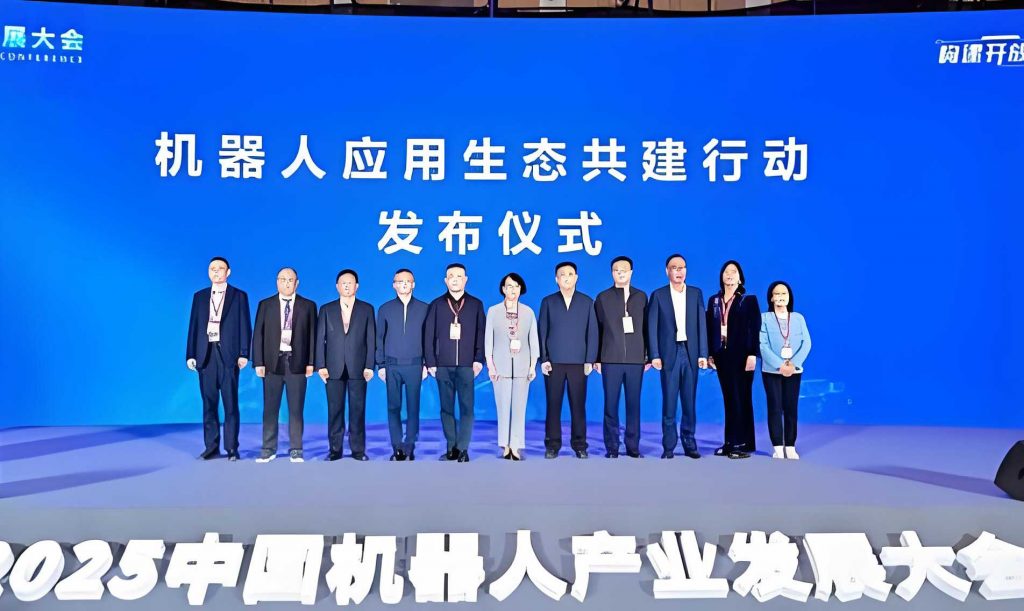
As a key technology integrating information systems with advanced manufacturing, robotics has become a strategic battleground for developed nations. Its advancement level is now a crucial benchmark for a country’s technological prowess. For China robots, this represents both an immense opportunity and a formidable challenge. The core drivers propelling this industry forward globally, and particularly for China robots, are multifaceted and powerful.
The primary equation fueling demand can be summarized by three critical variables: Labor Cost (L), Work Environment (W), and Quality/Reliability (Q). The composite driver (D) for robot adoption is a function of these factors:
$$ D = f(L, W, Q) $$
Where:
- L (Rising Labor Costs & Demographic Shift): Annual increases in wages, coupled with an aging society and a shrinking workforce of young people willing to perform repetitive factory tasks, make automation through China robots an economically rational and increasingly necessary choice.
- W (Harsh or Complex Operational Environments): In sectors like military, space exploration, delicate surgery, or hazardous material handling, China robots offer irreplaceable capabilities, performing tasks that are dangerous or impossible for humans.
- Q (Pursuit of High Reliability and Consistent Quality): In the face of intense global competition, manufacturers seek the precision, repeatability, and 24/7 uptime that robots provide to enhance efficiency and product quality.
The global robotics landscape is currently dominated by what is often termed the “Big Four,” which have established a formidable technological lead over decades.
| Region/Country | Representative Companies | Key Characteristics & Market Focus | Estimated Global Market Share |
|---|---|---|---|
| Europe | ABB, KUKA | Often provide turn-key solutions (e.g., complete automotive production lines: stamping, welding, painting, assembly). Strong in system integration. | 60% – 80% collectively for industrial robots |
| Japan | FANUC, YASKAWA | Follow an industrial chain model: manufacturers focus on robot development and mass production; system integration is handled by subsidiaries or specialized engineering firms. | |
| United States | Various (e.g., Boston Dynamics for advanced, specialized robots) | Emphasizes integration and innovation. Strong in military, medical, and service robotics. Often imports base robots for custom system design. | ~60% in service robot segments |
| China | Emerging domestic players | Rapidly growing demand (20,000-30,000 units/year). Market characterized by higher demand in coastal regions and private enterprises. Industry is in early产业化 stage. | Growing rapidly as a consumer, domestic share is still developing |
While China’s annual demand for industrial robots is massive, the domestic industry’s产业化 is nascent. We have yet to see globally influential champions emerge. Therefore, a critical strategic question for us is: Which developmental model should China robots adopt?
Analyzing the established models offers valuable insights. The Japanese model of specialized division across the industrial chain is highly efficient. The European turn-key model delivers deep vertical integration but requires immense capital and expertise. The American integration-application model leverages flexibility and innovation in system design. For the China robots industry in its formative stage, I believe a hybrid path is prudent: initially emphasizing strong application integration (akin to the U.S. model) to rapidly address market needs and build expertise, while gradually cultivating a specialized, vertically disintegrated supply chain (moving toward the Japanese model) to achieve scale and cost-effectiveness. This approach can leverage China’s dual advantages as a massive manufacturing hub and a colossal end-market.
However, the path for China robots is fraught with significant technical and commercial hurdles. Bridging the estimated 10-year gap with global leaders requires systematic focus on several core challenges.
1. Scalable Market Application is the Prerequisite. A robot is a platform; its value is unlocked only through application-specific engineering. The selection of target sectors is vital. Promising areas for规模化 application of China robots include construction assembly, chemical processing, and logistics. The growth of a robust ecosystem of skilled system integrators is equally important. The economic viability of a robot cell depends on its effective deployment, which can be modeled by a Return on Investment (ROI) equation considering initial cost (C), operational savings (S), and maintenance (M) over time (t):
$$ ROI(t) = \frac{\int_0^t (S(\tau) – M(\tau)) d\tau – C}{C} $$
High ROI drives adoption, and that depends on excellent, cost-effective integration.
2. Host Machine Cost and Reliability are the Core. The competitiveness of China robots hinges not just on low initial cost but on demonstrated high reliability over a long operational life. Reliability (R) is a complex function of numerous factors:
$$ R = \prod_{i=1}^{n} r_i = r_{material} \times r_{design} \times r_{component} \times r_{manufacturing} \times r_{testing} \times … $$
Common failure points in early-generation domestic robots often involve precision in high-speed rotating joints, connector interfaces, control buttons, and basic manufacturing defects (e.g., poor soldering, out-of-tolerance machining). Building a brand synonymous with reliability requires sustained investment and rigorous quality culture.
3. Core Components are the Key Bottleneck. This is arguably the most critical technical challenge. The performance, cost, and reliability of China robots are fundamentally constrained by three core components:
| Core Component | Function | Current Status for China Robots | Critical Performance Metrics |
|---|---|---|---|
| High-Precision Reducer (RV, Harmonic Drive) | Converts high-speed, low-torque motor input to low-speed, high-torque output at the joint. Determines precision, rigidity, and smoothness of motion. | Heavily reliant on imports. Domestic products are improving but still lag in consistency, lifespan, and precision under load. | Backlash ($\alpha$), transmission error ($\epsilon_t$), torsional stiffness ($k$), lifetime (L10 hours). $$ \tau_{output} = \eta \cdot N \cdot \tau_{input} $$ where $N$ is reduction ratio, $\eta$ is efficiency. |
| High-Performance Servo Motor & Drive | Provides precise control of position, velocity, and torque for each joint. | Mid-to-high end servo systems are still dominated by foreign brands. Domestic makers are catching up in mid-range performance. | Power density, torque-to-inertia ratio, bandwidth ($\omega_b$), control accuracy. Motor torque: $\tau_m = K_t \cdot I_q$ where $K_t$ is torque constant, $I_q$ is q-axis current. |
| High-Performance Controller | The “brain” handling trajectory planning, kinematics/dynamics calculation, and real-time control. | Software algorithms and real-time control stability are areas of intense R&D. Open-source platforms (ROS-Industrial) are aiding development. | Control cycle time ($\Delta t$), interpolation accuracy, support for advanced algorithms (e.g., force control). Inverse kinematics solution: $\vec{\theta} = IK(\vec{x}, \vec{\phi})$ for desired end-effector pose. |
The kinematics of a robotic manipulator, fundamental to its control, are described by its Denavit-Hartenberg (D-H) parameters and the resulting homogeneous transformation matrix between links:
$$ ^{i-1}T_i = \begin{bmatrix}
\cos\theta_i & -\sin\theta_i \cos\alpha_i & \sin\theta_i \sin\alpha_i & a_i \cos\theta_i \\
\sin\theta_i & \cos\theta_i \cos\alpha_i & -\cos\theta_i \sin\alpha_i & a_i \sin\theta_i \\
0 & \sin\alpha_i & \cos\alpha_i & d_i \\
0 & 0 & 0 & 1
\end{bmatrix} $$
The dynamics, governing the forces required for motion, are given by the equation:
$$ M(\vec{\theta})\ddot{\vec{\theta}} + C(\vec{\theta}, \dot{\vec{\theta}})\dot{\vec{\theta}} + \vec{G}(\vec{\theta}) + \vec{F}(\dot{\vec{\theta}}) = \vec{\tau} $$
Where $M$ is the mass/inertia matrix, $C$ represents Coriolis and centrifugal forces, $G$ is gravity, $F$ is friction, and $\tau$ is the vector of joint torques. Mastering the implementation of these equations in real-time controllers is essential for high-performance China robots.
4. Business Model and Ecosystem Innovation. Beyond technology, successfully scaling the China robots industry requires innovative business models. This could include Robot-as-a-Service (RaaS) offerings to lower upfront barriers for small and medium enterprises (SMEs), fostering closer collaboration between academic research institutes and manufacturers, and creating specialized industrial clusters for robotics.
The convergence of massive domestic demand, strong policy support, and intense global competition presents a historic window for China robots. The journey is complex, requiring sustained investment in core technologies, a focus on reliability, and the cultivation of a vibrant application ecosystem. If these multifaceted challenges—from precision reducers to scalable integration—can be systematically addressed, the future for China robots is not just one of rapid growth, but of enduring global impact and leadership. The “Made in China” label on the world’s intelligent machines is poised to become a symbol of innovation and quality.