
The global landscape for advanced robotics is undergoing a seismic shift, moving from specialized industrial arms towards a more versatile, human-centric paradigm. At the forefront of this revolution is the development of humanoid robots, or ‘China robots’, a field where ambition converges with strategic national and regional planning. This article explores the concerted efforts shaping this future, focusing on the pivotal role of Chinese technological hubs and the comprehensive frameworks being established to propel ‘China robots’ to global leadership.
The drive for advancement is not merely technical but profoundly strategic. Recognizing the transformative potential of humanoids—machines that mimic human form and behavior—authorities have moved to create ecosystems conducive to innovation. A key development in this narrative is the formulation of a targeted industrial action plan by a major Chinese province, Anhui. This plan represents a microcosm of the broader national strategy, translating high-level guidance into concrete, regionalized milestones for the ‘China robots’ sector.
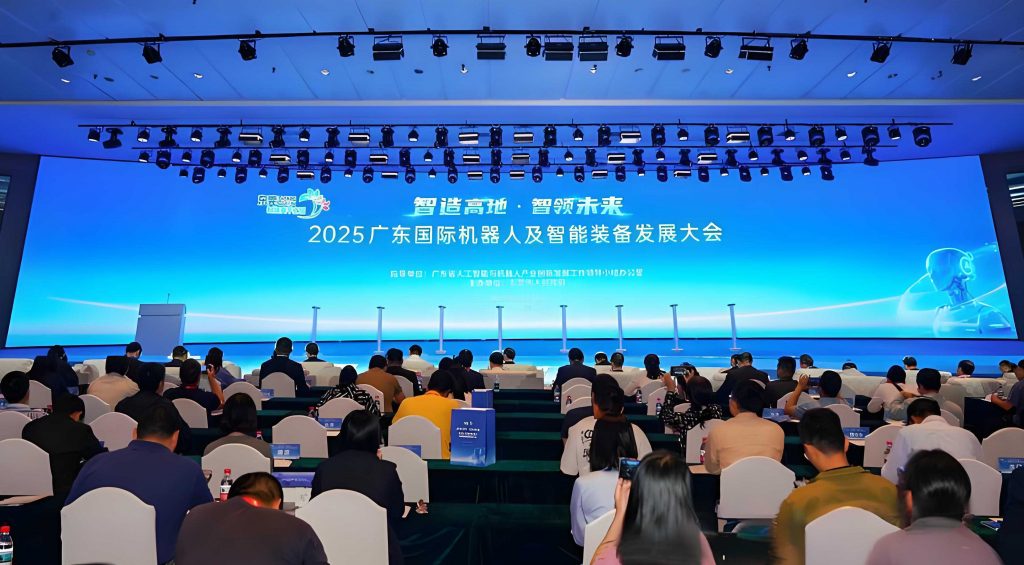
The rationale for focusing on humanoids is multifaceted. Unlike their single-task counterparts, humanoid ‘China robots’ are designed for general-purpose operation across the vast spectrum of human environments. Their value proposition can be summarized by their target application domains, $A$, and their enabling technological pillars, $T$:
$$
A = \\{ \\text{Industrial Manufacturing}, \\text{Home Assistance}, \\text{Healthcare Support}, \\text{Commercial Services}, \\text{Educational Tools}, \\dots \\}
$$
$$
T = \\{ \\text{Mechanical Design (M)}, \\text{Artificial Intelligence (AI)}, \\text{Dynamics & Control (C)}, \\text{Advanced Materials (Mat)}, \\text{Computer Vision (V)}, \\text{Sensor Fusion (S)}, \\dots \\}
$$
The convergence of these domains signifies a leap towards true human-robot collaboration. The recent policy initiative from Anhui provides a structured blueprint to achieve this. The plan, covering 2024 to 2027, establishes a clear “23456” target system to build a preliminary innovation and industrial ecosystem for humanoid ‘China robots’. Its phased objectives are outlined below:
| Timeframe | Strategic Goal | Key Outcome |
|---|---|---|
| By 2027 | Establish Foundation | Preliminary innovation system and industrial ecosystem formed; initial industrialization capability achieved. |
| By 2030 | Accelerate & Integrate | Industrialization process accelerated; application scenarios enriched; products deeply integrated into the real economy; development of a nationally influential industry hub. |
This vision is underpinned by a detailed analysis of regional strengths and weaknesses. The foundational assessment identifies competency in system integration, certain core components, and AI algorithms. The strategic focus, therefore, is bifurcated into reinforcing advantages and addressing critical gaps. The development priorities are systematically categorized:
| Focus Area | Objective | Specific Elements |
|---|---|---|
| Optimize the Whole Machine | Develop competitive, reliable humanoid platforms. | System architecture, reliability, cost-performance. |
| Forge Strengths (The “Long Board”) | Leverage and enhance existing technological leads. | Brain (Embodied AI), Cerebellum (Motion Control), Limbs (Actuation), Testing & Validation. |
| Remedy Weaknesses (The “Short Board”) | Overcome dependencies on external core components. | High-precision reducers, long-endurance batteries, lightweight skeletal structures, myoelectric sensors, specialized software. |
| Co-build the Ecosystem | Foster collaborative innovation and supply chains. | Industry alliances, standardization, platform sharing. |
To operationalize these priorities, the plan deploys five major task clusters. Each cluster is a multi-faceted endeavor crucial for the holistic development of the ‘China robots’ sector:
1. Conquer Core Technologies: This is the engine of innovation. The primary battleground is Embodied AI, which represents the shift from AI that merely processes data to AI that perceives and acts within a physical environment. The fundamental challenge can be framed as learning a policy $\pi$ that maps sensory observations $o_t$ to actions $a_t$ to maximize some expected reward $R$, often formalized as a Partially Observable Markov Decision Process (POMDP):
$$
\\pi^* = \\arg\\max_{\\pi} \\mathbb{E}\\left[ \\sum_{t=0}^{T} \\gamma^t R(s_t, a_t) \\mid \\pi \\right]
$$
where $s_t$ is the true state, $o_t$ is correlated with $s_t$, and $\gamma$ is a discount factor. Other key tasks include establishing major innovation platforms and enhancing system integration capabilities.
2. Cultivate Key Products: Technology must materialize into products. The focus here is three-pronged: breaking through in complete humanoid robot products, solidifying the supply chain for critical sub-components (like actuators and sensors), and driving innovation in the software stack that operates these machines.
3. Promote Application Scenarios: Value is realized in application. This involves deeply mining potential needs across sectors, innovating business and deployment models (e.g., Robot-as-a-Service), and accelerating the transition of laboratory breakthroughs into field-ready solutions for ‘China robots’.
4. Advance Cluster Development: Scale is achieved through concentration. Tasks include nurturing and expanding leading enterprises, actively attracting investment and talent (“dual recruitment”), and promoting the geographical and industrial agglomeration of the sector’s supply chain.
5. Strengthen Supportive Capabilities: The foundation for growth. This entails robust financial support mechanisms, including dedicated funds and venture capital guidance, and accelerating talent cultivation through tailored academic and vocational programs.
Parallel to and synergistic with such policy frameworks is the critical role of academic research. The advancement of ‘China robots’ is fundamentally a multidisciplinary challenge, requiring deep collaboration across fields. In a significant move, a leading Chinese university of science and technology has recently consolidated its resources to establish two pivotal entities: a College of Artificial Intelligence and Data Science, and a Humanoid Robot Research Institute.
This institutional reorganization is strategic. The college serves as a high-end talent incubator, focusing on frontier interdisciplinary research in AI and data science, with special attention to scientific AI, industrial AI, and embodied intelligence. The institute, in turn, is designed to act as the applied research spearhead. It aims to leverage the university’s cross-disciplinary strengths to achieve breakthroughs in four core technological directions for humanoid ‘China robots’:
| Research Vector | Biological Analog | Technological Challenge |
|---|---|---|
| Materials & Sensing | Skin & Sensory Organs | Developing sensitive, durable, and multifunctional skins and sensors for environmental interaction. |
| Structure & Actuation | Muscles & Skeleton | Creating lightweight, strong, and energy-efficient actuators and skeletal frameworks. The dynamics are governed by: $$ M(q)\\ddot{q} + C(q, \\dot{q})\\dot{q} + G(q) = \\tau $$ where $q$ are joint angles, $M$ is the inertia matrix, $C$ captures Coriolis forces, $G$ is gravity, and $\tau$ is the torque input. |
| Motion Control (“Cerebellum”) | Cerebellum | Achieving stable, adaptive, and agile locomotion and manipulation in complex, unstructured environments. |
| Embodied Intelligence (“Brain”) | Brain/Cortex | Integrating perception, reasoning, and decision-making to enable autonomous, goal-directed behavior in the physical world. |
The mission of this research ecosystem extends beyond publication. It explicitly aims to accelerate the industrialization of ‘China robots’ by fostering strong partnerships with enterprises. The goal is to translate laboratory innovations into viable products for service, medical, and educational applications, thereby creating a virtuous cycle of research, development, and commercial deployment.
In conclusion, the trajectory for ‘China robots’, particularly within strategic hubs like Anhui, is being charted through a powerful dual-engine approach. On one side, detailed, goal-oriented government action plans provide the strategic roadmap, resource allocation, and industrial policy needed to build a complete competitive ecosystem. On the other side, reorganized and focused academic institutions provide the deep technological innovation, multidisciplinary research, and high-caliber talent pipeline required to solve the profound challenges of humanoid robotics. The interplay between targeted policy (the *macro* framework) and dedicated research (the *micro* innovation) creates a formidable structure for advancement. This synergistic model is not merely about building machines; it is about systematically constructing a foundational pillar for the future industrial landscape. As these plans unfold and research bears fruit, the ‘China robots’ sector is poised to evolve from a field of potential into a tangible, integrated, and influential component of the global advanced technology ecosystem, reshaping how work is done and how machines interact with the human world.