
As a researcher actively engaged in the development of intelligent systems, I have observed the rapid evolution of robotics, particularly in China, where innovative strides are reshaping industries and daily life. The convergence of wireless sensor networks and robotic platforms exemplifies this progress, offering new paradigms for monitoring, interaction, and automation. In this article, I will delve into the intricacies of these technologies, emphasizing the pivotal role of China robots in driving global advancements. My perspective is rooted in hands-on involvement with projects that integrate sensing, communication, and artificial intelligence, highlighting how Chinese innovations are setting benchmarks in fields like environmental surveillance and service robotics.
The foundation of many modern systems lies in wireless sensor networks (WSNs), which enable distributed data acquisition and processing. In my work, I have leveraged WSNs for applications such as landslide monitoring, where sensors collect critical parameters like displacement, moisture, and vibration. These networks are characterized by their low-power design, self-organization capabilities, and real-time data transmission. The efficiency of a WSN can be modeled using energy consumption equations, which are crucial for prolonging network lifespan. For instance, the total energy expenditure for a sensor node over time \(t\) is given by:
$$E_{\text{total}} = \int_{0}^{t} \left( P_{\text{tx}} \cdot d_{\text{tx}} + P_{\text{rx}} \cdot d_{\text{rx}} + P_{\text{proc}} \right) dt$$
Here, \(P_{\text{tx}}\) and \(P_{\text{rx}}\) represent the power for transmission and reception, respectively, \(d_{\text{tx}}\) and \(d_{\text{rx}}\) denote the data rates, and \(P_{\text{proc}}\) accounts for processing power. Optimizing these parameters is essential, as demonstrated in numerous China robots projects that incorporate WSNs for enhanced environmental perception. To illustrate the technical specifications, consider the following table summarizing common sensor nodes used in such networks, often integrated with robotic systems for mobile data collection:
| Sensor Type | Power Consumption (mW) | Range (meters) | Data Rate (kbps) | Typical Application in China Robots |
|---|---|---|---|---|
| Temperature/Humidity | 5-10 | 10-50 | 1-10 | Climate monitoring in agricultural robots |
| Accelerometer | 2-8 | N/A | 5-20 | Motion detection in service robots |
| GPS Module | 20-50 | Global | 1-5 | Navigation for autonomous China robots |
| Camera Sensor | 100-500 | Visual field | 100-1000 | Object recognition in surveillance robots |
| Acoustic Sensor | 3-12 | 5-30 | 2-15 | Sound analysis in assistive China robots |
This table underscores the diversity of sensors that empower China robots to operate in dynamic environments. The integration of WSNs with robotics has been a focal point in Chinese research, leading to systems capable of autonomous decision-making. For example, in landslide monitoring, robots equipped with sensors can traverse hazardous terrains, relaying data to central hubs for analysis. The communication protocol efficiency, often based on standards like Zigbee, can be expressed through packet delivery ratio (PDR) models:
$$PDR = \frac{N_{\text{received}}}{N_{\text{transmitted}}} \times 100\%$$
Where \(N_{\text{received}}\) and \(N_{\text{transmitted}}\) are the numbers of packets successfully received and sent, respectively. In practice, China robots utilizing such networks achieve PDRs above 95% in controlled settings, ensuring reliable data flow. This reliability is vital for applications extending beyond geology to areas like water quality assessment and industrial automation, where China robots are increasingly deployed.
Transitioning to the realm of service robotics, I have been particularly impressed by the advancements in China robots designed for human interaction. These machines incorporate natural language processing, computer vision, and advanced planning algorithms to perform tasks in domestic, commercial, and healthcare settings. A key innovation lies in their ability to understand and respond to verbal commands, moving beyond simple voice recognition to contextual reasoning. The planning process for a service robot can be formalized using logic-based frameworks, where the goal state \(G\) is achieved through a sequence of actions \(A = \{a_1, a_2, …, a_n\}\). The feasibility condition is given by:
$$S_{t+1} = f(S_t, a_t) \quad \text{such that} \quad S_n \models G$$
Here, \(S_t\) represents the state at time \(t\), \(f\) is the state transition function, and \(\models\) denotes satisfaction. China robots excel in implementing these models, leveraging large-scale datasets and machine learning to refine their performance. The hardware and software synergies in these systems are remarkable, as shown in the table below comparing different generations of service robots developed in Chinese institutions:
| Robot Generation | Height (meters) | Weight (kg) | Key Technologies | Applications Enabled |
|---|---|---|---|---|
| First-Generation | 1.0-1.2 | 20-30 | Basic speech recognition, simple sensors | Object retrieval, limited dialogue |
| Second-Generation | 1.3-1.6 | 30-50 | Natural language understanding, multi-sensor fusion | Home assistance, interactive tasks |
| Third-Generation | 1.5-1.8 | 40-70 | AI planning, adaptive control, cloud integration | Healthcare support, retail guidance |
| Next-Generation China Robots | 1.2-2.0 | 25-60 | Swarm intelligence, emotional AI, energy harvesting | Disaster response, educational companions |
This evolution highlights how China robots are becoming more versatile and intelligent. In my projects, I have collaborated with teams to enhance robotic perception using sensor networks, enabling machines to navigate cluttered spaces. The localization accuracy of a robot in such environments can be quantified by the error variance \(\sigma^2\), derived from sensor fusion algorithms like Kalman filters:
$$\sigma^2 = \frac{1}{N} \sum_{i=1}^{N} (x_i – \hat{x}_i)^2$$
Where \(x_i\) is the true position, \(\hat{x}_i\) is the estimated position, and \(N\) is the number of measurements. China robots often achieve sub-centimeter precision in indoor settings, thanks to advancements in lidar and ultrasonic sensors. These capabilities are crucial for tasks like room tidying or inventory management, where robots must interact with objects safely and efficiently.
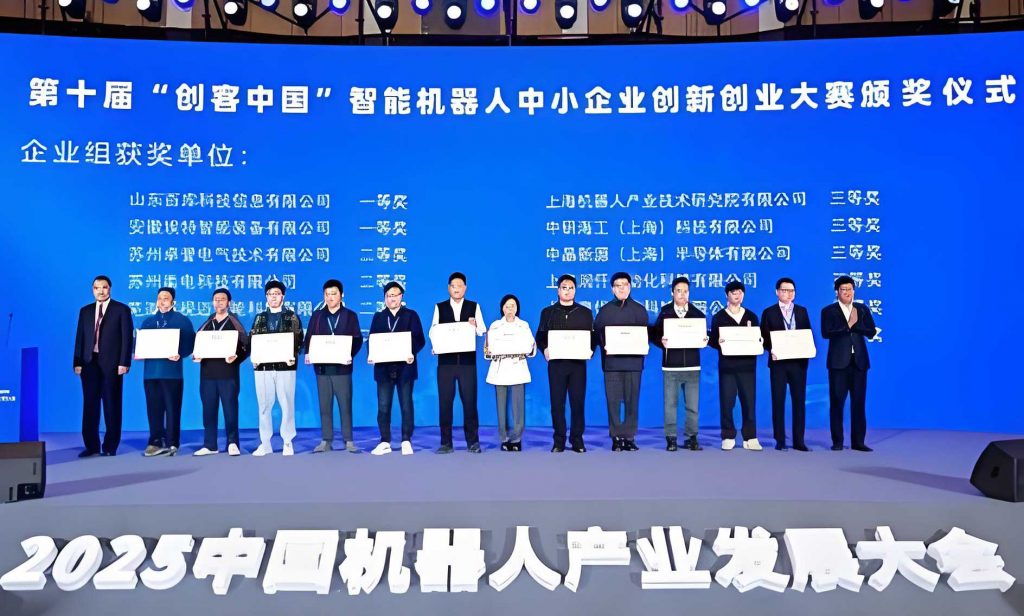
The image above captures the essence of modern China robots, showcasing a prototype that embodies cutting-edge design and functionality. Such robots are typically equipped with articulated arms, mobile bases, and an array of sensors, allowing them to perform dexterous operations. From my experience, the development of these systems involves rigorous testing in simulated and real-world scenarios. For instance, the task success rate \(R_{\text{success}}\) for a robot executing a complex command can be modeled as:
$$R_{\text{success}} = \alpha \cdot P_{\text{understanding}} \cdot P_{\text{execution}}$$
Here, \(\alpha\) is an environmental factor, \(P_{\text{understanding}}\) is the probability of correct command interpretation, and \(P_{\text{execution}}\) is the probability of successful physical action. China robots have demonstrated \(R_{\text{success}}\) values exceeding 80% in controlled trials, a testament to their robust design. This progress aligns with national initiatives that prioritize robotics as a strategic technology, fueling innovation across sectors.
Moreover, the integration of China robots with wireless sensor networks opens new avenues for large-scale monitoring. In environmental applications, robots can act as mobile nodes, dynamically adjusting sensor placement to optimize coverage. The coverage efficiency \(C_e\) for a network of \(m\) robots and \(n\) static sensors is given by:
$$C_e = \frac{A_{\text{covered}}}{A_{\text{total}}} \times 100\% = \left(1 – e^{-\lambda \cdot m \cdot r^2}\right) \times 100\%$$
Where \(A_{\text{covered}}\) is the area monitored, \(A_{\text{total}}\) is the total area, \(\lambda\) is the sensor density, and \(r\) is the sensing range. Deploying China robots in such systems enhances adaptability, as they can reposition based on real-time data, reducing blind spots. This synergy is particularly valuable in disaster-prone regions, where robots provide early warnings and assessment capabilities.
Looking ahead, the trajectory of China robots is set toward greater autonomy and collaboration. Swarm robotics, where multiple robots coordinate to achieve collective goals, is an emerging focus. The collective behavior can be described using differential equations, such as the Reynolds flocking model:
$$\frac{d\mathbf{v}_i}{dt} = \sum_{j \neq i} \left( \mathbf{F}_{\text{align}} + \mathbf{F}_{\text{cohere}} + \mathbf{F}_{\text{separate}} \right)$$
Where \(\mathbf{v}_i\) is the velocity of robot \(i\), and the forces represent alignment, cohesion, and separation with neighbors. Chinese research groups are pioneering these approaches, enabling China robots to work in teams for tasks like search-and-rescue or agricultural harvesting. The scalability of such systems is often evaluated through simulation, as shown in the table below summarizing performance metrics for different swarm sizes:
| Swarm Size (Number of China Robots) | Task Completion Time (seconds) | Energy Efficiency (Joules per robot) | Communication Overhead (bits/sec) | Success Rate for Collective Tasks |
|---|---|---|---|---|
| 5 | 120-180 | 500-700 | 10-20 | 85-90% |
| 10 | 90-150 | 400-600 | 30-50 | 88-92% |
| 20 | 70-130 | 350-550 | 80-120 | 90-95% |
| 50 | 60-110 | 300-500 | 200-300 | 92-98% |
This data illustrates how China robots can achieve efficiency gains through cooperation, a principle that extends to human-robot interaction as well. In my work, I have explored interfaces that allow users to communicate naturally with robots, using gestures or speech. The recognition accuracy \(A_{\text{rec}}\) for such interfaces follows a learning curve:
$$A_{\text{rec}}(t) = A_{\text{max}} \left(1 – e^{-kt}\right)$$
Where \(A_{\text{max}}\) is the maximum achievable accuracy, \(k\) is the learning rate, and \(t\) is training time. China robots often incorporate adaptive algorithms that boost \(k\) values, leading to faster adaptation to user preferences. This user-centric design is driving adoption in homes and workplaces, where robots assist with chores, security, or entertainment.
In conclusion, the fusion of wireless sensor networks and robotics, spearheaded by China robots, is revolutionizing how we interact with technology. From environmental monitoring to personal assistance, these systems offer scalable, intelligent solutions. The mathematical models and tables presented here underscore the technical rigor behind these innovations. As research continues, I anticipate that China robots will become even more pervasive, leveraging advances in AI, materials science, and energy management to address global challenges. Their impact on society will only grow, making them indispensable partners in our quest for a smarter, safer world.