
The global wave of humanoid robotics represents a pivotal convergence of artificial intelligence and advanced mechanical engineering, heralding a new era of automation. For China, the strategic development of “China robots” is not merely an industrial endeavor but a foundational pillar for cultivating new quality productive forces and securing a commanding position in the global technological race. The journey from laboratory prototypes to scalable, economically viable products is fraught with intricate challenges. This analysis delves into the competitive dynamics, core technological hurdles, and strategic pathways essential for the successful industrialization of humanoid robotics in China.
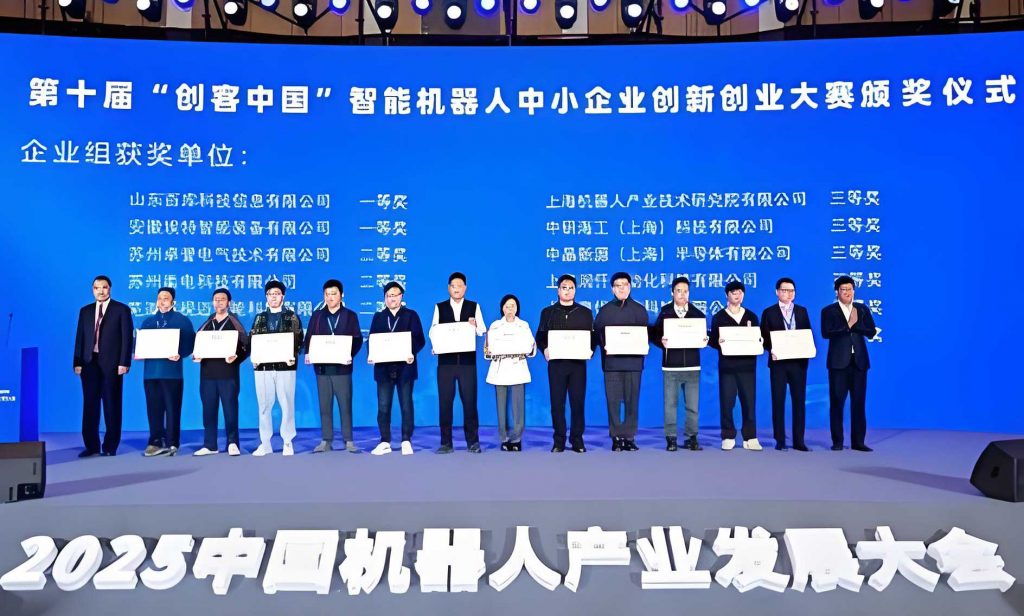
The potential for China robots is immense, projected to grow into a multi-billion dollar market. This potential is actively nurtured by a robust policy framework. Key national initiatives have laid out clear roadmaps, aiming to establish a preliminary innovation system and achieve breakthroughs in core technologies in the near term, with the ambition of building a world-class industrial ecosystem. The explicit inclusion of related foundational technologies in governmental agendas underscores the strategic priority assigned to this future industry, promising mechanisms for increased investment.
At the heart of humanoid robotics lie three interdependent technological pillars that define their capabilities:
- The “Brain”: This encompasses environmental perception, intelligent decision-making, and interaction. Its functions include multi-modal sensor fusion (e.g., vision, LiDAR), task planning, and natural language processing, often powered by large AI models. The core challenge is enabling contextual understanding and autonomous reasoning in unstructured environments.
- The “Cerebellum”: This subsystem is responsible for real-time motion coordination, dynamic balance, and adaptation to complex terrains. It involves sophisticated control algorithms that process sensor feedback to stabilize gait and execute agile movements like jumping or recovering from pushes.
- The “Limbs”: This refers to the physical embodiment—the mechanical structures and actuators. Key components include high-torque-density joint motors, compact reducers (like harmonic drives), and dexterous end-effectors (hands). The design focuses on power-to-weight ratio, durability, and energy efficiency.
The performance of China robots can be modeled as a function of these subsystems: $$P_{robot} = f_{\\text{integration}}(C_{brain}(I, D), C_{cerebellum}(B, A), C_{limbs}(T, E))$$ where $I$ is inference power, $D$ is decision complexity, $B$ is balance robustness, $A$ is agility, $T$ is torque density, and $E$ is energy efficiency.
Landscape of Key Players and Technological Focus
The global and domestic arena features distinct leaders, each with a unique strategic approach. The trajectory of China robots is significantly shaped by the competition and innovation between these entities.
Pioneers of China Robots: A Comparative Analysis
Leading companies within China have carved out significant niches. One prominent player has emerged as an industrialization pioneer, successfully deploying its robots for commercial tasks in real-world settings like automotive factories. Its strength lies in system integration and achieving stable, reliable operation for defined industrial workflows. Another domestic frontrunner has taken a different path, prioritizing extreme dynamic performance and radical cost reduction. Its robots achieve remarkable speeds and acrobatic feats, aggressively lowering price points to explore consumer and general service applications.
The technical parameters highlight these divergent strategies:
| Origin | Key Focus | Max Speed (m/s) | Notable Capability | Commercial Status |
|---|---|---|---|---|
| Domestic Pioneer A | Industrial Integration & Reliability | ~1.1 | Assembly, palletizing, precision tasks | Deployed in factories |
| Domestic Pioneer B | Dynamic Performance & Affordability | >3.0 | High-speed running, backflips | Low-cost unit available |
| Global Leader (e.g., Boston Dynamics) | Advanced Mobility & Agile AI | >5.5 | Parkour, complex object manipulation | Research & development focus |
Decoding the Technology Stack: “Brain,” “Cerebellum,” and “Limbs”
The “Brain” – The Cognitive Gap: A significant challenge for many China robots is the relative underdevelopment of advanced cognitive functions. While motion control has seen rapid progress, the integration of sophisticated AI for complex task planning and real-time adaptation remains a hurdle. The global leader has demonstrated robots that can autonomously perceive, reason, and manipulate unfamiliar objects in chaotic environments—a capability quintessential for general-purpose utility. The evolution for China robots involves moving from pre-programmed scripts to models where a high-level task goal $$G$$ can be decomposed autonomously into a sequence of executable actions $$\\{a_1, a_2, …, a_n\\}$$ based on real-time perception $$S_t$$: $$\\{a_i\\} = \\arg\\max_{a} P(G | S_t, a, \\Theta_{model})$$ where $\\Theta_{model}$ represents the trained parameters of a multi-modal foundation model.
The “Cerebellum” – The Control Paradigm: The global benchmark in dynamic motion control is exceptionally high, with algorithms that model the robot as a complex dynamical system. Balance is often maintained using concepts like the Linear Inverted Pendulum Model (LIPM) or more advanced Whole-Body Control (WBC). The equation for the Center of Pressure (CoP) in a simplified model is critical: $$CoP = \\frac{\\sum_{i}(m_i (\\ddot{z}_i+g) x_i – m_i \\ddot{x}_i z_i)}{\\sum_{i} m_i (\\ddot{z}_i+g)}$$ where $m_i$ is the mass of link $i$, $x_i, z_i$ are its coordinates, and $g$ is gravity. Mastering such real-time control under disturbance is a core competency. Domestic players have shown strong progress in stable walking, but the leap to highly agile, recovery-oriented behaviors is an ongoing R&D frontier for China robots.
The “Limbs” – The Hardware Foundation: The physical prowess of China robots is directly tied to core components. Domestic innovation in joint actuator design has been notable, with companies developing proprietary high-torque-density motors and integrated joint modules. The key metric here is the power density of the actuator: $$\\rho = \\frac{\\tau \\cdot \\omega}{m}$$ where $\\tau$ is the maximum continuous torque, $\\omega$ is the maximum speed, and $m$ is the mass. Achieving a high $\\rho$ is essential for strong, lightweight, and energy-efficient limbs. However, upstream supply chain dependencies on ultra-precision reducers, high-fidelity force-torque sensors, and tactile skins can constrain performance and cost.
Core Challenges in Industrializing China Robots
The path to mass adoption of China robots is obstructed by several interconnected barriers that extend beyond pure technical performance.
| Challenge Category | Specific Manifestation | Impact on Industrialization |
|---|---|---|
| Cognitive & Decision-Making | Limited complex task decomposition, poor environmental generalization, weak human-robot interaction. | Restricts application to simple, structured tasks; hinders deployment in dynamic service sectors. |
| Core Component Dependency | Reliance on imported precision reducers, high-end sensors; domestic alternatives may lag in reliability/lifetime. | Increases unit cost, creates supply chain vulnerabilities, limits design optimization. |
| Scale & Cost | Low production volumes (often <1000 units), high Bill of Materials (BOM) cost. | Prevents economies of scale; keeps selling price prohibitively high for most commercial applications. |
| Innovation Chain Fragmentation | Weak university-industry translation, missing “valley of death” bridging for prototypes. | Slows technology maturation, leads to duplication of effort, underutilizes academic R&D. |
| Intellectual Property Strategy | Imbalanced patent portfolios (hardware-heavy), insufficient overseas filing, gaps in emerging tech (AI/control). | Exposes companies to litigation risk, weakens global competitive position, reduces leverage in cross-licensing. |
The cost structure is a pivotal equation. The total cost $C_{total}$ of a China robot can be broken down as: $$C_{total} = C_{BOM} + C_{R&D/Amort.} + C_{Assembly} + C_{Margin}$$ where $C_{BOM} = \\sum (c_{imported} \\cdot q_i) + \\sum (c_{domestic} \\cdot q_j)$. The high $c_{imported}$ for key components and low production volumes (affecting $C_{Assembly}$ and amortization of $C_{R&D}$) keep $C_{total}$ elevated. Achieving a break-even scale $Q_{BE}$ is critical: $$Q_{BE} = \\frac{Fixed\\ Costs}{Price_{unit} – Variable\\ Cost_{unit}}$$ Current volumes for most China robots are far below a viable $Q_{BE}$ for mass-market pricing.
Strategic Pathways and Recommendations for China Robots
Overcoming these hurdles requires a multi-faceted, coordinated strategy involving government, industry, and academia.
1. Accelerating Intelligentization through Ecosystem Collaboration
Closing the “brain” gap requires focused collaboration. The establishment of government-industry-academia innovation centers dedicated to embodied AI should be scaled. These centers can pool resources to tackle fundamental problems in multi-modal learning and sim-to-real transfer. Furthermore, fostering open-source ecosystems for robot “brains” is crucial. Encouraging contributions to shared datasets, benchmark environments, and algorithm libraries—perhaps incentivized through a recognized “contribution index”—can accelerate collective progress for all China robots, reducing duplication and building on shared foundations.
2. Achieving Hardware Independence via Targeted Support
Building a resilient supply chain for China robots demands policy-guided support for core component manufacturers. This can include R&D subsidies, tax incentives for production, and procurement preferences for domestically sourced parts in public projects. Additionally, fostering deep collaboration between robot integrators and component suppliers to co-develop customized solutions—akin to integrated design and manufacturing in other advanced industries—can optimize performance and cost simultaneously.
3. Bridging the Innovation-Industry Divide
A mechanism is needed to effectively translate academic research into industrial technology for China robots. Models where companies define challenge problems (“enterprise sets the question”) and jointly fund university teams to solve them, with shared IP and downstream revenue rights, align incentives. Crucially, government and industry must co-invest in public or semi-public pilot-scale production (pilot line) facilities. These facilities provide the essential “middle ground” for testing, refining, and de-risking technologies before full-scale factory investment.
4. Forging a Strategic Intellectual Property Front
The IP landscape for China robots must be proactively managed. Leading domestic firms should consider forming patent alliances for mutual defense and cross-licensing in key areas, creating a stronger collective position. There must be a concerted push to file high-quality patents internationally, protecting innovations as China robots target global markets. Support for SMEs is vital, including access to IP strategy consulting and early-warning systems for patent risks. Finally, navigating the complexities of open-source software, which is increasingly vital for robot AI, requires clear governance and compliance strategies to avoid legal pitfalls.
5. Pioneering New Frontiers: The Case for Dexterous Manipulation
While much attention is on locomotion, the next competitive battleground for China robots may well be dexterous manipulation. Investing in affordable, robust, and adaptive robotic hands is a strategic opportunity. The technical formula for a useful hand involves a trade-off: $$U_{hand} = \\frac{Dexterity \\times Robustness}{Cost \\times Control\\ Complexity}$$. Focusing on optimizing this ratio for specific service or light industrial tasks could unlock high-value applications faster than pursuing full general-purpose humanoids. This modular approach allows companies and regions to specialize and create viable products, contributing to the broader ecosystem of China robots.
In conclusion, the industrialization of China robots is at a critical juncture. The convergence of strong policy support, demonstrated technical prowess in mobility, and a vast potential application market creates a unique opportunity. The journey ahead requires a disciplined focus on overcoming the cognitive software gap, securing the hardware supply chain, mastering scale and cost, and strategically managing intellectual capital. By addressing these challenges through collaborative ecosystems and targeted innovation, China robots are poised to transition from impressive prototypes to indispensable partners in industry and society, solidifying their role in the global automation landscape.