
As a researcher deeply embedded in the field of robotics in China, I recently had the opportunity to participate in and analyze a significant national survey. This survey, designed to map the technological and industrial landscape of China robots, gathered insights from hundreds of experts across academia and industry. The findings paint a detailed, introspective picture of our achievements, our bottlenecks, and our path forward. This article synthesizes those insights from a first-person perspective, using data, formulas, and frameworks to articulate the current state and future trajectory of China robots.
The survey’s methodology was comprehensive. A structured questionnaire was distributed nationwide, focusing on both technical and industrial dimensions of China robots. With a high recovery rate of valid responses from leading experts, the results carry considerable weight. The core investigation revolved around several pivotal questions, which I will unpack systematically.
Defining the Core: Technologies and Bottlenecks
The first step in understanding our position is to define what constitutes the “core” of an intelligent robot. When asked to select the key technical indicators, experts converged on a clear set of priorities. This consensus allows us to model the perceived technological importance. We can represent the aggregate expert valuation of a technology \(T\) as:
$$ \text{Importance}(T) = \frac{N_{\text{select}}(T)}{N_{\text{total}}} \times 100\% $$
Where \(N_{\text{select}}(T)\) is the number of experts who selected technology \(T\), and \(N_{\text{total}}\) is the total number of respondents. Applying this to the survey data yields the following hierarchy for China robots:
| Rank | Core Technical Indicator | Importance Score (%) | Corresponding Bottleneck Severity (%) |
|---|---|---|---|
| 1 | Intelligence & Autonomy | >70% | 64.8% |
| 2 | Environmental Perception & Path Planning | >70% | 58.3% |
| 3 | Navigation, Positioning & Control | >70% | 52.1% |
| 4 | Human-Robot Interaction | >50% | 54.2% |
| 5 | Multi-Robot Coordination & Collaboration | >50% | 46.5% |
The fourth column is critical. When asked about the primary technical bottlenecks hindering the development of China robots, experts identified the very same areas. This creates a clear map of challenges: our perceived core competencies are also our most significant hurdles. The bottleneck severity for “Drive & Smart Materials Technology” was also notably high (>50%), indicating a foundational weakness. This suggests a widespread technological gap, not confined to high-level AI but permeating through to core components. The challenge for China robots can be summarized by the inequality:
$$ \text{Bottleneck Index}(T) \approx \text{Importance}(T) $$
Where a high Bottleneck Index for a high-Importance technology signifies a critical strategic priority.
The Developmental Spectrum: From Lab to Factory
Classification provides another lens. Experts showed the highest agreement (58.7%) with a tripartite classification: Industrial, Service, and Special Robots. Assessing the maturity of each category within China reveals a stratified industry. We can define a maturity function \(M(category, stage)\) representing the percentage of experts who place a category in a given development stage.
| Robot Category | Industrialization Stage (%) | Pilot/Testing Stage (%) | Laboratory Stage (%) |
|---|---|---|---|
| Industrial Robots | 58.3% | 33.3% | 8.3% |
| Service Robots | 8.3% | 33.3% | 58.3% |
| Special Robots | 16.7% | 50.0% | 33.3% |
This table is a stark visualization of the journey for China robots. Industrial robots have successfully crossed the chasm to commercialization, a testament to decades of focus in manufacturing automation. Conversely, Service robots remain predominantly in the exploratory, lab-based phase, highlighting the complexity of unstructured environments. Special robots, often used in defense, space, or extreme environments, show an intermediate profile, with half in the testing phase. The weighted average maturity \(\bar{M}\) of the domestic robot ecosystem could be approximated as:
$$ \bar{M} = \sum (w_i \cdot S_i) $$
where \(w_i\) is the market or strategic weight of category \(i\), and \(S_i\) is a numerical score for its dominant stage (e.g., 3 for Industrialized, 2 for Pilot, 1 for Lab). For China robots, \(\bar{M}\) currently leans towards the lower end, pulled down by the service sector.
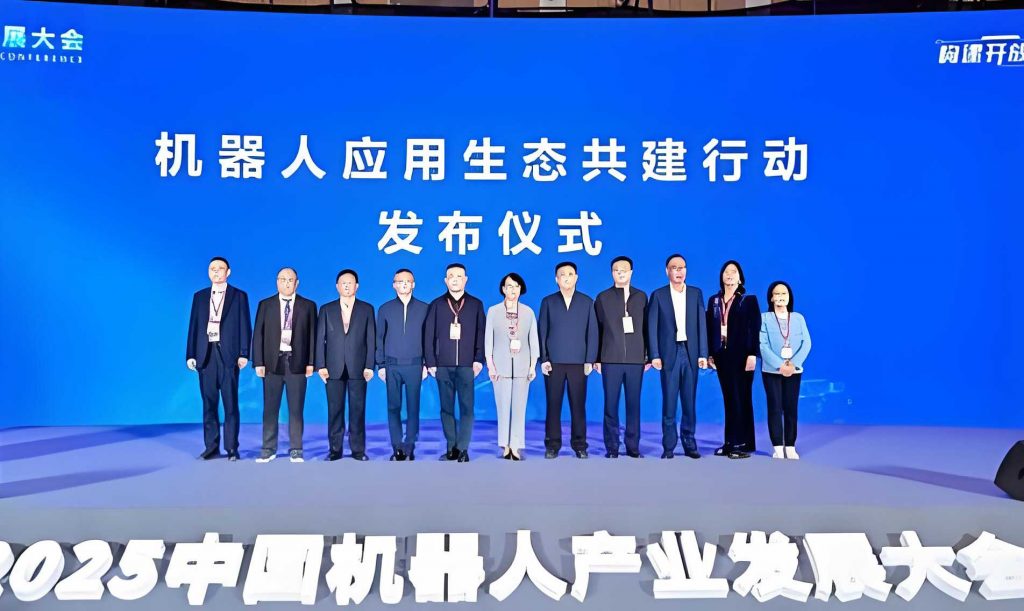
The diversity shown in the image above is what the industry aspires to, yet the data clarifies that for China robots, this diversity is not yet matched by uniform maturity.
The Gap Analysis: Technology, Industry, and Root Causes
No assessment of China robots is complete without a frank international comparison. Experts identified Japan, the USA, and Germany as the undisputed leaders. When quantifying China’s gap with the leading international level, the outlook was sobering: 58.3% believed the technological gap was “relatively large,” and 22.9% considered it “very large.” The industrial gap was viewed as even more pronounced.
However, a nuanced trend emerges over time. A majority (56.3%) believe this gap has been narrowing over the past five years, indicating momentum and catching-up effects in the field of China robots. Yet, a significant minority (22.9%) perceives the gap as widening, suggesting uneven progress across sub-fields.
The survey probed deeply into the root causes. The reasons for the technological gap and the industrial gap were distinct, as summarized below:
| Gap Category | Primary Cause | Expert Consensus (%) | Secondary Cause(s) |
|---|---|---|---|
| Technological Gap | Institutions, Policy, Environment | 47.9% | Talent & Teams (37.5%); R&D Funding (35.4%) |
| Formula: \(G_T \propto P + H + F\) | |||
| where \(P\)=Policy, \(H\)=Human Capital, \(F\)=Funding | |||
| Industrial Gap | Low Level of Core Technologies | 62.5% | Lack of Top-Level Design (41.7%); Talent Shortage in Enterprises (39.6%) |
| Formula: \(G_I \propto C_{low} + D_{missing} + E_{weak}\) | |||
| where \(C\)=Core Tech, \(D\)=Design, \(E\)=Enterprise Capability |
This analysis is crucial. It indicates that while the symptom is technological backwardness, the causes for China robots are systemic. The technological lag is attributed more to macro-factors like policy and talent cultivation systems. The industrial lag is directly linked to the core technology deficit itself, exacerbated by fragmented planning and a lack of skilled personnel within companies. This creates a feedback cycle: weak cores inhibit industry, and a weak industry cannot effectively fund or absorb advanced R&D.
The Strategic Imperative: Recommendations from the Frontlines
Beyond diagnosing problems, the survey elicited a wealth of strategic recommendations. These form a multi-pronged framework for advancing China robots.
1. Policy and Top-Level Design: The overwhelming call is for a coherent, long-term (10-20 year) national roadmap. Experts emphasize the need to “concentrate resources on major tasks,” avoiding the fragmented, duplicate, and short-term project-driven R&D that currently plagues the field. The policy must ensure consistency and focus on fostering indigenous innovation to prevent market dominance by foreign players, as seen in other industries.
2. Reform of R&D Funding and System: There is strong criticism of the current grant application model, deemed unsuitable for engineering projects. Proposals include shifting to a more outcome-based, competitive funding mechanism that supports the best performers post-achievement. A key structural issue identified is the disconnect between research institutes (which hold knowledge) and enterprises (which need it for commercialization). Bridging this “valley of death” requires institutional innovation.
3. Development Model and Path: Experts suggest a hybrid approach. Firstly, adopt a “Korean model” for market acquisition: utilize system integration and application engineering in specific sectors to build market presence. In parallel, emulate the “Japanese model” for technological depth: foster close industry-academia-research collaboration for collective breakthroughs in core components like reducers, servo motors, and controllers. The development equation for China robots thus becomes:
$$ \text{Success} = \text{Integration & Market Access} + \text{Component Breakthrough} $$
Another path highlighted is dual-track: pursuing cutting-edge theoretical research while also promoting mass application in fields like agriculture to create social and industrial pull.
4. Key Breakthrough Areas: The focus must be on the identified bottlenecks. Prioritize R&D in intelligence & autonomy algorithms, high-fidelity environmental perception (especially vision), and precision control. Concurrently, a national-level effort is needed to master the core trio of controller, servo system, and reducer. Development in smart materials and bionic structures is also seen as essential for next-generation China robots.
5. Talent and Discipline Construction: Recommendations span from popularizing robotics in primary education to attracting top global talent. There is also a call to standardize and strengthen robotics as an academic discipline, which is currently dispersed across mechanical, automation, and computer science departments without a unified standard.
| Strategic Pillar | Recommended Action | Expected Impact on China robots |
|---|---|---|
| Governance | Enact a unified, long-term National Robotics Roadmap. | Reduces fragmentation, aligns resources, ensures policy stability (\( \downarrow G_T \)). |
| Innovation System | Reform funding towards post-result competition; strengthen industry-academia links. | Improves R&D efficiency, accelerates commercialization (\( \uparrow \) Technology Transfer). |
| Technical Focus | National project on core components; intensify AI & perception research. | Directly raises the level of \(C\) (Core Tech), reducing \(G_I\). |
| Talent Pipeline | Integrate robotics into STEM curriculum; create special incentives for researchers. | Builds sustainable human capital \(H\), addressing a root cause of \(G_T\). |
A Regional Lighthouse: The Case of Liaoning
An interesting facet of the survey was the specific assessment of Liaoning province. The data reveals a strong positive perception: nearly 90% of national experts consider Liaoning’s robotics research level to be at the “leading” or “advanced” national level. A similarly high percentage (87.5%) hold this view for its industrialization level. This indicates that Liaoning has managed to build a relatively robust ecosystem for China robots, potentially serving as a model for integrated research and industrial development. The concentration of key research institutes and historical industrial base seems to have created a comparative advantage.
Conclusion: Navigating the Complex Trajectory
This introspective survey crystallizes the journey of China robots at a critical juncture. We have achieved industrialization in a foundational segment (industrial robots), possess a recognized research base in certain regions, and are witnessing a narrowing, though still substantial, gap with global leaders. Our challenges, however, are systemic and interconnected: core technological weaknesses rooted in policy, funding, and talent issues, which in turn constrain industrial scale and sophistication.
The path forward is not merely about investing more in R&D, but about restructuring the innovation ecosystem itself. It requires the strategic patience to execute a long-term roadmap, the wisdom to reform research funding mechanisms, the courage to focus on core component breakthroughs, and the dedication to build a talented workforce from the ground up. The future of China robots will be determined by how well we can translate this collective expert diagnosis into coordinated, sustained national action. The momentum is present, but the systemic hurdles remain the defining battlefront.