
As I delve into the dynamic landscape of global automation, I am continually astounded by the meteoric rise of the China robots sector. From a nascent industry to a formidable global contender, the trajectory of China robots exemplifies strategic planning, massive investment, and technological ambition. In this analysis, I will explore the regional ecosystems driving this growth, dissect the market forces at play, and project the future path of China robots. The story of China robots is not merely one of manufacturing scale; it is a narrative of innovation, integration, and intelligent transformation reshaping the world’s industrial base.
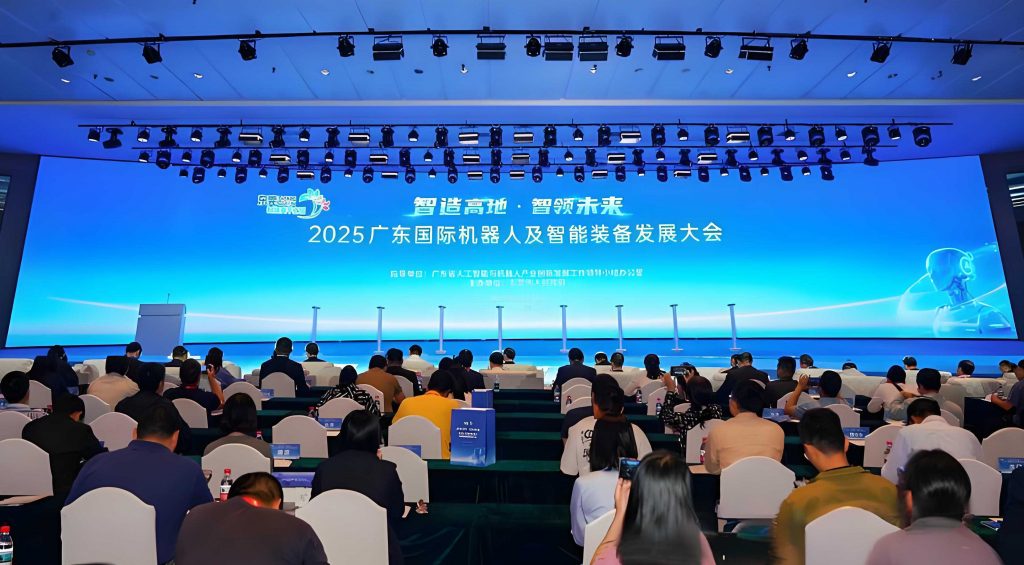
The foundation of the China robots revolution is meticulously laid through coordinated regional development strategies. Across the nation, clusters have emerged, each with distinct specializations and ambitious targets. These hubs are not operating in isolation; they form a interconnected network propelling the entire China robots industry forward. To encapsulate this geographical blueprint, I have compiled key data into the following table, which highlights the scale and focus of major clusters dedicated to advancing China robots.
| Region / Cluster | Strategic Development Goals for China Robots | Planned Industrial Output (in billion CNY) | Notable Industrial Park Initiatives |
|---|---|---|---|
| Eastern Coastal Metropolis (e.g., Shanghai area) | To establish a national R&D, design, manufacturing, and service hub; an international city for technology transfer and demonstration. | 200 (2015 target), 600-800 (2020 target) | “2+X” spatial layout: Core agglomeration zones in Pudong and Baoshan districts, with multiple specialized parks. |
| Southern Jiangsu Industrial Belt (e.g., Suzhou, Changzhou) | To develop specialized industrial robot sectors; to build advanced national bases for robotics. | Exceeding 300 (Kunshan base, 2015); 530+ (Changzhou, 2015 target); 136 (Zhangjiagang, 2013) growing to 300. | Established robotics and intelligent equipment industrial parks driving high concentration of China robots manufacturing. |
| Yangtze River Inland Hub (e.g., Chongqing area) | To create a domestically significant and globally influential robotics industry base; to aspire towards a “global robotics capital.” | Targets aligned with base construction, specific figures often integrated into broader advanced manufacturing goals. | Layout of “One Base with Three Functional Zones”: encompassing industrial, service, and special robotics districts. |
| Pearl River Delta Core (e.g., Guangzhou, Shenzhen) | Guangzhou: To be a regional center for R&D, production, and application. Shenzhen: To be a world-renowned base for manufacturing, innovation, and service in robotics and smart gear. | Shenzhen: Industry value-added exceeding 2000 (2020 target for robotics, wearables, smart equipment). | Guangzhou: Plan for 2-3 industrial robot parks. Shenzhen: Strengthening in core components like servos and controllers. |
| Pearl River Delta Manufacturing Centers (e.g., Dongguan, Foshan) | Dongguan: To become a nationally competitive industrial robot base and smart manufacturing demonstration city. Foshan: To grow its intelligent manufacturing sector. | Dongguan: 350 (2016 target), 700 (2020 target). Foshan: Over 1000 (2015 target for smart manufacturing). | Dongguan: Focus on application integration; developing multiple industrial parks and agglomeration zones, including a major international robotics base in Songshan Lake. |
| Other Major Regional Initiatives | Various provinces aim for large-scale clusters: e.g., an internationally competitive base in the Northeast; a national-level cluster in the North; a major northern R&D and manufacturing center; a national innovation base in the East. | Targets often in the hundreds of billions, e.g., 2000 billion for smart manufacturing equipment in a central province by 2017. | Widespread establishment of specialized robotics industrial parks and innovation bases across the country. |
This table merely scratches the surface of the ambition behind China robots. The numerical targets are staggering, reflecting a national consensus on the strategic importance of automation. The growth trajectory can be modeled mathematically. If we denote the industrial output of China robots at time \( t \) as \( I(t) \), the compound annual growth rate (CAGR) required to meet these targets is formidable. For a region aiming to grow from an output \( I_0 \) to \( I_n \) in \( n \) years, the CAGR \( r \) is given by:
$$ r = \left( \frac{I_n}{I_0} \right)^{\frac{1}{n}} – 1 $$
Taking the example of a cluster targeting an increase from 200 billion to 800 billion in 5 years (2015-2020), the required CAGR is:
$$ r = \left( \frac{800}{200} \right)^{\frac{1}{5}} – 1 = (4)^{0.2} – 1 \approx 1.3195 – 1 = 0.3195 $$
$$ r \approx 32\% \text{ per annum} $$
Such sustained high growth rates underscore the explosive phase of the China robots industry. This is not hypothetical; market data confirms the momentum. International Federation of Robotics statistics show that the China robots market has consistently grown at over 40% annually for several years. In 2013, nearly 37,000 industrial robots were sold in China, accounting for about one-fifth of global sales and making it the world’s largest market. The demand is projected to double in the subsequent two-year period. We can express this projected growth simply: if \( S_{2013} \) is the 2013 sales volume, then the projected sales \( S_{2015} \) is:
$$ S_{2015} \approx 2 \times S_{2013} = 2 \times 37,000 = 74,000 \text{ units} $$
This growth formula, \( S_{t+2} = 2 \cdot S_t \), highlights the immense velocity of adoption for China robots.
However, a critical metric reveals the immense potential that still lies ahead for China robots: robot density. While sales volume leads the world, penetration per worker remains low. Robot density \( D \) is defined as the number of operational industrial robots per 10,000 employees in the manufacturing sector:
$$ D = \frac{N_{\text{robots}}}{N_{\text{workers}}} \times 10,000 $$
For China robots, this density was merely 23, compared to a world average of 55 and over 300 in the leading nation. This gap, \( \Delta D \), represents the deployment frontier:
$$ \Delta D = D_{\text{world avg}} – D_{\text{China}} = 55 – 23 = 32 $$
$$ \Delta D_{\text{leader}} = D_{\text{leader}} – D_{\text{China}} = 332 – 23 = 309 $$
This indicates that to reach just the global average density, the installed base of China robots needs to grow by a factor of approximately \( \frac{55}{23} \approx 2.4 \), ignoring workforce changes. The growth potential is colossal, driven by fundamental economic drivers. I analyze these drivers through a multi-factor framework where the adoption rate \( A \) of China robots is a function of several variables:
$$ A = f(G, C, L, W, H) $$
Where:
\( G \) = Globalization pressures,
\( C \) = Shortened product life cycles,
\( L \) = Aging demographics,
\( W \) = Rising wage levels,
\( H \) = Health, safety, and environmental regulations.
The cost-benefit analysis increasingly favors China robots. The total cost of ownership (TCO) for a robot system is decreasing due to scale and localizing supply chains, while the cost of human labor \( C_L \) rises steadily. The threshold for automation becomes economically viable when:
$$ \text{TCO}_{\text{robot}} < C_L \times T \times E + C_{\text{other}} $$
Where \( T \) is the operational time horizon, \( E \) is equivalent labor units replaced, and \( C_{\text{other}} \) represents costs related to human management, variability, and risk. The precision, consistency \( \sigma_{\text{robot}} \ll \sigma_{\text{human}} \), and ability to operate in harsh environments (\( \text{Env}_{\text{tolerance}} \)) are intrinsic advantages of China robots that add qualitative value beyond direct cost.
Recognizing this, national industrial policy has provided a powerful tailwind. The 2013 guideline from the Ministry of Industry and Information Technology laid a strategic framework, explicitly aiming to foster and support domestic industrial robotics. This catalyzed an investment boom. Since 2014, numerous listed companies have ventured into robotics and intelligent automation projects, with a significant majority being first-time entrants into the China robots domain. This influx of capital accelerates R&D and scaling.
Technological advancement is central to the saga of China robots. A pivotal development has been the formation of industrial technology innovation alliances. One prominent alliance, established with a leading automation corporation as its chair, aims to create a collaborative innovation platform. Its mission is to pool technical resources, establish an intellectual property system, and enhance the market competitiveness of Chinese robotics enterprises. The alliance focuses on breakthroughs in core technologies for both industrial and service robots, followed by commercialization. This model accelerates innovation cycles. The progress in core components—controllers, servo drives, precision reducers—is crucial. We can model technological maturity \( M \) as a function of R&D investment \( R \), time \( t \), and collaboration efficiency \( \eta \):
$$ M(t) = M_0 + \eta \int_{0}^{t} R(\tau) \cdot K(\tau) \, d\tau $$
Where \( M_0 \) is initial capability, \( K(\tau) \) represents knowledge stock, and \( \eta \) is enhanced by alliances. The localization rate \( \lambda \) for core components is a key performance indicator for the China robots supply chain:
$$ \lambda = \frac{\text{Value of Domestically Produced Core Components}}{\text{Total Value of Core Components Used}} \times 100\% $$
This rate has been improving significantly, reducing dependence and cost.
The financial markets vividly reflect the optimism surrounding China robots. The robotics sector in the A-share market has shown sustained strength. Analysts point to the expanding application fields for industrial China robots and the notable progress in core part localization as signs the industry is in a period of explosive growth. Furthermore, the potential for smart service robots to enter homes presents a new frontier. Investment logic often centers on companies with capital and technological advantages in both industrial and service robotics. While I cannot cite specific listed companies per the guidelines, the sector encompasses firms involved in robotics integration, core component manufacturing, and automation solutions.
To quantitatively summarize the market expansion and regional contributions to the China robots ecosystem, consider the following table which synthesizes growth projections and cluster dynamics:
| Metric / Dimension | Past Performance / Base (Circa 2013-2015) | Projection / Target (2020 Horizon) | Implied Growth Factor & Notes |
|---|---|---|---|
| National Annual Robot Sales Volume | ~37,000 units (2013) | Projected to double by 2015 (~74,000), then continue growing. | Factor >2 over 2 years; CAGR >40% sustained. |
| Aggregate Industrial Output of Major Clusters | Hundreds of billions CNY across key regions (e.g., 270+ in Changzhou, 300+ in Kunshan). | Targets summing to well over 2000 billion CNY from listed regional plans. | Collective output target suggests a tripling or more of cluster-scale activity. |
| Robot Density (Robots per 10k Manufacturing Workers) | 23 | Implicit target is rapid increase towards global avg (55) and beyond. | To reach 55, installed base must grow ~2.4x, a key driver for China robots deployment. |
| Policy & Investment Momentum | National guideline issued (2013); start of corporate investment wave. | Deepened policy support; full maturation of new industrial parks and alliances. | Transition from policy launch to widespread implementation and ecosystem integration. |
| Technological Focus | Initial emphasis on industrial robot application integration and assembly. | Increased mastery in core components; push into advanced service and special robots. | Value chain movement upstream into high-margin components and new product categories. |
The evolution of China robots is thus a multi-variable optimization problem for the national economy. The objective function \( U \) could be framed as maximizing industrial competitiveness, employment quality, and technological sovereignty:
$$ \max U = \alpha \cdot \text{Productivity Gain} + \beta \cdot \text{Tech Leadership} – \gamma \cdot \text{Transition Cost} $$
Subject to constraints:
$$ \text{Productivity Gain} = g(\text{Robot Deployment}, \text{Integration Depth}) $$
$$ \text{Tech Leadership} = h(\text{Patents, Core Component } \lambda, \text{Standards Influence}) $$
$$ \text{Transition Cost} = c(\text{Workforce Reskilling}, \text{Capital Allocation}) $$
Where \( \alpha, \beta, \gamma \) are policy weightings. The current trajectory suggests heavy weighting on productivity and technology gains.
Looking forward, the path for China robots is set toward greater sophistication and global integration. The clusters will likely specialize further, creating a robust internal supply chain. The innovation alliances will be critical in overcoming the remaining technical hurdles in high-performance controllers, advanced sensors, and AI-driven robotics software. The formula for future success of China robots lies in combining scale with innovation:
$$ \text{Future Global Share} \propto (\text{Current Market Scale}) \times (\text{Innovation Rate}) \times (\text{Policy Support Multiplier}) $$
Furthermore, the convergence with technologies like the Internet of Things (IoT) and 5G will unlock new applications for China robots in logistics, healthcare, and personal services. The development of collaborative robots (cobots) that work safely alongside humans will expand the deployment scenarios. The economic model for service robots entering households will depend on cost, usability \( u \), and perceived value \( v \):
$$ \text{Adoption Rate}_{\text{home}} = k \cdot \frac{u \cdot v}{\text{Cost}} $$
Where \( k \) is a constant scaling factor for market readiness. China robots developers are poised to compete aggressively in this space due to massive home market data and manufacturing agility.
In conclusion, my analysis confirms that the rise of China robots is a defining industrial phenomenon of the early 21st century. It is driven by a powerful combination of top-down strategic planning, bottom-up entrepreneurial investment, and compelling macroeconomic drivers. The regional clusters, with their ambitious targets, are the engines of this growth. The technological catch-up, though ongoing, is progressing rapidly through collaborative models. While challenges such as achieving higher robot density, fully mastering core technologies, and managing societal transition remain, the momentum is undeniable. The narrative of China robots is transitioning from one of quantity to one of quality and innovation. As the industry continues its explosive growth, it will not only transform Chinese manufacturing but also significantly reshape the global robotics competitive landscape. The continued emphasis on research, development, and strategic clustering ensures that China robots will remain at the forefront of the global automation discourse for decades to come.