
Contemporary artificial intelligence is undergoing a fundamental paradigm shift. The classical computational and representational view of intelligence—which treats cognition as abstract symbol manipulation performed inside a detached brain—is being challenged by a phenomenological perspective that places embodiment at the very core of intelligent behavior. In this article, I argue that intelligence is not the product of a disembodied computational process but rather emerges from the dynamic coupling between an agent and its environment through sensorimotor loops, situated action, and interactive sense-making. The humanoid robot, as the most visible experimental platform of embodied AI, reveals both the promises and the limits of this new paradigm. By examining the sensorimotor, situated, and interactive dimensions of embodiment, I will show that the humanoid robot redefines what a robot can be, while also exposing deep ontological gaps that prevent it from replicating human-like cognition. My aim is to construct a phenomenological and ontological framework for embodied artificial intelligence—one that illuminates the structural tension among body, intelligence, and world, and calls for sustained ethical vigilance in the age of intelligent machines.
1. From Disembodied to Embodied Intelligence
The classical tradition in cognitive science, particularly in the decades following the advent of digital computing, conceived of intelligence as rule-governed symbol manipulation. According to this view, the physical substrate—whether a biological brain or a silicon chip—is irrelevant to the nature of cognition. The mind is a computer; thinking is computation; perception is input; action is output. This “disembodied” paradigm has produced impressive results in well-defined tasks such as chess, theorem proving, and database querying, but it has failed spectacularly in dealing with the open-ended, noisy, and ambiguous situations that characterize real-world interaction.
One of the strongest critiques of this paradigm came from the tradition of phenomenology, which insists that human experience is always embodied, situated, and directed toward a world. A crucial insight is that our most basic way of knowing the world is not through explicit representation but through skillful coping—the pre-reflective, habitual, and flexible ways in which our bodies respond to the demands of the environment. When I reach for a cup of coffee, I do not compute its coordinates and then issue motor commands. Instead, my body adjusts, anticipates, and coordinates fluidly with the affordances of the situation. This kind of intelligence cannot be captured by a set of explicit rules, because it rests on a background of bodily familiarity that is never fully formalizable.
This critique has given rise to a research program known as embodied cognition. The central thesis can be stated as follows: cognition depends not only on the brain but on the whole body, and the body shapes the very content and structure of thought. In this view, perception is not the passive reception of sensory data; it is an active exploration of environmental possibilities. Action is not the final output of a cognitive process; it is part of the process itself. Cognition is for action, and action is through the body. The body is not a peripheral device attached to a central processor; it is the medium through which the world becomes meaningful.
The shift from disembodied to embodied intelligence has profound consequences for artificial intelligence. If intelligence is grounded in bodily interaction, then an AI system must also be embodied—it must have a body that constrains and enables its interactions, it must be situated in an environment that offers the right kind of affordances, and it must be able to participate in social interactions that rely on shared bodily rhythms and mutual understanding. This is where the humanoid robot becomes an indispensable experimental instrument. By building machines that approximate the human bodily form, we are not merely trying to imitate human appearance; we are probing the extent to which body morphology, sensorimotor dynamics, and social presence contribute to the emergence of intelligent behavior.
However, the humanoid robot also poses a radical question: can a robot’s body, even one that looks human, ever be the ground for genuine cognition? Or does the human form carry a hidden, pre-reflective depth that no functional simulation can reach? To answer this, I need to distinguish three levels of embodiment that have emerged in the recent literature. I call them sensorimotor embodiment, situated embodiment, and interactive embodiment. These levels are not independent modules but interlocking aspects of a single dynamic process. Yet, for analytical clarity, I will treat them separately before showing how they converge in the humanoid robot.
2. Sensorimotor Embodiment as the Cognitive Foundation
The most basic level of embodiment is the sensorimotor loop. Cognition at this level arises from the continual coupling between an agent’s sensory inputs and its motor outputs. The body is not a neutral conduit that transmits signals from the world to the brain and then executes commands. Rather, the morphology of the body determines which environmental features are salient, which actions are possible, and which patterns of interaction can be learned.
Maurice Merleau-Ponty famously argued that the body is an “intentional arc” that projects itself into the world through movement and perception. Before any explicit thought, the body already understands the world in terms of “can do” and “cannot do”. This understanding is not represented in a symbolic code but is enacted in the body’s dynamic orientation. For example, stepping onto a moving escalator requires a continuous adjustment of posture and gait that is entirely pre-reflective. The body “knows” how to do it, but this knowledge is not a proposition that can be written in a formal language.
In artificial systems, this insight translates into the principle of morphological computation. Rather than relying on a central processor to solve every control problem, a robot’s body itself can perform significant computational work. The spring-like properties of a leg, the passive compliance of a joint, or the shape of a foot can simplify the control problem enormously. Consider a humanoid robot walking on uneven terrain. If every step required explicit planning and precise torque commands, the computational burden would be immense. But if the legs are designed with compliant materials that absorb shock and return energy, the robot can achieve stable locomotion with far less computation. The body, in this case, is not just an actuator system; it is a computational resource.
This can be formalized in a simple equation. Let \(S\) be the sensory state, \(M\) the motor command, and \(B\) the body morphology. The overall behavior \(B_t\) at time \(t\) is a function of the controller \(C\) and the body dynamics \(D\):
$$\dot{x}(t) = f_{\text{controller}}(x(t), S(t)) + f_{\text{body}}(x(t), M(t), B)$$
where \(x(t)\) is the internal state, \(f_{\text{controller}}\) is the computational contribution of the neural or algorithmic controller, and \(f_{\text{body}}\) is the contribution of the physical body itself. The key insight is that \(f_{\text{body}}\) is not negligible; it often does most of the work. In a humanoid robot, the mechanical structure, the mass distribution, the joint friction, and the elasticity of the actuators all shape the dynamics of movement in ways that can replace or augment explicit computation.
A classic example is the use of passive dynamic walkers. These simple mechanical devices can walk down a slight slope with no motors and no controllers at all. Their body dynamics alone produce a natural gait that mimics human walking. The lesson for humanoid robotics is profound: if we want a robot to move gracefully and adaptively, we should not treat the body as an obstacle to be controlled but as a partner in computation. The body is a medium of intelligence, not merely a vehicle for it.
However, sensorimotor embodiment alone is not sufficient for full-blown intelligence. A humanoid robot that can walk, balance, and even run still lacks any understanding of what it is doing. Its movements are meaningful to us, but are they meaningful to it? To address this, we need to consider the second dimension of embodiment: the situated context in which action unfolds.
3. Situated Embodiment and the Generation of Meaning
Meaning, in the phenomenological tradition, is not something that resides in the head of an agent. It is a property of the agent-environment system. The environment offers possibilities for action, and these possibilities are perceived directly in terms of the agent’s bodily capabilities. James Gibson called these possibilities affordances. A chair affords sitting, a door affords opening, a path affords walking. Affordances are not objective properties of the physical world, nor are they subjective mental projections; they are relational properties that emerge from the fit between an organism’s body and its niche.
For a humanoid robot, situated embodiment means that its cognitive processes must be embedded in a specific physical and social environment. The robot cannot rely on abstract, context-free rules to interpret the world; it must use its body to actively sample the environment, to test hypotheses, and to discover which affordances are relevant to its current goals. This requires a deep integration of perception and action, where the robot’s motor system is not merely a response to perceptual input but a way of structuring perceptual input in the first place.
The table below summarizes the differences between a classical, representation-based approach and a situated, affordance-based approach to robot intelligence.
| Aspect | Classical Approach | Situated Embodied Approach |
|---|---|---|
| Unit of analysis | Symbols, rules, representations | Agent-environment coupling |
| Perception | Passive input → internal model | Active exploration → affordance detection |
| Action | Output after computation | Co-constituent of cognition |
| Context | Background noise to be removed | Constitutive of meaning |
| Role of body | Input/output channel | Computational and experiential medium |
| Failure mode | Brittle in novel situations | Flexible, adaptive, but sometimes messy |
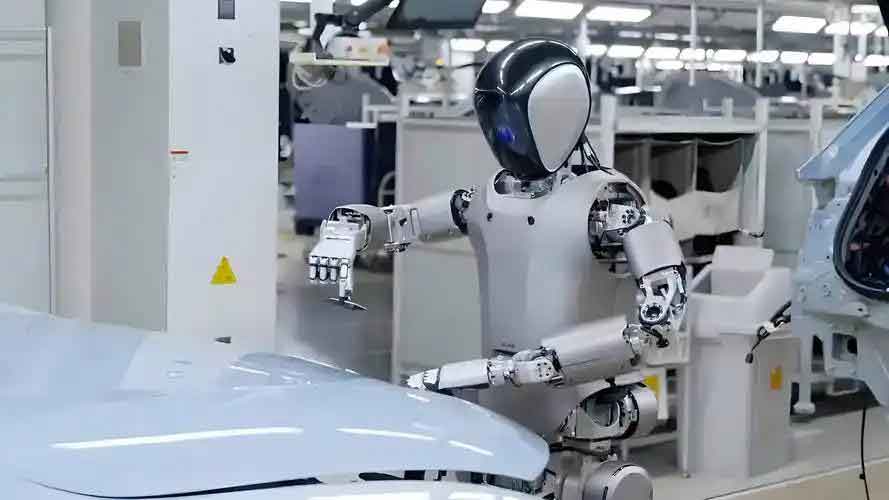
The humanoid robot, in this perspective, is an agent that is thrown into a world that was designed for human bodies. Its human-like morphology gives it immediate access to a wide range of human affordances: it can sit on human chairs, grasp human tools, and navigate human buildings. This is a practical advantage from an engineering perspective, because it allows the robot to operate in environments that are already structured for human needs. But it also raises a deeper issue: is the robot’s world the same as ours?
Consider a humanoid robot in a kitchen. It can recognize a cup, pick it up, and place it in a dishwasher. But does it understand what a cup is for? Does it grasp the social norms that surround the use of a cup, such as the fact that cups are shared, cleaned, and often given as gifts? A purely sensorimotor robot might learn to manipulate cups perfectly without any sense of their significance. Situated embodiment requires more than motor dexterity; it requires that the robot’s actions are embedded in a web of meaningful relations that extend beyond the immediate task.
This leads to the question of how meaning can be generated in an artificial system. In biological organisms, meaning is rooted in needs, drives, and the maintenance of viability. A human body is not a neutral observer of the world; it is a living organism that must regulate its internal states, avoid danger, seek nourishment, and reproduce. The robot, by contrast, has no intrinsic needs. Its goals are imposed from the outside by its programmers. This is a fundamental difference, and it has profound consequences for the nature of meaning in artificial cognition.
Some researchers attempt to overcome this by designing robots with “artificial needs” or “intrinsic motivation”. For example, a robot could be rewarded for increasing its predictive accuracy, thereby developing a curiosity-like drive that pushes it to explore novel situations. This is a promising direction, but it still falls short of the existential concerns that give human meaning its weight. Understanding this limitation is crucial for the philosophy of artificial intelligence.
4. Interactive Embodiment as a Paradigm of Social Cognition
The third dimension of embodiment takes us beyond the isolated agent-environment system and into the realm of intersubjectivity. Human intelligence is inherently social. We learn from others, we coordinate our actions with them, we share attention, emotions, and goals. The phenomenological tradition speaks of intercorporeality—the mutual resonance between bodies that makes social understanding possible. Before we infer what another person is thinking, we already sense it through their posture, gait, gestures, and facial expressions. This bodily attunement is the bedrock of all social communication.
For humanoid robots, interactive embodiment is the highest and most demanding level. It requires the robot to not only perceive and act in a physical environment but to engage in dynamic, co-constructed interactions with humans and other robots. In such interactions, the meaning of an action is not fixed in advance; it emerges from the reciprocal exchange of cues and responses. A wave of the hand can be a greeting, a farewell, a request for attention, or an attempted interruption, depending on the context and the mutual understanding of the participants.
A key concept here is participatory sense-making. Two agents in interaction do not simply exchange information; they create a shared domain of meaning that neither could produce alone. This process involves mutual adjustment, turn-taking, and continuous recalibration. For a humanoid robot to participate in this kind of interaction, it must be able to read the emotional tone of a situation, to respond with appropriate timing, and to express intentions through its own bodily actions. This is far more difficult than any purely computational task.
Let me formalize this interactional dynamic with a simple model. Suppose we have two agents, \(A_1\) and \(A_2\). Each has an internal state \(x_i\), a sensory stream \(s_i\), and a motor output \(m_i\). The interaction is a coupled dynamical system:
$$\begin{aligned}
\dot{x}_1 &= F_1(x_1, s_1, m_1) \\
\dot{x}_2 &= F_2(x_2, s_2, m_2) \\
s_1 &= H_1(x_2, m_2) \\
s_2 &= H_2(x_1, m_1)
\end{aligned}$$
Here, \(H_i\) represents the sensor coupling—how each agent perceives the other’s actions. The crucial point is that the sensory stream of each agent is not determined by an objective external world but by the actions of the other agent. This creates a closed loop, where the internal states of both agents co-evolve. In a successful interaction, the loop achieves a certain coherence, resulting in mutual understanding. If the loop becomes unstable, the interaction may break down, leading to confusion or conflict.
The humanoid robot, with its human-like face, hands, and body, is uniquely positioned to engage in such interactive loops. Its physical appearance allows humans to project expectations onto it, and it can exploit these expectations to establish rapport. Social robots like Pepper and Furhat have demonstrated that even simple expressive behaviors can evoke strong emotional responses in humans. But there is a risk of illusion: the robot might appear to understand, while in truth it is only following a script. This is the classic problem of “making the chatbot as good as possible” without genuine understanding.
The following table outlines the three dimensions of embodiment and their implications for the humanoid robot.
| Dimension | Core idea | Humanoid robot instantiation | Open problem |
|---|---|---|---|
| Sensorimotor | Body morphology computes; sensorimotor loops generate pre-reflective skills | Dynamic walking, grasping, balancing using compliant actuators | How to make the body more adaptive and self-organizing |
| Situated | Affordances structure meaning; context shapes action | Operating in human-designed environments, using object affordances | How to generate intrinsic motivation and genuine needs |
| Interactive | Co-construction of meaning through bodily coupling | Face-to-face dialogue, joint attention, emotional resonance | How to achieve authentic mutual understanding, not mere simulation |
5. The Humanoid Robot as a Redefinition of the Robot
What does the humanoid robot teach us about the nature of robots in general? The answer is: it redefines the very notion of a robot from a programmed tool into an embodied, situated, and interactive agent. Traditional robots are designed for precision and repeatability in structured environments. They are essentially sophisticated typewriters: they perform fixed sequences of operations with minimal regard for context. The humanoid robot, in contrast, is designed for variability and flexibility in open-ended environments. It must be able to adapt to new situations, to deal with uncertainty, and to cooperate with humans who are not trained to interact with machines.
This redefinition has several aspects. First, the humanoid robot blurs the boundary between hardware and software. Its intelligence is not located in a central brain but is distributed across its entire body. The limbs, joints, and sensors are not merely peripherals; they are active participants in the cognitive process. This is a concrete implementation of the principle of morphological computation. A humanoid robot’s ability to maintain balance, for example, emerges from the coordination of its mechanical structure, its sensor feedback, and its control algorithms—none of which can be separated from the others.
Second, the humanoid robot extends the concept of the robot from an instrument of labor to a social companion. As robots enter homes, schools, and hospitals, their roles change. They are no longer just tools to be used but agents to be interacted with. This shift is accompanied by new ethical considerations. If a robot is designed to elicit trust, empathy, and even attachment, what responsibilities follow for its designers? Can a robot deceive us by appearing to feel emotions when it does not? The humanoid form increases the risk of anthropomorphism, making us more likely to attribute human qualities to the machine.
Third, the humanoid robot forces us to reconsider what it means for a system to be intelligent. If a robot can pass a Turing test in a physical interaction—if it can make us laugh, comfort us when we are sad, and help us with complex tasks—should we say it is intelligent? Or is there something essential that is still missing? I believe the answer lies in the distinction between functional simulation and genuine experience. The humanoid robot can simulate many aspects of human intelligence, but it cannot share our existential condition. It does not fear death, feel joy, or wonder at the stars. Its intelligence, at least at present, is a shadow of ours—useful, but not the same.
6. The Limits of Humanoid Embodiment
Despite the impressive progress in humanoid robotics, there remain fundamental obstacles to achieving true embodied intelligence. These obstacles are not merely technical but philosophical. Let me enumerate some of the most important limitations.
| Limitation | Description | Example |
|---|---|---|
| Lack of intrinsic needs | Robots do not have biological drives, self-preservation instincts, or existential concerns | A humanoid robot may “care” about battery level but does not fear running out of battery |
| No pre-reflective world familiarity | Robots have not grown up in a human environment; their common sense is hand-coded or learned | A robot cannot know that a chair is for sitting unless it has extensive training data |
| Absence of sentience | No subjective experience, no qualia, no inner felt life | Robot can say “I am happy” but does not feel happiness |
| Immune to social norms | Robots may follow rules but do not internalize values | A robot may not be embarrassed in public |
| No historical identity | Robots lack a personal narrative that extends over a lifetime | A robot cannot remember what it felt like to be a child |
The most critical limitation is the absence of a transcendental structure of bodily experience. In phenomenology, the body is not just an empirical object; it is the horizon of all experience. The body’s two-fold structure—being both subject and object, both perceived and perceiving—constitutes the condition of possibility for experiencing a world at all. A humanoid robot has a body-object, but it does not have a body-subject. It is a thing in the world, not a being through which the world appears.
To make this clearer, consider the phenomenon of pain. Pain is not just a signal that the body is damaged; it is a privative experience that reorganizes the entire field of awareness. A humanoid robot can be equipped with pain sensors that cause it to withdraw its hand from a hot surface. But the robot does not suffer. It does not experience the unbearable quality of pain, the urge to escape, or the memory of pain that changes future behavior. Without this lived dimension, the robot’s pain is a mere functional imitation.
Another way to see the gap is through the concept of intentionality. Human mental states are about something; they point beyond themselves. A thought is always a thought of something. In the phenomenological tradition, intentionality is not a property of mental states alone but is grounded in the body’s directedness toward the world. The body reaches out, grasps, and constitutes meaning. A robot, by contrast, has intentionality only in a derivative sense. Its internal states are causally connected to external objects, but they do not exhibit intrinsic aboutness. The robot does not mean anything by its movements; it is the designer who assigns meaning to them.
These limitations do not mean that humanoid robot research is without value. On the contrary, they provide us with a lens through which we can better understand human intelligence. By trying to reverse-engineer the human body, we discover how deeply our cognition is shaped by our biological, existential, and social condition. The failures and successes of humanoid robots are equally informative.
7. Toward a Phenomenological and Ontological Foundation for Embodied AI
If we take the phenomenological critique seriously, what would it mean to build an embodied AI that is not merely a functional simulation but a genuine instance of embodied intelligence? The answer is not clear, and perhaps the question itself is misguided. We might need to abandon the assumption that intelligence is a single, unified property that can be instantiated in any substrate. Instead, we should talk about different kinds of intentionality, different modes of being-in-the-world.
One possible direction is to design robots that are not entirely human-like but whose bodies are tailored to their own forms of life. A snake-like robot, a bird-like drone, or an insect-like hexapod each has a specific body morphology that enables certain ways of sensing, acting, and interacting. These bodies constrain the kind of intelligence that the robot can develop. This is the principle of ecological nicheness: intelligence is always relative to a body and an environment. The humanoid form is one niche among many; it is not the only road to intelligence.
However, if our goal is to build robots that can interact meaningfully with humans, the humanoid form has obvious advantages. It can exploit the human tendency to treat human-like agents as social partners. This is why the humanoid robot is so prominent in current research. Yet, we must be cautious not to confuse the appearance of human-like behavior with the reality of human-like understanding. The humanoid robot might be a very good pretender without ever being a genuine participant in human forms of life.
A fuller ontological framework would distinguish among five levels of artificial agency:
| Level | Name | Capabilities | Embodiment |
|---|---|---|---|
| 1 | Mechanism | Fixed response, no adaptation | Minimal, body is a tool |
| 2 | Automatic controller | Feedback control, short-term adaptation | Body as sensorimotor interface |
| 3 | Learning agent | Improves with experience, model-based planning | Body as data generator |
| 4 | Social agent | Interaction, communication, joint attention | Body as expressive medium |
| 5 | Phenomenological agent | Subjective experience, self-awareness, intrinsic meaning | Body as lived subject |
Most current humanoid robots reside between levels 2 and 4. They can perform sophisticated sensorimotor tasks, learn from data, and engage in rudimentary social interactions. But none has reached level 5. Whether level 5 is achievable in principle is an open philosophical question. Some believe that consciousness emerges from sufficiently complex biological systems and cannot be replicated in silicon. Others hold that there is no magic in biology—only complicated computation. The humanoid robot is the battleground for this debate.
In any case, a phenomenological approach to embodied AI should begin by asking not “what is intelligence?” but “what is it to be a body?” We need to understand the structure of corporeality, the interplay of first-person and third-person perspectives, and the role of temporality and affectivity in cognition. These are not abstract philosophical musings; they have concrete implications for robot design. For example, a humanoid robot that lacks a sense of time cannot coordinate its behaviors in a socially meaningful way. A robot that has no pain or pleasure cannot be motivated in a non-derivative way. A robot that does not experience its own body as mine cannot develop a sense of ownership over its actions, which is a prerequisite for responsibility and moral agency.
Let me formulate a tentative principle for embodied AI design:
$$ \mathcal{E} = \langle \mathcal{B}, \mathcal{S}, \mathcal{I} \rangle $$
where \(\mathcal{B}\) is the morphological basis, \(\mathcal{S}\) is the situated coupling with the environment, and \(\mathcal{I}\) is the interactive openness toward others. For an artificial agent to approach true embodiment, these three components must be integrated such that they co-develop over time. This co-development is exactly what is lacking in most current systems, where the body is a fixed hardware platform, the situatedness is limited to a narrow task domain, and the interaction is often scripted.
8. Conclusion: Beyond the Humanoid Form
In this article, I have argued that the phenomenon of humanoid robots compels us to rethink the foundation of artificial intelligence. By distinguishing sensorimotor, situated, and interactive embodiment, I have shown how the humanoid robot exemplifies a new paradigm that goes beyond classical computation. The robot’s body is not an input/output device but a constitutive element of its cognitive organization. Its actions are not just movements but situated responses to affordances. Its interactions are not data exchanges but dynamic coordinations that can generate meaning.
However, I have also stressed that the humanoid robot, despite its human-like morphology, is still far from human-like cognition. The gap lies not in the number of actuators or sensors but in the lack of a lived body, a transcendental structure, and a first-person perspective. The robot’s simulation of human behavior is only skin-deep. Beneath the surface, there is no inner life, no existential concern, no genuine intentionality. This is not a failure of engineering; it is a fundamental difference between a machine and a living being.
Yet this difference is not a tragic flaw. The humanoid robot is not a “wannabe human”; it is a distinct kind of entity with its own possibilities and limitations. By studying it, we can learn more about both artificial and human intelligence. The robot serves as a mirror in which we see our own bodily nature more clearly. It reveals the hidden structures that make our own thought possible, and it challenges us to articulate what we value in cognition beyond mere performance.
For the future of embodied AI, I recommend a pluralistic approach. Instead of trying to force artificial agents into the human mold, we should explore a diversity of bodily forms, each with its own niches and skills. The humanoid robot will remain an important testbed for understanding how human-like bodies shape human-like minds, but it should not be the only goal. We also need robots that are embodied in ways that are alien to us, yet capable of interacting with us on the basis of shared affordances.
Most importantly, we must maintain ethical vigilance. The humanoid robot’s ability to elicit empathy and trust can be misused. It can create the illusion of companionship without the reality. It can manipulate human emotions, spread misinformation, or erode our sense of human uniqueness. These are not just technical problems; they are philosophical and political problems. We need frameworks for the responsible design, deployment, and governance of embodied AI. The phenomenology of embodiment can help us to see clearly what is at stake.
Let me conclude with a poetic thought: the humanoid robot is a bridge, but bridges can be crossed in both directions. It allows us to project humanity into matter, but it also allows matter to question our humanity. In this encounter, we are not just the creators but also the created. We learn to see ourselves through the eyes of the machine, and we discover that our own intelligence is deeply embedded in our bodies. The humanoid robot, in its very artificiality, is a testament to the power of the living body—a power that no algorithm can fully capture, and a mystery that no engineering can unravel. This is the ultimate lesson of the humanoid robot: true embodiment is not a condition to be replicated but a gift to be honored.