
Rapid advances in modern science and technology have placed robot education at the center of conversations about future-ready learning. In recent years, the humanoid robot has moved from laboratories and industrial settings into classrooms, where it has gained recognition from schools, teachers, students, and parents. When a humanoid robot is introduced into instruction, it can support classroom management, assisted teaching, and instructional facilitation. It can also awaken student interest and motivation, encourage curriculum renewal, and contribute to stronger educational outcomes and more balanced student development.
A humanoid robot is a high-technology platform that brings together artificial intelligence, mechanics, computer science, communication, control, and mechanical engineering. When a humanoid robot is applied in a reasonable and scientific way, it can help create a more engaging learning environment and mobilize student initiative and active participation. The discussion that follows examines the educational value of the humanoid robot, the challenges that surround its use, and the conditions needed to turn its promise into meaningful classroom practice.
The central argument is straightforward: the humanoid robot is not merely a new device or a passing novelty. It is a learning platform that can connect abstract ideas with visible action. A humanoid robot can turn programming logic into movement, make mechanical design tangible, and give students immediate feedback when their ideas succeed or fail. That feedback loop is one reason the humanoid robot has attracted attention in education. It encourages students to think, build, test, revise, and cooperate. At the same time, the humanoid robot remains a developing technology, and its educational use faces practical obstacles. Understanding both the value and the limitations of the humanoid robot is essential for schools that wish to adopt it responsibly.
1. The Growing Role of the Humanoid Robot in Education
Robot education has become a visible part of modern instructional innovation. The humanoid robot, in particular, has entered classroom teaching and has been recognized by a wide range of stakeholders. Schools see the humanoid robot as a way to connect technology with everyday learning. Teachers see the humanoid robot as a tool that can support explanation, demonstration, and student practice. Students see the humanoid robot as an approachable and exciting platform. Parents often see the humanoid robot as a sign that their children are engaging with skills that matter in a technology-rich world.
The humanoid robot can play several roles in the learning environment. It can assist with classroom management by serving as a focal point for structured activities. It can support assisted teaching by demonstrating concepts or responding to student input. It can also facilitate instruction by helping teachers organize tasks, present challenges, and guide reflection. These roles do not replace the teacher. Instead, the humanoid robot expands the range of tools available to the teacher and gives students another way to interact with knowledge.
The educational promise of the humanoid robot is closely tied to its interdisciplinary nature. A humanoid robot is not limited to a single subject. It can connect artificial intelligence, mechanics, computer science, communication, control, and mechanical engineering. For students, this means that work with a humanoid robot can cross traditional subject boundaries. A programming task may lead to a discussion about movement and balance. A design challenge may require communication and planning. A debugging session may require patience, observation, and logical reasoning. In this way, the humanoid robot becomes a bridge between disciplines rather than an isolated technology.
Another reason for the growing role of the humanoid robot is its capacity to motivate. A humanoid robot can make learning visible. When students write a program and the humanoid robot moves, turns, or responds, the result is immediate. When the humanoid robot fails to perform as expected, students must investigate. This cycle of action, observation, and correction can be highly engaging. It can also help students understand that errors are not final failures but information for improvement. The humanoid robot therefore supports both technical learning and a healthy attitude toward experimentation.
2. Application Value of the Humanoid Robot in Education
The application value of the humanoid robot in education can be understood through several connected areas. The humanoid robot can cultivate logical thinking, problem analysis and problem solving, hands-on practice, innovation, and teamwork. These areas are not separate from one another. They overlap and reinforce one another as students design, build, program, test, and revise a humanoid robot. The table below summarizes the main educational contributions of the humanoid robot.
| Educational area | How the humanoid robot contributes | Student outcome |
|---|---|---|
| Logical thinking | Students write programs, study the working principles of the humanoid robot, and learn the functions of its components. | Logical reasoning improves as students remove errors and build correct sequences of action. |
| Problem analysis and problem solving | Students work through construction, programming, operation, and debugging, identifying problems and optimizing the humanoid robot. | Students become more capable of analyzing situations and adjusting solutions to real conditions. |
| Hands-on practice | Students assemble, test, operate, and refine the humanoid robot rather than only reading or listening. | Practical ability and confidence with tools, components, and procedures are strengthened. |
| Innovation | Students modify designs, try alternative approaches, and complete processes that require their own thinking and action. | Creative thinking and independent problem solving are encouraged. |
| Teamwork | Students work in groups, share tasks, communicate, and combine efforts to solve difficult problems. | Cooperation, responsibility, and collective problem solving are developed. |
2.1 Cultivating Logical Thinking with the Humanoid Robot
One important part of humanoid robot education is program writing. For a humanoid robot, a program functions as its thinking. The program determines what the humanoid robot will do, when it will act, and how it will respond. Before students can write a successful program, they must understand the working principles of the humanoid robot. They must also understand the functions of its various components. This knowledge gives students a mental model of how the humanoid robot operates and how different parts of the system relate to one another.
To make the humanoid robot run properly, students must ensure that the program contains no logical errors. This requirement is demanding, but it is also educational. Students must consider sequence, conditions, repeated actions, and the relationship between input and output. If a step is out of order, the humanoid robot may not move correctly. If a condition is misunderstood, the humanoid robot may behave in an unexpected way. Students must examine the logic behind each instruction and consider how one instruction affects the next. In this process, their logical thinking improves, often without their fully noticing it.
The humanoid robot makes logical thinking visible. Unlike an abstract exercise on a page, a humanoid robot responds physically. A mistake in logic can become a visible movement error, a missed action, or a repeated behavior. Students can observe the result, trace it back to the program, and make corrections. This concrete feedback helps students understand why logic matters. The humanoid robot thus becomes a partner in learning, showing students the consequences of their reasoning and inviting them to refine it.
2.2 Cultivating Problem Analysis and Problem Solving
Making a humanoid robot is also an important part of humanoid robot education. The process is complex and involves multiple stages, including construction, programming, operation, and debugging. Any stage can present difficulties. A component may not fit as expected. A program may run but produce the wrong behavior. The humanoid robot may operate inconsistently. Students cannot succeed simply by following instructions mechanically. They must analyze what is happening and why.
Problem analysis begins when students compare the intended result with the actual result. They ask what the humanoid robot was supposed to do, what it did instead, and where the difference came from. They then inspect the design, the program, the connections, and the operating conditions. This process requires patience and careful observation. It also requires students to break a large problem into smaller parts. Instead of asking why the whole humanoid robot failed, they ask which subsystem or instruction may be responsible.
Problem solving continues as students test possible corrections. They may adjust a program, change a component, modify a structure, or revise an operating procedure. After each change, they test the humanoid robot again. This cycle helps students learn that solutions are often developed through iteration rather than found immediately. It also teaches them to use evidence. When the humanoid robot behaves differently after a change, students gain information about what worked and what did not. Over time, their ability to analyze problems and solve them improves, and they become more confident when facing unfamiliar challenges.
2.3 Cultivating Hands-On Practical Ability
Humanoid robot education is practical by nature. It is a process in which students operate with their own hands. The humanoid robot cannot be understood only through discussion. Students must build, connect, adjust, run, and test. They must think and act at the same time. This combination strengthens hands-on ability and helps students connect knowledge with practice.
Practical work with a humanoid robot involves many small decisions. Students must handle parts carefully, follow procedures, and check their work. They must observe how the humanoid robot responds and make adjustments when necessary. These activities develop manual skill, spatial awareness, and attention to detail. They also build confidence. When students see a humanoid robot that they have assembled and programmed begin to move, they experience a direct connection between effort and result.
This practical ability has value beyond the robotics classroom. Students learn that complex tasks require planning, patience, and careful execution. They learn to manage tools and materials responsibly. They learn to test their assumptions rather than relying only on theory. The humanoid robot provides a meaningful context for these habits. By working with a humanoid robot, students develop practical competence that can support later learning and future work.
2.4 Cultivating Innovation with the Humanoid Robot
A major purpose of humanoid robot education is to develop student innovation. Innovation does not appear automatically. It grows when students have opportunities to think independently, try alternatives, and improve designs. In the process of modifying and assembling a humanoid robot, some components may not be produced by students themselves. However, many other parts of the process still require students to think, decide, and act. They must consider how to arrange structures, how to sequence actions, and how to achieve a desired result with the resources available.
The humanoid robot encourages creative exploration because it can be approached in different ways. Students may develop different solutions to the same challenge. One group may change the program, while another group may modify the structure. One student may focus on stability, while another may focus on speed or expression. These variations create room for discussion and experimentation. When students compare approaches, they learn that innovation is not only about having a new idea. It is also about testing the idea, explaining it, and improving it through practice.
Because the humanoid robot responds to student decisions, it gives innovation a concrete outlet. Students can see whether a new approach works. They can revise it when it does not. They can combine ideas from different group members. In this way, the humanoid robot helps cultivate innovative thinking and the willingness to explore beyond the first solution.
2.5 Cultivating Team Collaboration Through the Humanoid Robot
Humanoid robot education is often organized in group form. This structure requires group members to cooperate closely. A humanoid robot project can involve many tasks, and no single student can easily complete all of them alone. Students must communicate, share responsibilities, and use the strength of the group to solve problems that would be difficult for an individual. This collaborative experience helps develop teamwork ability.
Teamwork with a humanoid robot involves more than dividing tasks. Students must listen to one another, explain their reasoning, and negotiate differences. They must decide who will work on which part and how the parts will fit together. When a problem appears, they must combine their observations and ideas. If one student notices a mechanical issue and another notices a programming issue, the group can reach a better understanding by sharing what they know.
Collaboration also teaches students to manage conflict constructively. Different opinions are natural in a complex project. The humanoid robot gives the group a shared goal that can help members move beyond disagreement. By testing ideas and observing results, students can decide which approach works best. The humanoid robot thus becomes a common focus that supports communication, mutual respect, and collective problem solving. These are valuable outcomes that extend far beyond the robotics classroom.
3. The Humanoid Robot as a Cross-Disciplinary Learning Platform
The humanoid robot is well suited to cross-disciplinary learning because it integrates multiple fields. Artificial intelligence, mechanics, computer science, communication, control, and mechanical engineering all meet in the humanoid robot. Students do not need to master every field at once. Instead, the humanoid robot can introduce them to the relationships among these fields. A programming decision may affect movement. A mechanical change may affect balance. A communication task may affect how a team coordinates its work.
This cross-disciplinary quality makes the humanoid robot valuable in education. It can help students see that knowledge is connected. Mathematics and logic appear in programming. Physics and mechanics appear in movement and structure. Communication and collaboration appear in group work. Design and iteration appear in the improvement of the humanoid robot. When students work with a humanoid robot, they are not simply learning isolated facts. They are practicing how to combine knowledge from different areas to achieve a goal.
The humanoid robot can also make abstract concepts more tangible. A variable becomes a stored value that affects behavior. A condition becomes a decision that changes movement. A loop becomes repeated action. A sensor reading becomes information that the humanoid robot can use. These ideas can be difficult to understand in purely theoretical form. The humanoid robot gives them a visible and physical expression. Students can observe the result and adjust their understanding accordingly.
In addition, the humanoid robot can help spread basic robot knowledge to a broader group of students. Robot education is no longer limited to advanced laboratories or specialized competitions. The humanoid robot can enter everyday learning life and become part of regular educational experience. This exposure can reduce the sense that robots are mysterious or remote. It can help students see the humanoid robot as a technology that people design, program, and use. That understanding supports long-term student development and prepares learners for a world in which intelligent systems play an increasing role.
4. Problems in Current Humanoid Robot Teaching Applications
Although the humanoid robot has clear educational potential, its use in teaching faces several problems. The discussion identifies immature technology development, limited attention from the education sector, and old thinking associated with fragmented brands and insufficient product innovation. These problems do not eliminate the value of the humanoid robot. They do, however, shape how quickly and effectively the humanoid robot can be adopted in classrooms. The table below summarizes the main challenges.
| Challenge area | Description | Educational implication |
|---|---|---|
| Immature technology development | The humanoid robot remains less developed than many industrial robot applications, and national priorities differ. | Classroom use may face limitations in reliability, capability, and support. |
| Limited attention from education | The humanoid robot has not received broad attention or promotion across the education sector, and cost remains a barrier. | Many schools offer robotics only as training, interest, or extracurricular activity rather than as a core learning experience. |
| Old thinking and market fragmentation | The humanoid robot field has followed some automobile-style development patterns, with many brands and limited innovation. | Schools may struggle to choose sustainable platforms and to fund long-term humanoid robot teaching. |
4.1 Immature Technology Development
At present, robot technology is used widely in industrial production. This focus has contributed to slower development in some areas of humanoid robot technology. Different countries also have different requirements for humanoid robot technology, and their development levels are uneven. For example, developed countries have often taken leading positions. Japan has shown interest in the walking methods of the humanoid robot, and its humanoid robot research has been notable in movement. The United States has placed emphasis on military robots and intelligent robots, and many of its humanoid robot efforts have reflected those priorities. These differences show that the humanoid robot field is shaped by national goals, industrial interests, and research traditions.
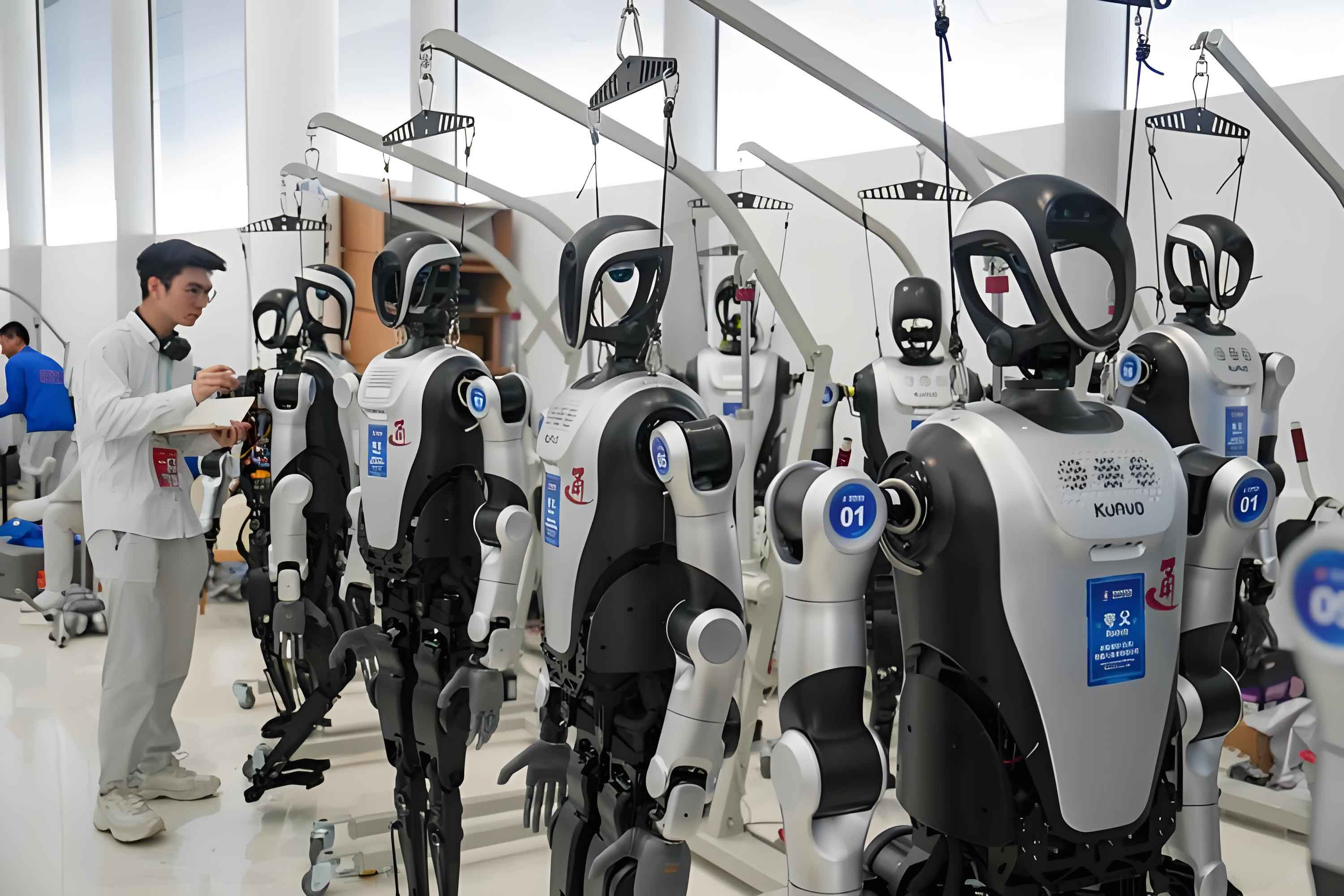
In China, the development of the humanoid robot is still at a primary stage. Immature technology means that humanoid robots may have limitations in various aspects. For education, this can affect the range of tasks that a humanoid robot can perform, the consistency of its behavior, and the availability of suitable teaching materials. Schools that adopt a humanoid robot must therefore consider whether the technology is ready for their intended learning goals. The humanoid robot can still be valuable as a learning platform, but expectations should match the current stage of development.
The immaturity of humanoid robot technology also affects the broader ecosystem. Teachers need reliable tools. Students need understandable systems. Schools need maintenance and support. If the humanoid robot is difficult to maintain or update, its educational use may be limited. If the humanoid robot behaves inconsistently, students may become frustrated. These are not reasons to reject the humanoid robot. They are reasons to approach adoption carefully and to demand continued improvement from developers.
4.2 Limited Attention from the Education Sector
Robot courses have gradually entered colleges and universities, and more students have begun to participate in robot competitions. This participation has helped promote awareness of robotics. However, the humanoid robot has not yet received widespread attention from the education sector. Promotion and publicity remain limited. As a result, many schools and institutions do not have a clear understanding of what the humanoid robot can offer or how it should be integrated into teaching.
Cost is another barrier. The humanoid robot is often expensive, and this makes broad adoption difficult. Many schools use robotics only in the form of training classes, interest classes, or extracurricular activities. In these settings, a school may purchase several sets of robot equipment and rely on comprehensive practice teachers or information technology teachers to provide guidance. Students may participate in robot programming activities and robot assembly activities. These experiences can be valuable, but they are often optional and limited in scope.
When the humanoid robot is confined to short-term activities, it is difficult to develop a sustained curriculum. Teachers may not have enough time to deepen student learning. Students may not have enough opportunities to move from basic exposure to advanced problem solving. The humanoid robot may remain a special event rather than a regular learning tool. For the humanoid robot to have a stronger educational impact, schools need more support, clearer curriculum models, and greater recognition of the humanoid robot as a serious educational platform.
4.3 Old Thinking and Market Challenges
In recent years, more enterprises have begun to research the humanoid robot and to develop new models for the market. This activity is positive, but it has also revealed familiar problems. The humanoid robot field has followed some of the development patterns seen in the automobile industry. Brands are numerous and fragmented. Products often lack sufficient innovation. These factors can hinder the long-term development of the humanoid robot market and make it harder for schools to choose the right platform.
For schools, market fragmentation creates practical difficulties. A school may invest in a humanoid robot platform only to find that support, parts, or software are limited. If brands do not share standards, teachers may need to learn different systems for different devices. This reduces efficiency and increases the burden on educators. Limited product innovation can also mean that the humanoid robot does not evolve quickly enough to meet educational needs. The humanoid robot may be technically impressive, but it may not be designed with classroom learning in mind.
Funding is another challenge. To carry out humanoid robot classroom teaching effectively, schools often need to invest sufficient resources at the beginning. They may need equipment, software, maintenance, and teacher training. Schools that already face limited budgets may find it difficult to sustain such efforts. Without long-term funding and institutional commitment, humanoid robot education can become dependent on short-term grants or special programs. This makes it hard to build a stable and equitable learning opportunity around the humanoid robot.
5. Implications for Schools, Educators, and Developers
The problems described above do not mean that the humanoid robot should be kept out of education. They mean that adoption should be thoughtful. Only by fully understanding the problems in the educational application of the humanoid robot can stakeholders fully realize its potential educational value and improve the quality of education and teaching. Schools, educators, developers, and policymakers all have roles to play in this process.
Schools should begin with clear learning goals. The humanoid robot should not be adopted simply because it is new or impressive. It should be connected to specific outcomes such as logical thinking, problem analysis, hands-on practice, innovation, and teamwork. Schools should also consider whether they have the infrastructure to support the humanoid robot over time. This includes space, storage, maintenance, technical support, and a plan for replacing or upgrading equipment when necessary.
Educators should receive adequate preparation. A teacher who is expected to use the humanoid robot in instruction needs more than basic familiarity with the device. The teacher needs to understand how the humanoid robot works, how student projects can be structured, and how to guide students through debugging and reflection. Professional development should help teachers see the humanoid robot as a pedagogical tool rather than a demonstration device. When teachers are confident with the humanoid robot, they can help students use it more meaningfully.
Developers should focus on the needs of education. The humanoid robot should be reliable, understandable, and adaptable. It should support a range of learning activities rather than only a narrow set of demonstrations. Developers should also consider how the humanoid robot can be maintained and updated in school settings. If the humanoid robot is difficult to repair or upgrade, schools may hesitate to adopt it. If the humanoid robot is designed with education in mind, it can become a more sustainable platform for learning.
Policymakers and education leaders can support the humanoid robot by encouraging awareness, sharing resources, and creating standards for responsible use. Publicity and promotion are important because many educators still do not know what the humanoid robot can do. Resource sharing can help schools that lack funding or expertise. Standards can help schools compare platforms and make informed decisions. These measures can reduce fragmentation and help the humanoid robot move from isolated experiments into broader educational practice.
6. Designing Humanoid Robot Learning Experiences
A successful humanoid robot learning experience should be active, structured, and reflective. Students should not merely watch the humanoid robot perform. They should build, program, test, and revise. The humanoid robot should present a challenge that is difficult enough to require thought but manageable enough to allow progress. Teachers should guide students through the process without taking over the work. The goal is to develop student capability, not to produce a perfect demonstration.
Logical thinking can be developed when students plan a sequence of actions for the humanoid robot. They can describe what the humanoid robot should do first, second, and later. They can identify conditions that change behavior. They can review errors and trace them back to the program. The humanoid robot gives these abstract operations a concrete result.
Problem analysis can be developed when students encounter difficulties. Instead of immediately asking the teacher for the answer, students can describe the problem, gather observations, and propose possible causes. The humanoid robot can be tested after each proposed change. This process helps students learn systematic troubleshooting. It also helps them understand that complex problems are often solved through small, evidence-based steps.
Hands-on practice can be developed when students take responsibility for the physical side of the humanoid robot. They can assemble parts, check connections, organize tools, and observe movement. These activities build practical skill and help students appreciate the effort required to make a humanoid robot work. The humanoid robot becomes more than an idea. It becomes a product of student labor and decision making.
Innovation can be developed when students are invited to improve the humanoid robot. They can propose modifications, compare alternatives, and explain why one design might be better than another. The humanoid robot provides a safe context for experimentation. Students can try an idea, observe the result, and revise it. This experience can strengthen their willingness to explore and their confidence in their own creative capacity.
Teamwork can be developed when students work in groups with shared goals. The humanoid robot project can require coordination among design, programming, testing, and presentation. Students must communicate clearly and support one another. They must also learn to resolve disagreements by referring to evidence from the humanoid robot. When the group succeeds, the achievement belongs to everyone. When the group struggles, the members can learn how to adjust and persist together.
7. The Road Ahead for the Humanoid Robot in Education
The humanoid robot has the potential to become a valuable educational partner. It can support logical thinking, problem solving, practical ability, innovation, and teamwork. It can connect multiple disciplines and make abstract ideas visible. It can excite students and encourage active learning. It can also help schools respond to the growing importance of technology in society. These are substantial reasons to continue exploring the educational use of the humanoid robot.
At the same time, the humanoid robot faces real challenges. Technology development is not yet fully mature. The education sector has not given the humanoid robot widespread attention. Promotion and publicity are limited. Cost remains a barrier. The market is fragmented, and product innovation is not always strong enough to meet educational needs. Schools with limited budgets may struggle to sustain humanoid robot teaching over time. These challenges must be addressed if the humanoid robot is to move beyond isolated projects and become a regular part of learning.
The future of the humanoid robot in education depends on collaboration. Developers must create more reliable and educationally relevant humanoid robot platforms. Schools must define clear learning goals and provide adequate support. Teachers must receive preparation and time to integrate the humanoid robot into instruction. Policymakers must encourage resource sharing and responsible adoption. Students must be given opportunities to build, program, test, and reflect with the humanoid robot. When these conditions are met, the humanoid robot can contribute more fully to educational quality.
The humanoid robot should not be seen as a replacement for teachers or as a single solution to every educational challenge. It is a tool with specific strengths and limitations. Its greatest value lies in the way it can engage students in thinking and doing. The humanoid robot can help students see the connection between logic and action, between design and result, and between individual effort and team success. These lessons are relevant far beyond robotics.
For schools considering the humanoid robot, the most responsible path is to start with clear purposes, realistic expectations, and strong support. The humanoid robot can then be introduced gradually, with attention to student learning and teacher practice. As experience grows, schools can expand their use of the humanoid robot and share what they learn. Over time, the humanoid robot may become a more common feature of education, not as a spectacle, but as a practical platform for developing capable, creative, and collaborative learners.
The humanoid robot therefore represents both an opportunity and a test. The opportunity is to enrich education with a powerful interdisciplinary tool. The test is to adopt the humanoid robot wisely, with awareness of its current limits and with commitment to its educational purpose. If stakeholders understand the value of the humanoid robot and confront the problems that limit its use, the humanoid robot can help improve teaching and learning in meaningful ways. The humanoid robot can support the development of students who are better prepared to reason, solve problems, work with their hands, innovate, and cooperate. That is the lasting educational promise of the humanoid robot.