
XPeng Group announced on September 8, 2026, that its independently designed and developed automated production line for high-order general-purpose humanoid robots has officially begun operation. The first high-order general-purpose humanoid robot, IRON, completed automated final assembly and autonomously walked off the production line, according to the company. He Xiaopeng, chairman and CEO of XPeng Group, said the development means that high-order general-purpose humanoid robots are beginning to have the real possibility of moving into the real world at large scale. XPeng Group said the production line’s core process automation rate exceeds 80 percent and that it has introduced an automotive industry quality system and automotive-grade consistency standards to support mass production quality.
The announcement places XPeng Group’s humanoid robots program within a wider industrial transition. Humanoid robots are moving from laboratory prototypes and small-batch trial production toward scalable mass production and commercialization. The automated production line is important because it addresses one of the central questions facing the humanoid robots sector: how to build humanoid robots with repeatable quality, reliable performance and manufacturable cost structures. For years, humanoid robots have demonstrated increasingly advanced movement, perception and interaction capabilities in controlled settings. The harder challenge has been turning those demonstrations into products that can be produced, tested, deployed and maintained at scale. XPeng Group’s automated line is presented as a step toward that goal.
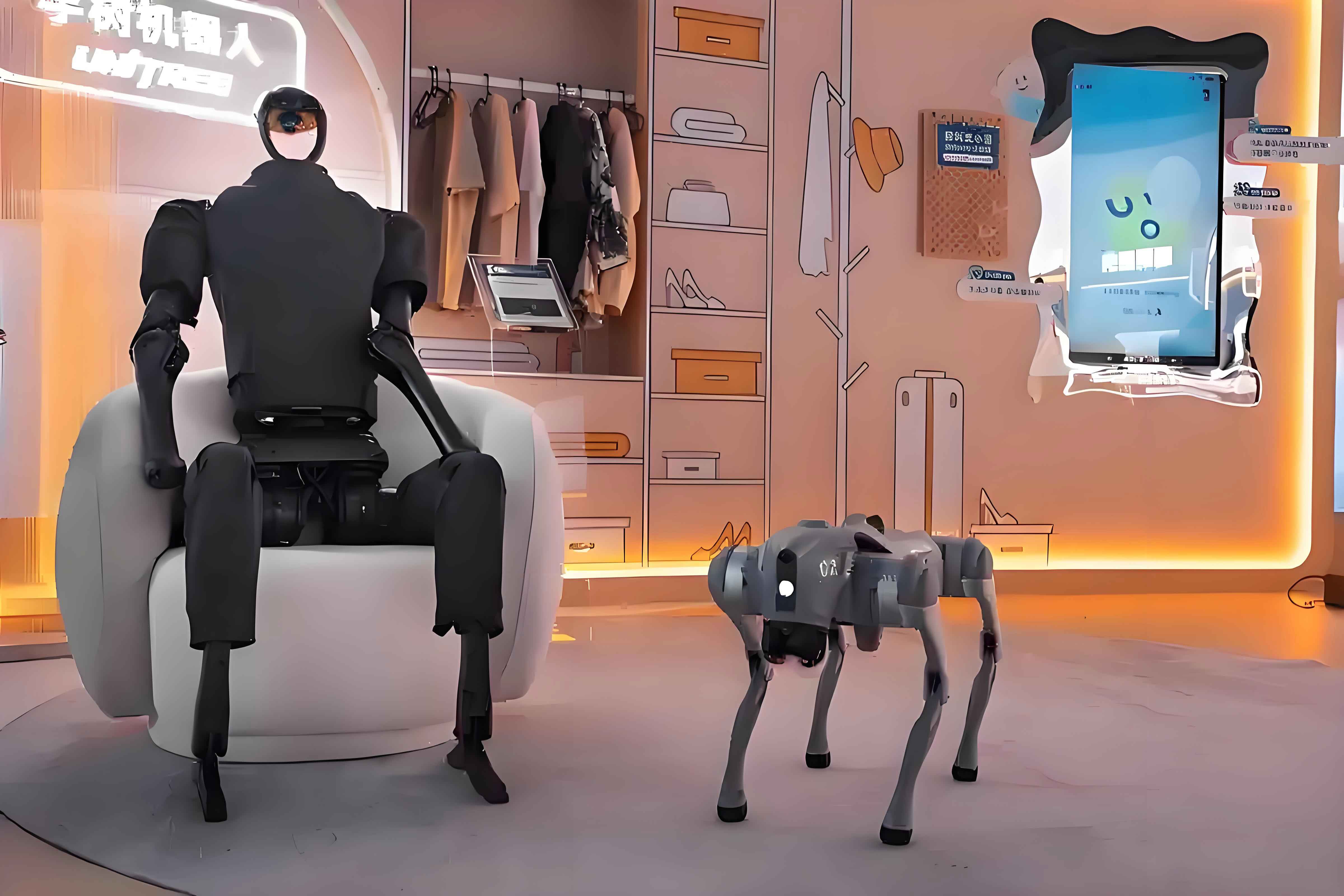
The first IRON humanoid robot completing automated final assembly and walking off the line is a symbolic and practical milestone. It suggests that key parts of the final assembly process for humanoid robots can be handled through automation rather than relying entirely on manual assembly. The company said the line’s core process automation rate exceeds 80 percent. That figure matters because humanoid robots are complex machines with many joints, sensors, controllers, wiring harnesses, power systems and software components. The more of that complexity that can be managed through standardized automated processes, the more likely humanoid robots are to achieve consistent output. XPeng Group also said it introduced an automotive industry quality system and automotive-grade consistency standards. Those standards are intended to help ensure that mass-produced humanoid robots meet defined quality levels across units.
XPeng Group’s statement also reflects a broader reality: humanoid robots are no longer only a research topic. They are increasingly discussed as potential general-purpose platforms for work in manufacturing, logistics, service, inspection, maintenance and other environments. That vision depends on production maturity. If humanoid robots cannot be manufactured consistently, their deployment will remain limited. If they cannot be maintained reliably, their commercial value will be constrained. If they cannot be produced at reasonable cost, adoption will be slow. The automated production line announced by XPeng Group is therefore not simply a manufacturing facility. It is an attempt to connect advanced robotics research with industrial quality discipline.
1. Automated Production as a Bridge to Mass Production for Humanoid Robots
The launch of an automated production line for high-order general-purpose humanoid robots is significant because it targets the gap between prototype success and stable manufacturing. A prototype can be assembled by skilled engineers, adjusted by hand and tested under close supervision. A mass-produced product must be assembled repeatedly, with consistent tolerances, documented processes and predictable quality. For humanoid robots, this gap is especially difficult. A humanoid robot combines mechanical structures, actuators, sensors, computing hardware, thermal management, power management and artificial intelligence software. Each subsystem can interact with others in ways that are difficult to fully predict. Automated final assembly can reduce variability, but it also requires that the product design itself be suitable for automation.
XPeng Group said the production line’s core process automation rate exceeds 80 percent. That level of automation suggests that a majority of core manufacturing steps are performed by machines or automated systems rather than manual labor. In the context of humanoid robots, automation can improve repeatability, cycle time and process control. It can also create detailed production data that supports traceability. Traceability is important for humanoid robots because failures in the field may require rapid identification of affected batches or components. Automotive-grade consistency standards are relevant here because they emphasize process discipline, supplier control, testing and documentation. By introducing those standards, XPeng Group is signaling that it intends to treat humanoid robots as serious industrial products rather than one-off demonstrations.
The first IRON humanoid robot autonomously walking off the line adds another layer of meaning. It shows that the robot can perform a basic mobility task after assembly. That does not prove full commercial readiness, but it does indicate that the assembled system can power on, control its movement and operate in a coordinated way. For humanoid robots, the ability to walk is not merely a mobility feature. It is a test of integration across actuators, balance control, sensing and software. When that capability is demonstrated immediately after an automated final assembly process, it suggests a degree of manufacturing and system integration maturity.
Even so, the transition to stable mass production for humanoid robots remains difficult. The industry still faces questions about product consistency, long-term reliability, production cost and application scenario maturity. XPeng Group’s automated line addresses some of these questions directly, especially consistency and quality control. Other questions, such as reliability over thousands of operating hours and cost reduction through scale, will require further evidence. The company’s plan for IRON to enter the mass production stage by the end of 2026 will be an important test. If that plan proceeds, it will provide a clearer view of how automated production affects the economics and quality of humanoid robots.
2. IRON Combines Humanlike Design, Artificial Intelligence and Safety Requirements
XPeng Group positions IRON as the physical artificial intelligence strategy’s important carrier. The company describes IRON as an extremely humanlike, AI-driven, high-order humanoid robot with high-standard safety and quality. The phrase “extremely humanlike” refers to the robot’s form and movement ambitions. The phrase “AI-driven” refers to the role of artificial intelligence in perception, decision-making and control. The phrase “high-standard safety and quality” refers to the requirement that humanoid robots operating near people and in shared environments must meet rigorous safety expectations. These three dimensions are closely connected. A humanlike form may help humanoid robots operate in environments designed for people, but it also creates safety challenges because the robot must move, balance and interact without harming humans or damaging property.
According to XPeng Group, IRON has 76 degrees of freedom in its whole body and 21 degrees of freedom in a single hand. It carries 3 Turing AI chips, with 2,250 TOPS of effective computing power. It also achieves on-device deployment of a physical AI large model. The company plans for IRON to enter the mass production stage by the end of 2026. XPeng Group said its robotics business has built a full-stack self-developed technology system covering software and hardware, including chips, controllers, motion modules and dexterous hands. This system spans the robot’s body, brain, cerebellum, data and infrastructure. The combination of a high degree of freedom, significant onboard computing power and on-device artificial intelligence is intended to support capable humanoid robots that can operate without constant reliance on remote computing.
| Item | Detail |
|---|---|
| Developer | XPeng Group |
| Product | IRON high-order general-purpose humanoid robot |
| Positioning | Extremely humanlike, AI-driven, high-standard safety and quality humanoid robot |
| Whole-body degrees of freedom | 76 |
| Single-hand degrees of freedom | 21 |
| AI chips | 3 Turing AI chips |
| Effective computing power | 2,250 TOPS |
| AI deployment | On-device deployment of a physical AI large model |
| Planned mass production stage | End of 2026 |
| Production line automation | Core process automation rate exceeds 80 percent |
| Quality framework | Automotive industry quality system and automotive-grade consistency standards |
| Technology scope | Full-stack self-developed software and hardware covering chips, controllers, motion modules, dexterous hands, body, brain, cerebellum, data and infrastructure |
The number of degrees of freedom is a useful indicator of mechanical capability. A humanoid robot with 76 degrees of freedom across its body can potentially perform complex movements involving the torso, arms, legs, hands and head. A single hand with 21 degrees of freedom is designed for dexterous manipulation. Human hands are highly capable, and reproducing even part of that capability is difficult. Dexterous hands are essential for humanoid robots that are expected to handle tools, parts, packages or other objects. The combination of a highly articulated body and dexterous hands moves humanoid robots closer to the flexibility that general-purpose tasks require.
The use of 3 Turing AI chips and 2,250 TOPS of effective computing power highlights the computational demands of advanced humanoid robots. Perception, planning, balance control, natural interaction and manipulation all require real-time processing. If some of that processing can occur on the robot itself, the humanoid robot can operate with lower latency and greater independence from network conditions. On-device deployment of a physical AI large model is particularly notable. A physical AI model must connect perception and language understanding to physical action. It must help the humanoid robot interpret its environment and decide how to move safely and effectively. Running such a model on the device is a challenging engineering goal, but it is important for practical deployment.
Safety and quality are also central. Humanoid robots are intended to work in human environments. That means they must be designed with strict limits on force, speed and behavior. They must detect people and obstacles. They must fail safely when errors occur. XPeng Group’s emphasis on high-standard safety and quality, together with the introduction of automotive industry quality systems, suggests that the company understands that humanoid robots cannot be treated as experimental gadgets if they are to enter real-world use. The automotive sector has developed extensive processes for safety, reliability and consistency. Applying similar discipline to humanoid robots could help the industry mature.
3. Policy Support Accelerates the Humanoid Robots Transition
The XPeng Group announcement comes amid active policy support for humanoid robots and embodied intelligence. In June 2026, the Ministry of Industry and Information Technology and the State-owned Assets Supervision and Administration Commission of the State Council launched a special action for real-scene training of humanoid robots and embodied intelligence. The action proposed that by the end of 2026, key products such as humanoid robots should complete application validation and normalized deployment in a group of representative scenarios. It also aims to drive the formation of a 10,000-unit-scale deployment capability. In July 2026, an official from the Science and Technology Department of the Ministry of Industry and Information Technology said that China’s annual complete machine output of humanoid robots is expected to exceed 100,000 units.
| Time | Development |
|---|---|
| June 2026 | The Ministry of Industry and Information Technology and the State-owned Assets Supervision and Administration Commission of the State Council launched a special action for real-scene training of humanoid robots and embodied intelligence. |
| By the end of 2026 | The action aims to push key products such as humanoid robots to complete application validation and normalized deployment in a group of representative scenarios and to drive the formation of a 10,000-unit-scale deployment capability. |
| July 2026 | An official from the Science and Technology Department of the Ministry of Industry and Information Technology said China’s annual complete machine output of humanoid robots is expected to exceed 100,000 units. |
| September 8, 2026 | XPeng Group announced that its automated production line for high-order general-purpose humanoid robots officially began operation, with the first IRON completing automated final assembly and autonomously walking off the line. |
| End of 2026 | XPeng Group plans for IRON to enter the mass production stage. |
These policy milestones show that humanoid robots are being treated as a strategic product category. The focus is not only on research and development. It is also on application validation, deployment and scale. Real-scene training is important because humanoid robots must learn to operate in environments that are messy, unpredictable and designed for humans. A factory floor, a warehouse, a laboratory or a service area can present countless variations in lighting, layout, objects and human activity. Humanoid robots must be tested in those conditions before they can be trusted. Normalized deployment means moving beyond one-time demonstrations toward routine use. That is a much higher bar.
The 10,000-unit-scale deployment capability target and the 100,000-unit annual output expectation indicate the direction of travel. They suggest that policymakers and industry participants see humanoid robots as moving toward larger production volumes. However, targets and expectations are not the same as delivered results. The humanoid robots sector must still prove that it can manufacture at scale, maintain quality and find applications that justify adoption. XPeng Group’s automated production line is one of the manufacturing steps needed to support that broader transition. Without production capacity and quality control, policy targets for humanoid robots would be difficult to meet.
The timing of XPeng Group’s announcement is therefore meaningful. It comes after policy actions in June and July 2026 and before the end of 2026, when both policy goals and XPeng Group’s planned mass production stage for IRON are set to be tested. The company is not alone in pursuing humanoid robots, but its decision to open an automated production line shows that competition is shifting toward manufacturing capability. In the next phase, the ability to produce reliable humanoid robots at consistent quality may matter as much as the ability to demonstrate advanced capabilities.
4. Humanoid Robots Still Face Consistency, Reliability, Cost and Scenario Challenges
Despite progress, humanoid robots still face multiple challenges. The industry must address product consistency, long-term reliability, production cost and application scenario maturity. These challenges are interconnected. If product consistency is poor, reliability suffers. If reliability is uncertain, customers hesitate. If production cost remains high, the addressable market shrinks. If application scenarios are not mature, deployment may not generate enough value. For humanoid robots to move from small-batch trial production to stable mass production, all four areas need progress.
| Challenge | Why It Matters |
|---|---|
| Product consistency | Humanoid robots must perform to the same standards across units. Variation in assembly, calibration or components can lead to different behavior, lower reliability and higher maintenance costs. |
| Long-term reliability | Humanoid robots must operate over extended periods without frequent failures. Joints, actuators, sensors, batteries and software must remain dependable in real environments. |
| Production cost | High costs limit adoption. Humanoid robots need manufacturable designs, efficient supply chains and scalable production processes to reach competitive price levels. |
| Application scenario maturity | Potential users need clear, repeatable and valuable use cases. Humanoid robots must prove that they can perform useful work safely and efficiently in real settings. |
Product consistency is especially important for humanoid robots because they are complex systems. A small difference in a joint, a sensor calibration or a controller setting can affect balance, movement or manipulation. In a factory, a warehouse or a service environment, such differences can lead to inconsistent task performance. Automated production helps because it reduces manual variation. Automotive-grade consistency standards help because they require documented processes and testing. XPeng Group’s statement that its production line uses these approaches suggests that it is trying to solve consistency at the manufacturing stage. That is a necessary step for humanoid robots.
Long-term reliability is another major hurdle. A humanoid robot may need to operate for many hours per day, often in dynamic environments. Its joints and actuators endure repeated motion. Its sensors must remain accurate. Its computing hardware must manage heat and power. Its software must handle unexpected situations. Reliability testing for humanoid robots is difficult because the range of possible tasks and environments is broad. Real-scene training and deployment, as promoted by the June 2026 policy action, can help expose weaknesses. But reliability can only be proven over time and across many units. Mass production will increase the amount of data available, which may help improve future designs.
Production cost remains a critical factor. Humanoid robots contain many expensive components, including high-performance chips, precision actuators, dexterous hands, sensors and batteries. Reducing cost requires design simplification, component standardization, economies of scale and efficient manufacturing. Automated production lines can contribute to cost reduction by improving cycle time and reducing labor content, but they also require capital investment. The business case for automated production depends on volume. XPeng Group’s plan for IRON to enter mass production by the end of 2026 suggests that the company expects sufficient demand or strategic value to justify the investment. The market will watch whether that expectation is validated.
Application scenario maturity is perhaps the most unpredictable challenge. Humanoid robots are often described as general-purpose platforms, but general-purpose capability is difficult to achieve. Early deployments may focus on specific tasks in structured environments. Over time, humanoid robots may expand to more complex tasks. However, each new scenario brings new safety, reliability and integration requirements. Customers will need to see clear return on investment. They will need confidence that humanoid robots can work alongside people without disruption. They will need support, maintenance and software updates. XPeng Group’s automated production line does not by itself solve scenario maturity, but it can help by making humanoid robots more available for testing and deployment.
5. Full-Stack Self-Development Supports XPeng Group’s Physical AI Ambitions
XPeng Group said its robotics business has built a full-stack self-developed technology system covering software and hardware. This includes chips, controllers, motion modules and dexterous hands. It also spans the robot’s body, brain, cerebellum, data and infrastructure. The term “body” refers to the mechanical structure and actuators. The term “brain” refers to high-level artificial intelligence, perception and decision-making. The term “cerebellum” refers to motion control, balance and coordination. Data and infrastructure refer to the systems used to collect, manage and use information for training and operation. A full-stack approach can allow tighter integration between hardware and software, which is important for humanoid robots because their performance depends on close coordination between physical components and control algorithms.
Developing chips, controllers, motion modules and dexterous hands in-house may give XPeng Group greater control over performance, supply and iteration. For humanoid robots, off-the-shelf components can accelerate early prototyping, but they may not provide the level of integration needed for mass production. Custom or self-developed components can be optimized for the robot’s specific requirements. They can also be designed with manufacturing and serviceability in mind. However, full-stack development is demanding. It requires expertise across mechanical engineering, electronics, control systems, artificial intelligence and manufacturing. XPeng Group’s decision to pursue this approach reflects the scale of its ambition in humanoid robots.
The physical AI large model is a central part of this strategy. Unlike purely digital artificial intelligence, physical AI must connect perception and reasoning to action in the real world. For humanoid robots, this means understanding objects, spaces, people and tasks, and then generating safe and effective movements. On-device deployment of such a model is challenging because of constraints on power, heat and computing resources. The use of 3 Turing AI chips and 2,250 TOPS of effective computing power is intended to provide the necessary computational foundation. If successful, on-device physical AI could allow humanoid robots to operate more autonomously and responsively. That would be valuable in environments where network connectivity is limited or latency is unacceptable.
XPeng Group’s use of automotive industry quality systems is also consistent with its broader engineering background. Automotive manufacturing places heavy emphasis on safety, reliability, traceability and consistency. Applying those principles to humanoid robots could help the company avoid some of the quality problems that affect new hardware categories. It could also help build trust with customers and partners. Humanoid robots that are intended for real-world work must meet high standards. A quality system alone does not guarantee success, but it provides a structured path toward it. The combination of full-stack technology, automated production and automotive-grade standards gives XPeng Group a comprehensive approach to humanoid robots.
6. From Small-Batch Trial Production to Stable Mass Production
The humanoid robots industry is currently in a transition period. It is moving from laboratory prototypes and small-batch trial production toward scalable mass production and commercialization. This transition is difficult because the requirements change. In a laboratory, success may be defined by a demonstration. In small-batch trial production, success may be defined by a limited number of units working in controlled conditions. In stable mass production, success is defined by consistent quality, reliable operation, acceptable cost and clear customer value. Humanoid robots must satisfy all these conditions to become a sustainable product category.
XPeng Group’s automated production line is aimed at the manufacturing part of this transition. The core process automation rate exceeding 80 percent indicates that the company is investing in repeatable production. The first IRON humanoid robot walking off the line indicates that the production process can produce a working system. The planned mass production stage at the end of 2026 provides a timeline for further validation. If XPeng Group can produce IRON humanoid robots at scale with consistent quality, it will have achieved an important milestone. If it encounters difficulties, it will join other humanoid robots developers in confronting the gap between prototype and product.
The policy environment adds urgency. The June 2026 special action for real-scene training of humanoid robots and embodied intelligence set goals for application validation and normalized deployment by the end of 2026. The July 2026 statement that annual complete machine output of humanoid robots is expected to exceed 100,000 units sets a high expectation. These goals imply that many humanoid robots will need to be produced, tested and deployed in a relatively short period. Manufacturing capacity, quality systems and supply chains must be ready. XPeng Group’s automated production line is one example of the industrial infrastructure that will be needed. Other companies and suppliers will also need to scale up.
Stable mass production also requires after-sales support. Humanoid robots contain wear parts, software systems and sensors that may need maintenance or replacement. Service networks, spare parts inventories and software update processes must be designed. If humanoid robots are deployed in large numbers, even small failure rates can create significant support burdens. Automotive-grade quality systems can help by emphasizing reliability and traceability, but serviceability must also be considered during design. XPeng Group’s full-stack approach may allow it to integrate serviceability into the hardware and software from the beginning. That could be an advantage as humanoid robots move into real-world use.
7. What to Watch as Humanoid Robots Move Toward Real-World Deployment
The next phase for humanoid robots will be defined by execution. Several questions will determine whether the current momentum leads to durable commercial success. Can humanoid robots be produced with consistent quality at scale? Can they operate reliably for long periods? Can production costs be reduced enough to support broad adoption? Can application scenarios generate measurable value? XPeng Group’s automated production line and IRON mass production plan will provide early evidence on some of these questions. The company’s claim that core process automation exceeds 80 percent and its use of automotive-grade consistency standards suggest a serious approach to manufacturing. The planned end-of-2026 mass production stage will show whether that approach can translate into volume.
The policy targets for humanoid robots will also be closely watched. The goal of application validation and normalized deployment in representative scenarios by the end of 2026 is ambitious. It requires cooperation between robot developers, customers, regulators and technology providers. Real-scene training is essential because humanoid robots must learn from real environments. But training must be done safely and systematically. Data from real deployments can improve artificial intelligence models, motion control and reliability. If that data is collected and used effectively, it can accelerate progress across the humanoid robots industry. If it is fragmented or difficult to share, progress may be slower.
For XPeng Group, IRON represents more than a single product. It is a test of the company’s physical AI strategy. The robot’s 76 degrees of freedom, 21 degrees of freedom in a single hand, 3 Turing AI chips, 2,250 TOPS of effective computing power and on-device physical AI large model are technical specifications that support a broad ambition. The automated production line, automotive quality system and full-stack self-developed technology system are the industrial and engineering foundations for that ambition. Together, they show how a company might try to move humanoid robots from concept to product. The outcome will depend on execution, reliability and market acceptance.
The broader humanoid robots sector is entering a critical period. The shift from small-batch trial production to stable mass production is not automatic. It requires manufacturing discipline, supply chain maturity, software reliability, safety validation and customer trust. XPeng Group’s announcement is a significant step because it focuses on the production side of that equation. The first IRON humanoid robot walking off an automated line is a visible sign of progress. The real test will come when humanoid robots are produced in larger numbers, deployed in representative scenarios and expected to work reliably day after day. If that test is passed, humanoid robots may indeed begin to move into the real world at large scale.