
The Ministry of Industry and Information Technology has laid out a broad and detailed agenda for the 15th Five-Year Plan period, placing emerging pillar industries, artificial intelligence and intelligent terminals at the heart of the next phase of the country’s industrial upgrading, while signaling that the problem of non-rational competition in the new energy vehicle sector will be tackled through planning guidance, coordination across government departments and targeted policy support.
A press conference held on August 26 by the State Council Information Office presented the ministry’s approach to implementing the 15th Five-Year Plan and accelerating new industrialization. The briefing covered a wide range of topics, including emerging industries, artificial intelligence development and the governance of non-rational competition, and it set out a series of specific deployments that will shape industrial policy over the coming years.
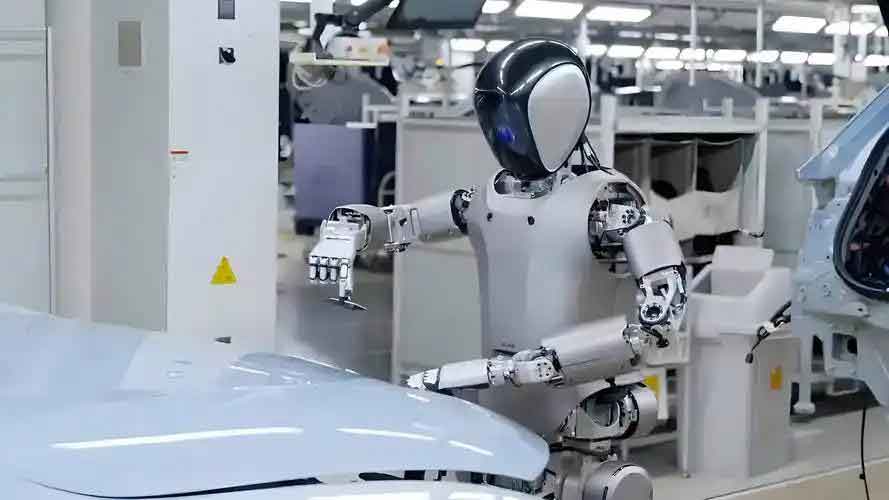
Among the most closely watched elements of the briefing was the emphasis placed on intelligent terminals. Officials repeatedly returned to the concept, naming humanoid robots and brain-computer interfaces as products whose iteration will be actively promoted. The ministry also said it will continue to expand the coverage of artificial intelligence terminal standards, provide enterprises with a clear direction for benchmarking and compliance, and accelerate the formation of an artificial intelligence terminal product catalogue to guide consumer decisions.
The scope of the announcements reflects a deliberately layered strategy. At the top sit six industries designated as emerging pillars. Below them sit a group of future industries identified as potential new growth points. And at the point of delivery sit the intelligent terminals — humanoid robots, brain-computer interfaces, smart mining machinery, agricultural machinery and intelligent medical devices among them — through which technological capability is expected to be converted into revenue, employment and data flows.
-
1. Six Emerging Pillar Industries Anchored as the Backbone of the Industrial Upgrade
Officials said the ministry will coordinate the upgrading of traditional industries, the cultivation and expansion of emerging industries, and the forward-looking layout of future industries, so as to maintain and further develop a complete industrial system.
For the 15th Five-Year Plan period, six industries have been designated as emerging pillar industries: integrated circuits, aerospace, biomedicine, the low-altitude economy, new energy storage and intelligent robots. The list was set out as the plan period got under way.
In March, the head of the National Development and Reform Commission told an economic-themed press conference held during the fourth session of the 14th National People’s Congress that preliminary estimates put the combined output value of these six industries at close to 6 trillion yuan in 2025, and that the figure is expected to double — or more — by 2030, expanding to more than 10 trillion yuan.
The designation of the six industries is intended to give a clear signal to investors, local governments and enterprises about where resources and policy attention will be concentrated. It also provides a benchmark against which progress can be measured, since the aggregate output value target is explicit and time-bound.
Number Emerging pillar industry 1 Integrated circuits 2 Aerospace 3 Biomedicine 4 Low-altitude economy 5 New energy storage 6 Intelligent robots The category of intelligent robots is closely associated in policy discussion with humanoid robots, which are widely regarded as one of the most demanding applications in the field and one of the most visible to the general public. Progress in humanoid robots is seen as a test of integrated capability across actuation, perception, control and power supply, which is one reason the technology features so prominently in the intelligent terminal agenda.
-
2. The Growth Arithmetic Behind the Trillion-Yuan Target
The scale of the target has drawn analytical attention. Su Jian, a professor at the School of Economics of Peking University, told a reporter that an increase in the combined output value from close to 6 trillion yuan to more than 10 trillion yuan corresponds to an average annual compound growth rate of roughly 11 percent. To double the figure, he noted, a rate of around 15 percent would be required — approximately two to three times the gross domestic product growth target of 4.5 percent to 5 percent for the current year.
Su said the target looks high, but that there are grounds for it. His assessment points to the fact that the six industries are not starting from a standing position. They already have substantial industrial bases, established supply chains and, in several cases, rapidly expanding demand.
Evidence from the first half of the year supports that view. According to data released by the National Development and Reform Commission, output of integrated circuits by industrial enterprises above a designated size rose 23.1 percent year on year in the first half, and the second quarter recorded a new monthly record for three consecutive months.
In aerospace, the C919 large passenger aircraft has accumulated 41 deliveries and surpassed 130,000 hours of safe flight. The first launch-and-recovery mission of the Long March 10B carrier rocket was completed successfully, a milestone marking a major breakthrough in reusable rocket technology.
In the intelligent robot field, the position is even more striking: of every 10 humanoid and quadruped intelligent robots sold worldwide, 8 are produced in China. That statistic alone explains why humanoid robots have moved from the periphery of industrial policy discussion to its center.
-
3. Future Industries Positioned as the Next Growth Points
Beyond the six pillar industries, the ministry identified a set of future industries that it intends to develop into new growth points for the economy. These are quantum technology, biomanufacturing, hydrogen and nuclear fusion energy, brain-computer interfaces, embodied intelligence and sixth-generation mobile communications, or 6G.
The inclusion of both brain-computer interfaces and embodied intelligence on the future industries list is significant for the intelligent terminal agenda, because both are technologies whose commercial value is realized through products rather than through laboratory results alone. Brain-computer interfaces in particular sit at the intersection of medicine, electronics and advanced computing, and the ministry has identified them as a terminal category whose iteration will be pushed forward.
Number Future industry 1 Quantum technology 2 Biomanufacturing 3 Hydrogen and nuclear fusion energy 4 Brain-computer interfaces 5 Embodied intelligence 6 6G The pairing of humanoid robots with embodied intelligence deserves attention. Humanoid robots are widely understood as a physical embodiment of artificial intelligence, and embodied intelligence provides the theoretical and algorithmic framework that allows a machine to learn from interaction with the physical world. Placing both on the policy map suggests that the ministry views the development of humanoid robots and the advancement of embodied intelligence as mutually reinforcing.
-
4. Intelligent Terminals Move to the Forefront, With Humanoid Robots and Brain-Computer Interfaces Set for Iteration
The term “intelligent terminal” recurred throughout the briefing, and the ministry’s plans for the 15th Five-Year Plan period include advancing the iteration of humanoid robots, brain-computer interfaces and other intelligent terminals.
On the supply side, the emphasis is on strengthening the technological foundation. Officials said the ministry will support research and development of high-end training chips, multimodal algorithms and other key technologies, pursue breakthroughs in frontier technologies such as brain-inspired intelligence and world models, push forward the iteration of humanoid robots, brain-computer interfaces and other intelligent terminals, and develop products including smart mining machinery, agricultural machinery and intelligent medical devices to better meet the needs of various industries.
The phrase “iteration of humanoid robots” is deliberately chosen. It implies a continuing cycle of product generations rather than a single research milestone, and it places humanoid robots in the same policy category as consumer electronics and other terminal products that improve through successive releases. This framing matters because it directs attention to manufacturing capability, supply chain readiness, cost reduction and user feedback — the factors that determine whether a technology becomes a widely adopted product.
The inclusion of brain-computer interfaces alongside humanoid robots in the same sentence is also notable. Both are frontier technologies with substantial technical barriers, and both require integration across multiple disciplines. Treating them as terminal categories subject to iteration places them on a path from demonstration to deployment.
Su Jian of Peking University later offered an interpretation of why the ministry has returned to the intelligent terminal concept so often. In his view, the emphasis carries three layers of meaning, and the first is that terminals are the last mile for artificial intelligence to reach the market.
-
5. Super-Conventional Measures Target Decisive Breakthroughs in Core Technologies
To support the emerging industries, the ministry intends to concentrate effort on technological breakthroughs. Yao Jun, director of the planning department of the Ministry of Industry and Information Technology, said the ministry will adopt super-conventional measures and pursue, across the entire chain, decisive breakthroughs in key core technologies in fields including integrated circuits, industrial machine tools, high-end instruments and meters, basic software and industrial software, advanced materials and biomanufacturing.
The phrase “across the entire chain” indicates that the effort is not limited to a single link. In the case of integrated circuits, for example, progress depends on design, manufacturing, packaging, testing, equipment and materials advancing together. A bottleneck in any one link constrains the whole.
The same logic applies to the technologies that underpin humanoid robots. A humanoid robot depends on high-performance actuators, precision reducers, sensors, control algorithms, power supplies and lightweight materials. Weakness in any of these areas limits the performance of the finished machine, which is why a whole-chain approach is relevant to the intelligent terminal agenda as well.
The list of fields also includes industrial machine tools and high-end instruments and meters, both of which are foundational inputs for advanced manufacturing. Improvements in these areas feed directly into the ability to produce humanoid robots and other intelligent terminals at scale and at competitive cost.
-
6. Demonstration Parks and Enterprises to Anchor the Emerging Industry Ecosystem
The ministry also plans to create national demonstration bases for emerging industry development. These will focus on key areas including next-generation information technology, new energy, new materials, intelligent connected new energy vehicles, robots, biomedicine, high-end equipment and aerospace, with the aim of building a group of benchmarks that can lead the development of emerging industries.
Yao said that by 2035 the ministry aims to cultivate around 100 demonstration parks that have a radiating and driving role in industrial cluster development, collaborative innovation, ecosystem optimization and governance improvement, and around 1,000 demonstration enterprises that are at a leading level in product development, technological innovation, business model innovation and management effectiveness.
For the intelligent robot sector, and for humanoid robots in particular, demonstration parks can serve several functions at once. They can concentrate suppliers in a geographic area, reduce logistics and coordination costs, provide shared testing and validation facilities, and create a concentrated pool of engineering talent. Demonstration enterprises, meanwhile, can act as anchor customers for component suppliers, giving smaller firms a predictable demand base.
The 2035 horizon is notable because it extends beyond the 15th Five-Year Plan period. It signals that the ministry expects the cultivation of these clusters to be a long-term endeavor rather than a short campaign.
-
7. Large-Scale Application Scenarios to Be Rolled Out Under the “Robot+” and “AI+” Banners
Alongside technology development and cluster building, the ministry plans to carry out large-scale application demonstrations for new manufacturing technologies, products and scenarios, and to accelerate the cultivation of major application scenarios including “5G+,” “artificial intelligence+,” “robot+,” “industrial internet+” and “Beidou+.”
Number Major application scenario 1 5G+ 2 Artificial intelligence+ 3 Robot+ 4 Industrial internet+ 5 Beidou+ The “robot+” scenario is directly relevant to the deployment of humanoid robots and other intelligent machines. Application scenarios are where technical capability is tested against real operating conditions, and they generate the operational data that feeds back into product improvement. Without deployment, humanoid robots remain prototypes; with deployment, they become products.
Artificial intelligence has already moved substantially into industrial use. It now runs through much of the full chain of research and design, production and manufacturing, and quality inspection and maintenance. Through real-scenario training, robots have entered an “operating mode” in settings including production and manufacturing, emergency rescue and catering services.
The combination of the “artificial intelligence+” and “robot+” scenarios suggests that the ministry expects the two to advance together. Artificial intelligence provides perception, planning and decision-making capability; robots provide physical action. Humanoid robots are one expression of that combination, but the same logic applies to specialized machines in mining, agriculture and healthcare.
-
8. Artificial Intelligence Foundations: Computing Power, Applications and Governance
The briefing also reviewed the current state of the artificial intelligence industry, describing it as dynamic and full of highlights and as injecting strong “intelligent momentum” into economic growth.
On the foundation side, the country’s computing power base has continued to strengthen. By the end of June, intelligent computing power had reached 2,185 EFLOPS, and more than 70 major computing power corridors had been built around computing power hubs.
On the application side, artificial intelligence now runs through essentially the entire chain of research and design, production and manufacturing, and quality inspection and maintenance. Through real-scenario training, robots have entered operating mode in production and manufacturing, emergency rescue and catering services, among other settings.
On the governance side, nearly 200 key artificial intelligence standards have been developed. The ministry is organizing a number of cities to carry out artificial intelligence ethics review and service practices, and the recently released International Action Plan on Artificial Intelligence Ethics Governance has received a positive response from many countries.
The standards effort is significant for the intelligent terminal agenda. Standards determine how products are evaluated, how performance is compared and how consumers can distinguish genuine capability from marketing claims. For humanoid robots, which are complex systems whose performance depends on many interacting subsystems, a consistent evaluation framework is a prerequisite for large-scale procurement by both enterprises and public institutions.
-
9. Intelligent Terminal Standards, a Product Catalogue and the Electronics Manufacturing Upgrade
Liu Yulin, director of the information and communications development department of the Ministry of Industry and Information Technology, also addressed artificial intelligence terminals when discussing the electronic information manufacturing sector.
Liu said that during the 15th Five-Year Plan period the ministry will accelerate the development of emerging technologies and the transformation and upgrading of products. It will speed up the industrialization of space computing, virtual reality, micro light-emitting diodes, silicon-based OLED displays and new types of batteries, and push electronic information products toward intelligent, green and integrated development, raising the supply of high-end electronic products that satisfy the public.
The ministry will continue to expand the coverage of artificial intelligence terminal standards, provide enterprises with a direction for benchmarking and compliance, and accelerate the formation of an artificial intelligence terminal product catalogue to provide guidance for public consumption decisions.
Liu also said the ministry will work with relevant departments to promote the application of consumer electronic products in scenarios including education and training, home-based elderly care, and sports and health, continue to collect typical cases in audiovisual systems and smart sports, accelerate the integrated development of consumer electronic products with vertical sectors, and innovate diversified consumption scenarios. Support will be given to display technology to play a greater role in fields such as digital cultural tourism, smart healthcare and education and training.
The mention of a product catalogue is a notable policy instrument. A catalogue can serve both as an information tool for consumers and as an implicit quality threshold for manufacturers. Combined with standards, it creates a framework in which products can be compared and in which the market can reward genuine capability.
-
10. Why Intelligent Terminals Matter: Three Layers of Meaning
Su Jian of Peking University offered a structured interpretation of the ministry’s repeated emphasis on intelligent terminals, identifying three layers of meaning.
The first is that terminals are the last mile for artificial intelligence to be deployed. Chips, algorithms and models are supply-side inputs. Only when they are installed in mobile phones, glasses, robots, mining machinery and medical devices do they generate revenue, employment and data flows, which in turn pull demand upstream for chips, displays and batteries. Humanoid robots sit at the demanding end of this spectrum, because they require the integration of perception, decision-making and physical action in a single product.
The second is that the terminal focus plays to existing strengths while avoiding weaknesses. In frontier large models and advanced process nodes, there remains a gap. But in complete-machine manufacturing, supply chains and the ultra-large-scale market, the advantages are clear. Placing the emphasis on terminals means using manufacturing and market strengths to absorb technological shortfalls, and on-device intelligence can also reduce dependence on cloud computing power.
The third is that the combination of standards and a catalogue will become a new policy tool. The national standard for the intelligent grading of artificial intelligence terminals, released in May, divides terminal intelligence into four levels, from L1 to L4. This both curbs marketing that overstates “pseudo-intelligence” and provides guidance for trade-in programs and consumption upgrading, linking industrial upgrading with the expansion of domestic demand.
All three layers converge on humanoid robots. They are among the most complex terminals to manufacture, they require on-device intelligence to operate in unstructured environments, and their performance is difficult for ordinary buyers to assess without a clear grading framework. That combination explains why humanoid robots appear so frequently in policy statements about intelligent terminals.
-
11. Non-Rational Competition in New Energy Vehicles Addressed Through Planning
Another topic addressed at the briefing was non-rational competition in the new energy vehicle industry. Xin Guobin, a vice minister of industry and information technology, said these are all key issues that must be tackled with greater effort during the 15th Five-Year Plan period.
To that end, the ministry has studied and formulated a plan for the development of the intelligent connected new energy vehicle industry during the 15th Five-Year Plan period. The aim is to promote sustained high-quality development of the industry through a combination of planning guidance, coordination among departments and policy support.
The treatment of non-rational competition illustrates the ministry’s broader approach. Where an industry faces disorderly price wars or duplicative investment, the response is not a single measure but a package: planning to set direction, coordination to align the actions of different departments, and policy support to shape incentives.
The same logic is likely to apply to the intelligent terminal sector as it scales. As more firms enter the market for humanoid robots and related products, questions about standards, quality, safety and fair competition will become more pressing. The standards and catalogue instruments described at the briefing are one part of the answer.
-
12. Outlook: From Policy Framework to Industrial Delivery
Taken together, the announcements sketch a policy framework with several distinguishing features.
It is layered. Six emerging pillar industries form the main body, six future industries provide the long-term options, and intelligent terminals provide the point of contact with markets and users. Humanoid robots, brain-computer interfaces and other terminal categories sit at that point of contact, where technological capability is converted into products.
It is whole-chain in its approach to technology. The emphasis on super-conventional measures and full-chain breakthroughs reflects an understanding that bottlenecks in equipment, materials or software can hold back an entire industry, no matter how strong the final product design may be.
It is cluster-oriented. The targets for demonstration parks and enterprises by 2035 indicate that the ministry expects geographic concentration and anchor firms to play a central role in the development of emerging industries, including robotics.
It is standards-driven. The expansion of artificial intelligence terminal standards, the formation of a product catalogue, and the four-level grading system for terminal intelligence together create a framework for evaluating and comparing products. For humanoid robots, which are expensive and technically complex, such a framework is likely to be a precondition for broad adoption.
And it is explicit about the connection between industrial upgrading and domestic demand. The statement that standards and catalogues can curb overstated marketing claims while also supporting trade-in programs and consumption upgrading makes that link direct.
Execution will determine outcomes. The 2030 output value target of more than 10 trillion yuan for the six emerging pillar industries, the 2035 targets for demonstration parks and enterprises, and the iteration targets for humanoid robots and other intelligent terminals all require sustained investment, coordination across departments and levels of government, and the continued development of the industrial workforce.
What the briefing makes clear is that intelligent terminals, and humanoid robots in particular, have moved from the margins of industrial policy to a central position. They are no longer discussed only as research topics. They are discussed as products, as sources of revenue and employment, and as the point at which artificial intelligence meets the physical economy.