
The second World Humanoid Robot Games has brought a new kind of athletic spectacle to Beijing’s Ice Ribbon, where humanoid robots moved far beyond simple walking demonstrations and entered a broad arena of competition, interaction, and practical testing. The event featured 51 events and 1,301 matches. It gathered 666 teams from 16 countries, with 2,056 humanoid robots taking part. The number of participating teams was nearly 1.5 times greater than at the previous edition, while the number of robots quadrupled.
For many observers, a robot sports event might suggest little more than machines running in straight lines or dancing to a preset rhythm. This gathering was different. Inside the venue, humanoid robots shifted from being able to walk toward being able to run, fight, balance, aim, throw, dance, and collaborate. Outside the competition area, a robot restaurant featured a robotic chef skillfully slicing a decorative cucumber dish, while the first Robot Hi-FUN Market offered human-robot interactive experiences. In this setting, humanoid robots were no longer high-tech exhibits behind glass. They were competitors, conversational partners, and even life companions with sensing and decision-making abilities.
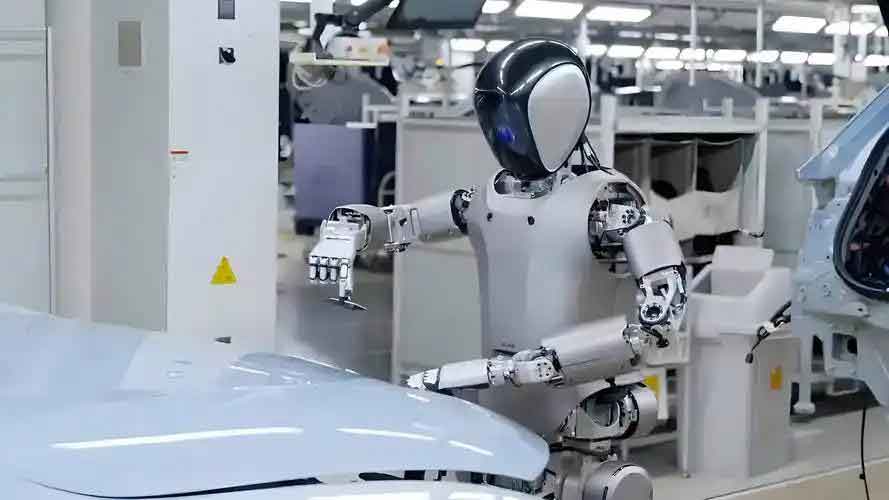
The significance of the event lies not only in the scale of the competition but also in the range of abilities it placed under public scrutiny. Humanoid robots were asked to demonstrate balance, coordination, perception, manipulation, autonomy, and cooperation. Each event became a visible test of technologies that are expected to move from the laboratory into factories, restaurants, homes, cultural venues, and public spaces. The games therefore offered more than entertainment. They offered a live examination of how far humanoid robots have come and how much further they must go.
1. A Global Arena Where Humanoid Robots Move Beyond Walking
The second World Humanoid Robot Games expanded the idea of what a robot competition can be. With 51 events, the program covered athletics, traditional culture, precision tasks, dance, and human-robot interaction. The 1,301 matches created repeated opportunities for humanoid robots to face unpredictable conditions, tight timing, and public expectations. The presence of 666 teams from 16 countries underlined the international character of the field. The participation of 2,056 humanoid robots showed that the event was not a small laboratory demonstration but a large-scale proving ground.
The growth in participation was notable. The number of teams was nearly 1.5 times higher than in the previous edition. The number of robots quadrupled. That increase reflects both the rapid development of humanoid robots and the growing confidence of research teams, universities, companies, and engineering groups. More teams meant more approaches, more software stacks, more mechanical designs, and more strategies for solving the same physical problems. The result was a dense schedule in which humanoid robots repeatedly tested their ability to perceive, decide, move, and recover.
What emerged was a shift from basic mobility to higher-level capability. Humanoid robots were not merely asked whether they could stand or take steps. They were asked whether they could run with stability, coordinate multiple joints, respond to targets, handle objects, and work with human operators. The competition highlighted a transition from “can move” to “can move accurately” and “can move reliably.” That transition is central to the future of humanoid robots because real-world tasks rarely reward motion alone. They reward useful, repeatable, and safe motion.
| Key Feature of the Second World Humanoid Robot Games | Recorded Figure or Detail |
|---|---|
| Events | 51 |
| Matches | 1,301 |
| Countries represented | 16 |
| Teams | 666 |
| Humanoid robots | 2,056 |
| Team growth compared with the previous edition | Nearly 1.5 times more |
| Robot growth compared with the previous edition | Quadrupled |
| Venue | Beijing Ice Ribbon |
The table above shows why the event attracted attention from both technical and public audiences. The scale alone made the gathering a major moment for humanoid robots. Yet the deeper story was about capability. Humanoid robots were tested in events that required them to combine bodies, algorithms, sensors, and human supervision. The games became a mirror of the current state of embodied intelligence.
2. Traditional Culture and Humanoid Robots as Digital Inheritors
One of the most distinctive features of the second World Humanoid Robot Games was the inclusion of many events based on traditional culture. Tai Chi was among the clearest examples. It moved from a performance event at the previous edition to a formal competition at this edition. Humanoid robots entered the arena wearing traditional Tai Chi practice uniforms and performed routines that ranged from opening postures to fully autonomous martial arts movements. The display was highly humanlike and carried a sense of ritual.
During the competition, humanoid robots completed classic Tai Chi actions such as a fist-and-palm salute and the white crane spreads its wings posture. They also attempted difficult movements such as a tiger jump and an aerial outward swing. Teams were even allowed to create their own difficulty levels and present unique skills. This freedom encouraged innovation while keeping the event grounded in the vocabulary of traditional martial arts.
The judging team explained that the Tai Chi event tested the body balance of humanoid robots, multi-joint coordination, motion control, and autonomous decision-making. Each flowing martial arts movement represented the result of research teams pushing the boundaries of embodied intelligent motion. Humanoid robots were not simply repeating a fixed sequence. They were demonstrating whether their bodies and control systems could maintain stability, timing, and form under competitive pressure.
This event also suggested a broader cultural role for humanoid robots. They can become digital inheritors of traditional movement, not by replacing human practitioners but by embodying, preserving, and demonstrating cultural forms in new contexts. Humanoid robots can bring traditional physical culture to audiences that might never attend a martial arts class or live performance. At the same time, the event reveals technical challenges. Traditional Tai Chi requires subtle weight shifts, continuous balance adjustments, and smooth transitions. For humanoid robots, those requirements are demanding tests of control and coordination.
The appearance of humanoid robots in Tai Chi also raised questions about authenticity and interpretation. The goal was not to imitate a human master perfectly. The goal was to use the robot body as a platform for cultural transmission and technical experimentation. When humanoid robots performed the white crane spreads its wings posture or a fist-and-palm salute, they connected ancient movement vocabulary with modern engineering. The result was a striking encounter between tradition and computation.
3. Pitch-Pot Tests the Precision of Humanoid Robots
The pitch-pot competition offered a different kind of challenge. In this event, humanoid robots had to grasp an arrow, stand behind a throwing line 1.5 meters from the pot, aim, swing an arm, and send the arrow toward the opening. A successful throw had to be completed within 3 minutes. When the arrow fell into the pot, the engineers accompanying the robot raised their arms and cheered. The perfect throw meant that the research team had also passed an important examination.
According to Zhang Hua, deputy director of the organizing committee, the pitch-pot event tested target judgment, motion precision, and force control. Humanoid robots needed hand-eye coordination, visual target recognition, upper-limb trajectory planning, stable grasping with dexterous hands, and precise control of throwing force and angle. The event concentrated on the fine manipulation ability of dexterous hands. It also required strong static standing balance.
For humanoid robots, pitch-pot is deceptively difficult. A human player can rely on years of sensorimotor experience, subtle visual cues, and rapid unconscious adjustments. A humanoid robot must convert visual information into a target model, plan a movement trajectory, control multiple joints, regulate grasp force, and release the arrow at the correct moment. Small errors in any stage can cause failure. The event therefore becomes a compact test of perception, planning, and execution.
The pitch-pot competition also showed how traditional sports can be adapted into meaningful engineering benchmarks. The rules are simple enough for audiences to understand, but the underlying capabilities are complex. Humanoid robots must stand still, see the target, decide on a motion, and act with precision. These abilities are relevant far beyond the arena. They matter in manufacturing, logistics, healthcare, service industries, and household tasks. A robot that can aim an arrow into a pot may one day be asked to place a tool, hand over an object, or assemble a component with similar care.
4. Bronze-Masked Humanoid Robots Bring Antiquity to Cheerleading
If Tai Chi and pitch-pot represented the activation of traditional sports, the cheerleading competition offered something more theatrical. Humanoid robots with bronze-statue-like designs took to the floor holding yellow pom-poms. They followed the competition music and performed dance movements. The effect was that of steel dancers wearing Sanxingdui bronze mask motifs, joyfully dancing in the arena.
The research team explained that the appearance of these humanoid robots drew on elements such as the vertical eyes of bronze masks unearthed at Sanxingdui. The design combined those ancient visual elements with a modern robot body. The team hoped that humanoid robots could become a symbol for the cultural output of Sanxingdui.
This event demonstrated that humanoid robots can serve as cultural messengers as well as technical platforms. The cheerleading routine required rhythm, balance, coordination, and expressive movement. At the same time, the visual design carried a cultural narrative. The combination of ancient imagery and modern robotics created a cross-temporal performance. Humanoid robots were not merely copying human cheerleaders. They were creating a new form of display in which heritage and technology interacted.
The cheerleading event also highlighted the importance of design in public acceptance. Humanoid robots can appear intimidating or unfamiliar. When they are given culturally recognizable forms and placed in joyful, non-threatening performances, audiences may relate to them more easily. The bronze-masked humanoid robots showed that engineering and cultural expression can reinforce each other. The robot body becomes a stage for both motion and meaning.
5. Running Events Reveal the Speed and Coordination of Humanoid Robots
On the blue running track, the starting gun set off a different kind of spectacle. Humanoid robots accelerated down the lanes, accompanied by mechanical sounds and loud cheers from the crowd. A series of marks were broken during the competition. One female student in the audience said the most impressive sight was humanoid robots running. She described it as a direct encounter with rapid technological change.
Liu Xingliang, a specially appointed researcher at the Digital China Research Institute of the University of Chinese Academy of Social Sciences, explained that robot racing appears to be a contest of two-legged coordination. In reality, it tests the coordination of the brain as a decision-making center, the cerebellum as a motion-control center, and the body. Compared with the previous year, algorithms, robot joint bodies, and control systems had all been upgraded.
The 400-meter event required humanoid robots to switch between straight sections and curves. The 100-meter event demanded speed and intensity. To the audience, these races may have looked like individual efforts by single humanoid robots. In practice, they depended on close cooperation between the robot and its operators. Although humanoid robots can already run autonomously, their “on” and “off” operations still require human control.
This means that a 4×100-meter relay requires 4 robot starts and 4 robot stops. That is a significant challenge for both the humanoid robots and their teams. Humanoid robots must autonomously sense when to accelerate, when to maintain speed, and when to decelerate. Operators must predict the robot’s state and avoid acting too early or too late, which could cause collisions or errors. The relay therefore becomes a test of timing, communication, and mutual understanding between human and machine.
The running events also revealed the importance of stability and anti-interference ability. Humanoid robots must maintain stable performance at high speed. They need repeated training to improve reliability under dynamic conditions. A fall or a stumble is not only a lost opportunity in competition. It is also a data point that can help engineers understand where control, sensing, or mechanical design needs improvement.
6. Relay Without a Baton: Coordination Between Humanoid Robots and Operators
A particularly interesting detail of the relay event was that there was no physical baton. According to Chen Bin, track and field event manager, the success of a robot handover was judged by two conditions. The handover had to occur within the designated handover area. The two humanoid robots also had to overlap physically. Overlap in position was enough. Fingers could overlap, a hand and a foot could overlap, or a hand and the body could overlap.
In an ideal state, the handover should be completed while both humanoid robots are in motion. This requires high-precision timing. The event therefore tested not only the speed of individual humanoid robots but also their ability to coordinate with one another and with human operators. The relay format turned the race into a system-level challenge. It combined mechanics, control, perception, communication, and human decision-making.
The relay also placed pressure on the stability and anti-interference capacity of humanoid robots. When two robots approach each other at speed, small deviations can become large problems. A delayed command or a slight misalignment can disrupt the handover. Teams had to train their humanoid robots to maintain stable performance under high-speed conditions. They also had to design operational procedures that allowed human supervisors to intervene when necessary without causing delay or danger.
This blend of autonomy and human control is likely to characterize many real-world deployments of humanoid robots. In factories, warehouses, hospitals, and public spaces, humanoid robots may perform tasks autonomously for much of the time, while humans supervise, assist, or intervene during transitions. The relay event offered a vivid model of that relationship. It showed that humanoid robots are not isolated machines. They are part of larger systems that include people, software, infrastructure, and rules.
7. From Arena Performance to Real-World Work
After watching the competition, one parent shared enthusiasm about the experience. The parent said the visit was intended to help the child understand intelligent systems, which are an inevitable trend. The parent noted that the country is developing new quality productive forces, and that greater exposure to these technologies is beneficial for children. Through the humanoid robot games, parents and children experienced both the visual impact of advanced technology and scenes from future life.
The event was not only an experience ground for the public. It was also a comprehensive test of humanoid robots. Every ability demonstrated in the arena corresponds to a possible future profession or application. Running and balancing relate to mobility in unstructured environments. Tai Chi relates to coordinated motion and cultural performance. Pitch-pot relates to precision manipulation. Cheerleading relates to expressive interaction and public engagement. Relay events relate to teamwork, timing, and human-robot collaboration.
Liu Xingliang observed that the purpose of the competition is changing. It is now about verifying whether humanoid robots can truly work. The games are more important for breaking down the technical barriers that separate laboratories from the real world. Today, teams compete for gold medals. In the future, the market will compete for orders. This shift from demonstration to deployment is one of the most important themes in the development of humanoid robots.
A co-founder of Lingxin Qiaoshou Co., Ltd. expressed a similar view. The co-founder said that every step a robot takes is not wasted, and every fall is not wasted. The data has already been recorded. Even failure has value. This perspective is essential in robotics. Humanoid robots improve through iteration. Each failed attempt provides information about balance, control, perception, or planning. The arena becomes a data-generation engine for future capability.
Every action on the field is a real test. The most important goal is not simply to perform a trick but to develop skills that can solve problems. Each improvement made by humanoid robots lays a realistic step toward a future of human-robot symbiosis. The games therefore serve as both a public showcase and a research accelerator.
| Event Area | Capability Tested in Humanoid Robots | Potential Real-World Direction |
|---|---|---|
| Tai Chi | Balance, multi-joint coordination, motion control, autonomous decision-making | Cultural performance, rehabilitation assistance, coordinated movement |
| Pitch-pot | Target judgment, hand-eye coordination, dexterous grasping, force and angle control | Precision assembly, object handover, service tasks |
| Cheerleading | Rhythm, expressive motion, public interaction, cultural design | Entertainment, education, public engagement |
| 100-meter and 400-meter running | Speed, balance, curve handling, high-speed stability | Mobility in complex environments, rapid response |
| 4×100-meter relay | Timing, coordination, operator interaction, anti-interference | Teamwork with humans, logistics, collaborative operations |
The table illustrates how varied the tests were. Humanoid robots were not judged by a single metric. They were assessed across a spectrum of physical and cognitive abilities. The event showed that progress in humanoid robots depends on integrating many subsystems. A strong robot body is not enough. Control algorithms, perception systems, planning software, human-machine interfaces, and safety mechanisms must all work together.
8. What the Competition Says About the Future of Humanoid Robots
The second World Humanoid Robot Games made one point clear: humanoid robots are moving from isolated demonstrations toward integrated capabilities. The ability to walk is now a baseline. The more valuable abilities are running, balancing, aiming, manipulating, dancing, and cooperating. These abilities are difficult to achieve because they require real-time perception, decision-making, and control. They also require the robot to operate in a world designed for human bodies.
Humanoid robots are attractive because they can potentially use human tools, navigate human spaces, and communicate through humanlike forms. But that same humanlike form creates engineering challenges. Bipedal balance is inherently unstable. Dexterous hands require precise force control. Social interaction requires interpretation of cues and context. The games placed these challenges side by side, allowing researchers and the public to see both progress and limitations.
The event also showed that humanoid robots are becoming platforms for cultural expression. Tai Chi, pitch-pot, and bronze-mask cheerleading were not merely side events. They demonstrated that humanoid robots can be adapted to local culture and heritage. This adaptability may help humanoid robots gain acceptance in different societies. When a robot performs a familiar cultural action, audiences may see it not only as a machine but also as a participant in shared traditions.
At the same time, the competition revealed the continued importance of human operators. In running events, humanoid robots could run autonomously, but start and stop operations still required control. In relay events, operators had to predict robot states and avoid timing errors. This does not diminish the achievement of autonomy. It shows that autonomy and human supervision will coexist for the foreseeable future. The most effective systems will combine autonomous capabilities with human judgment and intervention.
Another lesson concerns data. Every run, throw, dance, and handover generates information. Even failed attempts produce valuable data. The co-founder of Lingxin Qiaoshou emphasized that every step and every fall has value because the data is recorded. This data-driven improvement cycle is central to robotics. Humanoid robots become better not simply because of better hardware but because of continuous learning from real-world tests. Competitions provide structured, high-pressure environments for generating that data.
- Humanoid robots are being tested across mobility, manipulation, perception, and interaction.
- Humanoid robots are moving from laboratory demonstrations toward practical task validation.
- Humanoid robots still rely on human operators for key transitions and safety.
- Humanoid robots can serve as cultural carriers as well as technical platforms.
- Humanoid robots improve through repeated real-world trials, including failures.
These points do not mean that humanoid robots are ready for every task. They mean that the direction of development is becoming clearer. The games showed what works, what remains fragile, and what must be improved. The event was therefore a public scorecard for the field. It measured not only speed and strength but also reliability, precision, and coordination.
9. Humanoid Robots and the Making of a Human-Robot Symbiotic Future
The journey from the competition arena to daily life will not be a single leap. It will be a series of incremental steps. Humanoid robots must become more stable, more perceptive, more dexterous, and more trustworthy. They must learn to work alongside people without causing harm or disruption. They must also become affordable and maintainable. The games did not solve these challenges, but they made them visible.
In the arena, humanoid robots performed Tai Chi with ritual-like form. They threw arrows into pots with precision. They danced with bronze-inspired designs. They sprinted on blue tracks and attempted relay handovers without a baton. Each of these activities captured a different dimension of embodied intelligence. Together, they showed that humanoid robots are becoming more capable and more versatile.
Outside the arena, humanoid robots appeared in a robot restaurant and a human-robot interaction market. These settings suggested future applications in food service, retail, entertainment, education, and care. The presence of humanoid robots in such contexts also raised questions about safety, trust, and social acceptance. The games provided a controlled environment for exploring those questions in public.
The second World Humanoid Robot Games was therefore more than a sporting event. It was a global meeting point for engineering teams, a public education platform, and a stress test for humanoid robots. The 51 events, 1,301 matches, 16 countries, 666 teams, and 2,056 humanoid robots created a dense field of experimentation. The participation growth, with nearly 1.5 times more teams and a quadrupling of robots, reflected the momentum behind the field.
For humanoid robots, the next stage will be measured not only by medals but by usefulness. Can they work reliably in a factory? Can they assist in a hospital? Can they serve in a restaurant? Can they support education or cultural exhibition? Can they collaborate with humans in unpredictable environments? The competition offered early answers while exposing the distance still to travel.
The most important outcome may be the realization that humanoid robots are not just machines that imitate human form. They are systems that connect computation, mechanics, sensing, culture, and human intention. When they succeed, they expand what machines can do. When they fail, they generate knowledge for the next attempt. In this sense, every performance by humanoid robots contributes to a larger project: building a future in which humans and humanoid robots can coexist, cooperate, and create value together.
The games ended, but the work continues. Humanoid robots will keep running, balancing, grasping, dancing, and learning. Their progress will be measured in laboratories, factories, restaurants, homes, and public spaces. The second World Humanoid Robot Games provided a vivid snapshot of that future in motion. It showed that humanoid robots are no longer only a promise. They are becoming participants in the world.