
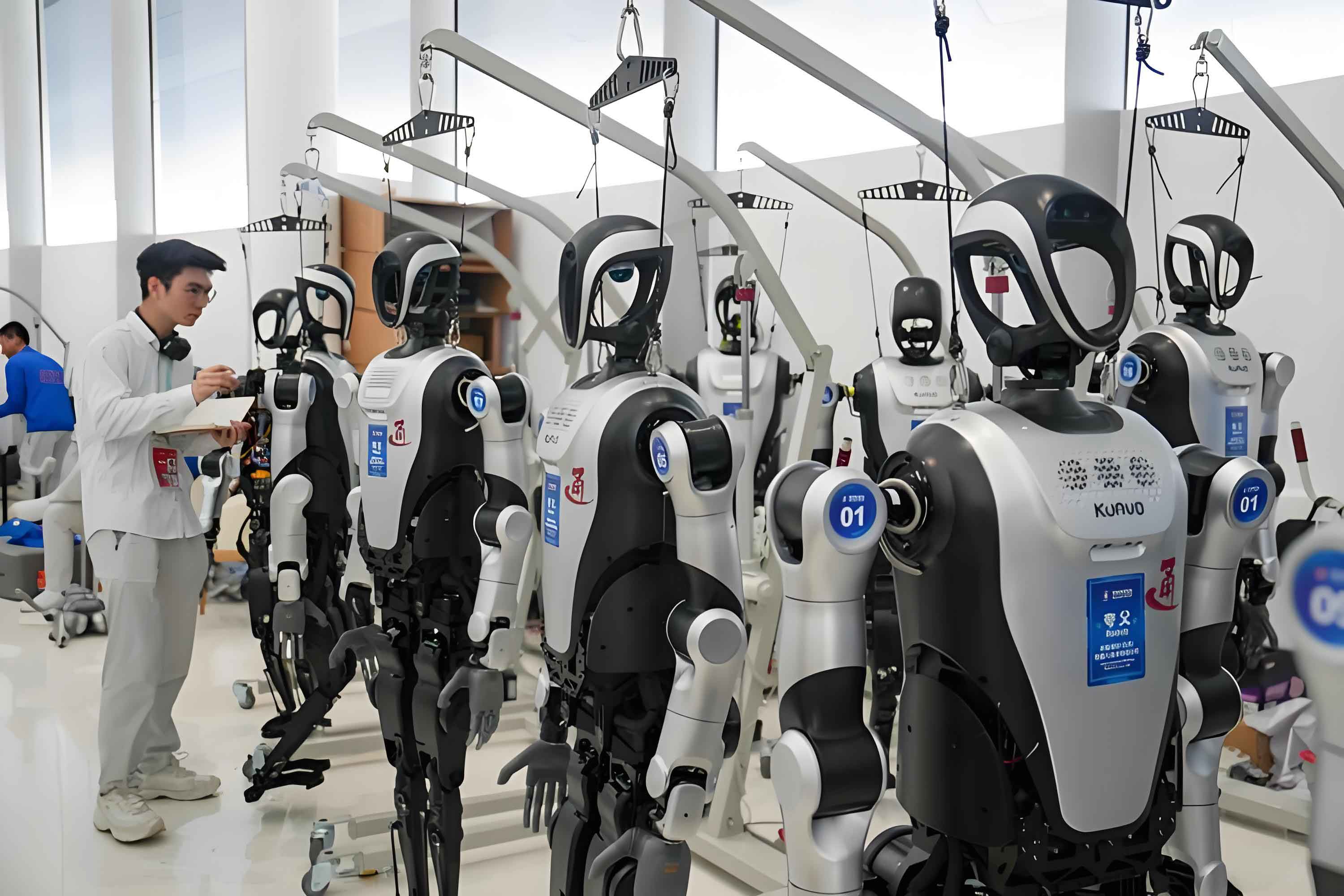
The Second World Humanoid Robot Games have brought together advanced humanoid robots, engineering teams, researchers, operators, and audiences from around the world. While the competitions and demonstrations continue with intensity, a less visible but essential layer of support is working behind the scenes to keep every humanoid robots event safe, connected, monitored, and orderly. State-owned capital forces are providing that support, forming a security foundation for the global gathering of humanoid robots and the complex systems that surround them.
Capital Information, a team under Beijing Data Group, which is affiliated with Beijing State-owned Capital Operation and Management Company, has drawn on practical experience from the first edition of the event and has iterated its platform capabilities. The result is a smart command foundation for the World Humanoid Robot Games, designed to use digital technology to protect the orderly operation of a world-class humanoid robots event. At the same time, Digital Certification, also under Beijing Data Group, has formed a specialized assurance team to protect the network and information security of the humanoid robots event. Together, these efforts create a coordinated security base for humanoid robots competitions, humanoid robots demonstrations, and the broader event environment.
The presence of humanoid robots in a major international event raises unique requirements. Humanoid robots must be monitored, humanoid robots must remain connected to event systems, humanoid robots must operate within safe venues, and humanoid robots must be supported by reliable data and cybersecurity. The event is therefore not only a stage for humanoid robots technology but also a test of integrated command, real-time awareness, emergency response, and digital resilience. The state-owned capital support described in the event’s assurance work addresses these requirements directly, with humanoid robots at the center of the operational picture.
- Capital Information Builds the Event Command System for the Humanoid Robots Games
Capital Information has built the event command system for the Second World Humanoid Robot Games by combining experience from the first event with upgraded platform capabilities. The team has developed a smart command foundation for the World Humanoid Robot Games, using digital technology to support the safe and orderly operation of a global humanoid robots event. This command foundation is not limited to one venue or one type of activity. It is designed to connect event information, security posture, and full-dimensional status monitoring of humanoid robots into one integrated collaborative command platform.
The platform supports real-time aggregation of event information, dynamic tracking of venue scenes, and full coverage of security across multiple venues. For humanoid robots competitions, this means that event managers can see what is happening in the competition areas, understand the status of humanoid robots, and coordinate responses across different locations. For humanoid robots demonstrations, this means that live conditions can be followed closely and that changes in the venue can be reflected quickly. For humanoid robots operations, this means that the event can remain efficient, coordinated, safe, and controllable through digital support.
The system is built around several clear priorities. It focuses on event information, security posture, and full-dimensional status monitoring of humanoid robots. It brings these elements together so that humanoid robots are not treated as isolated machines but as part of a connected event ecosystem. The command platform helps humanoid robots teams, venue staff, security personnel, and event organizers work from a shared operational picture. In this way, the humanoid robots event can proceed with stronger coordination and faster information flow.
System Layer Operational Focus Role in the Humanoid Robots Event Unified information aggregation Collection and convergence of event information Supports coordinated decisions affecting humanoid robots and event operations Real-time situational awareness Dynamic awareness of venues and event conditions Helps teams track humanoid robots and respond to changing situations Network and data security protection Protection of systems, networks, and data Strengthens trust in the digital environment surrounding humanoid robots Full-domain monitoring Monitoring across competition and event areas Provides broader visibility for humanoid robots competitions and venue safety Panoramic view Whole-event view of operations Helps command teams understand the full context of humanoid robots activities Whole-process perception Continuous collection of status indicators Supports real-time understanding of humanoid robots conditions and event dynamics The command platform therefore acts as a digital backbone for the humanoid robots event. It allows the event to move from fragmented information to integrated awareness. It allows humanoid robots to be monitored alongside the venues, people, and events that surround them. It allows security and operations teams to coordinate in a more unified way. For a global humanoid robots gathering, this kind of command foundation is essential because humanoid robots involve mechanical systems, intelligent software, communication links, live spectators, and complex schedules.
Capital Information’s work reflects a broader principle: as humanoid robots become more capable and more visible, the systems that support humanoid robots events must also become more capable. The command system for humanoid robots is not simply a display platform. It is a coordination environment for humanoid robots competitions, humanoid robots safety, humanoid robots monitoring, and humanoid robots event management. It supports the event’s efficient collaboration and safe, controllable operation through digital means.
- A Three-in-One Smart Dispatch System for Humanoid Robots Events
The system uses full-domain information aggregation as its foundation, real-time situational awareness as its method, and network and data security protection as its bottom line. On this basis, it creates a three-in-one smart dispatch system for the humanoid robots event: full-domain monitoring, panoramic view, and whole-process perception. This three-in-one structure is designed to support humanoid robots competitions and the wider event environment with layered awareness and coordinated response.
Full-domain monitoring gives the humanoid robots event a broad operational view. Panoramic view gives command teams a whole-event perspective. Whole-process perception gives the event a continuous understanding of humanoid robots status indicators and dynamic data. Together, these three dimensions help humanoid robots event managers move from isolated observations to integrated command. They help humanoid robots teams, venue operators, and security staff share a common understanding of conditions. They also help the event respond to incidents in a closed-loop manner.
For humanoid robots, the value of this three-in-one system is practical. Humanoid robots may move, interact, perform tasks, and operate in shared spaces. Humanoid robots may also depend on networks, sensors, power, and control systems. A smart dispatch system for humanoid robots must therefore connect what is happening in the venue with what is happening inside the humanoid robots systems and with what is happening in the digital infrastructure. The three-in-one model does exactly that by combining monitoring, perspective, and perception.
The system supports the humanoid robots event by helping teams identify abnormal conditions, locate key alerts, and coordinate responses. It supports the humanoid robots event by giving decision-makers a real-time view of the operational environment. It supports the humanoid robots event by reinforcing network and data security as a baseline requirement. In this sense, the smart dispatch system is not only a tool for watching humanoid robots; it is a tool for protecting the entire humanoid robots event ecosystem.
- Full-Domain Monitoring and Panoramic View for Humanoid Robots Competitions
The system relies on video technology to achieve full-domain monitoring across competition venues. This monitoring supports rapid identification of unexpected incidents and closed-loop handling. For humanoid robots competitions, rapid identification is important because humanoid robots may operate in dynamic environments, and event schedules may require quick decisions. Closed-loop handling means that an incident is not only detected but also followed through with a coordinated response.
The panoramic view presents the full picture of event operations. It enables agile switching among multiple live event feeds and precise positioning of key alert information. For humanoid robots competitions, this means that command teams can move between different views of the humanoid robots event without losing context. They can see the broader venue while also focusing on specific humanoid robots, specific competition zones, or specific alerts. This combination of breadth and precision supports better situational awareness for humanoid robots events.
In a humanoid robots event, the venue is more than a background. The venue is an active part of the humanoid robots operating environment. Humanoid robots may need clear pathways, safe boundaries, reliable communications, and coordinated schedules. Full-domain monitoring helps protect these conditions. Panoramic view helps event leaders understand how humanoid robots activities fit into the larger event flow. Together, they help the humanoid robots event remain safe, visible, and manageable.
The use of video technology also supports the humanoid robots event by strengthening event-wide observation. When humanoid robots are competing or demonstrating, multiple areas may require attention at the same time. Full-domain monitoring helps ensure that no critical area is overlooked. Panoramic view helps ensure that decisions are made with awareness of the whole event. For humanoid robots, which can attract intense interest and require careful handling, this layered visibility is a significant operational advantage.
- Whole-Process Perception of Humanoid Robots and Integrated Event Awareness
Through whole-process perception, the system collects and monitors various status indicators of embodied intelligent humanoid robots. It enables real-time understanding of dynamic data from competing humanoid robots. This is a critical capability because humanoid robots are not static exhibits. Humanoid robots are embodied intelligent systems that may move, respond, and interact. Monitoring humanoid robots status indicators helps event teams understand the condition of humanoid robots during competitions and demonstrations.
The system achieves integrated perception of people, machines, venues, and events. In this integrated picture, humanoid robots are one part of a larger operational environment. People include teams, operators, officials, spectators, and support staff. Machines include humanoid robots and related technical systems. Venues include competition areas and event facilities. Events include schedules, activities, and incidents. By bringing these elements together, the system provides real-time, trusted data support and a scientific decision basis for on-site command and emergency response.
For humanoid robots, integrated perception means that event managers can consider humanoid robots conditions together with venue conditions and human activity. If a humanoid robots system shows an abnormal status, the event team can connect that information with the venue view and the event schedule. If a venue condition changes, the team can consider how it may affect humanoid robots operations. If an emergency occurs, the team can use integrated data to support a coordinated response.
This approach reflects the growing maturity of humanoid robots events. Humanoid robots are not simply competing in isolation. Humanoid robots are part of a connected event system that includes data, networks, security, people, and infrastructure. Whole-process perception helps make that connection visible and actionable. It helps humanoid robots event managers make decisions based on real-time information rather than assumptions. It helps the humanoid robots event maintain safety while supporting the performance and demonstration of humanoid robots technology.
- Round-the-Clock Technical Duty and Rapid Emergency Response
During the event, Capital Information has activated a special highest-level assurance mode. It implements round-the-clock continuous technical duty. It strengthens real-time situational awareness, front-loaded risk prevention and control, and rapid emergency response. With digital operations capabilities, it builds a strong defense line for the safe operation of the system. This defense line supports the humanoid robots event and helps ensure that humanoid robots competitions can proceed under stable technical conditions.
Round-the-clock technical duty is especially important for humanoid robots events because humanoid robots depend on continuous digital and operational support. Humanoid robots may compete across long schedules. Humanoid robots may require live data transmission. Humanoid robots may be monitored through multiple systems. Humanoid robots may generate alerts that need immediate attention. A continuous duty model helps ensure that humanoid robots event systems remain watched, supported, and protected at all times.
Front-loaded risk prevention and control means that the humanoid robots event does not wait for problems to grow before responding. It seeks to identify risks earlier, evaluate them earlier, and handle them earlier. Rapid emergency response means that when an incident occurs, the humanoid robots event team can act quickly and in a coordinated manner. Together, these practices support the safety and reliability of the humanoid robots event.
The highest-level assurance mode for the humanoid robots event also reflects the importance of humanoid robots as a global technology theme. Humanoid robots attract attention from researchers, industry, media, and the public. Humanoid robots events require reliable operations because they showcase technical progress and public trust. The round-the-clock technical duty described here helps protect that trust by keeping humanoid robots event systems under continuous professional care.
- Digital Certification Safeguards Network and Information Security for the Humanoid Robots Games
Digital Certification has formed a specialized assurance team to support the Second World Humanoid Robot Games. The team has refined special plans and emergency plans. It has built a full-process assurance mechanism covering pre-event inspection, in-event monitoring, emergency response, and post-event review. The mechanism ensures that tasks are assigned to positions, responsibilities are assigned to people, and duty is in place. For the humanoid robots event, this structured approach helps protect network and information security across the event lifecycle.
Network and information security are fundamental to a humanoid robots event. Humanoid robots rely on data, communications, control systems, and event information systems. Humanoid robots competitions may involve live results, status monitoring, scheduling, security alerts, and operational coordination. Humanoid robots demonstrations may involve public-facing systems and venue networks. If network and information security are not protected, the humanoid robots event could face disruption, loss of trust, or operational risk. Digital Certification’s assurance work addresses these concerns directly.
The full-process mechanism begins before the humanoid robots event. Pre-event inspection helps identify potential weaknesses and preparation gaps. In-event monitoring helps maintain awareness during the humanoid robots competitions and related activities. Emergency response helps address incidents quickly when they arise. Post-event review helps capture lessons and improve future assurance for humanoid robots events. This lifecycle approach supports continuous protection rather than one-time checking.
By ensuring that tasks, responsibilities, and duty are clearly assigned, Digital Certification supports coordinated action. The humanoid robots event involves many stakeholders and complex systems. Clear responsibility helps avoid gaps and delays. It helps the humanoid robots event maintain order in cybersecurity work. It helps ensure that humanoid robots systems and event systems receive the attention they require.
- A Full-Process Protection Mechanism from Pre-Event Inspection to Post-Event Review
Facing highly integrated event information systems and a complex network environment, Digital Certification has applied its professional strengths. It has conducted comprehensive security health checks and protection reinforcement for event-related systems and data. Through normalized monitoring and a rapid response mechanism, it promotes early discovery, early assessment, and early handling of risks. This work helps ensure that assurance tasks are connected in an orderly way and implemented effectively.
The humanoid robots event relies on integrated information systems. These systems may connect competition data, venue information, security status, humanoid robots monitoring, and event operations. The more integrated the systems are, the more important it is to protect them as a whole. Digital Certification’s security health checks and reinforcement work help strengthen the humanoid robots event environment. They help protect the data and systems that support humanoid robots activities.
Assurance Stage Main Action Goal for the Humanoid Robots Event Pre-event inspection Review systems, data, and preparation conditions Identify risks before humanoid robots activities begin In-event monitoring Maintain normalized monitoring and rapid response Support continuous protection during humanoid robots competitions Emergency response Respond quickly to incidents and emerging risks Reduce disruption to humanoid robots event operations Post-event review Review experience and improve future protection Strengthen future assurance for humanoid robots events Normalized monitoring supports the humanoid robots event by keeping security visibility active. Rapid response supports the humanoid robots event by reducing the time between detection and action. Early discovery, early assessment, and early handling help prevent small issues from becoming larger problems. For humanoid robots, which depend on reliable digital systems, this proactive model is especially valuable.
The full-process protection mechanism also supports coordination among different teams. The humanoid robots event includes technology teams, venue teams, security teams, and event organizers. A shared assurance framework helps these groups work toward the same goals. It helps ensure that the humanoid robots event remains safe, stable, and well managed from preparation through completion.
- Professional Cybersecurity for Complex Event Systems and Networks
Digital Certification has used its professional advantages in the face of highly integrated event information systems and complex network conditions. It has carried out comprehensive security health checks and protection reinforcement for event-related systems and data. Through continuous monitoring and rapid response mechanisms, it has advanced early discovery, early assessment, and early handling of risks. This approach helps ensure that all assurance work is linked smoothly and implemented fully.
As a leading domestic cybersecurity solution provider, Digital Certification has repeatedly undertaken cybersecurity assurance tasks for major national events. That experience supports its work for the humanoid robots event. Major events require disciplined planning, clear responsibilities, continuous monitoring, and fast response. Humanoid robots events add another layer because humanoid robots themselves are advanced technology systems. Protecting the humanoid robots event therefore means protecting both the event infrastructure and the digital environment around humanoid robots.
The company completed the current stage of network security assurance with a collaborative and rigorous working style. For the humanoid robots event, this style matters because humanoid robots competitions and demonstrations depend on many moving parts. Network security work must be coordinated with event operations. Information security work must support humanoid robots monitoring and event management. Emergency response must be ready without disrupting the humanoid robots event experience.
Digital Certification’s role illustrates how cybersecurity is part of the foundation for humanoid robots events. Humanoid robots can only perform reliably when the systems around them are trustworthy. Humanoid robots data can only be useful when it is protected. Humanoid robots event operations can only remain stable when networks and information systems are secure. The assurance work therefore strengthens the entire humanoid robots event environment.
- Proven Experience in Major National Events and Long-Term Commitment
As a leading cybersecurity solution provider in the country, Digital Certification has repeatedly taken on cybersecurity assurance tasks for major national events. Looking to the future, it will continue to deepen its work, improve its cybersecurity assurance and emergency response capabilities for major events, and use technological innovation to protect cybersecurity. These efforts are intended to contribute to the high-quality development of the capital and to the strategic goal of building a strong cyber nation. In the context of humanoid robots, such capabilities help create a safer digital environment for humanoid robots innovation, humanoid robots competitions, and humanoid robots public engagement.
The humanoid robots event is a reminder that advanced technology and strong security must develop together. Humanoid robots can inspire audiences and demonstrate progress. Humanoid robots can support research, industry, and education. Humanoid robots can also introduce new operational and security considerations. The work of Capital Information and Digital Certification shows how state-owned capital can support humanoid robots events by building command systems and cybersecurity assurance around them.
The future of humanoid robots will depend on many factors: mechanical design, intelligence, safety, energy, communication, and public trust. Large-scale humanoid robots events bring these factors into one visible setting. They require reliable digital command, real-time awareness, network security, and emergency response. The security foundation described here is therefore not separate from humanoid robots progress. It is part of the conditions that allow humanoid robots to be demonstrated, tested, and celebrated in a safe and orderly way.
For humanoid robots teams, humanoid robots organizers, and humanoid robots audiences, the value of this assurance work may be most visible in what does not happen: disruption, insecurity, loss of data, or operational confusion. The quiet protection behind the humanoid robots event allows the competition and demonstrations to remain focused on humanoid robots performance, humanoid robots technology, and humanoid robots innovation. That is the practical meaning of a security foundation for the Second World Humanoid Robot Games.
- Conclusion: A Strong Digital and Security Backbone for Humanoid Robots on the World Stage
The Second World Humanoid Robot Games are a global stage for humanoid robots. Behind the intense competitions and dynamic demonstrations, state-owned capital forces are working to keep the humanoid robots event safe and orderly. Capital Information has built a smart command foundation for the World Humanoid Robot Games, using digital technology to support event information, security posture, and full-dimensional monitoring of humanoid robots. Digital Certification has provided network and information security assurance for the humanoid robots event, with a full-process mechanism and professional cybersecurity capabilities. Together, these efforts form a security base for humanoid robots competitions and humanoid robots demonstrations.
The command system for humanoid robots connects event information, venue monitoring, and status data. It supports full-domain monitoring, panoramic views, and whole-process perception. It helps event teams track humanoid robots, identify incidents, and coordinate responses. It provides real-time, trusted data support and a scientific basis for on-site command and emergency response. For humanoid robots, this means that safety and operations are supported by an integrated digital environment.
The cybersecurity assurance for humanoid robots protects systems, networks, and data across pre-event inspection, in-event monitoring, emergency response, and post-event review. It promotes early discovery, early assessment, and early handling of risks. It ensures tasks are assigned to positions and responsibilities are assigned to people. For humanoid robots, this means that the digital foundation of the event is protected and that humanoid robots activities can proceed with greater confidence.
As humanoid robots continue to advance, events like the Second World Humanoid Robot Games will become increasingly important. They will test not only humanoid robots capabilities but also the ability of organizers to manage complex, integrated, and secure environments. The work of state-owned capital forces demonstrates a model in which digital command, real-time awareness, network security, and emergency response come together around humanoid robots. This model helps protect the humanoid robots event today and contributes to the broader development of humanoid robots in the future.
The humanoid robots on the world stage may capture the spotlight, but the security foundation behind them is equally important. Humanoid robots need reliable systems. Humanoid robots need protected data. Humanoid robots need coordinated event management. Humanoid robots need rapid response when conditions change. By strengthening the security foundation for the Second World Humanoid Robot Games, state-owned capital forces are helping ensure that humanoid robots can compete, demonstrate, and inspire in a safe, stable, and well-managed environment. The humanoid robots event continues, and behind it, the digital and cybersecurity backbone continues to stand guard.