
On August 25, 2026, the National Humanoid Robot Industry Standard System Construction Guide (2026 Edition) was released for public comment. The document is intended to use the construction of a standards system as a leading force to promote the rapid and healthy development of China’s humanoid robots industry. The consultation places humanoid robots at the center of a broader effort to connect innovation, manufacturing, applications, safety and international rule-making.
The context is a humanoid robots sector that has expanded quickly. Data from the Ministry of Industry and Information Technology showed that in 2025, revenue of above-scale enterprises in China’s humanoid robots industry exceeded 300 billion yuan, with average annual growth of more than 20 percent over the past five years. In the first half of 2026, revenue reached 165.5 billion yuan, up 24.5 percent year on year. These figures indicate that humanoid robots are no longer a narrow laboratory topic; they are becoming an industrial category with measurable scale, investment and commercial activity.
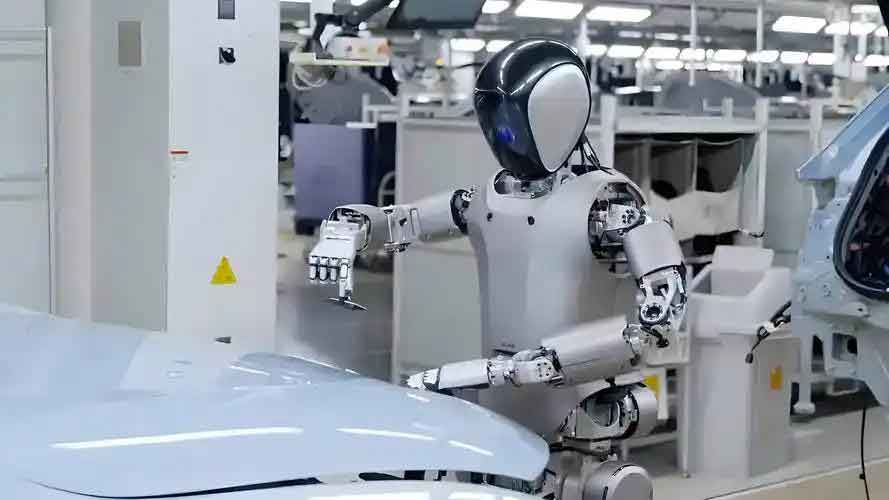
Humanoid robots technologies and products have been widely applied across many areas of the national economy and social development, becoming an important force for high-quality development. As humanoid robots move from demonstration projects toward broader deployment, the need for a scientific, reasonable, systematic and complete standards system has become an unavoidable requirement for rapid and healthy industrial growth. Standards can reduce uncertainty, clarify interfaces, improve safety and enable different parts of the humanoid robots value chain to work together.
China has attached importance to standardizing future industries. In August 2023, four departments, including the Ministry of Industry and Information Technology, jointly issued the New Industry Standardization Leading Project Implementation Plan (2023-2035). That plan called for forward-looking standards research in future industries, including humanoid robots. More recently, the 2026 Humanoid Robot Industry Development Report, released at the World Robot Conference, further proposed accelerating the construction of a “four-in-one” industrial ecosystem for humanoid robots, with standards development as the lead, talent cultivation as the foundation, international cooperation as expansion, and innovation infrastructure as the guarantee.
The Guide now open for public comment makes the direction more specific. It calls for establishing and improving the standards system for humanoid robots, with key breakthroughs in basic commonality, brain-inspired and intelligent computing, limbs and components, complete machines and systems, applications, and safety ethics. By 2028, the aim is to build a systematic, scientific and coordinated standards system. These arrangements are described as laying a solid foundation for fast and sound development of the industry.
To turn that foundation into real competitiveness and initiative, the document points to efforts in three dimensions. These dimensions are not isolated technical tasks. They concern global standard-setting power, the integration of a fragmented industrial ecosystem, and the ethical and safety boundaries that will shape public acceptance of humanoid robots. Each dimension affects the others, and together they form a practical agenda for the next stage of humanoid robots development.
| Priority area | Scope of standards work |
|---|---|
| Basic commonality | Foundation concepts, terminology, architecture and shared requirements for humanoid robots. |
| Brain-inspired and intelligent computing | Intelligence models, computing approaches and evaluation needs for humanoid robots. |
| Limbs and components | Actuators, joints, sensors, structures and component-level performance for humanoid robots. |
| Complete machines and systems | Integration, system performance, reliability and coordination of humanoid robots. |
| Applications | Deployment requirements and use-case guidance for humanoid robots across sectors. |
| Safety ethics | Ethical constraints, social impact assessment and safety boundaries for humanoid robots. |
The priority areas show that the standards system for humanoid robots is not limited to one technical layer. It reaches from basic definitions to intelligence, hardware, systems, applications and social rules. This breadth is necessary because humanoid robots combine mechanical engineering, artificial intelligence, control systems, communications, human-machine interaction and public policy. A weakness in any one area can slow deployment or create risk.
- Building the Standards System for Humanoid Robots from the Height of Global Industry Development
China has become an important source of global humanoid robots industry development. Latest data showed that in the first half of 2026, China’s humanoid robots shipments exceeded 40,000 units, and its global share further increased to 97 percent. The scale advantage should be further converted into a voice advantage in standard-setting. China should strive to become an important maker of standards in the humanoid robots field, allowing the standards system to play a greater role.
The table below summarizes key reported indicators for the humanoid robots sector. These figures provide context for why standards for humanoid robots have moved up the policy agenda. They also show why the choices made in standards work will have consequences beyond a single market or a single technology cycle.
Key reported indicators for the humanoid robots sector Indicator Period Reported figure Revenue of above-scale enterprises in the humanoid robots industry 2025 Exceeded 300 billion yuan Average annual revenue growth of above-scale humanoid robots enterprises Past five years More than 20 percent Revenue of above-scale humanoid robots enterprises First half of 2026 165.5 billion yuan Year-on-year revenue growth First half of 2026 24.5 percent Humanoid robots shipments First half of 2026 More than 40,000 units China’s share of global humanoid robots shipments First half of 2026 97 percent Domestic complete machine enterprises for humanoid robots 2025 More than 140 New enterprises established in the humanoid robots field First half of 2026 116,000 Previously, there was no accurate definition of humanoid robots worldwide. Now China has clearly defined humanoid robots as a new-generation intelligent terminal driven by artificial intelligence, with human-like form and capabilities, and able to autonomously execute complex tasks. This is an important contribution to the international standards system. It also means that humanoid robots should develop under an accurate definition, rather than being a label that any product can casually put on. The definition matters for standards because it determines scope, testing, interoperability, safety requirements and policy support.
A clear definition can prevent confusion in markets and regulation. If humanoid robots are defined too broadly, ordinary machines or software tools may be mislabeled, creating unrealistic expectations and uneven safety treatment. If humanoid robots are defined too narrowly, valuable innovations may fall outside supportive frameworks. The definition offered in the Guide tries to capture both the physical and intelligent dimensions of humanoid robots: artificial intelligence drives them, they have human-like form and capabilities, and they can autonomously execute complex tasks. That combination is central to the standards work that follows.
The Guide emphasizes establishing a tracking and research mechanism for key international standards, encouraging and guiding domestic enterprises and institutions to actively participate in international standardization exchanges and cooperation, and promoting mutual recognition and alignment between Chinese and foreign standards. For China’s humanoid robots industry, this has both immediate and long-term significance. Immediate because global markets require compatibility and confidence; long-term because the rules written today will shape market access, intellectual property, data flows and safety expectations for years.
International standards for humanoid robots can help avoid a patchwork of national requirements that raise costs for manufacturers and confuse users. They can also support responsible innovation by giving researchers and companies common reference points for performance, safety and ethics. If humanoid robots are to move across borders, serve multiple industries and interact with people in public and private spaces, mutual recognition and alignment are not optional. They are part of the infrastructure of trust.
China’s scale in humanoid robots gives it a practical basis for contributing to international standards. The country has a large and growing base of enterprises, applications and supply-chain activity. At the same time, influence in standardization depends not only on market size but on the quality of technical proposals, the credibility of testing and certification, and the willingness to cooperate with international partners. The Guide’s call for tracking key international standards and encouraging participation reflects an understanding that standards are a form of global public infrastructure, even when they also carry competitive implications.
For humanoid robots, standards also need to cover terminology and classification. Without a shared vocabulary, regulators, developers, buyers and users may talk past one another. A clear definition of humanoid robots can help distinguish them from other intelligent machines, such as industrial robots, service robots or software agents. That distinction is important for safety rules, liability, insurance and public communication. The definition offered in the Chinese document is therefore more than a semantic exercise; it is a foundational step for the humanoid robots standards system.
Global leadership in humanoid robots standards will also depend on demonstration and evidence. Standards are more persuasive when they are supported by test methods, performance data and real-world experience. China’s large domestic market can provide diverse scenarios for humanoid robots, from manufacturing and logistics to service and household use. That experience can feed into international discussions. However, it must be translated into transparent, measurable and interoperable requirements. Otherwise, market scale alone will not produce lasting influence.
The international dimension also involves talent and institutions. Participating in international standardization requires experts who understand both technology and diplomacy, and organizations that can sustain long-term engagement. The “four-in-one” ecosystem proposed in the 2026 Humanoid Robot Industry Development Report places talent cultivation as a foundation and international cooperation as expansion. For humanoid robots, these elements reinforce each other: standards work builds networks, networks build capacity, and capacity improves the ability to shape future rules.
Standards for humanoid robots can become a bridge between innovation and regulation. If they are too rigid, they may slow experimentation. If they are too loose, they may allow risk to accumulate. The Guide’s approach suggests a balance: focus on key areas, build a coordinated system by 2028, and engage internationally. This balance is especially important for humanoid robots because the technology is advancing quickly and applications are still emerging. A learning-oriented standards system is more likely to remain relevant than a static rulebook.
In global standardization, humanoid robots are a relatively new category. The rules that emerge will likely influence not only trade but also research collaboration, certification and public procurement. If China can help shape those rules through evidence and cooperation, its humanoid robots industry may gain smoother access to international markets. If it does not, its exporters may face duplicated testing, conflicting requirements and higher compliance costs.
Standards also interact with intellectual property. In some cases, standards may incorporate patented technologies, requiring licensing rules. In other cases, open standards may reduce barriers but raise questions about value capture. For humanoid robots, where innovation spans hardware, software and artificial intelligence, the interface between standards and intellectual property must be managed carefully. Transparent and balanced approaches can encourage participation while protecting legitimate rights.
Small and medium-sized enterprises have a strong interest in humanoid robots standards. They often lack the resources to comply with many different national requirements or to develop every component in-house. Common standards can lower entry barriers and allow them to focus on specialized strengths. For humanoid robots, a vibrant supplier base is essential because no single company is likely to excel in every component, model and application.
Public procurement can also use standards to promote safe and reliable humanoid robots. Governments and public institutions may be early buyers in areas such as logistics, inspection, education and care. If procurement requirements are aligned with standards, they can create demand for compliant humanoid robots and provide real-world feedback. This can accelerate learning and improvement without compromising safety.
- Using Standards Integration to Connect the Humanoid Robots Industrial Ecosystem
In 2025, the number of domestic complete machine enterprises for humanoid robots exceeded 140. In the first half of 2026, 116,000 new enterprises were established in the humanoid robots field. The rising number of players shows vitality, but it also makes fragmentation more prominent. Whether an established company or a new entrant, every new product may require starting from zero and “reinventing the wheel,” wasting research and development and other resources. For humanoid robots, fragmentation can appear in hardware interfaces, software stacks, data formats, testing methods, safety assumptions and component specifications.
Under the Guide, future work should regulate the construction of open-source software and hardware ecosystems in the humanoid robots field, open interface protocols and data-sharing mechanisms. The scope includes open hardware descriptions, community governance logic, data-sharing protocols and compatibility certification systems. These elements are closely connected. Open hardware descriptions can make it easier for component makers and integrators to design compatible parts. Open interface protocols can reduce integration costs. Data-sharing mechanisms can support training and evaluation while respecting rules. Compatibility certification can give buyers confidence that different humanoid robots products and components can work together.
When standards are unified, bottlenecks are opened and cooperation is strengthened, the development of the humanoid robots industry can reduce costs and accelerate the survival of the fittest among related enterprises. This does not mean that standards should freeze innovation or impose one design for all humanoid robots. Rather, standards can set common baselines while leaving room for differentiation in form, capability, application and business model. A well-designed standards system separates what must be interoperable from what can compete.
For humanoid robots, modularity is a major issue. A humanoid robots system may include limbs, joints, actuators, sensors, power systems, computing platforms, artificial intelligence models, control software and safety mechanisms. If each developer uses unique interfaces and data formats, the cost of assembling, maintaining and upgrading humanoid robots rises sharply. Common standards can allow specialized suppliers to scale, while complete machine companies can focus on integration, user experience and application-specific performance. This is how a fragmented field becomes an industrial ecosystem.
Open-source approaches can play a constructive role, but they need governance. The Guide refers to community governance logic and data-sharing protocols. For humanoid robots, open ecosystems can accelerate learning and reduce duplication, but they also raise questions about security, privacy, intellectual property, quality control and liability. Standards can help define how contributions are managed, how data is shared, how compatibility is certified and how responsibilities are assigned. In this sense, standards are not only technical documents; they are also coordination mechanisms for a complex humanoid robots innovation system.
The integration of humanoid robots into the broader economy will depend on interfaces with other systems. Humanoid robots may need to work with cloud platforms, factory equipment, building management systems, medical devices, logistics networks and consumer devices. Standards for open interface protocols and data sharing can help humanoid robots connect to these environments without requiring custom engineering for every deployment. That reduces project risk and makes it easier for smaller companies to participate.
The Guide’s emphasis on reducing fragmentation also has implications for investment and competition. When standards are clear, investors can better assess which humanoid robots companies have durable advantages. Companies that rely only on closed, non-interoperable designs may face higher integration costs and narrower markets. Companies that build on common standards while adding differentiated value may scale faster. The result can be a more efficient allocation of capital and talent across the humanoid robots sector.
Compatibility certification is a particularly important part of this picture. For humanoid robots, certification can cover components, subsystems, software interfaces and complete machines. It can test whether a product meets agreed requirements for safety, performance, interoperability and data handling. Certification can also support market access and public procurement. If it is transparent and internationally aligned, it can reduce trade friction and help buyers compare humanoid robots products across suppliers.
Data-sharing mechanisms require careful design. Humanoid robots generate and consume data from sensors, cameras, microphones, motion systems and interactions with people. Some of this data may be personal or sensitive. Standards can define what data is shared, for what purpose, under what protections and for how long. They can also support common formats and metadata that make data useful for research and testing without compromising privacy. For humanoid robots, data governance is inseparable from technical performance and public trust.
Open hardware descriptions can help create a market for components. If actuators, joints, sensors and control modules are described in consistent ways, suppliers can compete on quality and price while buyers can integrate them more easily. This can lower barriers for startups and allow larger firms to source from multiple suppliers. For humanoid robots, where mechanical complexity is high, open descriptions can reduce design risk and shorten development cycles.
Community governance logic is also relevant. Many open-source projects depend on rules for contribution, review, version control, licensing and dispute resolution. For humanoid robots, these rules can affect safety and security. A community may need to manage vulnerabilities, evaluate updates and ensure that changes do not introduce unacceptable risks. Standards can provide guidance without stifling the flexibility that makes open ecosystems valuable.
The overall goal is not uniformity for its own sake. The goal is to make humanoid robots easier to build, test, deploy, maintain and improve. Standards can create a common language and common expectations. They can also help the industry avoid repeated mistakes. By addressing open ecosystems, interfaces, data sharing and certification together, the Guide points toward a more coherent humanoid robots industrial system.
Reference architectures are another useful tool. A reference architecture for humanoid robots can describe how perception, planning, control, actuation, power and communication fit together. It does not force every humanoid robots to be identical, but it provides a common map for designers and integrators. With such a map, components can be developed with clearer assumptions, and testing can be more systematic.
Simulation and digital twins can support standards for humanoid robots. Testing physical humanoid robots in every possible scenario is expensive and sometimes dangerous. Simulation can supplement physical testing, especially for rare or high-risk events. Standards can define how simulation results are validated and how they relate to real-world performance. For humanoid robots, this can speed development while maintaining safety.
Supply-chain resilience is also connected to standards. When parts and interfaces are standardized, multiple suppliers can produce compatible components. This reduces dependence on a single source and makes it easier to respond to disruptions. For humanoid robots, where specialized actuators and sensors may be bottlenecks, standards can help build a more robust supplier network.
Interoperability does not mean that all humanoid robots will be the same. It means that they can connect, communicate and share data where needed. A service humanoid robots may look and behave differently from an industrial humanoid robots, but both may benefit from common safety protocols, data formats and testing methods. Standards can preserve diversity while enabling cooperation.
- Making Safety and Ethics Central to Humanoid Robots Standards
In the development of the humanoid robots industry, safety and ethics are among the most important concerns for the public. The Guide emphasizes the need to regulate ethical constraints and social impact assessments for humanoid robots technology research and development and scenario applications. This reflects a recognition that humanoid robots are not ordinary machines. They may operate in human spaces, interact with vulnerable people, collect data, make decisions and perform physical actions. Their design and deployment therefore require clear boundaries.
One basic consideration is that humanoid robots should “behave themselves.” They should only provide convenience within what is permitted by laws and regulations, and they must not exercise any form of unauthorized power or commit infringement. Relevant companies should not go beyond this scope to create gimmicks that damage the development of the entire industry. For humanoid robots, safety and ethics are not obstacles to innovation; they are conditions for sustainable innovation. Public trust is essential if humanoid robots are to move from controlled demonstrations into homes, hospitals, schools, factories and public spaces.
Safety standards for humanoid robots need to cover physical safety, functional safety, cybersecurity and data protection. Physical safety includes safe movement, force control, collision avoidance, emergency stopping and safe interaction with people. Functional safety includes reliable behavior under expected and unexpected conditions. Cybersecurity includes protection against unauthorized access, manipulation and malicious use. Data protection includes clear rules for collection, storage, sharing and use of personal and sensitive data. These areas overlap, and standards can help integrate them into a coherent framework.
Ethical standards for humanoid robots need to address human dignity, autonomy, privacy, fairness, accountability and transparency. Humanoid robots may be used in care, education, security, retail and domestic settings. In these contexts, questions arise about informed consent, emotional attachment, surveillance, substitution of human contact and unequal access. Social impact assessments can help identify risks before deployment and create mechanisms for monitoring and correction. The Guide’s reference to ethical constraints and social impact assessments signals that humanoid robots governance must go beyond technical performance.
The phrase “behave themselves” captures a simple but powerful principle. Humanoid robots should not exceed their legal authority, and companies should not use humanoid robots to mislead the public or pursue short-term attention at the expense of long-term trust. For example, humanoid robots should not be presented as having capabilities they do not have, nor should they be deployed in ways that violate privacy or dignity. Standards can help define acceptable claims, testing requirements and disclosure practices. They can also support remedies when harm occurs.
Safety and ethics standards also need to be international in scope. Humanoid robots can be traded across borders, and software can be updated remotely. If different countries adopt conflicting ethical requirements, companies may face uncertainty, and users may face uneven protection. International cooperation on humanoid robots standards can help build common baselines while respecting legitimate differences in law and culture. The Guide’s call for international standardization exchanges and mutual recognition is therefore connected to its safety and ethics goals.
Public communication is another element. Humanoid robots are often portrayed in dramatic terms, both positive and negative. Standards can support accurate terminology, realistic claims and transparent reporting of capabilities and limitations. They can also help journalists, policymakers and the public distinguish between different types of humanoid robots and different levels of autonomy. A better-informed public debate can reduce fear and hype, allowing humanoid robots to be evaluated on evidence.
Safety and ethics standards should also be integrated into the lifecycle of humanoid robots. This includes design, development, testing, deployment, operation, maintenance, updating and retirement. At each stage, different risks may arise. During design, choices about materials, force limits and sensor use matter. During development, training data and model behavior matter. During testing, scenarios must include edge cases and human interaction. During deployment, monitoring and incident reporting matter. During updating, changes to software or artificial intelligence models can alter behavior. A lifecycle approach can help prevent gaps.
Accountability is a difficult but necessary area. When a humanoid robots system causes harm, it may involve the manufacturer, software provider, data provider, operator, owner or user. Standards can help clarify roles and responsibilities, support incident investigation and encourage documentation. For humanoid robots, accountability frameworks must be practical enough to be used in real cases and flexible enough to accommodate new applications. They should also align with existing legal systems.
Transparency is closely related to accountability. Users and affected persons may need to know when they are interacting with humanoid robots, what data is being collected, how decisions are made and what options exist for appeal or redress. Standards can define disclosure requirements and interface design principles. For humanoid robots, transparency can be challenging because artificial intelligence models may be complex and behavior may be emergent. Still, meaningful transparency is possible through documentation, testing, labeling and clear user communication.
Fairness and inclusion also deserve attention. Humanoid robots may be deployed in ways that affect access to services, employment or social participation. If their design or use disadvantages certain groups, public trust may suffer. Standards can encourage diverse testing, accessible design and impact assessment. For humanoid robots, fairness is not only a social value; it is also a practical requirement for broad adoption. Systems that work well for only a narrow group will not fulfill the promise of humanoid robots in the wider economy.
Security is another critical dimension. Humanoid robots may be connected to networks, receive remote updates and process sensitive data. They could be targets for hacking, data theft or malicious control. Standards can help define security requirements, vulnerability management, authentication and incident response. For humanoid robots, security failures could have physical consequences, not just informational ones. This makes security standards an essential part of the overall safety and ethics framework.
Finally, safety and ethics standards must be dynamic. Humanoid robots are evolving, and new applications will create new questions. A standards system that is built by 2028 must also include mechanisms for review, revision and stakeholder input. The Guide’s emphasis on social impact assessment and international cooperation suggests that humanoid robots governance will be a continuing process. Standards can provide stability, but they must also learn.
Human-robot interaction standards deserve particular attention. Humanoid robots are designed to work near people, sometimes in close physical contact. Standards can address motion planning, gesture recognition, speech interaction, personal space and emergency behavior. They can also consider cultural differences in communication and expectations. For humanoid robots, interaction quality is not just a user-experience issue; it affects safety and trust.
Privacy by design should be a core principle for humanoid robots. Because they may carry cameras, microphones and other sensors, humanoid robots can collect detailed information about their surroundings. Standards can require data minimization, on-device processing where appropriate, clear consent mechanisms and secure storage. For humanoid robots in homes or care settings, privacy protection is essential for acceptance.
Ethical review and oversight can help organizations deploying humanoid robots. An ethics review process can assess purpose, necessity, alternatives, risks and mitigations before deployment. It can also include ongoing monitoring and avenues for complaints. For humanoid robots, such processes can be integrated with existing research ethics, data protection and product safety frameworks.
Clear red lines are also important. Some uses of humanoid robots may be unacceptable or require strict controls, such as unauthorized surveillance, manipulation, discrimination or physical coercion. Standards can help identify prohibited or restricted practices and support enforcement. For humanoid robots, red lines provide certainty for companies and protection for the public.
Education and training are part of the ethical picture. Operators, technicians and users need to understand what humanoid robots can and cannot do, how to interact safely and how to report problems. Standards can support training requirements and certification for personnel. For humanoid robots, human competence is as important as machine capability.
Humanoid robots are empowering industries at an unprecedented speed and will eventually enter homes. In this process, building an industrial development standards system is especially important. The construction of the humanoid robots standards system should have a broad perspective, further strengthen China’s advantages, and place greater emphasis on safety and ethics, so as to ensure the rapid and healthy development of China’s humanoid robots industry.
The Guide’s public consultation is a step in that direction. It brings together market scale, innovation capacity, application expansion, international engagement, open ecosystems, safety and ethics. For humanoid robots, the challenge is to move from isolated products to reliable infrastructure. Standards are a key part of that transition. They can help humanoid robots become compatible, safe, trustworthy and globally connected, while preserving room for competition and creativity.
The next phase will require detailed technical work, broad participation and continuous revision. Humanoid robots are changing quickly, and standards must be able to learn. The process should involve enterprises, research institutions, testing organizations, users, ethicists, legal experts and international partners. If the standards system for humanoid robots is built with both ambition and responsibility, it can support an industry that is not only large but also durable, inclusive and worthy of public confidence.