
The second World Humanoid Robot Games concluded in Beijing on August 27, and Zhiyuan Robotics emerged as one of the most closely watched participants. Its robot formations captured 18 gold medals, 16 silver medals, and 12 bronze medals, finishing first in both gold medals and total medals. The results drew attention to the agility, balance, and responsiveness of the machines on display, but they also highlighted a less visible story: the precision manufacturing base beneath the performance. Flexible obstacle crossing and avoidance, the precise scooping of salt grains, and rapid fire-extinguishing responses all depend on accurate algorithm scheduling, yet they also rely on finely engineered hardware. Most of the critical structures behind those “silicon athletes” came from Lens Technology, according to the information available.
The connection between a major humanoid robot competition and a company long known for precision manufacturing points to a broader shift in the embodied intelligence sector. Embodied intelligence is moving from laboratory demonstrations and public showcases toward industrial production, commercial delivery, and global supply chain integration. Lens Technology, with more than 30 years of experience in precision manufacturing, has been translating its capabilities from consumer electronics into the humanoid robot track. That translation is now visible in automated production lines, batch deliveries, financial reporting, and overseas capacity planning.
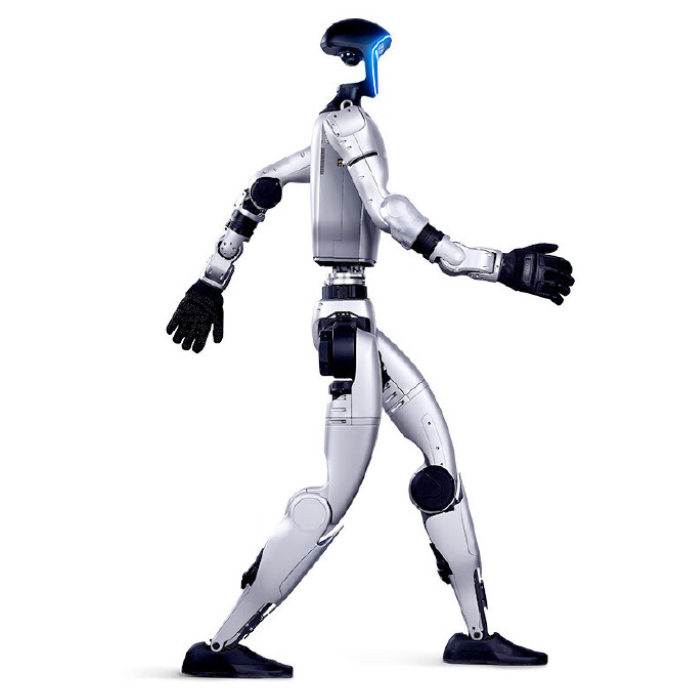
1. Embodied Intelligence Finds a Precision Manufacturing Foundation
Inside the Lens Technology Yong’an campus, automated production lines operate in an orderly sequence. The workflow covers precision component processing, joint module production, and complete machine assembly. To an outside observer, the transition from glass cover plates to humanoid robots may appear to be a move between two unrelated industries. In practice, however, both fields share the same underlying logic of precision manufacturing: micron-level processing accuracy, large-scale mass production capability, and continuous breakthroughs in material innovation. Lens Technology has followed that logic and applied it to the embodied intelligence sector.
For embodied intelligence, hardware is not a secondary concern. A humanoid robot must sense its environment, process information, make decisions, and then act physically. Algorithms determine how a robot plans and responds, but the physical body determines whether those plans can be executed reliably. Joint modules control movement. Dexterous hands determine manipulation. Controllers coordinate motion and sensing. Grippers handle objects with varying shapes, weights, and surfaces. Structural parts provide stability, durability, and consistency. Each of these elements must be manufactured to precise tolerances and assembled in a repeatable way. Without that foundation, embodied intelligence remains confined to controlled demonstrations.
Lens Technology’s experience in consumer electronics provides several advantages that are directly relevant to embodied intelligence. The company has spent decades working with materials, coatings, structural components, and high-volume production processes. It has developed expertise in producing large quantities of parts without sacrificing precision. It has also learned how to integrate components into complete systems and how to test those systems before delivery. Those capabilities are now being redirected toward robot joint modules, dexterous hands, controllers, grippers, and complete humanoid machines.
- Micron-level processing accuracy supports the fine mechanical movements required by embodied intelligence.
- Large-scale mass production capability allows robot components and complete machines to be delivered in batches rather than as one-off prototypes.
- Material innovation helps improve durability, weight, structural performance, and reliability in humanoid robot applications.
- Testing and control experience supports the integration of joint modules, controllers, grippers, and complete robot systems.
The phrase “translation” is appropriate because Lens Technology is not starting from zero in robotics. It is transferring an established manufacturing discipline from one product category to another. The company’s work in glass cover plates required precision at the fingertips. Its work in robot joint modules and dexterous hands requires precision in motion, force control, and assembly. The underlying demand is similar: repeatability, quality control, and the ability to scale. In the emerging embodied intelligence market, those qualities are becoming competitive differentiators.
The humanoid robot sector has attracted intense interest because it promises to combine artificial intelligence with physical action. But the path from an impressive demonstration to a commercially useful robot is long. It requires not only advances in perception, planning, and learning, but also a reliable hardware supply chain. Embodied intelligence depends on actuators, sensors, controllers, structural components, and power systems. Each must be produced at acceptable cost and quality. Lens Technology’s entry into this field reflects a recognition that the hardware layer of embodied intelligence is just as important as the software layer.
2. Zhiyuan Robotics Partnership Turns Embodied Intelligence Into Deliveries
Zhiyuan Robotics is one of the key landing points in Lens Technology’s move toward humanoid robots. In 2024, Lens Technology and Zhiyuan began cooperation. In January 2025, the two parties held a Lingxi X1 humanoid robot package delivery ceremony in Changsha. Lens Technology delivered complete machines in batch and participated deeply in the production, assembly, and test control of core components including joint modules, DCU controllers, and the Omni Picker gripper. That cooperation marked an important step for embodied intelligence in the region, because it moved beyond design and prototyping toward actual delivery.
The partnership soon advanced from delivery to mass production. In November 2025, the Lens Intelligent Yong’an production campus was put into operation. One month later, the first batch of 600 humanoid robots was delivered in a single batch. The main models involved were from Zhiyuan’s Lingxi series. A delivery of 600 humanoid robots is significant in the context of embodied intelligence because it demonstrates that production processes, component supply, assembly lines, and testing systems can support volume. It also shows that a customer relationship can mature from early collaboration into repeatable manufacturing.
As production capacity climbed, the cooperation between Lens Technology and Zhiyuan Robotics deepened. The two sides established a joint venture, Hunan Zhiqi Future Technology Co., Ltd., to operate Hunan’s first embodied intelligence innovation center. The first phase of the project covers approximately 7,000 square meters and deploys more than 120 robots. The center is intended to support innovation, testing, application development, and integration in the embodied intelligence field. Its scale and robot deployment indicate that the partnership is not limited to component supply; it also includes ecosystem building and application exploration.
For the embodied intelligence industry, this type of partnership is important because it connects several parts of the value chain. Lens Technology contributes precision manufacturing, component production, assembly, and testing. Zhiyuan Robotics contributes robot design, algorithms, and application scenarios. The joint innovation center provides a place where hardware and software can be tested together. In practice, embodied intelligence advances through iteration: a robot performs a task, data is collected, algorithms are adjusted, hardware is refined, and the process repeats. A center with more than 120 robots can support that iteration at a meaningful scale.
The delivery of the Lingxi X1 package in January 2025 also illustrates how quickly the relationship developed. Lens Technology did not simply supply a single part. It participated in joint modules, DCU controllers, and the Omni Picker gripper, as well as complete machine delivery. That level of involvement suggests a broader role in the robot value chain. As humanoid robots become more complex, suppliers that can handle multiple critical subsystems may be better positioned to support mass production. Lens Technology’s experience in integrating components and testing complete systems is therefore directly relevant to embodied intelligence.
3. Commercial Signals: Embodied Intelligence Begins to Contribute Revenue
The capabilities validated through the Zhiyuan Robotics partnership are also beginning to appear in financial results. Lens Technology’s latest half-year report showed total operating revenue of RMB 28.866 billion. Within that total, other intelligent terminal business revenue reached RMB 534 million, an increase of 46.92 percent year on year. The consumer electronics main business was under pressure during the period, and the new momentum represented by robotics is helping to fill the gap. The report indicates that embodied intelligence is no longer only a strategic theme; it is becoming a revenue contributor.
During the reporting period, Lens Technology’s embodied intelligence business shipments ranked among the leaders in the industry. Dexterous hands, joint modules, and other core components, as well as complete machine assembly, were delivered in batches. These deliveries contributed an important revenue increment. As a strategic partner of Zhiyuan Robotics, Lens Technology was awarded the “Excellent Supplier Partner Award” by Zhiyuan for two consecutive years. The company has completed a transition from development coordination to complete machine mass production, and then to global strategic partner.
| Financial Indicator | Reported Figure | Context |
|---|---|---|
| Total operating revenue | RMB 28.866 billion | Reported in the latest half-year report |
| Other intelligent terminal business revenue | RMB 534 million | Increased by 46.92 percent year on year |
| Second-quarter net profit attributable to parent | RMB 726 million | Turned around quarter on quarter and increased by 1.77 percent year on year |
| Overall gross margin | 18.2 percent | Reported in the same period |
In the second quarter, Lens Technology’s net profit attributable to the parent company turned around from the previous quarter to reach RMB 726 million, an increase of 1.77 percent year on year. The overall gross margin rose to 18.2 percent. These figures suggest that the company’s new businesses, including embodied intelligence, are contributing to a more balanced operating picture. The revenue growth in other intelligent terminal business, combined with batch deliveries of robot components and complete machines, shows that embodied intelligence is moving from concept validation to commercial execution.
For the broader embodied intelligence market, revenue recognition is an important milestone. Many companies in the sector have demonstrated prototypes, announced partnerships, or conducted pilot projects. Fewer have reported batch deliveries of core components and complete humanoid robots. Lens Technology’s half-year report and its relationship with Zhiyuan Robotics indicate that embodied intelligence is entering a phase in which manufacturing capacity, supply chain management, and quality control matter as much as innovation. The company’s ability to deliver dexterous hands, joint modules, controllers, grippers, and complete machines at volume is a signal that the hardware foundation of embodied intelligence is maturing.
The “Excellent Supplier Partner Award” from Zhiyuan Robotics is also notable because it reflects performance over time. Supplier awards are often based on delivery reliability, quality, responsiveness, and cost control. Winning for two consecutive years suggests that Lens Technology has not only entered the embodied intelligence supply chain but has also maintained a high level of execution. The transition from development coordination to complete machine mass production and then to global strategic partner describes a deepening relationship. It also shows how an embodied intelligence company can work with a manufacturing partner to scale from early prototypes to commercial products.
4. Overseas Capacity Builds a Global Delivery Network for Embodied Intelligence
Lens Technology is not limiting its embodied intelligence ambitions to a single market. Overseas capacity layout is being advanced in parallel to support global delivery. In March this year, Lens Technology (Thailand) Co., Ltd. completed registration. The Thailand facility has the capacity to produce tens of millions of structural parts annually and can also provide prototype proofing, testing, and small-batch delivery support for overseas robot customers. This combination of capabilities is relevant to embodied intelligence because robot developers often need rapid iteration during early stages and reliable volume production later.
The Vietnam base is also being expanded. On the basis of existing consumer electronics capacity, the Vietnam facility is simultaneously expanding robot structural parts capacity to serve Southeast Asia and global customers. This geographic diversification can support customers in different regions, reduce delivery lead times, and strengthen supply chain resilience. For embodied intelligence companies, a global manufacturing footprint can be an advantage because robot deployment is expected to be international. Customers may require components and complete machines in different regions, and they may need local support for testing, assembly, or after-sales service.
The Thailand and Vietnam developments also show that Lens Technology is treating robotics as a long-term business rather than a temporary extension. Building capacity for structural parts is a significant commitment. It requires facilities, equipment, process development, quality systems, and trained personnel. The decision to provide prototype proofing, testing, and small-batch delivery support in Thailand indicates an understanding of how robot customers progress from design to production. Early-stage support can lead to deeper relationships as customers scale. Small-batch delivery can validate manufacturing processes before full-scale production begins. In embodied intelligence, this kind of staged support can help reduce risk and accelerate commercialization.
5. Market Outlook: Embodied Intelligence Scale-Up
The long-term market outlook for humanoid robots provides context for these investments. Goldman Sachs forecasts that global humanoid robot shipments will grow from approximately 20,000 units in 2025 to 1.4 million units in 2035. If that forecast materializes, the demand for precision components, joint modules, dexterous hands, controllers, grippers, structural parts, and complete machine assembly will increase substantially. Lens Technology’s half-year report states that its embodied intelligence business is entering “large-scale mass production.” The company’s more than 30 years of precision manufacturing experience is being converted into delivery capacity and competitive barriers in this emerging field.
| Category | Figure or Status |
|---|---|
| Global humanoid robot shipments in 2025 | Approximately 20,000 units |
| Forecast global humanoid robot shipments in 2035 | 1.4 million units |
| First batch of humanoid robots delivered after Yong’an campus production | 600 units |
| Main models in that delivery | Zhiyuan Lingxi series |
| Embodied intelligence innovation center first-phase area | Approximately 7,000 square meters |
| Robots deployed in the innovation center | More than 120 units |
| World Humanoid Robot Games medals for Zhiyuan Robotics | 18 gold, 16 silver, 12 bronze |
The forecast suggests that the embodied intelligence market could expand by orders of magnitude over the next decade. Such growth would place heavy demands on manufacturing. Producing tens of thousands or millions of humanoid robots would require standardized components, reliable suppliers, efficient assembly, and rigorous testing. Companies that have already invested in precision manufacturing and large-scale production are likely to be important enablers. Lens Technology’s work with Zhiyuan Robotics, its batch delivery of 600 humanoid robots, and its overseas capacity planning all point in that direction.
At the same time, the path to 1.4 million units by 2035 will not be automatic. The embodied intelligence sector still faces technical, commercial, and regulatory challenges. Robots must become more capable, safer, and more affordable. Applications must be developed that justify deployment at scale. Supply chains must mature. The forecast is a projection, not a guarantee. Nevertheless, it helps explain why manufacturing companies are investing in embodied intelligence today. The opportunity is large enough to justify long-term capacity building, even if the timing and pace of growth remain uncertain.
6. Why Precision Manufacturing Is Central to Embodied Intelligence
Embodied intelligence is often discussed in terms of artificial intelligence models, perception systems, and decision-making algorithms. Those elements are essential, but they are not sufficient. A robot that can plan a path or recognize an object must also be able to move its limbs, grip an item, and apply the right amount of force. That physical interaction depends on hardware. Joint modules must move smoothly and repeatably. Dexterous hands must handle fragile objects without damaging them. Controllers must coordinate signals from sensors and actuators. Grippers must adapt to different shapes. Structural parts must maintain alignment under repeated motion.
Precision manufacturing makes these capabilities possible. Micron-level processing accuracy helps ensure that parts fit together correctly and that motion is predictable. Large-scale mass production capability makes it possible to produce the same component thousands or millions of times with consistent quality. Material innovation helps reduce weight, improve strength, and extend service life. Testing and control ensure that complete systems meet performance requirements before delivery. These are the same disciplines that Lens Technology developed in consumer electronics, and they are now being applied to embodied intelligence.
- Joint modules require precision machining, assembly, and testing to support reliable movement.
- Dexterous hands require fine mechanical design and manufacturing to enable complex manipulation.
- DCU controllers require integration with sensors and actuators to coordinate robot motion.
- Omni Picker grippers require reliable mechanisms for grasping and handling objects.
- Complete machine assembly requires system-level testing and quality control before delivery.
The partnership with Zhiyuan Robotics demonstrates how these capabilities come together. Lens Technology’s involvement in joint modules, DCU controllers, Omni Picker grippers, and complete machine assembly shows that it is not limited to a single component. It can participate in multiple critical parts of the robot. That breadth is important because embodied intelligence systems are complex. A problem in one component can affect the performance of the whole robot. A supplier that understands integration can help identify and solve issues across boundaries. This systems-level view is a potential competitive advantage.
The Yong’an campus production lines reflect this integrated approach. Precision component processing, joint module production, and complete machine assembly are located within the same manufacturing ecosystem. This co-location can support faster iteration, better communication, and more efficient problem-solving. When a design change is needed, the impact on components, modules, and final assembly can be evaluated more quickly. In embodied intelligence, where hardware and software are tightly coupled, this kind of integration can shorten development cycles and improve product quality.
7. From Arena Validation to Industrial Deployment
The World Humanoid Robot Games provided a public stage for embodied intelligence. Zhiyuan Robotics’ medals in gold, silver, and bronze demonstrated the agility and capability of its robots. Events such as obstacle crossing, precise scooping, and fire extinguishing require a combination of perception, planning, control, and hardware performance. A robot that can perform these tasks under competition conditions has passed a meaningful validation test. But competition success is not the same as commercial success. The next step is industrial deployment, where reliability, cost, serviceability, and volume production become critical.
Lens Technology’s trajectory shows how arena validation can connect to industrial deployment. The company moved from component cooperation with Zhiyuan Robotics to complete machine delivery. It moved from a delivery ceremony in January 2025 to a 600-unit batch delivery after the Yong’an campus began production in November 2025. It moved from component supply to a joint venture operating an embodied intelligence innovation center with more than 120 robots. Each step represents a deeper level of engagement and a stronger manufacturing commitment.
The innovation center is particularly relevant to the transition from validation to deployment. A center with more than 120 robots can support testing across many scenarios. It can generate data, identify failure modes, and validate improvements. It can also serve as a demonstration environment for customers and partners. For embodied intelligence, real-world data is valuable because robots must operate in unstructured environments. The more scenarios a robot encounters, the more robust its algorithms and hardware must become. A dedicated innovation center can accelerate that learning process.
Overseas capacity adds another dimension. As embodied intelligence customers expand globally, they will need suppliers that can support multiple regions. Lens Technology’s Thailand facility, with annual capacity for tens of millions of structural parts and support for prototype proofing, testing, and small-batch delivery, can serve overseas robot customers. The Vietnam base, with expanded robot structural parts capacity, can serve Southeast Asia and global customers. This global footprint can help ensure that embodied intelligence products are not limited by a single manufacturing location.
8. What the Lens Technology Case Shows About Embodied Intelligence
The Lens Technology case offers several insights into the current state of embodied intelligence. First, embodied intelligence requires manufacturing scale. Algorithms and software are essential, but physical robots must be produced, assembled, and tested. The ability to deliver 600 humanoid robots in a batch, along with joint modules, dexterous hands, controllers, and grippers, is a sign that the hardware supply chain is developing. Second, partnerships matter. The relationship between Lens Technology and Zhiyuan Robotics combines manufacturing expertise with robotics expertise. The joint venture and innovation center deepen that relationship and create a platform for further development. Third, commercial validation is beginning to appear. Revenue growth in other intelligent terminal business, batch deliveries, and supplier awards show that embodied intelligence is contributing to real business results. Fourth, global capacity is becoming part of the competitive landscape. Thailand and Vietnam investments position Lens Technology to serve customers beyond a single market.
- Embodied intelligence needs precision manufacturing at scale to move from prototypes to products.
- Deep partnerships between robot developers and manufacturing specialists can accelerate commercialization.
- Batch deliveries and revenue contribution are important indicators of embodied intelligence maturity.
- Global production capacity can support international deployment and supply chain resilience.
The broader significance is that embodied intelligence is no longer only a software or research pursuit. It is becoming an industrial activity. Humanoid robots require thousands of parts, complex assemblies, and rigorous testing. The companies that can provide those elements reliably and at scale will play a central role in the sector’s growth. Lens Technology’s more than 30 years of precision manufacturing experience, its work with Zhiyuan Robotics, its batch delivery of the Lingxi series, its embodied intelligence innovation center, and its overseas capacity planning all point to a company that is preparing for that future.
At the same time, the field remains young. The Goldman Sachs forecast of 1.4 million humanoid robots by 2035 is ambitious and depends on many factors. Technical progress, cost reduction, application development, safety standards, and customer adoption will all influence the pace of growth. The 600-unit batch delivery and the 120-plus robots in the innovation center are meaningful, but they are early steps in a much longer journey. What is clear is that the hardware foundation of embodied intelligence is being built now. Production lines are running, components are being delivered, and global capacity is being planned. The competition in embodied intelligence will not be won by algorithms alone. It will also be won by companies that can turn designs into reliable products at scale.
For Lens Technology, the move into embodied intelligence represents a strategic extension of its core capabilities. The company’s history in glass cover plates gave it experience in precision, materials, and mass production. Its work in robot joint modules, dexterous hands, controllers, and complete machine assembly applies that experience to a new field. The results so far include batch deliveries, revenue growth, supplier recognition, and overseas expansion. The half-year report states that the embodied intelligence business is entering large-scale mass production. If that process continues, the company’s precision manufacturing foundation may become one of the competitive barriers in the humanoid robot era. The road from the World Humanoid Robot Games to the factory floor is already being traveled, and embodied intelligence is moving with it.