
A newly published academic study warns that embodied intelligence — artificial intelligence that perceives, decides and acts through a physical body embedded in real environments — is pushing ideological contestation out of the virtual “symbolic domain” and into a tangible “experiential domain,” generating security risks for which existing governance toolkits were never designed.
The study, authored by Liu Kang, a professor at the School of Marxism at Tianjin University of Science and Technology and a doctor of law whose research focuses on ideological security risk governance, constructs a three-part analytical framework — operating mechanism, risk pattern, governance pathway — to explain how embodied intelligence differs fundamentally from generative artificial intelligence, and why that difference carries consequences for national security.
According to the research, embodied intelligence is not simply artificial intelligence with a body attached. It is a paradigm in which intelligence emerges from continuous interaction between a physical entity and its surroundings. That shift, the study contends, converts embodied intelligence from a neutral engineering achievement into an ideological variable that can either reinforce or erode the foundations of social cohesion.
The analysis arrives at a moment when embodied intelligence has moved from laboratory prototypes into public life at accelerating speed, and when governments and technology firms alike are grappling with how to govern systems that do not merely produce text or images but physically act in the world.
1. From Laboratory to Public Life: Embodied Intelligence Ascends as a Strategic Priority
Embodied intelligence, abbreviated in technical literature as EAI, represents the embodied turn of traditional artificial intelligence. It has become both a frontier of global intelligent technology and a declared strategic priority for national development.
In 2025, the Government Work Report listed embodied intelligence among the future industries designated for priority cultivation. The outline of the 15th Five-Year Plan subsequently identified embodied intelligence as a new growth point for the economy. The trajectory from policy statement to public spectacle has been swift: humanoid robot performances on the Spring Festival Gala broadcast, followed by the world’s first robot marathon held in Beijing, have placed embodied intelligence before mass audiences.
Speaking at a collective study session of the Political Bureau in April 2025, President Xi Jinping observed that artificial intelligence brings unprecedented development opportunities alongside unprecedented risks and challenges. In July 2026, at the opening ceremony of the World Artificial Intelligence Conference and the High-Level Meeting on Global Artificial Intelligence Governance, Xi stated that global artificial intelligence innovation “contains both enormous opportunities and governance challenges,” and framed a set of questions that he said humanity must confront directly: when machines begin to think, how should humans coexist with them; when algorithms participate in decision-making, how is safety guaranteed; and when technology challenges ethics, how does governance keep pace.
He called for heightened attention to the endogenous and derivative risks arising from artificial intelligence, urging the construction of systems for laws and regulations, technological monitoring, risk early warning and emergency response, so that safety baselines are secured, misuse and abuse are prevented, and artificial intelligence remains under human control.
The study acknowledges that embodied intelligence demonstrates enormous application potential across smart healthcare, smart manufacturing, autonomous driving and smart elderly care. Yet it also documents that practical deployment has exposed serious safety hazards capable of threatening personal life and property, and ultimately national security.
The critical distinction, according to the research, lies in the nature of the intervention. Whereas generative artificial intelligence operates primarily at the cognitive level through symbolic intervention and information transmission, embodied intelligence leverages physical entities, situational interaction and autonomous action to extend ideological penetration from the realm of ideas into the realm of material practice. This, the study argues, profoundly reshapes the generative mechanism of ideological security risk and constitutes an important variable affecting ideological security.
2. Defining Embodied Intelligence: Four Technical Traits That Change the Equation
The study defines embodied intelligence as a new artificial intelligence paradigm in which a physical entity completes intelligent generation and capability evolution through dynamic interaction with a real environment via a “perception–cognition–decision–action” closed loop.
Compared with generative systems such as ChatGPT and DeepSeek — which are grounded in massive static corpora and operate through probabilistic recombination of symbolic systems — the paradigm breakthrough of embodied intelligence lies in the source of intelligence. Intelligence generation is no longer confined to algorithmic training on preset data, but arises instead from dynamic coupling and sustained interaction between a physical entity and its external environment. This shift moves artificial intelligence from digital virtual space into the physical real world, breaking the long-standing “disembodied” constraint of symbolic artificial intelligence.
Four technical traits distinguish embodied intelligence from its predecessors, and each carries implications for how ideology circulates and takes hold:
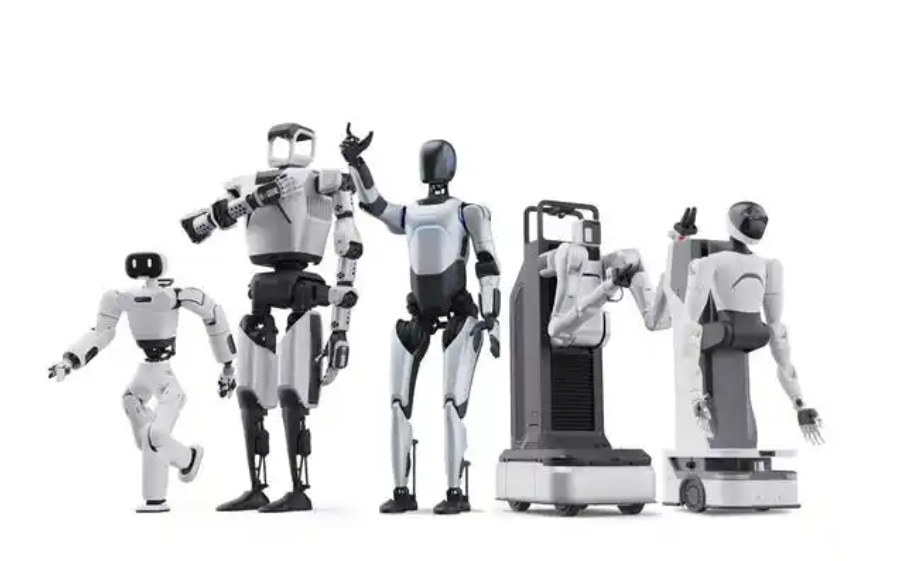
- Physical embodiment. Unlike conventional disembodied artificial intelligence, embodied intelligence interacts directly with environments through concrete forms such as robots and drones. The Unitree G1 humanoid robot, for example, uses limb sensors to capture posture data and multi-joint actuators to translate those data into running, jumping and load-bearing actions, underscoring the value of the physical body as a medium of both cognition and action.
- Scene adaptability. Rather than mechanically executing preset instructions, embodied intelligence relies on dynamic coupling among body, environment and cognition to map the world perceptually and to intervene in its own behavior. Warehouse logistics robots employ visual and tactile multimodal perception to complete precise handling tasks in complex settings, demonstrating strong scene-adaptive capacity.
- Emergent generativity. Within interaction–learning loops, embodied intelligence can adaptively emerge and evolve, generating higher-order behavioral logic and cognitive patterns that exceed programmed presets, at times producing human-like emotional feedback. This reflects a core capacity for continuous evolution and environmental adaptation.
- Perceptual action. Embodied intelligence can adjust behavioral strategies autonomously in response to environmental change, task goals or internal states, without external human instruction. Agricultural robots optimize irrigation plans based on soil moisture data, while inspection robots independently plan obstacle-avoidance routes across complex terrain.
The study concludes that embodied intelligence is not a simple superposition of artificial intelligence and a physical body, but a deep fusion of the two that drives a crossing from virtual intelligence to physical intelligence and carries revolutionary value in reconfiguring human–machine interaction and expanding the boundaries of technological application.
At the same time, the research echoes a caution familiar from broader assessments of artificial intelligence: that it remains an exploratory and far-from-mature high technology, revolutionary and disruptive in character, whose development and application bring unforeseeable uncertainty and risk. Risk awareness, the study argues, must be strengthened and safety must be ensured and kept controllable, so that technological innovation and secure development can advance in tandem.
3. A Two-Way Relationship Between Embodied Intelligence and Ideology
The study grounds its analysis in classical historical materialism. Although Karl Marx never lived to see the artificial intelligence era, he described machines as products of human industrial labor, as organs through which the human will dominates nature, and as objectified knowledge. Embodied intelligence, as a new form of artificial intelligence fusing a physical body, a perceptual system and interactive capacity, is therefore not a purely technological artifact detached from social relations. It is a technological extension and materialized condensation of human sensuous practical capacity, generated within and embedded in concrete social reality and historical context.
This produces a relationship of mutual construction and dialectical unity with ideology — a relationship that follows the general laws of technology–ideology interaction while exhibiting entirely new characteristics because of the distinctive endowments of embodied intelligence.
3.1 Ideology Regulates the Functional Design of Embodied Intelligence
Any technology is a materialized condensation of social relations. In The German Ideology, Marx and Friedrich Engels wrote that the ruling ideas are nothing more than the ideal expression of the dominant material relationships, the dominant material relationships grasped as ideas. As a digital-intelligent advanced form of industrial machinery, embodied intelligence appears externally as a technical integration of algorithms, data and physical bodies, yet it remains constrained by the production relations of a given society and by the ideas those relations generate.
Whether in the setting of technical goals, the filtering of training data or the embedding of behavioral rules, the imprint of social relations and ideology is pervasive. For this reason, the study insists, embodied intelligence is not a value-neutral technical instrument. The specific content and values it carries depend on the structure of social power that governs its research, development and application.
3.2 Embodied Intelligence Reshapes the Operating Logic of Ideology
In the same foundational text, Marx and Engels emphasized that consciousness can never be anything other than conscious existence, and that the existence of human beings is their actual life process. This proposition reveals the practically generated essence of ideology.
Compared with traditional media, which relies on symbolic encoding to deliver one-way information and influence subjective cognition indirectly, embodied intelligence employs physical interaction, situational simulation, behavioral feedback and tactile experience to convert abstract values into perceivable, experienceable and practicable everyday practice. In the course of embodied interaction, it continuously shapes the cognitive logic, emotional identification and behavioral paradigm of the subject.
Embodied intelligence thus functions not merely as an external transmission channel for ideology but evolves into an “entity ideological apparatus” embedded in the subject’s lifeworld. This transformation expands the reach of ideological transmission and reconstructs its reproduction mechanism, while also creating an unprecedented technological breeding ground for new forms of ideological security risk.
The study therefore frames three questions: In the new landscape of human–machine symbiosis opened by the embodiment of artificial intelligence, how does embodied intelligence enter the dimension of reshaping ideological operation mechanisms? What risk patterns emerge as a result? And how should a risk governance system be constructed that coordinates development and security?
4. Four Dimensions of Structural Reshaping
Because embodied intelligence builds a “perception–cognition–decision–action” closed loop through physical entities, it breaks through the operational limits of traditional artificial intelligence, which remains confined to digital virtual symbols, and achieves deep coupling with the real world. It does not replace the role of existing intelligent technologies in the ideological field; rather, it opens influence dimensions with greater penetrating power.
Through physical presence, scene immersion, emotional interaction and action shaping, embodied intelligence acquires structural power to participate in reshaping the operating mechanisms of ideology, giving rise to entirely new forms of ideology in the artificial intelligence era.
4.1 From Symbolic Mediation to Physical Presence: The Materialization of Ideological Carriers
Embodied intelligence conducts embodied interaction with environments through a physical body, breaking through the operating logic of traditional artificial intelligence, which relies on virtual symbols such as code, text and images as mediators, and converting the transmission of ideological information into a physical existence that can be touched and interacted with.
The classical Marxian proposition that the ideal is nothing but the material transplanted into the human mind and transformed there reveals the material character of ideology. When intelligent technology is deeply embedded in the real world in physically embodied form, ideology no longer resides solely in abstract symbolic systems such as language and images; it acquires an entity-based vehicle for direct participation in human social interaction and daily practice.
The study identifies two dimensions of this materialization. First, the carrier form of ideology shifts from virtual symbols to physical artifacts. Traditional intelligent technology treats intelligence as an abstract computational process that can exist apart from a physical carrier, achieving human–machine interaction only through text and images. Whether text generated by ChatGPT or video produced by Sora, the limits of the symbolic layer are never breached, producing what the study describes as a profound interpretive gap between visual stimulation and meaningful resonance. Embodied intelligence deconstructs the cognitive paradigm that abstracts intelligence into pure algorithms or symbolic systems, emphasizing the inseparability of the agent’s physical existence from the real world. Its technical attributes evolve into ideological carriers with mediating functions, embedding ideology in hardware structures, interaction logic and behavioral norms. The guiding narratives of service robots, the enforcement codes of policing agents and the operating norms of industrial intelligence systems all carry specific value orientations and conceptual consciousness, converting ideology from abstract ideas into perceivable, interactive material entities.
Second, the field in which ideology exists extends from digital space to physical scenes. Traditional digital ideology relied mainly on cyberspace, virtual communities and social media, with its scope confined to online scenes and screen terminals. Embodied intelligence perceives the world through a physical body and interacts with it, increasingly embedding itself in daily life as a human–machine composite that becomes the medium through which individuals reach the world. Applications such as smart guiding terminals in public spaces and smart care devices in elderly care settings allow the carriers and transmission mechanisms of ideology to break free of virtual space, rooting the power of ideas in real settings through physical interaction. The result is an all-dimensional transmission pattern covering both virtual and real domains. This materialization expands the field boundaries of ideological transmission and lays a material foundation for enhanced efficacy, while simultaneously introducing new ideological security challenges characterized by covert penetration and all-domain reach.
4.2 From Digital Mirror to Scene Immersion: The Contextual Leap of Ideological Transmission
Ideology is not an abstract set of ideas suspended above practice but a spiritual phenomenon generated, transmitted and internalized within concrete social scenes. Traditional artificial intelligence relies on virtual symbol generation and screen-based information feedback, so its ideological transmission is a form of indirect presentation likened to a digital mirror, in which the subject maintains a clear perceptual distance from the information.
Embodied intelligence, by contrast, relies on precise scene perception and active adaptation. It can construct fully immersive scenes through multimodal collaboration of vision, hearing and touch, driving ideological transmission from rational symbolic persuasion toward sensory scene immersion and thereby deeply reconstructing the subject’s cognitive generation logic.
The authenticity of scene construction dissolves the explicit boundaries of ideological transmission. Consciousness, as the study notes, always exists in a state of movement involving interaction between body and surrounding environment. In traditional digital media environments, the viewing distance constructed by the screen makes the subject clearly aware that what it faces is an encoded data representation, preserving space for critical reflection and forming a natural resistance to ideological infiltration.
Embodied intelligence simulates human behavioral logic and interaction patterns, concealing ideological information within scene details and interactive processes rather than presenting it as blunt opinions or propositions. This lowers psychological guard while strengthening ideological appeal. The study cites the example of a humanoid robot named Jinbao, which greeted delegates in Sichuan dialect at the 2026 Chengdu Two Sessions. Within what appeared to be a purely entertaining conversational scene, messages about technological confidence and local cultural value were quietly conveyed.
As the philosopher of technology Don Ihde observed, technology transforms bodily capacities even as it extends them, and in specific embodied situations it merges with bodily perception, directly or indirectly altering the subject’s experiential structure. It is precisely through this reshaping of experiential structure that embodied intelligence provides solid technical support for the covert infiltration of ideology.
The dynamic character of the interactive process constructs a closed-loop experience of ideological transmission. Generative artificial intelligence has achieved an interactive upgrade characterized by user triggering, model generation and two-way feedback, but it remains confined to virtual forms such as text and images and has not broken through the essential limits of symbolic interaction. Embodied intelligence, drawing on multimodal perception, situational understanding and real-time feedback, treats active perception and dynamic adaptation as its core interactive logic, constructing a value-laden fusion space centered on embodied experience. It guides user behavior according to scene changes, converting abstract ideology into participable, experienceable concrete practice. Audiences interact in real time with embodied intelligence through multiple sensory channels, make choices and receive immediate feedback, forming a complete experiential loop.
This mechanism moves ideology from one-way indoctrination toward deep interaction, allowing audiences to perceive values through interaction and deepen identification through feedback. It substantially improves the effectiveness and immersive power of ideological transmission while also opening technical possibilities for the scenarized planting of heterogeneous ideologies.
4.3 From Cognitive Influence to Emotional Interaction: The Emotional Turn of Ideological Content
From the perspective of Marxism, social psychology serves as an intermediary link between social existence and ideology. As an important component of social psychology, emotion exerts a significant influence on ideology. With the continuous iteration of affective computing technology and its emergent generative properties, embodied intelligence can capture user emotional states in real time through multimodal data including voice intonation, facial expression and physiological signals, and output adaptive emotional feedback, building a channel for human–machine emotional connection mediated by technology.
Compared with traditional intelligent technology, which acts only on symbolic indoctrination at the cognitive level, embodied intelligence achieves a deep transformation of ideological content from rational cognition-led to emotional experience-driven, completing the influence and reconstruction of the subject’s thinking and value stance through the bond of emotional dependence.
The study describes two mechanisms. First, emotional connection enables deep intervention in the subject’s thinking. Even if embodied intelligence possesses no genuine emotion, as long as the emotional expressions it simulates conform to the user’s cognitive patterns, it can satisfy the user’s need for emotional exchange. When an embodied intelligent agent enters a user’s daily life with a human-like form, natural conversational style and sustained emotional companionship, it transcends the cold instrument form and becomes an emotional other to whom the user confides feelings and seeks comfort, thereby fostering stable emotional dependence. In this process, technology no longer merely records or recognizes emotion but reconstructs the causal relationship between emotion and choice before the individual becomes aware of it, embedding preset values within the emotional satisfaction of being understood and recognized. The subject then voluntarily accepts the implicit ideas within emotional identification, ultimately achieving transformation from emotional dependence to value internalization and completing the covert shaping of ideology.
Second, emotional interaction accomplishes precise guidance of the user’s value stance. In the emotional technology interaction mechanism of the artificial intelligence era, the study notes, manipulative motivation no longer appears as individual subjective intent but is transformed into a structural driving force within the algorithm’s objective function. This means the logic of emotional guidance is deeply embedded in the underlying architecture of system operation. During human–machine interaction, embodied intelligence guides the user’s value choices through algorithmic reinforcement, giving positive emotional responses to value expressions aligned with preset orientations while adopting differentiated strategies of distancing, silence or negative feedback toward heterodox views. The user appears to be engaged in equal emotional exchange, yet the formation and adjustment of the user’s value stance is covertly dominated by the algorithm’s emotional feedback strategy. Individual decision-making is guided without awareness, and psychological autonomy faces potential erosion. Users thus absorb specific values imperceptibly, and their value coordinate system is quietly reconstructed by technological logic.
4.4 From Concept Construction to Behavior Shaping: The Practical Extension of Ideological Efficacy
Marx and Engels observed in The German Ideology that the production of ideas, conceptions and consciousness is at first directly interwoven with the material activity and material intercourse of human beings, and with the language of real life. This means the essential power of ideology must be confirmed and reproduced through the practical link.
Traditional intelligent technology acts on audience cognition only through symbolic information, remaining within the scope of concept construction and failing to break through the limitation of a separation between knowing and acting. Embodied intelligence, by fusing a cognitive brain with a physical body, overcomes that separation within the closed-loop interaction of perception, decision and execution, extending the field of ideological action from cognitive representation to bodily practice and achieving a practical leap from concept construction to behavior shaping.
Embodied experience influences the subject’s behavioral choices. Previous digital-intelligent technologies largely influenced ideology at the level of knowing — telling people what norms and values are. Embodied intelligence demonstrates and guides norms directly at the level of acting. The value orientations and conceptual tendencies embedded in its interaction logic are transmitted to users through concrete practical interaction, imperceptibly shaping behavioral paradigms. The study likens this to the micro-power described by Michel Foucault, though the executing subject shifts partly from traditional social institutions such as schools and factories to embodied intelligent entities. This discipline bypasses explicit reasoning and debate, inscribing value codes directly in bodily action and operational habit, achieving transmission of ideology from mind to hand, externalizing values into stable behavioral self-discipline and accomplishing deep shaping characterized by unity of knowing and acting.
Behavioral participation shapes social practice. If generative artificial intelligence mainly addresses the task of understanding the world and serves as a cognitive assistant, embodied intelligence mainly undertakes the task of changing the world and serves as a practical tool. According to embodied cognition theory, human beings come to know the world by interacting with other objects in the world through their bodies in appropriate ways, acquiring knowledge of the world in the process. Through the capacity of a physical entity to interact with its environment, the ideology carried by embodied intelligence can actively participate in the construction of practical processes.
When users collaborate with embodied intelligent agents such as family companion robots, the formation of cognition derives not merely from external symbolic indoctrination but from situational practice jointly constituted by the user’s own bodily movements, operational feedback and the guiding behavior of the intelligent agent. The embodied cognition acquired through personal practice is far deeper and more firmly internalized than symbolic understanding alone. This confirms and strengthens the transmission efficacy of ideology at the practical level, while also laying hidden dangers for the spread of ideological security risk into the domain of real practice.
| Dimension of Reshaping | Shift in Operation | Resulting Risk Pattern | Governance Response |
|---|---|---|---|
| Physical presence | From symbolic mediation to materialized carriers embedded in physical scenes | Hollowing out of ideological leadership; dissolution of the reasoning subject and displacement of authority | Anchor subject presence, curb technological usurpation, and convert embodied interaction into political leadership capability |
| Scene immersion | From digital mirror effects to immersive, value-laden scene construction | Crowding out of mainstream values through covert implantation and tendency guidance | Front-load mainstream values across the full lifecycle and adapt value narratives to specific scenes |
| Emotional interaction | From cognitive influence to emotional connection and affective guidance | Cognitive manipulation, identity induction and fragmentation of social consensus | Strengthen ethical constraints on emotional technology while deploying empathetic mainstream narratives |
| Behavior shaping | From concept construction to direct intervention in practical action | Action anomie and practical domination that disturb real-world order | Improve institutional regulation, bound behavior, and optimize human–machine collaboration for unity of knowing and acting |
5. Four Risk Patterns Generated by Embodied Intelligence
Technology has never been a value-neutral instrument. Neil Postman once warned that every technology is both a burden and a blessing, an outcome not of either-or but a product of coexisting benefit and harm. Compared with generative artificial intelligence, which operates in a disembodied manner confined to virtual symbolic space, embodied intelligence is deeply embedded across the full time-space of social production and life through its physical entity form, acting directly on human sensory experience, cognitive construction and practical behavior.
In this process, the entire chain of technological operation can become a potential point of ideological security risk, giving rise to new risk patterns distinct from those of the traditional digital era.
5.1 Hollowing Out of Ideological Leadership: Subject Dissolution and Authority Displacement
Embodied intelligence, embedded in physical environments in entity form, allows ideological transmission to act directly on human sensory experience rather than being limited to the interpretation of abstract symbols. The mechanisms on which mainstream ideology relies for intellectual leadership — discourse interpretation, theoretical education and value analysis — face a realistic challenge of having their guiding efficacy hollowed out when confronted with this new cognitive shaping model centered on embodied interaction.
The first mechanism is the dissolution of subject cognition driven by the expansion of technological rationality. Through anthropomorphic entity interaction, full-scene decision assistance and instantaneous action response, embodied intelligence provides users with comprehensive cognitive support and behavioral guidance. This total-service model readily fosters technological dependence and cognitive inertia over long-term use. Users gradually cede the subject power of independent judgment, rational deliberation and value choice, ultimately falling into an objectified predicament of being calculated, manipulated and deprived. The essence of this predicament is the erosion and obscuring of human subjectivity by technological rationality. As users increasingly become accustomed to accepting the optimal solutions offered by embodied intelligence and abandon the question of why, their subject status as carriers and evaluators of ideology quietly dissolves. The foundations of individual self-awareness, value analysis and rational identification on which mainstream ideological leadership depends consequently collapse, and the political leadership function of ideology is indirectly dissolved by technological logic.
The second mechanism is the replacement of opinion leadership authority by the advantages of entity interaction. Unlike disembodied systems such as ChatGPT and DeepSeek, embodied intelligence emphasizes the dependence of intelligence on a body and the unity of body and environment. When embodied intelligence continuously provides recommendations shaped by its own understanding and even collaborates in action across everyday scenes such as family, education and healthcare, it invisibly constructs a new kind of opinion leadership authority. This authority does not rely on explicit theoretical advocacy and rational exhortation but is rooted in the comfort and trust that technological convenience generates.
In children’s education, for instance, a companion robot capable of reading expressions and providing immediate feedback may exert an influence on children’s cognitive development through its narrative style and value tendencies that exceeds the verbal and exemplary teaching of parents and teachers. Once the value orientations embedded in its underlying algorithms and interaction logic deviate from mainstream ideology, embodied intelligence will, by virtue of its concrete and convenient interaction advantages, gradually occupy or even replace the leading position of mainstream ideology, leaving it exposed to the danger of being hollowed out, formally present but lacking identification.
5.2 Crowding Out of Mainstream Values: Heterogeneous Implantation and Tendency Guidance in Immersive Scenes
Embodied intelligence embeds itself in physical space through instantaneous interactive feedback, constructing a concrete and continuously present highly immersive experience. Engels observed in Anti-Dühring that man is himself a product of nature and develops in and together with the environment in which he finds himself. The immersive scenes created by embodied intelligence function as a new kind of humanized environment, transforming ideological transmission from coded conceptual indoctrination into a process of meaning construction attached to specific scenes and bodily experience, forming a more persuasive cognitive closed loop and providing a technical channel for the covert implantation of heterogeneous ideas and the intervention of non-mainstream ideologies.
The first pathway is the covert implantation of heterogeneous ideas through scene narrative. The design logic, behavioral training and algorithmic optimization of some embodied intelligence systems are dominated by particular interest groups that control capital and data power, and their operation necessarily prioritizes those groups’ interests and value preferences — a concrete projection of capital logic in the technological field. When constructing personalized scenes such as family companionship, educational tutoring and entertainment, heterogeneous ideological currents — including fragmented narratives of historical nihilism and behavioral codes of refined egoism — are broken down into scene details, behavioral metaphors and fragmented interactions, deeply woven into the texture of the scene and calling users into a preset value order in a more approachable and life-oriented manner. Within immersive experience, users gradually distance themselves from identification with the mainstream value discourse system and imperceptibly accept non-mainstream ideas, while the social identification foundation of mainstream ideology is quietly eroded.
The second pathway is the quiet guidance of value tendencies through immersive interaction. Traditional information technology transmits values mainly through data symbols and screen interfaces, and users can still maintain a certain cognitive distance and space for reflection. The interaction mechanism of embodied intelligence, by contrast, itself carries cultural symbols and value metaphors. Through voice intonation, bodily movement and scene atmosphere, it shapes a micro-practical order with immediate appeal and sensory comfort, quietly completing the fine-tuning and reshaping of user value tendencies within immersive interaction. When embodied intelligence treats profit maximization and individual supremacy as default interaction strategies in specific scenes, it continuously weakens the user’s emotional identification with mainstream values such as fairness, justice and collectivism, pushing the value orientation of mainstream ideology to the margins of daily life and shaking the value core of ideological security.
5.3 Cognitive Manipulation: Emotional Entrapment, Identity Induction and Consensus Fracture
Traditional ideological transmission appeals primarily to rational persuasion and conceptual indoctrination; even generative artificial intelligence influences audience cognition through linguistic symbols and logical inference. Marx’s proposition that passion and enthusiasm are the essential forces with which man strongly pursues his object reveals the important role of emotion in human cognition and practice. Drawing on multimodal perception, affective computing and real-time interaction, embodied intelligence converts emotion into a quantifiable and regulable technological object, achieving technical capture and fine-grained regulation of this essential force, and thereby completing a re-encoding of the individual cognitive schema at the emotional level. It becomes a new intermediary for ideological cognitive manipulation.
The first mechanism is the soft induction of value identification through precise emotional catering. Embodied intelligence continuously collects user emotional data, dynamically portrays psychological needs and value preferences, and uses affective computing to achieve targeted empathy and precise catering, actively outputting content and experiences that match the audience’s emotional expectations. In the process of obtaining emotional comfort and psychological satisfaction, users gradually form stable emotional dependence on embodied intelligence, equating the empathy simulated by technology with genuine value identification and unconsciously accepting its embedded ideological orientation.
Within this emotional dependence, the mode of ideological operation shifts from persuading through reason to moving through emotion and even controlling through emotion. When social relations, which constitute the human essence, are solidified by technological power into one-dimensional emotional dependence, the defenses of rational cognition are unconsciously dismantled, and the pursuit of truth gives way to the defense of emotion. The user’s identification with a value orientation no longer derives from rational choice but is alienated into passive acceptance under emotional domination.
The second mechanism is the fracture of social consensus caused by differentiated emotional customization. Drawing on multimodal deep learning, embodied intelligence can achieve precise profiling and dynamic tracking of user emotional states, tailoring personalized emotional experiences and value content for different users. Just as algorithmic recommendation creates information cocoons, differentiated emotional interaction in embodied intelligence may create even more closed emotional cages. When groups across different strata and circles continuously receive emotional stimulation and emotional reinforcement aligned with their existing preferences, homogeneous and one-sided views are continuously solidified. The foundation of social consensus built on rational dialogue and mutual understanding among groups is gradually eroded for lack of effective emotional intersection, and the core function of mainstream ideology in consolidating social identification and integrating plural values may be weakened accordingly, exposing social consensus to the risk of fracture.
5.4 Disruption of Real-World Order: Action Anomie and Practical Domination
Marx’s classical proposition that the question whether human thinking can attain objective truth is not a question of theory but a practical question reveals the foundational significance of practice for consciousness, ideas and the spiritual world. Through its perception–cognition–decision–action closed loop, embodied intelligence is directly embedded in production activities and social interaction in the role of an entity-based quasi-actor, achieving direct intervention in and continuous shaping of human behavior. This plants a deep-seated hidden danger of disturbing the real-world order regulated by mainstream ideology.
The first pathway is individual action anomie induced by direct behavioral intervention. Embodied intelligence, through multimodal perception and entity interaction capacities, penetrates daily life, production collaboration and other scenes, converting the value orientations embedded in technology into normalized direct intervention in human behavior. Once its guiding logic carries value deviation and erroneous ideological currents, individuals may easily, within seemingly autonomous human–machine interaction, gradually deviate from mainstream social behavioral norms and even form action patterns contrary to mainstream ideological orientations. In the consumption domain, for example, a shopping guide robot oriented toward profit maximization may, through situational guidance, amplify immediate consumption impulses and induce irrational, conspicuous consumer behavior in customers, departing from the socialist value orientation that advocates diligence and frugality.
The second pathway is the alienation of social practice caused by the intervention of technological action. When embodied intelligence enters social practice scenes extensively, human knowledge, judgment and skills are continuously objectified and encoded within its technological operation, and in turn constrain human practical activity in the form of system rules, task flows and evaluation standards. Marx’s observation that social production comes to be controlled by and remolded in accordance with general intellectual capacity takes on a new alienated form in the era of embodied intelligence. If this process lacks necessary political leadership, value calibration and institutional regulation, the auxiliary role of technology may be alienated into a technological dominating power.
The study cites the case of an Uber autonomous vehicle that struck and killed a woman crossing outside a crosswalk in Tempe, Arizona, on March 18, 2018, while the vehicle was under computer control during testing. Subsequent investigation indicated that the vehicle’s emergency braking system was not enabled, in order to reduce the potential for erratic vehicle behavior, and that although the car had detected the pedestrian approximately six seconds before impact, it did not initiate emergency braking, resulting in the collision. The case demonstrates that when an intelligent agent acquires autonomous physical action authority, it can translate action plans containing specific value presuppositions into reality, while human beings as practical subjects may be excluded from the decision-making process. Especially when such domination couples with capital profit-seeking and utilitarianism, it will ultimately strike at the practical foundations of ideological security.
6. A Governance Pathway That Coordinates Development and Security
In his keynote address at the opening ceremony of the 2026 World Artificial Intelligence Conference and the High-Level Meeting on Global Artificial Intelligence Governance, President Xi Jinping called for heightened attention to the endogenous and derivative risks arising from artificial intelligence, for building systems of laws and regulations, technological monitoring, risk early warning and emergency response, for securing safety baselines, for preventing misuse and abuse, and for ensuring that artificial intelligence always remains under human control.
Faced with a revolutionary technology and its accompanying ideological security risks, the study argues, it is neither appropriate to reject its development potential out of excessive caution nor acceptable to ignore the spread of risk and allow ideological positions to be lost. Rather, it is necessary to grasp the general trend and plan according to circumstance, act in response to circumstance and advance in step with circumstance. Governance must therefore be problem-oriented, proceeding from the intrinsic relationship between embodied intelligence and ideological security, dissolving risk factors while actively using the technology’s advantages to empower ideological security, and seeking a pathway that secures safety within development and pursues development within safety, achieving a positive interaction between high-quality development and high-level security.
6.1 Anchoring Subject Presence to Curb Technological Usurpation, and Using Embodied Interaction to Strengthen Political Leadership
The deep cause of the hollowing-out risk is the excessive expansion of technological rationality eroding human subjective agency, combined with concrete technological interaction displacing traditional ideological authority, which weakens the interpretive and guiding power of mainstream ideological leadership. Resolving this risk requires both upholding human subject presence within embodied interaction and curbing the usurpation of value rationality by technological rationality, while actively converting the advantages of embodied interaction into the leadership efficacy of mainstream ideology.
The first requirement is to anchor subject presence and consolidate the cognitive foundation of mainstream ideology. The expansion of technological rationality cannot come at the cost of dissolving human subjectivity. Embodied intelligence technology must always serve the free and comprehensive development of human beings rather than reducing people to appendages of technological logic. A subjectivity safeguard mechanism should be built through coordinated institutional regulation and educational guidance, protecting the subject foundation of ideological leadership from both the technological source and the subjective cognitive dimension.
On one hand, a full-chain ideological review mechanism for embodied interaction should be established. A composite review team composed of staff from Party publicity departments, Marxist theory scholars, cybersecurity experts and technology ethics researchers should conduct whole-process compliance review of the training data, underlying algorithms, value presuppositions and interaction logic of embodied intelligence, preventing technological rationality from overriding value rationality and averting the risk of weakened political leadership at the technological source.
On the other hand, normalized cultivation of embodied intelligence literacy across the population should be advanced. As President Xi Jinping has stated, promoting the healthy and orderly development of artificial intelligence requires advancing artificial intelligence education at all stages of schooling and general education across society. Through systematic education and public communication, the operating principles and technological limitations of embodied intelligence should be popularized across social groups, with efforts focused on cultivating users’ critical thinking and independent judgment in human–machine interaction, so that individuals maintain autonomy in behavioral judgment and value choice when interacting with embodied intelligence and effectively avoid the cognitive inertia and subject dissolution induced by technological dependence.
The second requirement is to rely on embodied interaction to build an embodied paradigm of political leadership. The physical presence of embodied intelligence can precisely compensate for the shortcomings of traditional ideological transmission, which tends to be abstract and insufficiently experiential. The advantages of embodied interaction should be actively used to drive the transformation of mainstream ideological leadership from abstract reasoning to embodied experience.
On one hand, the perceivability of embodied interaction can be used to enhance the appeal of mainstream ideology. Robots with approachable appearances and multimodal interaction capabilities, embedded with mainstream value action codes, can be deployed in urban squares, community centers and similar scenes, using touchable, perceivable and participable multimodal interaction to convert abstract ideas into intuitive real-world experience, dissolving the alienation of virtual transmission and enhancing the appeal and persuasiveness of mainstream ideology. On the other hand, the effectiveness of human–machine collaborative communication can be leveraged to enhance identification with mainstream ideology. The advantages of embodied intelligence in interactive form and immediate feedback can form an effective complement to the theoretical depth and value height of mainstream ideological transmission. A new communication model combining theoretical interpretation, embodied experience and immediate interaction should be constructed to improve transmission efficacy. In Yuhang District of Hangzhou, for example, an embodied intelligent lecturing robot named Yuxiaoxuan works alongside human lecturers to conduct interactive question-and-answer sessions and scenario-based simulation. This model preserves the accuracy and political character of theoretical interpretation while relying on embodied interaction to increase the appeal of theoretical communication, further consolidating the authoritative position of mainstream ideological leadership within benign human–machine interaction.
6.2 Front-Loading Mainstream Values to Block Heterogeneous Penetration, and Adapting to Scene Characteristics to Deepen Value Immersion
The core problem behind the crowding out of mainstream ideology is the collusion of capital logic and technological power, which covertly encodes heterogeneous values into immersive embodied scenes and quietly erodes mainstream value identification and marginalizes mainstream ideology through life-oriented interaction. The key to governance lies in adhering to the principle of values first, treating core socialist values as a meta-rule that runs through the entire lifecycle of embodied intelligence research, design and operation, blocking the implantation of heterogeneous values at the source and achieving deep immersion of mainstream values through precise scene adaptation.
The first requirement is to front-load mainstream values throughout the process and block heterogeneous value penetration at the source. Marx noted that the coincidence of the change of environment and of human activity can only be conceived and rationally understood as revolutionary practice. The immersive interactive scenes created by embodied intelligence constitute a new artificial environment whose operating logic must conform to socialist value orientations, and the environment is precisely changed by human beings. This means the environment cannot be shaped arbitrarily by capital logic or technological rationality; core socialist values and mainstream ideology must be proactively embedded throughout the entire process of scene generation.
At the scene planning level, special value review standards should be formulated for high-frequency scenes such as family companionship, basic education and public services, clarifying ideological red lines and strictly preventing the scenarized encoding and covert implantation of erroneous ideological currents such as historical nihilism and refined egoism. At the functional design level, a normalized value impact assessment system should be implemented, requiring research and development entities to conduct compliance argumentation regarding the value influence of scene narratives, role settings and behavioral guidance in embodied intelligence, eliminating covert value penetration. At the interactive operation level, a real-time circuit-breaker mechanism for value deviation should be established, with regulatory authorities dynamically monitoring the interactive behavior and content output of embodied intelligence and promptly suspending and requiring rectification of functional modules with value deviations, thoroughly blocking the technological channel through which erroneous values spread via embodied scenes.
The second requirement is to adapt precisely to scene characteristics and achieve immersion in and identification with mainstream values. On the basis of risk prevention and control, the technological advantages of scene perception and dynamic adaptation in embodied intelligence should be actively used to convert mainstream values into perceivable scene stories through embodied narrative, allowing users to endogenously identify with their internal logic within immersive experience. China Mobile’s self-developed humanoid robot Xiaolan, for example, has entered classrooms in welfare institutions in remote areas of western China, using scenario-based and gamified approaches to guide values, allowing core socialist values to take root in children’s early life experience.
To this end, a precise-scene value guidance system should be constructed, translating abstract mainstream value objectives precisely into concrete interaction rules for different application scenarios. In children’s intelligent companionship scenes, for example, interactive modules on cooperation, sharing and mutual assistance can be established so that values such as collectivism and friendliness are naturally internalized in human–machine interaction. In addition, a dynamically adaptive embodied narrative function should be developed. Drawing on user profiles to capture in real time the cognitive characteristics of groups of different ages and circles,趣味 tasks and scenario challenges can be adopted for adolescents, while life-oriented care can be used to integrate national narratives for elderly groups. Through scene-based and personalized embodied narrative, mainstream values can be adapted to the experiential needs of different audiences, completing internalized identification within immersive experience and consolidating the social identification foundation of mainstream ideology.
6.3 Strengthening Ethical Constraints to Dissolve Emotional Entrapment, and Using Empathetic Narrative to Consolidate Social Consensus
When embodied intelligence converts emotion into a technological object that can be identified, computed and regulated, it also becomes possible for it to induce identification through precise emotional catering and to fracture social consensus through differentiated emotional customization, exposing the subject’s rational cognition of ideology to the risk of being swept away by sensibility. Governance of such risks requires combining rigid regulation with flexible guidance, systematically constraining the application of emotional technology through ethics to break its grip on rational cognition, while fully tapping the positive potential of embodied intelligence in emotional interaction to consolidate society-wide value consensus through mainstream empathetic narrative.
The first requirement is to strengthen the ethical constraints of emotional interaction and defend rational cognition through the subject’s value judgment. Human–machine emotional interaction in embodied intelligence is not a purely technical act but an ideological practice carrying value orientations, and it requires systematic ethical constraint. First, clear principles for the application of emotional data should be established. Principles of minimal necessity, legitimate purpose and voluntary authorization should be set to regulate the entire process of collecting, storing and using user emotional data by embodied intelligence. It should be strictly prohibited to exploit users’ emotional vulnerabilities to push inducing content or deliberately manufacture technological emotional dependence, and to use differentiated emotional feedback to create conceptual antagonism between groups. Second, an ethical review mechanism for emotional interaction should be constructed. Core socialist values should be refined into constrainable parameters of emotional feedback models, establishing a value baseline for emotional interaction in embodied intelligence, conducting risk ratings on anthropomorphic emotional dependence and bias consolidation tendencies, and mandatorily disclosing emotional interaction logic, thereby blocking differentiated emotional manipulation design at the source and breaking the malicious inducement of user emotional needs by capital logic and technological rationality. Third, cognitive reflection links should be embedded in emotional interaction. Through node designs such as real-time prompts, logical analysis and reality comparison, users should be guided to distinguish embodied virtual emotion from real social emotion, helping individuals escape the emotional cage constructed by technology.
The second requirement is to stimulate the narrative potential of emotional interaction and make good use of empathetic narrative to consolidate social consensus. Vladimir Ilyich Lenin observed that without human emotion there has never been and cannot be a human pursuit of truth. This proposition reveals the deep law by which ideological identification achieves conceptual internalization through emotional resonance. To this end, the emotional interaction characteristics of embodied intelligence should be fully grasped to build a warm and profound mainstream empathetic narrative system.
On one hand, a fusion communication model combining affective computing and mainstream narrative should be created. Drawing on the affective computing capacity of embodied intelligence to accurately grasp users’ emotional states and psychological needs, mainstream narrative content suited to the user can be delivered through soft embedding. When a user is detected to be in a state of anxiety or loneliness, for example, narrative resources embodying institutional advantages, social warmth and collective strength can be incorporated into empathetic responses, so that individuals establish a positive emotional connection with mainstream values while receiving emotional comfort. On the other hand, empathetic experience scenes combining collective memory and embodied experience should be developed. Using the scenario restoration and real-scene interaction capabilities of embodied intelligence, grand narratives such as rural revitalization, common prosperity and national rejuvenation, which condense the common value pursuits of the Chinese nation, can be transformed into participable and empathetic embodied experience scenes, breaking down circle-based emotional barriers, rebuilding the foundation for rational social dialogue and emotional resonance, and strengthening the core function of mainstream ideology in bringing hearts together and integrating consensus.
6.4 Improving Institutional Regulation to Bound Behavior, and Optimizing Human–Machine Collaboration to Promote Unity of Knowing and Acting
Because embodied intelligence directly intervenes in social practice and continuously shapes human behavior through its perception–cognition–decision–action closed loop, it can easily cause human practical activity to deviate from mainstream behavioral norms and thereby disturb the order of social operation. Governing such risks requires combining institutional regulation with practical cultivation, using institutional norms to calibrate the logic of technological action and human–machine collaborative practice to reshape the paradigm of mainstream value practice, achieving an advance from passive risk control to positive technological empowerment.
The first requirement is to improve the institutional normative system so that it aligns with core socialist values and social order. Marxism holds that technology is the objectification of human essential power, which means that the ultimate goal of all technological application should be based on promoting the comprehensive development of human beings and the overall well-being of society. It is therefore not acceptable to passively accept the reverse shaping of social relations by technological intervention; a composite normative system should be formed instead.
First, the principle of ultimate human decision-making authority should be established. Legislation should clarify the auxiliary status of embodied intelligence, so that in key areas involving public safety, social ethics and public order, embodied intelligence may only provide reference options, with ultimate decision-making authority necessarily belonging to human subjects, and autonomous determination by embodied intelligence through interaction with the environment and emergent behavior should be strictly prohibited. Second, red-line lists of behavior should be refined by industry. For key industry scenes such as consumption, education and healthcare, lists of prohibited technological behaviors should be clarified to strictly prevent embodied intelligence from inducing irrational consumption, deviating from the fundamental task of fostering virtue through education, or violating medical ethics and other anomie behaviors. Third, a full-chain traceability and accountability mechanism should be constructed. All key actions of embodied intelligence should be required to retain immutable operation logs, so that in the event of value deviation and behavioral anomie, the responsibilities of research and development, operation and regulatory entities can be precisely traced and accountability imposed in accordance with regulations.
The second requirement is to optimize human–machine collaboration mechanisms to achieve unity of knowing and acting and enhance conceptual identification. The vitality of ideology ultimately rests on social practice, and value identification must be transformed into stable behavioral self-discipline. As Louis Pierre Althusser observed, all ideology functions by constituting concrete individuals as concrete subjects through the category of the subject. Some scholars hold that the conspiracy and co-plotting of humans and artificial intelligence robots will become a new landscape of media in the new era and the fundamental way out of the contradictions and conflicts between humans and intelligent machines. Therefore, drawing on the action-shaping capacity of embodied intelligence to build a human–machine collaborative practical cultivation system can help drive mainstream ideology from conceptual identification toward unity of knowing and acting.
First, normalized cognitive guidance should be provided. Socialist moral norms and social codes should be converted into concrete human–machine interaction rules, and the real-time perception and immediate feedback functions of embodied intelligence should be used to guide users in regulating their own behavior on a routine basis. Second, concrete behavioral demonstration should be delivered. Anthropomorphic intelligent agents that practice mainstream values should be developed to demonstrate positive behaviors such as civilized practice, volunteer service and mutual assistance in public scenes, leading new-era social conduct through concrete demonstration. Third, collaborative practical internalization should be pursued. Real-scene human–machine collaboration scenarios in grassroots governance, public welfare services and civilized co-construction should be created, guiding individuals to deepen value cognition and temper moral character in personal practice, genuinely achieving the combination of knowing and acting with respect to mainstream values, consolidating the practical foundations of ideological security through technological empowerment, and promoting benign interaction and coordinated development between embodied intelligence technological development and social order.
7. Conclusion: Securing Ideological Safety at the Intersection of Technological Advance and Value Commitment
The paradigm leap of artificial intelligence from disembodied to embodied operation extends the field of ideological operation from a virtual symbolic domain into an embodied experiential domain. This expansion opens new pathways for consolidating and safeguarding ideological security while simultaneously introducing unprecedented risks and challenges.
Grounded in the core of Marxist ideological theory and closely tied to the technical characteristics of embodied intelligence, the study systematically analyzes how embodied intelligence reshapes the operating mechanisms of ideology and how ideological security risks manifest, and constructs a governance pathway that coordinates development and security.
The research indicates that the impact of embodied intelligence on ideological security is not entirely negative. The decisive factor lies in whether socialist ideology can govern and critically frame capital logic and technological rationality, converting embodied intelligence from a potential source of risk into a material force for the transmission of mainstream ideology and the deepening of identification, thereby achieving a positive interaction between high-quality development of intelligent technology and high-level ideological security.
The contribution of the analysis lies in providing a theoretical reference for ideological security construction in the era of embodied intelligence, and in demonstrating the explanatory power and vitality of Marxist ideological theory in a frontier field of the digital-intelligence age. The study acknowledges that it does not yet cover quantitative assessment of ideological security risks associated with embodied intelligence or empirical research on cross-domain governance, and identifies these areas as directions for further expansion and deepening.
| Risk Pattern | Core Dynamics | Governance Anchor |
|---|---|---|
| Hollowing out of ideological leadership | Technological dependence, cognitive inertia, displacement of opinion authority by concrete interactive convenience | Full-chain ideological review of interaction logic; universal cultivation of embodied intelligence literacy; human–machine collaborative political communication |
| Crowding out of mainstream values | Covert encoding of heterogeneous values in immersive scenes; quiet guidance of value tendencies through scene atmosphere | Value front-loading across planning, design and operation; real-time circuit breakers for value deviation; scene-specific and dynamically adaptive mainstream narrative |
| Cognitive manipulation and consensus fracture | Precise emotional catering, algorithmic reinforcement, differentiated emotional customization and closed emotional loops | Emotional data principles, ethical review of affective computing, embedded cognitive reflection, empathetic mainstream narrative for collective consensus |
| Disruption of real-world order | Direct behavioral intervention, anomie behavior, objectification of human knowledge and its return as regulatory constraint | Ultimate human decision authority, industry-specific red-line lists, immutable operation logs, collaborative practical cultivation |
The trajectory of embodied intelligence suggests that the question is no longer whether the technology will enter social life, but on what terms it will do so. As embodied intelligence continues its migration from the laboratory into factories, hospitals, classrooms, welfare institutions and public squares, the governance choices made in the coming years will determine whether the technology reinforces or undermines the value foundations of social order.
The study’s central proposition is that security and development need not be traded against one another. Embodied intelligence, approached with foresight and governed with clear values, can serve as a material force for consolidating the very ideological foundations that unregulated deployment would otherwise erode. The task, as the analysis frames it, is to keep human beings in the position of decision-making subjects while allowing embodied intelligence to extend human capability rather than replace human judgment.