
GUANGZHOU, Guangdong Province — The 21st China International Small and Medium Enterprises Fair, known as CISMEF, recently took place in Guangzhou, Guangdong Province, offering a major national platform for exchange and cooperation among small and medium enterprises across the Asia-Pacific region. The event coincided with APEC China Year and the 32nd APEC Small and Medium Enterprises Ministerial Meeting and related activities. The linked format of one meeting and one exhibition created deep interaction between policy dialogue, industrial exchange, and technology display. Within this setting, embodied intelligence emerged as one of the most closely watched directions, not only because robots appeared on the exhibition floor, but because companies were demonstrating how embodied intelligence can move into real commercial and public-service environments.
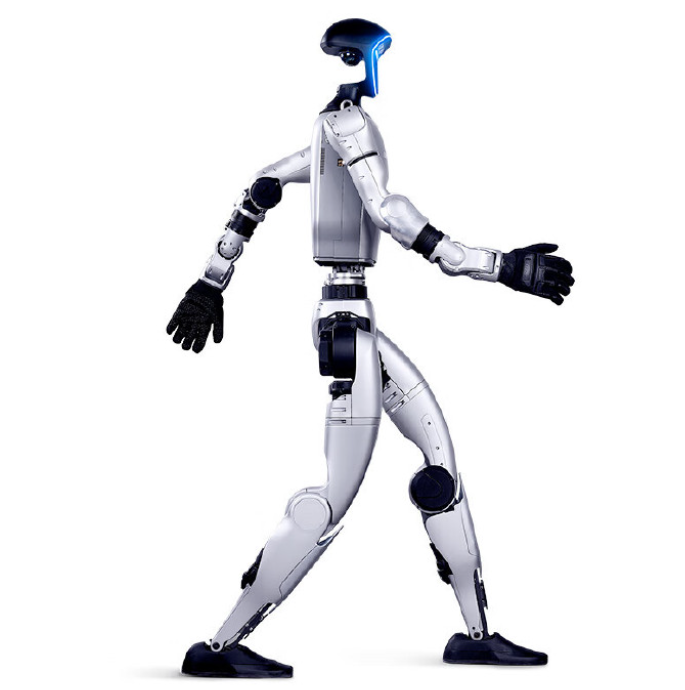
Among the participants, Zhifang (Shenzhen) Technology Co., Ltd. brought its new-generation full-body collaborative general intelligent robot, AlphaBot O1, to the CISMEF stage. The product received the “Top 10 Most Popular New Products” award at the fair. The recognition reflects a broader shift in the embodied intelligence sector: the market is paying attention not merely to humanoid or robotic form factors, but to whether embodied intelligence can understand tasks, perceive environments, make decisions, and execute work reliably in open, dynamic conditions.
The AlphaBot O1 is driven by the embodied large model AlphaBrain. According to the company, the robot can understand tasks, perceive its environment, and make intelligent decisions. It then uses dual-arm force control and full-body coordination to achieve precise execution. In open and dynamic real-world environments, AlphaBot O1 can stably complete cross-space, long-sequence, and fine manipulation tasks. It can also continue learning and evolving during sustained operation. These capabilities place the product at the center of a wider discussion about embodied intelligence, because they address the gap between demonstration and deployment, between a robot that performs in a controlled setting and an embodied intelligence system that works in the messy, changing real world.
1. A National Platform Connects Embodied Intelligence with Asia-Pacific Cooperation
The 21st CISMEF was more than a traditional trade show. By aligning with APEC China Year and the 32nd APEC Small and Medium Enterprises Ministerial Meeting, the fair became a meeting point for enterprises, policymakers, researchers, and service providers from across the Asia-Pacific region. The “one meeting, one exhibition” model allowed embodied intelligence to be discussed not only as a laboratory breakthrough but as an industrial opportunity for small and medium enterprises. That distinction matters because embodied intelligence is not a single product category. It is a convergence of artificial intelligence, robotics, control systems, sensors, actuators, software platforms, and service models. When an exhibition brings these elements together under one roof, it creates conditions for cross-border collaboration and supply-chain integration.
For China’s embodied intelligence sector, the event offered a visible platform to show how domestic companies are moving from component development to integrated systems. The presence of AlphaBot O1 at CISMEF signaled that embodied intelligence is increasingly being judged by practical criteria. Can a robot operate in a public space? Can it interact with people? Can it perform a multi-step task without constant supervision? Can it handle objects with different shapes, weights, and surface conditions? These are the questions that define the next phase of embodied intelligence. They are also the questions that small and medium enterprises must answer if they want to participate in the wider robotics economy.
The Asia-Pacific context adds another layer. APEC economies include both advanced industrial markets and fast-growing digital economies. Embodied intelligence can become a shared platform for manufacturing upgrades, service innovation, and workforce support. However, cooperation is necessary because no single company or country can build the entire embodied intelligence stack alone. Sensors may come from one market, actuators from another, AI models from another, and deployment scenarios from yet another. CISMEF’s role as a national-level platform therefore goes beyond display. It helps connect embodied intelligence with the small and medium enterprises that often turn early technology into scalable services and products.
2. AlphaBot O1 Wins Recognition as Embodied Intelligence Moves Center Stage
The “Top 10 Most Popular New Products” award for AlphaBot O1 was one of the clearest signals that embodied intelligence is becoming a focal point at major industrial exhibitions. Popularity at a fair is not the same as commercial scale, but it does indicate where attention, curiosity, and expectation are gathering. For embodied intelligence, attention is important because the field requires long-term investment, multidisciplinary talent, and real-world testing. When a product such as AlphaBot O1 receives broad recognition, it can help attract partners, customers, and developers into the embodied intelligence ecosystem.
The AlphaBot O1 is described as a new-generation full-body collaborative general intelligent robot. The term “general” is significant. In embodied intelligence, generality is a difficult goal. Many robots are designed for one task, one environment, or one object type. A general intelligent robot must handle variation. It must work with different objects, adapt to changing environments, and respond to tasks that may not be fully scripted in advance. AlphaBot O1’s positioning therefore reflects a larger ambition in embodied intelligence: to create systems that are not limited to repetitive factory motions but can also operate in service, retail, public, and domestic contexts.
The award also highlights the role of integrated design. Embodied intelligence cannot be reduced to a software model or a mechanical body. It requires the model, the body, the sensors, and the control loop to work together. AlphaBot O1’s combination of AlphaBrain, dual-arm force control, and full-body coordination illustrates how embodied intelligence is becoming a system-level engineering challenge. The product’s recognition at CISMEF suggests that the market is beginning to value this integration, not just isolated breakthroughs in perception or language understanding.
3. Inside AlphaBrain: The Embodied Intelligence Layer That Turns Intent into Action
At the center of AlphaBot O1 is AlphaBrain, described as an embodied large model. In the field of embodied intelligence, a large model is not simply a text generator or a vision system. It is expected to connect language, perception, planning, and action. For embodied intelligence to be useful, the system must translate a high-level goal into a sequence of physical steps. It must also monitor whether those steps are succeeding and adjust when they are not. AlphaBrain is presented as the layer that enables the robot to understand tasks, perceive the environment, and make intelligent decisions.
This capability is essential for embodied intelligence because real environments are not static. A bar, a retail store, a public service hall, or a laboratory is filled with movement, noise, unexpected obstacles, and human behavior. A robot driven by embodied intelligence must do more than recognize objects. It must understand context. It must infer what a person wants, where an object is located, what order of operations is safe, and how to recover from an error. The AlphaBrain-driven approach described by Zhifang points toward an embodied intelligence architecture in which high-level reasoning and low-level control are connected.
The phrase “continuous learning and evolution” is also important. Embodied intelligence is not a one-time deployment. A robot that enters a real workplace will encounter new objects, new layouts, and new interaction patterns. If the system can learn from these experiences, its value increases over time. This does not necessarily mean that every robot retrains a foundation model from scratch. It can mean that the embodied intelligence system accumulates skills, refines policies, and improves task success rates through operational data. For companies, this is a path toward more adaptable automation. For the embodied intelligence industry, it is a path toward products that improve after sale rather than remain fixed at the factory gate.
4. Dual-Arm Force Control Gives Embodied Intelligence a Delicate Touch
One of the most practical features of AlphaBot O1 is dual-arm force control. In embodied intelligence, manipulation is a core challenge. A robot may know what to do, but if it cannot apply the right amount of force, the task can fail. It may crush a delicate object, drop a heavy one, or damage a surface. Dual-arm force control allows the robot to sense joint force and contact status in real time. It can then dynamically adjust its applied force according to different objects, environments, and tasks. This supports precise, gentle, and stable operation.
This capability is especially relevant for service scenarios. Consider a bar setting where a robot is asked to prepare a cocktail or interact with customers. The robot may need to handle bottles, glasses, ice, tools, and garnishes. Each object has different weight, shape, friction, and fragility. A glass may need a firm but careful grip. A bottle may need a specific pouring angle. A shaker may need controlled force. Without force control, embodied intelligence would remain primarily a perception and planning exercise. With force control, embodied intelligence becomes physically competent.
Dual-arm force control also supports richer task structures. Many real tasks require two hands working together: holding an object with one arm while manipulating it with the other, stabilizing a container while pouring, or transferring an object from one hand to another. For embodied intelligence, dual-arm coordination is not simply about having two arms. It is about synchronizing perception, planning, and force regulation across both limbs. AlphaBot O1’s dual-arm force control therefore represents a meaningful step in making embodied intelligence more capable in unstructured environments.
5. Full-Body Coordination Extends Embodied Intelligence Beyond the Workbench
Full-body coordination is another defining feature of AlphaBot O1. In traditional industrial robotics, the base is often fixed and the task is designed around the robot. In embodied intelligence for open environments, the robot must coordinate movement, torso posture, arm extension, and end-effector operation. It must move to a location, adjust its body, reach for an object, and complete a task while maintaining balance and precision. This is a much more complex control problem, but it is also a prerequisite for operating in human spaces.
When embodied intelligence is combined with full-body coordination, the robot can perform cross-space tasks. Instead of working only within a single cell, it can move between areas, approach people and objects, and adapt its posture to the task. This expands the range of possible deployments. A robot in a retail environment may need to move along shelves, turn toward customers, and hand over products. A robot in a public service setting may need to guide visitors, point to information, and handle documents. A robot in a hospitality setting may need to move behind a counter, reach for tools, and interact across a bar. Full-body coordination makes these scenarios more feasible.
The challenge is that movement and manipulation can interfere with each other. When a robot moves, its balance and arm position change. When it manipulates an object, its center of gravity and contact forces change. Embodied intelligence must manage these interactions in real time. AlphaBot O1’s full-body coordination is presented as a way to balance operational precision with overall stability. This is a key requirement for embodied intelligence systems that are expected to work safely around people. It also shows why embodied intelligence is not just an AI problem; it is a robotics, control, and systems problem.
6. From Cocktail Service to Public Service: Embodied Intelligence Enters Real Commercial Settings
The deployment example described by Zhifang is notable because it moves embodied intelligence out of the laboratory and into a social environment. In August, the company’s robot entered a bar in Lan Kwai Fong, Hong Kong, to provide cocktail mixing and interactive services for customers. This is a setting full of unpredictable elements: people moving, conversations, music, changing orders, and objects that require careful handling. A robot working in such an environment must combine embodied intelligence with physical dexterity and human-facing interaction.
The bar deployment does not prove that every service job can or should be automated. It does, however, show that embodied intelligence is entering real commercial settings where the value proposition is not only efficiency but also novelty, consistency, and service availability. A robot that can mix a cocktail and interact with customers demonstrates a combination of skills: task understanding, object manipulation, sequence execution, and social engagement. For embodied intelligence, this kind of deployment provides valuable operational data. Each interaction, each pour, each grip, and each recovery from an unexpected event can help refine the system.
Zhifang’s broader message is that productivity-type general robots have already achieved real deployment in public services, new retail, and other fields. The company said it will continue to promote the entry of robots into the real world. This statement captures the central theme of embodied intelligence today. The question is no longer whether a robot can perform a scripted demonstration. The question is whether embodied intelligence can be deployed repeatedly, maintained economically, and integrated into workflows where it creates measurable value.
7. Why Real-World Deployment Is the Decisive Test for Embodied Intelligence
Real-world deployment is the decisive test for embodied intelligence because it exposes weaknesses that demonstrations often hide. A controlled demonstration may use known objects, stable lighting, and a cooperative human operator. A real environment introduces variability. Objects are misplaced. Surfaces are wet or uneven. People behave unexpectedly. Network conditions change. Power and maintenance constraints appear. An embodied intelligence system must handle these realities without constant human intervention. This is why deployments in bars, retail stores, and public-service settings are so important. They generate the feedback that improves embodied intelligence.
Deployment also forces companies to think about total system design. A robot must be safe, reliable, and easy to operate. It must be repairable and upgradeable. Its software must be maintainable. Its sensors must be robust. Its behavior must be understandable to the people around it. For embodied intelligence, these requirements are not secondary. They are part of the product. A model that performs well in simulation but cannot run reliably on a physical robot in a busy environment is not yet a deployable embodied intelligence solution.
The CISMEF recognition of AlphaBot O1 should therefore be understood in the context of this broader challenge. Awards and exhibitions can create visibility, but deployment creates credibility. When an embodied intelligence product moves from a booth to a bar, a store, or a service hall, it enters a cycle of learning that no laboratory can fully replicate. The companies that can manage this cycle will be best positioned to lead the next stage of embodied intelligence.
8. From a Single Product to an Industry Chain: The Wider Significance of the CISMEF Showcase
The significance of AlphaBot O1 at CISMEF extends beyond one product. It illustrates how embodied intelligence is becoming an industry chain. At the top are foundation models and embodied large models such as AlphaBrain. Below that are perception systems, planning algorithms, and control software. At the physical layer are actuators, sensors, joints, end effectors, batteries, and structural components. Around the system are deployment services, maintenance, data operations, safety assessment, and user training. Each layer creates opportunities for small and medium enterprises. Each layer also depends on the others.
For embodied intelligence to scale, this chain must become more standardized and more collaborative. A company should not need to build every component from scratch. It should be able to integrate best-in-class modules and focus on its unique value. Exhibitions such as CISMEF help this process by allowing suppliers, integrators, and customers to meet. They also allow policymakers and industry associations to see where bottlenecks remain. If embodied intelligence is to become a broad productivity tool, the ecosystem must support many participants, not only a few vertically integrated players.
The APEC dimension reinforces the cross-border nature of this ecosystem. Embodied intelligence can benefit from regional cooperation in standards, testing, data governance, and market access. Small and medium enterprises in different economies can contribute specialized capabilities. A shared understanding of safety and interoperability can reduce friction and accelerate adoption. In this sense, CISMEF’s focus on small and medium enterprises is well matched to the needs of embodied intelligence, because the field’s next breakthroughs may come not only from large laboratories but also from agile suppliers and service innovators.
| Item | Details |
|---|---|
| Product | AlphaBot O1 |
| Developer | Zhifang (Shenzhen) Technology Co., Ltd. |
| Core engine | AlphaBrain embodied large model |
| Key capabilities | Task understanding, environment perception, intelligent decision-making, dual-arm force control, full-body coordination, cross-space and long-sequence task execution, continuous learning and evolution |
| Recognition | Top 10 Most Popular New Products at the 21st China International Small and Medium Enterprises Fair |
| Deployment example | Hong Kong Lan Kwai Fong bar, providing cocktail mixing and interactive service in August |
The table above summarizes the publicly described features of AlphaBot O1 and its recognition at CISMEF. It does not replace the deeper story: embodied intelligence is moving from component innovation to integrated systems, and from integrated systems to real deployments. The product’s capabilities matter because they address the physical and cognitive requirements of embodied intelligence. Its deployment matters because it tests those capabilities in a live environment. Its recognition matters because it shows that the market and industry are looking for concrete examples of embodied intelligence, not only promises.
9. The Role of Embodied Intelligence in Public Services and New Retail
Public services and new retail are two areas where embodied intelligence may find early and repeatable demand. In public services, robots can assist with information delivery, guidance, document handling, queue support, and routine interactions. These tasks require embodied intelligence because they take place in human environments and involve unpredictable requests. A service robot must understand spoken or visual instructions, navigate safely, and respond appropriately. It must also know when to ask for help or escalate to a human. The value of embodied intelligence in public services is not simply replacing staff. It is extending service availability, improving consistency, and handling repetitive tasks so that human workers can focus on complex cases.
In new retail, embodied intelligence can support product handling, shelf management, customer interaction, and in-store demonstration. Retail environments are dynamic and visually rich. Products change, customers move, and layouts are rearranged. An embodied intelligence system must recognize objects, plan routes, manipulate items, and interact with people. The bar deployment in Hong Kong is one example of a service environment, but the same underlying capabilities can apply to retail. A robot that can mix a cocktail must handle tools and containers. A robot that works in retail must handle packages, shelves, and payment or information devices. The common requirement is adaptable physical interaction driven by embodied intelligence.
For small and medium enterprises, these application areas are attractive because they are close to customers and can be tested in specific locations. A single store, bar, or service center can serve as a pilot environment. Data from that environment can improve the embodied intelligence system, which can then be adapted to similar settings. This creates a path from niche deployment to broader adoption. It also explains why events such as CISMEF are important: they allow solution providers and end users to meet, test assumptions, and form partnerships.
10. The Road Ahead for Embodied Intelligence in China and the Asia-Pacific Region
The road ahead for embodied intelligence will be shaped by several practical questions. First, how can embodied intelligence systems be made safe enough for everyday environments? Safety is not only about avoiding collisions. It is about predictable behavior, transparent decision-making, and reliable recovery from errors. Second, how can embodied intelligence systems be maintained and upgraded at scale? A robot in a bar or store must be serviceable by local teams. Third, how can data from deployments be used responsibly to improve embodied intelligence without compromising privacy or security? Fourth, how can standards and interoperability be developed so that different components and systems can work together?
China’s embodied intelligence sector has a strong base in manufacturing, electronics, software, and artificial intelligence. This gives it an advantage in building integrated systems. However, the transition from prototype to product remains difficult. Companies must master hardware reliability, software stability, user experience, and service operations. The AlphaBot O1 example shows that progress is being made. A robot driven by an embodied large model, equipped with dual-arm force control and full-body coordination, can be presented as a general intelligent robot and deployed in a real service setting. That combination is a meaningful indicator of where embodied intelligence is heading.
In the Asia-Pacific region, cooperation can accelerate this progress. APEC economies can share best practices in testing, certification, and workforce training. They can support small and medium enterprises that develop specialized components or services for embodied intelligence. They can also encourage open research and responsible innovation. The 32nd APEC Small and Medium Enterprises Ministerial Meeting and related activities provided a policy context for this cooperation. The CISMEF exhibition provided a commercial and technological context. Together, they created a platform where embodied intelligence could be discussed as both an innovation priority and an industrial opportunity.
| Stage | Focus | What Embodied Intelligence Must Prove |
|---|---|---|
| Laboratory demonstration | Core algorithms and controlled tasks | That perception, planning, and control can work together in a defined setting |
| Product integration | Hardware, software, and user interface | That embodied intelligence can run reliably on a physical platform |
| Pilot deployment | Real environment with real users | That embodied intelligence can handle variability, interruption, and recovery |
| Commercial service | Repeatable value and maintainable operations | That embodied intelligence can deliver consistent service and be supported at scale |
| Ecosystem expansion | Partners, standards, and specialized suppliers | That embodied intelligence can grow through collaboration rather than isolated effort |
The journey outlined in the table is not automatic. Each stage introduces new requirements. A laboratory demonstration may impress viewers, but a pilot deployment must satisfy safety, reliability, and usability demands. A commercial service must also make economic sense. For embodied intelligence, the most difficult transition is often from a successful pilot to a repeatable service. This requires not only better models but also better operations. It requires training, documentation, spare parts, remote monitoring, and clear service-level expectations. Companies that understand this will be better able to turn embodied intelligence into a durable business.
11. Conclusion: The Shift from Showcase to Service
The presence of AlphaBot O1 at the 21st CISMEF and its “Top 10 Most Popular New Products” award capture a larger movement in China’s technology sector. Embodied intelligence is no longer only a research topic or a futuristic concept. It is becoming a product category with real deployments, real users, and real operational challenges. The AlphaBrain-driven robot, with dual-arm force control and full-body coordination, demonstrates how embodied intelligence can combine cognition and physical action. Its deployment in a Hong Kong bar demonstrates how embodied intelligence can enter service environments. Its recognition at CISMEF demonstrates how the industry is searching for practical examples of embodied intelligence that can move beyond the exhibition hall.
The broader significance is industrial. Embodied intelligence brings together artificial intelligence, robotics, sensors, control systems, and service models. It creates opportunities for large companies and small and medium enterprises alike. It also creates challenges that no single company can solve alone. Platforms such as CISMEF and APEC-related meetings help connect the many participants needed to build the embodied intelligence ecosystem. They allow companies to show products, customers to explore use cases, and policymakers to understand the conditions needed for adoption.
For Zhifang, the message is forward-looking. The company states that productivity-type general robots have already achieved real deployment in public services, new retail, and other fields. It adds that it will continue to promote the entry of robots into the real world. That commitment reflects the direction of the entire embodied intelligence field. The next phase will be defined not only by larger models or more advanced hardware, but by the ability to deliver reliable service in everyday environments. The shift from showcase to service is already underway. Embodied intelligence is moving from the edge of the exhibition floor into the center of the real economy, and the companies that can turn demonstrations into dependable deployments will shape the next chapter of this transformation.