
The embodied intelligence industry is entering a faster phase of development as advances in software and hardware meet expanding application scenarios. From robot “brain” solutions to factory logistics deployments, listed companies are moving quickly to fill gaps in specialized industrial segments. At the same time, leading international enterprises and startups are pressing ahead with technology breakthroughs and mass-production plans. Minsheng Securities said in a latest research note that, based on strong capabilities in cross-scenario adaptation and artificial intelligence deployment, humanoid robots are expected to reshape the industrial ecosystem over the next five to ten years. The firm said humanoid robots could achieve scaled penetration in fields such as industrial manufacturing and medical rehabilitation, becoming a strategic high ground in a new round of technological revolution. The rapid convergence of software, hardware, and application scenarios is giving embodied intelligence a more concrete commercial direction.
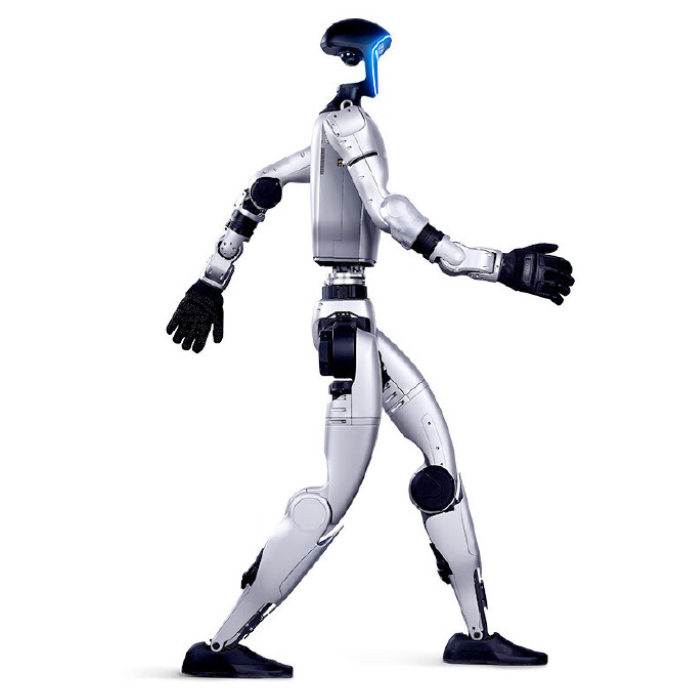
1. Market Momentum and Strategic Outlook for Embodied Intelligence
Embodied intelligence is no longer confined to laboratory demonstrations. It is moving into supply chains, factories, logistics systems, homes, and sports science. The development path is being shaped by several forces at once: stronger multimodal artificial intelligence models, more powerful edge computing chips, lower-cost sensors, improved robot bodies, and growing demand for automation in environments that are difficult to standardize. Minsheng Securities said the cross-scenario adaptability of embodied intelligence and its ability to carry artificial intelligence into physical environments are central reasons why humanoid robots may become a strategic priority. The research note pointed to industrial manufacturing, medical rehabilitation, and other areas as likely venues for scaled penetration over the next five to ten years.
That outlook is already influencing corporate behavior. Domestic listed companies are accelerating product launches in embodied intelligence, moving from component supply toward integrated system solutions. International leaders are pushing production plans, while startups are using specialized robots to enter homes and commercial settings. The result is a multi-layered race: one layer focuses on the robot brain, another on the body and energy system, another on data collection and simulation, and another on real-world deployment. Each layer feeds the others. Better embodied intelligence systems generate more data, which improves models, which makes deployment more feasible, which in turn attracts more investment and more participants.
The strategic importance of embodied intelligence also lies in its ability to connect digital intelligence with physical labor. Unlike purely software-based artificial intelligence, embodied intelligence must perceive, decide, and act in unstructured environments. That requirement demands tight coordination among chips, controllers, sensors, actuators, power systems, and software algorithms. It also demands manufacturing discipline. Companies with experience in automotive-grade production, industrial automation, or large-scale electronics manufacturing are therefore finding new opportunities in the embodied intelligence supply chain.
2. Listed Companies Roll Out New Embodied Intelligence Products
Recent product launches show how quickly listed companies are positioning themselves in the embodied intelligence ecosystem. On September 18, Joyson Electronics held a new product launch event and introduced a robot artificial intelligence head assembly, a robot domain controller based on the NVIDIA Jetson Thor chip, and a new generation of robot energy management products. The move reflects a broader trend in which automotive suppliers and electronics manufacturers are applying their engineering and production experience to embodied intelligence.
Joyson Electronics said the artificial intelligence head assembly, designed specifically for embodied intelligence robots, highly integrates a flexible display, a microphone array, a depth camera, and other functions. Its multimodal artificial intelligence interaction system can enable active voice interaction and face recognition tracking. The company said the system allows a robot not only to understand what a user says but also to understand what the user feels. That description points to a shift in embodied intelligence from basic command execution toward more natural and responsive human-robot interaction.
Yu Zhaohui, board secretary of Joyson Electronics, said that in the past robots were mostly assembled by manufacturers themselves, which created compatibility and stability problems. The company uses automotive-grade manufacturing processes to build system assemblies, addressing core pain points in software-hardware collaboration. That statement highlights one of the central challenges in embodied intelligence: integrating many advanced components into a reliable system that can operate consistently outside controlled laboratory conditions.
The domain controller released on the same day is described as a core element of the robot brain. According to the company, the controller is built on the NVIDIA Jetson Thor chip and delivers artificial intelligence computing power of 2070 TOPS. That is 7.5 times the previous generation, while CPU performance is improved by 3.1 times. The controller can support real-time inference of edge-side large models with 100 billion parameters. Such capability is important for embodied intelligence because robots must process multimodal inputs and make decisions with low latency, often without relying on constant cloud connectivity.
Joyson Electronics also disclosed that since 2025 it has cooperated with Zhiyuan Robotics, Galbot, and RIVR, a Swiss embodied intelligence robot company, based on automotive-grade advanced manufacturing technologies and processes. These partnerships suggest that embodied intelligence is becoming a cross-industry effort, drawing on automotive electronics, robotics, artificial intelligence, and advanced manufacturing. The company’s product strategy illustrates how embodied intelligence is moving from isolated components toward integrated, production-ready subsystems.
3. Hikrobot Targets Industrial Logistics Automation with Embodied Intelligence
On September 21, Hikrobot held its 2025 mobile robot ecosystem product launch event, focusing on core challenges in the deepening process of industrial logistics automation. The company introduced three new products: a controller integrated kit, a general-purpose 3D integrated logistics simulation platform called PlantMirror, and a mobile robot system called EasyAMR. These products are aimed at helping manufacturing customers address difficult non-standard scenario adaptation and high simulation costs, while promoting deeper integration between mobile robots and industrial scenarios.
The launch reflects a practical direction for embodied intelligence. In many factories, the challenge is not simply building a robot that can move, but building a robot system that can adapt to changing layouts, varying workflows, and unpredictable material flows. Hikrobot’s new products are designed to reduce the friction between robot deployment and industrial reality. The controller integrated kit, simulation platform, and mobile robot system together address hardware control, virtual testing, and fleet coordination. This combination is a clear example of how embodied intelligence is being commercialized through logistics and manufacturing applications.
Hikrobot’s representative said at the event that the new products will help manufacturing clients solve the difficulties of non-standard scenario adaptation and high simulation costs, and will promote the deep integration of mobile robots and industrial scenarios. For embodied intelligence, industrial logistics is an attractive early market because tasks such as moving, sorting, and transporting goods are repetitive, measurable, and economically valuable. Success in these environments can generate data and operational experience that later support more complex humanoid robot applications.
4. Global Technology Race and Mass Production Plans
Global embodied intelligence companies are advancing through two parallel strategies. Leading enterprises are focusing on mass production, while startups are pursuing targeted technology breakthroughs. Together, these efforts are accelerating the development of the humanoid robot industry. The competition is no longer only about demonstrating a prototype; it is increasingly about manufacturing capability, cost reduction, data collection, and commercial deployment.
Tesla, an established player in electric vehicles and energy systems, has become a major reference point in the humanoid robot field. After announcing in 2024 that Optimus had acquired capabilities for upper-limb heavy-object handling, dynamic grasping, and autonomous lower-limb movement over complex terrain, Tesla recently said it will further optimize the product’s rough-terrain gait, speed response, and fall recovery functions. These improvements are important for embodied intelligence because real-world environments are rarely flat, predictable, or forgiving. A humanoid robot must maintain balance, recover from disturbances, and respond quickly to changes in terrain and load.
Tesla CEO Elon Musk has repeatedly said in public that the company will expand Optimus production at the fastest speed and expects to achieve an annual production target of 1 million units within five years. That ambition aligns with the latest compensation incentive plan proposed for Musk. Under the plan, one requirement for Musk to receive subsequent equity incentives is cumulative delivery of 1 million humanoid robots. Tesla also said Optimus 3 will be launched at the end of 2025, begin mass production in 2026, and have an estimated price range of USD 20,000 to USD 30,000. If achieved, such pricing would represent a significant step toward commercial viability for embodied intelligence platforms.
Minsheng Securities said that star startups such as Figure AI, Agility, and 1X Technologies continue to evolve, and that overseas humanoid robots are accelerating deployment in core scenarios including industrial manufacturing, logistics sorting, and home services. The firm said 2025 is expected to become the first year of overseas humanoid robot mass production, with leapfrog development in technology research and development, mass production, and commercial applications. This outlook reinforces the view that embodied intelligence is moving from a research theme to an industrial theme.
| Company or Institution | Product or Initiative | Technical or Application Focus | Reported Detail |
|---|---|---|---|
| Joyson Electronics | Robot AI head assembly, robot domain controller, energy management products | Multimodal interaction, robot brain, power management | AI head integrates flexible display, microphone array, depth camera; controller based on NVIDIA Jetson Thor with 2070 TOPS, 7.5 times previous AI performance, 3.1 times CPU performance, supports edge-side 100-billion-parameter model real-time inference |
| Hikrobot | Controller integrated kit, PlantMirror, EasyAMR | Industrial logistics automation, simulation, mobile robot systems | Aims to address non-standard scenario adaptation and high simulation costs, promote deep integration of mobile robots and industrial scenarios |
| Tesla | Optimus humanoid robot | Humanoid robot mass production | Optimus 3 planned for launch at the end of 2025, mass production in 2026, estimated price range of USD 20,000 to USD 30,000; annual production target of 1 million units within five years |
| Figure AI | Series C financing | Home and commercial robots, GPU training infrastructure, advanced data collection | Committed investment of more than USD 1 billion, post-money valuation of USD 39 billion; led by a venture capital firm with participation from NVIDIA, Intel Capital, LG Technology Ventures and other institutions |
| 1X Technologies | Neo Gamma humanoid robot | Home services | Can perform tasks such as brewing coffee, laundry, and vacuuming; plans to deploy hundreds to thousands of units to household users before the end of 2025 for early testing and real-environment data collection |
| Zhiyuan Robotics and Fulin Precision | A2-W robot deployment | Factory logistics and material handling | Tens of millions of yuan cooperation; nearly 100 A2-W robots to enter Fulin Precision factory; medicine box handling as entry point; current handling efficiency about 60% to 70% of human workers; future AMR coordination planned |
| UBTech | Industrial humanoid robots | Sorting, handling, quality inspection | Expects to deliver 500 industrial humanoid robots in 2025; estimates five to ten years of real-scenario accumulation and hundred-billion-yuan-level investment to support broader core roles |
| Li-Ning and Beijing Humanoid Robot Innovation Center | Tiangong Ultra robot testing | Sports science and product testing | Robot wears running shoes on a 200-meter track and treadmill, collects data through joint sensors; previous tests required 4 to 8 professional athletes for 2 to 3 days plus about 1 month for data processing; robot can produce results the same day |
5. Startups Push Embodied Intelligence into New Arenas
Startups are playing a distinct role in embodied intelligence by targeting specific capabilities and user experiences. Figure AI recently became a market focal point. On September 16 local time, Figure AI announced the completion of its Series C financing. The round was led by a venture capital firm, with participation from NVIDIA, Intel Capital, LG Technology Ventures, and other institutions. Committed investment funds exceeded USD 1 billion, and the post-money valuation reached USD 39 billion. Figure AI said the financing will be used to advance robots into home and commercial scenarios, build GPU training infrastructure, and launch advanced data collection work.
The scale of Figure AI’s financing shows that investors see embodied intelligence as a platform opportunity, not merely a niche robotics category. Home and commercial scenarios are especially demanding because they require robots to operate around people, handle varied objects, and adapt to unpredictable layouts. GPU training infrastructure and advanced data collection are equally important. Embodied intelligence depends on large amounts of real-world interaction data, and companies that can collect, curate, and learn from such data may gain a durable advantage.
1X Technologies, known for home robot products, has also attracted market attention. The company released the Neo Gamma humanoid robot this year. The robot can perform a series of household tasks including brewing coffee, doing laundry, and vacuuming. The company founder said Neo Gamma has recently left the laboratory and plans to deploy hundreds to thousands of units to household users before the end of 2025 for early testing. The goal is to collect real-environment data to optimize models. However, the founder also said there is still a long way to go before commercialization. That caution is important: home environments are highly variable, safety requirements are strict, and user expectations are high. Embodied intelligence in the home will require not only capable hardware but also reliable software and long-term data refinement.
Minsheng Securities said that Figure AI, Agility, 1X Technologies, and other star startups continue to evolve. The firm said overseas humanoid robots are accelerating deployment in core scenarios such as industrial manufacturing, logistics sorting, and home services. It also said 2025 is expected to become the first year of overseas humanoid robot mass production, with technology research and development, mass production, and commercial applications experiencing leapfrog development. For embodied intelligence, this means the competitive frontier is expanding from demonstration videos to production lines, service trials, and supply chain integration.
6. Industrial Applications and Commercial Orders for Embodied Intelligence
In terms of deployment, companies are actively seeking more suitable scenarios. Humanoid robots entering industrial scenarios has become a relatively certain application trend both domestically and internationally. Industrial environments offer structured tasks, clear economic returns, and opportunities to gather operational data. They also allow companies to test safety, reliability, and efficiency in real production conditions.
Zhiyuan Robotics and Fulin Precision previously reached a cooperation project worth tens of millions of yuan. Nearly 100 A2-W robots are set to enter the Fulin Precision factory, making it a typical case of scaled commercial orders for embodied robots in the domestic industrial sector. Fulin Precision engineering director Deng Yang said the company used medicine box handling as an entry point to begin exploring robot applications in the factory. At present, the handling efficiency of embodied intelligence robots is about 60% to 70% of that of human workers. Fulin Precision later plans to use Zhiyuan robots and AMR carts in coordinated operations to build a complete material box delivery and empty box recovery system, further reducing labor intensity.
This model can not only alleviate labor shortages but also bring new optimization space to factory production processes. The phased approach is notable. Instead of attempting to replace every task at once, the company starts with a defined handling task and gradually expands toward an integrated logistics system. That approach is practical for embodied intelligence because it allows the technology to mature alongside operational workflows. The coordination between humanoid robots and AMR carts also points to a future in which different types of embodied intelligence systems work together in the same facility.
UBTech has signed robot procurement contracts with multiple customers during the year. The company said it is accelerating humanoid robot production and expects to deliver 500 industrial humanoid robots in 2025. UBTech chief brand officer Tan Min said that current UBTech robot application scenarios in factories are mainly concentrated in three categories: sorting, handling, and quality inspection. He estimated that through five to ten years of real-scenario accumulation and hundred-billion-yuan-level investment, artificial intelligence will support humanoid robots entering more core positions. That estimate underscores both the scale of investment required and the long-term nature of the transition. Embodied intelligence may arrive in stages, with industrial tasks serving as the first proving ground.
7. Sports Science and New Testing Scenarios for Embodied Intelligence
Beyond factories, many industries are exploring more applications for humanoid robots. The 2025 humanoid robot half marathon and robot sports games were originally viewed more as product display and testing activities. However, sports equipment companies seized the opportunity and began using humanoid robots for product testing and sports science research. This represents an unexpected but promising extension of embodied intelligence into consumer product development.
At the Li-Ning Sports Science Research Center, the Tiangong Ultra robot from the Beijing Humanoid Robot Innovation Center wears running shoes and continuously collects data through joint sensors on a 200-meter track and a treadmill. The data provides a reference for optimizing running shoe performance. Yang Fan, senior director of the Li-Ning Sports Science Application Research Center, said that in the past, testing required 4 to 8 professional athletes for 2 to 3 days, and data processing required about 1 month. Now the robot can produce results the same day. Robot testing not only shortens the testing cycle but also eliminates the influence of human differences, Yang said. The center is building a running shoe database through robots, and future plans include exploring robot applications in badminton and basketball equipment testing.
This example shows how embodied intelligence can be used not only for labor replacement but also for measurement, simulation, and product optimization. A robot can repeat motions with high consistency, collect sensor data continuously, and reduce the variability that comes from human testers. For embodied intelligence, sports science is a valuable niche because it combines dynamic movement, precise sensing, and real-time data analysis. It also demonstrates that the application boundaries of embodied intelligence are broader than many early forecasts suggested.
8. Policy Support and Industrial Chain Development
Policy support is helping to shape the direction of embodied intelligence and robotics in China. According to the implementation plan for the “Robot+” application action issued by the Ministry of Industry and Information Technology and 17 departments, by 2025 China should focus on 10 major application areas, break through more than 100 robot innovation application technologies and solutions, and promote more than 200 typical robot application scenarios with relatively high technical levels, innovative application models, and notable application results.
At a recent press conference on the high-quality completion of the 14th Five-Year Plan, a relevant official from the Ministry of Industry and Information Technology said that China’s humanoid robots currently have full industrial chain manufacturing capabilities, from key chips and components to complete machines. The official said future efforts will further strengthen industrial supply, accelerate technological breakthroughs in high-end computing power chips, industrial multimodal algorithms, and software-hardware adaptation, accelerate the creation of high-quality data sets, and build a solid industrial foundation. The official also said the country will promote the development and deployment of intelligent agents and develop humanoid robots and other artificial intelligence terminal products.
These policy directions are closely connected to embodied intelligence. High-end computing power chips support the brain of embodied intelligence systems. Industrial multimodal algorithms allow robots to combine vision, language, touch, and motion. Software-hardware adaptation ensures that algorithms can run efficiently on real machines. High-quality data sets provide the fuel for model training and evaluation. Intelligent agent development and artificial intelligence terminal products represent the application layer where embodied intelligence eventually meets users and industries. Together, these elements form an industrial base for scaled embodied intelligence.
9. Investment and Supply Chain Implications of Embodied Intelligence
Industry participants said the rapid progress of overseas embodied intelligence enterprises proves that the entire industry has entered a critical stage. Leading enterprises have relatively low-cost mass production capabilities. Competition will continue to heat up, and companies will launch new products as quickly as possible to attract consumer attention. At the same time, the broad prospects of the industry provide opportunities for Chinese enterprises with cost advantages and industrial integration capabilities, allowing them to achieve rapid development by joining the supply chains of leading humanoid robot companies.
Zhang Yongwei, chairman of the China EV100, said that smart cars, intelligent robots, and low-altitude aircraft are the “three major pieces” of aggregated intelligence. He said they are essentially characterized by technology homology, chain connectivity, and application integration. He added that they are expected to become a new engine for Chinese companies going global after the “new three” exports. This view places embodied intelligence within a broader mobility and intelligent hardware ecosystem. The same sensors, chips, power systems, software stacks, and manufacturing processes can often be adapted across cars, robots, and low-altitude vehicles.
A securities analyst further told reporters that auto parts companies have natural advantages in the embodied intelligence field. They have strong customer expansion capabilities and mass production experience. Their main products and robot components are technologically interconnected, and they can leverage automotive customer resources to quickly enter the robot supply chain. However, the analyst also noted that valuations for some companies in this sector have already reflected growth expectations for the next three to five years. Investors therefore need to be alert to valuation correction pressure if technology deployment falls short of expectations.
This analysis captures both the promise and the risk of embodied intelligence. On the one hand, the convergence of automotive engineering, robotics, and artificial intelligence creates real synergies. Automotive-grade manufacturing can improve reliability. Mass production experience can reduce costs. Existing customer relationships can open doors to industrial deployments. On the other hand, embodied intelligence remains technically difficult. Real-world performance, safety, maintenance, and return on investment must all be proven. The gap between a compelling demonstration and a scalable commercial product can be wide.
10. Outlook: Embodied Intelligence Moves Toward Scaled Deployment
The next phase of embodied intelligence will be defined by execution. Companies must turn component breakthroughs into complete systems, complete systems into reliable products, and reliable products into scalable deployments. The recent wave of product launches, financing rounds, commercial orders, and policy measures suggests that the industry is moving in that direction. Joyson Electronics is integrating automotive-grade manufacturing with robot brains and energy management. Hikrobot is applying mobile robot systems to industrial logistics. Tesla is targeting mass production and lower price points. Figure AI is raising large-scale financing for home and commercial robots. 1X Technologies is testing home robots in real environments. Zhiyuan Robotics and Fulin Precision are deploying industrial robots under commercial contracts. UBTech is planning industrial humanoid robot deliveries. Li-Ning is using humanoid robots for sports product testing.
Each of these efforts contributes to the broader embodied intelligence ecosystem. Industrial deployments generate operational data. Home trials generate interaction data. Sports testing generates motion and sensor data. Simulation platforms generate synthetic data. Financing supports infrastructure and talent. Policy supports standards, supply chains, and application scenarios. The more these elements interact, the faster embodied intelligence can improve.
Minsheng Securities said humanoid robots are expected to reshape the industrial ecosystem over the next five to ten years, with scaled penetration in industrial manufacturing, medical rehabilitation, and other fields. That timeline suggests the transition will not be instantaneous. It will require continued investment, iterative engineering, and careful scenario selection. Yet the direction is becoming clearer. Embodied intelligence is moving from a research frontier to an industrial reality. The companies that can combine artificial intelligence, advanced manufacturing, cost control, and real-world deployment experience are likely to shape the next stage of competition.
As software and hardware continue to resonate with diverse scenarios, embodied intelligence will increasingly be judged by what it can do in factories, warehouses, homes, hospitals, sports centers, and other physical environments. The coming years will reveal which applications achieve durable commercial scale and which remain experimental. What is already evident is that embodied intelligence has become a central organizing theme for robotics, artificial intelligence, advanced manufacturing, and investment. The convergence of these forces is accelerating the industry’s path toward broader deployment.