
In the first half of 2025, many of China’s largest internet companies made high-profile moves into embodied intelligence. They announced partnerships, launched robotics brands, invested in humanoid robot startups, and staged public demonstrations of machines that could walk, grasp, sort, and serve. Against that backdrop, ByteDance appeared unusually quiet. But a quiet posture does not mean absence. In embodied intelligence, ByteDance has been moving through a more discreet route: a combination of venture investments, large-model research, hardware development, manufacturing preparation, and ecosystem partnerships. The company is not simply watching the sector. It is assembling pieces of a long-term strategy that could place it at the intersection of artificial intelligence, robotics, logistics, content platforms, and next-generation hardware.
The central logic is becoming clearer. Embodied intelligence requires both a “brain” and a “body.” A powerful model must understand language, vision, and action. A physical platform must move, grasp, manipulate, and operate in real environments. ByteDance appears to be pursuing both ends at once. On the model side, its Seed team has introduced a vision-language-action model known as Seed GR-3. On the hardware side, it has developed a general dual-arm mobile robot called ByteMini. At the same time, its investment network, including the Jinqiu Fund, has backed several embodied intelligence companies. Its self-developed logistics robots have reportedly entered mass production. The result is a multi-layered approach that touches capital, algorithms, hardware, manufacturing, and commercial deployment.
Industry observers and economists say the opportunity is significant. One expert noted that ByteDance’s greatest advantage in embodied intelligence is its direct traffic entry, which could give it stronger commercial prospects than many pure-technology players. At the same time, the expert pointed to a clear challenge: ByteDance lacks deep technical accumulation in execution control. Internet companies may be strong in building robot “brains,” but they are often weak in joints, limbs, and the cerebellum-like control systems that govern motion. That gap may require external technology, partnerships, and acquisitions. Another challenge is the limited number of current embodied intelligence application scenarios. The sector is growing quickly, but commercialization still depends on finding repeatable, scalable use cases.
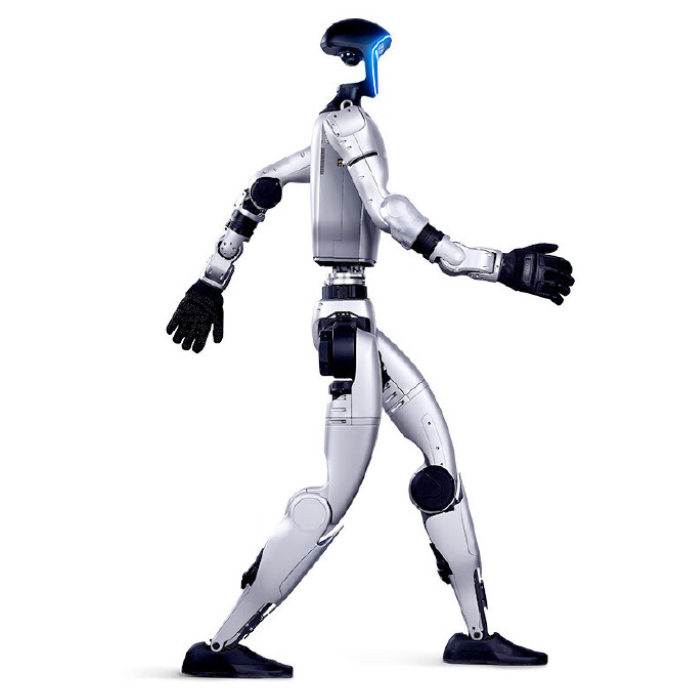
1. A low-profile but widening footprint in embodied intelligence
ByteDance’s approach to embodied intelligence has been less theatrical than some of its peers. It has not staged a single grand launch to declare its ambitions. Instead, its moves have appeared across different parts of its business and investment network. In September 2025, Xingchen Intelligent (Shenzhen) Co., Ltd. announced a strategic cooperation with Xiangong Intelligent. The plan called for deploying more than 1,000 AI robots within two years, with phased deployments in industrial manufacturing, warehousing, and logistics scenarios. That kind of “thousand-unit” order is still rare in the embodied intelligence sector. As of September 2025, only a small number of players, including Unitree Robotics, AgiBot, and Songyan Dynamics, had been able to sign orders at that scale.
What made the Xingchen announcement particularly notable was its investor base. Behind Xingchen Intelligent were not only well-known institutions such as Ant Group, Yunqi Capital, and Daotong Capital, but also the Jinqiu Fund, which has deep ties to ByteDance. ByteDance is one of the limited partners of Jinqiu Fund. The fund was founded by Yang Jie, a former head of ByteDance’s financial investment department. Its name comes from Jinqiu Jiayuan, the first office location of ByteDance. Its core team is drawn largely from ByteDance’s investment department as well as other first-tier investment institutions and industrial companies. That background makes Jinqiu Fund more than a conventional financial investor in the embodied intelligence space. It functions as a bridge between ByteDance and a wider ecosystem of robotics and AI companies.
The investment route is important because embodied intelligence is not a single technology. It is a stack that includes perception, planning, decision-making, motion control, actuators, reducers, sensors, batteries, manufacturing, and deployment. No single company can easily master every layer. For ByteDance, investing in specialized companies can help fill gaps while keeping its own strategic options open. It can learn from external teams, support promising technologies, and build relationships that may later become deeper commercial or technical partnerships. In embodied intelligence, that kind of ecosystem positioning may prove as valuable as direct ownership.
2. Jinqiu Fund becomes a bridge between ByteDance and embodied intelligence
Between April and August 2025, Jinqiu Fund invested in five embodied intelligence companies, according to data from IT Juzi. These included Xingchen Intelligent, Yinkesi, Lexiang Technology, Unitree Robotics, and Pangbote. The list covers different parts of the embodied intelligence value chain. Unitree Robotics is already one of the most visible names in robotics. Xingchen Intelligent has been pursuing advanced robotic platforms and commercial deployment. Other companies may focus on components, systems, or application-specific technologies. Taken together, the investments suggest that Jinqiu Fund is not making a single bet. It is spreading its exposure across the embodied intelligence ecosystem.
For ByteDance, the Jinqiu Fund connection offers several advantages. First, it provides early visibility into emerging technologies and teams. Second, it creates a network of founders, engineers, and investors who may become partners or suppliers. Third, it allows ByteDance to participate in the upside of embodied intelligence without having to integrate every technology into its own organization immediately. Fourth, it helps ByteDance understand where the bottlenecks are, whether in dexterous hands, motion control, energy systems, or manufacturing. In a field as complex as embodied intelligence, that intelligence-gathering function can be as important as financial return.
The fund’s identity also matters. Because Jinqiu Fund was founded by a former ByteDance investment executive and staffed by people from ByteDance’s investment circle, its deals are often interpreted as signals of ByteDance’s broader interests. That does not mean every Jinqiu investment is a ByteDance acquisition in waiting. But it does mean the fund operates close to ByteDance’s strategic thinking. In embodied intelligence, where talent, data, and supply chains are still forming, that proximity can create advantages in deal flow and technical insight.
| Company | Sector focus within embodied intelligence | Reported investment period |
|---|---|---|
| Xingchen Intelligent | Robotic platforms and commercial deployment | April to August 2025 |
| Yinkesi | Embodied intelligence technology and components | April to August 2025 |
| Lexiang Technology | Embodied intelligence applications and systems | April to August 2025 |
| Unitree Robotics | Robotics platforms and motion capabilities | April to August 2025 |
| Pangbote | Embodied intelligence technology and applications | April to August 2025 |
3. Seed GR-3: A brain for embodied intelligence
ByteDance’s own research in embodied intelligence is centered partly on the Seed team. In July 2025, the Seed team launched a new vision-language-action model called Seed GR-3. A VLA model is designed to connect visual perception, language understanding, and physical action. In practical terms, it aims to let a robot understand what it sees, interpret what a human asks, and then execute a sequence of actions in the physical world. That combination is central to embodied intelligence, because a robot cannot rely on language alone or vision alone. It must translate perception and instruction into movement.
According to the Seed team, GR-3 can understand abstract instructions, manipulate deformable objects, and demonstrate strong generalization. Those capabilities matter because real-world environments are messy. Objects bend, fold, shift, and vary. Instructions are often incomplete or ambiguous. A useful embodied intelligence system must handle those uncertainties rather than succeed only in a controlled laboratory setting. GR-3 was described as being able to process long-horizon tasks and perform highly dexterous operations. These include bimanual coordination, manipulation of deformable objects, and whole-body operations that integrate chassis movement.
One of the most important claims about GR-3 is its data efficiency. Earlier VLA models often depended on large amounts of robot trajectory data. Collecting such data is expensive, time-consuming, and difficult to scale. GR-3, by contrast, reportedly needs only a small amount of human demonstration data to fine-tune for new tasks. That can significantly lower deployment costs. If a model can adapt to new tasks with fewer demonstrations, then companies can deploy embodied intelligence systems across more scenarios without rebuilding the data pipeline for every single task. That would be a meaningful step toward commercial scalability.
The model architecture also matters. GR-3 was said to benefit from an improved structure that allows it to handle long-horizon tasks and high-dexterity operations. Long-horizon tasks require a robot to remember goals, sequence actions, and recover from errors. High-dexterity operations require precise control of arms, wrists, and hands. Bimanual coordination adds another layer of complexity, because two arms must work together without conflict. Deformable object manipulation is especially difficult because the object’s shape changes as it is handled. Whole-body operations that combine chassis movement and arm manipulation require coordination between mobility and manipulation. These are exactly the capabilities that embodied intelligence must master if robots are to move from demonstrations to useful work.
4. ByteMini: A body designed to match the brain
To make use of GR-3, ByteDance also developed a general dual-arm mobile robot called ByteMini. The robot has 22 degrees of freedom and a distinctive wrist ball-angle design. It can perform bimanual coordination, fine grasping, and movement in narrow spaces. ByteMini is intended to serve as the “body” that carries the GR-3 “brain,” forming a complete embodied intelligence solution. That combination reflects a broader industry shift toward software-hardware integration. A model alone cannot act in the world. A robot alone cannot understand abstract instructions or adapt to new tasks. The value emerges when the two are tightly integrated.
ByteMini’s design choices are revealing. A dual-arm mobile platform is more versatile than a fixed robot arm, because it can move to different locations and work in less structured environments. The 22 degrees of freedom suggest a high level of flexibility, allowing the robot to coordinate shoulders, elbows, wrists, and hands. The wrist ball-angle design may help with fine manipulation and orientation. The ability to move in narrow spaces is important for warehouses, laboratories, retail backrooms, and eventually homes. If a robot is too large or too rigid, it cannot operate in the crowded, irregular spaces where many real tasks occur.
The pairing of ByteMini with GR-3 is also a statement about ByteDance’s ambition. The company is not only investing in embodied intelligence startups. It is building its own model and its own hardware platform. That gives it control over the user experience, the data loop, and the integration between software and hardware. In embodied intelligence, integration can be a source of competitive advantage. When the model understands the robot’s kinematics and the robot is designed around the model’s capabilities, performance can improve. The challenge is that hardware development is capital-intensive and manufacturing-heavy, areas where internet companies have traditionally had less experience.
| Layer | Initiative | Key reported details |
|---|---|---|
| Capital and ecosystem | Jinqiu Fund | ByteDance is one of the limited partners; the fund invested in five embodied intelligence companies from April to August 2025. |
| Model and brain | Seed GR-3 | A vision-language-action model that understands abstract instructions, manipulates deformable objects, generalizes, and needs only a small amount of human demonstration data for fine-tuning. |
| Hardware and body | ByteMini | A general dual-arm mobile robot with 22 degrees of freedom, wrist ball-angle design, bimanual coordination, fine grasping, and narrow-space movement. |
| Manufacturing | Self-developed robots | Mass production reportedly began in 2023; cumulative output has exceeded 1,000 units; the form is a wheeled logistics robot without sorting arms. |
| Commercial deployment | Internal logistics | Robots are mainly used to transport packages and parts in warehouses and production lines, serving Douyin e-commerce warehouses and other ByteDance businesses. |
| Ecosystem partners | Volcano Engine conference | Gizwits, Quectel, Songyan Dynamics and other third-party partners displayed intelligent robot devices. |
5. Self-developed robots enter mass production
ByteDance’s embodied intelligence efforts are not limited to research and investment. According to LatePost, ByteDance’s self-developed robots have entered mass production. The company’s AI Lab robotics team reportedly began pushing robot mass production in 2023. By the time of the report, the robots developed by ByteDance had accumulated more than 1,000 units in mass production. The robot form is a wheeled logistics robot. It does not have a mechanical arm for sorting. Its main purpose is to transport packages and parts in warehouses and on production lines. It primarily serves Douyin e-commerce warehouses and other ByteDance businesses.
This detail is important because it shows that ByteDance’s embodied intelligence strategy is not purely speculative. The company is already deploying robots in its own operations. Internal logistics is a practical starting point. Warehouses and production lines are semi-structured environments. They have repeatable routes, clear tasks, and measurable performance. A wheeled logistics robot can create value by moving goods from one point to another, reducing manual labor, improving efficiency, and generating operational data. That data can later inform more advanced embodied intelligence systems.
At the same time, the choice of a wheeled logistics robot without a sorting arm is revealing. It is a narrower, more achievable form factor than a general-purpose humanoid robot. ByteDance appears to be starting with a task-specific platform that can be deployed at scale, rather than trying to solve all robotics problems at once. That approach aligns with the broader logic of embodied intelligence commercialization. The first successful products may not be humanoid robots in homes. They may be specialized robots in warehouses, factories, retail backrooms, and logistics centers. Those environments offer clear return on investment and fewer safety and social complications.
ByteDance did not immediately respond to a request for comment on the mass production report. Even so, the direction is consistent with the company’s other moves. If ByteDance can manufacture and deploy its own logistics robots while also developing advanced VLA models and investing in external robotics companies, it can build capabilities across the embodied intelligence value chain. The company can learn from real deployment, improve its models with operational data, and gradually expand from logistics to more complex tasks.
6. Ecosystem partners extend the hardware reach
ByteDance is also using ecosystem partnerships to expand its hardware presence. In June 2025, at the Volcano Engine conference, third-party partners including Gizwits, Quectel, and Songyan Dynamics displayed intelligent robot devices. These partners represent different capabilities. Gizwits is associated with IoT and device connectivity. Quectel is known for communication modules. Songyan Dynamics is involved in robotics. Their presence at a ByteDance-linked event suggests that ByteDance is building an ecosystem around cloud, AI, connectivity, and robotics.
The industry consensus is increasingly moving toward software-hardware integration. A model without hardware cannot act. Hardware without a model cannot adapt. Cloud services without devices cannot capture real-world data. ByteDance has positioned itself across technology, investment, manufacturing, and ecosystem. That positioning may allow it to support partners with AI capabilities while also learning from their hardware. In embodied intelligence, the company that controls the integration layer may capture significant value, even if it does not manufacture every component itself.
This ecosystem approach also helps ByteDance manage risk. Embodied intelligence is still an emerging field. Technical routes are not settled. Some companies focus on humanoid robots, others on wheeled platforms, dual-arm systems, dexterous hands, or specialized industrial robots. By investing in multiple companies and working with multiple partners, ByteDance can maintain exposure to different outcomes. It does not have to bet everything on a single form factor or a single application. That flexibility is valuable in a sector where the winning product category is still uncertain.
7. Expert view: self-research plus investment is the right strategy
Pan Helin, a well-known economist and a member of the Information and Communications Economic Expert Committee of the Ministry of Industry and Information Technology, said in an interview that “self-research plus investment” is the correct strategy for ByteDance in embodied intelligence. In his view, self-research is necessary for ByteDance to develop AI-plus capabilities. In the future, the company can use AI to empower its content platforms and other businesses. Investment, meanwhile, can fill gaps. It allows ByteDance to absorb external team technologies and gain access to algorithms, computing power, reducers, motors, and other components. The core goal is both to serve current businesses and to seize future entry points.
Pan also pointed out that ByteDance’s biggest opportunity in embodied intelligence is its direct traffic entry. That advantage could give it better prospects in commercial applications. ByteDance operates platforms with enormous user reach. If embodied intelligence eventually becomes a new interface for services, commerce, content, or daily tasks, a company with direct traffic could have a natural advantage in distribution and user feedback. It could integrate robots into existing services, test applications with real users, and collect data at scale. That is a different advantage from pure robotics companies, which may have stronger hardware expertise but weaker consumer reach.
However, Pan identified significant challenges. ByteDance lacks technical accumulation in execution control. Internet companies may be good at building robot brains, but they are weak in joints, limbs, and the cerebellum-like systems that control movement. Those areas require deep mechanical engineering, control theory, actuator design, and manufacturing know-how. ByteDance may need to introduce external technology or acquire specialized teams. Another challenge is that embodied intelligence currently has few application scenarios. Even if the technology improves, companies must find enough real-world uses to justify investment and scale. That is not only a ByteDance problem. It is an industry-wide problem.
The expert’s assessment captures the dual nature of ByteDance’s position. On one side, the company has capital, data, AI talent, cloud infrastructure, and traffic. On the other side, it lacks traditional robotics experience and faces an uncertain market. Its strategy of self-research plus investment is designed to balance those strengths and weaknesses. By building its own models and hardware, it develops core capabilities. By investing in external companies, it gains access to specialized knowledge and hedges against uncertainty. The success of this strategy will depend on execution, integration, and the pace of commercialization in embodied intelligence.
8. China’s embodied intelligence sector accelerates
China’s embodied intelligence sector is developing rapidly. Data released at the opening ceremony of the 2025 World Robot Conference showed that in the first half of 2025, China’s robot industry revenue grew by 27.8 percent year on year. Industrial robot output increased by 35.6 percent, while service robot output increased by 25.5 percent. China has been the world’s largest industrial robot application market for 12 consecutive years. These figures indicate that robotics is not a niche experiment. It is already a large industrial base, and embodied intelligence is emerging on top of that base.
Investment activity has also accelerated. According to incomplete statistics, by June 23, 2025, there had been 91 domestic investment events in the embodied intelligence industry during the year. In just over two months, that number increased by 47. IT Juzi data showed that in 2023, there were only 28 embodied intelligence investment events. In 2024, the number more than doubled to 77. As of September 5, 2025, there had been 148 domestic embodied intelligence investment events during the year, with total investment reaching RMB 18.418 billion. The trend is clear: capital is moving into embodied intelligence at a faster pace, and the sector is attracting both strategic investors and financial investors.
| Period | Investment events | Total disclosed investment | Notes |
|---|---|---|---|
| 2023 | 28 | Not available in the reported data | Early stage of embodied intelligence investment activity |
| 2024 | 77 | Not available in the reported data | More than doubled from 2023 |
| Year to June 23, 2025 | 91 | Not available in the reported data | Increased by 47 events in just over two months |
| As of September 5, 2025 | 148 | RMB 18.418 billion | Domestic embodied intelligence investment events during the year |
| Indicator | Year-on-year change or status |
|---|---|
| Robot industry revenue | Increased by 27.8 percent |
| Industrial robot output | Increased by 35.6 percent |
| Service robot output | Increased by 25.5 percent |
| World’s largest industrial robot application market | 12 consecutive years |
9. Internet giants intensify the race for embodied intelligence
ByteDance is not the only internet company pursuing embodied intelligence. JD.com, Alibaba, Meituan, and others have also accelerated their moves. JD.com has been especially aggressive. From May to July 2025, JD.com made six consecutive investments in the embodied intelligence sector. It backed AgiBot, Qianxun Intelligent, LimX Dynamics, Zhongqing Robotics, RoboScience, and PaXini. These investments cover multiple key technology nodes, from humanoid robots to motion control. JD.com also launched a brand called JoyInside, which focuses on attaching intelligence to hardware devices. The brand embeds AI dialogue capabilities into robots, robot dogs, and other hardware, strengthening product intelligence and scenario collaboration.
Alibaba and Ant Group have also been active. In June 2025, Alibaba and Ant Group jointly led a Series C financing round for Unitree Robotics. Ant Group also invested in Taihu Robotics, Xingchen Intelligent, and Galaxea, three companies developing humanoid robots, as well as Linker Hand, a developer of dexterous hands. Alibaba, over the past year, invested in LimX Dynamics, Robot Era, Yuanluo Technology, and Unitree Robotics. These investments show that Alibaba and Ant Group are building a portfolio across robot platforms, motion control, dexterous manipulation, and embodied intelligence systems.
Meituan has taken a somewhat different approach, with a stronger emphasis on deployment. Through Galbot, Meituan has pursued unmanned pharmacies and smart retail. It has also invested in Unitree Robotics, X Square Robot, Galaxea, and other embodied intelligence companies. Meituan’s strategy appears to connect robotics with its existing strengths in local services, retail, and delivery. If embodied intelligence can reduce labor costs and improve service availability, Meituan could integrate robots into parts of its commercial network.
The competition among these internet giants is not only about current logistics and manufacturing scenarios. It is about future entry opportunities in home services, healthcare, human-machine interaction, and other large markets. The companies are competing in ecosystem building, data accumulation, and scenario deployment. Each has different strengths. ByteDance has traffic, content, AI, and cloud. JD.com has retail, logistics, and supply chain. Alibaba and Ant Group have commerce, payments, cloud, and a broad investment network. Meituan has local services and dense real-world operational scenarios. In embodied intelligence, those strengths may shape which applications each company pursues first.
| Company | Reported strategy | Selected investments or initiatives |
|---|---|---|
| ByteDance | Self-research, investment, manufacturing, and ecosystem building | Jinqiu Fund investments; Seed GR-3; ByteMini; self-developed logistics robots; Volcano Engine partner ecosystem |
| JD.com | Six consecutive investments and an embodied intelligence hardware brand | AgiBot, Qianxun Intelligent, LimX Dynamics, Zhongqing Robotics, RoboScience, PaXini; JoyInside |
| Alibaba and Ant Group | Broad portfolio across robot platforms, motion control, and dexterous manipulation | Unitree Robotics Series C; Taihu Robotics; Xingchen Intelligent; Galaxea; Linker Hand; LimX Dynamics; Robot Era; Yuanluo Technology |
| Meituan | Deployment-focused investment and integration with local services | Galbot for unmanned pharmacies and smart retail; Unitree Robotics; X Square Robot; Galaxea |
10. Commercialization nears a tipping point
The 2025 World Robot Conference offered a glimpse of how embodied intelligence is moving toward real-world use. At the event, robots were more deeply integrated into everyday scenarios. Crowds lined up at coffee and pancake robot booths, waiting for food to be prepared. In a convenience store staffed by a robot clerk, buying a bottle of water took less than one minute. These examples may seem simple, but they signal an important shift. Robots are moving from isolated demonstrations to service environments where they interact with ordinary people and perform useful tasks.
The robot industry is approaching a commercialization tipping point. That does not mean the technology is fully solved. Many robots still operate in constrained environments. Many tasks remain too difficult, too expensive, or too unreliable for large-scale deployment. But the direction is clear. Costs are falling, models are improving, and customers are becoming more willing to test robots in real operations. In embodied intelligence, the key question is no longer whether robots can perform impressive demonstrations. The key question is whether they can perform useful work reliably, safely, and economically at scale.
Internet giants are competing for both current and future markets. In the short term, logistics, manufacturing, retail, and warehousing offer the clearest returns. These environments are structured enough for robots to operate, and the tasks are repetitive enough to justify investment. In the longer term, the larger opportunities may lie in home services, healthcare, human-machine interaction, and other areas that require more general intelligence. The companies that build ecosystems, accumulate data, and deploy robots in real scenarios today may be better positioned for those future markets. The “dark war” around next-generation intelligent hardware is not only about robots. It is about who will control the interface between AI and the physical world.
11. What to watch next in embodied intelligence
Several indicators will determine how the embodied intelligence race develops. The first is model generalization. Can VLA models such as Seed GR-3 adapt to new tasks with limited data? If they can, deployment costs will fall, and the range of applications will expand. The second is hardware reliability. Robots must work for long hours, handle variability, and avoid dangerous failures. The third is cost. Even a capable robot may not be adopted if it is too expensive compared with human labor or existing automation. The fourth is data. Embodied intelligence depends on real-world interaction data. Companies that deploy robots at scale may gain a data advantage. The fifth is ecosystem integration. The winners may not be the companies with the best single component, but those that can integrate models, hardware, software, services, and deployment.
For ByteDance, the next phase will test whether its quiet strategy can produce durable advantages. Its investment network through Jinqiu Fund gives it visibility into emerging embodied intelligence companies. Seed GR-3 gives it a position in advanced VLA models. ByteMini gives it a hardware platform for research and development. Its logistics robots give it real deployment experience and internal demand. Its ecosystem partnerships extend its reach into connectivity, IoT, and robotics. Its traffic entry gives it a potential commercial advantage that many pure robotics companies lack. At the same time, its weaknesses in execution control, mechanical engineering, and manufacturing depth remain significant. The company will need to decide how much it builds internally, how much it buys, and how much it partners for.
The broader lesson is that embodied intelligence is not a single product category. It is a convergence of AI, robotics, cloud, data, manufacturing, and services. Companies from different starting points are entering the field. Some begin with robots, others with models, others with traffic or supply chains. ByteDance begins with AI, content, cloud, and consumer reach. Its challenge is to translate those advantages into physical systems that can operate reliably in the real world. Its opportunity is to become a central platform for embodied intelligence as the technology moves from laboratories and warehouses into broader commercial and consumer environments.
As investment increases and deployments expand, the embodied intelligence sector will likely experience both rapid progress and periodic disappointment. Some companies will find scalable use cases. Others will struggle with costs, reliability, or demand. The internet giants will continue to invest, partner, and compete. ByteDance’s low-profile approach may keep it out of the loudest headlines, but it is steadily assembling the pieces of a serious embodied intelligence strategy. The coming years will reveal whether that quiet offensive can become a lasting position in one of the most important technology markets of the next decade.