
The accelerating development of artificial intelligence and embodied systems is placing the humanoid robot at the center of public debate. From industrial laboratories to service environments, the humanoid robot is no longer only a science-fiction image. It is becoming a platform for investment, research, regulation, and social expectation. A recent academic analysis argues that the most urgent questions are not only technical. They concern ethics and responsibility. The analysis examines whether a humanoid robot can possess ethical norms similar to those of humans and whether a humanoid robot can be responsible in the way a human being is responsible. Its conclusion is sobering: a humanoid robot cannot fully meet human ethical standards, and in the foreseeable future a humanoid robot cannot become a fully responsible subject in the human sense.
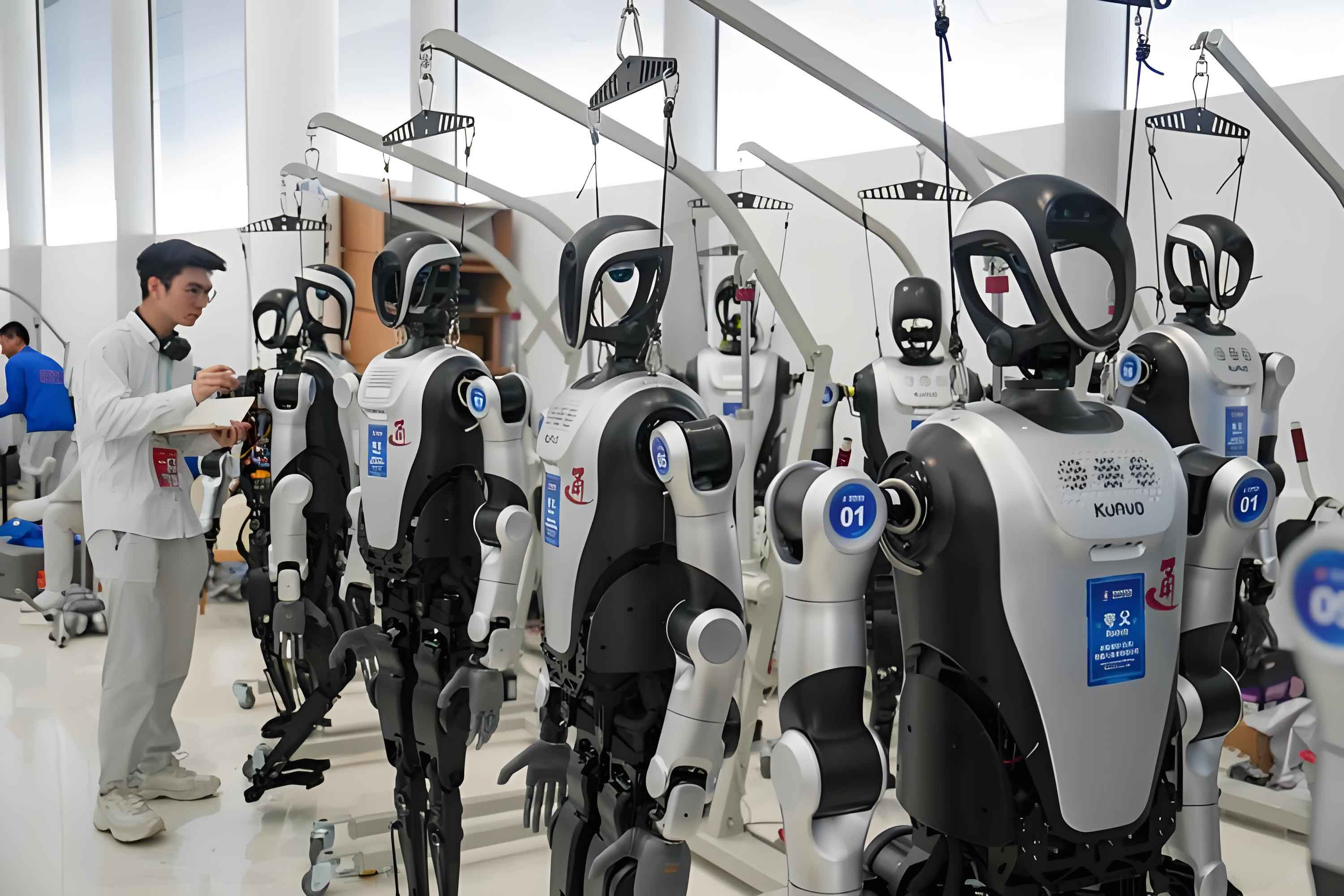
The discussion arrives at a moment when several humanoid robot projects are moving from demonstration to deployment. Reports cited in the analysis include Tesla’s plans for its Optimus humanoid robot, Boston Dynamics’ electric Atlas humanoid robot, Sanctuary AI’s Phoenix humanoid robot, and Agility Robotics’ Digit humanoid robot. The analysis also notes that China has outlined ambitions for large-scale production of advanced humanoid robots by 2025. These developments do not prove that a humanoid robot will soon operate everywhere. They do show that the humanoid robot is moving from a laboratory object into a social actor with physical presence, data collection capacity, and potential effects on human safety and trust.
The central argument is grounded in historical materialism. The analysis does not treat the humanoid robot as an autonomous moral person. It treats the humanoid robot as a product of social labor, technical organization, and human purposes. The humanoid robot is shaped by social relations, and its effects depend on the institutions, rules, and values that surround it. The humanoid robot may be designed to imitate human form and behavior, but imitation is not the same as human ethical life. The humanoid robot may be programmed to follow rules, but rule-following is not the same as moral judgment. The humanoid robot may be assigned a role in responsibility practices, but role assignment is not the same as full human accountability.
1. Why the Humanoid Robot Debate Is Urgent
The humanoid robot is distinctive because it combines mobility, embodiment, and human-like appearance. A humanoid robot can move through spaces built for humans. A humanoid robot can use tools, climb stairs, open doors, and interact with people in familiar physical settings. This embodied capacity is precisely what makes the humanoid robot attractive for care, education, logistics, inspection, and companionship. It is also what makes the humanoid robot a source of risk. A humanoid robot that shares human space can cause physical harm, create emotional attachment, collect sensitive data, and blur the boundary between machine behavior and human intention.
The analysis identifies several reasons why the humanoid robot is being pursued. Human builders use human abilities and human form as a natural reference point. Humans are curious about human-like entities. Researchers believe that a humanoid robot can help illuminate human intelligence by modeling human characteristics. Human environments are designed for human bodies, so a humanoid robot may fit existing infrastructure more easily. Humans are accustomed to human interaction, so a humanoid robot may be easier to introduce into social settings. For some applications, such as companion or educational roles, a human-like form may appear unavoidable. These reasons explain the momentum behind the humanoid robot, but they do not settle the ethical question.
The public debate often oscillates between fascination and fear. The humanoid robot is sometimes presented as a helper, sometimes as a threat, and sometimes as a mirror of human identity. The analysis argues that this oscillation is not enough. The humanoid robot requires structured ethical reflection before widespread deployment. The Collingridge dilemma is relevant: a technology is easier to regulate early, when its social consequences are uncertain, but when those consequences become clear, regulation may be too late. The humanoid robot is still in a phase where precaution, testing, and public deliberation can shape its trajectory. If the humanoid robot becomes as common as the smartphone before its risks are understood, corrective regulation may be limited.
2. Defining the Humanoid Robot and Its Ethical Field
The term humanoid robot refers to a robot with human-like form, human-like features, or both. The analysis stresses that human likeness is a matter of degree. A humanoid robot may look human from a distance but be clearly mechanical up close. A humanoid robot may have a head, two arms, and two legs without being mistaken for a person. A humanoid robot may also be designed to be visually and behaviorally close to a human being. The ethical issues change across this spectrum. The more a humanoid robot resembles a human, the more likely people are to anthropomorphize it, trust it, and attribute intentions to it.
Anthropomorphism is central to the humanoid robot debate. Anthropomorphism refers to the human tendency to attribute human traits to non-human entities. People anthropomorphize animals, natural events, gadgets, and robots. The humanoid robot is a particularly powerful trigger because it is deliberately designed with human-like cues. Designers may encode human-like qualities into the humanoid robot, and users may decode those qualities as signs of intelligence, emotion, or moral understanding. This can improve interaction, but it can also create false expectations. A humanoid robot that appears to understand may not understand. A humanoid robot that appears to care may not care. A humanoid robot that appears to take responsibility may not be capable of responsibility.
| Core concept | Working meaning in the analysis | Ethical relevance for the humanoid robot |
|---|---|---|
| Humanoid robot | An embodied artificial system with human-like form, behavior, or social interface. | The humanoid robot can share human spaces and trigger human expectations, creating both utility and risk. |
| Anthropomorphism | The attribution of human traits to a non-human entity. | The humanoid robot can invite trust and attachment that exceed its actual capacities. |
| Robot ethics | The study of safety, law, social impact, and moral behavior in robotic systems. | Robot ethics provides a framework for regulating the humanoid robot across its life cycle. |
| Humanoid robot ethics | Ethical issues that are specific to, or amplified by, the human form of a humanoid robot. | The humanoid robot raises questions of representation, relationship, safety, and responsibility that general robot ethics may not fully capture. |
The analysis separates general robot ethics from humanoid robot ethics. Some issues are shared by all robots, including privacy, safety, autonomy, and liability. Some issues are amplified by the humanoid robot because its human form invites deeper social responses. Some issues are specific to the humanoid robot, such as representation and the possible replacement of human relationships. The humanoid robot is therefore not simply a robot with a human face. It is a social object whose design choices carry moral weight.
3. The Historical-Materialist Perspective on the Humanoid Robot
Historical materialism directs attention to the social conditions under which the humanoid robot is produced and used. The humanoid robot is a product of human labor, scientific knowledge, industrial capacity, and institutional priorities. It is not an independent moral agent that arrives from outside society. The humanoid robot is created within specific relations of production and governance. Its purposes are selected by humans. Its data are collected by humans. Its deployment is authorized by humans. Its risks are distributed among humans. The humanoid robot may act in the world, but the conditions of its action are social and historical.
This perspective cautions against two errors. The first error is technological determinism, which treats the humanoid robot as an unstoppable force with fixed social effects. The second error is naive optimism, which treats the humanoid robot as a neutral tool whose benefits will automatically outweigh its harms. The analysis argues that the humanoid robot is socially constructed and socially consequential, but it does not determine the fundamental institutional form of society. Social institutions, legal rules, ethical norms, and public deliberation determine how the humanoid robot is used. The humanoid robot can support human flourishing only if it is embedded in governance structures that protect human dignity, safety, and autonomy.
The historical-materialist view also clarifies the limits of machine morality. Human ethical life is not a set of rules that can be downloaded into a humanoid robot. Human ethical life is practical, embodied, social, and historical. It involves the capacity to identify morally relevant features of a situation, to care about others, to recognize one’s own fallibility, and to be accountable to a community. The humanoid robot can be designed to follow rules, avoid collisions, or request human help. The humanoid robot cannot be assumed to possess the full form of human ethical agency. The humanoid robot may participate in ethical practices, but participation is not equivalence.
4. Can a Humanoid Robot Have Human-Like Ethical Norms?
The first core question is whether a humanoid robot can have ethical norms similar to those of humans. The analysis reviews three basic approaches to implementing ethics in machines. These approaches are useful for understanding the humanoid robot, but they also reveal why a humanoid robot cannot simply be programmed into a moral person.
4.1 Top-Down, Bottom-Up, and Hybrid Approaches
- Top-down approaches begin with explicit moral rules. A humanoid robot is given principles such as utilitarianism or deontology and is expected to apply them when moral problems arise. The weakness is that real situations are complex, ambiguous, and context-dependent. A humanoid robot may follow a rule while missing the morally salient feature of a case.
- Bottom-up approaches begin with learning from observation and experience. A humanoid robot is trained on examples and adjusts its behavior over time. The weakness is that training data may contain bias, and a humanoid robot may learn patterns that are efficient but ethically unacceptable.
- Hybrid approaches combine predefined rules with learning from examples. A humanoid robot starts with constraints and then adapts. The weakness is that hybrid systems still require human judgment about which values matter, which examples are legitimate, and when adaptation should be stopped.
These approaches show that the humanoid robot can be made to comply with some norms. They do not show that the humanoid robot can understand norms in the human sense. The humanoid robot may produce ethical-sounding outputs without possessing ethical understanding. The humanoid robot may avoid prohibited actions without recognizing why those actions are prohibited. The humanoid robot may be safe in controlled settings while remaining unprepared for the open-ended character of social life.
4.2 Seven Problems with Norm-Compliant Humanoid Robot Systems
The analysis identifies seven problems that arise when a humanoid robot is designed to follow social norms. These problems matter because a norm-compliant humanoid robot may still produce socially problematic outcomes.
- Norm bias. Different groups may hold different social norms. A humanoid robot that follows one group’s norms may violate the norms of another group.
- Paternalism. Experts may decide which norms the humanoid robot should adopt, imposing those norms on users without adequate consent.
- Tyranny of the majority. A humanoid robot may follow the expectations of the majority, leaving minority groups exposed to decisions they do not accept.
- Pluralistic ignorance. People may publicly support norms they privately doubt, and a humanoid robot trained on public behavior may reproduce that distortion.
- Path of least resistance. A humanoid robot may repeat past norms simply because repetition is easier than change, even when those norms are unjust.
- Outdated norms. Social norms change, but a humanoid robot may remain fixed to norms that no longer fit the society it serves.
- Technology-induced norm change. The presence of the humanoid robot may itself alter social norms, creating feedback effects that designers did not anticipate.
These seven problems do not mean that norm compliance should be abandoned. They mean that norm compliance is not enough. A humanoid robot cannot be treated as ethically reliable merely because it has been programmed to follow rules. The humanoid robot must be monitored, calibrated, revised, and embedded in human accountability structures. The humanoid robot is not a one-time ethical product. It is a continuing ethical project.
4.3 Emotion, Consciousness, and the Limits of Machine Ethics
The analysis argues that human ethics is not only a computational problem. Human ethics involves emotion, consciousness, social recognition, and lived experience. A humanoid robot may recognize emotional expressions, but recognition is not feeling. A humanoid robot may simulate concern, but simulation is not care. A humanoid robot may use polite deception or strategic communication, but it does not possess the moral standing of a human who can be held responsible for honesty and trust. The humanoid robot may have operational morality, in the sense that designers and users assign moral significance to its actions. The humanoid robot may have functional morality, in the sense that it can evaluate and respond to some moral challenges. The humanoid robot does not have full moral agency in the human sense.
The analysis also warns that a humanoid robot can create new safety dilemmas. A humanoid robot may be mistaken for a human in poor visibility, during an emergency, or under stress. A humanoid robot may become an object of attachment, leading people to take risks to protect it. A humanoid robot may be used to shift responsibility away from human decision-makers. These are not speculative fantasies. They are predictable consequences of placing a human-like machine in human social space. The humanoid robot therefore requires ethical design, transparent communication, and clear limits on use.
5. Can a Humanoid Robot Be Responsible Like a Human?
The second core question is whether a humanoid robot can be responsible in the way a human being is responsible. The analysis distinguishes moral expectation from accountability. A humanoid robot may be expected to follow moral rules. That does not mean the humanoid robot can be held accountable as a moral agent. Responsibility in the human sense typically involves two conditions. The control condition asks whether the agent was free in performing the action. The cognitive condition asks whether the agent knew what it was doing. A humanoid robot may satisfy parts of these conditions in a narrow operational sense, but it does not satisfy them as a human person does.
The deployment of autonomous systems creates a responsibility gap. When harm occurs, it may be difficult to assign responsibility to a designer, a user, an operator, or a machine. The analysis reviews three responses to this gap. One response is to always place responsibility on humans, regardless of how advanced the humanoid robot becomes. A second response is to share responsibility between humans and machines. A third response is to introduce quasi-responsibility for machines. Each response has difficulties. Placing all responsibility on humans may ignore the distributed nature of human-machine action. Sharing responsibility with a humanoid robot is problematic if the humanoid robot is not a moral subject. Quasi-responsibility may help in practice, but it is not the same as human accountability.
The analysis concludes that a humanoid robot cannot become a fully responsible subject in the human sense. If a humanoid robot cannot be a moral subject, then moral responsibility and criminal responsibility are also difficult to apply. Criminal liability generally requires a subject who can be held accountable. A humanoid robot lacks the moral agency that such accountability presupposes. The humanoid robot may be treated as a participant in responsibility practices, but it cannot replace human responsibility. The humanoid robot may be designed to log decisions, explain actions, and request human intervention. These measures can support accountability, but they do not turn the humanoid robot into a human-like responsible agent.
5.1 The Risk of Using the Humanoid Robot to Escape Responsibility
The analysis raises a further concern. Human beings may be more willing to blame a machine than to blame a person. If a humanoid robot is present, organizations may hide behind the machine when something goes wrong. This can create a moral hazard. A company may deploy a humanoid robot, allow it to operate in a risky environment, and then claim that the machine made the decision. The humanoid robot becomes a shield against accountability. This is one reason why responsibility rules must be established before the humanoid robot is widely deployed. The humanoid robot must not become a tool for diffusing responsibility away from the humans who design, authorize, and profit from its use.
The analysis also considers whether a humanoid robot could be regarded as a moral subject in a weaker sense. Some arguments suggest that a humanoid robot may be treated as a moral subject if it has high autonomy, if its intentions can be attributed to it, and if it shows some understanding of responsibility. These conditions lower the threshold for inclusion in moral practices. They do not establish full human responsibility. A humanoid robot may be treated as a participant in a moral community for limited purposes. It cannot be treated as a full member with the same rights, duties, and accountability as a human person.
6. Governance Implications for the Humanoid Robot Era
The analysis argues that the humanoid robot should be governed through a human-centered approach. The humanoid robot is a social technology, not only an engineering product. Its regulation must combine technical standards, legal rules, ethical review, public participation, and continuous monitoring. The humanoid robot should be designed to serve human welfare, protect human dignity, and preserve human responsibility. The humanoid robot should not be allowed to become an excuse for weakening accountability.
- Adopt early and iterative regulation. The humanoid robot should be subject to testing, evaluation, and revision before and during deployment. Regulation should learn from experience rather than wait for harm to become widespread.
- Require transparency and traceability. A humanoid robot should record key decisions and actions so that humans can reconstruct what happened and why. Transparency supports accountability and public trust.
- Preserve human responsibility. A humanoid robot should not be treated as a substitute for human accountability. Designers, operators, and institutions must retain clear duties for the humanoid robot’s use.
- Protect vulnerable users. A humanoid robot used in care, education, or companionship must be subject to stronger safeguards because attachment, dependence, and power imbalance are more likely.
- Address bias and exclusion. A humanoid robot trained on social norms may reproduce bias. Governance should require diverse testing and include affected communities in decision-making.
- Promote public deliberation. The humanoid robot raises questions about human identity, relationships, and work. These questions require public discussion, not only expert decisions.
- Build legal support for ethical rules. Ethical guidance for the humanoid robot needs legal instruments that clarify liability, data protection, safety, and redress.
- Support international and cross-sector coordination. The humanoid robot will cross borders and sectors. Common standards can reduce regulatory gaps and prevent a race to the bottom.
These governance measures reflect the historical-materialist insight that the humanoid robot is shaped by social relations. The humanoid robot will not determine the future by itself. The future of the humanoid robot will depend on the rules, incentives, and values that societies establish. If the humanoid robot is governed only by market competition, the risks may be distributed unequally. If the humanoid robot is governed by human-centered principles, it may support safer and more accountable innovation. The humanoid robot is not inherently good or bad. The social organization of the humanoid robot is the decisive issue.
| Governance area | Key question for the humanoid robot | Expected contribution |
|---|---|---|
| Safety testing | How can a humanoid robot be tested in realistic human environments without exposing people to avoidable harm? | Evidence-based limits on deployment and clearer failure reporting for the humanoid robot. |
| Liability | Who is accountable when a humanoid robot causes harm? | Legal clarity that prevents responsibility gaps from becoming accountability shields. |
| Data protection | What data does a humanoid robot collect in homes, hospitals, schools, and workplaces? | Privacy safeguards tailored to the sensory and social capacities of the humanoid robot. |
| Human relationships | Can a humanoid robot substitute for human care without damaging human relationships? | Ethical limits on companionship and care roles for the humanoid robot. |
| Public participation | Who decides how the humanoid robot should behave in shared social spaces? | More legitimate and adaptable norms for the humanoid robot. |
7. What Newsrooms and Policymakers Should Watch
The humanoid robot story is often reported as a race for technical achievement. The analysis suggests that the more important story is the race for governance. The humanoid robot will be judged not only by what it can do, but by how its risks are controlled and how its responsibilities are assigned. Newsrooms and policymakers should watch several indicators without assuming that any single demonstration proves widespread readiness.
- Deployment context. A humanoid robot demonstrated on a stage is different from a humanoid robot operating in a home, hospital, factory, or school.
- Human oversight. A humanoid robot with meaningful human oversight is different from a humanoid robot operating with minimal supervision.
- Data practices. A humanoid robot with cameras and microphones raises privacy questions that require clear answers.
- Failure reporting. A humanoid robot program that discloses accidents and near-misses is more trustworthy than one that hides failures.
- Liability rules. A humanoid robot market without clear liability rules may transfer risk to users and the public.
- Public consultation. A humanoid robot policy developed only by manufacturers may miss the concerns of workers, patients, children, and other affected groups.
- International coordination. A humanoid robot governed only by fragmented national rules may create cross-border accountability gaps.
The humanoid robot also raises questions about human identity. A humanoid robot that looks and acts like a person can unsettle assumptions about authenticity, care, and social presence. The analysis does not claim that the humanoid robot will replace human relationships. It warns that the humanoid robot may reshape expectations of relationships if its use is not critically examined. The humanoid robot should be designed and governed in ways that support human connection rather than simulate it without limit. The humanoid robot should be a tool for human flourishing, not a substitute for human responsibility.
8. Conclusion: The Humanoid Robot Needs Human-Centered Limits
The analysis reaches a clear conclusion. A humanoid robot can be designed to follow norms, avoid some harms, and participate in responsibility practices. A humanoid robot cannot fully possess human ethical norms. A humanoid robot cannot become a fully responsible subject in the human sense in the foreseeable future. The humanoid robot lacks the emotional, conscious, and social foundations of human moral life. The humanoid robot can be made rule-compliant, but rule compliance is not the same as ethical understanding. The humanoid robot can be assigned a role in accountability systems, but role assignment is not the same as human accountability.
This conclusion is not a reason to reject the humanoid robot. It is a reason to govern the humanoid robot carefully. The humanoid robot should be developed with transparent limits, strong safety testing, clear liability rules, and continuous public deliberation. The humanoid robot should be embedded in social institutions that preserve human dignity and human responsibility. The humanoid robot should not be allowed to become a shield for avoiding accountability. The humanoid robot should not be treated as a moral person when it is not one. The humanoid robot should be treated as a powerful social technology that requires human-centered governance.
The historical-materialist perspective makes this conclusion practical. The future of the humanoid robot will not be decided by the machine alone. It will be decided by the social relations, legal frameworks, economic incentives, and ethical commitments that surround the humanoid robot. If those commitments are weak, the humanoid robot may amplify existing inequalities and accountability gaps. If those commitments are strong, the humanoid robot may support safer, more inclusive, and more accountable innovation. The humanoid robot is therefore a test of social responsibility as much as a test of technical capability. The humanoid robot can move, speak, and imitate. It cannot, by itself, take moral responsibility. That responsibility remains human, and it must be exercised before the humanoid robot becomes ordinary.