
At the 2026 China International Fair for Trade in Services in Beijing, Shijingshan District placed embodied intelligence, humanoid robot training, sci-fi industry development and university-local cooperation at the center of its agenda. The district is hosting the event at Shougang Park for the second consecutive year under the one-venue arrangement, and this is the first year in which the core area of the permanent venue has been fully used after renovation and upgrading. During the event, Shijingshan focused on several priority fields, including cross-border circulation of embodied intelligence data, embodied intelligence performance services, the sci-fi industry and cooperation between universities and the local government. Multiple key projects were signed and implemented.
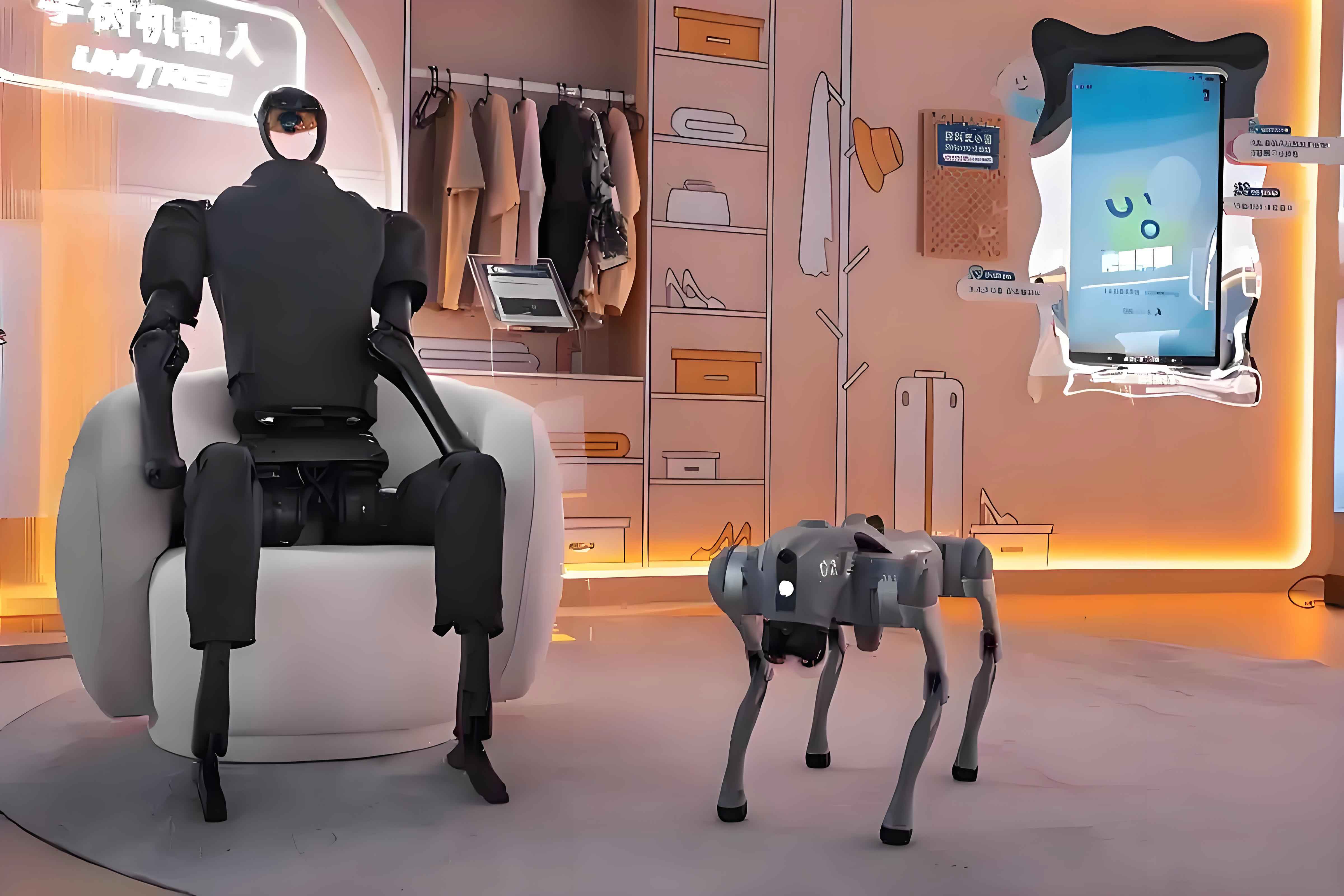
The most visible industrial step was the full upgrade of the first phase of the Shijingshan Humanoid Robot Data Training Center, which has already been in operation for more than a year. The upgrade is intended to push humanoid robots further into real application scenarios. Instead of remaining limited to controlled demonstrations, the training center is designed to help humanoid robots learn from realistic data, adapt to complex environments and improve their practical value in homes, factories and service settings. The center is part of a broader effort to connect humanoid robot development with data governance, industrial collaboration, international trade in services and talent cultivation.
- Cross-border data platform gives humanoid robot data a compliant route to global markets
At the 2026 CIFTIS Open Cooperation Thematic Forum, the Embodied Intelligence Data Element Cross-Border Circulation Service Trade Platform was launched. The platform was jointly built by the Shijingshan district-owned enterprise Jingshi Sci-Tech Innovation Group and Beijing Telecom. It is described as China’s first industry-level comprehensive service platform focused on the cross-border circulation of embodied intelligence data elements. It is also the first landmark result of the Beijing Pilot Free Trade Zone Shijingshan Linked Development Zone in implementing the full-chain coordinated reform task for cross-border data in the artificial intelligence field.
The platform has already established a complete transaction closed loop, from data product listing to cross-border delivery. This is important for humanoid robot development because humanoid robot training depends on large volumes of data drawn from real environments, human operations, industrial processes and service scenarios. The platform is intended to improve the convenience of embodied data going global while strengthening compliance management. For companies working on humanoid robot systems, the ability to move data across borders through a structured and compliant channel can support international cooperation, model improvement and market expansion.
The cross-border platform also reflects a wider shift in the humanoid robot sector. The value of a humanoid robot is no longer defined only by hardware, actuators, sensors or mechanical design. It is increasingly defined by the quality of data, the representativeness of training scenarios and the ability to validate models in real conditions. A platform that supports data product listing, cross-border delivery and compliance management can help humanoid robot developers treat data as an industrial element rather than an isolated technical byproduct. In this sense, the platform adds a service-trade layer to the humanoid robot innovation chain.
- Sci-fi ecosystem supports humanoid robot innovation and industrial clustering
Shijingshan has developed the sci-fi industry as a distinctive local sector. According to the reported information, the district has already gathered more than 300 sci-fi and related technology enterprises, forming an industrial clustering trend. This ecosystem is relevant to humanoid robot development because sci-fi-related companies often work with simulation, digital content, virtual production, interactive systems and future-oriented application scenarios. These capabilities can support humanoid robot testing, scenario design and public engagement.
As new phenomena emerge in the industrial development process, the district is also exploring more suitable development paths. For the humanoid robot sector, this means connecting technological innovation with real demand rather than treating humanoid robot progress as a standalone laboratory task. The presence of sci-fi enterprises, digital art platforms, performance technology projects and university research institutions creates a broader environment in which humanoid robot applications can be imagined, tested and commercialized. The humanoid robot is therefore not only a machine category but also a focal point for cross-sector collaboration.
- Performance, biopharma, AI and digital art projects expand the humanoid robot application map
Several cooperation outcomes were signed during the 2026 CIFTIS. Beijing Yuanke Vision Technology Co., Ltd., the Zhongguancun Zhongheng Cultural Technology Innovation Service Alliance and Chongqing Xingweishi Technology Co., Ltd. signed a project for a digital embodied intelligence performance service platform. The project is intended to promote the innovative application of embodied intelligence technology in the performance field. For humanoid robot development, performance scenarios can provide structured environments for interaction, motion coordination, audience engagement and multi-agent cooperation. They can also help humanoid robot systems learn how to operate in culturally rich and human-centered settings.
Beijing Fuhua Kangtai Biopharmaceutical Technology Co., Ltd. and Beijing Zhongguancun Industrial Internet Industry Development Co., Ltd. collaborated to establish an international innovation center for the biopharmaceutical industry chain. The center focuses on cross-sector integration between biopharmaceuticals and the industrial internet. While this project is not solely about humanoid robots, it contributes to the broader industrial digital infrastructure that humanoid robot companies may use for production management, quality control, supply-chain coordination and data-driven operations. The humanoid robot supply chain can benefit from stronger industrial internet capabilities and from cross-industry innovation models.
Beijing Zhihui Hengxing Technology Co., Ltd. reached a strategic cooperation agreement with a B-round investment institution for its AI international expansion strategy and B-round financing cooperation. The cooperation is intended to support the international expansion of AI technology in the digital culture field. Humanoid robot development is closely connected with AI models, perception systems, language interaction and content generation. International expansion in AI can therefore create additional channels for humanoid robot companies to collaborate, localize services and reach new markets.
In addition, the Shijingshan Park Management Committee signed an agreement with Zhongke Qushi (Beijing) Technology Service Co., Ltd. to jointly build a digital art asset operation platform. The platform is intended to help digital art assets complete a value loop from content creation to value realization, injecting new momentum into the development of Shijingshan’s digital culture industry. For humanoid robot applications, digital art assets can support virtual training environments, interactive exhibitions, performance design and user-facing experiences. A humanoid robot that can understand and interact with digital cultural content may find new applications in museums, exhibitions, education and entertainment.
- University cooperation strengthens the humanoid robot talent and transfer pipeline
During the 2026 CIFTIS, the Shijingshan District People’s Government signed a strategic cooperation agreement with Beijing Jiaotong University. The two sides will carry out deep cooperation in talent cultivation, scientific and technological innovation and achievement transformation. This kind of cooperation is directly relevant to the humanoid robot sector, which requires mechanical engineering, control systems, artificial intelligence, sensing, human-machine interaction and industrial application talent. By linking university research with local industrial scenarios, the cooperation can help humanoid robot technologies move from laboratories into practical use.
The event also included the unveiling of the Beijing Branch of the Harbin Institute of Technology Technology Transfer Center. Harbin Institute of Technology has previously co-built the Harbin Institute of Technology Beijing Research Institute with Shijingshan District. The institute is described as a comprehensive university-local cooperation institution integrating scientific research innovation, achievement transformation and talent recruitment and cultivation. It focuses on frontier fields including aerospace, artificial intelligence, robotics and intelligent manufacturing, new materials and financial technology. It has already opened a regular global talent recruitment channel.
The unveiling of the technology transfer center’s Beijing branch marks a further deepening of cooperation. It is expected to combine Harbin Institute of Technology’s scientific and technological strengths and talent advantages with Shijingshan’s industrial scenarios and development space. For humanoid robot innovation, this combination can support prototype development, testing, technology transfer and commercial validation. The humanoid robot is a complex system that requires long-term research and continuous engineering iteration, so stable cooperation between universities and local industry is an important condition for sustained progress.
- Inside the upgraded training center, human mentors teach humanoid robots through real scenarios
The upgraded first phase of the Shijingshan Humanoid Robot Data Training Center is located in the Shougang Park Sci-Fi Industry Innovation Center. It was jointly created by Lingyun Guang and Zhongguancun Tongli, with more than ten robot industry chain enterprises participating in its construction. The layout of the center is designed according to the learning logic of robots. It is divided into multiple functional areas, including a 4D world collection area, a physical interaction laboratory and an AI factory. Together, these areas form a complete humanoid robot data collection and training process system.
Walking into the training center is like entering a dedicated school for robots. Each humanoid robot has a human mentor who teaches it to complete various operations step by step. The upgraded center is designed to address industry needs precisely, especially the shortage of real-scene data and the weak adaptability of robots. It builds a complete data loop described as collection, modeling, training, validation and return. From scene data collection and real-scene replication to simulation, model training and real-machine testing, the center forms a closed-loop training model. This allows a humanoid robot to upgrade from simply performing fixed movements to seeing the world, understanding scenes and integrating into real life and work.
The human mentor model is significant because humanoid robot learning is not only about copying motion. A humanoid robot must also understand context, handle objects with different shapes and materials, respond to changes in the environment and coordinate perception with action. Human mentors can demonstrate tasks, correct errors and provide structured feedback. The training center uses these human demonstrations to generate data that can be modeled, trained and validated. In this process, the humanoid robot becomes more than a mechanical platform; it becomes a learning system that improves through repeated interaction with realistic scenarios.
- Home and industrial scenarios give humanoid robot training a practical benchmark
For home scenarios, the training system can fully reproduce daily household actions such as sweeping and cleaning, cooking and meal preparation, and home care. These scenarios provide sufficient real-scene data for the training of household humanoid robots. A household environment is complex and variable. Floors, furniture, kitchen tools, food items, cleaning equipment and human instructions all create diverse conditions. A humanoid robot trained in such environments must learn to recognize objects, plan actions, avoid obstacles and interact safely with people. The training center’s home scenarios are designed to bring humanoid robot training closer to these everyday realities.
For industrial scenarios, the system can accurately collect industrial operation processes such as fabric sewing, cargo packing and handling, and product assembly. This allows humanoid robots to fully grasp the operational rules of industrial production and adapt to factory work requirements. Industrial environments often demand repeatability, precision and safety. A humanoid robot used in industry must understand task sequences, handle tools and materials, and maintain stable performance over long periods. By collecting data from industrial processes, the training center helps humanoid robot developers test whether their systems can meet practical production needs.
- From data collection to validation: a closed loop for humanoid robot development
The closed-loop model at the training center begins with data collection. Human mentors and real scenarios generate data that reflects actual tasks. The next stage is modeling, in which the collected data is structured and used to build representations of tasks, objects and environments. Training then uses these models to improve humanoid robot policies and perception systems. Validation tests whether the trained humanoid robot can perform the task in real-machine conditions. The return stage feeds the results back into the system, allowing further collection and improvement.
This loop is important because humanoid robot development cannot rely on a one-time training process. Real environments change, objects vary and human needs differ. A humanoid robot must continue to learn from new data and from its own performance. The collection, modeling, training, validation and return cycle creates a structured path for continuous improvement. It also helps humanoid robot companies identify where data is missing, where models fail and where hardware or control systems need adjustment.
The training center’s functional layout supports this loop. The 4D world collection area captures dynamic scene data. The physical interaction laboratory supports testing of contact, manipulation and movement. The AI factory supports model development and training. By connecting these functions in one location, the center reduces the distance between data collection and real-machine validation. For humanoid robot innovation, this integration can shorten iteration cycles and improve the relevance of training data to actual deployment.
- Why real-scene data matters for humanoid robot commercialization
Real-scene data is essential for humanoid robot commercialization because the real world is far more varied than simulated environments. A humanoid robot may perform well in a controlled demonstration but struggle when it encounters different lighting, unexpected obstacles, fragile objects or human instructions that are incomplete. Training with real-scene data helps the humanoid robot learn the variability of daily life and industrial work. It also helps developers understand the limits of their models and the safety requirements of real deployment.
The cross-border data platform and the training center together address two different but connected needs. The training center generates and organizes high-quality data from realistic scenarios. The cross-border platform provides a compliant route for data circulation and service trade. For humanoid robot companies, this combination can support both local training and international cooperation. A humanoid robot developer may need data from multiple environments, partners and markets. A structured data circulation platform can make such cooperation more efficient and more compliant.
At the same time, the humanoid robot sector requires strong governance. Data related to human actions, workplaces and homes can be sensitive. Compliance management is therefore not a secondary issue but a core condition for internationalization. The reported platform aims to improve both convenience and compliance management for embodied data going global. This balance is important for humanoid robot companies that want to operate across borders while respecting data security and privacy requirements.
- Shijingshan’s integrated approach links humanoid robot hardware, data, services and international trade
The developments reported at the 2026 CIFTIS show an integrated approach to humanoid robot and embodied intelligence development. The district is not treating the humanoid robot as a single product category. Instead, it is linking hardware development with data collection, model training, performance services, digital art, biopharma-related industrial internet, university research and cross-border service trade. This broad approach reflects the fact that humanoid robot deployment depends on an ecosystem rather than a single breakthrough.
The humanoid robot data training center provides the data and testing foundation. The cross-border platform provides a trade and compliance channel. The performance service project explores human-centered applications. The university cooperation supports talent and technology transfer. The sci-fi industry and digital art projects provide scenario creativity and content resources. Together, these elements can help humanoid robot companies find partners, test applications and reach markets. The district’s strategy is therefore built around the connection between technological capability and real-world demand.
- Reported developments at a glance
The following table summarizes the main reported developments and their relevance to humanoid robot and embodied intelligence development.
| Focus area | Reported development | Relevance to humanoid robot development |
|---|---|---|
| Cross-border embodied intelligence data | The Embodied Intelligence Data Element Cross-Border Circulation Service Trade Platform was launched by Jingshi Sci-Tech Innovation Group and Beijing Telecom. It is described as China’s first industry-level comprehensive service platform focused on cross-border circulation of embodied intelligence data elements and has established a complete transaction closed loop from data product listing to cross-border delivery. | Supports compliant data circulation, international cooperation and service trade for humanoid robot training and embodied intelligence models. |
| Humanoid robot data training | The first phase of the Shijingshan Humanoid Robot Data Training Center was fully upgraded after more than a year of operation. New data collection equipment and more realistic scenarios were added to improve the practical value of trained humanoid robots. | Provides real-scene data and closed-loop training for humanoid robot perception, manipulation and task adaptation. |
| Training methodology | The center uses a collection, modeling, training, validation and return data loop. It includes a 4D world collection area, a physical interaction laboratory and an AI factory. Each humanoid robot has a human mentor. | Connects human demonstration, data modeling, model training and real-machine testing for continuous humanoid robot improvement. |
| Performance services | A digital embodied intelligence performance service platform project was signed by Beijing Yuanke Vision Technology Co., Ltd., the Zhongguancun Zhongheng Cultural Technology Innovation Service Alliance and Chongqing Xingweishi Technology Co., Ltd. | Explores humanoid robot and embodied intelligence applications in performance, interaction and cultural scenarios. |
| Biopharma and industrial internet | Beijing Fuhua Kangtai Biopharmaceutical Technology Co., Ltd. and Beijing Zhongguancun Industrial Internet Industry Development Co., Ltd. established an international innovation center for the biopharmaceutical industry chain. | Strengthens cross-industry industrial digital infrastructure that can support humanoid robot production and supply-chain coordination. |
| AI international expansion | Beijing Zhihui Hengxing Technology Co., Ltd. reached a strategic cooperation agreement with a B-round investment institution for AI international expansion and B-round financing cooperation. | Supports AI technology internationalization, which is relevant to humanoid robot perception, interaction and market expansion. |
| Digital art assets | The Shijingshan Park Management Committee and Zhongke Qushi (Beijing) Technology Service Co., Ltd. signed an agreement to jointly build a digital art asset operation platform. | Can provide digital content, virtual environments and interactive experiences for humanoid robot applications. |
| University cooperation | Shijingshan District signed a strategic cooperation agreement with Beijing Jiaotong University. The Beijing Branch of the Harbin Institute of Technology Technology Transfer Center was unveiled, following the earlier co-building of the Harbin Institute of Technology Beijing Research Institute. | Supports talent cultivation, scientific research, technology transfer and humanoid robot-related innovation in robotics, AI and intelligent manufacturing. |
| Sci-fi ecosystem | Shijingshan has gathered more than 300 sci-fi and related technology enterprises and is exploring development paths suited to emerging industry phenomena. | Provides simulation, digital content and scenario design resources that can support humanoid robot experimentation and public engagement. |
- Outlook: humanoid robot deployment moves closer to real work
The reported upgrade of the Shijingshan Humanoid Robot Data Training Center and the launch of the cross-border embodied intelligence data platform point to a practical direction for the humanoid robot industry. The focus is moving toward data quality, real-scene adaptation, compliance and service-trade integration. A humanoid robot that can learn from human mentors, validate its performance in realistic home and industrial settings and feed results back into training is better positioned for commercial deployment than a system trained only on fixed demonstrations.
The broader project portfolio in Shijingshan also shows that humanoid robot development is connected with many other sectors. Performance services, digital art, biopharma-related industrial internet and university research can all contribute to humanoid robot scenarios, components, content and talent. The humanoid robot is therefore an integrating technology, bringing together mechanical systems, AI models, data governance, cultural content and international service trade. The district’s approach is to build the supporting environment around the humanoid robot rather than treating it as an isolated device.
As the 2026 CIFTIS brings attention to these developments, the central message is clear. The humanoid robot sector is entering a phase in which real-scene data, closed-loop training and compliant cross-border circulation become essential parts of the innovation chain. The Shijingshan Humanoid Robot Data Training Center is designed to supply the data and validation foundation. The cross-border platform is designed to support international data service trade. The university and industry cooperation projects are designed to sustain talent, technology transfer and application exploration. Together, these efforts aim to release new momentum for the embodied intelligence industry and to help the humanoid robot move from demonstration settings into real life and real work.