
In the second half of 2024, the humanoid robot sector has remained one of the most closely watched areas of advanced manufacturing and artificial intelligence. Capital, research institutions, industrial groups, and public observers continue to debate when the humanoid robot will move from demonstration stages into durable commercial deployment. Yet despite the intensity of interest, the market has not produced a widely recognized “second humanoid robot stock.” The first company to take that step, Shenzhen-based UBTECH Robotics, has continued to attract attention because its operating condition is moving toward greater stability and its research activity remains positive. For the broader robotics industry, that combination sends a constructive signal: the humanoid robot is not merely a concept for staged exhibitions, but a long-term engineering and business challenge that requires patient capital, disciplined research, and real-world validation.
UBTECH’s Walker S humanoid robot has become the most visible expression of that effort. After twelve years of research and development in humanoid robot technology, the company has presented Walker S as a working answer to the question of whether humanoid robots can enter productive environments. In early July 2024, UBTECH announced a partnership with FAW-Volkswagen Qingdao Branch. Under the collaboration, Walker S is expected to enter application scenarios on the production line of a national-level intelligent manufacturing demonstration factory in Qingdao, where the humanoid robot will carry out tasks such as bolt tightening, parts installation, and parts transfer during automobile manufacturing.
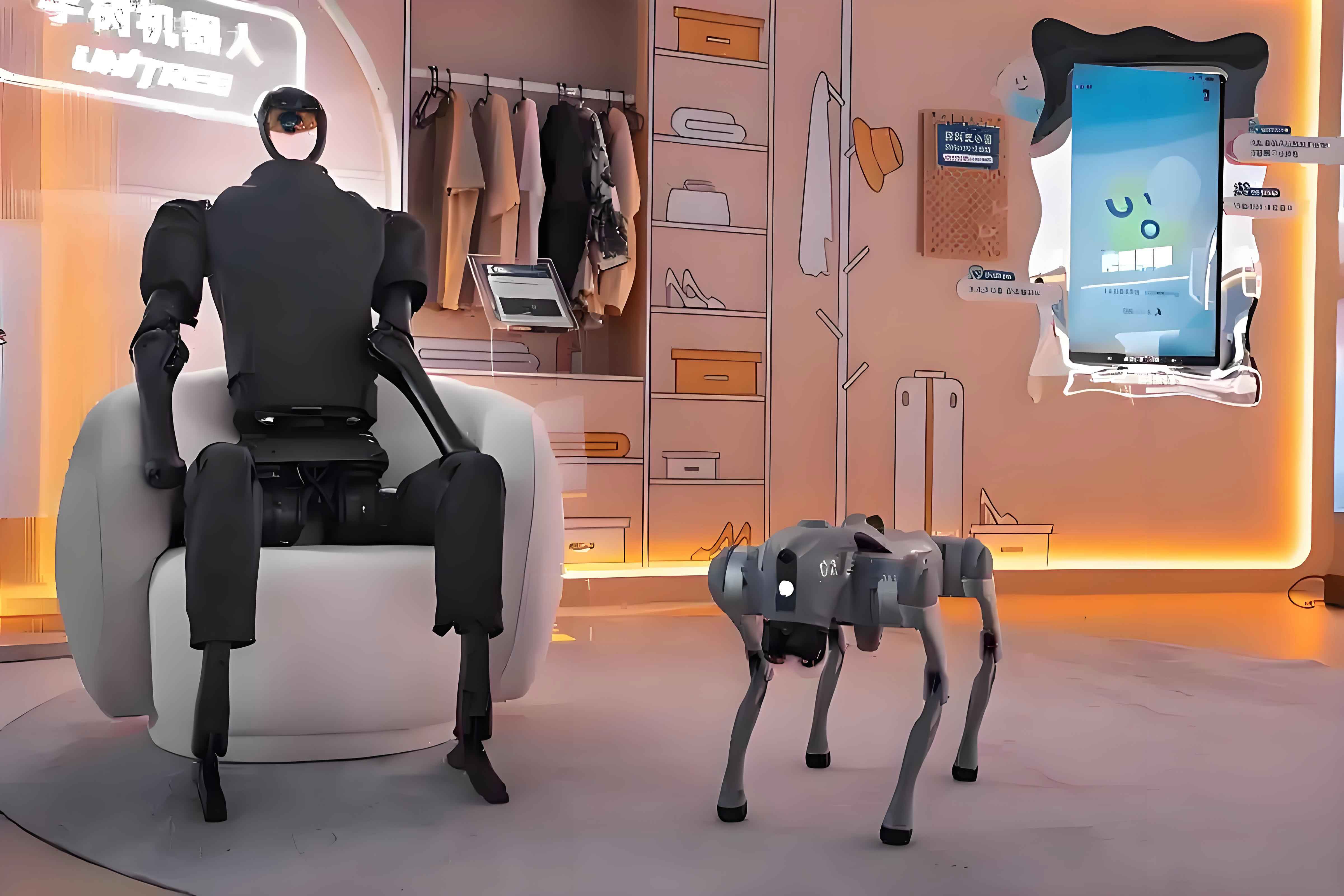
The choice of automobile manufacturing as an early testing ground for the humanoid robot is not accidental. Yi Peng, head of the humanoid robot team for forward manufacturing engineering at NIO, has explained in a public speech that automobile manufacturing combines a high level of industrial digital intelligence with massive data resources. Those data resources can support the construction of large models and the development of embodied intelligence. At the same time, automobile manufacturing can be adapted downward to other industrial manufacturing scenarios, which gives the humanoid robot a natural generalization advantage in automotive applications. The FAW-Volkswagen Qingdao Branch is the third automobile factory to reach cooperation with UBTECH, following NIO and Dongfeng Liuzhou Motor. UBTECH’s official media channels have continued to update clips of the humanoid robot at work, inviting industry observers to witness the process through which the humanoid robot becomes integrated into industrial production and daily operations, as well as the breakthroughs that emerge along the way.
Within the humanoid robot industry, UBTECH is often described as a strong performer that combines commercial strength, technological potential, and brand visibility. In a conversation with Jiao Jichao, Vice President of UBTECH and Executive Dean of the Research Institute, the discussion moved beyond publicity and into the practical path of humanoid robot development: how the company funds long research cycles, how it builds a full-stack technology base, how it uses large models to improve generalization, and how it tests the humanoid robot in public and industrial environments before mass commercialization becomes realistic.
-
Industry Momentum and the Humanoid Robot Manufacturing Testbed
The current phase of the humanoid robot industry is defined by high expectations and uneven commercial proof. The humanoid robot has become a symbol of embodied intelligence, a platform for artificial intelligence, and a potential answer to labor shortages in selected industrial tasks. Yet the distance between a humanoid robot demonstration and a humanoid robot product that can be deployed repeatedly, maintained economically, and integrated into workflows remains substantial. UBTECH’s position is therefore important because it illustrates both the promise and the discipline required. The company’s operating condition is described as tending toward stability, while its research vitality continues to improve. Those are not small achievements in a field where development cycles are long and where the humanoid robot must combine mechanical design, control systems, perception, navigation, decision-making, and human-machine interaction.
Walker S represents the accumulation of twelve years of humanoid robot research at UBTECH. The humanoid robot is not simply a machine with a human-like shape; it is a system that must operate in spaces designed for people, handle tools intended for people, and respond to changes in an environment that was not constructed around robotic convenience. The automobile factory is one of the clearest examples of this challenge. A production line contains fixed stations, moving parts, safety requirements, and process timing. A humanoid robot that enters such a setting must do more than walk into the frame. It must reach the correct position, identify the correct object, apply the correct force, follow the correct sequence, and do so without disrupting the surrounding workflow.
The tasks described for Walker S at FAW-Volkswagen Qingdao Branch are practical and specific: bolt tightening, parts installation, and parts transfer. Each task places different demands on the humanoid robot. Bolt tightening requires precise positioning and controlled force. Parts installation requires hand-eye coordination and adaptation to variation. Parts transfer requires navigation, object handling, and task sequencing. These tasks are not abstract research demonstrations. They are expressions of the industrial logic behind the humanoid robot: the machine must be useful in a production environment where efficiency, consistency, and safety are measured continuously.
The automobile industry offers a further advantage for the humanoid robot because it is already highly digitized. A modern automobile factory generates large amounts of data across production equipment, process monitoring, quality inspection, and logistics. That data environment can support the training and evaluation of models that allow the humanoid robot to understand scenes, align perception with action, and improve task planning. The humanoid robot can also benefit from the automobile industry’s existing safety culture and process discipline. In this sense, the automobile factory is not merely a place where the humanoid robot is displayed. It is a testbed in which the humanoid robot learns how to become an industrial worker.
UBTECH’s cooperation with NIO, Dongfeng Liuzhou Motor, and FAW-Volkswagen Qingdao Branch shows a deliberate sequence. The humanoid robot is being introduced through partnerships with automobile manufacturers rather than through isolated laboratory claims. The company’s official media updates of Walker S at work serve a similar purpose. They allow industry participants and the public to observe the humanoid robot in realistic settings, including the ordinary and repetitive aspects of industrial work. That visibility matters because the humanoid robot sector has sometimes been dominated by concept videos. A humanoid robot that can perform a task repeatedly, under process constraints, is more meaningful than a humanoid robot that can perform a single dramatic action once.
The broader industrial context also explains why the humanoid robot has attracted so much attention. Manufacturing systems face pressure to increase flexibility, respond to labor availability, and improve digital integration. A humanoid robot, if it can be made reliable and affordable, could offer a general-purpose platform that moves between tasks and environments. That promise is why the humanoid robot is often discussed as a strategic technology rather than a niche product. But the same promise creates risk. The more general the humanoid robot is expected to be, the more complex its software, perception, control, and safety systems become. UBTECH’s early focus on automobile manufacturing is therefore a way to constrain the problem while still testing the humanoid robot’s ability to operate in a demanding industrial setting.
-
Self-Generated Cash Flow and the Humanoid Robot Technology Stack
By the end of 2023, UBTECH’s Walker series humanoid robot had gone through five iterations. That record reflects both sustained financial input and continuous technical accumulation. Jiao Jichao has recalled that when UBTECH began its entrepreneurial journey, the company started with research and development of servo drivers and gradually expanded into motion control, perception, and other technologies. Revenue from these technologies across various industries helped ensure that the humanoid robot project had a stable supply of research funding. This is a critical point for the humanoid robot industry. A humanoid robot program that depends only on external financing can be vulnerable to market cycles. A humanoid robot program that is supported by revenue-generating component and system businesses has more room to endure long development periods.
UBTECH has reported that it has designed and produced more than forty different types of servo drivers, achieving batch production from small-torque to large-torque servo drivers and applying them at large scale across different robot series. Servo drivers are fundamental to the humanoid robot because they translate control commands into motion. The performance of the humanoid robot’s joints, the smoothness of its walking, and the precision of its manipulation all depend on the servo system. By developing a broad servo driver portfolio, UBTECH created a technological foundation that serves both its humanoid robot ambitions and its broader robot product lines. This is one example of how component-level research can support the humanoid robot without requiring every part of the business to depend on humanoid robot sales.
UBTECH’s early small humanoid robot Alpha also played an important role. Alpha allowed the company’s technology to be tested by the market and helped lay a foundation for the research and development of the larger humanoid robot. The small humanoid robot and the large humanoid robot are not comparable in development difficulty. A large humanoid robot is a multidisciplinary集合? No, it is a multidisciplinary integration of mechanical engineering, electronics, control, perception, artificial intelligence, and human-machine interaction. Movements that appear ordinary may represent months of effort by a research team. The humanoid robot’s value comes from the accumulation of many such ordinary movements into a reliable system.
The act of upright walking illustrates the challenge. When a humanoid robot walks upright, its joints are in a fully extended state, which limits the space available for maintaining balance and places high demands on the rationality of planning algorithms. During the iterative optimization of several generations of prototypes, UBTECH developed a stable and mature gait planning method. The method uses a virtual foot model and an inverted pendulum model to generate planning data for the body and feet. At the same time, based on the humanoid robot’s rich array of sensors, the company developed a multi-dimensional force-position hybrid controller that improves the humanoid robot’s ability to adapt to complex terrain and external impacts. These details matter because they show that the humanoid robot’s walking ability is not a decorative feature. It is a control problem that affects stability, safety, and the ability to perform useful work.
Beyond motion control and perception, UBTECH also focuses on positioning and navigation, autonomous decision-making, voice interaction, hand-eye coordination, and other technologies. The company is described as one of the very few in the world with full-stack humanoid robot technology. That full-stack capability includes robot technologies such as motion planning and control technology and servo drivers; artificial intelligence technologies such as computer vision and voice interaction; robot-artificial intelligence fusion technologies such as SLAM, visual servo operation, and human-machine interaction; and robot operating system application frameworks. The significance of full-stack technology is that it allows the humanoid robot to be developed as an integrated system rather than as a collection of disconnected modules. A humanoid robot that perceives well but cannot control its body is not useful. A humanoid robot that walks well but cannot understand a task is also limited. Full-stack development is an attempt to align these capabilities around a single product direction.
A report published by the People’s Daily Research Institute on humanoid robot technology patent analysis stated that UBTECH ranked first globally in both the number of valid humanoid robot patents and the average number of patent applications over the past five years. Patent counts alone do not guarantee commercial success, but they do indicate sustained investment in humanoid robot research. In a field where the humanoid robot must integrate many subsystems, a broad patent portfolio can reflect depth across motion control, perception, interaction, and system integration. Jiao Jichao has explained that the UBTECH Research Institute set mass production and deployment of the humanoid robot as its goal early on. The institute has decomposed technology from both software and hardware perspectives and pursued self-development step by step. In the next stage, UBTECH plans a new round of improvement and upgrading in three areas: reducing volume, achieving smoother appearance, and increasing power density.
Publicly described area What UBTECH has reported Relevance to humanoid robot commercialization Servo drivers More than forty different types designed and produced, with batch production from small torque to large torque and large-scale application across robot series Provides the motion foundation for the humanoid robot and supports revenue from broader robot applications Alpha small humanoid robot Allowed technology to be tested by the market and helped lay a foundation for larger humanoid robot research Offers early market feedback before the humanoid robot moves into more demanding environments Walker series Five iterations by the end of 2023 Shows sustained humanoid robot development rather than a single prototype Full-stack technology Motion planning and control, servo drivers, computer vision, voice interaction, SLAM, visual servo operation, human-machine interaction, and robot operating system frameworks Supports integrated humanoid robot capabilities instead of isolated modules Patent portfolio Ranked first globally in valid humanoid robot patents and average annual patent applications over the past five years, according to the cited report Indicates long-term research investment in humanoid robot technology Industrial partnerships Cooperation with NIO, Dongfeng Liuzhou Motor, and FAW-Volkswagen Qingdao Branch Places the humanoid robot in real manufacturing settings for testing and learning The humanoid robot business also benefits from the company’s broader product history. UBTECH did not begin with a large humanoid robot alone. It built capabilities in servo drivers, motion control, perception, and consumer-facing robots before concentrating more visibly on large humanoid robots. That history helps explain how the company has been able to sustain humanoid robot research while also generating revenue from other robot products. In the humanoid robot sector, self-generated cash flow is not a guarantee of success, but it can reduce dependence on short-term financing cycles. It also creates an engineering culture in which research must eventually connect to a product, a cost structure, and a customer use case.
-
The Listing Gong and the Discipline Behind Humanoid Robot Stability
UBTECH has been listed for more than half a year, yet discussion continues around the striking moment at the Hong Kong Stock Exchange at the end of 2023. It was the first time in human history that a humanoid robot struck the gong at a listing ceremony. The event was more than a ceremonial novelty. It became a milestone in the global acceleration of humanoid robot commercialization because it placed the humanoid robot at the center of a formal public market moment. The humanoid robot had to move, position itself, and act within a tightly scheduled event. That requirement revealed a practical truth about the humanoid robot: public credibility depends on reliable execution, not only on technical ambition.
Jiao Jichao has explained that the preparation for the listing ceremony presented several difficulties. The team faced limited time and limited understanding of the site environment and process. It also needed to ensure that the humanoid robot maintained stable gait as it moved from below the stage to the stage, accurately reached the gong, and performed the striking action at the exact moment of listing. These requirements placed pressure on the humanoid robot’s walking control, sensing, navigation, and system scheduling. A failure in any one of these areas would have disrupted the ceremony.
To address the technical difficulties, the team adjusted the humanoid robot’s gait planning within a short period and introduced human-like walking planning in its legs. This improved the naturalness and flexibility of the humanoid robot’s walking and helped ensure gait stability. UBTECH also optimized the humanoid robot’s sensing, navigation, and system scheduling solutions so that it could successfully walk to the designated position on stage and complete the gong-striking action at the determined time. The episode is instructive because it shows how humanoid robot development combines high-level research with event-specific engineering. The humanoid robot had to operate in an environment that was not a laboratory, under time constraints, and in front of a public audience. That kind of validation is valuable for commercialization because it tests the humanoid robot’s ability to perform under pressure.
The listing ceremony also illustrated the importance of system integration. A humanoid robot that can walk but cannot navigate a stage is not sufficient. A humanoid robot that can navigate but cannot coordinate its arm movement with a scheduled action is not sufficient. A humanoid robot that can perform an action but cannot maintain balance is not sufficient. The ceremony required the humanoid robot to combine perception, planning, control, and timing into a single sequence. That sequence may appear simple to an observer, but it depends on many layers of technology working together. For the humanoid robot industry, this is a reminder that commercialization will be built through many such sequences, repeated reliably in factories, public spaces, and eventually homes.
UBTECH’s willingness to place its humanoid robot in high-visibility situations reflects a broader pattern. The company has repeatedly created large stages for its robot products. Those stages are not substitutes for commercial deployment, but they can serve as public tests. A humanoid robot that performs in front of a large audience must meet standards of stability, safety, and coordination that are difficult to simulate fully in a laboratory. The resulting experience can feed back into research and product development. In that sense, the listing gong was not only a symbol of financial arrival. It was also an engineering test of whether the humanoid robot could act reliably in a complex public setting.
-
Large Models, Embodied Intelligence, and Humanoid Robot Generalization
Large models are expected to give the humanoid robot stronger generalization and adaptability in real scenarios. Among the humanoid robot’s functional modules, decision-making is the most abstract and one of the most difficult to research. Decision-making requires the integration of multi-dimensional perception information for reasoning, and that is precisely the area in which large models can contribute. A large model can improve the humanoid robot’s knowledge completeness. When the humanoid robot encounters an abstract task that must be decomposed and reasoned about, the large model can play a role similar to a central nervous system, improving the humanoid robot’s generalization and versatility.
UBTECH, like other leading companies in the field, is closely watching end-to-end reinforcement learning algorithms. The company has customized and developed modules for multimodal perception, motion control, positioning and navigation, and other functions. It has also transformed lightweight versions of large models into self-developed deep learning small models and applied them to the humanoid robot to form end-to-end artificial intelligence capabilities. This approach reflects a practical challenge in the humanoid robot industry: large models can be powerful, but the humanoid robot has limited onboard resources, real-time requirements, and safety constraints. The ability to translate large-model capabilities into efficient models that run on the humanoid robot is therefore essential.
Jiao Jichao has shared recent research results from UBTECH. To train a large model to understand scenes, the company uses simulation scenes and real data to construct embodied intelligence data. It aligns sensor data with the corresponding actions of the robot and trains a multimodal planning large model to output plans. UBTECH has applied a large language model to solve the problem of insufficient generalization and difficult adaptation when the robot performs precise movements in complex environments. Compared with text-only large models, multimodal large models have stronger scene understanding ability. They can extract semantic information and combine it with the scene to make reasonable inferences. In addition, by adding the robot’s specific actions to training, the multimodal large model can understand action instructions and achieve planning capability with stronger generalization.
This technical direction optimizes the humanoid robot’s decision-making reasoning and task control process and provides a feasible path for improving the humanoid robot’s generalization and versatility. In April 2024, Walker S demonstrated generalized grasping, object sorting, and voice interaction at the Baidu AI Developer Conference. The demonstration was described as one of the very few international applications in a real scenario that combined an artificial intelligence large model with a humanoid robot. The significance of such a demonstration is that it moves the humanoid robot beyond pre-programmed repetition. A humanoid robot that can generalize grasping and sorting can potentially adapt to variations in object position, shape, and task context. A humanoid robot that can interact through voice can potentially receive instructions in a more natural way.
In recent years, UBTECH has continued to improve the control system performance of the humanoid robot’s manipulation and walking. Based on a high-fidelity simulation environment and multimodal sensing-control datasets, the company has developed an end-to-end learning control framework. By combining teleoperation and imitation learning, the humanoid robot’s dual arms can achieve generalized grasping of different objects and generalized execution of different actions. Through reinforcement learning and large-scale parallel simulation training, the company has worked toward fine operations such as shaft-hole assembly and high-performance biped walking. These capabilities are closely connected to the industrial use cases that UBTECH is pursuing. Shaft-hole assembly, for example, requires precise alignment and force control, while biped walking requires balance and adaptation to uneven conditions. Both are relevant to a humanoid robot that must work in manufacturing environments.
The humanoid robot’s generalization challenge is not only a software problem. It is also a data problem, a hardware problem, and a systems problem. The humanoid robot must collect useful data from its sensors, interpret that data in the context of a task, and translate the interpretation into actions that its motors and joints can execute safely. Large models can help with semantic understanding and task planning, but they must be connected to the humanoid robot’s physical capabilities. UBTECH’s approach of aligning sensor data with robot actions and training multimodal planning models is an attempt to build that connection. The goal is a humanoid robot that can understand what to do, adapt to how the environment changes, and execute the task with enough precision to be useful.
The emphasis on large models also reflects a shift in the humanoid robot industry. Earlier humanoid robot development often focused on walking and basic manipulation. Those capabilities remain essential, but the competitive frontier is moving toward intelligence and adaptability. A humanoid robot that can walk through a factory is impressive. A humanoid robot that can understand a task, locate the right parts, adjust to variation, and complete the task reliably is commercially relevant. Large models are attractive because they promise to reduce the amount of task-specific programming required for each new humanoid robot application. If that promise can be realized under real-time and safety constraints, the humanoid robot could become more flexible and more economically viable.
-
Public Validation and the Humanoid Robot Commercialization Paradox
The future application scenarios for the humanoid robot are expected to be broad, and that expectation continues to attract capital. Industry participants hope that capacity expansion in humanoid robot production can bring scale effects and reduce unit costs. In the current stage, however, high research and production costs remain a barrier. Capacity expansion is a paradox: aggressive mass production before demand and reliability are proven can lead to a situation in which the humanoid robot is praised but not purchased. The commercialization prospects of the humanoid robot still contain many uncertainties, and companies need the patience to endure long periods of unglamorous research and incremental progress.
Some experts have estimated that the humanoid robot industry has hundred-billion-level development space. At the 2024 World Artificial Intelligence Conference, almost every robot company claimed to have entered the field of embodied intelligence, and dozens of humanoid robots were presented for visitors to observe. Yet discussion of cost reduction, efficiency improvement, and mass production timelines was often redirected by industry participants. The hotter the humanoid robot concept becomes, the greater the pressure on research and development teams. Cost and market difficulties hang over the humanoid robot like a Sword of Damocles, ready to undermine immature businesses before they can reach stability.
UBTECH has taken a step forward in this environment. In a sense, the listing ceremony involving a humanoid robot continued UBTECH’s established approach of creating large stages for robot products. The company’s products entered public view long before the current wave of humanoid robot enthusiasm. In 2016, 540 Alpha robots performed simultaneously at the CCTV Spring Festival Gala and were recognized by Guinness World Records. Walker X, the Panda robot Youyou, and other humanoid robots have been used at events that attracted worldwide attention, including the China Pavilion at Dubai Expo, the Beijing Winter Olympics, and the Chengdu Universiade. These displays brought UBTECH substantial attention and helped more people truly recognize and understand the humanoid robot.
Jiao Jichao has explained that these application scenarios were relatively difficult. The ability of UBTECH’s humanoid robots to represent the latest scientific and technological innovation achievements on such occasions was a form of affirmation. At the same time, the products and technologies underwent a rare form of testing. The company had to break through multiple key core technologies in a short period and accumulate rich application experience. That experience is relevant to the humanoid robot’s commercial path because public events impose strict requirements on reliability, timing, and safety. They also reveal weaknesses that might not appear in a controlled laboratory environment.
In 2024, UBTECH has focused on key manufacturing areas such as automobiles and 3C electronics, improving the humanoid robot’s tool operation and task execution capabilities. The company is also developing a bionic humanoid robot for family companionship scenarios. This dual focus reflects the two directions of the humanoid robot market. Industrial applications require precision, repeatability, safety, and integration with existing processes. Family companionship applications require natural interaction, adaptiveness, and a different set of safety and social considerations. The humanoid robot that succeeds in one area may not automatically succeed in the other, but shared advances in perception, motion control, decision-making, and interaction can support both.
The humanoid robot commercialization paradox is therefore not a reason to dismiss the sector. It is a reason to be more precise about expectations. The humanoid robot will not become ubiquitous simply because the concept is popular. It will become commercially meaningful when specific tasks can be performed reliably at acceptable cost. UBTECH’s industrial partnerships, public demonstrations, and research investments are attempts to move toward that condition. The company’s experience suggests that the humanoid robot path is neither a short sprint nor a dead end. It is a long engineering journey in which each stage must be validated before the next stage can be scaled.
-
A Three-Stage Humanoid Robot Roadmap and the Meaning of Proven Progress
For the industrial application of the humanoid robot, UBTECH’s plan is divided into three stages. From 2023 to 2024, the company uses new energy vehicle manufacturing scenarios as the entry point for the humanoid robot in industrial settings, aiming to test large humanoid robots in industrial scenarios such as handling and quality inspection. From 2025 to 2027, UBTECH’s large humanoid robots are expected to gradually expand to medium-difficulty tasks. The company will focus on building applications in three to five dedicated scenarios, gradually achieving scale commercialization, and expanding horizontally into consumer electronics manufacturing and other industries and application scenarios. From 2028 to 2033, UBTECH’s large humanoid robots are expected to further expand into more complex task scenarios, possess more than ten skills, and become multi-task general-purpose industrial humanoid robots.
Phase Publicly described focus Humanoid robot implications 2023 to 2024 Use new energy vehicle manufacturing as the entry point for industrial humanoid robot applications; test large humanoid robots in handling, quality inspection, and related industrial scenarios Establishes early humanoid robot validation in real manufacturing environments 2025 to 2027 Expand large humanoid robots to medium-difficulty tasks; focus on three to five dedicated scenarios; gradually achieve scale commercialization; expand horizontally into consumer electronics manufacturing and other industries Moves the humanoid robot from testing toward repeatable commercial deployment in selected scenarios 2028 to 2033 Expand large humanoid robots into more complex task scenarios; possess more than ten skills; become multi-task general-purpose industrial humanoid robots Targets a more general-purpose humanoid robot capable of broader industrial task coverage This roadmap is notable because it is staged rather than speculative. It begins with automobile manufacturing, where tasks are structured and data-rich, and then moves toward medium-difficulty tasks and dedicated scenarios. Only later does it target more complex task scenarios and a multi-task general-purpose industrial humanoid robot. The sequence reflects the reality of humanoid robot development. A humanoid robot must first prove that it can perform a limited set of tasks reliably. It must then prove that those tasks can be replicated across stations, factories, and process variations. It must finally prove that the humanoid robot can combine skills and adapt to new tasks without extensive reprogramming. Each stage requires different advances in hardware, software, data, safety, and cost control.
UBTECH’s progress also illustrates why the humanoid robot should not be judged only by the presence or absence of mass production. The humanoid robot is a complex system that must mature across many dimensions. Servo drivers must become more efficient and compact. Gait planning must become more stable and adaptable. Perception must become more robust in changing light, clutter, and motion. Decision-making must become more general through large models and embodied intelligence. Manufacturing partnerships must generate data and feedback. Public demonstrations must test reliability. Commercialization must eventually connect all of these elements into a product that customers are willing to deploy at scale.
The humanoid robot is not a “dead end” in the sense that its challenges are insurmountable. UBTECH’s experience shows that progress is possible when research is supported by revenue-generating technology, when the humanoid robot is tested in real environments, and when large models are connected to physical action. At the same time, the humanoid robot is not yet a simple commercial opportunity. High costs, uncertain demand, and technical complexity mean that companies must be disciplined. The humanoid robot that succeeds will not be the one with the loudest concept. It will be the one that can perform useful work repeatedly, safely, and economically.
For the broader humanoid robot industry, UBTECH’s journey offers a practical lesson. The first humanoid robot stock did not emerge because the market was easy. It emerged because a company was willing to invest across components, control, perception, artificial intelligence, and application scenarios over a long period. The absence of a “second humanoid robot stock” does not mean the sector lacks potential. It means the humanoid robot remains difficult to commercialize at scale. The companies that advance will need to demonstrate not only technical capability but also financial endurance, manufacturing discipline, and a realistic understanding of where the humanoid robot can create value first.
UBTECH’s Walker S, the company’s factory partnerships, its full-stack technology base, its large-model research, its public demonstrations, and its staged industrial roadmap together form a coherent picture of the humanoid robot’s current state. The humanoid robot has moved beyond the question of whether it can walk or gesture. The central questions now concern reliability, generalization, cost, and integration. The humanoid robot must learn to work in factories, adapt to task variation, and operate under real constraints. That process will take time, but the evidence presented by UBTECH supports a measured conclusion: the humanoid robot is not a passing illusion, and it is not a guaranteed commercial success. It is a long-term technology platform whose progress will be measured through repeated practical tests rather than through hype alone.