
Humanoid robot deployment moved further into open commercial environments during the 2026 National Day holiday period, with shopping malls, supermarkets and scenic areas using humanoid robot guides, promoters and interactive service units as part of frontline customer operations. The shift marked a visible step beyond earlier humanoid robot demonstrations that were concentrated in research laboratories, exhibition halls and limited pilot programs, and it reinforced the view that humanoid robot commercialization is moving from technical validation toward practical service delivery.
Global humanoid robot shipments reached nearly 25,000 units in the first half of 2026, up 432.1% year on year, according to IDC data. China accounted for more than 19,000 humanoid robot units in that period, representing about 77.9% of the global market and making China the central growth engine for the global humanoid robot industry. The figures underline how quickly humanoid robot supply chains, manufacturing capacity and customer adoption have developed, while also raising questions about the quality, durability and commercial value of humanoid robot deployments now entering public-facing environments.
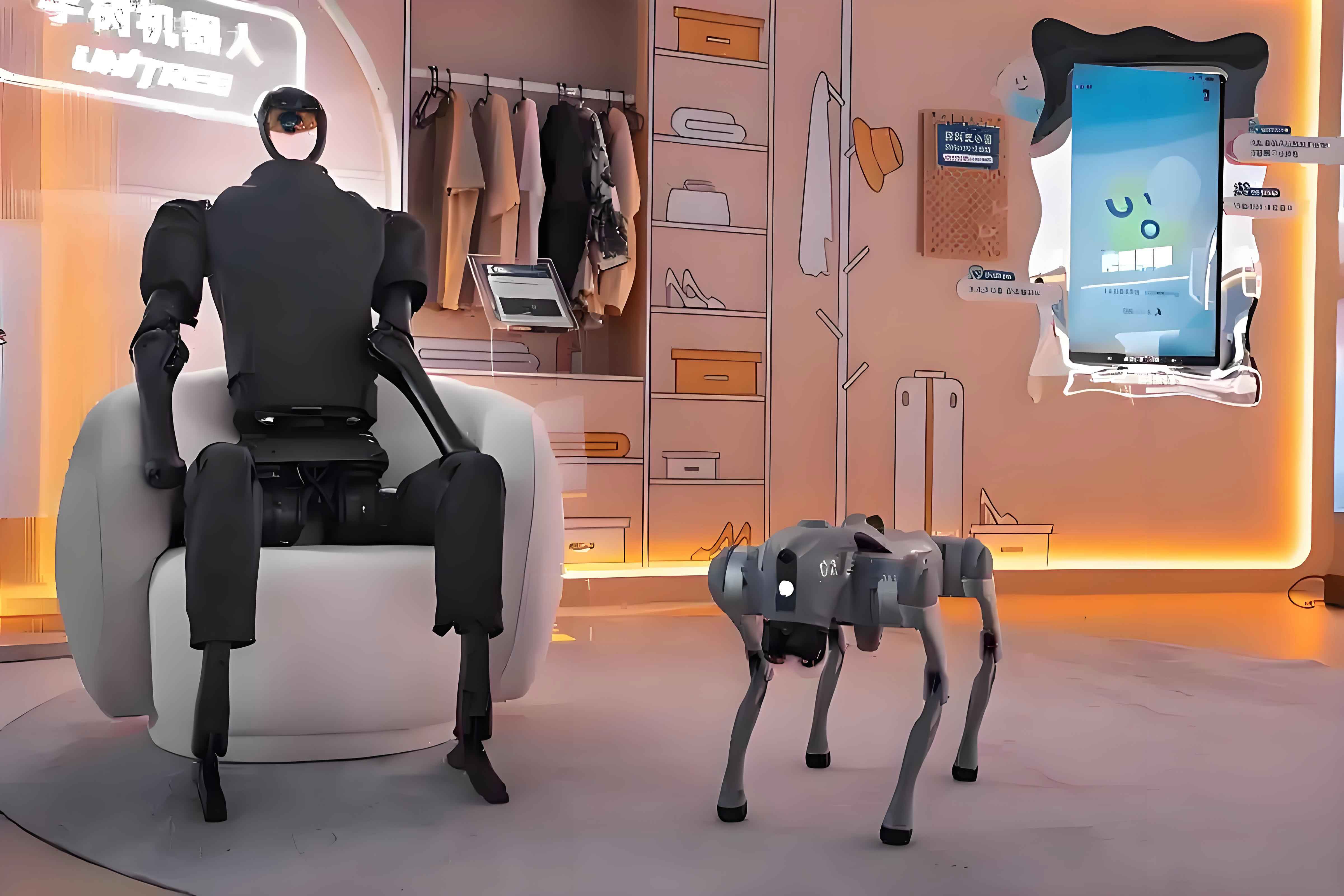
The humanoid robot sector is no longer defined only by small-scale trials centered on scientific research and staged performances. Industry participants are now describing a transition in which humanoid robot units are delivered in batches, deployed in stores and scenic locations, and integrated into service tasks that require interaction with customers in less controlled surroundings. That transition does not automatically guarantee profitability, but it does show that humanoid robot hardware manufacturing and batch delivery capabilities have advanced to a point where commercial scene testing can be conducted at a larger scale.
- Humanoid robot shipments surge as batch delivery capability matures
The first-half shipment data for humanoid robot units show a market that is expanding rapidly from a relatively small base. IDC reported that global humanoid robot shipments approached 25,000 units in the first six months of 2026, while China’s humanoid robot shipments exceeded 19,000 units and accounted for about 77.9% of the global total. Those humanoid robot shipment figures are significant not only because of the growth rate but also because they indicate that multiple Chinese humanoid robot manufacturers have moved beyond single-unit engineering projects and into repeatable production and delivery.
Chinese humanoid robot manufacturers featured prominently in the shipment landscape. AgiBot shipped more than 8,600 humanoid robot units in the first half of 2026, according to the IDC data cited by industry observers, with Unitree, UBTech, Galaxy General and Qingbao among the companies following in the humanoid robot market. The presence of several humanoid robot suppliers with meaningful delivery volumes suggests that competition is widening across product design, application focus, service capability and commercial model, rather than being confined to a single humanoid robot platform or a single use case.
Wei Guohong, a member of the China Robot Education and Training Standards Committee, said that humanoid robot units are entering open commercial scenarios in batches and that delivery momentum is expected to continue accelerating in the second half of 2026. The Chinese humanoid robot industry is expected to maintain high-speed shipment growth for the full year, according to Wei, who framed the movement of humanoid robot units into retail, tourism and other public-facing environments as an important signal of commercial progress.
The humanoid robot industry’s delivery capability has improved, but the meaning of shipment growth must be interpreted carefully. Wei noted that current institutional shipment statistics still include research procurement and exhibition sample machines, and that the share of purely commercial paid orders for humanoid robot units still needs to increase. A high humanoid robot shipment rate does not by itself prove that humanoid robot enterprises have achieved profitability, and the industry still needs to demonstrate that humanoid robot deployments can generate sustainable revenue after installation.
Reported humanoid robot indicator Data cited in the market assessment Relevance for humanoid robot commercialization Global humanoid robot shipments in the first half of 2026 Nearly 25,000 units Shows that humanoid robot batch delivery has reached a larger scale than earlier trial phases Year-on-year growth in global humanoid robot shipments 432.1% Indicates rapid expansion from a small humanoid robot base and strong customer interest China humanoid robot shipments in the first half of 2026 More than 19,000 units Positions China as a major humanoid robot production and deployment market China share of global humanoid robot shipments About 77.9% Highlights China’s central role in global humanoid robot supply and adoption AgiBot humanoid robot shipments in the first half of 2026 More than 8,600 units Shows one leading humanoid robot supplier operating at meaningful volume Global humanoid robot shipments expected in 2030 More than 750,000 units Points to a long-term humanoid robot growth path across multiple markets The humanoid robot market’s rapid shipment growth also reflects changes in manufacturing organization. Batch delivery of humanoid robot units requires coordinated supply of actuators, sensors, batteries, computing modules, structural components and software tools, and it requires quality control processes that can handle repeat production rather than one-off engineering builds. The humanoid robot industry’s ability to ship thousands of units in a half-year period therefore provides evidence of industrial maturity, even as humanoid robot companies continue to refine reliability, serviceability and scenario-specific performance.
At the same time, the humanoid robot sector is not yet at a stage where shipment volume alone can be treated as commercial success. Humanoid robot deployment in open commercial environments exposes units to variable lighting, crowded spaces, uneven floors, unpredictable customer behavior and continuous operating hours. Those conditions test humanoid robot hardware durability, navigation stability, interaction quality and maintenance response, and they can reveal gaps that are less visible in controlled demonstration settings.
For humanoid robot suppliers, the next stage of competition will involve not only producing more units but also supporting them in the field. Humanoid robot service networks, spare-parts systems, remote monitoring, software updates and operator training are becoming part of the humanoid robot value proposition. Customers that introduce humanoid robot units into retail or tourism settings need confidence that the humanoid robot can perform consistently and that technical issues can be resolved without disrupting customer service.
- Humanoid robot application mix shifts toward commercial service scenarios
The structure of humanoid robot applications is changing. Traditional humanoid robot use cases such as research and education, exhibition and display, and government data-collection centers continue to account for a portion of shipments, but their share is declining as retail, cultural tourism, industrial manufacturing and logistics contribute new humanoid robot demand. The humanoid robot market is therefore becoming more diversified, with different customer groups evaluating humanoid robot units against different performance criteria and different return-on-investment assumptions.
Chinese humanoid robot manufacturers are pursuing divergent strategies. Some humanoid robot companies are focusing on retail and cultural tourism scenarios, where humanoid robot units can serve as guides, promoters, interactive hosts and companion-style service devices. Other humanoid robot manufacturers are concentrating on automotive and electronics manufacturing environments, where humanoid robot units are expected to support handling, assembly-related tasks or repetitive operations. The split in humanoid robot strategy reflects the fact that no single humanoid robot configuration or software stack is equally suited to every commercial environment.
Zhang Feng, chairman of the China Humanoid Robot and Embodied Intelligence 100-Member Association, said that industry data for the first half of 2026 show that humanoid robot mass-production and delivery capability has been proven. The main bottleneck for the humanoid robot industry has shifted from hardware body manufacturing toward scenario adaptation and embodied intelligence software capability, according to Zhang. That assessment places humanoid robot software, interaction design, task planning and operational integration at the center of the next phase of humanoid robot competition.
Zhang noted that leading humanoid robot enterprises can now achieve stable delivery at the thousand-unit and ten-thousand-unit level. However, different scenarios place very different demands on humanoid robot systems. Industrial humanoid robot applications place a premium on grasping, repeated-operation precision and process consistency, while retail and cultural tourism humanoid robot applications test anti-interference capability in open environments and natural interaction with customers. The humanoid robot companies that can manage both mass production and scenario operations are likely to possess longer-term competitiveness.
The humanoid robot application shift is important because commercial customers tend to evaluate humanoid robot units in terms of specific tasks rather than general technological novelty. A humanoid robot in a store may be expected to attract attention, provide information, guide customers or support promotional activities. A humanoid robot in a scenic area may be expected to offer directions, explain exhibits, interact with visitors and handle repetitive questions. Those humanoid robot tasks are not identical, and they require different content libraries, interaction flows, safety rules and operational procedures.
Industrial humanoid robot deployments face a different set of expectations. Manufacturing customers may evaluate humanoid robot units on cycle time, precision, uptime and integration with existing production lines. A humanoid robot that performs well in a public exhibition may not meet industrial requirements for repeatability and process control. Conversely, a humanoid robot designed for structured factory tasks may lack the conversational flexibility and social presence needed in a retail or tourism environment. The humanoid robot market is therefore likely to remain segmented, with specialized humanoid robot products and software stacks emerging for different commercial scenarios.
Humanoid robot companies also need to think beyond the initial sale. A humanoid robot deployment creates ongoing needs for content updates, software maintenance, hardware servicing, performance monitoring and operator support. In retail and tourism settings, humanoid robot content may need to change with promotions, seasons, exhibitions or visitor profiles. In industrial settings, humanoid robot task parameters may need adjustment as production processes change. The humanoid robot supplier that can provide continuous operational support may be better positioned than a supplier that focuses only on hardware shipment.
The humanoid robot industry’s movement toward commercial scenarios does not mean that research, education and exhibition demand will disappear. Those humanoid robot use cases continue to provide testing grounds, training opportunities and public awareness. However, the incremental growth of the humanoid robot market is increasingly dependent on commercial customers that expect humanoid robot units to perform useful work. That expectation places pressure on humanoid robot makers to demonstrate measurable value rather than relying on novelty alone.
- Retail and cultural tourism become frontline humanoid robot testbeds
Recent humanoid robot deployments illustrate how retail and cultural tourism are becoming frontline testbeds for commercial service. A batch of 100 Lingxi X2 humanoid robot units was deployed across 100 Aishida stores nationwide, where the humanoid robot units serve as store promoters in real retail environments. Qingbao humanoid robot units also entered multiple domestic scenic areas in batches, taking on roles such as park guidance, science popularization interaction and visitor accompaniment. Those humanoid robot deployments show that commercial customers are beginning to assign defined service tasks to humanoid robot units rather than treating them only as static exhibits.
IDC analysis cited in the market discussion indicates that humanoid robot units are moving from static display objects toward post-type robots capable of taking on fixed service tasks. Retail and cultural tourism have become frontier proving grounds for humanoid robot commercialization because they offer public visibility, relatively flexible task definitions and a degree of tolerance for experimentation. A humanoid robot that can welcome visitors, answer common questions or support a promotional campaign can create value even if it does not perform every task perfectly, which gives humanoid robot suppliers room to iterate in live environments.
Retail humanoid robot deployments can serve multiple functions. A humanoid robot promoter may attract customer attention, introduce products, guide shoppers to specific areas or support seasonal campaigns. The humanoid robot can also collect interaction data and provide feedback on customer engagement, although the use of such data must be handled within applicable privacy and compliance rules. For retailers, the humanoid robot represents a new interface between digital content and physical space, and its value depends on whether the humanoid robot can deliver a consistent experience across repeated customer interactions.
Cultural tourism humanoid robot deployments place greater emphasis on interaction and information delivery. A humanoid robot guide in a scenic area may need to provide directions, explain points of interest, answer questions about opening hours or facilities, and engage visitors in educational activities. The humanoid robot must operate in outdoor or semi-outdoor environments that may include crowds, noise, changing weather conditions and uneven surfaces. Those conditions make humanoid robot reliability and natural interaction capability especially important, because a humanoid robot that fails to respond appropriately can disrupt the visitor experience.
The use of humanoid robot units in retail and tourism also reveals the importance of scenario-specific content. A humanoid robot that is engaging in a shopping mall may need a different tone, vocabulary and interaction style from a humanoid robot guiding visitors through a cultural exhibition. Humanoid robot suppliers must therefore work with customers to design dialogue flows, knowledge bases, safety boundaries and escalation procedures. The humanoid robot is not simply a hardware product; it is a service platform that requires content, software and operational support to function effectively.
Humanoid robot deployment in open commercial environments also introduces maintenance challenges. A humanoid robot operating for long hours may experience battery depletion, sensor obstruction, joint wear, software faults or network interruptions. In a crowded retail or tourism setting, even a minor humanoid robot malfunction can become visible to customers and staff. Humanoid robot suppliers need to design for serviceability, provide remote diagnostics where possible and establish response procedures for on-site issues. The operational burden of humanoid robot deployment is a key part of the total cost that customers must evaluate.
The humanoid robot industry’s focus on retail and cultural tourism does not imply that those scenarios are easy. They are attractive because they offer relatively large public audiences and varied interaction opportunities, but they also expose humanoid robot units to unpredictable behavior and complex social norms. A humanoid robot must maintain appropriate physical distance, avoid collisions, interpret unclear requests and respond gracefully when it cannot complete a task. Those humanoid robot capabilities are difficult to perfect, and they require continuous testing and refinement in real environments.
- Humanoid robot business models evolve as RaaS lowers entry barriers
As humanoid robot deployments expand, business models are also changing. In addition to whole-unit sales, the RaaS model, or Robot-as-a-Service, is gradually becoming more common. Under a RaaS arrangement, retail and cultural tourism customers do not need to bear the full upfront hardware procurement cost of a humanoid robot; instead, they can pay according to the usage period or service arrangement. The RaaS model can reduce the initial financial barrier for small and medium-sized businesses and scenic area operators that want to test humanoid robot services without committing to a large capital purchase.
The humanoid robot rental price for RaaS arrangements is continuing to decline, according to the market discussion, which helps smaller merchants and scenic areas experiment with humanoid robot services. A lower humanoid robot rental cost can make it easier for customers to evaluate whether a humanoid robot contributes to customer engagement, information delivery or promotional activity. For humanoid robot suppliers, RaaS can create recurring revenue and deepen customer relationships, but it also shifts more responsibility onto the supplier for maintenance, uptime and service quality.
The RaaS model may be particularly relevant for humanoid robot applications in retail and cultural tourism because demand can be seasonal or campaign-based. A retailer may want humanoid robot support during a holiday promotion, a product launch or a store opening. A scenic area may need additional humanoid robot guidance during peak visitor periods. RaaS allows humanoid robot capacity to be adjusted to usage cycles, which can align cost with expected benefit. However, the humanoid robot supplier must manage fleet utilization, logistics, maintenance and staffing to make the model economically viable.
Humanoid robot RaaS also changes the customer’s evaluation criteria. When a customer purchases a humanoid robot outright, the decision may focus on hardware specifications, price and expected lifespan. When a customer uses a humanoid robot through RaaS, the decision may focus on service uptime, task performance, content quality, support responsiveness and monthly cost. The humanoid robot supplier must therefore demonstrate operational excellence, not just product capability, and must be able to quantify the humanoid robot’s contribution to the customer’s objectives.
Despite the promise of RaaS, the humanoid robot business model still faces challenges. Open environments are complex, and humanoid robot units may experience occasional failures. Maintenance costs can be high, and the direct revenue created by a single humanoid robot may be limited. Those issues are common across the humanoid robot industry and affect both sales-based and RaaS-based deployments. Customers may be willing to tolerate some experimentation, but they will expect the humanoid robot to deliver a clear service outcome if the deployment is to continue beyond an initial trial.
The humanoid robot industry therefore needs to develop better tools for measuring value. A retail humanoid robot might be evaluated on customer interactions, promotional reach, information delivery or staff support. A tourism humanoid robot might be evaluated on visitor engagement, guidance volume, repeated questions handled or educational impact. Without a clear measurement framework, humanoid robot deployments may remain dependent on novelty and marketing budgets rather than becoming part of routine operations. The ability to quantify humanoid robot job value will be essential for scaling commercial adoption.
- Cost, reliability and job-value measurement remain humanoid robot hurdles
Wei Guohong said that retail and cultural tourism are good commercial proving grounds for humanoid robot units because they offer relatively large fault-tolerance space. A humanoid robot in a store or scenic area can be supported by staff, and occasional errors may be corrected without stopping an entire production line. That tolerance gives humanoid robot suppliers room to test and improve performance. However, Wei also noted that humanoid robot companies must cross two critical barriers to achieve a commercial closed loop: cost and value. Humanoid robot procurement costs need to decrease, and the value of the humanoid robot’s job must be clearly quantified.
The cost barrier for humanoid robot deployment includes more than the purchase price. Customers must consider installation, integration, content development, staff training, maintenance, insurance, energy use and downtime. A humanoid robot that appears affordable at the point of sale may become expensive if it requires frequent servicing or if it disrupts customer operations. Humanoid robot suppliers need to provide transparent total-cost information and design humanoid robot systems that are easy to maintain, upgrade and repair.
The value barrier is equally important. A humanoid robot must perform a task that customers value, and that value must be sufficient to justify the cost. In retail, a humanoid robot promoter may increase foot traffic or customer engagement, but the connection between humanoid robot activity and sales can be difficult to measure. In cultural tourism, a humanoid robot guide may improve visitor experience, but the economic benefit may depend on ticket sales, visitor satisfaction, repeat visits or operational savings. Humanoid robot suppliers and customers need to define expected outcomes before deployment and track performance against those outcomes.
Reliability is a central part of both cost and value. A humanoid robot that operates consistently can deliver service value and reduce maintenance burden. A humanoid robot that fails frequently can erode customer confidence and increase operating costs. Humanoid robot reliability depends on hardware quality, software robustness, environmental sensing, battery management and remote support. The humanoid robot industry must continue to improve reliability across different environments, because commercial customers will compare humanoid robot performance with existing service methods and will expect dependable operation.
Humanoid robot safety is another critical consideration. In public retail and tourism environments, humanoid robot units must operate safely around customers, including children and older visitors. Humanoid robot navigation must avoid collisions, and humanoid robot interaction must respect personal space and privacy. Humanoid robot suppliers need to establish clear safety protocols, emergency stop procedures and incident response plans. As humanoid robot deployments scale, safety standards and operational guidelines will become increasingly important for customer acceptance and regulatory compliance.
The humanoid robot industry also needs to address workforce integration. Humanoid robot units in retail and tourism are often introduced alongside existing staff rather than replacing entire roles. Staff may need training to operate humanoid robot systems, respond to humanoid robot errors and use humanoid robot-generated information. If humanoid robot deployment is poorly integrated, it can create additional work for employees rather than reducing burden. Successful humanoid robot deployments therefore require attention to workflow design, staff roles and customer service processes.
Wei expects that retail and cultural tourism scenarios will continue to produce small-batch regular operation projects over the next 1 to 2 years. Those humanoid robot projects may not represent mass adoption, but they can provide valuable operating data and business model experience. Wei expects that large-scale humanoid robot普及—large-scale humanoid robot adoption—will still require 3 to 5 years. The path to humanoid robot scale will therefore be gradual, with repeated cycles of deployment, learning and refinement across retail, tourism and other commercial scenarios.
Time frame Reported humanoid robot deployment expectation Implication for humanoid robot market development Next 1 to 2 years Retail and cultural tourism scenarios are expected to continue producing small-batch regular operation projects Humanoid robot suppliers can accumulate operating data and refine service models Next 3 to 5 years Large-scale humanoid robot adoption is expected to require this period Humanoid robot cost, reliability and value measurement must improve before broader scale 2030 Global humanoid robot shipments are expected to exceed 750,000 units Industrial, commercial service and home consumer markets are expected to form a diversified humanoid robot demand base - Humanoid robot outlook points to a long adoption runway through 2030
IDC forecasts that global humanoid robot shipments could exceed 750,000 units by 2030, with industrial, commercial service and home consumer markets forming a diversified demand structure. That humanoid robot outlook suggests that the current phase of retail and tourism experimentation is an early stage in a longer adoption cycle. The humanoid robot market is expected to develop across multiple segments rather than depending on a single application, and each segment will place different requirements on humanoid robot hardware, software and service networks.
Industrial humanoid robot demand may be driven by tasks that are repetitive, physically demanding or difficult to staff. Commercial service humanoid robot demand may be driven by customer interaction, information delivery, guidance and promotional activities. Home consumer humanoid robot demand may be driven by assistance, companionship, education and household tasks, although that segment is likely to require high levels of safety, affordability and reliability. The humanoid robot industry’s long-term growth will depend on its ability to adapt platforms and software to these different environments.
The 2030 humanoid robot shipment forecast also implies that supply chains must continue to scale. Humanoid robot production will require reliable supplies of components, consistent quality control and efficient manufacturing processes. Humanoid robot companies will need to manage inventory, service networks and software updates across larger installed bases. The humanoid robot industry’s ability to support fleets of units in the field will become as important as its ability to produce them.
Retail and cultural tourism are likely to remain important humanoid robot proving grounds because they generate frequent interactions and visible use cases. The experience gained from humanoid robot deployments in stores and scenic areas can inform the development of humanoid robot software for natural interaction, crowd navigation and content delivery. Those capabilities may later transfer to other commercial service environments such as airports, museums, hotels, exhibition centers and public service facilities, although each setting will have its own operational requirements.
The humanoid robot market’s development will also depend on the broader ecosystem. Humanoid robot software developers, content providers, system integrators, service operators and component suppliers all play roles in turning humanoid robot hardware into useful services. Customers may prefer humanoid robot solutions that integrate with existing systems, such as customer relationship management, ticketing, navigation or building management platforms. The humanoid robot industry’s ability to build open interfaces and partner ecosystems may influence how quickly humanoid robot deployments can scale.
Public acceptance is another factor in the humanoid robot adoption path. Retail and tourism settings give large numbers of people direct exposure to humanoid robot units, which can help build familiarity and trust. Positive humanoid robot experiences may encourage customers to accept humanoid robot services in other contexts. Negative experiences, such as unsafe movement, poor interaction or frequent failures, can slow acceptance. Humanoid robot companies therefore have a responsibility to deploy carefully, manage expectations and ensure that humanoid robot units operate safely and respectfully in public spaces.
The humanoid robot industry’s growth narrative is becoming more operational and less speculative. Shipment data, store deployments, scenic area pilots, RaaS models and maintenance challenges all point to a market that is testing real business cases. The humanoid robot sector still faces significant hurdles in cost, reliability, value measurement and service support, but the direction of travel is clear: humanoid robot units are moving from demonstration settings into commercial environments where their performance will be judged by customers, staff and the public.
- Strategic implications for humanoid robot ecosystem participants
For humanoid robot manufacturers, the shift toward commercial deployment requires a broader set of capabilities. Humanoid robot hardware must be reliable, serviceable and safe, but humanoid robot success also depends on software, content and operations. Manufacturers that can provide scenario-specific humanoid robot solutions, support customers through deployment and measure humanoid robot performance will be better positioned to build repeat business. The humanoid robot market is likely to reward companies that treat deployment as a service relationship rather than a one-time equipment sale.
For retail and cultural tourism customers, humanoid robot adoption should begin with clear objectives. A customer should define what the humanoid robot is expected to do, how success will be measured and how the humanoid robot will be integrated with existing staff and systems. Humanoid robot trials should include realistic operating conditions and a plan for collecting feedback. Customers should also evaluate total cost, including maintenance and staff time, rather than focusing only on the humanoid robot purchase or rental price.
For investors and industry observers, humanoid robot shipment growth is an important indicator but not a complete measure of commercial health. The humanoid robot industry’s progress should also be assessed through paid commercial orders, utilization rates, service costs, customer renewal decisions and measurable task outcomes. The humanoid robot market’s long-term potential is significant, but the path to scale will depend on execution across product, software, service and business model dimensions.
For the broader humanoid robot ecosystem, standards and interoperability will matter. Humanoid robot safety standards, data protection practices, interface specifications and service quality guidelines can help reduce deployment friction and build customer confidence. Humanoid robot companies that participate in standards development may also gain influence over how the market evolves. As humanoid robot units enter more public and commercial spaces, clear rules for operation and accountability will become increasingly important.
The humanoid robot market is entering a phase in which commercial evidence will matter more than promotional claims. The first-half shipment data show that humanoid robot production and delivery can reach meaningful volumes. Retail and cultural tourism deployments show that humanoid robot units can be placed in customer-facing roles. RaaS models show that humanoid robot suppliers are experimenting with ways to lower adoption barriers. At the same time, cost, reliability, maintenance and value measurement remain unresolved challenges that will shape the pace of humanoid robot scale.
Humanoid robot adoption in retail and cultural tourism is therefore best understood as an early commercial chapter rather than a finished outcome. The humanoid robot industry has demonstrated that it can build and deliver units in batches, and it has begun to test humanoid robot services in open environments. The next stage will require humanoid robot companies to prove that those services can operate consistently, generate measurable value and support sustainable business models. If that proof emerges, the humanoid robot market may be positioned for a much larger expansion across industrial, commercial service and home consumer segments in the years ahead.
The humanoid robot sector’s trajectory through 2026 and toward 2030 will be shaped by how quickly humanoid robot suppliers reduce costs, improve reliability and demonstrate job value. Retail and cultural tourism will continue to provide visible test cases, while industrial and logistics applications may provide different kinds of operational evidence. The humanoid robot industry’s ability to learn from those deployments and translate experience into better products and services will determine whether the current shipment surge becomes a durable commercial market. The humanoid robot is no longer only a showcase technology; it is increasingly a service platform whose value will be tested in everyday commercial environments.