
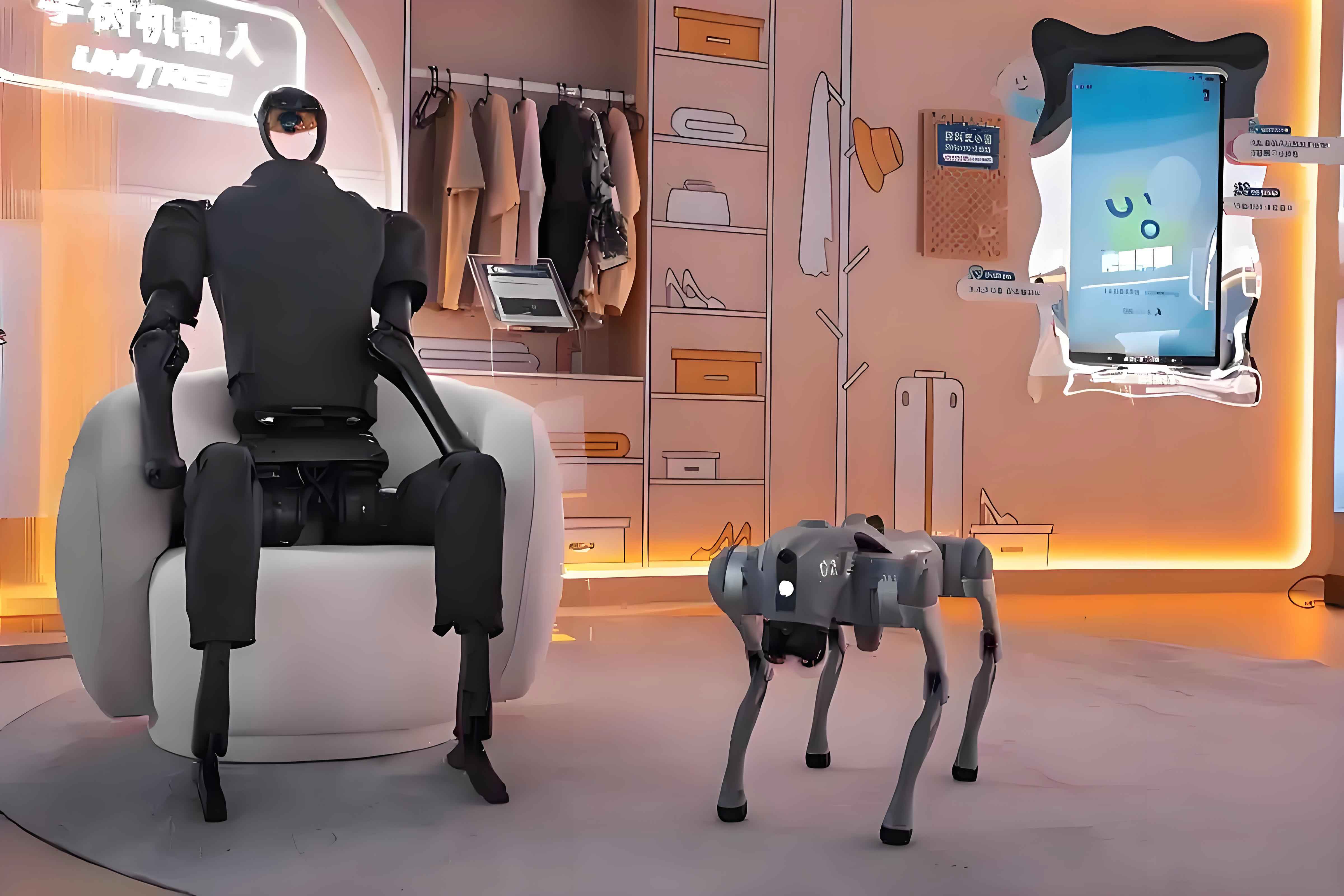
ANHUI, September 3, 2026 – The 2026 World Manufacturing Convention is preparing to place humanoid robot technology, embodied intelligence and real-world automation at the center of its industrial showcase, with organizers announcing that nearly 200 robot exhibits will be presented in a dedicated robot and embodied intelligence industry exhibition. The event is expected to offer visitors a close look at how humanoid robot systems, service robots, industrial robots and related technologies are moving from laboratories and production lines into factories, commercial spaces, communities and homes.
The robot and embodied intelligence industry exhibition will continue on the foundation established by the previous edition of the convention, and it will remain one of the major highlights of the broader event. According to the convention executive committee office, the exhibition will bring together a wide range of robot products, including a prominently featured humanoid robot lineup, interactive demonstrations and full-chain displays of key components, innovation platforms and downstream applications. Visitors will be able to observe humanoid robot systems in motion, participate in interactive experiences and gain a more direct understanding of how human-machine integration may shape manufacturing, retail, household services and public spaces.
The organizers stated that the robot and embodied intelligence exhibition area will adopt a presentation approach that combines large-scale operational demonstrations, multi-scenario community settings, dynamic performances and full-ecosystem displays. This structure is designed to show typical application scenarios in industrial manufacturing and commercial services, while also presenting the broader industrial chain, including core technologies, innovative platforms and after-market services. The exhibition is not intended to be a static product display; instead, it will emphasize motion, interaction and practical application, allowing visitors to see how humanoid robot technology and embodied intelligence can be integrated into everyday operations.
The event will feature four major presentation highlights. These highlights are connected by a common emphasis on real scenarios, flagship humanoid robot products, visitor interaction and ecosystem-wide coordination. Together, they will create a comprehensive view of the robot industry that extends from components and software platforms to complete humanoid robot systems and end-user applications. The convention is expected to attract attention from manufacturers, technology developers, industry users and the general public, all of whom will have the opportunity to examine how humanoid robot solutions are being prepared for broader deployment.
-
Nearly 200 Robot Exhibits and a Humanoid Robot Lineup Create a Large-Scale Technology Showcase
The upcoming exhibition will present nearly 200 robot exhibits, marking an increase from the previous edition of the convention. The organizers noted that the number of robot exhibits has grown to nearly 200, reflecting both the expansion of the robotics sector and the increasing diversity of products available across industrial, commercial and consumer-facing applications. Among the exhibits, humanoid robot products will occupy a central position, supported by industrial robots, service robots, key components and platform technologies that together form a richer and more complete display system.
The humanoid robot lineup will be one of the most closely watched elements of the exhibition. A dedicated humanoid robot product matrix area will be established in the central part of the exhibition zone, bringing together 16 humanoid robot models. These models will include robots that won gold and silver medals at the 2nd World Humanoid Robot Games, general technology base robots, traffic police robots and other advanced humanoid robot systems. The display is expected to demonstrate more flexible limbs, agile motion control and intelligent decision-making capabilities, while also presenting practical application solutions for real-world scenarios.
The humanoid robot product matrix is designed to show that humanoid robot development is no longer limited to isolated demonstrations. Instead, the exhibition will highlight how humanoid robot systems can be adapted to different tasks and environments through hardware design, control systems, perception technologies and software platforms. Visitors will be able to compare different humanoid robot forms and functions, observe how humanoid robot systems move and interact, and consider how these technologies may eventually support manufacturing operations, public services and household tasks.
At the same time, the exhibition will place humanoid robot technology within a broader robotics ecosystem. Industrial robots will demonstrate logistics sorting, material handling and production support. Service robots will demonstrate store sales, home services and sanitation cleaning. The humanoid robot lineup will sit alongside these systems, illustrating both the distinctive capabilities of humanoid robot platforms and the complementary roles that different robot categories can play in integrated operations.
The scale of the exhibition is also reflected in the participation of multiple enterprises across several specialized boards. The smart manufacturing factory board will bring together 6 enterprises and 22 products. The smart block board will gather 4 enterprises and 22 products. The smart innovation community board will feature 4 enterprises and 33 products. The embodied intelligence full-stack technology chain board will present 4 enterprises and 10 products, together with the humanoid robot lineup. These displays will be supported by exhibits of key robot components, innovation platforms and related achievements, forming a comprehensive presentation of the robot industry chain.
For visitors, the combination of scale and diversity means that the exhibition will offer more than a single view of robotics. A humanoid robot may appear in a performance setting, while another humanoid robot system may be presented in a service scenario. Industrial robots may operate in a simulated factory environment, while service robots may interact with visitors in a commercial or community setting. This multi-layered presentation is intended to make the humanoid robot and embodied intelligence sector more accessible to a broad audience while retaining technical depth for industry professionals.
-
Scenario-Based Layout Connects Humanoid Robot Technology With Factories, Communities and Commercial Spaces
The first major highlight is the scenario-based layout of the exhibition area. The exhibition will set up two robot avenues and divide the space into four major boards: the smart manufacturing factory, the smart innovation community, the smart block and the embodied intelligence full-stack technology chain. This layout is designed to guide visitors through different application environments and to show how humanoid robot systems and other robotic products can operate in settings that resemble real factories, communities and commercial districts.
In the smart manufacturing factory setting, robots will demonstrate material handling, logistics sorting and production support. These demonstrations are intended to show how industrial robots and humanoid robot platforms may contribute to efficient manufacturing operations. The factory scenario will allow visitors to observe how robots can move materials, support repetitive tasks and coordinate with production processes. For industry observers, the scenario also raises important questions about integration, safety, workflow design and the role of humanoid robot systems in future factories.
In the smart innovation community and smart block settings, the exhibition will present store sales, home services, sanitation cleaning and other service-oriented applications. Humanoid robot systems may appear in interactive service roles, while other robots may demonstrate cleaning, delivery or retail support. These scenarios are designed to show that robotics is not confined to industrial environments. The exhibition will illustrate how robots can enter communities, commercial spaces and households, creating new forms of service delivery and human-machine interaction.
The scenario-based approach is particularly important for humanoid robot development because humanoid robot systems are often expected to operate in environments designed for humans. A humanoid robot that can move through a shop, assist in a home or interact with customers must be able to perceive its surroundings, understand instructions and respond safely. By presenting humanoid robot technology in realistic settings, the exhibition will help visitors understand both the potential and the practical challenges of deploying humanoid robot systems in everyday environments.
The two robot avenues will serve as connecting routes through the exhibition, linking the four major boards and allowing visitors to move from one scenario to another. This design is expected to create a coherent narrative: robots in production, robots in community services, robots in commercial spaces and robots supported by a full-stack technology chain. The humanoid robot lineup will be integrated into this narrative, demonstrating how humanoid robot platforms can participate in multiple scenarios and how they depend on broader advances in components, perception, control and artificial intelligence.
The scenario-based layout also supports the exhibition’s goal of immersive experience. Visitors will not simply read about robot applications; they will see robots performing tasks in dynamic environments. A humanoid robot may gesture, speak or respond to a visitor. An industrial robot may move materials along a simulated line. A service robot may demonstrate cleaning or retail support. These live demonstrations are intended to make the technology more tangible and to show how humanoid robot and embodied intelligence applications may become part of daily operations.
-
Flagship Humanoid Robot Products Highlight Advances in Limbs, Motion Control and Intelligence
The second major highlight is the display of flagship products, especially the humanoid robot product matrix in the central area of the exhibition. The 16 humanoid robot models will include award-winning robots from the 2nd World Humanoid Robot Games, general technology base robots, traffic police robots and other representative humanoid robot systems. This concentrated display will allow visitors to see the diversity of humanoid robot design and the progress being made in areas such as mobility, manipulation, perception and interaction.
The organizers emphasized that the humanoid robot lineup will demonstrate more flexible limbs, agile motion control and intelligent decision-making capabilities. In practical terms, this means that humanoid robot systems are being developed to handle more complex movements, adapt to uneven environments and respond to changing conditions. The humanoid robot products on display will also present real-world application solutions, showing how humanoid robot platforms may be configured for specific tasks in industry, public services and other sectors.
The gold and silver medal winners from the 2nd World Humanoid Robot Games are expected to attract particular attention. Their presence in the exhibition will connect competitive achievements with industrial and commercial applications, showing how humanoid robot systems tested in challenging events can inform the development of more capable and reliable products. The humanoid robot lineup will therefore serve as both a technology showcase and a signal of the growing maturity of the humanoid robot sector.
General technology base robots will also be part of the display. These platforms are important because they can support multiple applications and allow developers to build specialized solutions on a common foundation. By presenting general technology base robots alongside application-specific humanoid robot systems, the exhibition will illustrate how the humanoid robot industry is developing shared technological foundations while also pursuing market-specific products.
Traffic police robots and other specialized humanoid robot systems will further broaden the display. These products show how humanoid robot technology can be adapted to public service roles that require interaction, observation and response. While the exhibition will not suggest that all such applications are already fully deployed at scale, it will demonstrate the direction of development and the range of possibilities being explored by robot developers.
The humanoid robot product matrix is also intended to highlight the integration of hardware and software. A humanoid robot depends on actuators, sensors, control algorithms, perception systems and decision-making software. The exhibition will present these systems as part of a complete product, allowing visitors to see how advances in individual technologies contribute to the performance of the humanoid robot as a whole. This integrated view is essential for understanding why humanoid robot development requires coordination across multiple industrial and research domains.
-
Interactive Presentations Bring Visitors Closer to Humanoid Robot Systems
The third major highlight is the interactive presentation of robot technology. The convention will build a robot stage, a robot boxing ring and other performance areas. Daily robot performances will be organized, and visitors will be invited to participate in interactions. The goal is to create an exhibition experience that is visible, perceptible and touchable, allowing visitors to engage with robots rather than merely observing them from a distance.
These interactive presentations will include humanoid robot performances and human-robot interactions. A humanoid robot may appear on stage, respond to audience input or take part in a dynamic demonstration. The robot boxing ring will provide a controlled setting for robot combat demonstrations, offering visitors a vivid example of motion control, balance and mechanical response. Such performances are not only entertaining; they also reveal the technical challenges involved in building humanoid robot systems that can move, balance and react in real time.
Visitors will also have opportunities to engage in intelligent dialogue with realistic robots and to observe how humanoid robot systems respond to questions, instructions and environmental cues. These interactions are designed to show the current state of human-robot communication and to help the public understand how humanoid robot technology may support service, education, entertainment and other applications in the future.
The interactive approach reflects a broader shift in robotics exhibitions. Instead of presenting robots as isolated machines behind barriers, the exhibition will place humanoid robot systems in active environments where visitors can see their capabilities and limitations. This can help build public awareness and trust while also giving industry participants valuable opportunities to observe how people respond to humanoid robot technology.
Daily performances will add a dynamic rhythm to the exhibition. Visitors who return to the exhibition on different days may see different demonstrations, and the repeated performances will allow more people to experience the humanoid robot lineup and other robot products in action. The combination of stage performances, boxing demonstrations and dialogue interactions will create multiple entry points for visitors with different levels of technical knowledge.
For enterprises, the interactive areas also provide a platform to present products in a more engaging way. A humanoid robot that can interact with visitors may communicate its value more effectively than a static display. At the same time, the exhibition will maintain a focus on industrial and commercial applications, ensuring that the entertainment and performance elements are connected to the broader story of robot deployment and embodied intelligence development.
-
Ecosystem Displays Connect Humanoid Robot Products With Components, Platforms and Industrial Clusters
The fourth major highlight is the ecosystem-oriented display. The exhibition area will include not only complete robot products but also key components of the robot industry. It will invite industrial clusters from Wuhu, Xuancheng, Huainan and Bengbu to participate in a concentrated display. Enterprises will also organize roadshows, product promotions and other activities intended to connect upstream and downstream participants in the humanoid robot and embodied intelligence industry chain.
This ecosystem approach recognizes that humanoid robot development depends on far more than a single product. A humanoid robot requires advanced components, sensors, actuators, control systems, software platforms, testing capabilities and application integration. By displaying key components alongside complete humanoid robot systems, the exhibition will show how the industry chain supports product development and how improvements in one area can enable progress in another.
The participation of industrial clusters from Wuhu, Xuancheng, Huainan and Bengbu will add a regional dimension to the exhibition. These clusters can demonstrate their capabilities in specialized areas and connect with other enterprises, research institutions and users. For the humanoid robot sector, such cluster-based participation can support supply chain coordination, technology exchange and market development.
Roadshows and product promotions will provide enterprises with opportunities to present their latest solutions to potential partners and customers. These activities are intended to facilitate business connections and to help translate exhibition displays into practical cooperation. The organizers noted that the exhibition will help connect key links in the upstream and downstream implementation of the robot and embodied intelligence industry, turning technological achievements into broader industrial applications.
The ecosystem display will also include innovation platforms and related achievements. These platforms can support research and development, testing, standardization and application validation. For humanoid robot companies, access to such platforms can accelerate product development and help address common challenges in areas such as safety, reliability and human-robot interaction.
By bringing together products, components, platforms and industrial clusters, the exhibition will present a more complete picture of the robot industry. Visitors will be able to see a humanoid robot on stage, examine the components that enable its movement, learn about the platforms that support its software and understand the industrial networks that make production possible. This full-chain perspective is essential for assessing the future of humanoid robot and embodied intelligence development.
-
Humanoid Robot Applications Move From Industrial Manufacturing to Retail, Household and Public Services
The exhibition will demonstrate that humanoid robot technology is being explored across a wide range of application scenarios. In industrial manufacturing, robots can support material handling, logistics sorting and production operations. In commercial settings, robots can support store sales and customer service. In community and household settings, robots can support home services and sanitation cleaning. In public spaces, humanoid robot systems may take on interactive roles, including performances and public service demonstrations.
These applications show that the humanoid robot is not a single-purpose machine. Instead, the humanoid robot form factor is being developed as a flexible platform that can potentially adapt to environments designed for humans. A humanoid robot that can walk, grasp, perceive and communicate may be able to perform tasks that require mobility and interaction. However, the exhibition will also show that different robot forms remain important. Industrial robots, service robots and specialized automation systems will continue to play complementary roles alongside humanoid robot platforms.
In the smart manufacturing factory scenario, the emphasis will be on efficiency, coordination and reliability. Robots will demonstrate how they can move materials and support production processes. For humanoid robot developers, the factory environment presents both opportunities and challenges. Opportunities include repetitive tasks, structured workflows and clear performance metrics. Challenges include safety, speed, payload and integration with existing systems. The exhibition will present these issues in a visible and practical way.
In retail and commercial spaces, the focus will shift to interaction and service. A robot may demonstrate store sales, guide customers or support product display. A humanoid robot in this environment must be able to communicate clearly and move safely among people. The exhibition will show how humanoid robot systems are being designed to operate in public-facing roles and how they may complement human workers rather than simply replace them.
In household and community services, robots will demonstrate home services and sanitation cleaning. These scenarios require robots to navigate complex environments, adapt to obstacles and perform tasks with limited supervision. The humanoid robot may not yet be the dominant form in all household applications, but the exhibition will show how humanoid robot research and service robot development are converging in areas such as mobility, perception and task planning.
Public service demonstrations, including traffic police robots, will show another dimension of humanoid robot application. These systems may support information delivery, observation and interaction in public spaces. By presenting such examples, the exhibition will illustrate how humanoid robot technology can be adapted to roles that require both mobility and communication, while also highlighting the need for safety, reliability and clear operational rules.
-
Local Enterprises and Innovation Platforms Bring Humanoid Robot Solutions to the Fore
Multiple local robot enterprises will participate in the exhibition and present their latest products. The Jianghuai Frontier Technology Collaborative Innovation Center will bring a series of products that won gold and silver awards at the 2nd World Humanoid Robot Games. These products will present the center’s latest research results and reflect the momentum of industrial development in related fields. The display will connect award-winning humanoid robot technology with broader application possibilities and demonstrate how research institutions can support industry innovation.
Hefei-based Renjie Intelligent and Youai Zhihe, as well as Wuhu-based EFORT and Kuwa Technology, are among the robot manufacturers that will present their latest exhibits. Their participation will add to the diversity of the exhibition and show how companies in different locations and market segments are contributing to the robot industry. The presence of these enterprises also reflects the broader development of Anhui’s robot sector, which spans industrial robots, service robots, humanoid robot systems and supporting technologies.
The involvement of local enterprises is important for the humanoid robot sector because product development requires close cooperation between technology providers, manufacturers and application users. Exhibitions provide a setting where these actors can meet, exchange information and explore collaboration. For a humanoid robot company, the ability to connect with component suppliers, software developers and end users can be as important as the underlying technology itself.
The Jianghuai Frontier Technology Collaborative Innovation Center’s award-winning products will be a focal point for visitors interested in humanoid robot performance and innovation. The gold and silver awards from the 2nd World Humanoid Robot Games provide an external reference point for the capabilities of these systems. At the same time, the exhibition will place these achievements in the context of practical applications, showing how competition-derived advances may contribute to products that can be used in industry, services and public environments.
Renjie Intelligent, Youai Zhihe, EFORT and Kuwa Technology represent different parts of the robot ecosystem. Their latest exhibits will demonstrate the range of technologies being developed in Anhui and the ways in which companies are responding to market demand. For visitors, this offers a chance to see how humanoid robot technology is supported by a wider industrial base that includes automation, mobility, sensing and service applications.
The participation of local enterprises also supports the convention’s broader goal of promoting industrial collaboration. By bringing together robot developers, component suppliers, platform providers and users, the exhibition can help identify common needs, accelerate technology transfer and encourage the formation of new partnerships. These outcomes are essential for moving humanoid robot technology from demonstration projects toward sustained commercial deployment.
-
Exhibit Distribution Shows a Full-Chain View of the Robot and Embodied Intelligence Sector
The distribution of exhibits across the exhibition boards provides a clear view of how the robot and embodied intelligence sector is being presented. The smart manufacturing factory board will feature 6 enterprises and 22 products. The smart block board will feature 4 enterprises and 22 products. The smart innovation community board will feature 4 enterprises and 33 products. The embodied intelligence full-stack technology chain board will feature 4 enterprises and 10 products, together with the humanoid robot lineup.
This distribution shows that the exhibition is organized around both application scenarios and technology foundations. The factory, block and community boards focus on where robots may be used, while the full-stack technology chain board focuses on how robots are built and supported. The humanoid robot lineup cuts across these categories, appearing as a flagship product group and as an example of how embodied intelligence can be integrated into complete systems.
The exhibition will also include key robot components, innovation platforms and related achievements. These displays are important because they show the underlying capabilities that make advanced robot products possible. A humanoid robot may attract attention through its movement and interaction, but its performance depends on actuators, sensors, control electronics, software and testing. By presenting these elements together, the exhibition will help visitors understand the depth of the industry chain behind the humanoid robot.
The table below summarizes the main exhibition boards and their reported participation figures.
Robot and embodied intelligence exhibition boards
Exhibition board Participating enterprises Products on display Smart manufacturing factory 6 22 products Smart block 4 22 products Smart innovation community 4 33 products Embodied intelligence full-stack technology chain 4 10 products plus the humanoid robot lineup The overall exhibition will feature nearly 200 robot exhibits, reflecting growth from the previous convention. The increase in exhibit numbers is accompanied by a broader range of product types and application scenarios. Visitors will be able to move from industrial robots to service robots, from complete humanoid robot systems to key components, and from individual products to platform-level solutions. This structure supports the convention’s aim of presenting a full industrial ecosystem rather than a collection of isolated exhibits.
The exhibit distribution also highlights the importance of integration. A humanoid robot may be displayed in the central product matrix, but its development depends on the full-stack technology chain. Similarly, a service robot in the smart block may rely on components and platforms presented in another part of the exhibition. By organizing the exhibition around both scenarios and technology chains, the convention will show how different parts of the industry connect and reinforce one another.
-
Four Presentation Highlights Create a Coherent Visitor Experience
The four presentation highlights – scenario-based layout, flagship products, interactive presentation and ecosystem display – are designed to work together. The scenario-based layout provides context, showing where robots may operate. The flagship products, especially the humanoid robot lineup, provide a focal point for technology and innovation. The interactive presentation provides engagement, allowing visitors to experience robots in action. The ecosystem display provides depth, showing the components, platforms and industrial networks that support the products on display.
This combination is expected to create a coherent visitor experience. A visitor may begin by observing a humanoid robot on stage, then move to a simulated factory to see how robots support production, then visit a commercial or community setting to see service applications, and finally examine the components and platforms that enable these systems. The journey is intended to connect excitement with understanding, allowing visitors to appreciate both the visible performance of robots and the less visible industrial foundation behind them.
For industry professionals, the four highlights offer multiple opportunities for engagement. Scenario-based displays can reveal user needs and operational challenges. Flagship humanoid robot products can demonstrate technical progress. Interactive presentations can test public response and human-robot interaction. Ecosystem displays can support supply chain coordination and technology transfer. The exhibition therefore serves both public education and industry development purposes.
The emphasis on interaction is particularly relevant to humanoid robot development. Because humanoid robots are often designed to work alongside people, their success depends on how well they can communicate, move safely and respond to human behavior. Public exhibitions provide valuable settings for observing these interactions and for collecting feedback that can inform future product design.
The ecosystem display also reflects the growing maturity of the robot industry. As humanoid robot systems become more complex, the need for specialized components, software platforms, testing facilities and application integration increases. By presenting these elements together, the exhibition will show that the humanoid robot sector is supported by a broader industrial base and that progress in one area can enable progress across the entire chain.
The table below summarizes the four presentation highlights and their main focus.
Four presentation highlights
Highlight Main focus Visitor experience Scenario-based layout Two robot avenues and four boards covering smart manufacturing, smart community, smart block and the full-stack technology chain Immersive observation of robots in factory, community, commercial and technology-chain settings Flagship products A central humanoid robot product matrix with 16 humanoid robot models, including award-winning robots, general technology base robots and traffic police robots Close inspection of humanoid robot capabilities, including limbs, motion control and intelligent decision-making Interactive presentation A robot stage, a robot boxing ring and daily performances Direct participation, intelligent dialogue and live human-robot interaction Ecosystem display Complete robot products, key components, innovation platforms and industrial clusters from Wuhu, Xuancheng, Huainan and Bengbu Understanding of the full industry chain, roadshows and upstream-downstream connections The four highlights are not separate attractions but interconnected parts of a single exhibition narrative. The humanoid robot appears across these parts: as a flagship product, as a participant in interactive performances, as an application in service scenarios and as a system supported by the full technology chain. This repeated presence is intended to reinforce the message that the humanoid robot is becoming a platform for innovation across multiple sectors.
-
Anhui’s Robot Industry Growth Adds Momentum to the Humanoid Robot Agenda
Robotics is a key industry for Anhui during the 15th Five-Year Plan period. The exhibition and the broader convention are taking place against a backdrop of strong growth in robot production. Data shows that in the first seven months of this year, Anhui’s industrial robot output increased by 17.1 percent year on year, service robot output increased by 89 percent year on year, and humanoid robot output achieved more than 10 times growth. These figures indicate that the robot sector is expanding across multiple product categories, including the humanoid robot segment.
Industrial robots have entered a stage of monthly output averaging 5,000 units, and annual output is expected to exceed 60,000 units. Humanoid robot output is expected to exceed 10,000 units for the year. These production figures suggest that robots are moving from niche applications toward larger-scale deployment, supported by growing industrial capacity and increasing market demand. For the humanoid robot sector, the expected annual output milestone is particularly significant because it indicates a transition from prototype development and small-batch production toward broader commercialization.
Anhui is accelerating toward its goal of building a globally influential robot industry highland by 2030. The convention’s robot and embodied intelligence exhibition supports this goal by providing a platform for enterprises to display products, connect with partners and explore application scenarios. The humanoid robot lineup, in particular, demonstrates the region’s ambition in a technology area that combines advanced manufacturing, artificial intelligence, sensing and human-robot interaction.
The growth data also highlights the complementary nature of different robot categories. Industrial robots continue to expand in manufacturing, service robots are growing rapidly in commercial and consumer applications, and humanoid robots are advancing from research and demonstration toward product development. Together, these categories form a diversified robot industry that can address different market needs while sharing underlying technologies and supply chain capabilities.
The table below presents the reported industry indicators without adding new figures beyond the information released by the organizers.
Reported robot industry indicators for Anhui
Indicator Reported performance Industrial robot output Up 17.1 percent year on year in the first seven months of this year Service robot output Up 89 percent year on year in the first seven months of this year Humanoid robot output More than 10 times growth in the first seven months of this year Industrial robot monthly output Average of 5,000 units, with annual output expected to exceed 60,000 units Humanoid robot annual output Expected to exceed 10,000 units 2030 goal Build a globally influential robot industry highland These indicators provide context for the exhibition. The humanoid robot lineup is not merely a display of future concepts; it is part of a broader industrial development process that includes production growth, supply chain expansion and application exploration. The convention will allow visitors to see products that reflect this process, while also showing the challenges that remain in areas such as reliability, safety, cost and integration.
The growth of the robot industry also creates opportunities for local enterprises and industrial clusters. Companies in Hefei, Wuhu and other parts of Anhui can use the exhibition to demonstrate their capabilities, attract partners and identify new market opportunities. For the humanoid robot sector, collaboration across materials, components, software, manufacturing and application development will be essential for continued progress.
The 2030 goal of building a globally influential robot industry highland provides a long-term framework for these efforts. The 2026 World Manufacturing Convention and its robot and embodied intelligence exhibition will serve as a milestone in that journey, bringing together current achievements and future possibilities in a single setting.
-
Humanoid Robot Performances and Public Interaction Broaden the Reach of the Exhibition
The exhibition will include a range of performances and public interactions designed to broaden the reach of robot technology. A humanoid robot may perform Huangmei opera, taking part in a cultural performance that combines advanced robotics with traditional art. Robot fighting demonstrations will offer a more energetic form of entertainment, while intelligent dialogue with realistic robots will allow visitors to experience human-robot communication. These activities are intended to make the humanoid robot more accessible to the public and to show that robotics can engage with culture, entertainment and everyday conversation.
The use of a humanoid robot in a Huangmei opera performance is a notable example of how robotics can intersect with the arts. Such a performance requires precise motion control, coordination and stage presence. It also raises interesting questions about how humanoid robot systems can be used in cultural settings, education and entertainment. The exhibition will present this not as a replacement for human performers but as a demonstration of the expressive potential of humanoid robot technology.
Robot fighting demonstrations will highlight motion control, balance and mechanical durability. Though presented as entertainment, these demonstrations also reflect the engineering challenges involved in building robots that can withstand physical interaction and maintain stability. For visitors, the robot boxing ring will provide a vivid and memorable experience, while for industry observers, it will illustrate advances in hardware and control systems that can support other applications.
Intelligent dialogue with realistic robots will show how humanoid robot systems can communicate with people. Visitors may ask questions, give instructions or simply observe how a robot responds. These interactions are designed to be engaging, but they also demonstrate the underlying technologies of speech recognition, natural language processing, perception and response generation. As humanoid robot systems become more capable, the quality of human-robot communication will be an important factor in their acceptance and usefulness.
The public interaction program will also support the convention’s educational goals. By seeing robots perform, speak and respond, visitors can develop a more informed understanding of what robots can and cannot do. This can help reduce misconceptions and build realistic expectations about the role of humanoid robot systems in society.
The combination of cultural performance, entertainment and dialogue demonstrates the versatility of the humanoid robot as a platform. It also shows that the robot industry is not limited to factories and warehouses. Humanoid robot technology may eventually become part of public spaces, cultural events and everyday services, creating new experiences and new forms of interaction.
-
Full-Stack Technology and Key Components Support the Next Stage of Humanoid Robot Development
The embodied intelligence full-stack technology chain board will present 4 enterprises and 10 products, together with the humanoid robot lineup. This board is important because it shows the technology foundations behind complete robot systems. A humanoid robot depends on a chain of technologies, including perception, decision-making, motion control, actuation, power and communication. By displaying these technologies alongside complete products, the exhibition will provide a more complete understanding of how humanoid robot systems are developed and improved.
Key components are essential to the performance of any robot. Actuators determine movement, sensors provide perception, control systems coordinate motion, and software platforms support decision-making and interaction. For humanoid robot systems, these components must be integrated into a compact and reliable form that can operate safely in human environments. The exhibition will show how component development contributes to the capabilities of the humanoid robot and how advances in one area can enable new applications.
Innovation platforms will also be part of the display. These platforms can support research, testing, validation and application development. For humanoid robot companies, access to shared platforms can reduce development costs and accelerate the transition from prototype to product. Platforms can also support collaboration among enterprises, universities and research institutions, helping to address common technical challenges.
The full-stack technology chain display reflects the increasing maturity of the robot industry. Instead of focusing only on finished robots, the exhibition will show the underlying technologies and industrial capabilities that make those robots possible. This is particularly important for humanoid robot development, where integration across hardware and software is complex and where performance depends on many interconnected subsystems.
The display will also help visitors understand why humanoid robot development takes time. A humanoid robot that can walk, grasp, perceive and communicate must integrate multiple advanced technologies into a single system. Each subsystem must be reliable, and the overall system must be safe and usable. By presenting the full technology chain, the exhibition will show the depth of engineering work behind the humanoid robot products on display.
The ecosystem display, including industrial clusters from Wuhu, Xuancheng, Huainan and Bengbu, will further strengthen the connection between technology and manufacturing. These clusters can demonstrate specialized capabilities and contribute to the development of a more resilient and coordinated supply chain. For the humanoid robot sector, this kind of regional industrial collaboration can support scaling and cost reduction, which are important for broader adoption.
-
What Visitors Can Expect From the Robot and Embodied Intelligence Exhibition
Visitors to the robot and embodied intelligence exhibition can expect a multi-layered experience. They will see humanoid robot systems in a central product matrix, observe industrial robots in a simulated factory, watch service robots in community and commercial settings, and examine key components and innovation platforms. They will also have opportunities to participate in interactive performances, including robot stage shows, robot boxing demonstrations and intelligent dialogue.
The exhibition will be organized to guide visitors through different scenarios. The two robot avenues will connect the four major boards, creating a route that moves from manufacturing to community services, commercial spaces and full-stack technology. Along this route, the humanoid robot will appear in different contexts, showing how a single technology platform can be adapted to multiple applications.
For visitors interested in technology, the exhibition will provide detailed views of components, platforms and complete systems. For visitors interested in applications, the scenario-based displays will show how robots may support factories, stores, homes and public spaces. For visitors interested in entertainment and culture, the performances and interactions will offer engaging experiences. The exhibition is designed to appeal to a broad audience while maintaining technical relevance for industry professionals.
The convention will also provide opportunities for enterprises to present their latest products and connect with potential partners. Roadshows and product promotions will support business exchange, while the ecosystem display will encourage upstream and downstream cooperation. These activities are expected to contribute to the long-term development of the robot and embodied intelligence industry.
The humanoid robot will remain a central theme throughout the exhibition. From the product matrix to interactive performances, from service scenarios to full-stack technology displays, the humanoid robot will serve as a focal point for discussions about the future of robotics. At the same time, the exhibition will show that humanoid robot development is part of a broader industrial ecosystem that includes industrial robots, service robots, components, platforms and application users.
The 2026 World Manufacturing Convention’s robot and embodied intelligence exhibition will therefore offer more than a display of machines. It will present a view of how robotics may become integrated into production, services and daily life, and it will show how the humanoid robot is moving from a subject of research and demonstration toward a product category with growing industrial relevance.
-
Conclusion: Humanoid Robot Innovation Takes a Visible Step Forward
The 2026 World Manufacturing Convention is set to provide a prominent platform for the robot and embodied intelligence industry, with nearly 200 robot exhibits, a 16-model humanoid robot lineup, scenario-based demonstrations, interactive performances and full-chain ecosystem displays. The event will bring together industrial robots, service robots, humanoid robot systems, key components and innovation platforms, creating a comprehensive view of a sector that is expanding across manufacturing, commercial services, communities and public spaces.
The humanoid robot will be one of the most visible symbols of this development. The humanoid robot product matrix will show advances in limbs, motion control and intelligence. Interactive performances will allow visitors to experience humanoid robot systems in action. Scenario-based displays will place the humanoid robot alongside other robots in factories, stores, communities and public services. Ecosystem displays will show the components and platforms that support the humanoid robot and the broader robot industry.
The participation of local enterprises and innovation platforms, including the Jianghuai Frontier Technology Collaborative Innovation Center, Renjie Intelligent, Youai Zhihe, EFORT and Kuwa Technology, will demonstrate the depth of activity in Anhui’s robot sector. The reported growth in industrial robot, service robot and humanoid robot output provides further context for the exhibition and reflects the region’s ambition to build a globally influential robot industry highland by 2030.
For visitors, the exhibition will offer an opportunity to see, understand and interact with robots in ways that go beyond static displays. For industry participants, it will provide a setting for product presentation, technology exchange and business connection. For the humanoid robot sector, the convention will serve as a visible step forward, showing how humanoid robot technology is being integrated into a wider industrial ecosystem and how it may contribute to the next stage of robotics development.
As the 2026 World Manufacturing Convention approaches, the robot and embodied intelligence exhibition is expected to attract broad attention. The combination of scale, interactivity and full-chain presentation will make the humanoid robot and related technologies more accessible to the public while supporting the industrial collaborations needed for continued progress. The exhibition will show that the humanoid robot is not only a machine of the future but also a product of an evolving industrial system that is already taking shape across manufacturing, services and everyday life.