
A humanoid robot equipped with a fully domestic electronic architecture was unveiled in Yichang, Hubei, on September 28, 2026, at the 2026 Domestic Electronic Architecture Embodied Intelligence Robot Launch Event. The humanoid robot was jointly released by LimX Dynamics, a Shenzhen Nanshan-based embodied intelligence company, and Kyland Technology. The launch marked the first time that a domestic electronic architecture has entered the full-machine system of a humanoid robot, and it was described as a historic moment in the development of embodied intelligence technology.
The humanoid robot system has long relied on foreign electronic architecture systems at the underlying level. As a result, the complete system link among the underlying platform, the intelligent brain and the humanoid robot body has been difficult to make fully autonomous and controllable. The humanoid robot jointly released by LimX Dynamics and Kyland Technology changes this pattern by connecting the underlying platform, the intelligent brain and the humanoid robot body through a complete system link at the underlying communication level. For the first time, domestic industrial-grade real-time communication capability has been connected across a complex humanoid robot system.
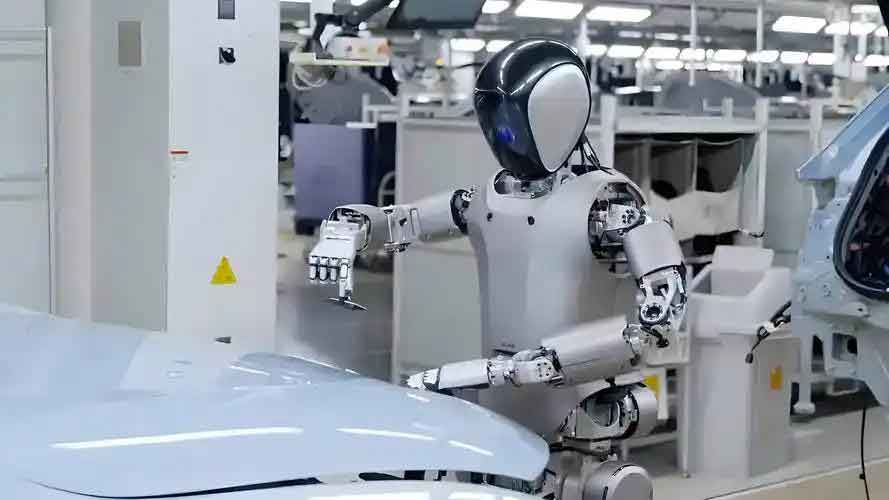
The significance of the launch extends beyond a single humanoid robot product. It shows that the humanoid robot industry is moving toward deeper collaboration in underlying communication, real-time control, artificial intelligence computing and full-machine validation. The humanoid robot is not merely a mechanical body; it is a complex system that requires close coordination among hardware, software, communication networks and intelligent computing platforms. The launch demonstrated that a humanoid robot can be built on a domestic electronic architecture while maintaining a complete system link from the underlying platform to the intelligent brain and the humanoid robot body.
-
Humanoid Robot Development Moves Toward a Domestic Full-Chain System Link
The humanoid robot has become one of the most closely watched directions in embodied intelligence. However, the complexity of the humanoid robot system means that progress cannot be achieved through hardware alone. A humanoid robot must process sensory information, coordinate motion control, support intelligent decision-making and maintain real-time communication among multiple subsystems. The underlying electronic architecture therefore plays a critical role in the overall performance and reliability of the humanoid robot.
In the past, humanoid robot full-machine systems often followed foreign electronic architecture systems at the underlying level. This made it difficult to achieve complete autonomous and controllable links among the underlying platform, the intelligent brain and the humanoid robot body. The launch by LimX Dynamics and Kyland Technology addressed this issue from the bottom-layer communication level. The humanoid robot now has a complete system link that connects the underlying platform, the intelligent brain and the humanoid robot body through domestic technology.
The achievement is important for the humanoid robot sector because it moves beyond single-component substitution. It represents a full-system attempt to integrate a humanoid robot with a domestic electronic architecture. The humanoid robot is thus positioned as a complete validation platform for domestic underlying technology, intelligent computing and real-time communication. The launch indicates that the humanoid robot industry is entering a phase in which full-machine system links are being examined together with component-level innovation.
-
LimX Dynamics and Kyland Technology Divide Work Around the Humanoid Robot System
The collaboration between LimX Dynamics and Kyland Technology reflects a clear division of work in the humanoid robot system. LimX Dynamics provided the original design and manufacturing of the humanoid robot body hardware, the integration of the brain and cerebellum technologies, and the humanoid brain system COSA. These capabilities served as a high-performance full-machine validation platform for the humanoid robot. The platform allowed the domestic electronic architecture to be tested within a complete humanoid robot system rather than in an isolated laboratory environment.
Kyland Technology provided the fully domestic underlying electronic architecture capability. In the humanoid robot system, this architecture functions as an independent nervous system. It supports the communication and control links that allow the humanoid robot to coordinate its underlying platform, intelligent brain and body. The humanoid robot therefore gained a domestic nervous system that connects real-time communication, control and intelligent computing.
The division of work also highlights the importance of collaboration in the humanoid robot industry. A humanoid robot requires original body design, intelligent brain systems, real-time communication, operating systems, deterministic buses, tool software and AI processor chips. No single layer can support the full humanoid robot system alone. The cooperation between LimX Dynamics and Kyland Technology demonstrates how specialized companies can combine their strengths to build a complete humanoid robot validation platform.
-
Domestic Electronic Architecture Gives the Humanoid Robot a New Nervous System
The fully domestic electronic architecture provided by Kyland Technology includes the Intewell operating system, the AUTBUS deterministic bus, the MaVIEW intelligent agent tool software and a fully domestic AI processor chip. These components are integrated to support the humanoid robot system. The architecture achieves isolation and fusion between control and AI intelligent computing. This is particularly relevant to the humanoid robot because the humanoid robot must simultaneously meet strict requirements for real-time performance, determinism and controllability.
For a humanoid robot, real-time performance is essential for motion coordination and safe operation. Determinism is important for predictable communication and control behavior. Controllability is necessary for system-level reliability and security. The domestic electronic architecture addresses these requirements from the bottom layer. By combining an operating system, a deterministic bus, intelligent agent tool software and a domestic AI processor chip, the architecture provides a foundation for the humanoid robot to coordinate complex tasks across multiple subsystems.
The humanoid robot launched at the event therefore represents more than a hardware platform. It demonstrates that a domestic electronic architecture can support the complete system link of a humanoid robot. The humanoid robot’s underlying platform, intelligent brain and body can communicate through a domestic architecture that is designed for real-time and deterministic operation. This is a key step for the humanoid robot industry because it shows that domestic electronic architecture can enter the full-machine system of a humanoid robot.
| Architecture Layer | Component | Provider | Role in the Humanoid Robot System |
|---|---|---|---|
| Operating system | Intewell operating system | Kyland Technology | Provides a domestic operating system foundation for the humanoid robot electronic architecture |
| Deterministic bus | AUTBUS deterministic bus | Kyland Technology | Supports deterministic communication across the humanoid robot system link |
| Intelligent agent tool software | MaVIEW intelligent agent tool software | Kyland Technology | Supports intelligent agent tool functions within the humanoid robot architecture |
| AI processor chip | Fully domestic AI processor chip | Kyland Technology | Supports control and AI intelligent computing isolation and fusion for the humanoid robot |
| Humanoid robot body and validation platform | Original body hardware design and manufacturing, brain-cerebellum fusion technology and humanoid brain system COSA | LimX Dynamics | Provides a high-performance full-machine validation platform for the humanoid robot |
-
Humanoid Robot Passes Stability Tests Under Adverse Conditions
At the launch event, the National Industrial Information Security Development Research Center conducted tests on the humanoid robot. The tests covered adverse conditions including joint damage, network attacks and virus implantation. Under these conditions, the humanoid robot using the domestic architecture maintained stable operation. The test results demonstrated the stability of the humanoid robot system when the domestic electronic architecture was exposed to challenging scenarios.
The ability of the humanoid robot to maintain stable operation under joint damage, network attacks and virus implantation is significant for the humanoid robot industry. Industrial and special scenarios often involve complex environments and high-risk conditions. A humanoid robot deployed in such environments must be able to maintain control and communication even when parts of the system face disruption. The test results provide bottom-layer support for the deployment of the humanoid robot in industrial, special and other high-risk scenarios.
The tests also underline the importance of security and reliability in the humanoid robot electronic architecture. A humanoid robot that relies on multiple subsystems must ensure that communication and control remain stable when the system faces unexpected conditions. The domestic electronic architecture used in the humanoid robot was tested in the presence of joint damage, network attacks and virus implantation. The fact that the humanoid robot maintained stable operation provides a reference point for future humanoid robot system design and validation.
| Test Condition | System Under Test | Observed Result |
|---|---|---|
| Joint damage | Humanoid robot with domestic electronic architecture | Stable operation maintained |
| Network attack | Humanoid robot with domestic electronic architecture | Stable operation maintained |
| Virus implantation | Humanoid robot with domestic electronic architecture | Stable operation maintained |
-
Humanoid Robot Deployment Gains Bottom-Layer Support for High-Risk Scenarios
The test results are especially relevant to humanoid robot deployment in industrial and special scenarios. These scenarios often require a humanoid robot to operate in environments where reliability, real-time response and system stability are critical. A humanoid robot used in industrial settings may need to coordinate complex tasks while maintaining safe communication with its underlying platform and intelligent brain. A humanoid robot used in special scenarios may face additional risks related to network security and system integrity.
The domestic electronic architecture provides a bottom-layer foundation for the humanoid robot in such environments. The architecture combines real-time communication, deterministic bus technology, operating system support and AI computing. This combination allows the humanoid robot to maintain a complete system link even when the system faces adverse conditions. The humanoid robot therefore has a stronger basis for entering industrial and special high-risk scenarios.
The launch also shows that the humanoid robot industry is paying increasing attention to full-system security and controllability. A humanoid robot is expected to interact with the physical world, which means that system failures can have real consequences. The ability to maintain stable operation under joint damage, network attacks and virus implantation is therefore an important consideration for the humanoid robot. The domestic electronic architecture addresses this consideration at the underlying level.
-
Humanoid Robot Architecture Evolution Moves From Single-Point Breakthroughs to Ecosystem Building
The development of the domestic humanoid robot electronic architecture has followed a path of gradual ecosystem building. In May 2025, the Intewell operating system was released. In April 2026, a domestic robot electronic architecture consortium was formed. In September 2026, a domestic embodied intelligent robot electronic architecture alliance was initiated with Tsinghua University, AgiBot, Moore Threads and other participants. These steps show that domestic humanoid robot bottom-layer technology is moving from single-point breakthroughs toward whole-industry-chain ecosystem co-building.
The formation of the consortium and the alliance reflects the need for collaboration across the humanoid robot supply chain. A humanoid robot system requires operating systems, communication buses, tool software, AI processor chips, body hardware, intelligent brain systems and validation platforms. Each layer must be coordinated with the others to support a complete humanoid robot system. The launch by LimX Dynamics and Kyland Technology is an example of this coordination in practice.
The humanoid robot sector is thus entering a phase in which full-system integration matters as much as individual component performance. The humanoid robot launched at the event demonstrates that domestic electronic architecture can be integrated into a full humanoid robot system. The next step for the humanoid robot industry is to expand this integration across more platforms, more scenarios and more partners. The movement from single-point breakthroughs to ecosystem building is expected to support the long-term development of the humanoid robot industry.
-
Humanoid Robot Innovation Requires Coordination Across Communication, Control and Intelligence
The humanoid robot is a demanding platform for electronic architecture because it combines communication, control and intelligence in a single system. The humanoid robot must coordinate its body hardware with its intelligent brain, and it must maintain real-time communication between the underlying platform and the humanoid robot body. This requires an architecture that can support deterministic communication, real-time control and AI intelligent computing without compromising system stability.
The domestic electronic architecture used in the humanoid robot addresses these requirements through the integration of Intewell, AUTBUS, MaVIEW and a domestic AI processor chip. The architecture supports isolation and fusion between control and AI intelligent computing. This means that the humanoid robot can benefit from AI capabilities while maintaining the real-time and deterministic behavior required for physical interaction. The humanoid robot therefore gains a more complete foundation for embodied intelligence.
The launch also highlights the role of full-machine validation in humanoid robot development. A humanoid robot architecture cannot be evaluated only through isolated components. It must be tested within a complete humanoid robot system that includes the body, the intelligent brain, the underlying platform and the communication link. The LimX Dynamics full-machine platform provided this validation environment. The humanoid robot thus served as a practical testbed for domestic electronic architecture.
-
Humanoid Robot Industry Enters a New Phase of Full-System Validation
The humanoid robot unveiled in Yichang represents a new phase of full-system validation for the humanoid robot industry. The launch was not limited to a single subsystem or a single component. It connected the underlying platform, the intelligent brain and the humanoid robot body through a complete system link. This full-system approach is essential for the humanoid robot because the humanoid robot must operate as an integrated system rather than as a collection of separate parts.
The humanoid robot industry has reached a point where domestic electronic architecture can be tested in a complete humanoid robot system. The launch demonstrates that domestic technology can support the communication and control links required by a humanoid robot. It also shows that the humanoid robot can maintain stable operation under adverse conditions when supported by a domestic electronic architecture. These results provide a foundation for further humanoid robot development in industrial, special and other scenarios.
The humanoid robot is expected to become an important platform for embodied intelligence. As the humanoid robot industry develops, the ability to integrate communication, control, AI computing and body hardware will become increasingly important. The launch by LimX Dynamics and Kyland Technology provides a reference for this integration. It shows that the humanoid robot can be built on a domestic electronic architecture and validated as a complete system.
-
Humanoid Robot Ecosystem Cooperation Expands the Path to Industrial Application
The humanoid robot industry requires cooperation among companies with different areas of expertise. LimX Dynamics contributed body hardware design, brain-cerebellum fusion technology and the COSA humanoid brain system. Kyland Technology contributed the domestic electronic architecture, including the operating system, deterministic bus, intelligent agent tool software and AI processor chip. The combination of these capabilities allowed the humanoid robot to be validated as a complete system.
This model of cooperation is important for the humanoid robot ecosystem. The humanoid robot cannot be developed through isolated innovation in a single layer. It requires coordination across hardware, software, communication, control and AI computing. The launch demonstrates that such coordination can produce a humanoid robot with a complete domestic system link. It also provides a practical example for future humanoid robot projects that seek to integrate domestic electronic architecture.
The humanoid robot ecosystem is expanding through consortia and alliances. The domestic robot electronic architecture consortium formed in April 2026 and the domestic embodied intelligent robot electronic architecture alliance initiated in September 2026 show that the humanoid robot industry is building a broader base for collaboration. These efforts are expected to support the humanoid robot industry as it moves from single-point breakthroughs to whole-industry-chain ecosystem co-building.
-
Humanoid Robot Security and Controllability Become Central Design Requirements
Security and controllability are central requirements for the humanoid robot. A humanoid robot operates in the physical world, and its actions depend on reliable communication and control. If the humanoid robot system is disrupted by network attacks, virus implantation or hardware damage, the consequences can be serious. The tests conducted at the launch event therefore addressed issues that are directly relevant to humanoid robot deployment.
The domestic electronic architecture provides a foundation for humanoid robot security and controllability. The architecture includes a domestic operating system, a deterministic bus, intelligent agent tool software and a domestic AI processor chip. These components support the humanoid robot’s control and communication links. The architecture also supports isolation and fusion between control and AI intelligent computing. This helps the humanoid robot maintain stable operation while benefiting from AI capabilities.
The humanoid robot tested at the event maintained stable operation under joint damage, network attacks and virus implantation. This result is important for the humanoid robot industry because it shows that a domestic electronic architecture can support stability under adverse conditions. The humanoid robot can therefore be considered for scenarios where security and controllability are essential. The test results provide a reference for future humanoid robot system design and validation.
-
Humanoid Robot Development Looks Toward Full-Chain Autonomy and Ecosystem Integration
The launch of the humanoid robot with a domestic electronic architecture marks an important step toward full-chain autonomy. The humanoid robot system link now connects the underlying platform, the intelligent brain and the humanoid robot body through domestic technology. This is a change from the previous situation in which the humanoid robot full-machine system often relied on foreign electronic architecture at the underlying level.
The humanoid robot industry is likely to continue focusing on full-chain autonomy as more components and systems are integrated. The humanoid robot requires not only domestic hardware and software but also domestic communication, control and AI computing capabilities. The launch shows that these capabilities can be combined in a complete humanoid robot system. It also shows that the humanoid robot can be validated through full-machine testing under adverse conditions.
The humanoid robot ecosystem is expected to benefit from the continued development of domestic electronic architecture. The humanoid robot industry is moving from single-point breakthroughs to ecosystem integration. The launch by LimX Dynamics and Kyland Technology is a practical example of this transition. It demonstrates that the humanoid robot can serve as a platform for domestic electronic architecture and that domestic electronic architecture can support the complete system link of a humanoid robot.
The humanoid robot launched in Yichang is therefore more than a demonstration of a single product. It is a full-system validation of domestic electronic architecture within a humanoid robot. The humanoid robot connects the underlying platform, the intelligent brain and the body through a complete system link. It includes a domestic operating system, a deterministic bus, intelligent agent tool software and a domestic AI processor chip. It also demonstrated stable operation under joint damage, network attacks and virus implantation.
For the humanoid robot industry, the launch provides a reference for future development. The humanoid robot must be reliable, real-time, deterministic and controllable. The humanoid robot must also support AI intelligent computing and body hardware coordination. The domestic electronic architecture used in the humanoid robot addresses these requirements at the bottom layer. The humanoid robot therefore has a stronger foundation for deployment in industrial, special and other high-risk scenarios.
The humanoid robot sector is moving toward deeper ecosystem cooperation. The Intewell operating system release in May 2025, the domestic robot electronic architecture consortium in April 2026 and the domestic embodied intelligent robot electronic architecture alliance in September 2026 show a clear path of development. The humanoid robot is at the center of this path. As the humanoid robot industry continues to evolve, the integration of domestic electronic architecture, intelligent brain systems and body hardware will remain essential for the development of a complete humanoid robot ecosystem.