
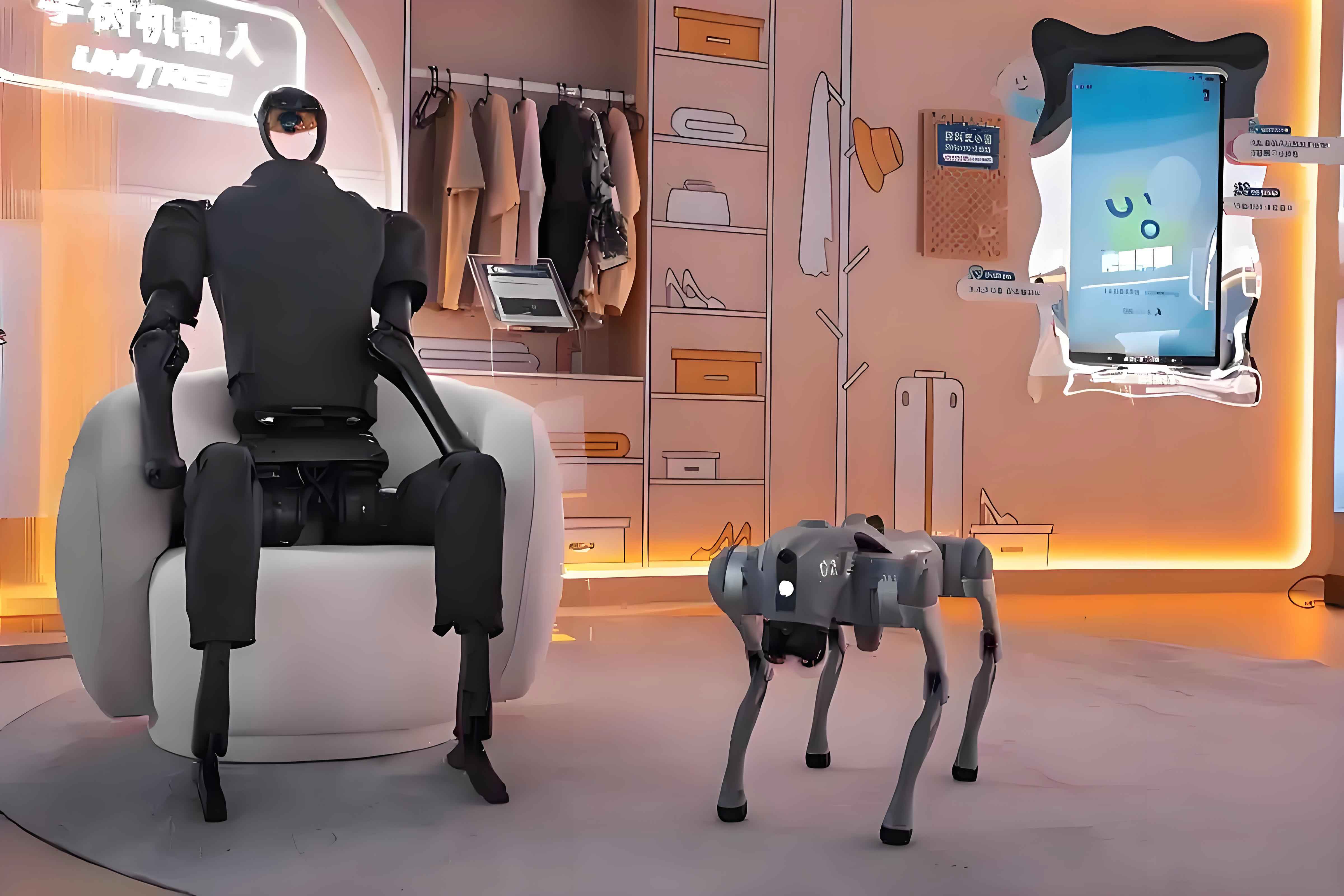
During a halftime break in the street dance competition at the second World Humanoid Robot Games, a staff member removed a humanoid robot’s outer trousers and fanned the machine to help it dissipate heat. The scene drew smiles from spectators, but it also offered a vivid snapshot of a serious engineering challenge: under high-intensity movement or long periods of continuous operation, humanoid robot systems commonly face severe thermal problems that can constrain reliability, performance, and commercial deployment.
The challenge is not limited to a single component or a single competition. It runs through the entire humanoid robot architecture, from the joints that act as muscles to the compute units that serve as the brain and the power system that functions as the heart. As humanoid robot developers push machines toward faster movement, longer endurance, heavier payloads, and more complex tasks, heat management has moved from a secondary design consideration to a core factor affecting product maturity. The question now facing the industry is how to break the thermal bottleneck without sacrificing the size, weight, sealing, cost, and dynamic performance that make a humanoid robot useful in the first place.
1. Why Humanoid Robot Heat Problems Appear in Real Operations
Real-world experience from competitive events illustrates how quickly thermal limits can become visible. Peng Chenyuyang, director of the project center at the Penghai Robot Studio of the University of Science and Technology Beijing, said the team encountered heat-related problems while participating in the free combat event at the second World Humanoid Robot Games. After a humanoid robot had fought several consecutive matches, its movements were noticeably less agile than at the beginning. Punches became slower, reactions became delayed, and the machine fell more frequently. The cause was sustained high-load operation of motors and chips, which produced continuous heat, reduced motor power, forced chip frequency reduction, slowed control response, and lowered stability.
Such symptoms are important because they show that thermal management is not merely a comfort issue for electronics. In a humanoid robot, heat directly affects motion quality, balance, control latency, safety, and uptime. A humanoid robot that performs well for a few minutes on a demonstration stage may behave very differently when asked to work for an entire shift in a factory, a warehouse, a commercial space, or an outdoor environment. The transition from short demonstrations to continuous work turns heat from a secondary problem into a direct determinant of reliability and commercialization.
Shi Haiguang, who leads joint production at the pilot verification platform of the Beijing Humanoid Robot Innovation Center, said heat generation in a humanoid robot is concentrated in three core modules: the joints, which act as the robot’s muscles; the compute unit, which acts as the robot’s brain; and the power system, which acts as the robot’s heart. Each module has its own heat-generation mechanisms, and each interacts with the others inside a tightly packed mechanical body.
| Core Module | Functional Role | Main Heat-Generation Mechanisms | Thermal Consequences for the Humanoid Robot |
|---|---|---|---|
| Joints | Muscles for movement and manipulation | Motor windings produce copper loss during stall or high-torque output; reducers generate friction heat during high-speed operation or frequent forward and reverse rotation; power devices inside drivers produce switching and conduction losses during high-frequency operation. | Reduced motor power, slower response, lower motion precision, greater risk of instability, and increased fall risk during demanding tasks. |
| Compute Unit | Brain for perception, mapping, planning, and inference | GPUs, NPUs, and other chips generate heat during vision processing, mapping, and end-to-end large-model inference; transient power can reach 50 W to 300 W, creating very high local heat density. | Chip frequency reduction, slower control response, degraded perception and planning performance, and reduced reliability under sustained load. |
| Power System | Heart for energy supply and management | Battery packs generate significant heat through internal resistance during high-current discharge, such as jumping or carrying; battery management systems and various conversion circuits accumulate thermal losses during continuous operation. | Reduced available power, thermal stress on battery and electronics, lower endurance, and potential safety and reliability concerns. |
The joint module is especially demanding because it combines electromechanical and power-electronics functions in a small package. A humanoid robot joint often integrates a motor, a reducer, and a driver. Motor windings generate substantial copper loss when the joint is stalled or producing high torque. The reducer produces friction heat when running at high speed or reversing direction frequently. Power devices inside the driver also generate losses under high-frequency operation. Because these components are close together, heat from one source can raise the local temperature of neighboring components and reduce overall joint performance.
The compute unit creates a different kind of thermal challenge. A humanoid robot relies on GPUs, NPUs, and other chips for visual processing, environment mapping, motion planning, and end-to-end large-model inference. These tasks can produce transient power of 50 W to 300 W, with extremely high local heat density. The heat is concentrated in a small area, and the surrounding enclosure may have limited airflow. As a result, the humanoid robot’s brain can become a hot spot that affects control response and perception reliability.
The power system adds another layer of heat. Battery packs generate significant heat through internal resistance during high-current discharge, such as jumping or carrying loads. Battery management systems and conversion circuits also accumulate thermal losses during continuous operation. Because the power system is closely tied to endurance and safety, thermal management here cannot be separated from energy management. A humanoid robot must balance the energy spent on movement, computation, and cooling, and every additional cooling component may reduce the energy available for useful work.
2. Compact Design and High Power Density Make Heat Hard to Remove
Wang Xi, director of the Artificial Intelligence and Robotics Institute at Hankou University, said that heat accumulation caused by compact structures and high power density is one of the key problems in humanoid robot thermal management. To achieve a human-like form and flexible movement, the body and joints of a humanoid robot are usually very compact. Components are integrated at high density, the internal space is relatively enclosed, and the available space for natural air convection is limited. External air exchange is restricted, and internal heat is difficult to dissipate effectively. Heat generated by dynamic work can accumulate in the joints and torso, and long periods of continuous operation or high outdoor temperatures can further worsen heating and temperature rise.
This description captures why humanoid robot cooling cannot be solved by simply adding a fan or a water-cooling loop. The humanoid robot is constrained by its own form factor. A human-scale joint must contain a motor, reducer, driver, sensors, and structural elements, leaving almost no room for cooling hardware. The torso must contain compute units, batteries, power electronics, wiring, and structural supports, while still preserving a human-like appearance and safe interaction. Every cubic centimeter matters, and every added component affects weight, balance, and energy consumption.
Shi Haiguang described humanoid robot heat management as a system-level problem defined by four overlapping constraints: space, weight, sealing, and dynamic posture. First, space inside the humanoid robot is extremely limited. Engineers must fit motors, reducers, and drivers into joints that are similar in size to human joints, and the space left for heat dissipation is almost exhausted. Second, when the humanoid robot performs explosive actions such as deep squats or jumps, heat generation rises sharply, placing high demands on thermal buffering and rapid response. Third, weight and cooling conflict with each other. Although liquid cooling systems can be relatively complete, pumps, pipes, and coolant add extra load. A humanoid robot is extremely sensitive to weight; even a small increase can disturb balance, increase joint burden, consume more energy, and generate more heat, creating a vicious cycle. Fourth, when the humanoid robot runs, its limbs swing widely and its body continues to vibrate, which can cause wear in liquid-cooling pipes and leakage of cooling media, placing extremely high demands on sealing processes and flexible materials.
Wu Daijun, executive secretary of the Penghai Robot Studio at the University of Science and Technology Beijing, expressed a similar view. He said the root of humanoid robot cooling difficulty lies in the combination of many heat sources and very little space. Motors, chips, and batteries are all concentrated in a compact, sealed, water-resistant shell. At the same time, battery weight and capacity define the energy budget available to the cooling system. If more power is allocated to cooling, endurance suffers first. For a humanoid robot to move from a few minutes of demonstration on an exhibition stand to continuous work in a factory for a full day, heat dissipation changes from a secondary issue into a core issue directly related to reliability and commercialization.
The sealing requirement deserves particular attention. A humanoid robot intended for real environments must resist dust, water, and accidental contact. Sealing protects internal components, but it also traps heat. Natural convection inside a sealed enclosure is weak, and external air cannot easily reach internal hot spots. The humanoid robot may need thermal pathways that conduct heat from internal sources to outer surfaces, but those pathways must not compromise structural integrity or sealing. The design therefore becomes a multi-objective optimization problem: remove heat while preserving protection, weight, appearance, safety, and manufacturability.
3. The Thermal Problem Is a Multi-Objective Engineering Trade-Off
Wang Xi said the humanoid robot cooling problem is essentially caused by significant coupling and multi-objective trade-offs among extreme structural constraints, high-performance requirements, high-reliability requirements, and lightweight targets. This is an important technical difficulty for the industry. Humanoid robots intended for civilian and commercial deployment must meet requirements for low noise, low failure rates, low maintenance, and lightweight design. Liquid cooling or hybrid liquid cooling can provide strong heat dissipation, but it has relatively high cost and complex structure, which increases mass-production and maintenance difficulties. Active air cooling has relatively low cost, but it brings noise, dust accumulation, and short fan life. Passive cooling is mainly limited by its heat-dissipation capacity ceiling. The industry must seek a balance among cooling effect, product reliability, lightweight targets, and mass-production cost.
This balance is not easy to achieve because the constraints pull in different directions. Increasing airflow can improve cooling but may introduce noise and dust problems. Adding a liquid-cooling loop can improve heat removal but adds weight, complexity, leakage risk, and maintenance burden. Using larger heat sinks can improve passive cooling but consumes space and weight. Reducing compute performance can lower heat generation but may degrade perception and planning. Reducing motor torque can lower joint heating but may limit payload and dynamic capability. Every thermal decision affects motion performance, endurance, safety, cost, and user experience.
For a humanoid robot, the thermal system must also respond to highly variable workloads. During idle periods, heat generation may be relatively low. During vision-intensive tasks, compute heat may dominate. During jumping, carrying, or climbing, joint and power-system heat may spike. During continuous walking, heat may accumulate gradually over a long period. A single cooling strategy may not be optimal across all conditions. The humanoid robot needs a thermal architecture that can handle both steady-state heat and transient peaks without adding excessive mass or complexity.
Another complication is that heat affects control. When motors heat up, their power output may be derated. When chips heat up, they may reduce frequency to protect themselves. When batteries heat up, power delivery may be limited. These thermal effects change the dynamic behavior of the humanoid robot. A control algorithm that assumes constant actuator performance may become inaccurate as temperatures rise. Therefore, thermal management is not only a hardware issue but also a control and software issue. The humanoid robot must sense temperature, estimate thermal load, adjust motion, and coordinate cooling with locomotion and manipulation.
4. Existing Cooling Approaches and Their Limits
According to Wang Xi, current cooling approaches in the industry can be broadly grouped into four categories: passive cooling, micro active air cooling, micro liquid cooling, and phase-change material assisted cooling. Each approach has strengths and weaknesses, and each must be adapted to the specific constraints of a humanoid robot.
| Cooling Approach | How It Works | Potential Advantages | Key Limitations for Humanoid Robot Applications |
|---|---|---|---|
| Passive cooling | Uses conduction, natural convection, heat sinks, heat spreaders, and structural thermal paths to move and dissipate heat without active components. | No fan noise, no added pumping power, high reliability, simple structure, and low maintenance in some designs. | Limited heat-dissipation capacity, dependence on available surface area and thermal pathways, and difficulty handling high transient heat loads in sealed joints. |
| Micro active air cooling | Uses small fans or blowers to force air across hot surfaces or through internal channels. | Relatively low cost, straightforward control, and useful for supplementing passive cooling in selected zones. | Noise, dust accumulation, fan lifetime, limited effectiveness in sealed enclosures, and additional power consumption. |
| Micro liquid cooling | Uses pumps, tubes, cold plates, and coolant to transfer heat from hot components to a remote radiator or heat exchanger. | Strong heat-removal capability and suitability for high-power-density components or heavy-duty operation. | Added weight, complex structure, sealing risk, leakage risk under dynamic motion, maintenance difficulty, and higher cost. |
| Phase-change material assisted cooling | Uses phase-change materials to absorb peak heat during transient high-load events and release it later. | Can buffer transient heat spikes, requires no active pumping power, and may help smooth temperature peaks. | Finite heat-absorption capacity, recharge and recovery limitations, packaging constraints, and integration complexity. |
Passive cooling is often the foundation of a humanoid robot thermal design because it is reliable and does not consume additional energy. However, passive cooling alone is constrained by available surface area and thermal conductivity. In a compact joint or sealed torso, natural convection may be weak, and heat may not reach the outer surface efficiently. Passive cooling can handle some steady loads, but it may struggle when the humanoid robot performs high-intensity tasks or operates in high-temperature environments.
Micro active air cooling can supplement passive cooling in selected locations. Small fans can increase airflow and reduce local hot spots, and the cost is relatively low. However, fans produce noise, can draw dust into sensitive areas, and have limited lifetime. In a sealed humanoid robot enclosure, fans may simply move hot air around unless there is a path for heat to leave the system. Fan reliability also matters because a failed fan could create a thermal failure in a critical module.
Micro liquid cooling offers strong heat-removal capability and is attractive for high-power-density compute units or heavy-duty joints. However, liquid cooling adds pumps, pipes, coolant, and heat exchangers, all of which increase weight and complexity. The humanoid robot’s dynamic motion creates additional risks: pipes may wear, connections may loosen, and coolant may leak. Sealing must be extremely robust, and maintenance must be manageable. For a mass-produced humanoid robot, liquid cooling also raises cost and manufacturing challenges.
Phase-change materials can absorb heat during transient peaks, which is valuable for a humanoid robot that alternates between idle and burst activity. However, phase-change materials have finite capacity. Once the material has absorbed its latent heat, it must release that heat before it can absorb more. In a sealed and compact humanoid robot, releasing heat may itself be difficult. Packaging the material without interfering with joint motion or structural integrity is another challenge.
The industry has not yet found a single optimal solution for humanoid robot cooling. Instead, engineers are combining approaches and tuning them for specific modules, operating conditions, and product requirements. The humanoid robot thermal system is becoming a layered architecture rather than a single device.
5. Source Control, Structural Design, and Intelligent Thermal Management
Peng Chenyuyang said that for a robot, cooling solves the problem of how to remove heat after it is generated, while dedicated chips reduce heat from the source. Reducing heat sources first and then applying heat dissipation allows the humanoid robot to run faster and more stably. This source-control principle is important because every watt of heat that is not generated does not need to be removed. If motors, drivers, and compute chips can be made more efficient, the thermal system can be smaller and lighter.
Wang Xi argued that breaking the humanoid robot cooling dilemma requires a systematic solution that combines source heat control, structural enablement, composite cooling, and intelligent management, adapted to the characteristics of humanoid equipment. The first step is to optimize hardware design at the source, improve the energy efficiency of motors, drivers, and other components, and reduce unnecessary heat generation. The second step is to adopt zoned composite cooling that matches different body parts and operating conditions. Depending on actual needs, a combination of passive cooling as the foundation, active cooling as a supplement, and phase-change materials to absorb peak heat can be used. The third step is to iterate lightweight new thermal materials and devices. The fourth step is to build intelligent thermal management algorithms for humanoid robots and link them with motion control algorithms so that power output can be dynamically optimized according to temperature rise, load, and other states, reducing continuous heat accumulation.
Zoned cooling is particularly relevant to humanoid robots because different modules have different thermal profiles. The compute unit may produce high local heat density and require a dedicated thermal path to a heat spreader or heat sink. Joints may produce heat during high-torque tasks and require thermal pathways through structural components. The power system may produce heat during high-current discharge and require thermal separation from temperature-sensitive electronics. A uniform cooling strategy may waste weight and space, while a zoned strategy can allocate thermal resources where they are most needed.
In Wang Xi’s view, different cooling solutions can be configured in layers according to application scenarios and product requirements to match different mass-production needs. For civilian and commercial humanoid robot models, lightweight structural heat conduction and low-noise micro air cooling can be prioritized as a combined solution to balance cost, weight, and cooling effect. For industrial heavy-duty and high-power-density humanoid robots, micro liquid cooling, heat pipes or vapor chambers, and phase-change materials can be used in necessary locations to ensure thermal stability under high-load conditions. This step-by-step approach can promote standardization and mass production of humanoid robot cooling technologies.
Shi Haiguang said heat generation, heat transfer, and heat control must be solved together. Breaking the humanoid robot cooling problem requires multi-dimensional collaborative design from a systems engineering perspective. First, design must be front-loaded with system-level thermal management. Cooling should be involved in the early stages of whole-machine development. Through digital simulation, thermal-structure-electronic control co-design can optimize heat-source layout and heat-flow paths from the beginning. Second, in materials and structures, higher-thermal-conductivity composite materials should be developed, such as graphene-copper composite substrates and diamond composite materials. At the same time, cooling structures should be made lighter and more miniaturized, for example by developing smaller and more reliable micro liquid-cooling pumps and flexible pipes. Third, intelligent temperature-control closed loops should be implemented by building temperature-sensing networks across the body and combining motion large models to predict thermal loads and achieve precise temperature control.
This systems perspective is essential because humanoid robot heat problems cannot be solved by isolated components. A better motor may reduce joint heat, but it may also change torque characteristics and control behavior. A better heat spreader may improve compute cooling, but it may add weight and affect balance. A more powerful cooling fan may reduce temperature, but it may increase noise and power consumption. The humanoid robot must be designed as an integrated thermal-mechanical-electrical-control system.
6. A Practical Roadmap for Humanoid Robot Thermal Reliability
A practical roadmap for humanoid robot thermal management begins with understanding the mission profile. A humanoid robot designed for short demonstrations may need only limited thermal headroom. A humanoid robot designed for continuous factory work must handle sustained joint loading, compute-intensive perception, and repeated high-current discharge. A humanoid robot designed for outdoor commercial use must also handle ambient heat, dust, and variable workloads. The thermal architecture should be derived from the mission profile rather than added after the mechanical design is complete.
The next step is to map heat sources and thermal paths. Engineers should identify the highest heat-density components, the most temperature-sensitive components, and the paths through which heat can reach the outer surface. Digital simulation can help evaluate how heat moves through joints, torso structures, and enclosures. Thermal-structure-electronic control co-design can reveal conflicts early, such as a heat sink that interferes with joint motion or a cooling channel that compromises sealing. Front-loading thermal design reduces the risk of late-stage redesign and improves product reliability.
Source control should be pursued in parallel with heat removal. More efficient motors and drivers can reduce joint heat. Dedicated chips or optimized compute architectures can reduce heat from perception and inference. Power electronics with lower losses can reduce power-system heat. However, source control must not compromise performance. The goal is not to minimize heat at any cost but to achieve the required performance with acceptable thermal loads. A humanoid robot that is too conservative in actuation or computation may be thermally safe but commercially uncompetitive.
Composite cooling should be matched to module needs. Passive conduction and heat spreading can serve as the base layer for many humanoid robot modules. Micro active air cooling can supplement local hot spots where noise and dust can be managed. Phase-change materials can buffer transient peaks in joints or compute units. Micro liquid cooling can be reserved for high-power-density modules in heavy-duty humanoid robots where weight and maintenance can be tolerated. Intelligent thermal management can coordinate these layers, adjusting cooling effort based on real-time temperature and predicted workload.
Intelligent thermal management is especially promising because humanoid robot workloads are dynamic. A distributed temperature-sensing network can provide visibility into joints, compute units, power systems, and enclosure hot spots. Motion large models can predict future thermal loads based on planned tasks. The thermal controller can then pre-cool critical modules, adjust compute frequency, modify motion trajectories, or allocate cooling power where it is needed most. By linking thermal management with motion control, the humanoid robot can avoid excessive heat accumulation while maintaining task performance.
Materials and structures will also play a central role. Higher-thermal-conductivity composites can improve heat spreading without adding excessive weight. Graphene-copper composite substrates and diamond composite materials are examples of advanced materials that may help. Miniaturized and reliable micro liquid-cooling pumps and flexible pipes can improve liquid-cooling feasibility. Lightweight heat sinks, vapor chambers, and structural heat paths can turn mechanical parts into thermal components. The challenge is to integrate these materials and structures without compromising strength, sealing, manufacturability, or cost.
7. Scenario-Based Cooling for Different Humanoid Robot Products
Different humanoid robot products will require different thermal strategies. A civilian or commercial humanoid robot may prioritize low noise, low cost, lightweight design, and safe interaction. In such products, a combination of lightweight structural heat conduction and low-noise micro air cooling may be appropriate. Passive cooling can handle baseline heat loads, while small fans or blowers supplement local hot spots. Phase-change materials may be used selectively to buffer transient peaks. The thermal system should be quiet enough for human interaction and simple enough for mass production.
An industrial heavy-duty humanoid robot may prioritize payload, endurance, and continuous operation. In such products, joints and power systems may experience higher sustained loads, and compute units may run perception and planning continuously. Micro liquid cooling, heat pipes or vapor chambers, and phase-change materials may be needed in selected locations. The thermal system must be robust against vibration, dust, and repeated motion. Maintenance access and leak prevention become critical. The humanoid robot must be designed so that cooling components do not compromise structural integrity or safety.
A humanoid robot designed for outdoor commercial use may face high ambient temperatures, solar load, and variable weather. The thermal system must manage both internal heat and external heat gain. Sealing and dust protection must be balanced against heat rejection. Materials must resist environmental degradation. The humanoid robot may need adaptive thermal management that reduces activity or compute load when temperatures exceed safe limits. Thermal safety and user safety must be considered together.
Across all scenarios, standardization will be important for scale. Humanoid robot developers need common thermal interfaces, test methods, reliability standards, and safety criteria. Cooling modules should be designed for manufacturability and maintenance. Thermal simulation models should be validated against real operating data. Standardization can reduce cost, improve reliability, and accelerate the deployment of humanoid robot products in diverse applications.
8. The Commercial Significance of Humanoid Robot Thermal Management
The ability to manage heat reliably will influence the commercial trajectory of the humanoid robot industry. A humanoid robot that overheats during continuous work will face limited deployment in factories, warehouses, hospitals, hotels, retail spaces, and outdoor environments. Customers expect machines to operate for full shifts, recover quickly from high-load tasks, and maintain performance over time. Thermal reliability affects uptime, maintenance cost, safety, and user trust.
Thermal management also affects product design and cost. A humanoid robot with an oversized cooling system may be heavy, expensive, and inefficient. A humanoid robot with insufficient cooling may be unreliable and unsafe. The industry must find the right balance for each product category. This balance requires collaboration among mechanical engineers, thermal engineers, electronics engineers, control engineers, and manufacturing teams. It also requires a willingness to integrate thermal design early in the development process rather than treating it as a late-stage fix.
The humanoid robot market will likely see multiple thermal architectures rather than a single dominant solution. Some products will rely on passive cooling and smart power management. Others will use micro air cooling, phase-change materials, or micro liquid cooling. Some will combine all of these approaches in a layered system. The common thread is that thermal management will be designed as part of the humanoid robot system, not as an accessory.
As humanoid robots move from demonstrations to real work, the industry will need to prove that these machines can operate safely and reliably under sustained load. Heat is one of the clearest physical limits. Motors, chips, and batteries all generate heat, and compact humanoid forms make that heat difficult to remove. The solution will not come from a single component but from a coordinated approach that reduces heat at the source, spreads heat efficiently, buffers transient peaks, and controls temperature intelligently.
The scene at the World Humanoid Robot Games, where a staff member fanned a humanoid robot during a halftime break, may become a memorable image of the industry’s early challenges. The next stage of humanoid robot development will be judged by whether such improvisation is no longer necessary. A mature humanoid robot should manage its own thermal load, adapt to changing workloads, and maintain reliable performance without external fanning or frequent cooldown breaks. Achieving that goal will require continued innovation in materials, structures, cooling architectures, and intelligent control. It will also require the industry to treat thermal management as a first-class design discipline for every humanoid robot product.
In the end, breaking the thermal bottleneck is not only about preventing overheating. It is about enabling humanoid robots to work longer, move faster, carry more, and operate safely in real environments. The humanoid robot that can master heat will be better positioned to move from the exhibition stage to the factory floor, from short demonstrations to continuous service, and from technical promise to commercial reality.