
In the context of a globally aging population, the increasing burden of elderly care presents a significant societal challenge. Older adults, as a special demographic group, require more attention and support. With adult children often absent due to work or distance, and a relative shortage of professional caregiving labor, providing quality eldercare has become a pressing issue. Intelligent solutions, often termed “smart eldercare,” have emerged as a viable pathway to address this challenge. The development of smart eldercare platforms, intelligent home systems, and robotic assistants can meet diverse needs, offering convenient, efficient, and high-quality life support for the elderly. Among these technologies, the companion robot, designed to provide companionship and assist with daily activities, holds substantial market promise. For such a companion robot to stand out in a competitive market and quickly capture consumer interest, its exterior appearance becomes a crucial factor influencing user expectations and usage intentions. Therefore, aesthetic design is a primary determinant of acceptance. Whether a companion robot is welcomed and liked by older adults largely depends on whether its design aligns with their preferences and cognitive abilities.
Traditional methods for evaluating product appearance often rely on subjective surveys using semantic differential scales or Kansei engineering, where users describe products with imagery vocabulary. While these methods allow for some quantification, they are inherently based on users’ prior knowledge and result in fuzzy, subjective evaluations. These evaluations suffer from significant individual differences and do not robustly define what constitutes “good” or “bad” appearance. Furthermore, older adults often experience cognitive decline, leading to more straightforward aesthetic judgments. Their evaluations tend to be polarized—simply “liked” or “disliked”—focusing on immediate perceptual appeal. Current literature lacks sufficient focus on modeling this binary, intuitive judgment process specific to the elderly demographic for products like companion robots.
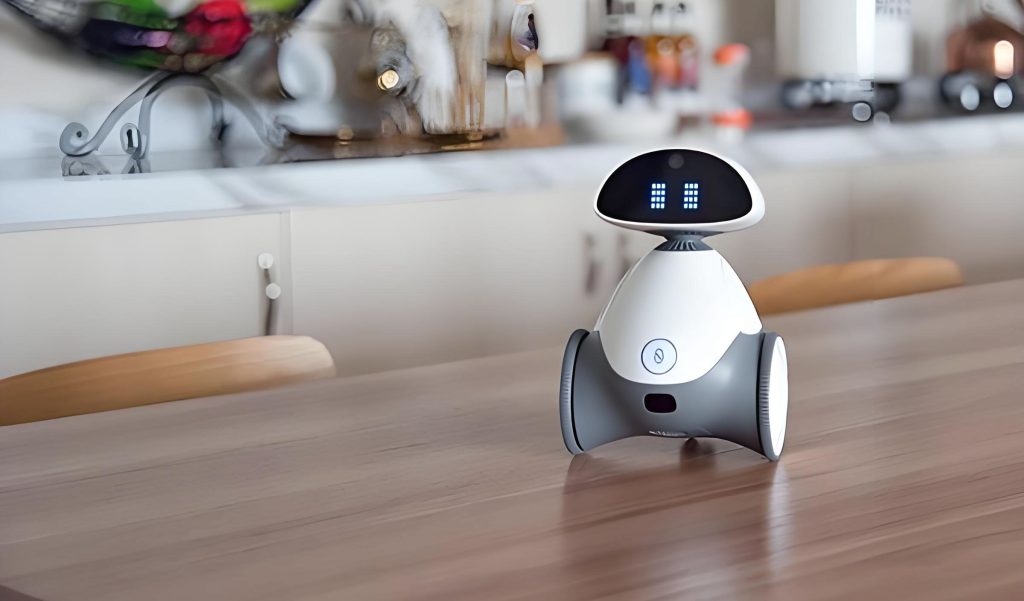
To address these gaps, this paper proposes an objective evaluation method for the appearance of elderly companion robots based on eye-tracking technology and statistical modeling. We establish a representative indicator system primarily comprising eye movement and heart rate variability (HRV) metrics. Binary Logistic Regression is employed to quantify the influence of various factors, identifying the most significant indicators affecting elderly users’ attention towards a companion robot‘s appearance. Recognizing the polarized nature of elderly aesthetic judgment, we frame the appearance evaluation as a binary classification problem. Subsequently, a Fisher discriminant function model is constructed using the strongest predictors, providing an objective standard for evaluation. This integrated Logistic-Fisher approach offers a technically feasible and theoretically grounded pathway for establishing a robust design evaluation system for the appearance of elderly companion robots.
Theoretical Foundation and Algorithm
1. Binary Logistic Regression Analysis
We utilize the Binary Logistic Regression model to quantitatively analyze the indicator factors influencing the attention level of elderly users towards a companion robot. It is a nonlinear classification statistical method frequently used for regression analysis with a dichotomous dependent variable. The “binary” refers to the dependent variable having two categories, which in our experiment are “high attention” and “low attention.” “Logistic” refers to the Logit transformation applied to the target probability.
Let \(Y\) be the binary dependent variable, where \(Y=1\) represents “high attention” and \(Y=0\) represents “low attention.” The independent variables \((X_i)\) are the values of various indicator factors. Denoting the conditional probability of high attention as \(p\), the Logit transformation \(f(p)\) is defined as:
$$
f(p) = \ln\left(\frac{p}{1-p}\right)
$$
The Logistic linear regression model is then expressed as:
$$
\ln\left(\frac{p}{1-p}\right) = \beta_0 + \beta_1 X_1 + \beta_2 X_2 + \cdots + \beta_i X_i
$$
where \(\beta_0\) is the intercept, and \(\beta_1, \ldots, \beta_i\) are the regression coefficients, representing the relative contribution rate of each indicator factor. A positive coefficient indicates a positive correlation between the factor and the likelihood of high attention, while a negative coefficient indicates a negative correlation. The more significant the influence of an indicator on the outcome, the greater its weight in determining elderly preference for the companion robot appearance.
2. Fisher Discriminant Analysis
Fisher Discriminant Analysis reduces dimensionality by projecting sample data onto a line. This projection aims to minimize the distance between samples of the same class while maximizing the distance between samples of different classes, thereby making the distinction between two classes more evident. It is particularly suitable for binary classification problems. The optimal projection direction, defined by a discriminant function, is derived through training on sample data.
Let \(X=\{x_1, x_2, \ldots, x_n\}\) be the attribute set. The sample mean vector in the n-dimensional space is calculated and transformed to a 1-dimensional space, yielding the projected mean \(M_i\) for class \(i\):
$$
M_i = \frac{1}{n_i} \sum_{x \in G_i} x, \quad i=1,2
$$
where \(n_i\) is the number of samples in class \(i\). The within-class scatter for class \(i\), denoted \(S_i^2\), is calculated as:
$$
S_i^2 = \sum_{x \in G_i} (x – m_i)^2, \quad i=1,2
$$
The Fisher criterion function, which is maximized to find the best projection, is:
$$
J(\omega) = \frac{(m_1 – m_2)^2}{S_1^2 + S_2^2}
$$
The linear discriminant derived from maximizing this function is the Fisher discriminant function, representing the optimal solution vector for classification.
3. The Logistic-Fisher Evaluation Method for Elderly Companion Robot Appearance
The main steps for establishing the Logistic-Fisher discriminant model are as follows:
- Select experimental stimuli and conduct eye-tracking experiments.
- Extract eye movement and heart rate data to establish an indicator system.
- Construct a Binary Logistic Regression model with the indicator factors.
- Identify the indicator factors with the most significant impact on the attention result.
- Use these significant factors as discriminant variables to build a Fisher discriminant model. Train the model with samples to obtain the final Logistic-Fisher discriminant model.
The overarching process is summarized below:
| Stage | Activity | Output |
|---|---|---|
| 1. Experiment | Eye-tracking with elderly participants viewing companion robot images. | Raw gaze data, pupil data, HRV data. |
| 2. Data Processing | Extraction of metrics: fixation duration, saccades, heart rate SDNN, etc. | Matrix of indicator variables for each participant-stimulus pair. |
| 3. Regression Analysis | Binary Logistic Regression on indicators vs. subjective preference (like/dislike). | Identification of key significant predictors (e.g., Total Fixation Duration, Fixation Count). |
| 4. Model Construction | Fisher Discriminant Analysis using key predictors as input features. | Fisher discriminant function with specific coefficients. |
| 5. Validation | Testing the discriminant model on new samples. | Classification accuracy metric (e.g., 91%). |
Constructing the Logistic-Fisher Discriminant Model for Appearance Evaluation
2.1 Determining Evaluation Indicators
2.1.1 Indicator Factor Analysis and Extraction
The evaluation indicators are derived from three sources: eye-tracking metrics, physiological (heart rate) metrics, and participant demographic variables.
1) Eye-Tracking Indicators: Eye-movement metrics are categorized into pictorial perception indicators (visualizations like heatmaps, gaze plots) and statistical analysis indicators. The statistical indicators are further divided into basic and synthetic metrics. For this study, we focus on key statistical fixation metrics:
- Time to First Fixation (TFF): Latency until the first fixation on the Area of Interest (AOI).
- First Fixation Duration (FFD): Duration of the very first fixation within an AOI.
- Total Fixation Duration (TFD): Sum of all fixation durations within an AOI.
- Average Fixation Duration (AFD): Mean duration of individual fixations within an AOI.
- Fixation Count (FC): Total number of fixations within an AOI.
- Second Fixation Duration (SFD): Duration of the second fixation within an AOI.
Generally, a longer AFD suggests the stimulus is more engaging or the information is harder to process. A longer TFD indicates that the target companion robot requires more cognitive processing or is more attractive.
2) Heart Rate Variability (HRV) Indicator: HRV reflects subtle variations between consecutive heartbeats and is a non-invasive measure of autonomic nervous system activity. We employ a primary time-domain metric: the Standard Deviation of Normal-to-Normal intervals (SDNN), calculated over the stimulus presentation period. This metric can indicate an immediate physiological response to interesting vs. uninteresting companion robot images.
3) Participant Variable Indicators: To explore if persistent user characteristics influence preference, we include demographic factors: Gender, Age, and Education Level. Since all participants resided in private homes, living situation was not included.
2.1.2 Sample Classification for Elderly Companion Robot Appearance
Evaluating the appearance of an elderly companion robot is fundamentally a sample classification task. Typically, products are rated on scales like “good,” “average,” or “poor.” However, considering the cognitive profile of older adults—where visual processing, memory, and complex reasoning abilities may decline—their aesthetic evaluations are often more direct and dichotomous. Therefore, we frame this as a binary classification problem. The companion robot appearances are classified into two groups: G1 (“appealing”) and G2 (“unappealing”). This simplification aligns with the observed polarized judgment style in the elderly and facilitates the development of a robust predictive model. The linear discriminant function for classification is:
$$
g(x) = \omega_1 X_1 + \omega_2 X_2 + \cdots + \omega_m X_m + \omega_0
$$
where \(g(x)\) is the discriminant score; \(X_1, \ldots, X_m\) are the evaluation indicators (the significant factors from Logistic regression); \(\omega_1, \ldots, \omega_m\) are the discriminant coefficients (weights); and \(\omega_0\) is a constant. The decision rule is:
$$
\begin{cases}
g(x) < 0, & \text{sample } S \in G1 \text{ (appealing)} \\
g(x) > 0, & \text{sample } S \in G2 \text{ (unappealing)} \\
g(x) = 0, & \text{on boundary, reject or assign arbitrarily}
\end{cases}
$$
2.1.3 Eye-Tracking Experiment
Stimuli: A collection of 68 companion robot images was gathered from various sources. Through multidimensional scaling, cluster analysis, and expert opinion, four representative categories were defined: Humanoid, Pet-like, Anthropomorphic (non-humanoid), and Object-like. Thirty-two stimulus images were created with different layouts. Sample stimuli from these categories are essential for training.
Participants: 18 elderly participants (7 male, 11 female, average age 70) were recruited. Education levels varied from primary school to university graduate.
Apparatus & Procedure: A Tobii Pro X3-120 eye-tracker (120 Hz) was used. Participants sat 60 cm from a monitor, calibrated the eye-tracker, and then viewed the 32 images in a randomized order, each for 10 seconds. Heart rate was monitored simultaneously via a pulse sensor. Data was recorded using ErgoLAB V3.0 software. After the eye-tracking session, participants completed a binary questionnaire for each robot: “Do you like the appearance of this robot?” (Yes/No), which served as the ground truth for “high attention” (like) and “low attention” (dislike).
2.2 Binary Logistic Regression Analysis
Data from 8 distinct companion robot stimuli across all 18 participants yielded 144 data points. The dependent variable was binary preference (1=Like/High attention, 0=Dislike/Low attention). First, the overall model fit was assessed. The likelihood ratio test was significant (\( \chi^2 = 115.077, p < 0.001\)), indicating that the model with the predictors provided a significantly better fit than a null model, confirming the validity of the included variables.
The detailed results of the Binary Logistic Regression are presented in the table below. Only the statistically significant predictors (\(p < 0.05\)) are considered strong influencers.
| Variable | B (Coeff.) | S.E. | Wald | Sig. (p) | Exp(B) [Odds Ratio] |
|---|---|---|---|---|---|
| Gender | -0.720 | 1.172 | 0.378 | 0.539 | 0.487 |
| Age (vs. 60-65) | – | – | 2.725 | 0.605 | – |
| Education (vs. Primary) | – | – | 2.331 | 0.675 | – |
| Total Fixation Duration (X₁) | -1.477 | 0.413 | 12.771 | 0.000 | 0.228 |
| Average Fixation Duration (X₂) | 18.854 | 4.689 | 16.165 | 0.000 | 1.54e8 |
| Fixation Count (X₃) | 0.383 | 0.087 | 19.346 | 0.000 | 1.467 |
| Time to First Fixation | 0.166 | 0.125 | 1.759 | 0.185 | 1.181 |
| First Fixation Duration | -1.534 | 2.491 | 0.379 | 0.538 | 0.216 |
| Second Fixation Duration | -0.210 | 0.198 | 1.121 | 0.290 | 0.811 |
| HRV (SDNN) | 0.001 | 0.001 | 3.456 | 0.063 | 1.001 |
| Constant | -7.643 | 2.962 | 6.657 | 0.010 | 0.000 |
Key Findings from Regression:
– Demographics (Gender, Age, Education) showed no significant influence on appearance preference for the companion robot.
– Total Fixation Duration (TFD/X₁) had a significant negative influence (B = -1.477, p=0.000). The odds ratio Exp(B)=0.228 indicates that for each one-unit increase in TFD, the odds of the robot being “liked” decrease by a factor of 0.228, holding other factors constant. This counter-intuitive result may suggest that designs which are confusing or difficult to process (requiring longer total viewing) are less liked.
– Average Fixation Duration (AFD/X₂) had a significant positive influence (B = 18.854, p=0.000). Longer average fixations are associated with a dramatically increased likelihood of being liked, suggesting engaging or captivating designs hold gaze longer per fixation.
– Fixation Count (FC/X₃) had a significant positive influence (B = 0.383, p=0.000). A higher number of fixations on the companion robot increases the odds of it being liked, indicating that visually interesting designs promote repeated sampling.
– Other eye-tracking metrics (TFF, FFD, SFD) and HRV were not significant predictors.
Thus, X₁ (Total Fixation Duration), X₂ (Average Fixation Duration), and X₃ (Fixation Count) were selected as the discriminant factors for the subsequent Fisher model.
2.3 Discriminant Function Model Establishment and Validation
2.3.1 Establishing the Discriminant Function Model
The three significant factors—X₁, X₂, X₃—were input into a Fisher discriminant analysis using the data from the 18 participants as the training set. The analysis extracted one discriminant function. The function had an eigenvalue of 1.005, accounting for 100% of the variance, with a canonical correlation of 0.708. Wilks’ Lambda was 0.499 (\( \chi^2 = 97.715, p < 0.001\)), confirming the function’s statistical significance. The standardized canonical discriminant function coefficients are shown below, and the resulting Fisher discriminant function \(K\) is:
| Discriminant Variable | Function Coefficient |
|---|---|
| Total Fixation Duration (X₁) | -0.612 |
| Average Fixation Duration (X₂) | 6.554 |
| Fixation Count (X₃) | 0.157 |
| Constant | -2.427 |
$$
K = -0.612 \cdot X_1 + 6.554 \cdot X_2 + 0.157 \cdot X_3 – 2.427
$$
2.3.2 Validating the Discriminant Function Model
To validate the model, the discriminant function \(K\) was applied to the original training data and to a separate test set from 2 new elderly participants (16 new data points). The classification rule is: If \(K < 0\), classify as “Appealing (G1)”; if \(K > 0\), classify as “Unappealing (G2)”. The confusion matrix for the training data and the test results are summarized below:
| Classification Results for Training & Test Data | ||
|---|---|---|
| Sample | Predicted: Appealing (G1) | Predicted: Unappealing (G2) |
| Actual: Appealing (G1) | 50 | 9 |
| Actual: Unappealing (G2) | 4 | 81 |
| Test Set (New Participants) | 8 | 8 |
The overall correct classification rate for the training sample was 91.0% ((50+81)/144). The model also performed well on the held-out test samples, with predictions largely matching the actual subjective preferences. This high accuracy rate demonstrates that the integrated Logistic-Fisher discriminant model is reliable and generalizable for evaluating the appearance of elderly companion robots.
Conclusion and Implications
This research developed a novel, objective method for evaluating the appearance design of elderly companion robots, addressing the limitations of purely subjective evaluation techniques. By integrating eye-tracking technology with robust statistical modeling, we established a practical and theoretically sound Logistic-Fisher framework.
The key contributions and findings are:
- Significant Predictor Identification: Through Binary Logistic Regression analysis of eye-tracking, physiological, and demographic data, we identified three core eye-movement metrics that significantly influence elderly users’ attention and preference towards a companion robot‘s appearance: Total Fixation Duration (negative effect), Average Fixation Duration (positive effect), and Fixation Count (positive effect). Demographic factors showed no significant impact in this study.
- Binary Classification Model: Aligning with the cognitive style of older adults, we successfully framed appearance evaluation as a binary (“appealing” vs. “unappealing”) classification problem. Using the three significant predictors as input, we constructed a Fisher linear discriminant function.
- High Predictive Accuracy: The resulting Logistic-Fisher discriminant model achieved a high classification accuracy of 91.0% on training data and performed reliably on test data. This confirms the model’s validity and potential for practical application.
The proposed workflow simplifies the process of analyzing complex eye-tracking data and translating it into a usable design evaluation tool. For designers and engineers, this method provides an objective, data-driven standard to assess and iterate on the appearance of a companion robot early in the design process. By focusing on designs that elicit a higher number of fixations and longer average fixations (while potentially avoiding those that lead to excessively long total viewing times due to confusion), developers can create companion robots that are more visually appealing and immediately engaging to the elderly population. This research offers a significant step towards ensuring that the visual design of assistive technologies truly resonates with their intended users, facilitating greater acceptance and adoption of companion robots in eldercare.