
In the realm of robotics, the field of bionic robots has emerged as a pivotal area of study, drawing inspiration from biological systems to enhance technological capabilities. As we delve into this domain, it is essential to understand that bionic robots leverage principles from bionics—a discipline that merges biology with engineering to replicate or mimic structures, functions, and control mechanisms found in nature. The applications of bionic robots are vast, ranging from military reconnaissance and combat to search-and-rescue operations in hazardous environments. This review, from our perspective as researchers in the field, aims to provide an in-depth analysis of bionic robot research, focusing on structural bionics, material bionics, and control bionics. We will explore the current state, challenges, and future directions, emphasizing the integration of these aspects to advance bionic robot development. Throughout this discussion, we will frequently reference the term “bionic robot” to underscore its significance, and we will incorporate tables and mathematical formulations to summarize key concepts. The ultimate goal is to offer a comprehensive resource that guides future innovations in bionic robotics.
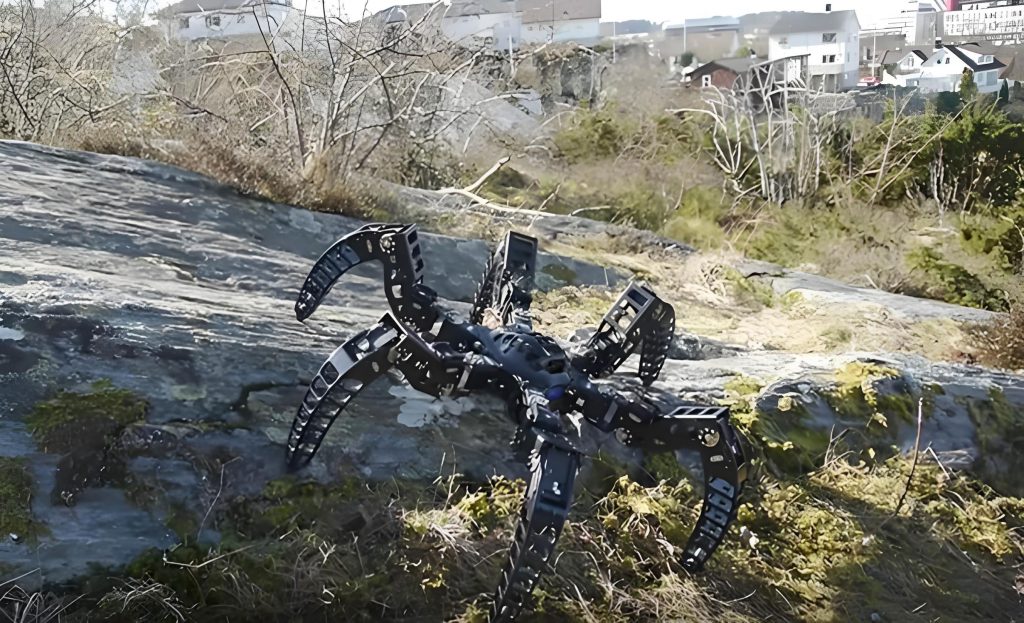
The concept of bionic robots stems from the observation that biological organisms have evolved over millions of years to optimize their forms and functions for survival in diverse environments. By imitating these natural designs, engineers can create robots with enhanced flexibility, adaptability, and efficiency. For instance, a bionic robot inspired by snakes can navigate through tight spaces, while one modeled after insects can achieve agile flight. In this review, we will first examine structural bionics, which involves replicating the physical architectures of organisms. Next, we will discuss material bionics, where biomimetic materials are used to improve robot performance. Finally, we will cover control bionics, which mimics biological nervous systems and behaviors for intelligent operation. Each section will include detailed explanations, supported by tables and equations, to elucidate the complexities of bionic robot design. We will also touch upon the frontier of bio-robots, where living organisms are integrated with robotic systems. By synthesizing these elements, we hope to highlight the interdisciplinary nature of bionic robot research and its potential to revolutionize various sectors.
Structural Bionics in Bionic Robot Design
Structural bionics focuses on emulating the morphological features of biological entities to develop robots that can perform analogous functions. This approach is foundational in bionic robot research, as it directly influences mobility, stability, and interaction with the environment. We will explore several key categories of structural bionics, including snake-like robots, insect-inspired flying robots, fish-like underwater robots, and legged robots. Each category presents unique design challenges and opportunities, which we will analyze in detail.
Snake-like bionic robots are designed to mimic the serpentine locomotion of snakes, which allows them to traverse uneven terrain and confined spaces. The motion of a snake can be described using kinematic models. For example, the lateral undulation pattern can be represented by a sine wave, where the body curvature changes over time. Mathematically, the position of a point along the snake’s body can be expressed as:
$$ y(x,t) = A \sin(kx – \omega t) $$
where \( A \) is the amplitude, \( k \) is the wave number, \( \omega \) is the angular frequency, \( x \) is the longitudinal position, and \( t \) is time. In bionic robot applications, this model informs the design of segmented actuators that replicate the bending motions. Research in this area has led to robots like ACM-R3, which can perform various gaits such as sidewinding and concertina movement. However, challenges remain in improving energy efficiency and control precision. To summarize the advancements in snake-like bionic robots, we present Table 1, which compares different prototypes and their capabilities.
| Robot Model | Institution/Country | Key Features | Locomotion Modes | Challenges |
|---|---|---|---|---|
| ACM-R3 | Baraki University, Japan | Modular segments, waterproof design | Undulation, sidewinding, rolling | High power consumption |
| Snakebots | NASA, USA | Lightweight, autonomous navigation | Creeping, climbing | Limited speed |
| Custom Designs | Various labs worldwide | Flexible joints, sensor integration | Obstacle avoidance, adaptive movements | Control complexity |
Insect-inspired flying bionic robots, often referred to as micro aerial vehicles (MAVs), replicate the flapping-wing mechanics of insects like bees or dragonflies. The aerodynamics of insect flight involve complex fluid-structure interactions, which can be modeled using the Navier-Stokes equations. For simplicity, the lift force generated by a flapping wing can be approximated by:
$$ L = \frac{1}{2} \rho C_L S v^2 $$
where \( \rho \) is air density, \( C_L \) is the lift coefficient, \( S \) is the wing area, and \( v \) is the relative velocity. In bionic robot implementations, this requires precise actuation mechanisms, such as piezoelectric materials or electromagnetic motors. Notable examples include the MFI from UC Berkeley and the MAV from Caltech. These bionic robots excel in maneuverability but struggle with endurance due to battery limitations. Future research aims to develop bio-inspired energy harvesting systems to prolong flight time. The table below outlines key parameters for insect-inspired bionic robots.
| Parameter | Typical Range | Biological Inspiration | Engineering Challenge |
|---|---|---|---|
| Wingbeat Frequency | 20-200 Hz | Bee wings (200 Hz) | Actuator design and efficiency |
| Wingspan | 5-30 cm | Dragonfly wings (15 cm) | Structural integrity vs. weight |
| Lift-to-Weight Ratio | 1.5-3.0 | Hummingbird flight | Power source optimization |
| Autonomy Duration | 10-30 minutes | Insect foraging patterns | Energy storage and management |
Fish-like bionic robots, or robotic fish, mimic the swimming motions of aquatic animals to achieve efficient underwater propulsion. The carangiform motion, common in tuna, involves oscillatory movements of the posterior body, which can be modeled using the Lighthill equation:
$$ F = \frac{d}{dt} \left( m \frac{dy}{dt} \right) $$
where \( F \) is the thrust force, \( m \) is the virtual mass, and \( y \) is the lateral displacement. Bionic robots like Robotuna and VCUUV have demonstrated this principle, using flexible tails and compliant materials. However, challenges include scaling up for oceanographic applications and integrating sensors for environmental monitoring. The efficiency of a bionic robot fish can be quantified by the Strouhal number:
$$ St = \frac{f A}{U} $$
where \( f \) is tail beat frequency, \( A \) is amplitude, and \( U \) is forward speed. Optimal swimming occurs when \( St \) is between 0.2 and 0.4, as observed in biological fish. This insight guides the design of bionic robot control systems to minimize energy consumption.
Legged bionic robots, including those inspired by insects, crabs, and humans, focus on stable locomotion over rough terrain. The dynamics of legged movement involve multi-body kinematics and ground reaction forces. For a bipedal bionic robot, the zero-moment point (ZMP) criterion is often used for stability analysis:
$$ x_{ZMP} = \frac{\sum_{i} m_i (g z_i – \ddot{z}_i x_i) – \sum_{i} I_i \ddot{\theta}_i}{\sum_{i} m_i (g – \ddot{z}_i)} $$
where \( m_i \) is mass, \( g \) is gravity, \( z_i \) is height, \( \ddot{z}_i \) is vertical acceleration, \( x_i \) is horizontal position, \( I_i \) is moment of inertia, and \( \ddot{\theta}_i \) is angular acceleration. Robots like Whegs IV and BHR-01 have implemented these principles, but issues such as gait transition and energy recovery persist. In Table 3, we compare different legged bionic robots based on their design and performance metrics.
| Robot Type | Inspiration | Number of Legs | Key Achievements | Limitations |
|---|---|---|---|---|
| Hexapod | Cockroach | 6 | High-speed running, obstacle negotiation | Complex control algorithms |
| Crab-like | Crab | 8 | Omnidirectional movement, mine detection | Bulky design |
| Bipedal | Human | 2 | Dynamic walking, object manipulation | Balance and power efficiency |
| Quadruped | Dog or cat | 4 | Versatile gait patterns, load carrying | Cost and maintenance |
In summary, structural bionics provides a robust framework for developing bionic robots with enhanced locomotor capabilities. By studying biological models, engineers can create robots that adapt to complex environments, paving the way for applications in surveillance, exploration, and disaster response. However, the integration of these structural designs with advanced materials and control systems remains a critical area for future bionic robot research.
Material Bionics for Enhanced Bionic Robot Performance
Material bionics involves the development and application of biomimetic materials that replicate the properties of biological tissues, such as strength, flexibility, and self-healing. In bionic robot construction, these materials can significantly improve durability, efficiency, and functionality. We will discuss key material innovations, including ionic polymer-metal composites (IPMCs), layered structures inspired by nacre, and shape-memory alloys. Each material offers unique advantages for bionic robot components, from actuators to exoskeletons.
Ionic polymer-metal composites (IPMCs) are synthetic materials that mimic the actuation mechanisms of muscles. They consist of a polyelectrolyte membrane sandwiched between metal electrodes. When an electric field is applied, ions migrate within the membrane, causing bending motion. The bending curvature \( \kappa \) can be described by:
$$ \kappa = \frac{3d_{31} V}{h^2} $$
where \( d_{31} \) is the piezoelectric coefficient, \( V \) is the applied voltage, and \( h \) is the thickness. IPMCs are used in bionic robot grippers and fins due to their low power consumption and compliance. However, challenges include slow response times and degradation over cycles. Research is ongoing to enhance their performance through nanocomposite formulations.
Nacre-inspired materials replicate the brick-and-mortar structure of mollusk shells, which combines hardness with toughness. This is achieved by alternating layers of stiff ceramics and soft polymers. The fracture toughness \( K_{IC} \) of such a composite can be estimated using:
$$ K_{IC} = \sqrt{2E \gamma} $$
where \( E \) is Young’s modulus and \( \gamma \) is the surface energy. In bionic robots, these materials are used for protective casings or joint components, offering resistance to impact and wear. For instance, a bionic robot operating in rugged terrain might employ nacre-like armor to withstand collisions. Table 4 compares biomimetic materials used in bionic robot applications.
| Material Type | Biological Inspiration | Key Properties | Applications in Bionic Robots | Research Challenges |
|---|---|---|---|---|
| IPMCs | Muscle tissues | Flexible, low-voltage actuation | Soft robotics, underwater propulsion | Durability and scalability |
| Nacre-like Composites | Mollusk shells | High toughness, lightweight | Protective exoskeletons, structural frames | Manufacturing complexity |
| Shape-Memory Alloys | Plant movements | Recovery of shape, high strain | Actuators for deployable structures | Energy efficiency and control |
| Hydrogels | Cartilage and skin | Self-healing, biocompatibility | Sensors and interfaces for bio-robots | Mechanical strength stability |
Shape-memory alloys (SMAs) are metals that return to a pre-defined shape when heated, mimicking the adaptive behaviors of plants like Venus flytraps. The transformation is governed by the Clausius-Clapeyron relation:
$$ \frac{d\sigma}{dT} = -\frac{\Delta H}{T \Delta \epsilon} $$
where \( \sigma \) is stress, \( T \) is temperature, \( \Delta H \) is enthalpy change, and \( \Delta \epsilon \) is strain change. In bionic robots, SMAs are used for lightweight actuators that can generate large forces, ideal for jumping or gripping mechanisms. However, they require precise thermal management and have limited cycle life. Integration with other materials is key to developing hybrid systems for advanced bionic robot platforms.
Additionally, hydrogels and other soft materials are being explored for their self-healing properties, which could allow bionic robots to repair minor damages autonomously. This is inspired by biological systems like skin, where wounds close through cellular processes. The healing efficiency \( \eta \) can be defined as:
$$ \eta = \frac{\sigma_{healed}}{\sigma_{original}} \times 100\% $$
where \( \sigma \) denotes tensile strength. While still in early stages, such materials promise to enhance the longevity and reliability of bionic robots in field operations.
In conclusion, material bionics plays a crucial role in advancing bionic robot technology by providing innovative solutions for actuation, protection, and adaptability. By emulating natural materials, researchers can overcome limitations of traditional robotics, leading to more resilient and efficient bionic robots. Future work should focus on multifunctional composites that combine several biomimetic properties, tailored for specific bionic robot tasks.
Control Bionics: Mimicking Biological Intelligence in Bionic Robots
Control bionics refers to the implementation of biologically inspired algorithms and architectures to govern the behavior of bionic robots. This encompasses methods based on animal behaviors, neural systems, evolutionary processes, and collective intelligence. We will delve into each approach, highlighting their principles, applications, and mathematical foundations. The goal is to achieve autonomous, adaptive, and robust control for bionic robots operating in unstructured environments.
Behavior-based control draws from the decentralized decision-making observed in insects. Instead of a central processor, multiple simple behaviors (e.g., obstacle avoidance, target seeking) run concurrently, with arbitration mechanisms to resolve conflicts. The overall robot action \( A \) can be expressed as a weighted sum:
$$ A = \sum_{i} w_i B_i $$
where \( w_i \) are weights and \( B_i \) are behavioral outputs. This approach has been used in bionic robots like Genghis, a hexapod that navigates rough terrain by reacting to sensor inputs. Advantages include real-time responsiveness and fault tolerance, but challenges arise in designing behavior coordination for complex tasks. Table 5 summarizes key behavior-based control strategies for bionic robots.
| Strategy | Biological Model | Control Mechanism | Bionic Robot Examples | Limitations |
|---|---|---|---|---|
| Subsumption Architecture | Insect reflexes | Layered behaviors with inhibition | Genghis, Attila-I | Scalability to complex behaviors |
| Motor Schemas | Animal navigation | Vector summation of behavior fields | Autonomous mobile robots | Tuning parameters for dynamic environments |
| Reactive Planning | Predator-prey interactions | Condition-action rules | Swarming micro-robots | Lack of long-term planning |
Neural network-based control mimics the brain’s information processing through artificial neural networks (ANNs). These networks consist of interconnected nodes that learn from data. For a multilayer perceptron, the output \( y \) given input \( x \) is:
$$ y = f\left( \sum_{j} w_{ij} f\left( \sum_{k} w_{jk} x_k + b_j \right) + b_i \right) $$
where \( w \) are weights, \( b \) are biases, and \( f \) is an activation function. ANNs are used in bionic robots for tasks like image recognition and gait optimization. For instance, a bionic robot with vision sensors can use convolutional neural networks to identify obstacles. However, training requires large datasets and computational resources. Fuzzy logic control, another neural-inspired method, handles uncertainty by using linguistic variables. The output of a fuzzy system is derived from rules like:
$$ \text{IF } x \text{ is } A \text{ THEN } y \text{ is } B $$
where \( A \) and \( B \) are fuzzy sets. This is effective for bionic robots in unpredictable environments, but rule design can be subjective.
Genetic algorithms (GAs) simulate natural selection to optimize control parameters. A GA starts with a population of solutions and iteratively applies selection, crossover, and mutation to evolve better solutions. The fitness function \( F \) evaluates each solution, and the process can be described as:
$$ P_{t+1} = \text{Mutation}(\text{Crossover}(\text{Selection}(P_t))) $$
where \( P_t \) is the population at generation \( t \). GAs have been applied to bionic robot tasks such as path planning and morphology design. For example, a bionic robot’s leg parameters can be optimized for energy efficiency. The main drawback is computational cost, especially for real-time control.
Swarm intelligence, inspired by social insects like ants and bees, involves collective behaviors emerging from simple interactions among multiple robots. The ant colony optimization algorithm uses pheromone trails to find shortest paths, with update rules:
$$ \tau_{ij}(t+1) = (1-\rho) \tau_{ij}(t) + \Delta \tau_{ij} $$
where \( \tau_{ij} \) is pheromone on edge \( ij \), \( \rho \) is evaporation rate, and \( \Delta \tau_{ij} \) is new pheromone. In bionic robot swarms, this enables tasks like area coverage or collaborative transport without central coordination. Challenges include communication reliability and scalability. The potential of swarm-based bionic robots is vast, particularly in search-and-rescue missions where redundancy is beneficial.
To illustrate the integration of these control methods, consider a bionic robot that uses a hybrid approach: behavior-based reflexes for immediate reactions, neural networks for perception, and genetic algorithms for long-term adaptation. This mirrors the hierarchical control seen in animals, from spinal reflexes to cortical planning. Mathematical modeling of such hybrid systems often involves differential equations or state machines, but unifying frameworks are still under development. As bionic robot complexity grows, control bionics will play an increasingly vital role in ensuring robust autonomy.
Bio-Robots: The Frontier of Bionic Robot Research
Bio-robots represent an advanced paradigm where living organisms are interfaced with electronic systems to create cyborg-like entities. This blurs the line between biological and artificial systems, pushing the boundaries of bionic robot capabilities. We will explore examples such as insect-controlled robots and rodent-guided platforms, discussing the underlying technologies and ethical considerations. While controversial, bio-robots offer unparalleled adaptability and energy efficiency, derived directly from biological processes.
In insect-based bio-robots, electrodes are implanted into the nervous system of creatures like cockroaches or moths to steer their movements. The control signal can be modeled as a stimulus current \( I(t) \) that modulates neural activity:
$$ I(t) = I_0 \sin(2\pi f t) $$
where \( I_0 \) is amplitude and \( f \) is frequency. Researchers have demonstrated remote control of cockroaches for navigation through mazes. Similarly, rodent bio-robots use brain-computer interfaces to guide rats for exploration tasks. These systems leverage the organism’s innate sensors and actuators, reducing the need for complex robotic hardware. However, issues include ethical concerns regarding animal welfare and the longevity of implants.
From a bionic robot perspective, bio-robots can be seen as extreme cases of bionics, where the “robot” is partly biological. This raises questions about definition and application. For military or surveillance purposes, bio-robots could be deployed for covert operations, but regulations may limit their use. Technologically, the integration of micro-electromechanical systems (MEMS) with living tissue is a key challenge, requiring advances in biocompatibility and wireless communication.
Future directions in bio-robot research may involve synthetic biology, where engineered cells are used to construct living machines. This could lead to bionic robots with self-replication or environmental sensing capabilities beyond current electronics. As we advance, it is crucial to balance innovation with ethical guidelines, ensuring that bionic robot development benefits society responsibly.
Conclusion and Future Perspectives on Bionic Robot Development
In this comprehensive review, we have examined the multifaceted domain of bionic robot research through the lenses of structural, material, and control bionics, along with the emerging field of bio-robots. Bionic robots, by imitating nature, offer transformative potential for applications in defense, medicine, and environmental monitoring. Our analysis underscores that progress in bionic robotics hinges on interdisciplinary collaboration, merging insights from biology, engineering, computer science, and materials science.
The structural bionics section revealed how mimicking organisms like snakes, insects, fish, and legged animals can enhance robot mobility and adaptability. Mathematical models, such as kinematic equations and stability criteria, provide a foundation for design optimization. However, challenges like energy efficiency and control precision persist, urging further research into hybrid locomotion strategies.
Material bionics highlighted the importance of biomimetic materials, such as IPMCs and nacre-like composites, in improving the durability and functionality of bionic robots. These materials enable soft actuation and impact resistance, but scalability and manufacturing remain hurdles. Future work should explore smart materials that respond dynamically to environmental stimuli, making bionic robots more autonomous.
Control bionics demonstrated how biologically inspired algorithms—from behavior-based systems to neural networks and swarm intelligence—can equip bionic robots with intelligent decision-making. These approaches facilitate robustness in unstructured settings, yet integrating them into cohesive architectures requires advanced computational frameworks. As artificial intelligence evolves, so too will the capabilities of bionic robots.
Looking ahead, we anticipate several trends in bionic robot research. First, the convergence of structural, material, and control bionics will lead to holistic designs where form, substance, and intelligence are seamlessly integrated. For instance, a bionic robot might feature a shape-memory alloy skeleton with IPMC muscles, controlled by a neural network trained through genetic algorithms. Second, miniaturization and nanotechnology will enable micro-scale bionic robots for targeted interventions, such as drug delivery or micro-surgery. Third, ethical and regulatory frameworks will become increasingly important, especially as bio-robots blur biological and mechanical boundaries.
In conclusion, bionic robot research is a dynamic and promising field that continues to evolve. By learning from nature’s billions of years of optimization, we can create robots that not only perform tasks but also interact harmoniously with their surroundings. We encourage continued exploration and innovation, as bionic robots hold the key to solving complex challenges in our increasingly automated world. Through sustained effort, the vision of versatile, intelligent bionic robots will become a reality, transforming industries and improving lives.