
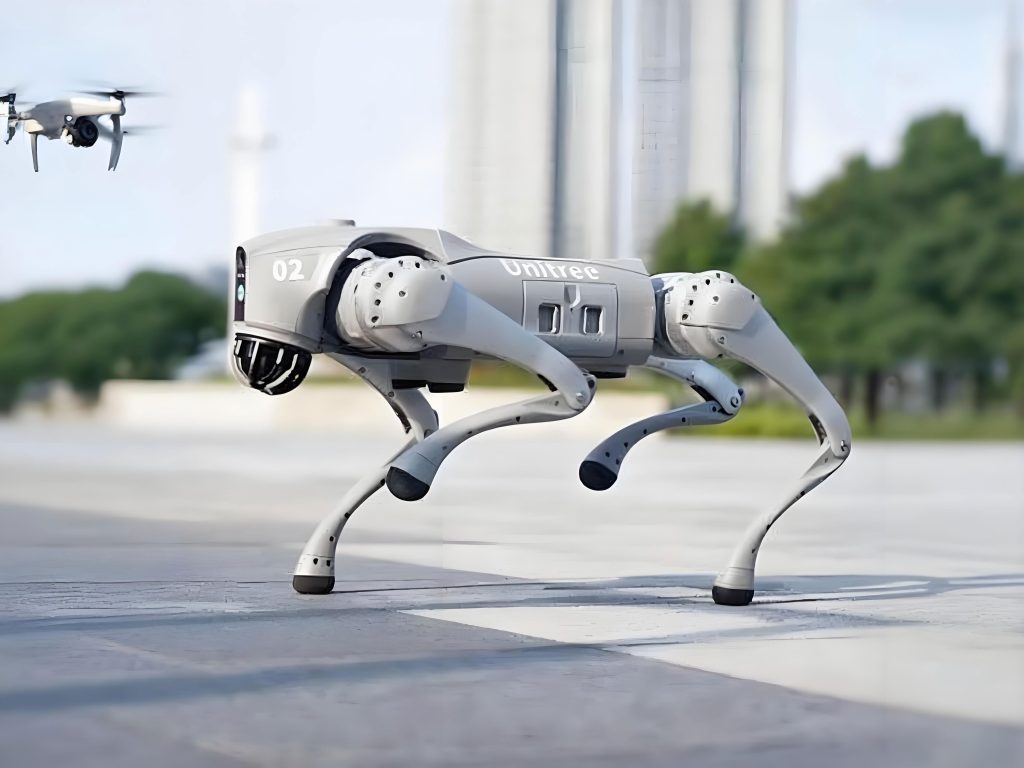
The field of robotics has been profoundly transformed by principles drawn from nature. Bionics, emerging in the early 1960s as an interdisciplinary frontier between biological sciences and engineering, provides the foundational philosophy. It involves studying, imitating, replicating, and reconstructing the structures, functions, operational principles, and control mechanisms of biological systems to innovate and enhance mechanical systems, instruments, and processes. A bionic robot epitomizes this synergy, integrating biological principles with electromechanical control to design systems with superior performance by mimicking biological morphology, locomotion characteristics, and underlying mechanisms.
The scope of bionic robot research is vast, encompassing not only humanoid machines but also robots inspired by a diverse array of fauna. This field leverages principles from multiple domains, including mechanical bionics (structure), sensory bionics (perception), control bionics, cognitive bionics (intelligence), and material bionics. It is inherently multidisciplinary, converging knowledge from life sciences, information science, brain and cognitive science, engineering, mathematics, mechanics, and systems science.
1. Current Research Landscape of Bionic Robots
Driven by growing demand, bionic robots now exhibit remarkable diversity in form and function. To systematically review the state of the art, this analysis is structured according to the operational environment: aquatic, terrestrial, and aerial. The historical pursuit of bionic robot concepts dates back centuries, with early modern research primarily driven by institutions in several technologically advanced nations, often motivated by defense and space exploration objectives. The first World Bionics Congress in 1960 marked a pivotal moment, catalyzing decades of global research and innovation in bionic technologies.
1.1 Aquatic Bionic Robots
The underwater environment presents unique challenges due to its complexity, density, and pressure, making the design of aquatic bionic robots particularly demanding. This necessity for advanced integration of technologies, however, unlocks significant potential in both civilian and military applications, such as exploration, inspection, and environmental monitoring.
1.1.1 International Research Progress
Pioneering work in the 1990s involved the development of a robotic tuna, which aimed to replicate the efficient swimming gait of its biological counterpart to improve propulsion efficiency and maneuverability for underwater vehicles. Subsequent developments included a robotic lobster, designed for stability in complex seabed environments, equipped with waterproof sensory hairs and an onboard micro-computer for tasks like mineral prospecting.
A significant leap came with the introduction of a soft robotic fish, “SoFi,” in 2018. This bionic robot closely mimics the size, appearance, and behavior of real fish, enabling close, non-disruptive observation of marine life via remote control. Another longstanding research stream has focused on developing increasingly lifelike and capable robotic fish platforms for underwater research, with successive generations improving in autonomy and hydrodynamic performance.
1.1.2 Domestic Research Progress
Early research efforts focused on addressing practical needs like underwater surveying and archaeological detection, leading to the development of successive generations of robotic fish that contributed to studies on hydrodynamics and swimming stability. A key technological breakthrough involved the development of a bio-inspired actuator using Ionic Conducting Polymer Film (ICPF). This smart material actuator operates at low voltage with high energy conversion efficiency, producing a fish-like tail oscillation ideal for miniature bionic robot propulsion. Its integration led to novel design paradigms where the control board acts as the robot’s skeleton, simplifying structure and facilitating miniaturization.
1.2 Terrestrial Bionic Robots
Inspired by terrestrial fauna, ground-based bionic robots are designed to perform dangerous tasks such as reconnaissance, detection, and handling of hazardous materials, often in place of humans.
1.2.1 International Research Progress
Early research in the 1980s included a frog-inspired jumping robot for space exploration, mimicking the powerful leap mechanism. The late 1960s saw the inception of seminal work on bipedal locomotion, resulting in a series of robots capable of basic walking. Significant contributions also came from various university research groups, often with defense funding, leading to the development of robust, terrain-adaptive hexapod robots like the “RHex” series.
Recent innovations include a spider-inspired bionic robot capable of both walking and rolling, the latter mode allowing faster movement over certain terrains and inclines. Its strong terrain adaptability makes it suitable for agriculture and exploration. Another landmark is the development of a highly dexterous humanoid robot, “Fedor,” capable of operating tools, performing fine motor skills, and working in hazardous environments, with potential extensions to space and military applications.
1.2.2 Domestic Research Progress
Early foundational work focused on serpentine locomotion, leading to the development of snake-like robots. These robots can slither on land and swim in water, equipped with cameras for real-time video transmission in confined or hazardous spaces for inspection and reconnaissance.
In humanoid robotics, the early 2000s marked the debut of the first domestically developed full-scale humanoid robot, capable of basic walking and simple speech. This was followed by several other prominent humanoid platforms from leading universities, each generation achieving more complex functions like stair climbing, running, and integrated multi-modal perception (vision, force, balance). A later model, “Huizhong 5,” incorporated advanced capabilities such as vision-based dexterous manipulation and whole-body coordinated autonomous reaction control.
1.3 Aerial Bionic Robots
Aerial bionic robots, particularly micro- and nano-scale fliers, offer advantages in agility, access to confined spaces, and broad operational areas free from terrain constraints. Their potential in military reconnaissance, disaster response, and surveillance is immense and highly valued.
1.3.1 International Research Progress
Inspired by bats and birds, researchers have created impressive flapping-wing aerial robots. One notable example is the “BionicFlyingFox,” featuring a super-lightweight carbon fiber skeleton and an elastic membrane wing with a honeycomb structure, enabling graceful gliding and maneuvering. Another landmark is the “SmartBird,” a lightweight, aerodynamically efficient robotic seagull that provided deep insights into flow phenomena for product design optimization.
At the microscale, researchers created the first robotic fly using a polyimide film for wings, achieving semi-autonomous tethered flight at 150 Hz. Further miniaturization and autonomy led to an untethered robotic fly, “RoboFly,” powered by a laser and an onboard circuit. Its low cost and small size make it ideal for surveillance in inaccessible areas, gas leak detection, and crop monitoring.
1.3.2 Domestic Research Progress
Substantial theoretical work has been conducted on insect flight mechanics, studying the principles of hovering, turning, and flight through experimental observation and simulation to inform the design of micro flapping-wing vehicles.
Practical implementations include several successful prototypes of bird-like flapping-wing vehicles. Research teams have developed models that achieved free flight, with performance parameters such as flight duration and control sophistication reaching levels comparable to international counterparts. Other institutions have contributed through fundamental research on flapping mechanisms and the development of experimental test platforms.
2. Analysis of Bionic Principles and Key Technologies
The effectiveness of a bionic robot hinges on the depth of biological imitation and the sophistication of enabling technologies. We can analyze this through several core dimensions.
| Bionic Dimension | Biological Inspiration | Key Technological Manifestation in Robots | Example Performance Metric |
|---|---|---|---|
| Morphological Bionics | Body shape, limb structure, wing profile | CAD-optimized hulls, compliant structures, skeletal frameworks | Drag coefficient ($C_d$), Structural efficiency |
| Locomotion Bionics | Gait patterns (swimming, walking, flying) | Gait control algorithms, CPG (Central Pattern Generator) networks | Speed ($v$), Cost of Transport ($COT$), Stability margin |
| Sensory Bionics | Vision, touch (whiskers), echolocation, lateral line | Event cameras, tactile sensor arrays, sonar, pressure sensor arrays | Signal-to-Noise Ratio (SNR), Spatial resolution |
| Material & Actuation Bionics | Muscle contraction, skin elasticity | Shape Memory Alloys (SMA), Dielectric Elastomer Actuators (DEA), ICPF, Pneumatic Artificial Muscles | Strain ($\epsilon$), Force-to-Weight ratio, Bandwidth |
The locomotion of a bionic robot can often be described or optimized using physics-based models. For instance, the thrust generated by an oscillating fin in an aquatic bionic robot can be related to its motion parameters:
$$ F_{thrust} \propto \rho A f^2 \phi^2 C_T $$
where $\rho$ is fluid density, $A$ is fin area, $f$ is oscillation frequency, $\phi$ is the peak-to-peak amplitude, and $C_T$ is a thrust coefficient dependent on the Strouhal number ($St = fA / U$, where $U$ is forward speed). Optimal efficiency often occurs in the biological range of $0.2 < St < 0.4$.
For legged terrestrial bionic robots, the Spring-Loaded Inverted Pendulum (SLIP) model is a foundational template for running dynamics:
$$ m \ddot{z} = -mg + k(l_0 – l) \cos(\theta) $$
where $m$ is mass, $z$ is vertical height, $k$ is leg stiffness, $l_0$ is resting leg length, $l$ is current leg length, and $\theta$ is leg angle. Control strategies for a bionic robot often involve hierarchical architectures, from low-level servo control to high-level path planning, which can be formulated as an optimization problem minimizing a cost function $J$:
$$ J = \int_{0}^{T} ( \mathbf{x}^T Q \mathbf{x} + \mathbf{u}^T R \mathbf{u} ) \, dt $$
where $\mathbf{x}$ is the state vector (positions, velocities), $\mathbf{u}$ is the control input vector, and $Q$ and $R$ are weighting matrices.
3. Future Trends in Bionic Robot Development
As understanding of biological systems deepens and enabling technologies mature, bionic robots are evolving along several convergent trends aimed at achieving more lifelike performance, greater resilience, and higher intelligence for operation in unstructured, dynamic environments.
3.1 Toward Enhanced Intelligence
The transition from purely mechanical systems to intelligent agents is paramount. Future bionic robots will exhibit increased task diversity, more fluid and adaptive motion (human-like or animal-like dexterity), and precise, autonomous control. This is driven by advances in embedded AI, machine learning for sensorimotor control, and cognitive architectures, enabling a bionic robot to learn from interaction and make decisions in real-time.
3.2 The Drive for Miniaturization
Application scenarios demanding access to confined or precise spaces (e.g., pipeline inspection, in-body medical procedures, micro-reconnaissance) are pushing the frontier of micro- and nano-bionic robots. The core challenge is the development of Micro-Electro-Mechanical Systems (MEMS) that integrate micro-sensors, actuators, control circuits, and power sources into a single, tiny package. Success in this trend will unlock revolutionary applications.
3.3 High-Fidelity Morphological Imitation (Mimicry)
Beyond functional imitation, achieving high-fidelity外形仿生 is becoming a key goal, especially for covert operations. A bionic robot that is visually and behaviorally indistinguishable from a real animal offers unparalleled advantages in surveillance and ecological monitoring. This trend requires advances in materials science, soft robotics, and micro-patterning to replicate textures, colors, and subtle movements.
3.4 Embracing Multifunctionality
The future operational landscape requires versatility. A single bionic robot platform may need to transition between different locomotion modes (e.g., walking and swimming, flying and perching) or manipulate various tools. This trend addresses broader societal needs, such as providing assistive care in aging societies or performing complex search-and-rescue operations, where a multi-skilled bionic robot can replace or augment human labor in diverse tasks.
3.5 The Power of Swarms and Collectives
Inspired by social insects like ants and bees, the coordination of multiple simple bionic robots into a collective “swarm” can achieve complex goals beyond the capability of a single unit. Swarm intelligence provides robustness through redundancy, scalability, and parallel task execution. This is critical for applications like environmental mapping, distributed sensing, and large-scale material handling, where the collective behavior emerges from simple local interactions, governed by algorithms such as:
$$ \mathbf{v}_i(t+1) = w \cdot \mathbf{v}_i(t) + c_1 r_1 (\mathbf{p}_{best,i} – \mathbf{x}_i(t)) + c_2 r_2 (\mathbf{g}_{best} – \mathbf{x}_i(t)) $$
which is a simple form of a Particle Swarm Optimization (PSO) rule that can be adapted for robot swarm coordination, where $\mathbf{v}_i$ and $\mathbf{x}_i$ are the velocity and position of robot $i$, and $\mathbf{p}_{best,i}$ and $\mathbf{g}_{best}$ are individual and global best-known positions.
| Trend | Core Objective | Key Enabling Technologies | Potential Impact Areas |
|---|---|---|---|
| Intelligence | Autonomous decision-making & adaptive learning | Edge AI, Neuromorphic computing, Reinforcement Learning | Unmanned exploration, Autonomous rescue |
| Miniaturization | Access to micro-scale environments | MEMS/NEMS, Micro-actuation, Wireless power/control | Precision medicine, Micro-engineering |
| Mimicry | Undetectable biological resemblance | Soft robotics, Active camouflage materials, Behavioral AI | Covert surveillance, Ecological research |
| Multifunctionality | Multi-modal operation & task versatility | Reconfigurable mechanisms, Multi-sensor fusion, Modular design | Personal assistance, Complex field operations |
| Swarming | Scalable, robust collective action | Ad-hoc networking, Distributed consensus algorithms | Disaster response, Agricultural monitoring |
4. Conclusion
The integration of bionics with robotics has propelled the field far beyond structured industrial settings. Modern bionic robots are increasingly designed for autonomous operation in the unpredictable, non-structural environments of space, deep sea, disaster zones, and urban landscapes. The future trajectory points toward systems that are not just tools but capable partners, able to sense, reason, adapt, and collaborate—whether as a single sophisticated agent or as a resilient collective. The ultimate goal is to deploy bionic robots where humans cannot go, to perform tasks we cannot do, safely and effectively, thereby extending human capability and understanding. The convergence of deeper biological insight with breakthroughs in AI, materials, and fabrication will continue to be the driving force behind the next generation of truly lifelike and intelligent bionic robots.