
As a city at the forefront of China’s digital economy, we recognize that Embodied AI, the deep fusion of artificial intelligence with physical entities, is fundamentally reshaping manufacturing, services, and social governance paradigms. The core of this revolution lies in the “Perception-Decision-Action” closed-loop that enables intelligent agents to interact with and learn from the real world. This technological pathway is widely considered crucial for advancing toward Artificial General Intelligence (AGI). Leveraging our existing advantages in digital infrastructure, a dense network of research institutions, and rich application scenarios, our city possesses inherent strengths for developing the embodied AI robot sector. The fact that five out of six notable new tech enterprises in our region are positioned within the embodied AI value chain is a testament to this potential. Our development strategies explicitly prioritize related industries like AGI, brain-inspired intelligence, and humanoid robotics. This article, from our perspective, examines the development trends of the embodied AI robot industry, assesses our foundational strengths and existing gaps, and proposes a comprehensive strategy for accelerated growth.
Global Industry Landscape and Development Trends
The embodied AI industry is currently in a phase of explosive growth. While academic definitions vary, our focus is on intelligent robotic agents, excluding autonomous vehicles deeply integrated with specific platforms like cars or drones. The industry is broadly segmented by robotic form and application: industrial robots, service robots, and humanoid robots. The market dynamics reveal a sector in rapid evolution, with service robots showing both high growth and volume.
| Robot Segment | Estimated Market Size (2024) | Year-on-Year Growth |
|---|---|---|
| Industrial Robots | ~¥60 billion | ~10% |
| Service Robots | ~¥70 billion | ~30% |
| Humanoid Robots | ~¥2.76 billion | ~50% |
The embodied AI value chain is characterized by high integration, collaboration, and scenario-specific adaptation. The upstream segment is technology-intensive with high R&D barriers, encompassing critical components such as AI chips, sensors, reducers, servo motors, controllers, and communication modules. The mid-stream involves deep software-hardware integration, covering algorithms, operating systems, middleware, and cloud services. Downstream applications are fragmented and customized, spanning products like humanoid, industrial, and service robots across numerous fields including manufacturing, healthcare, logistics, and public safety.
A new wave of competition is being led by global tech giants. Significant investments and financing activities, particularly in the humanoid robot segment, underscore the sector’s vitality. These players are creating a virtuous cycle of “Technology-Scenario-Capital.” Policy support has become a powerful catalyst. With embodied AI being elevated to national strategic importance, regional governments are enacting specialized action plans aiming to cultivate massive industrial clusters and innovative ecosystems.
| Chain Tier | Key Segments | Competitive Landscape |
|---|---|---|
| Upstream (Core Components & Infrastructure) |
AI Chips, Sensors (Vision, Force, LiDAR), Reducers, Servo Motors, Controllers, Communication Modules | Dominance by international specialized manufacturers; domestic players making progress in specific areas like vision sensors and certain AI chips. |
| Mid-stream (Software & System Integration) |
AI Algorithms & Models, Robot Operating Systems (ROS), Middleware, Cloud Platforms for Simulation/Training | Led by major AI and cloud service providers; open-source frameworks lowering entry barriers; intense R&D in multi-modal models and embodied cognition. |
| Downstream (Products & Applications) |
Humanoid Robots, Industrial Robots (Arms, AGVs), Service Robots (Logistics, Cleaning, Healthcare), Specialized Robots | Mix of specialized robotics companies and large tech firms expanding into embodiment; application success heavily dependent on domain-specific integration. |
However, the industry faces significant common challenges. Technologically, limitations persist in multi-modal perception and understanding of complex environments. A critical bottleneck is the scarcity of high-quality, large-scale robotics datasets for training, which hinders the direct transfer of data-driven AI advancements to the embodied AI robot domain. This can be represented by the gap between data availability and model complexity:
$$ \text{Embodied AI Performance} \propto \frac{\text{Quality \& Scale of Robotic Datasets}}{\text{Environmental Complexity \& Task Diversity}} $$
High costs for components, testing, and maintenance constrain R&D and market adoption. Commercially, immature technology limits application breadth, preventing the full release of market potential. This creates an investment risk; if marketization lags behind technological hype, a downturn could follow, as evidenced by volatility in industrial robot installations and challenges faced by some highly-valued startups. Furthermore, the integration of embodied AI robot systems into human societies raises urgent safety and ethical questions, with a lack of established standards posing a potential future barrier.
Our Foundational Strengths and Advantages
We have built a robust foundation for the embodied AI robot industry through proactive policy, digital infrastructure, research excellence, and a budding industrial ecosystem.
Proactive Policy and Capital Commitment: Our region was a national pioneer in launching a “Robot+” initiative. We have since implemented a series of specialized plans and support policies for humanoid robotics and related AI fields, offering substantial subsidies for foundational model development,标杆 demonstration projects, and innovation platforms. Significant government-guided industrial funds facilitate the landing of major projects. Strategic partnerships are being forged to establish manufacturing innovation centers and virtual training grounds, creating a policy-capital synergy that underpins technological industrialization.
Leading-edge Digital Infrastructure (Compute & Data): Large language and other AI models form the “brain” of an embodied AI robot, while its “body” relies on other physics-aware algorithms. Thus, compute and data are fundamental. We have instituted a “computing power voucher” system and built a public computing network centered on a “1+N” model, offering cost-effective and elastic computing resources. Our unit computing cost is significantly below the national average. In data resources, we are a national leader in public data openness and innovation, pioneering data transaction models that ensure security and privacy. These assets provide core support for our embodied AI robot enterprises from algorithm training to scenario deployment.
Solid Research Power and Collaborative Innovation: Our city’s strength lies in a comprehensive research network encompassing top-tier universities, national-level laboratories, and corporate research institutes. These institutions cover the full spectrum from basic research to applied innovation. Focused research on key technologies like flexible actuators and multi-modal algorithms is accelerated through mechanisms like “unveiling the list and appointing the best” and public-private联合 laboratories. The presence of major national science facilities further enhances our capacity for breakthrough, strategic research.
Emerging Industrial Clusters and Leading Enterprises: We host companies across the embodied AI value chain. Upstream, we have leaders in visual perception, AI chips, and control systems. In algorithms, breakthroughs in multi-modal large models and embodied cognition are being achieved. Downstream, we are home to globally competitive companies in consumer and commercial robotics, such as those specializing in quadruped and humanoid robots. Some service robot companies have already secured substantial commercial orders, indicating early market validation.
| Advantage Pillar | Key Manifestations | Impact on Embodied AI Robot Industry |
|---|---|---|
| Policy & Funding | Early “Robot+” strategy; targeted subsidies for models and projects; large-scale industry funds. | Reduces initial R&D risk and cost; attracts and anchors key projects and talent. |
| Compute & Data | Low-cost public compute network (“1+N”); national leader in public data open innovation. | Provides essential fuel (data) and engine (compute) for training and simulating embodied AI robot systems. |
| Research & Innovation | Dense network of elite universities and labs; “揭榜挂帅” collaboration models; national mega-science projects. | Drives breakthroughs in core underlying technologies; facilitates rapid transition from lab to application. |
| Industry & Enterprise | Presence of upstream component and AI algorithm leaders; downstream明星 enterprises in robotics. | Forms a nascent but potent local ecosystem; provides application validation and supply chain opportunities. |
Confronting Our Key Challenges and Shortcomings
Despite a strong foundation, we must objectively address several critical gaps to achieve leadership in the embodied AI robot domain.
Imbalanced Multi-Track Development Due to Policy Focus: While supportive policies for humanoid robotics are abundant, a holistic industrial policy for the broader embodied AI robot field is lacking. Excessive resource concentration on the high-risk, long-cycle humanoid track may marginalize other crucial and more immediately viable paths like advanced industrial and service robotics. These tracks share common underlying technologies, and their neglect hinders synergistic breakthroughs. Economically, mature markets in logistics, healthcare, and manufacturing risk being ceded to competitors if not adequately supported. Patent data reveals a significant gap between our province and leading regions in core humanoid robotics technologies, indicating a need for broader, more balanced technical capacity building.
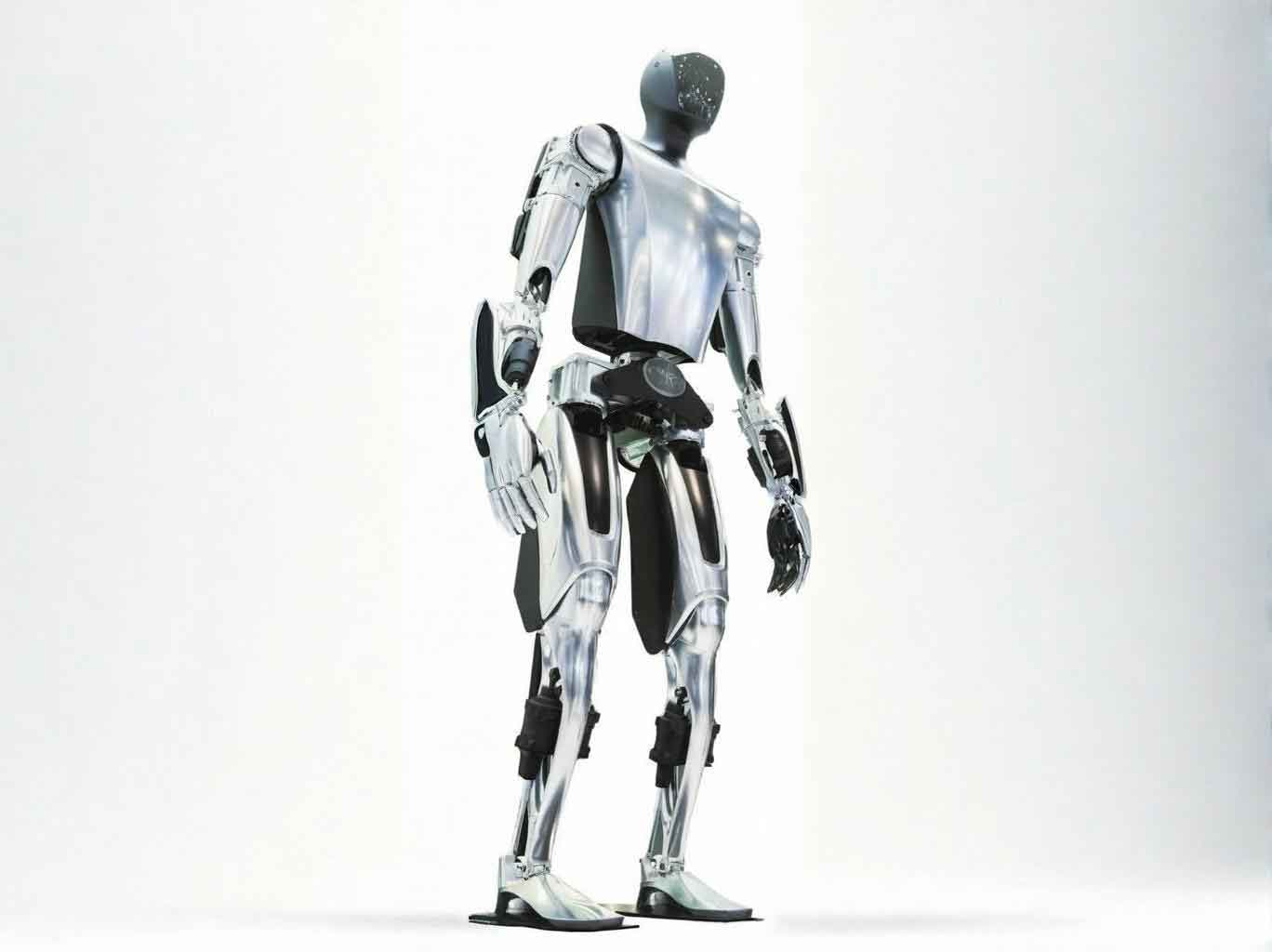
Difficult Commercialization Amid Scarce Application Scenarios: Market落地 for embodied AI robots is hampered not only by the immaturity of humanoid technology—its instability, limited dexterity, and high cost—but also by gaps in our local industrial base for key application domains. High-quality, multi-modal robotic datasets are scarce, limiting training. A simplified view of the performance challenge for a humanoid embodied AI robot involves balancing multiple factors:
$$ \text{Usability} = f(\text{Stability}, \text{Dexterity}, \text{Intelligence}, \frac{1}{\text{Cost}}) $$
Where advancements in one often come at the expense of others given current technological constraints. Furthermore, our city’s industrial structure is less focused on the heavy manufacturing sectors (automotive, electronics, metal) that are primary drivers of industrial robot demand. Compared to rivals with stronger manufacturing bases, we lack the inherent supply chain advantages and mass-production experience that accelerate robot deployment and cost reduction. In the high-growth service robot segment, our region’s patent output and number of leading manufacturers also trail behind key competitors.
Insufficient Industrial Synergy Due to Fragmentation: Our industrial chain is skewed towards downstream application developers, with a relatively weak upstream supply base. Downstream firms often work in isolation on fragmented scenarios, lacking effective collaboration. In contrast, competing clusters have achieved high local supply chain integration and evolved a synergistic “leader-defines, SME-fills” ecosystem. Collaborative platforms for共享 high-cost resources like training data and simulation environments are also underdeveloped here. While we excel in digital economy, our contribution to the global open-source communities that are vital for AI and robotics innovation is not proportional. Embracing开源 is a proven method to build trust, accelerate development, and establish influence.
Innovation Bottlenecks from a Shortage of High-Level Talent: Key hardware components (high-end chips, precision reducers, motors) remain import-dependent, affecting cost and supply chain security. In software, real-time multi-modal data processing capabilities are insufficient, and reliance on foreign-developed frameworks (ROS, TensorFlow) poses autonomy risks. Overcoming these bottlenecks requires attracting top-tier, internationally-minded talent—an area where we face stiff competition from other first-tier Chinese cities. Domestically, the education and training system often produces specialists in single disciplines, whereas the embodied AI robot field demands truly interdisciplinary talent combining mechanics, electronics, computing, and materials science. The pace of technological change outstrips traditional curriculum updates.
| Challenge Area | Specific Manifestation | Potential Consequence |
|---|---|---|
| Policy & Strategy | Over-concentration on humanoid robotics; lack of holistic embodied AI industry policy. | Missed opportunities in faster-maturing robot segments; hindered development of shared underlying technologies. |
| Commercialization | Scarce local high-quality application scenarios and data; high robot cost; mismatch with traditional strong industrial demand sectors. | Prolonged lab-to-market cycle; inability to achieve scale and cost reduction; loss of market share to better-positioned regions. |
| Industry Synergy | Weak upstream supply chain; fragmented downstream players; underdeveloped collaborative data/platforms; limited open-source contribution. | High costs; low innovation efficiency; inability to form a resilient, self-reinforcing industrial cluster. |
| Talent & Technology | Dependence on imported core components and software frameworks; shortage of high-level interdisciplinary and international talent. | Innovation bottlenecks; supply chain vulnerabilities; slowed participation in global standard-setting and cooperation. |
A Strategic Roadmap for Accelerated Development
To overcome these challenges and secure a leading position, we propose a multi-faceted strategy centered on strengthening fundamentals, fostering innovation, cultivating talent, balancing development, and accelerating market penetration for the embodied AI robot industry.
Fortifying Foundational Data Infrastructure: We must construct an open-platform specifically for embodied AI robot data. Leveraging our advanced data transaction models, we should integrate 3D data (visual, force, motion trajectories) and multi-modal interaction data, prioritizing high-value datasets for healthcare, advanced manufacturing, and logistics. This creates a unique resource advantage. Furthermore, we should amplify the utility of public data by establishing secure AI data training bases that offer subsidized compute and controlled data access to SMEs and developers, using privacy-preserving technologies like federated learning to ensure safe data circulation, all within a robust legal framework for data security.
Elevating Scientific Research and Technological Capability: Building a通用 technology platform is essential. We should collaborate with leading enterprises and research institutes to develop open-source embodied AI robot development kits, including standardized modular frameworks, 3D dataset tools, and high-fidelity simulation environments. This drastically lowers the entry barrier for innovators. For关键 technology breakthroughs, a “揭榜挂帅” mechanism combined with a dedicated fund should target the国产化 of core components like RV reducers and high-performance servo motors. Joint laboratories between academia and industry are crucial for shared advancement.
We must vigorously support the open-source ecosystem, developing communities around robotics and AI that meet global standards to enhance our international influence. Concurrently, we must lead in standardization, incentivizing enterprises to develop and set接口, communication, and safety standards for embodied AI robot systems, which reduces integration costs and fosters industrial synergy.
Building a World-Class Talent Pipeline: We need to pioneer new models for cultivating interdisciplinary talent. Our universities should be supported in establishing “Embodied AI” majors or focused tracks that blend mechanical engineering, computer science, and materials science. “Engineer Bootcamps” in partnership with enterprises will provide crucial hands-on,场景-specific training. To attract global talent, we should establish an “International Embodied AI Innovation Center” and host major international conferences in collaboration with prestigious global societies. Facilitating joint R&D centers between our local companies and international robotics leaders will also facilitate knowledge transfer and attract expertise.
Fostering Balanced, Multi-Track Synergistic Development: A分类支持 strategy is required. We should formulate a unified embodied AI industry plan with a dual-track support mechanism: one for general-purpose/long-term tracks (e.g., humanoids) focusing on basic research and risk compensation, and another for specialized/near-term tracks (e.g., industrial, service,特种 robots) focusing on applied innovation and market access. To优化 the upstream supply chain, we should use a mix of investment attraction and local cultivation, supported by a dedicated industry guidance fund, to nurture core component and material technologies. Regionally, we can collaborate with neighboring cities to establish a “Zhejiang Embodied AI Components Industrial Park,” creating a full-chain service system from R&D to mass production.
Accelerating Commercialization and Market Penetration: Proactively opening application scenarios is critical. We should encourage government and state-owned enterprises to open测试 scenarios in areas like municipal services, public safety, and healthcare, providing standardized testing services to reduce validation costs for companies. Establishing unified technical and safety standards will further lower barriers.强化 policy and capital support through targeted subsidies, tax incentives, and inclusion of qualified embodied AI robot products in government procurement catalogs for pilot applications will stimulate initial demand. A “green channel” for approval processes can expedite time-to-market.
Finally, we should create a real-world embodied AI robot innovation proving ground, allowing testing in operational environments like logistics parks and hospitals, supported by scenario adaptation subsidies. A new model of enterprise-led, multi-stakeholder R&D should be promoted, ensuring tight coupling between research and application. Hosting regular “Embodied AI Scenario Demand Matchmaking” events will directly connect problem-holders with solution-providers, ensuring our innovation ecosystem remains tightly aligned with market needs.
| Strategic Pillar | Proposed Key Actions | Expected Outcome for the Industry |
|---|---|---|
| Data & Infrastructure | Build Embodied AI Data Open Platform; Open Public Data in Secure Bases. | Reduces dataset acquisition cost & time; attracts developers and SMEs; establishes Hangzhou as a data resource hub. |
| Technology & Innovation | Develop Open通用 Tech Platform; Launch “揭榜挂帅” for Core Components; Boost Open Source & Standardization. | Lowers R&D entry barrier; accelerates国产化 of key parts; enhances global influence and industry interoperability. |
| Talent Cultivation | Establish Interdisciplinary University Programs; Create International Innovation Center & Host Global Events. | Builds sustainable local talent pipeline; attracts top global experts; integrates into international innovation networks. |
| Industrial Ecosystem | Implement “Dual-Track” Support Policy; Foster Upstream Supply Chain via Funds & Regional Parks. | Balances risk and opportunity across robot segments; strengthens local supply chain resilience and reduces costs. |
| Commercialization | Mandate Open Scenario Testing; Provide Green Channel & Procurement Support; Create Real-World Proving Grounds. | Accelerates product iteration and validation; creates initial market demand; tightly couples R&D with real-world application needs. |
In conclusion, by executing this integrated strategy—fortifying our data and tech foundations, cultivating a vibrant talent and innovation ecosystem, balancing strategic investments across the embodied AI robot spectrum, and relentlessly driving commercialization—we can transform our existing advantages into unequivocal global leadership in the defining technological frontier of embodied intelligence.