
The global landscape for humanoid robots is undergoing a period of unprecedented transformation. Market scales are expanding rapidly, technological innovation is accelerating, new market players are emerging continuously, and commercial applications are being actively explored. As a pivotal embodiment of advanced robotics and artificial intelligence, the humanoid robot represents a critical future industry. Major developed economies are investing heavily to secure a leading position in this strategic field. For instance, companies like Tesla have announced production plans for their latest models, showcasing significant advancements in dexterity, precision, and endurance. Other international firms are forging strong innovation ecosystems with tech giants, rapidly establishing competitive barriers. It is imperative to seize the current window of opportunity, proactively address inherent challenges, and accelerate the innovative development of humanoid robots to ensure a favorable position in the global future industrial competition.
Current Development Status of the Humanoid Robot Industry
The humanoid robot sector is demonstrating vigorous growth across multiple dimensions, from market potential to core technological breakthroughs.
Rapid Market Expansion
The global market for humanoid robots is on a steep growth trajectory. Projections from various analyst firms indicate a compound annual growth rate of around 50% over the next five years, with the market size expected to multiply several-fold. Long-term optimistic forecasts suggest the market could reach a scale of hundreds of billions of dollars within the next 10-15 years. The development within certain regions is particularly notable, with estimates suggesting it could account for nearly one-third of the global total within a few years, positioning it as a dominant player in the worldwide humanoid robot market.
| Year | Market Size (Billion USD) | Key Growth Driver |
|---|---|---|
| 2023 | 1.8 | Initial commercialization, rising AI integration |
| 2028 | 13.8 (Est.) | Technology maturation, cost reduction, initial industrial adoption |
| 2035 (Optimistic) | 154.0 (Est.) | Mass production, widespread industrial and service applications |
Rapid Advancement in Technological Innovation
Humanoid robot technology has evolved into an intelligent development phase, marked by significant progress in several key subsystems often analogized to human capabilities:
- The “Brain” – Interaction and Decision-Making: The integration of large foundation models has dramatically enhanced the generalization ability for task comprehension. This allows a humanoid robot to understand instructions and make decisions efficiently in complex, unstructured environments. The technological pathway is evolving from modular architectures towards more integrated, end-to-end learning systems. The performance can be conceptualized by the improvement in task completion rate $R_{task}$ influenced by model generalization $G_{model}$:
$$R_{task} = f(G_{model}, D_{env})$$
where $D_{env}$ represents environmental complexity. - The “Senses” – Environmental Perception: High-density integration of multi-modal sensors (cameras, LiDAR, force/torque, tactile) combined with advanced processing algorithms enables comprehensive self-state monitoring, multi-dimensional environmental perception, and robust object recognition and tracking.
- The “Cerebellum” – Motion Control: The introduction of AI and large models provides rich prior knowledge and generalization capabilities to control systems. The trend is shifting from traditional model-based control methods towards data-driven, learning-based control methods. This transition significantly reduces development cycles and costs for robust locomotion and manipulation. A simplified representation of this evolution is:
$$\text{Control Law} \ U \rightarrow \text{from} \ U = K(X_{ref} – X) \ \text{to} \ U = \pi_{\theta}(O)$$
where $K$ is a controller gain, $X$ is state, $X_{ref}$ is reference state, $\pi_{\theta}$ is a learned policy parameterized by $\theta$, and $O$ is observation. - The “Limbs” – Actuation and Execution: The actuation paradigm has largely transitioned from hydraulic to electric drives. Electric actuators offer advantages in longevity, robustness, control precision, cost-effectiveness, and low response latency, enabling “high-dynamic, high-precision” movements essential for a capable humanoid robot.
Proliferation of Market Entities
The competitive field is intensifying with entries from both established tech giants and agile startups. Global technology leaders are making strategic investments in and partnerships with specialized humanoid robot companies. Simultaneously, the number of companies dedicated to developing humanoid robot platforms has grown significantly worldwide. These products can generally be categorized based on their primary design focus and application domain.
| Category | Primary Focus | Key Capabilities | Typical Application Domains |
|---|---|---|---|
| High-Dynamic Mobility | Exceptional locomotion in complex, outdoor environments | Dynamic balance, running, jumping, terrain adaptation | Military, search and rescue, exploration |
| Dexterous Manipulation | Fine motor skills and hand-eye coordination | Precision grasping, tool use, assembly-like tasks | Industrial manufacturing, logistics, specialized operations |
| Interactive Service | Human-robot interaction and indoor utility | Natural communication, safe indoor navigation, basic object handling | Customer service, healthcare assistance, education |
Accelerated Exploration of Commercial Applications
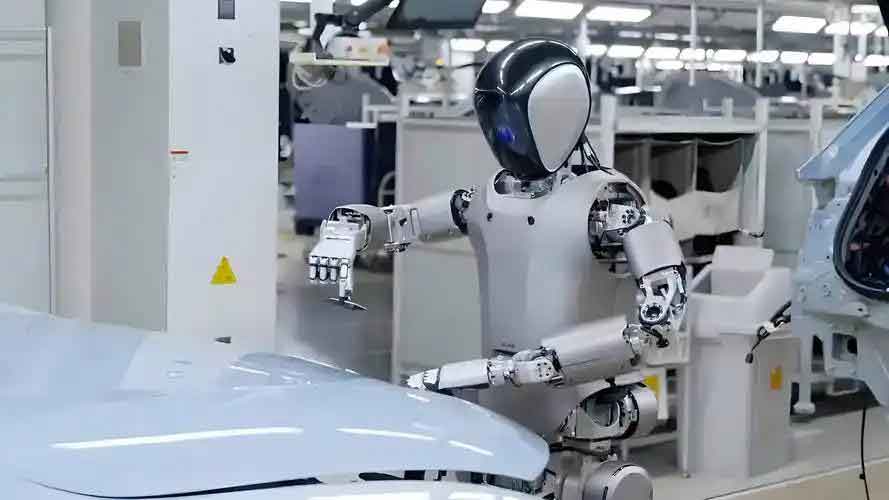
Leading international companies are moving beyond prototypes to validate the commercial viability of humanoid robots. Pilot programs and initial deployments are underway in sectors like automotive manufacturing, logistics, and security. These real-world tests involve tasks such as parts handling, warehouse pick-and-place operations, and facility patrols, marking the initial steps towards scalable economic utility for the humanoid robot.
Key Challenges in Humanoid Robot Development and Industrial Application
Despite the promising trajectory, the path to widespread adoption of humanoid robots is fraught with significant challenges that must be addressed to unlock its full potential.
Lack of Credible, Open-Source Public Datasets
High-quality, diverse, and accessible datasets are the lifeblood for training the advanced AI models that power a humanoid robot. The current scarcity of such resources presents a major bottleneck. Three core issues contribute to this problem:
- High Data Acquisition Cost: Collecting realistic data on humanoid robot interactions—encompassing spatial physics, human-robot interaction, and nuanced motion perception—requires high-fidelity environments and precise equipment, leading to prohibitive costs.
- Absence of Open Data for Core Functions: Critical data, particularly for whole-body coordinated control and complex manipulation, is often treated as proprietary by individual companies, creating data silos that stifle collective progress for the entire humanoid robot field.
- Vulnerability to Data Poisoning: Publicly available datasets, especially those used for end-to-end model training, are susceptible to malicious contamination. Since learning models struggle to distinguish between malicious inputs and benign anomalies, this poses significant safety and reliability risks for deployed humanoid robot systems.
Deficiency in Industrial-Scenario-Specific Simulation Systems
Sophisticated simulation is a cornerstone for efficient and cost-effective humanoid robot development, allowing for billions of trial-and-error iterations in a virtual space. The lack of simulation tools tailored to complex industrial settings is a critical gap.
- No Dedicated Platform for Industrial Settings: Existing open-source simulation platforms are primarily designed for domestic or generic environments. They lack the specific assets, physics, and task frameworks needed to train a humanoid robot for the diverse, structured, and often hazardous conditions found in manufacturing, assembly lines, or logistics hubs.
- Lack of Multi-Dimensional Environment Models: Current simulation assets often represent tools and machinery with simplistic properties. A truly effective training environment for a humanoid robot requires complex, multi-state models that accurately reflect the mechanical, electrical, and functional states of industrial equipment.
- Inefficient Simulation of Physical Interactions: Mainstream simulators often fall short in efficiently and accurately modeling the intricate physical interactions between a humanoid robot’s components (e.g., finger joints, actuator backlash) and between those components and environmental elements. This limits the ability to develop skills for fine manipulation and contact-rich tasks.
The fidelity of a simulation can be expressed as a function of its model complexity $C_m$ and physical accuracy $A_p$:
$$F_{sim} = g(C_m, A_p, R_{real-time})$$
where $R_{real-time}$ is the simulation speed. Achieving high $F_{sim}$ with a high $R_{real-time}$ is computationally challenging but essential.
Severe Technical Barriers in Core Components
The performance and cost of a humanoid robot are fundamentally dictated by its core components, such as high-torque-density actuators, precision reducers, and advanced sensors. Significant barriers hinder domestic advancement in these areas:
- Foreign Patent Barriers: Key manufacturing processes for components like high-performance hollow-cup motors are protected by international patents. This restricts alternative manufacturing methods, leading to higher costs, lower efficiency, and design limitations for domestic producers, ultimately affecting the final humanoid robot product.
- Lack of High-Precision Manufacturing Equipment: The production of ultra-precise components like planetary roller screws depends on advanced, imported machine tools (e.g., high-precision thread grinders). The performance gap in domestic equipment limits the ability to produce top-tier components, confining manufacturers to the mid-to-low end of the market.
- Insufficient Forward Design Capability: There is a gap in holistic, forward design methodology and mature toolchains for core components. Relying on reverse or semi-forward engineering limits rapid customization, product diversity, and the optimization cycle speed compared to established international competitors.
Incomplete Performance Evaluation and Standards System
The absence of comprehensive, authoritative evaluation frameworks hampers objective comparison, hinders trust, and slows down iterative improvement for humanoid robot technologies.
- Lack of Advanced Design Theory and Assessment Methods: For core components like reducers and servo systems, the lack of sophisticated theoretical models and digital twin-based assessment tools makes it difficult to guide rapid performance optimization and reliability validation during the design phase.
- Absence of Authoritative Application Benchmarking Standards: There are no universally accepted metrics and testing protocols to objectively compare the basic capabilities (e.g., energy efficiency $E_{eff}$, payload-to-weight ratio $R_{pw}$, autonomous operation duration $T_{auto}$) of different humanoid robot platforms. This creates market confusion and impedes healthy competition.
$$E_{eff} = \frac{\text{Useful Work Output}}{\text{Total Energy Input}}, \quad R_{pw} = \frac{\text{Max Payload}}{\text{Robot Mass}}$$ - Deficient Holistic Product Testing Regime: Current testing by manufacturers often focuses narrowly on basic本体 functionality in controlled labs. There is a critical need for systematic evaluation frameworks that assess a humanoid robot’s performance across a spectrum of integrated tasks in realistic, representative application scenarios.
| Challenge Area | Specific Issue | Impact on Humanoid Robot Development |
|---|---|---|
| Data & Simulation | Lack of Open, High-Quality Datasets | Slows AI training, increases cost, reduces model robustness and generalization. |
| Missing Industrial-Grade Simulators | Prolongs development cycles, increases physical testing risk/cost, limits skill training for complex tasks. | |
| Hardware & Standards | Core Component Technology Barriers | Increases system cost, limits performance ceiling, creates supply chain dependencies. |
| Incomplete Evaluation Standards | Hinders objective comparison, slows technology iteration, reduces user confidence and market transparency. |
Strategic Policy Recommendations
To overcome these challenges and foster a robust ecosystem for the humanoid robot industry, a multi-faceted strategic approach is necessary.
Expedite the Construction of Public Data Repositories for Humanoid Robots
- Consolidate Public Data Resources: Leverage national-level data infrastructure platforms to aggregate and curate robotics-relevant data. Develop and implement advanced techniques for automated data annotation, cleaning, and secure sharing to create foundational public datasets that act as a multiplier for innovation in the humanoid robot sector.
- Comprehensively Expand Key Data Categories: Using the public repository as a base, systematically expand datasets to include: Physical Interaction Data (tactile feedback, force profiles, thermal changes, object manipulation dynamics); Human-Robot Interaction Data (multi-modal commands, gestures, expressions); and Multi-Sensor Motion Perception Data from diverse sensor suites.
- Develop Robust Data Sanitization Pipelines: Establish technical standards and pathways for ensuring data quality and safety. This involves integrating mechanisms for detecting and filtering poisoned data, verifying data provenance and credibility, and enforcing strict privacy protections to build trustworthy training datasets for humanoid robot AI models.
Prioritize R&D for Industrial-Scenario-Specific Humanoid Robot Simulation Systems
- Select and Model Key Industrial Scenarios: Identify high-priority, high-impact application scenarios for humanoid robots in industry. Develop high-fidelity 3D simulation engines that accurately replicate the physical properties, workflow constraints, and human-factor elements of these specific environments (e.g., electronic assembly lines, automotive parts logistics).
- Build a Public Simulation Training Service Platform: Establish a cloud-based platform that provides the necessary computational infrastructure, physics engines, and basic interaction mechanics. This platform should support high-concurrency, cluster-based training, allowing researchers and companies to efficiently train and validate humanoid robot control policies at scale.
- Create High-Fidelity Model Libraries: Develop extensive libraries of industrial equipment and tools with multi-dimensional, interactive properties. Furthermore, build accurate dynamic models of key humanoid robot sub-assemblies (e.g., articulated hands, compliant legs) to enable realistic simulation of component-to-component and component-to-environment interactions, thereby accelerating hardware-in-the-loop testing and control algorithm refinement.
Enhance Policy Support and Safeguards for the Humanoid Robot Industry
- Establish Specialized R&D Funding Pools: Create targeted funding mechanisms to encourage and support domestic enterprises in deepening their R&D efforts for core humanoid robot technologies and exploring novel application scenarios.
- Implement Strategic Market Guidance: While ensuring product quality and safety, formulate policies that provide a conducive initial market environment for domestically developed humanoid robot solutions and core components, helping them gain crucial early deployment experience.
- Introduce Favorable Fiscal and Tax Measures: Consider policies such as tax rebates for integrators using domestic core components or for final products meeting certain localization thresholds. These measures can stimulate innovation and lower the adoption barrier for home-grown technology in humanoid robot manufacturing.
- Launch Domestic Application Demonstration Projects: Initiate government-supported demonstration projects that showcase the capabilities of domestic humanoid robot platforms and components in real-world settings. Encourage insurance providers to offer “first-set” insurance products to de-risk early adopters and build confidence in new technologies.
Establish a Comprehensive Humanoid Robot Evaluation and Testing Platform
- Develop Performance Evaluation Standards for Systems and Components: Accelerate the formulation of standardized testing protocols and metrics for both complete humanoid robot platforms (assessing mobility, autonomy, manipulation) and their core components (evaluating efficiency, durability, precision of reducers, actuators, controllers, etc.).
- Construct Integrated Testing and Experimentation Platforms: Build state-of-the-art physical facilities capable of conducting standardized tests on humanoid robot capabilities such as dynamic balance recovery, complex terrain navigation, dexterous manipulation under uncertainty, and natural human-robot dialogue.
- Research Core Component-Specific Test Methodologies: For each critical component (e.g., servo motor, torque sensor, battery pack), define detailed performance test procedures (e.g., measuring peak efficiency ${\eta}_{max}$, continuous power rating $P_{cont}$, torque ripple $T_{ripple}$) and establish accredited testing laboratories.
$${\eta}_{max} = \max\left(\frac{P_{out}}{P_{in}}\right), \quad T_{ripple} = \frac{T_{max} – T_{min}}{T_{avg}}$$ - Build Scenario-Specific Testing Platforms: Create dedicated testing environments that replicate key application scenarios like hazardous material handling, disaster site inspection, or warehouse logistics. Develop performance benchmarks specific to these scenarios to evaluate the practical utility and robustness of a humanoid robot in target domains.
In conclusion, the era of the humanoid robot is dawning, marked by intense global competition and rapid technological evolution. The path to successful, widespread application is complex, requiring breakthroughs not just in isolated technologies but across the entire ecosystem—from data and simulation to hardware and standards. By strategically addressing the identified challenges through coordinated policy, focused R&D, and collaborative platform building, it is possible to cultivate a vibrant, innovative, and competitive humanoid robot industry. This will be instrumental in shaping the future of work, manufacturing, and service sectors, ensuring a leading role in the next wave of technological and industrial transformation.