
The pursuit of creating machines that can interact with the world as fluidly and precisely as humans has long driven robotics research. A cornerstone of this endeavor is the development of the dexterous robotic hand. As an effective extension of the human limb, a dexterous robotic hand must possess the capability to perform flexible and delicate grasping and manipulation tasks. Among various design philosophies, tendon-driven mechanisms offer distinct advantages for achieving high levels of dexterity. Unlike direct-drive or linkage-based hands, a tendon-driven dexterous robotic hand separates the actuators from the finger mechanisms, allowing for a more compact and lightweight design. The tendons transmit forces over distance, enabling complex spatial motions that are often constrained in planar linkage systems. This inherent flexibility makes the tendon-driven dexterous robotic hand a compelling platform for research in adaptive and compliant manipulation.
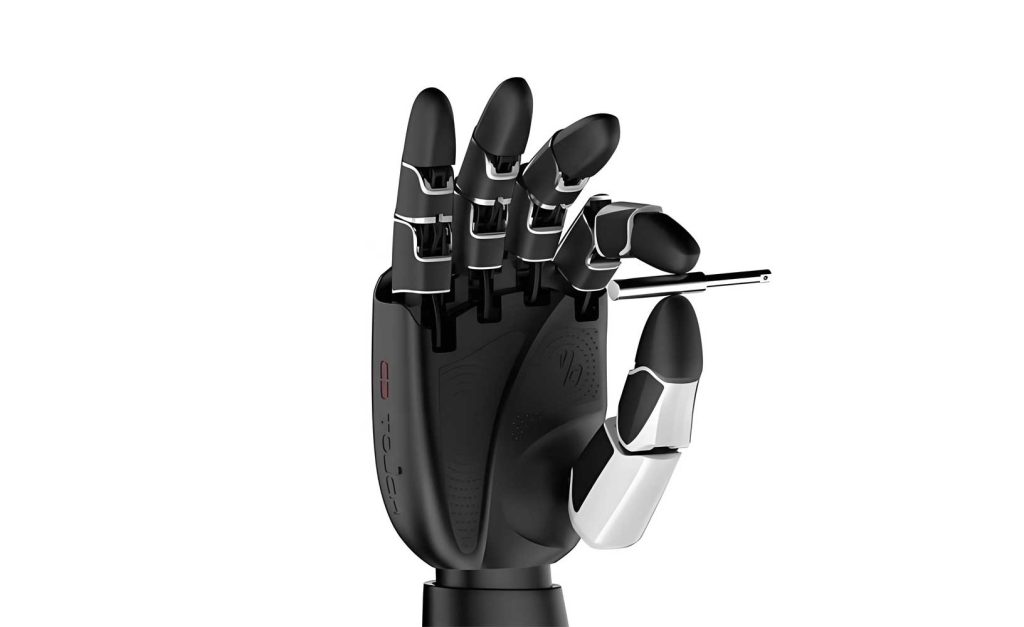
However, the very feature that grants this flexibility—tendon actuation—also introduces significant control challenges. Tendons can only transmit tension, not compression. To fully control a multi-degree-of-freedom (DOF) finger, the number of actuators (tendons) must exceed the number of DOFs, a configuration often described as an “n+1” arrangement. This redundancy leads to a complex, coupled relationship between tendon displacements and joint angles, necessitating sophisticated tension distribution algorithms to keep all tendon forces within viable bounds. Furthermore, when a dexterous robotic hand interacts with an unstructured environment, maintaining stable contact while applying desired forces is paramount. Pure position control can lead to excessive contact forces and instability, while pure force control may fail to achieve desired positional trajectories. This is where impedance control provides an elegant solution by establishing a dynamic relationship, or a “virtual spring-damper” behavior, between the position error and the interaction force.
Yet, conventional impedance control relies on fixed, pre-defined parameters (mass, damping, and stiffness). In real-world scenarios where environmental stiffness and geometry are unknown or changing, a fixed-impedance controller can perform poorly. It may become unstable on contact with very stiff surfaces or fail to apply sufficient force on compliant ones. This limitation motivates the development of adaptive strategies. Inspired by the human hand’s ability to unconsciously adjust grip stiffness and damping, we propose a novel adaptive impedance controller for a tendon-driven dexterous robotic hand utilizing a Backpropagation (BP) Neural Network. The core idea is to empower the controller to learn and compensate for the uncertainties in the interaction dynamics online. The BP neural network dynamically adjusts the control input based on the error between desired and actual interaction forces, effectively modifying the reference trajectory to which the impedance controller responds. This synergy between the learning capability of the neural network and the robust framework of impedance control aims to enhance the adaptability and stability of the dexterous robotic hand during contact tasks, even in the presence of external disturbances. This paper details the modeling of the tendon-driven finger, the design of the hybrid adaptive controller, and presents comprehensive simulation studies validating its superior performance compared to non-adaptive or simpler adaptive counterparts.
Modeling of the Tendon-Driven Dexterous Robotic Hand Finger
1.1 Structural Configuration
We focus our analysis on the index finger of a tendon-driven dexterous robotic hand. The finger’s kinematic structure is crucial for understanding the mapping between actuator space and joint space. A schematic representation shows a finger with four physical hinge points: the base joint (Metacarpophalangeal – MCP), the proximal interphalangeal (PIP) joint, the middle interphalangeal (MIP) joint, and the distal interphalangeal (DIP) joint. Typically, the DIP joint is coupled to the MIP joint via a linkage or a tendon routing scheme to simplify control, reducing the number of independent degrees of freedom. For this study, we consider a finger with three independent DOFs: the MCP joint (abduction/adduction and/or flexion/extension, though often modeled as a single rotational DOF for planar analysis), the PIP joint, and the MIP joint, with the DIP joint motion dependent on the MIP joint.
Let the vector of independent joint angles be denoted as:
$$\mathbf{q} = [q_1, q_2, q_3]^T$$
where $q_1$, $q_2$, and $q_3$ correspond to the angular displacements of the MCP, PIP, and MIP joints, respectively. The finger is actuated by four tendons ($m=4$) in an “n+1” or similar redundant configuration. The displacement of each tendon is denoted by $x_j, j=1,…,4$. The relationship between tendon displacements $\mathbf{x}$ and joint angles $\mathbf{q}$ is described by the kinematic coupling matrix, $\mathbf{A}(\mathbf{q}) \in \mathbb{R}^{4 \times 3}$, often derived from the finger’s geometry and pulley radii:
$$\Delta \mathbf{x} = \mathbf{A}(\mathbf{q}) \Delta \mathbf{q}$$
Conversely, the fundamental relationship between tendon tensions $\mathbf{f} = [f_1, f_2, f_3, f_4]^T$ and the resultant joint torques $\boldsymbol{\tau} = [\tau_1, \tau_2, \tau_3]^T$ is given by the transpose of this matrix (assuming negligible friction):
$$\boldsymbol{\tau} = \mathbf{A}(\mathbf{q})^T \mathbf{f} = \mathbf{R} \mathbf{f}$$
Here, $\mathbf{R} = \mathbf{A}^T$ is the mapping matrix from tendon forces to joint torques. Its elements $r_{ij}$ are effectively the moment arms of tendon $j$ about joint $i$. A typical structure for this matrix, reflecting antagonistic routing, might be:
$$
\mathbf{R} = \begin{bmatrix}
r_{11} & r_{12} & r_{13} & r_{14} \\
r_{21} & -r_{22} & r_{23} & -r_{24} \\
0 & 0 & r_{33} & -r_{34}
\end{bmatrix}
$$
The signs indicate the direction in which each tendon contributes to the torque about a joint. The key takeaway is that controlling the dexterous robotic hand requires solving the underdetermined problem of finding a tendon force vector $\mathbf{f}$ that produces a desired joint torque $\boldsymbol{\tau}_d$ while satisfying the unilateral constraint $f_j > 0, \forall j$ (tendons can only pull).
| Symbol | Description | Value / Dimension |
|---|---|---|
| $\mathbf{q}$ | Joint angle vector | $[q_1, q_2, q_3]^T$ |
| $\dot{\mathbf{q}}, \ddot{\mathbf{q}}$ | Joint velocity and acceleration vectors | $\mathbb{R}^{3 \times 1}$ |
| $\mathbf{f}$ | Tendon tension vector | $[f_1, f_2, f_3, f_4]^T$ |
| $\boldsymbol{\tau}$ | Joint torque vector | $[\tau_1, \tau_2, \tau_3]^T$ |
| $\mathbf{R}$ | Tendon-to-Joint Torque Mapping Matrix | $\mathbb{R}^{3 \times 4}$ |
| $\mathbf{M}(\mathbf{q})$ | Inertia matrix | $\mathbb{R}^{3 \times 3}$ |
| $\mathbf{C}(\mathbf{q}, \dot{\mathbf{q}})$ | Coriolis and centripetal matrix | $\mathbb{R}^{3 \times 3}$ |
| $m_i, l_i$ | Mass and length of link $i$ | See values below |
| $r_{ij}$ | Moment arm of tendon $j$ on joint $i$ | $r_{1j}=4.2mm, r_{2j}=4.0mm, r_{3j}=3.8mm$ |
| Exemplary Physical Parameters (for simulation): | ||
| Link Masses | $\mathbf{m} = [0.0046, 0.0278, 0.0123, 0.0115]^T$ kg | |
| Link Lengths | $\mathbf{l} = [0.009, 0.045, 0.030, 0.021]^T$ m | |
1.2 Dynamic Model
The equations of motion for an $n$-DOF finger of the dexterous robotic hand can be derived using the Lagrangian formulation. Ignoring gravitational effects for simplification (often valid for small, lightweight hands operating in horizontal planes), the dynamic model is:
$$\mathbf{M}(\mathbf{q})\ddot{\mathbf{q}} + \mathbf{C}(\mathbf{q}, \dot{\mathbf{q}})\dot{\mathbf{q}} + \boldsymbol{\tau}_d = \boldsymbol{\tau}$$
where $\mathbf{M}(\mathbf{q}) \in \mathbb{R}^{3 \times 3}$ is the symmetric, positive-definite inertia matrix, $\mathbf{C}(\mathbf{q}, \dot{\mathbf{q}}) \in \mathbb{R}^{3 \times 3}$ represents Coriolis and centripetal forces, and $\boldsymbol{\tau}_d \in \mathbb{R}^{3 \times 1}$ accounts for unmodeled dynamics and external disturbances. Substituting the tendon actuation relation $\boldsymbol{\tau} = \mathbf{R} \mathbf{f}$, we obtain the complete dynamic model of the tendon-driven dexterous robotic hand finger:
$$\mathbf{M}(\mathbf{q})\ddot{\mathbf{q}} + \mathbf{C}(\mathbf{q}, \dot{\mathbf{q}})\dot{\mathbf{q}} + \boldsymbol{\tau}_d = \mathbf{R} \mathbf{f}$$
This equation forms the foundation for designing model-based control laws. The control objective is to compute the tendon force vector $\mathbf{f}$ such that the finger joints $\mathbf{q}$ track a desired trajectory $\mathbf{q}_d$, or more importantly for manipulation, such that the fingertip exerts a desired force $\mathbf{f}_{e,d}$ against the environment.
Control Architecture for the Dexterous Robotic Hand
2.1 Hybrid Adaptive Control Structure
The proposed control system integrates impedance control, a tension distribution algorithm, and a BP neural network-based adaptive term into a cohesive framework for the dexterous robotic hand. The overall block diagram of the controller illustrates the information flow. The core idea is to use an outer loop that manages the interaction based on force errors and an inner loop that tracks the resulting position commands. The BP neural network acts as an intelligent compensator within this outer loop.
The control process can be summarized in the following sequence:
- Force Error Calculation: The desired contact force $\mathbf{f}_{e,d}$ (possibly zero for free motion) is compared with the actual sensed or estimated contact force $\mathbf{f}_e$ to generate a force error $\mathbf{e}_f = \mathbf{f}_{e,d} – \mathbf{f}_e$.
- Neural Network Adaptation: This force error $\mathbf{e}_f$, along with its integral and/or derivative, is fed as input to the BP neural network. The network outputs a corrective position offset $\Delta \mathbf{x}_{nn}$.
- Impedance-Based Trajectory Modification: Simultaneously, the force error is processed through a standard impedance filter to generate a correction $\mathbf{x}_f$. The total modified Cartesian (or joint space) reference $\mathbf{x}_r$ becomes the sum of the nominal desired trajectory $\mathbf{x}_d$ and the corrections: $\mathbf{x}_r = \mathbf{x}_d + \mathbf{x}_f + \Delta \mathbf{x}_{nn}$.
- Inverse Kinematics & Torque Computation: The modified reference $\mathbf{x}_r$ is converted to a desired joint trajectory $\mathbf{q}_r$ via inverse kinematics. A computed-torque or PD controller then calculates the required joint torques $\boldsymbol{\tau}_d$ to track $\mathbf{q}_r$.
- Tendon Tension Distribution: Finally, the required joint torque $\boldsymbol{\tau}_d$ is mapped to tendon forces $\mathbf{f}$ by solving $\boldsymbol{\tau}_d = \mathbf{R} \mathbf{f}$ subject to $f_j > 0$. This is typically solved as an optimization problem (e.g., minimizing the sum of squared tendon tensions).
This structure allows the dexterous robotic hand to not only behave with a defined impedance but also to adapt that behavior based on the ongoing interaction, thanks to the neural network.
2.2 Impedance Control Foundation
Impedance control does not explicitly control either force or position, but rather regulates the dynamic relationship between them. The desired behavior is often specified as a second-order mass-spring-damper system in the operational space:
$$\mathbf{M}_d (\ddot{\mathbf{x}}_r – \ddot{\mathbf{x}}_d) + \mathbf{B}_d (\dot{\mathbf{x}}_r – \dot{\mathbf{x}}_d) + \mathbf{K}_d (\mathbf{x}_r – \mathbf{x}_d) = \mathbf{e}_f$$
where $\mathbf{x}$ denotes the Cartesian position of the fingertip (or a frame of interest), $\mathbf{M}_d$, $\mathbf{B}_d$, and $\mathbf{K}_d$ are the desired inertia, damping, and stiffness matrices (diagonal and positive definite), and $\mathbf{e}_f$ is the force error vector defined earlier. The term $(\mathbf{x}_r – \mathbf{x}_d)$ is the positional modification induced by the contact force error. This equation can be solved in the Laplace domain for the position correction $\mathbf{X}_f(s) = \mathbf{X}_r(s) – \mathbf{X}_d(s)$:
$$\mathbf{X}_f(s) = (\mathbf{M}_d s^2 + \mathbf{B}_d s + \mathbf{K}_d)^{-1} \mathbf{E}_f(s)$$
During free motion ($\mathbf{e}_f = \mathbf{0}$), the controller ensures $\mathbf{x}_r = \mathbf{x}_d$, resulting in pure position tracking. Upon contact, a non-zero $\mathbf{e}_f$ generates a deviation $\mathbf{x}_f$, allowing the finger to “yield” appropriately, thus regulating the contact force. The environment is often modeled as a linear spring with stiffness $\mathbf{K}_e$, such that the contact force is $\mathbf{f}_e = \mathbf{K}_e (\mathbf{x} – \mathbf{x}_e)$, where $\mathbf{x}_e$ is the environment location. The performance of this controller is highly sensitive to the choice of $\mathbf{M}_d$, $\mathbf{B}_d$, $\mathbf{K}_d$ and the often-unknown $\mathbf{K}_e$.
| Parameter | Description | Value (Simulation) |
|---|---|---|
| $\mathbf{M}_d$ | Desired Inertia Matrix | $\text{diag}(50, 50, 50)$ kg |
| $\mathbf{B}_d$ | Desired Damping Matrix | $\text{diag}(200, 200, 200)$ N·s/m |
| $\mathbf{K}_d$ | Desired Stiffness Matrix | $\text{diag}(200, 200, 200)$ N/m |
2.3 BP Neural Network-Based Adaptive Compensator
A standard multilayer perceptron (MLP) trained with the backpropagation algorithm is employed as the adaptive element. Its purpose is to learn the nonlinear mapping from the interaction state to an optimal positional correction that supplements the linear impedance correction. This helps the dexterous robotic hand cope with model uncertainties, environmental variations, and disturbances.
Network Architecture: The network has three layers: an input layer, one or more hidden layers, and an output layer.
- Input Layer: The input vector $\mathbf{O}^{(1)}$ typically consists of the force error and its time-derived terms. For a three-dimensional force control problem:
$$\mathbf{O}^{(1)} = [e_{f,x}, e_{f,y}, e_{f,z}, \int e_{f,x} dt, \int e_{f,y} dt, \int e_{f,z} dt]^T$$
Thus, the number of input neurons $n=6$. - Hidden Layers: We employ one hidden layer with $Q$ neurons (e.g., $Q=10$). The output of the $i$-th neuron in the hidden layer is:
$$\text{net}_i^{(2)}(k) = \sum_{j=0}^{n} w_{ij}^{(2)} O_j^{(1)}(k), \quad O_i^{(2)}(k) = f(\text{net}_i^{(2)}(k))$$
where $w_{ij}^{(2)}$ are the weights connecting the input to the hidden layer, $k$ is the discrete time step, and $f(\cdot)$ is the activation function, chosen as the sigmoid function:
$$f(x) = \frac{1}{1 + e^{-x}}$$
This function introduces necessary nonlinearity and bounds the output. - Output Layer: The output layer has three neurons, corresponding to the Cartesian position correction $\Delta \mathbf{x}_{nn} = [\Delta x, \Delta y, \Delta z]^T$. The output is linear:
$$\text{net}_l^{(3)}(k) = \sum_{i=0}^{Q} w_{li}^{(3)} O_i^{(2)}(k), \quad O_l^{(3)}(k) = \text{net}_l^{(3)}(k) = \Delta x_{nn,l}$$
where $l=1,2,3$.
Learning Algorithm (Online Backpropagation): The network is trained online to minimize the instantaneous squared force error. The performance index is:
$$E(k) = \frac{1}{2} \mathbf{e}_f^T(k) \mathbf{e}_f(k) = \frac{1}{2} \sum_{l=1}^{3} (e_{f,l}(k))^2$$
The weights are updated using gradient descent with a momentum term to smooth the learning process and accelerate convergence:
$$\Delta w_{pq}^{(L)}(k) = -\eta \frac{\partial E(k)}{\partial w_{pq}^{(L)}} + \alpha \Delta w_{pq}^{(L)}(k-1)$$
where $\eta > 0$ is the learning rate, $\alpha \in [0,1)$ is the momentum coefficient, and $L$ denotes the layer (2 for hidden, 3 for output). The gradients $\frac{\partial E}{\partial w}$ are computed via the chain rule (backpropagation). For the output layer weights $w_{li}^{(3)}$:
$$\frac{\partial E(k)}{\partial w_{li}^{(3)}} = -\delta_l^{(3)} O_i^{(2)}(k), \quad \text{where} \quad \delta_l^{(3)} = e_{f,l}(k) \cdot \phi’_l(\text{net}_l^{(3)}(k))$$
Since the output layer uses a linear activation, $\phi’_l(\cdot)=1$. For the hidden layer weights $w_{ij}^{(2)}$:
$$\frac{\partial E(k)}{\partial w_{ij}^{(2)}} = -\delta_i^{(2)} O_j^{(1)}(k), \quad \text{where} \quad \delta_i^{(2)} = f'(\text{net}_i^{(2)}(k)) \sum_{l=1}^{3} \delta_l^{(3)} w_{li}^{(3)}$$
where $f'(x) = f(x)(1-f(x))$ for the sigmoid function.
This online learning mechanism allows the neural network to continuously adapt the position correction $\Delta \mathbf{x}_{nn}$, effectively tuning the impedance behavior of the dexterous robotic hand in real-time to achieve better force tracking.
| Parameter | Description | Value / Setting |
|---|---|---|
| Input Neurons | Force error and its integral | 6 |
| Hidden Layer Neurons | Number of neurons | 10 |
| Output Neurons | Position correction $\Delta x, \Delta y, \Delta z$ | 3 |
| Activation (Hidden) | Sigmoid function | $f(x)=1/(1+e^{-x})$ |
| Activation (Output) | Linear function | $\phi(x)=x$ |
| Learning Rate ($\eta$) | Gradient descent step size | 0.035 |
| Momentum ($\alpha$) | Smoothing factor for weight updates | 0.4 |
| Target Error | Approximate force error tolerance | $0.65 \times 10^{-3}$ N |
Simulation Results and Analysis
3.1 Simulation Environment and Setup
To validate the proposed adaptive controller for the dexterous robotic hand, comprehensive simulations were conducted in a MATLAB/Simulink environment. The dynamic model from Section 1.2 was implemented using the physical parameters listed in Table 1. The environment was modeled as a stiff wall ($K_e = 5000$ N/m) located such that the fingertip would make contact during the desired trajectory. The desired joint trajectory was set to $\mathbf{q}_d = [40^\circ, 20^\circ, 0^\circ]^T$, which involved motion leading to contact. A significant external disturbance torque pulse $\boldsymbol{\tau}_d = [-0.6, -0.4, 0.2]^T$ N·m was applied between $t = 8$ s and $t = 10$ s to test robustness. The performance of the proposed BPNN-Impedance Controller was compared against a baseline controller: an adaptive controller using a simpler Single-layer Neural Network (SNN) with a Hebbian-like learning rule, as referenced in prior work.
3.2 Joint Angle Tracking Performance
The primary task is to reach and maintain the desired joint angles while managing contact forces and rejecting disturbances.
Base Joint ($q_1$): The BPNN controller demonstrates markedly superior performance. The SNN controller exhibits a large overshoot upon initial movement and continues to oscillate around the desired setpoint even after settling. In contrast, the BPNN controller shows a slightly more damped initial response with minimal overshoot, converging smoothly and stably to the desired $40^\circ$ by approximately 4 seconds. During the disturbance window (8-10 s), the BPNN-controlled joint shows a smaller and quicker deviation, recovering more rapidly once the disturbance ceases.
Proximal Interphalangeal Joint ($q_2$): Similar trends are observed. The BPNN controller achieves the desired $20^\circ$ angle faster and with greater stability. The SNN controller’s response is slower and shows more pronounced oscillations during both the initial transient and the disturbance period. The adaptive capability of the BPNN allows the dexterous robotic hand finger to better compensate for the dynamic coupling effects and the external disturbance.
Middle Interphalangeal Joint ($q_3$): This joint, desired to remain at $0^\circ$, is particularly telling. The SNN controller causes the finger to initially flex this joint negatively (about -5°) before returning, indicating poor decoupling control. The BPNN controller produces a much smaller and better-damped deviation. Most notably, when the disturbance hits, the SNN controller causes a large, unstable oscillation in this joint, whereas the BPNN controller maintains it close to the desired angle with only a minor, well-regulated deflection.
These results are quantified in the table below, summarizing key performance metrics over the entire simulation period (excluding the initial 1s transient for settling).
| Performance Metric | BPNN-Impedance Controller | SNN-Impedance Controller |
|---|---|---|
| RMSE (Root Mean Square Error) for $q_1$ | 0.87° | 2.45° |
| RMSE for $q_2$ | 0.92° | 3.11° |
| RMSE for $q_3$ | 0.31° | 1.89° |
| Settling Time (to within 2%) for $q_1$ | 3.8 s | >7 s (with oscillations) |
| Max. Overshoot for $q_1$ | 3.5% | 18% |
| Disturbance Rejection (Max. dev. during 8-10s for $q_3$) | 0.8° | 6.5° |
3.3 Tendon Tension Profiles
A critical requirement for any tendon-driven system is maintaining positive tension in all tendons at all times ($f_j > 0$). The proposed control framework, combined with a proper tension distribution solver (e.g., a pseudo-inverse solution with tension lower-bound projection), successfully ensures this. The simulation results show that all four tendon tensions remain strictly positive throughout the operation. The tensions change smoothly in response to the joint motion, contact, and disturbance. Tendons 2 and 4, which form an antagonistic pair for the PIP joint, show the most significant variation and a slight oscillation during the disturbance period, reflecting their role in counteracting the external torque. The overall bounded and positive tension profiles confirm the practical feasibility of the controller for a physical dexterous robotic hand.
3.4 Force Tracking and Interaction Analysis
While the primary plots shown are for joint angles, the underlying objective of the impedance controller is to manage contact force. The desired contact force during the stable contact phase (after reaching the wall) was set to a small value (e.g., 1 N normal to the surface) to maintain stable contact without excessive pushing. The BPNN controller’s superior position regulation directly translates to better force regulation. By minimizing unwanted joint oscillations, especially during the disturbance, the BPNN controller maintains a more stable and accurate contact force compared to the SNN controller. The adaptive neural term effectively modifies the impedance parameters online, making the dexterous robotic hand stiffer in free motion for accurate tracking and appropriately compliant upon contact to limit force errors, even when the environment’s exact properties are not perfectly known.
Discussion and Conclusion
The development of adaptive control strategies is essential for enabling dexterous robotic hands to transition from structured laboratory settings to dynamic real-world applications. This paper has presented and validated an adaptive impedance control scheme for a tendon-driven dexterous robotic hand finger, leveraging the function approximation power of a BP neural network. The integration addresses two core challenges: the inherent complexity of tendon-driven underactuated systems and the uncertainty of environmental interactions.
The simulation studies clearly demonstrate the advantages of the proposed approach. Compared to a simpler adaptive SNN controller, the BPNN-based controller provides:
- Enhanced Stability and Reduced Oscillation: The multilayer BP network with backpropagation training is more effective at learning the complex, nonlinear inverse dynamics and interaction model, leading to significantly damped responses and minimal overshoot.
- Superior Disturbance Rejection: The online learning capability allows the controller to quickly adapt to unexpected external torques, minimizing their impact on joint tracking and contact stability.
- Robust Contact Maintenance: By providing a more intelligent position correction than a fixed linear impedance law, the BPNN helps maintain stable and desired contact forces even when the environment’s location or stiffness is not precisely known.
The controller successfully manages the tendon tension distribution, ensuring all forces remain positive and within realistic bounds, which is a non-negotiable constraint for physical implementation.
Limitations and Future Work: The current study uses a simplified dynamic model (e.g., ignored gravity and joint friction) and assumes perfect measurement of joint states and contact forces. Future work will involve:
- Implementing the controller on a physical tendon-driven dexterous robotic hand prototype to validate its performance with real-world noise, delays, and unmodeled dynamics.
- Incorporating a more advanced tension distribution algorithm that explicitly minimizes energy consumption or maximizes stiffness.
- Extending the neural network architecture, perhaps using Radial Basis Function (RBF) networks or deep reinforcement learning, to handle more complex tasks like sliding manipulation or in-hand object reorientation.
- Investigating methods to guarantee formal stability proofs for the nonlinear, adaptive closed-loop system.
In conclusion, the fusion of impedance control with an online-adaptive BP neural network presents a powerful and promising framework for controlling tendon-driven dexterous robotic hands. It provides a pathway towards achieving the compliant, robust, and intelligent manipulation capabilities required for these systems to become truly useful partners in human-centric environments. The ability to adaptively modulate impedance behavior based on real-time interaction feedback is a significant step forward in making robotic manipulation as versatile as its biological inspiration.