
As a researcher deeply involved in the field of robotics, I have witnessed the rapid evolution of humanoid robots, which represent a convergence of artificial intelligence, advanced manufacturing, and new materials. These humanoid robots are poised to become disruptive products, following in the footsteps of computers, smartphones, and electric vehicles, with the potential to reshape human lifestyles, industrial patterns, and even global security. However, the absence of a comprehensive standard system severely hampers the growth of the humanoid robot industry. In this article, I will explore the technological innovation pathways, key technologies, and propose recommendations for building a robust standard framework to foster collaborative innovation.
The current era is marked by the explosion of embodied intelligence, where AI large models, open-source platforms, and operating systems have transformed the development paradigm for vertical AI applications. This shift enables a “train large models + fine-tune for specific tasks” approach, propelling humanoid robots into an era of “model as application,” which accelerates their generalizability and commercial viability. The competition in next-generation humanoid robots revolves around three core elements: the robot本体, embodied intelligence, and AI infrastructure. Critical to this are capabilities in high-end manufacturing, open-source collaboration, and ecosystem organization. Challenges include achieving low costs, acquiring and leveraging massive datasets, and sustaining long-term momentum. For instance, training datasets and simulation environments for embodied intelligence models require substantial upfront investment and time, which can be prohibitive for small and medium-sized enterprises. To address this, collaborative efforts have led to the creation of heterogeneous training grounds and open-source communities that facilitate data collection and interoperability across different humanoid robot platforms.
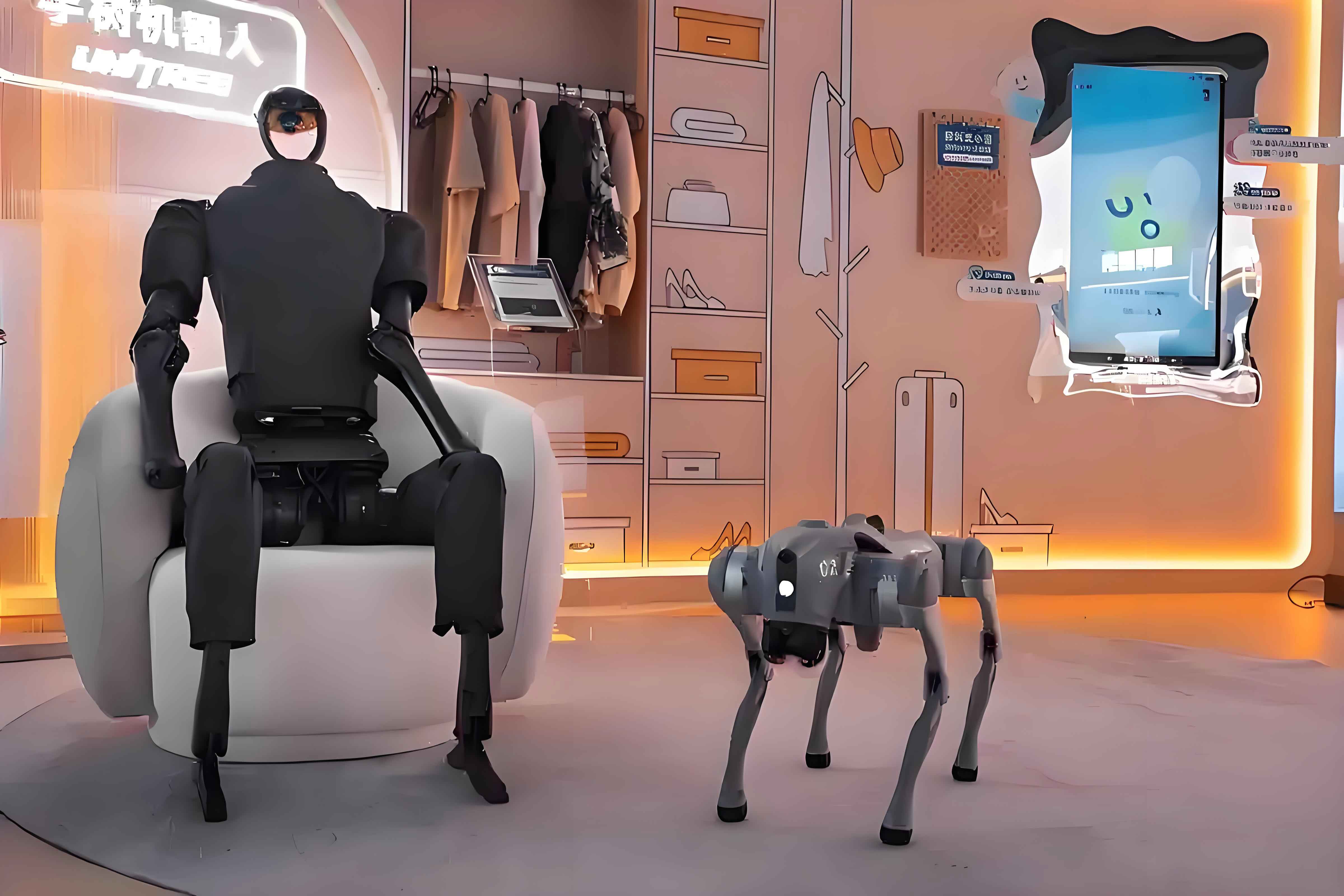
In terms of technological development, humanoid robots are designed for applications in specialized fields, intelligent manufacturing, and civil services. The concept of “heterogeneous swarm intelligence” guides the integration of diverse robotic systems, enabling seamless communication and data sharing. This approach supports the expansion of humanoid robot scenarios, as outlined in various governmental guidelines, and lays the groundwork for collecting real-world data from multiple platforms. Moreover, open-source initiatives have emerged to accelerate global developer collaboration, driving deep integration across the industry chain and spurring rapid innovation in humanoid robot technologies.
The key technologies for humanoid robots are often categorized into the “brain,” “cerebellum,” and “limbs,” which work synergistically to empower the overall system, with AI infrastructure serving as a robust digital and intelligent foundation. The “brain” of a humanoid robot is responsible for multimodal data perception, information understanding and fusion, task planning, and decision-making, particularly in dynamic open environments. It focuses on building human-robot-environment interactive capabilities to support full-scenario applications. Breakthroughs in the brain rely on large-scale datasets, cloud-edge-end integrated computing architectures, multimodal perception, and environmental modeling, with end-to-end embodied large models at the core. The following table summarizes the key technologies of the humanoid robot “brain”:
| Component | Description | Key Technologies |
|---|---|---|
| Multimodal Perception | Integration of sensory inputs like vision, audio, and touch | Sensor fusion algorithms, deep learning models |
| Task Planning | Decision-making for complex tasks in dynamic environments | Reinforcement learning, hierarchical planning |
| Environmental Modeling | Real-time representation of the surroundings | SLAM (Simultaneous Localization and Mapping), 3D reconstruction |
Mathematically, the perception process can be represented using a multimodal fusion formula: $$ P(O|S) = \prod_{i=1}^{n} P(o_i | s_i) $$ where \( P(O|S) \) is the probability of observations \( O \) given states \( S \), and \( o_i \) and \( s_i \) represent individual sensory inputs and states, respectively. This underpins the humanoid robot’s ability to adapt to unpredictable scenarios.
The “cerebellum” of a humanoid robot handles trajectory planning and motion control, which are essential for high-dynamic movements and operations. It involves high-fidelity system modeling and simulation, network control architectures, multi-body dynamics modeling, online behavior control, typical biomimetic motion characterization, and autonomous learning for whole-body coordination. In complex terrains and dynamic environments, the stability and flexibility of a humanoid robot depend on precise motion control and adaptive walking capabilities. Currently, large models are primarily applied to upper-level control in the cerebellum, such as task understanding, decomposition, and skill or action planning, while lower-level motion control commands are generated by classical robotics algorithms. The integration of large models is still in its infancy. Future advancements will leverage model predictive control based on dynamics models, imitation learning, reinforcement learning, and large models to enhance the humanoid robot’s movement and operational abilities in open environments. A common equation for motion control is the dynamics model: $$ \tau = M(q)\ddot{q} + C(q, \dot{q}) + G(q) $$ where \( \tau \) is the torque, \( M(q) \) is the mass matrix, \( \ddot{q} \) is the acceleration, \( C(q, \dot{q}) \) represents Coriolis and centrifugal forces, and \( G(q) \) is the gravitational force. This formula is crucial for achieving stable locomotion in humanoid robots.
The “limbs” of a humanoid robot consist of the “machine limbs” and “machine body,” which form the hardware foundation for executing tasks based on brain and cerebellum functions. The “machine limbs” include the design and manufacturing of compact hands, arms, and legs, enabling complex motion control and fine manipulation. Key technologies encompass biomimetic design, kinematics and dynamics modeling, high-performance actuators, multi-sensor integration, and advanced control algorithms. The “machine body” involves high-strength lightweight materials, skeleton structure optimization, 3D printing, electronic skin, and energy management. Together, these components provide high degrees of freedom, compliance, and dynamic coordination, allowing humanoid robots to handle variable task scenarios and complex operational environments with human-like dexterity. The following table outlines the key technologies for the limbs of a humanoid robot:
| Part | Description | Technologies |
|---|---|---|
| Machine Limbs | Arms, legs, and hands for motion and manipulation | Biomimetic design, actuator systems, sensor fusion |
| Machine Body | Main structure and energy systems | Lightweight composites, 3D printing, power management |
For example, the kinematics of a humanoid robot arm can be described using the Denavit-Hartenberg parameters, with the transformation matrix between links given by: $$ T_i^{i-1} = \begin{bmatrix} \cos\theta_i & -\sin\theta_i \cos\alpha_i & \sin\theta_i \sin\alpha_i & a_i \cos\theta_i \\ \sin\theta_i & \cos\theta_i \cos\alpha_i & -\cos\theta_i \sin\alpha_i & a_i \sin\theta_i \\ 0 & \sin\alpha_i & \cos\alpha_i & d_i \\ 0 & 0 & 0 & 1 \end{bmatrix} $$ where \( \theta_i \), \( d_i \), \( a_i \), and \( \alpha_i \) are joint angle, link offset, link length, and twist angle, respectively. This facilitates precise control of limb movements in humanoid robots.
Despite these technological breakthroughs, the rapid iteration in humanoid robot development highlights the lag in standard systems. The lack of unified safety assessments, performance quantification standards, and interface protocols poses significant barriers. Internationally, no consistent safety evaluation framework exists, creating uncertainties in product准入. Domestically, the absence of quantifiable key performance indicators hinders横向 comparisons between humanoid robot products. Fragmented data interfaces and communication protocols make it difficult to integrate different systems, leading to industry fragmentation as leading companies develop internal standards. This is particularly problematic in sensitive areas like healthcare and elderly care, where standard gaps could raise ethical and safety concerns. Therefore, establishing a comprehensive standard system covering technology, application, and ethics is crucial for scaling humanoid robots from laboratories to real-world applications.
At the international level, I recommend that stakeholders in the humanoid robot industry actively participate in organizations like ISO and IEC to incorporate advancements in embodied intelligence algorithms, motion control, and biomimetic design into global standards. This can create technical barriers and competitive advantages, enabling technology export through standard dissemination. Domestically, accelerating the development of core standards is essential to fill existing gaps and build a full-chain system encompassing technology R&D, product manufacturing, scenario application, and ethical norms. This systemic support will underpin the sustainable growth of the humanoid robot industry.
The prosperity of the humanoid robot sector depends on a strong support体系, which includes industrial standard construction, upgraded testing certification and pilot verification, and enhanced safety governance. Moving forward, it is imperative to strengthen top-level design, integrate resources from various parties, and continuously improve the overall support capabilities. This involves refining standard systems, boosting certification capacities, and reinforcing safety management to establish a dynamic and optimized support framework that aligns with industry development. Such efforts will provide a solid foundation for the long-term advancement of humanoid robots, ensuring they can meet evolving challenges and opportunities.
In conclusion, the journey of humanoid robots from concept to widespread adoption relies on collaborative innovation and standardized frameworks. By addressing technological hurdles and fostering international cooperation, we can unlock the full potential of humanoid robots to transform societies and economies. As we continue to push the boundaries of what these machines can achieve, it is vital to maintain a focus on safety, ethics, and inclusivity, ensuring that humanoid robots serve humanity in beneficial and sustainable ways.