
As a researcher deeply immersed in the field of agricultural automation, I observe that agricultural mechanization serves as the cornerstone of modern agriculture and a critical indicator of agricultural modernization. In China, the aging population structure has led to a severe shortage of labor directly engaged in agricultural production, particularly for strenuous field tasks. The workforce is predominantly older, driving up labor costs and reducing productivity. Concurrently, China faces multifaceted challenges that hinder agricultural health: declining soil fertility, shrinking arable land, water scarcity, escalating environmental pollution in rural areas, and rapidly rising production costs. In practice, the widespread adoption of agricultural robots for operations can reduce manual labor intensity and production costs while enhancing industrial recycling rates. This represents a fundamental solution to address the insufficiency of agricultural labor resources and low productivity.
Agricultural robots are novel intelligent agricultural machinery equipment, integrating advanced technologies such as artificial intelligence monitoring, automatic control, image recognition, environmental modeling algorithms, sensors, and flexible execution. Currently, agricultural robots have seen significant development globally; some robots can already replace humans in certain agricultural activities, such as field and greenhouse pesticide spraying, harvesting and sorting of specific crops, and tasks difficult for humans, like high-altitude picking. The extensive use of agricultural robots in production will profoundly transform traditional agricultural labor models, reduce reliance on large labor forces, and contribute to the shift from traditional to modern agriculture.
From my perspective, the evolution of agricultural robotics in China is not just a technological pursuit but a necessary response to socio-economic pressures. The integration of China robots into farming systems symbolizes a leap toward sustainable and efficient agriculture. Below, I delve into the characteristics, structure, classification, current status, challenges, and future prospects of agricultural robots, with a focus on China’s context.
Characteristics of Agricultural Robots
Compared to industrial robots, agricultural robots exhibit several distinctive features due to their unique operating environments and tasks. These characteristics pose both challenges and opportunities for design and implementation. I summarize them as follows, emphasizing why China robots must adapt to these conditions:
- Complex Operational Objects: Unlike industrial materials, crops are often delicate and susceptible to damage. They vary widely in species, shape, and growth stages in three-dimensional space, with significant individual differences. Agricultural robots require robust recognition capabilities to make appropriate actions with precise force.
- Complex Operational Environments: Crops grow and change over time and space, demanding robots that can adapt to open, dynamic environments. Constraints include terrain slopes, seasonal changes, light variations, and atmospheric conditions. Thus, agricultural robots need high intelligence in vision, judgment, and reasoning to handle flexible crop processing and environmental adaptability.
- Special Operational Requirements: Operators are typically farmers without mechanical or electronic expertise, necessitating high reliability, usability, and maintainability in design to ensure widespread adoption in practical production.
To quantify these aspects, I propose a formula for evaluating robot adaptability in agricultural settings. Let $A$ represent the adaptability score, influenced by factors such as recognition accuracy $R$, environmental stability $E$, and user-friendliness $U$. A simplified model can be:
$$A = \alpha \cdot R + \beta \cdot E + \gamma \cdot U$$
where $\alpha$, $\beta$, and $\gamma$ are weighting coefficients based on specific agricultural tasks. For China robots, optimizing $A$ is crucial for success in diverse farming landscapes.
| Characteristic | Agricultural Robots | Industrial Robots |
|---|---|---|
| Operational Object | Delicate, variable crops (e.g., fruits, vegetables) | Uniform, rigid materials (e.g., metals, plastics) |
| Environment | Open, dynamic, subject to weather and terrain | Closed, controlled factory settings |
| Intelligence Requirement | High (for recognition and adaptation) | Moderate (for repetitive tasks) |
| Operator Skill Level | Low (farmers with minimal tech knowledge) | High (trained technicians) |
| Cost Sensitivity | High (due to seasonal use and low profit margins) | Lower (with continuous production cycles) |
Basic Structure and Classification of Agricultural Robots
Agricultural robots are semi-autonomous or flexible automated devices designed for agricultural production, featuring information perception and reprogrammable functions. They integrate cutting-edge technologies like artificial intelligence, image recognition, communication, sensors, and system integration. From a structural standpoint, I break down agricultural robots into core components:
- End-Effector (Robot Hand): This includes grippers, magnetic chucks, vacuum suction cups, multi-joint multi-finger hands, and compliant hands. Based on displacement control, they are categorized into cylindrical, Cartesian, and polar coordinate manipulators. Power sources encompass electric actuators (e.g., stepper, DC, AC servo motors), hydraulic actuators (e.g., axial piston cylinders, double-rod cylinders, hydraulic motors), and pneumatic actuators (e.g., cylinders, pneumatic motors).
- Sensor and Machine Vision System: This involves sensors for measuring distance, force, position, velocity, acceleration, and angle, along with machine vision for image acquisition and positioning.
- Traveling Devices: Common forms include legged, tracked, gantry, rail-guided, and wheeled movements.
- Control Devices: Typically using microcontrollers, DSP chips, or computers.
To illustrate the control logic, consider a simple feedback loop for robot motion. Let $x_d$ be the desired position and $x_a$ the actual position. The error $e$ is given by:
$$e = x_d – x_a$$
The control signal $u$ can be modeled using a PID controller:
$$u(t) = K_p e(t) + K_i \int_0^t e(\tau) d\tau + K_d \frac{de(t)}{dt}$$
where $K_p$, $K_i$, and $K_d$ are proportional, integral, and derivative gains, respectively. This is fundamental for precision in China robots navigating uneven terrains.
Based on operational domains, I classify agricultural robots into three main categories, with further subdivisions as shown in Table 2. This classification helps in understanding the scope of China robots’ applications.
| Major Category | Subcategory | Examples of Tasks |
|---|---|---|
| Facility Agricultural Robots | Fruit Grafting Robots | Automated grafting for vegetables and fruits |
| Flower Cutting Robots | Automated cutting and propagation of flowers | |
| Vegetable Harvesting Robots | Harvesting tomatoes, cucumbers, eggplants | |
| Field Production Robots | Fruit Harvesting Robots | Harvesting strawberries, apples, oranges |
| Whole-Plant Robots | Seedling, transplanting, harvesting cycles | |
| Field Planting Robots | Sowing, rice transplanting | |
| Agricultural Product Processing Robots | Field Harvesting Robots | Harvesting grains, watermelons, cabbages |
| Field Plant Protection Robots | Fertilizing, spraying, weeding | |
| Animal Husbandry Robots | Milking, shearing, meat processing |
This taxonomy underscores the versatility required for China robots to address diverse agricultural needs.
Development Overview of Agricultural Robots in China
In the realm of agricultural robot development, advanced countries such as those in Europe, Japan, and South Korea started earlier and progressed rapidly. They have created various robots for harvesting strawberries, grapes, citrus, tomatoes, cucumbers, and more, with high efficiency and stable quality, setting a precedent for global applications. These nations have achieved large-scale, precision agriculture, and their thriving facility agriculture has accelerated robot adoption.
In contrast, China’s journey with agricultural robots began later, with a weak foundation, limited investment, and slow development. Currently, it remains largely in the theoretical research phase, far from practical application, with numerous hurdles to overcome. The gap with developed countries is substantial. However, through persistent efforts by domestic research institutions, China has made notable strides. For instance, China Agricultural University, as one of the earliest R&D units, developed an automatic grafting robot that has undergone successful production trials, addressing the challenge of mechanized grafting for fragile vegetable seedlings. This provides an advanced, proprietary automation technology for scaling greenhouse vegetable and fruit grafting in China. Northeast Forestry University created a robot for forest cone harvesting, enhancing efficiency during short maturity periods and mitigating risks and costs of manual picking. Other institutions like Nanjing Agricultural University, Shanghai Jiao Tong University, Northwest A&F University, and Shaanxi University of Science and Technology have also researched robots for harvesting strawberries, cucumbers, eggplants, tomatoes, and weeding. Surveys indicate that China has accumulated foundational research and成果 in robots for tillage, fertilization, spraying, and harvesting of some crops.
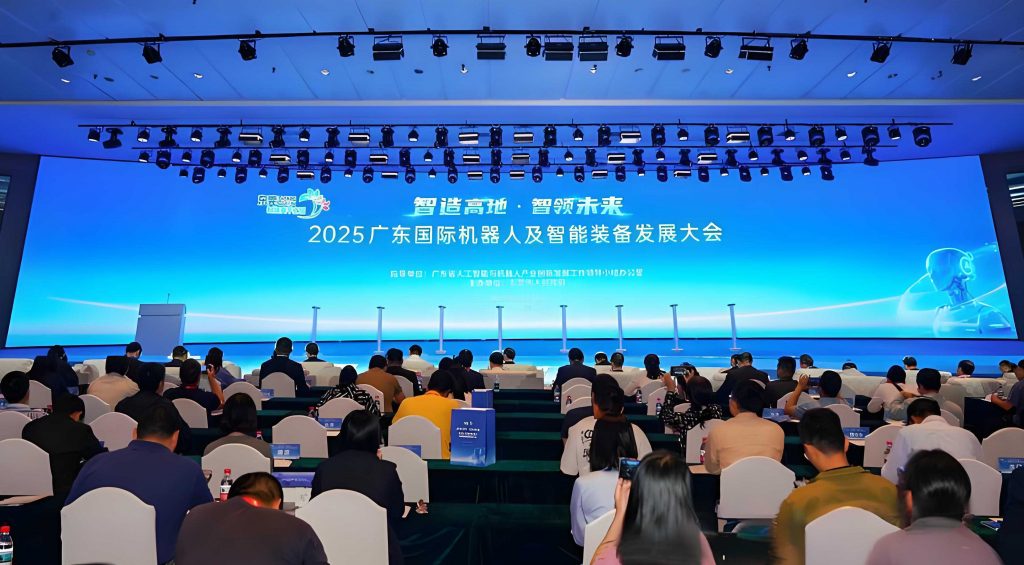
Compared to developed nations, China’s agricultural robot technology is relatively薄弱, with significant disparities in reliability, accuracy, and efficiency. Current research focuses on image analysis and mechanical control, often targeting spherical fruits like tomatoes, while less attention is given to irregularly shaped produce. Most prototypes are not yet commercialized. The progression of China robots reflects a catch-up phase, where innovation must align with local agricultural practices.
To quantify China’s progress, I analyze key metrics. Let $P_{China}$ represent the performance index of China robots, and $P_{global}$ for global leaders. A relative performance ratio $R_p$ can be defined as:
$$R_p = \frac{P_{China}}{P_{global}}$$
Currently, $R_p$ is estimated below 0.5 for many applications, indicating room for improvement. Factors influencing $P$ include technological maturity $T$, market penetration $M$, and cost-effectiveness $C$:
$$P = w_1 T + w_2 M + w_3 C$$
where $w_1$, $w_2$, $w_3$ are weights. For China robots, enhancing $T$ through R&D is paramount.
| Aspect | Developed Countries (e.g., Japan, EU) | China |
|---|---|---|
| Start of Development | 1980s-1990s | 2000s onward |
| Technology Maturity | High (commercial robots available) | Moderate (mostly research prototypes) |
| Application Scale | Widespread in facilities and fields | Limited to pilot projects |
| Key Focus Areas | Harvesting, spraying, milking | Grafting, basic harvesting, weeding |
| Investment Level | Substantial public and private funding | Relatively low, reliant on grants |
| Integration with AI | Advanced (computer vision, learning) | Developing (basic image recognition) |
This table highlights the disparities and underscores the potential for growth in China robots.
Existing Problems in Agricultural Robot Application
Despite some agricultural robots being capable of replacing humans in specific tasks, I identify three main issues hindering practical deployment, particularly for China robots:
- Insufficient Intelligence and Flexibility: To cope with complex, variable environments, agricultural robots need high intelligence and柔韧性, such as basic recognition and obstacle avoidance. While research has shifted toward machine vision, automatic navigation, and positioning, with some mature solutions, the general intelligence level of agricultural robots remains low, unable to fully substitute human labor. For China robots, this is exacerbated by diverse cropping systems and fragmented farms.
- Inadequate Reliability and Stability: The demanding production environments, varied crop traits, and strict quality requirements necessitate high reliability and stability. System failures or智能不足 can lead to significant agricultural losses. China robots often struggle with durability in harsh conditions, such as humidity or dust.
- High Costs and Low Affordability: Agricultural robots are in their infancy, with components and systems not yet standardized or mass-produced, resulting in high prices and maintenance fees. Moreover, most robots are designed for specific tasks (e.g., seeding, picking), not entire production cycles, and seasonal agriculture leads to low utilization rates, indirectly increasing costs. This is a critical barrier for China robots, where farmers have limited capital.
To model the cost challenge, let $C_{total}$ be the total cost of a robot, including initial purchase $C_{init}$, operating costs $C_{op}$, and maintenance $C_{maint}$. The annualized cost $C_{annual}$ can be expressed as:
$$C_{annual} = C_{init} \cdot \frac{r(1+r)^n}{(1+r)^n – 1} + C_{op} + C_{maint}$$
where $r$ is the discount rate and $n$ is the lifespan in years. For China robots, reducing $C_{init}$ through localization and scale is essential. The benefit $B$ from robot adoption, such as labor savings $L$ and yield increase $Y$, must exceed $C_{annual}$ for viability:
$$B = \alpha L + \beta Y > C_{annual}$$
Currently, for many China robots, this inequality does not hold, limiting adoption.
| Problem | Description | Impact on China Robots |
|---|---|---|
| Low Intelligence | Inability to handle complex recognition and decision-making in dynamic environments | Reduces applicability in diverse Chinese farms |
| Poor Reliability | Frequent breakdowns due to harsh conditions (e.g., mud, temperature extremes) | Increases downtime and erodes farmer trust |
| High Cost | Expensive initial investment and upkeep, with low seasonal utilization | Limits access for smallholder farmers, prevalent in China |
| Limited Versatility | Task-specific design prevents multi-use across agricultural cycles | Decreases return on investment in China’s varied crops |
| Technological Gaps | Lag in core technologies like sensors and AI compared to global leaders | Slows innovation and competitiveness of China robots |
Future Prospects for Agricultural Robots in China
With China’s rapid technological and economic growth, increased government support for agricultural mechanization, and the ongoing adjustment of agricultural structures toward intensification, the agricultural machinery sector is experiencing an unprecedented favorable period. As a foundational industry, agricultural development directly impacts economic growth and social stability. Aligning with international advanced trends, developing and widely applying agricultural robot technology can enhance resource utilization and labor productivity, facilitating China’s transformation from a large agricultural country to a powerful one.
The先进性 and引领性 of agricultural robot technology dictate that it will become a key focus in China’s future agricultural equipment R&D. Drawing on global experiences, I propose several innovative research directions for China robots:
- Redefine Robot Actions: Shift from高度模仿人类动作 to designing actions based on crop physical characteristics and stable technologies. Instead of mimicking human gestures, develop robot-friendly motions that ensure gentleness and efficiency. For example, use suction-based picking for delicate fruits rather than gripper模仿. This can be formulated as optimizing an action function $f(a)$ to minimize damage $D$ while maximizing speed $S$:
$$\min_{a} D(a) \quad \text{subject to} \quad S(a) \geq S_{min}$$
where $a$ represents the robot action parameters. For China robots, this approach can simplify control algorithms.
- Standardize Crops through Bioengineering and Facility Agriculture: Employ methods like breeding uniform crop varieties or using controlled environments (e.g., greenhouses) to reduce crop variability, thereby lowering the technical demands on robots. This aligns with China’s push for precision agriculture and can make China robots more effective. A homogeneity index $H$ can be defined for crops, and robot performance $P_r$ may scale with $H$:
$$P_r \propto H^\kappa$$
where $\kappa$ is a positive constant. Increasing $H$ through agronomic practices can boost $P_r$ for China robots.
- Develop Integrated End-Effectors and Software: Create modular end-effectors and computer software that expand robot functionalities, enabling multi-purpose use (e.g., a single robot for spraying, weeding, and monitoring). This improves utilization rates and reduces overall costs. For China robots, modularity can be key to affordability. Let $F$ be the number of functions a robot can perform. The cost-effectiveness $CE$ might improve with $F$:
$$CE = \frac{B \cdot F}{C_{total}}$$
By increasing $F$, China robots can become more viable for small-scale farms.
Additionally, I emphasize the importance of cross-disciplinary collaboration, policy incentives, and farmer training to accelerate the adoption of China robots. The integration of IoT and big data can further enhance robot capabilities, leading to smart farming systems where China robots operate autonomously within networked environments.
In conclusion, the journey of agricultural robots in China is marked by challenges but also immense potential. By addressing intelligence, reliability, and cost issues through innovative strategies, China robots can play a pivotal role in modernizing agriculture. As I reflect on this field, the continuous advancement of China robots will not only boost productivity but also contribute to global food security and sustainable development. The future of China robots lies in tailored solutions that resonate with local agricultural contexts, driving a new era of robotic farming.
To encapsulate the progress, I present a final formula for the growth trajectory $G(t)$ of China robots over time $t$, considering factors like R&D investment $I$, policy support $S_p$, and market demand $D_m$:
$$G(t) = G_0 \cdot e^{kt} \cdot \left(1 + \frac{I}{I_0}\right) \cdot \left(1 + \frac{S_p}{S_0}\right) \cdot \left(1 + \frac{D_m}{D_0}\right)$$
where $G_0$, $I_0$, $S_0$, $D_0$ are baseline values, and $k$ is a growth constant. With sustained efforts, $G(t)$ for China robots is poised to rise, heralding a transformative impact on agriculture.