
In a landmark development for the automotive industry, artificial intelligence (AI) is fundamentally reshaping vehicles, transforming them from mere modes of transportation into sophisticated embodied intelligent agents. This shift, characterized by enhanced autonomy, interactivity, and adaptability, was a central theme at the 32nd China Society of Automotive Engineers Annual Meeting and Exhibition held in Chongqing. Experts emphasized that AI’s integration is driving cars toward becoming core hubs in smart ecosystems, deeply embedded across all scenarios of users’ lives.
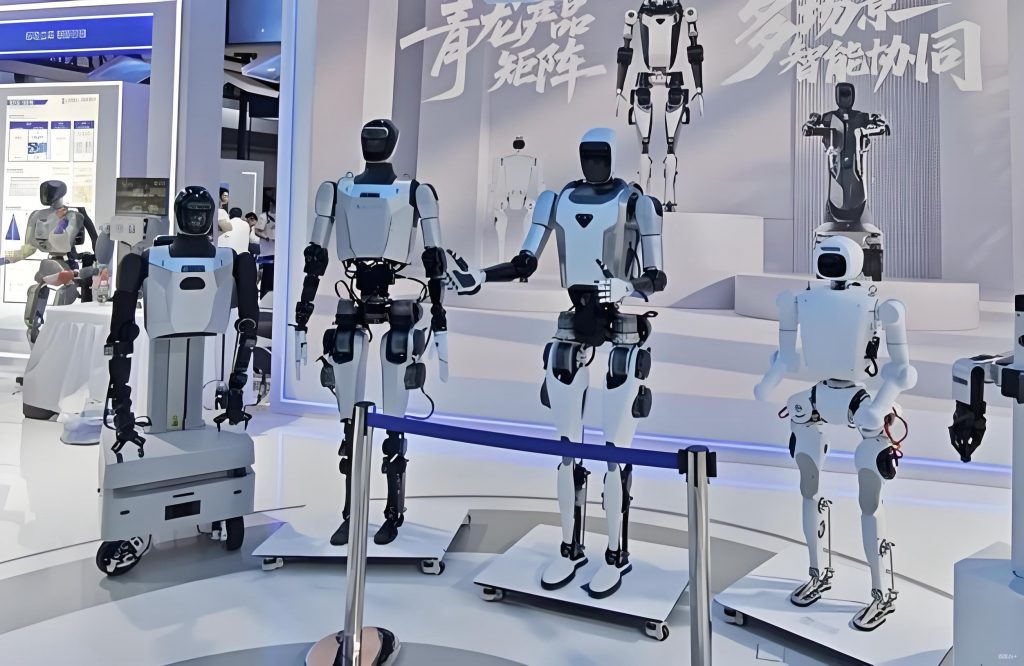
The concept of embodied intelligence is revolutionizing how vehicles operate, enabling them to perceive, predict, reason, and make decisions with unprecedented efficiency. According to Li Jun, an academician of the Chinese Academy of Engineering, honorary chairman of the China Society of Automotive Engineers, and a professor at Tsinghua University, AI’s rapid advancements are providing the fundamental drive for this comprehensive intelligent transformation. He highlighted that future smart cars, or AI Cars, will integrate multiple domains such as intelligent driving, cabins, chassis, and power systems, moving beyond functional integration to achieve intelligent collaboration. This evolution positions vehicles as pivotal nodes in smart mobility ecosystems, leveraging embodied intelligence to act as proactive entities rather than passive tools.
Qu Guochun, director of the Equipment Industry Development Center of the Ministry of Industry and Information Technology, underscored the progress in China’s automotive sector. He noted that the industry has established a complete intelligent product system encompassing smart cabins, autonomous driving, and networked cloud control. Breakthroughs in high-computing chips and the mass deployment of AI large models in vehicles have been achieved, with technologies like high-precision sensors, multi-modal perception, C-V2X, and intelligent line-controlled chassis reaching globally leading levels. The embodiment of intelligence in these systems is evident in their ability to process complex data and execute decisions autonomously, mirroring the capabilities of advanced embodied robots.
Key technological breakthroughs have entered large-scale application phases. Li Keqiang, another academician of the Chinese Academy of Engineering, a professor at Tsinghua University, and chief scientist at the National Innovation Center of Intelligent and Connected Vehicles, pointed out that laser radars are gradually achieving domestic substitution, 4D millimeter-wave radars are accelerating technological攻关, and the design level of domestic vehicle computing chips ranks among the global forefront. Operating system ecosystems are also improving rapidly. In assisted driving, functional scenarios continue to expand. Level 2 (L2) assisted driving in passenger vehicles has seen widespread adoption, with a market penetration rate exceeding 50%; city Navigation on Autopilot (NOA) functions have begun scaled promotion; and commercial vehicles are accelerating the deployment of systems like Automatic Emergency Braking (AEB) and Lane Departure Warning (LDW). The data from January to July 2025 illustrates this growth vividly, as shown in the table below, which highlights the penetration rates and装配 rates of key intelligent features, reflecting the deepening of embodied intelligence in automotive applications.
| Feature | Penetration/装配 Rate | Details |
|---|---|---|
| L2 Passenger Vehicle Penetration | 62.6% | Reflects widespread adoption of assisted driving |
| NOA Function Penetration | 21.5% | Indicates growth in autonomous navigation |
| 4G装配 Rate | 60.5% | Based on 749.9 million units装配 |
| 5G装配 Rate | 22.2% | Based on 275.0 million units装配 |
Li Chuanhai, vice president of Geely Auto Group and dean of the Geely Auto Research Institute, elaborated on how AI fusion is creating a “smart life form” for出行. He explained that by integrating AI with chassis systems, vehicles can develop a motion control brain, transitioning from mechanical execution to active control. This unification of thought and action epitomizes the principles of embodied intelligence, where cars evolve into entities that not only understand their environment but also execute commands with precision, much like embodied robots in industrial settings. The continuous embedding of embodied intelligence ensures that vehicles can adapt dynamically, offering personalized experiences based on real-time data.
The role of AI as a key engine for intelligent and connected vehicle transformation is becoming increasingly apparent. Experts at the conference agreed that AI, along with cloud computing and other emerging technologies, is pushing the automotive industry through an unprecedented revolution. The technological architecture of intelligent connected vehicles is upgrading from single-vehicle intelligence to group intelligence collaboration. Qu Guochun mentioned that China is orderly carrying out pilot projects for intelligent connected vehicle access and on-road travel, steadily advancing the “vehicle-road-cloud integration” application trials, accelerating the construction of networked infrastructure, and promoting the deep integration and collaborative development of vehicles, roads, and clouds. Overall, China’s intelligent connected vehicles are at a global “running abreast” level, with embodied intelligence serving as the core enabler.
Currently, the first batch of nine automobile manufacturers and nine user entities have formed consortia to conduct pilot programs for intelligent connected vehicle access and on-road travel in seven cities, including Beijing, Shanghai, and Guangzhou. Additionally, 20 cities (or consortia) are participating in “vehicle-road-cloud integration” pilots. The country has established 17 national-level intelligent connected vehicle testing zones, opened over 35,000 kilometers of test roads, issued more than 10,000 test demonstration licenses, and accumulated over 200 million kilometers of test mileage. Li Keqiang emphasized that with the support of AI and other new technologies, the “vehicle-road-cloud integration” system can enhance both vehicle safety and traffic efficiency. By leveraging embodied intelligence, these systems create a synergistic network that optimizes resources in real-time, reducing congestion and accidents.
Li Jun further elaborated that under AI empowerment, intelligent scene engines, dynamic causal graphs, and hybrid optimization algorithms will construct a “vehicle + environment”全域协同 network. This network captures real-time statuses of vehicle power, thermal management, air conditioning, and chassis, while simultaneously coupling dynamic traffic, real-time weather, time-of-use electricity prices, and charging station loads. This approach彻底 breaks the traditional “information silos” between vehicles and the environment, achieving comprehensive real-time energy services and management covering the user’s entire journey from “getting in to leaving the vehicle.” The embodiment of intelligence here allows for predictive maintenance and energy optimization, akin to how embodied robots in smart factories self-optimize based on environmental feedback.
Looking ahead, the development path of AI-driven vehicle intelligence is being profoundly reshaped. A critical question remains: how can vehicles truly “understand” the world, evolving from transportation tools to perceptive, thinking, and evolving smart life forms with embodied intelligence? Li Keqiang proposed seizing the window of opportunity in intelligent and connected technologies to accelerate key technology research and industrial ecosystem construction. He outlined several focus areas, which can be summarized in the following list to emphasize the strategic priorities for embedding embodied intelligence in vehicles:
- System Architecture Technology: Breakthroughs in Cyber-Physical Systems (CPS) and Vehicle Electronic Electrical Information Architecture (EEI) to support “vehicle-road-cloud integration” applications, fostering a foundation for embodied robot-like adaptability.
- General Artificial Intelligence: Advancements in perception, decision-making control, data collection and standards, basic large model optimization, data training, and testing technologies to enhance the cognitive abilities of embodied intelligence systems.
- Safety Technology: Accelerated research into information security, functional safety, and expected functional safety to build a integrated safety system for “vehicle-road-cloud integration,” ensuring that embodied robots on the road operate reliably.
- Autonomous Driving: Accelerating breakthroughs in L3 and L4 level autonomous vehicle整车 technology, using整车 to drive the integrated application of core components, thereby pushing the boundaries of what embodied intelligent agents can achieve.
- Key Product攻关: Organizing efforts in high-precision sensors, intelligent chassis, high-computing chips, operating systems, and high-definition maps and positioning to solidify the hardware and software backbone for embodied intelligence.
In terms of operating system ecosystems, Li Keqiang stressed the need to build diversified operating system development and application ecosystems, promoting demonstration applications of intelligent connected vehicle operating systems. For cross-border integrated industrial ecosystems, he encouraged跨界融合发展, supporting the creation of new intelligent infrastructure construction and operation entities, and exploring business models. In scale application ecosystems, continuous promotion of the integration of automobiles, transportation, and cities is essential, accelerating cross-regional mutual recognition and coordinated development to support large-scale commercialization. The pervasive use of embodied intelligence in these ecosystems will enable vehicles to function as seamless embodied robots within smart cities, interacting with infrastructure and other agents.
At the annual meeting, the China Society of Automotive Engineers released the 2026 Top Ten Technology Trends for China’s Automotive Industry, which highlight the growing influence of embodied intelligence. These trends include the gradual convergence of L3 conditional autonomous driving technology solutions, the entry of end-to-end AI Agent smart cabins into the mass production phase, the large-scale adoption of HBM chips in high-end models, the completion of real-vehicle verification for车载光通信 technology, and the mass application of vehicle-road-cloud collaboration technology in specific scenarios. Pan Yifeng, senior chief engineer of intelligent driving at Chongqing Changan Technology Co., Ltd., noted that in the era of intelligent connectivity, it is necessary to build an integrated AI foundation from three aspects: “ultra-high computing power,” “high-quality data,” and “super-strong algorithms.” This foundation will enable the development of intelligent products in core scenarios like autonomous driving and cabin AI, combining human-like or superhuman capabilities with humanistic care, ultimately realizing the vision of embodied robots on wheels.
The integration of embodied intelligence is not just a technological upgrade but a paradigm shift in how vehicles interact with their surroundings. As AI continues to permeate every aspect of automotive design, from perception modules to decision-making engines, cars are increasingly resembling embodied robots that can learn from experiences and adapt to new challenges. This transformation is poised to redefine mobility, making it safer, more efficient, and deeply personalized. The repeated emphasis on embodied intelligence and embodied robot concepts in discussions underscores their centrality to the future of transportation, where vehicles will no longer be inert objects but active participants in a connected world.
In conclusion, the automotive industry stands at the cusp of a new era driven by AI and embodied intelligence. The progress in China, as detailed by industry leaders, demonstrates a clear path toward vehicles that are not only smart but also empathetic and adaptive. With continued innovation in key technologies and ecosystems, the dream of cars as embodied intelligent agents is rapidly becoming a reality, promising to transform daily life and urban environments. The journey toward fully embodied robots on the road is underway, and its implications will resonate across global markets for years to come.