
As I explore the rapid evolution of AI human robot technologies, it becomes increasingly clear that these systems pose profound challenges to personal privacy. The integration of artificial intelligence with humanoid robots has ushered in an era of “embodied intelligence,” where machines not only mimic human form but also exhibit advanced perception, decision-making, and social interaction capabilities. In this article, I delve into how AI human robot systems impact various types of privacy, drawing on typological frameworks to analyze both negative and positive aspects of freedom. I will use tables and mathematical models to summarize key concepts, and propose legal responses tailored to different risk scenarios. The pervasive nature of AI human robot applications—from healthcare and finance to education and emergency services—demands a nuanced approach to privacy protection, one that balances innovation with individual rights.
The development of AI human robot systems traces back to early robotics and computational theories, but it is the advent of generative AI that has truly accelerated their capabilities. For instance, models like ChatGPT demonstrate how large language models can enable humanoid robots to understand and respond to natural language, performing complex tasks without extensive retraining. This progress, however, amplifies privacy risks, as AI human robot devices can conduct unobtrusive surveillance, capture intimate details, and even manipulate human behavior. In my view, the unique features of AI human robot—such as realistic human-like appearance, environmental sensors, and emotional detection algorithms—make privacy invasions more covert and pervasive than ever before. To illustrate, consider an AI human robot in a home setting: it might use thermal sensors to see through walls or audio systems to eavesdrop on private conversations, all while building trust through social interactions.
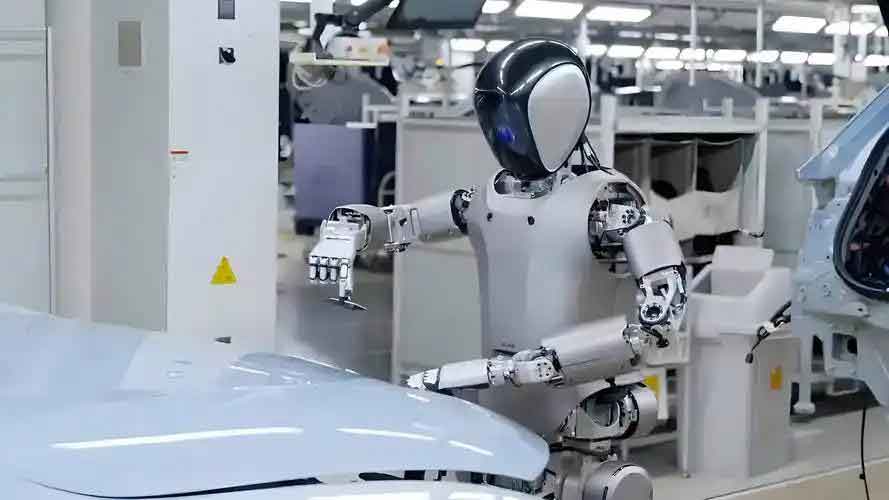
In assessing the privacy implications of AI human robot systems, I find it useful to categorize applications based on risk levels. High-risk scenarios, such as those in medical diagnostics or financial services, involve sensitive data like health records or biometric information, whereas low-risk settings like retail entertainment may have lesser impacts. Below, I present a table summarizing common AI human robot applications and their associated privacy risks, emphasizing how the context influences the severity of threats. This classification helps in designing targeted legal measures, as a one-size-fits-all approach could stifle innovation or overlook critical vulnerabilities.
| Application Scenario | Risk Level | Key Privacy Concerns |
|---|---|---|
| Healthcare and Medical Diagnostics | High | Body privacy, health data, emotional states |
| Financial Services | High | Financial records, decision privacy, behavioral tracking |
| Education and Training | High | Knowledge privacy, student data, monitoring |
| Emergency Rescue and Military | High | Location privacy, communication secrecy, psychological data |
| Retail and Entertainment | Low to Moderate | Space privacy, minor data collection |
From my perspective, the privacy impacts of AI human robot can be understood through a typology that distinguishes between negative and positive freedoms. Negative freedoms involve the right to be left alone—encompassing body, space, communication, and proprietary privacy. For example, an AI human robot equipped with cameras and microphones can intrude into private spaces, intercept communications, or expose personal belongings, leading to violations of these domains. I model this intrusion using a simple equation where the privacy risk $R$ is a function of the robot’s sensing capabilities $S$, data processing power $P$, and the sensitivity of the environment $E$: $$R = k \cdot S \cdot P \cdot E$$ Here, $k$ is a constant representing contextual factors, and higher values indicate greater privacy erosion. In high-risk settings, this equation shows how AI human robot systems can exponentially increase risks, necessitating strict controls.
On the other hand, positive freedoms relate to self-development and include knowledge, decision, association, and behavioral privacy. AI human robot systems, especially those integrated with manipulative AI, can undermine these by exploiting cognitive vulnerabilities or influencing thoughts and actions. For instance, an AI human robot using brain-computer interfaces might access subconscious thoughts or dreams, as seen in emerging “dream hacking” technologies. This threatens knowledge privacy, where individuals should be free to explore ideas without surveillance. I represent this manipulation through a probabilistic model: Let $M$ denote the manipulative intent of the AI human robot, $V$ the vulnerability of the user, and $I$ the inconsistency with user goals. The likelihood of privacy harm $H$ can be expressed as: $$H = \Pr(M | V) \cdot I$$ This highlights that when AI human robot systems act against user objectives, they erode positive freedoms, potentially leading to long-term psychological effects.
To address these challenges, I propose several legal responses centered on the AI human robot ecosystem. First, informed consent standards must be clarified and strengthened. Users should be fully aware of an AI human robot’s capabilities—such as its data collection range, storage practices, and third-party sharing—before deployment. This involves “piercing the veil” to disclose manufacturers, data handlers, and potential risks. For example, in healthcare, an AI human robot must obtain explicit consent for handling sensitive body privacy data, with alternatives offered if users withdraw permission. I summarize key elements of consent in the table below, which can guide policymakers in implementing robust transparency measures for AI human robot interactions.
| Consent Element | Description | Example in AI Human Robot Context |
|---|---|---|
| Purpose Disclosure | Clear explanation of the robot’s intended use | Informing a user that an AI human robot is for medical monitoring, not just entertainment |
| Technical Capabilities | Details on sensors, data processing, and limits | Disclosing that an AI human robot can record audio up to 10 meters away |
| Risk Notification | Warnings about potential privacy invasions | Alerting users to risks of emotional data being shared with cloud services |
| User Controls | Options to opt-out or delete data | Providing a button to disable an AI human robot’s camera in private spaces |
Second, I argue for extending privacy rights to cover positive freedoms, as traditional frameworks often overlook these aspects. In many jurisdictions, privacy laws focus on negative liberties, but AI human robot technologies necessitate protections for intellectual and decisional autonomy. For instance, laws could recognize a right to “cognitive liberty,” shielding individuals from unauthorized thought surveillance by AI human robot systems. This aligns with broader human dignity principles and can be integrated into general personality rights. Mathematically, we can think of privacy as a multidimensional space: Let $\vec{P}$ represent a privacy vector with components for body, space, knowledge, etc. The overall privacy protection $PP$ could be modeled as: $$PP = \sum_{i=1}^{n} w_i P_i$$ where $w_i$ are weights assigned to each privacy type, and $P_i$ are the protection levels. By increasing weights for positive freedoms, legal systems can better address AI human robot threats.
Third, I advocate for moderate regulation of manipulative AI practices within AI human robot systems, rather than outright bans. Drawing from the EU AI Act’s approach, we should distinguish between permissible persuasive AI—which aligns with user goals—and prohibited manipulative AI that exploits vulnerabilities. For example, an AI human robot helping someone quit smoking might use encouragement, but if it hiddenly influences shopping habits, it crosses into manipulation. I propose a regulatory framework based on intent and transparency: if an AI human robot’s actions are predictable and consented to, they are acceptable; otherwise, they require scrutiny. This can be captured in a decision rule: If $M > threshold$ and $I > 0$, then regulate, where $M$ is manipulative intent and $I$ is goal inconsistency. Such targeted rules prevent overregulation while curbing AI human robot abuses.
Lastly, for high-risk AI human robot scenarios, I recommend dynamic governance rules, including strict liability, algorithm audits, and sandbox testing. Under strict liability, manufacturers of defective AI human robot products would be accountable for privacy harms without proof of fault, encouraging safer designs. Algorithmic transparency can be enhanced through explainable AI and regular audits, which I model as an optimization problem: minimize privacy risk $R$ subject to constraints like usability $U$ and cost $C$: $$\min R \quad \text{subject to} \quad U \geq U_{\text{min}}, \quad C \leq C_{\text{max}}$$ Sandbox environments allow testing AI human robot systems in controlled settings, reducing real-world risks. For instance, a new AI human robot for education could be evaluated in a simulated classroom to identify privacy gaps before full deployment.
In conclusion, the rise of AI human robot technologies presents both opportunities and significant privacy challenges. By applying a typological lens, we can better understand how these systems affect negative and positive freedoms, and tailor legal responses accordingly. Through informed consent, extended privacy rights, moderate regulation, and high-risk governance, we can harness the benefits of AI human robot while safeguarding individual autonomy. As I reflect on this, it is clear that ongoing research and adaptive policies will be crucial as AI human robot systems continue to evolve, ensuring that privacy remains a cornerstone of our digital future.