
The convergence of robotics and bionics has given rise to a remarkable class of machines: amphibious bionic robots. These systems, inspired by nature’s most adept trans-media creatures, represent the frontier of mobile robotics, designed to operate seamlessly across the fluid boundary between land and water. My exploration into this field reveals a fascinating journey from simple mechanical imitations to sophisticated systems that blur the line between biological organism and engineered machine. The fundamental challenge and appeal lie in conquering the “domain shift” – the drastic change in physical forces and environmental constraints when moving from aquatic to terrestrial realms. Nature’s amphibians, perfected over eons of evolution, provide the ultimate blueprint for solving this problem, offering solutions in form, locomotion, material, and control that we are only beginning to decode and replicate.
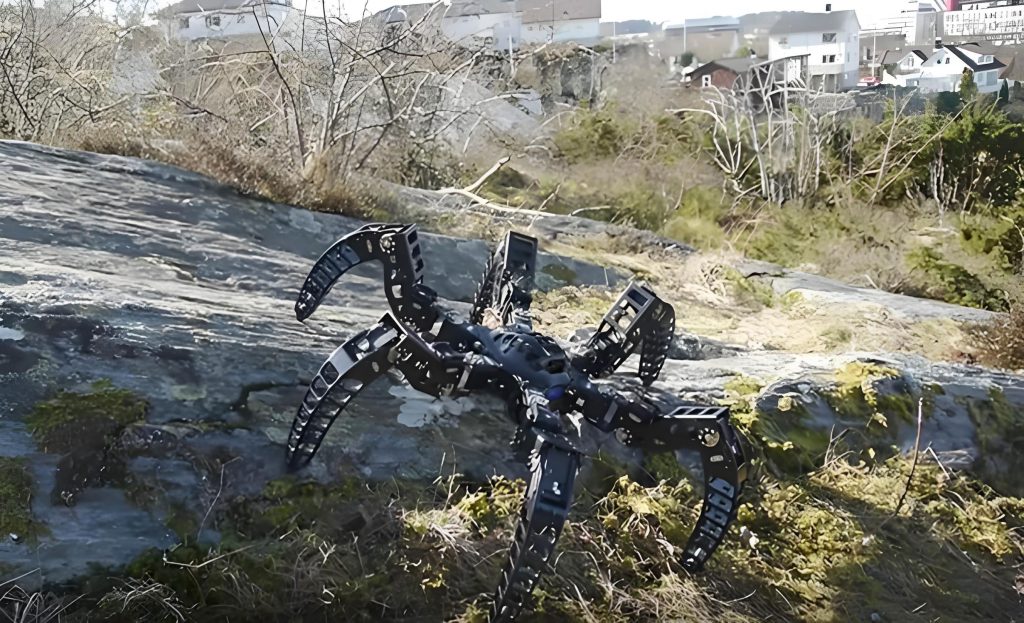
The imperative for developing such versatile bionic robots is clear. They are poised to revolutionize tasks in environmental monitoring, executing delicate surveys of coastal ecosystems, marshlands, and littoral zones without the disruptive footprint of human presence or conventional vehicles. In disaster response, their ability to navigate flooded urban areas, submerged debris, and unstable terrain makes them indispensable for search, rescue, and reconnaissance. Furthermore, their potential in defense, infrastructure inspection, and scientific exploration of extreme environments is vast. However, early attempts often relied on dual, separate locomotion systems requiring manual reconfiguration, leading to inefficiency and reduced operational robustness. The modern paradigm, therefore, focuses on true biomimicry—creating a single, adaptable bionic robot whose movement emerges from principles directly copied from living amphibians.
Bionic Design Principles: Learning from Nature’s Playbook
The design of an amphibious bionic robot is a multidisciplinary endeavor rooted in a deep understanding of biological prototypes. It extends beyond cosmetic resemblance to a holistic imitation of mechanisms, structures, materials, and control strategies.
Bionic Mechanism and Structural Imitation
The primary insight from biology is that efficient trans-media locomotion often requires integrated, multi-modal propulsion rather than separate systems. I observe that successful bionic robots emulate the way an organism’s limbs or body segments are repurposed for different environments. For instance, a turtle’s flipper is a marvel of adaptive design: it provides powerful thrust in water through oscillatory motions and can transform its posture to facilitate awkward but effective crawling on land. This principle has led to the development of transformable leg-flipper composites in bionic robots. The core equation governing such fluid-limb interaction during swimming can be simplified to the thrust generation model:
$$ F_{thrust} = \frac{1}{2} C_T \rho A v^2 $$
where $F_{thrust}$ is the propulsive force, $C_T$ is the thrust coefficient dependent on the fin’s kinematics and shape, $\rho$ is fluid density, $A$ is the characteristic area, and $v$ is the velocity of the fin relative to water. On land, the same limb must generate ground reaction forces for support and propulsion, a problem of terrestrial dynamics. The genius of the bionic approach is to design a single actuator network and morphological structure that can satisfy the conflicting optimality conditions for both media.
Bionic Materials and Actuation
A critical frontier is the shift from rigid, motor-driven joints to soft, compliant, and biomimetic materials. Traditional actuators (e.g., electric motors) often necessitate bulky waterproofing and struggle to replicate the smooth, continuous deformation of muscle. The next generation of bionic robots employs artificial muscles, such as pneumatic actuators, shape-memory alloys (SMAs), dielectric elastomers (DEAs), and ionic polymer-metal composites (IPMCs). These materials allow for distributed actuation, intrinsic compliance, and lifelike motion. For example, an octopus-inspired bionic robot uses silicone-based pneumatic channels to mimic muscular hydrostats, enabling complex bending and elongation without a rigid skeleton. The stress-strain behavior of such soft actuators is crucial:
$$ \sigma = E(\epsilon) \cdot \epsilon + \sigma_{active}(\xi) $$
Here, $\sigma$ is total stress, $E(\epsilon)$ is the nonlinear elastic modulus of the base material, $\epsilon$ is strain, and $\sigma_{active}(\xi)$ is the active stress component driven by a control variable $\xi$ (like air pressure or electrical voltage). This material-level bionics is key to achieving resilience, safe interaction, and efficient locomotion in unstructured environments.
Bionic Control and Sensor Fusion
An organism’s graceful transition from swimming to walking is orchestrated by its nervous system, particularly central pattern generators (CPGs). In bionic robots, CPG-inspired controllers—often implemented as networks of coupled nonlinear oscillators—generate stable, rhythmic locomotion patterns without requiring detailed pre-programming of every joint trajectory. The phase dynamics between oscillators dictate gait. A simple CPG model for a segment is:
$$ \dot{x}_i = \alpha (\beta – r_i^2)x_i – \omega_i y_i + \sum_{j \neq i} k_{ij}(x_j \cos \phi_{ij} – y_j \sin \phi_{ij}) $$
$$ \dot{y}_i = \alpha (\beta – r_i^2)y_i + \omega_i x_i + \sum_{j \neq i} k_{ij}(x_j \sin \phi_{ij} + y_j \cos \phi_{ij}) $$
where $x_i, y_i$ define the oscillator state for joint $i$, $r_i^2 = x_i^2 + y_i^2$, $\omega_i$ is the frequency, and coupling terms $k_{ij}, \phi_{ij}$ synchronize the network. Sensory feedback (e.g., from inertial measurement units, force sensors, vision) modulates these oscillator parameters in real-time, allowing the bionic robot to adapt to slopes, currents, or obstacles, mirroring an animal’s reflex pathways.
Taxonomy and Performance of Amphibious Bionic Robots
The diversity of amphibious life has inspired a correspondingly diverse array of bionic robot architectures. They can be classified by their primary biological inspiration and their dominant propulsion strategy. The following table summarizes key examples and their characteristics.
| Biological Inspiration | Representative Robot | Key Locomotion Features | Typical Performance Metrics |
|---|---|---|---|
| Crab/Lobster | Crabster CR200, BUR-001 | Multi-legged walking on land; paddling/swimming with specialized limbs. | High stability, good payload (e.g., 300 kg for CR200), slow speed (~0.5 m/s land, ~0.5 m/s water). |
| Turtle | Naro-Tartaruga, MiniTurtle | Flipper-driven swimming; flipper-based crawling or wheeled motion on land. | Efficient swimming (up to 2 m/s), moderate land mobility, good depth capability. |
| Salamander | Salamandra Robotica, Pleurobot | Undulatory body swimming; legged walking with spinal undulation. | Excellent gait transition, high maneuverability, complex control. |
| Snake/Eel | ACM-R5, AmphiBot | Anguilliform swimming; lateral undulation or rolling on land. | Excellent terrain conformity, good in constrained spaces, lower speed. |
| Ray/Fish (BCF/MPF) | RoboTuna, Velox, Aqua-ray | Body/Caudal Fin (BCF) or Median/Paired Fin (MPF) propulsion; wheeled or fin-flipping on land. | High swimming efficiency, often limited or specialized terrestrial locomotion. |
| Insect (Cockroach) | RHex, AmphiHex | Spring-loaded legs for running; transformable legs to paddles for swimming. | High land speed and obstacle clearance (e.g., RHex at 2 km/h), simple control. |
| Spherical/Ball | Guardbot, Turtle-inspired spherical robots | Pendulum-driven rolling on land; sealed hull with internal thrusters for water. | Omnidirectional land motion, good sealing, stable floating platform. |
To objectively compare the locomotion efficiency across such differently scaled bionic robots, I propose the Locomotion Capability of Amphibious Robot (LCAR) coefficient. It normalizes speed by mass, providing a fair metric for mobility performance:
$$ \text{LCAR} = \frac{v}{m} $$
where $v$ is the maximum velocity in a given medium (m/s) and $m$ is the robot’s mass (kg). A higher LCAR indicates a more mobile platform for its weight. Plotting this for various robots reveals that while most cluster in the lower range (0-0.1 m/(s·kg)), some designs, like certain high-speed hexapods or streamlined swimmers, achieve significantly higher values, pointing to successful biomimetic optimization.
Propulsion Mode Analysis: The Engine of Trans-Media Mobility
The choice of propulsion mode is the most decisive factor in an amphibious bionic robot‘s performance. The table below analyzes the predominant modes, highlighting their principles and trade-offs.
| Propulsion Mode | Aquatic Principle | Terrestrial Principle | Advantages | Disadvantages |
|---|---|---|---|---|
| Legged | Paddling, rowing with specialized foot segments. | Static/dynamic walking, running. | Superior obstacle negotiation, high ground traction, stable platform. | Complex mechanics, often slower aquatic speed, potential low swimming efficiency. |
| Undulatory (Snake-like) | Body/Caudal Fin (BCF) waves generating thrust. | Lateral undulation pushing against ground asperities. | Excellent terrain conformity, good swimming efficiency, mechanically simple segments. | Lower speed on flat ground, can disturb sediments, challenging control. |
| Flipper/Fin Oscillation | Lift-based thrust from oscillating foils (MPF). | Flipper-based crawling or lifting for steps. | High efficiency and maneuverability in water, potentially good for stealth. | Often poor or inefficient land locomotion, may require posture transformation. |
| Wheeled/Paddle Hybrid | Paddling with wheel rims or deployable blades. | Conventional wheeled rolling. | High land speed and efficiency, simple control. | Poor performance on soft terrain (e.g., sand, mud), lower aquatic efficiency than fins. |
| Wheel-Leg Composite (e.g., Whegs, AmphiHex) | Paddling with transformed arc-shaped legs/webs. | Running with spring-loaded arc legs. | Good compromise speed and obstacle-crossing on land, adaptable to water. | Mechanical complexity of transformation, may be sub-optimal in either pure medium. |
The trend is evident: the most adaptable and high-performing amphibious bionic robots employ combined or transformable propulsion. For example, a bionic robot might use undulatory fins for efficient cruising underwater and then deploy or reconfigure those fins into leg-like structures for walking. This approach directly mimics nature’s strategy, where morphology is not fixed but behaviorally adaptable.
Frontier Challenges and Future Visions
Despite remarkable progress, the field of amphibious bionic robots faces significant hurdles on the path to achieving true biological parity and widespread deployment.
1. Energy Autonomy and Novel Power Sources
Endurance remains a critical bottleneck. The high energy cost of locomotion in two different fluids (water and air/ground) strains onboard batteries. Future bionic robots must integrate advanced energy solutions. This includes higher energy-density batteries, but also bionic energy harvesting. Imagine a bionic robot with a skin embedded with flexible photovoltaic cells for solar charging on the surface, or with undulating fins that double as piezoelectric or triboelectric generators to scavenge energy from wave motion during swimming. The development of artificial “metabolic” systems that efficiently convert chemical fuel to mechanical work, inspired by muscle biochemistry, is a long-term visionary goal.
2. Intelligence, Swarming, and Embodied AI
The next leap is from teleoperated or gait-preprogrammed machines to truly intelligent, autonomous agents. This requires advances in:
- Multi-sensor Fusion: Creating a perceptual “world model” from cameras, LiDAR, sonar, pressure, and chemical sensors to understand complex amphibious terrain.
- Adaptive Control: Moving beyond fixed CPGs to learning-based controllers that can discover and optimize new gaits for unforeseen environments.
- Swarm Intelligence: Deploying teams of inexpensive amphibious bionic robots that cooperate like a school of fish or a colony of crabs for mapping, search, or construction. This requires robust inter-robot communication (acoustic underwater, radio in air) and distributed algorithms.
3. Quantitative Bionic Fidelity and Bio-Hybridization
How “bionic” is a given robot? I propose a Bionic Similarity Index Measure (BSIM) framework for evaluation. It is a multi-level scoring system that assesses fidelity across dimensions:
$$ \text{BSIM}_{\text{total}} = \sum_{i} w_i \cdot S_i $$
where $S_i$ is a score (e.g., 0-3) for category $i$ (Morphology, Material, Actuation, Control, Behavior), and $w_i$ is a weight reflecting its importance. A high-fidelity morphology score ($S_M$) would require detailed geometric similarity; a high material score ($S_{Mat}$) demands mechanical properties matching tissue; a high control score ($S_C$) necessitates neuromorphic or CPG control. This metric drives design towards deeper biomimicry.
The ultimate frontier is bio-hybridization—integrating living biological components into the bionic robot. Early steps include using engineered muscle tissue or cardiomyocyte layers as actuators (as seen in some ray-inspired microrobots). Future bio-hybrid amphibious bionic robots might leverage living sensors (e.g., engineered olfactory cells for chemical detection) or even possess simple biological energy generation systems. This convergence of synthetic biology and robotics could yield machines with self-healing, growth, and adaptation capabilities unheard of in traditional engineering.
4. Manufacturing and Scalability
Building complex, often soft-bodied amphibious bionic robots with integrated actuators and sensors is non-trivial. Additive manufacturing (3D/4D printing) of multi-material structures, including soft elastomers and conductive elements, is key. The challenge is to develop scalable fabrication processes that can produce robust, waterproof, and functionally integrated robotic organisms at reasonable cost.
Conclusion
The development of amphibious bionic robots stands at a compelling inflection point. We have moved from proof-of-concept prototypes that crudely mimic a single aspect of biology to integrated systems that begin to capture the essence of adaptive, trans-media life. By steadfastly applying bionic principles—emulating not just the shape, but the mechanism, material, and mind of amphibians—we are engineering machines capable of operating in the planet’s most dynamic and critical interface zones. The future of this field lies in overcoming the intertwined challenges of energy, intelligence, and biological fidelity. As these challenges are met, amphibious bionic robots will evolve from fascinating laboratory demonstrations into ubiquitous partners in exploration, stewardship, and understanding of our world, seamlessly bridging the gap between land and water as their biological muses have done for millions of years.