
In recent years, the field of medical robotics has emerged as a critical frontier in healthcare innovation, blending engineering, computer science, and clinical medicine to create intelligent systems that assist in diagnosis, surgery, rehabilitation, and patient care. As a researcher deeply immersed in this interdisciplinary domain, I have witnessed firsthand the rapid evolution of medical robot technologies and their transformative impact on global health systems. The assessment of scientific and technological development levels in this area is not merely an academic exercise but a strategic imperative for nations aiming to secure leadership in the burgeoning medical robot market. In this article, I present a comprehensive analysis based on literature and patent data from 2017 to 2021, employing open-source methodologies to evaluate key countries’ capabilities and identify emerging research hotspots. My goal is to provide insights that can guide policy-making, foster collaboration, and drive innovation in the medical robot ecosystem.
The significance of medical robots cannot be overstated. From surgical assistants like the Da Vinci system to rehabilitation devices and diagnostic capsules, these machines enhance precision, reduce human error, and expand access to care. However, the global landscape is highly competitive, with disparities in research output, patent quality, and institutional collaboration. To systematically assess these dimensions, I adopted a framework inspired by the RAND Corporation’s approach, which focuses on four independent indicators: high-impact literature output, density of cooperative networks, quality-adjusted patents, and scientific organizational capacity. These metrics allow for a nuanced comparison without the biases of composite weighted scores. Additionally, I utilized text mining tools such as VOSviewer and Latent Dirichlet Allocation (LDA) models to distill research themes from both academic papers and patent documents. This multi-faceted analysis offers a holistic view of the medical robot field, highlighting strengths, weaknesses, and opportunities for stakeholders worldwide.
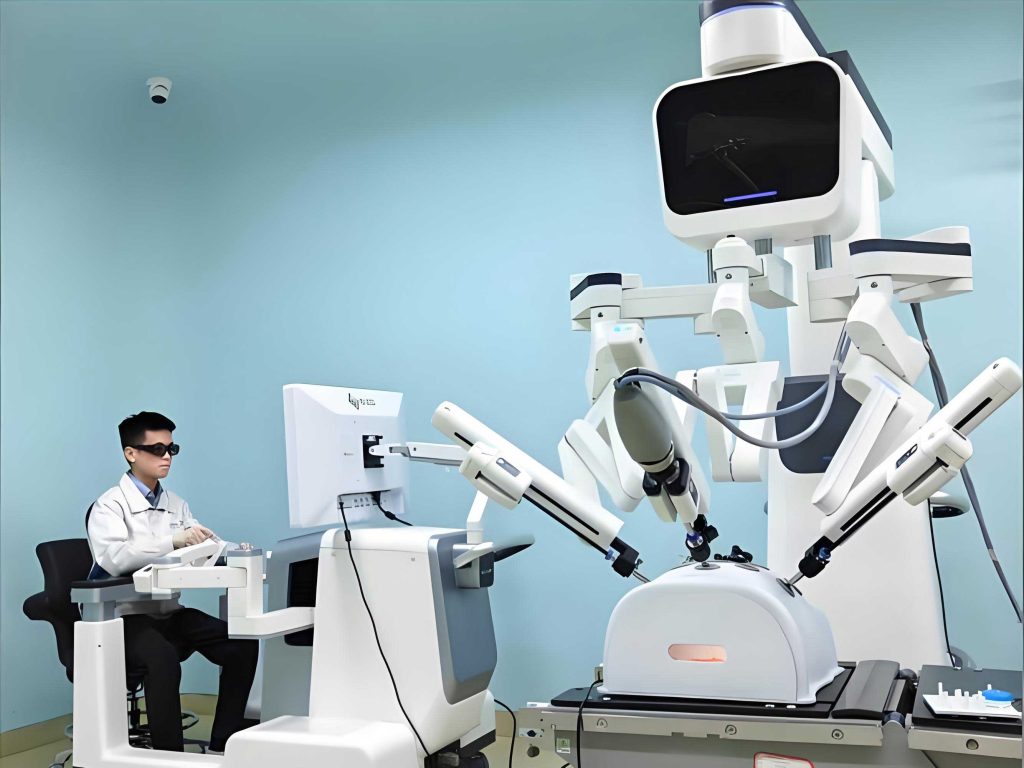
Data collection was centered on two primary sources: the Web of Science Core Collection for scholarly literature and the Incopat database for patents. The search query was designed to capture a broad spectrum of medical robot applications, excluding unrelated terms like industrial robots. For literature, I filtered publications from January 1, 2017, to December 31, 2021, resulting in 12,387 relevant articles, including journal papers, conference proceedings, reviews, and editorials. For patents, I considered active or PCT-valid entries within the same period, yielding 3,410 patents. This dataset forms the foundation for my evaluation of eight leading nations—China, the United States, Italy, the United Kingdom, Germany, France, South Korea, and Japan—selected based on their prominence across the four indicators. The methodology ensures transparency and reproducibility, key tenets of open science in the medical robot domain.
Beginning with high-impact literature, I identified the top 10% most-cited papers to gauge research quality. The distribution of citation counts across all 12,387 articles reveals a long-tail pattern, with many publications receiving minimal attention. Specifically, 5,074 papers had zero citations at the time of analysis, underscoring the concentration of influence in a subset of works. The United States dominated this metric, contributing 516 high-impact papers, which account for 41.58% of the global total. This reflects the country’s robust investment in medical robot research and its ability to produce groundbreaking studies. Italy, China, and the United Kingdom followed with 193, 181, and 141 high-impact papers, respectively, indicating active but less concentrated scholarly output. Table 1 summarizes these findings, illustrating the competitive hierarchy in academic excellence for medical robots.
| Country | High-Impact Papers |
|---|---|
| United States | 516 |
| Italy | 193 |
| China | 181 |
| United Kingdom | 141 |
| Germany | 99 |
| South Korea | 88 |
| France | 84 |
| Japan | 54 |
Moving to cooperative network density, I analyzed cross-country collaborations in literature production. Using VOSviewer, I computed connection strengths between institutions globally, deriving the density of each nation’s collaborative ties. The United States again led with connections to 73 countries and a network density of 0.273, followed by Italy at 0.204. European nations like the UK and Germany also exhibited high densities, reflecting a culture of international partnership in medical robot research. In contrast, Asian countries, particularly China, showed lower network densities despite substantial publication volumes. For instance, China produced 1,740 papers but had a density of only 0.097, indicating a tendency toward domestic collaboration. This disparity suggests that while China is prolific in output, it may benefit from deeper integration into global medical robot research networks. Table 2 details these metrics, highlighting the importance of collaborative ecosystems in advancing medical robot innovation.
| Country | Total Papers | Collaborating Countries | Connection Strength | Network Density |
|---|---|---|---|---|
| United States | 3403 | 73 | 1565 | 0.273 |
| Italy | 1094 | 59 | 1169 | 0.204 |
| United Kingdom | 750 | 55 | 831 | 0.145 |
| Germany | 713 | 52 | 736 | 0.128 |
| China | 1740 | 47 | 559 | 0.097 |
| France | 506 | 50 | 529 | 0.092 |
| Japan | 847 | 45 | 338 | 0.059 |
| South Korea | 601 | 36 | 299 | 0.052 |
The third indicator, quality-adjusted patents, addresses the often-overlooked aspect of patent quality in medical robot technology. Raw patent counts can be misleading due to variations in patent family sizes, which reflect the breadth of international protection. To adjust for this, I applied the formula:
$$ \text{Quality-Adjusted Patents} = \text{Total Patents} \times \frac{\text{Average Patent Family Size of Country}}{\text{Average Patent Family Size of World}} $$
where the global average patent family size was calculated as 2.8299. This adjustment reveals stark contrasts: the United States saw its patent count increase from 368 to 1,186 after adjustment, indicating high-quality patents with extensive family networks. Similarly, Germany, France, and Italy showed positive adjustments. Conversely, China experienced a dramatic decrease from 2,473 to 1,314, signaling a prevalence of low-quality patents, possibly due to domestic policies encouraging quantity over quality. South Korea’s patents remained nearly unchanged, suggesting alignment with global standards. This metric underscores the need for nations to prioritize substantive innovations in medical robot development. Table 3 compares pre- and post-adjustment figures, emphasizing the quality gap.
| Country | Pre-Adjusted Patents | Average Patent Family Size | Adjustment Coefficient | Post-Adjusted Patents |
|---|---|---|---|---|
| United States | 368 | 9.1222 | 3.2235 | 1186 |
| Germany | 22 | 6.1818 | 2.1845 | 48 |
| France | 40 | 6.1250 | 2.1644 | 87 |
| Italy | 11 | 5.6363 | 1.9917 | 22 |
| Japan | 244 | 5.5204 | 1.9508 | 476 |
| United Kingdom | 5 | 4.0000 | 1.4135 | 7 |
| South Korea | 129 | 2.8217 | 0.9971 | 129 |
| China | 2473 | 1.5038 | 0.5314 | 1314 |
Scientific organizational capacity, the fourth indicator, measures the number of institutions engaged in medical robot research, as evidenced by literature and patent outputs. A higher count suggests a distributed and resource-rich ecosystem. China led with 754 literature-producing institutions and 1,119 patent-applying entities, demonstrating extensive involvement across academia and industry. The United States followed with 1,336 and 58 institutions, respectively, indicating a strong academic base but fewer patenting bodies. However, when combined with quality-adjusted patents, China’s average patents per institution drop significantly, from 2.21 to 1.17, pointing to fragmentation and potential inefficiencies. In contrast, European nations like Italy and Germany show more concentrated efforts. This metric highlights the role of institutional networks in fostering medical robot innovation, where quality and coordination matter as much as quantity. Table 4 summarizes organizational participation, providing insights into national research infrastructures.
| Country | Literature-Producing Institutions | Patent-Applying Institutions |
|---|---|---|
| China | 754 | 1119 |
| United States | 1336 | 58 |
| Japan | 384 | 32 |
| Italy | 579 | 5 |
| United Kingdom | 346 | 2 |
| France | 454 | 16 |
| Germany | 365 | 12 |
| South Korea | 185 | 59 |
Beyond quantitative assessments, I delved into research hotspots to understand the thematic focus of medical robot studies. Using VOSviewer for keyword co-occurrence analysis on literature data, I identified seven clusters from 157 high-frequency terms. These clusters represent core areas such as surgical applications, urological treatments, system design, and rehabilitation. Notably, “robotic surgery” emerged as a central node, underscoring its dominance in the field. The medical robot is consistently referenced across clusters, reflecting its pervasive role in modern healthcare. For patents, an LDA topic model applied to abstracts revealed five themes: component integration, detection and imaging, surgical assistance, mechanical support, and product design. The International Patent Classification (IPC) distribution further highlighted concentrations in diagnostic instruments (A61B) and manipulators (B25J). These findings align with the literature, indicating a convergence on practical, clinically relevant innovations in medical robot technology.
To quantify the thematic analysis, consider the LDA model’s topic distribution. The coherence score peaked at five topics, validated by pyLDAvis visualization. The probability distribution for each topic can be expressed as:
$$ P(\text{topic} | \text{document}) = \frac{\exp(\beta_{t,k})}{\sum_{j=1}^{K} \exp(\beta_{t,j})} $$
where $\beta$ represents the topic-word weights, and $K=5$ is the number of topics. This model encapsulates the diversity of medical robot research, from hardware design to clinical integration. Similarly, the keyword clusters from literature can be represented as a network graph with edge weights $w_{ij}$ denoting co-occurrence frequency, computed as:
$$ w_{ij} = \frac{n_{ij}}{\sqrt{n_i \cdot n_j}} $$
where $n_{ij}$ is the joint occurrence count of keywords $i$ and $j$, and $n_i$, $n_j$ are their individual frequencies. These mathematical representations enhance the reproducibility of hotspot identification in the medical robot domain.
The implications of these results are profound. For the United States and European nations, excellence in high-impact research and patent quality is bolstered by dense collaborative networks, fostering an environment where medical robot innovations thrive through shared knowledge. In contrast, China’s strength lies in its vast organizational capacity, but this is tempered by weaker international ties and patent quality concerns. This dichotomy suggests that global leadership in medical robot technology requires a balanced approach—merging scale with sophistication. Moreover, the hotspot analysis reveals a strong focus on surgical and diagnostic applications, pointing to areas where investment may yield high returns. As the medical robot market expands, understanding these dynamics is crucial for stakeholders aiming to navigate the competitive landscape.
Drawing from my analysis, I propose several recommendations for enhancing medical robot development, particularly for nations like China. First, fostering international collaboration is essential. The low network density observed in Asian countries indicates a need for greater cross-border engagement in medical robot research. Initiatives such as joint conferences, exchange programs, and multinational projects can bridge this gap, as seen in European networks. Second, patent quality must be prioritized. The adjustment formula highlights the disparity in patent value; policies should incentivize substantive innovations rather than sheer numbers, possibly through stricter examination or quality-based subsidies. Third, strengthening the “government-industry-university-research-application” nexus can accelerate the translation of medical robot ideas into clinical practice. This involves creating platforms for data sharing, standardizing regulations, and encouraging interdisciplinary teams. Fourth, diversifying research tracks is vital. While surgical robots dominate, areas like rehabilitation, telemedicine, and nano-robots offer growth opportunities; a balanced portfolio can mitigate risks and capture emerging markets. Finally, holistic market development should be encouraged, moving beyond rehabilitation to embrace a full spectrum of medical robot applications, from home care to complex surgeries.
In conclusion, the medical robot field stands at a pivotal juncture, driven by technological advances and growing healthcare demands. My evaluation, based on robust metrics and text mining, illustrates the varying capabilities of leading nations and the thematic directions of current research. The United States and Europe excel in quality and collaboration, while China demonstrates scale but faces challenges in integration and patent integrity. The identified hotspots, such as robotic surgery and system design, signal where future breakthroughs may occur. For policymakers, researchers, and industry players, these insights offer a roadmap for strategic investment and cooperation. As I continue to explore this dynamic domain, I am optimistic that concerted efforts will unlock the full potential of medical robots, revolutionizing healthcare delivery worldwide. The journey toward advanced medical robot technologies is complex, but with data-driven approaches and global synergy, it is undoubtedly achievable.