
In my years of research into precision mechanical transmission systems, particularly within the industrial robotics sector, I have observed a critical dependency on high-performance reduction gears. The rotary vector (RV) reducer stands out as a cornerstone technology for robotic joints, enabling high torque transmission, compact design, and exceptional accuracy. The global market for industrial robots has seen exponential growth, with China emerging as the largest consumer. However, this demand contrasts sharply with the domestic industry’s capacity to produce core components. Through this analysis, I aim to elucidate the current state of RV reducer technology in China, examining its historical context, technological benchmarks, and the multifaceted challenges impeding its progress. I will integrate quantitative summaries via tables and formulas to provide a structured overview, emphasizing the keyword ‘RV reducer’ throughout to maintain focus on this pivotal component.
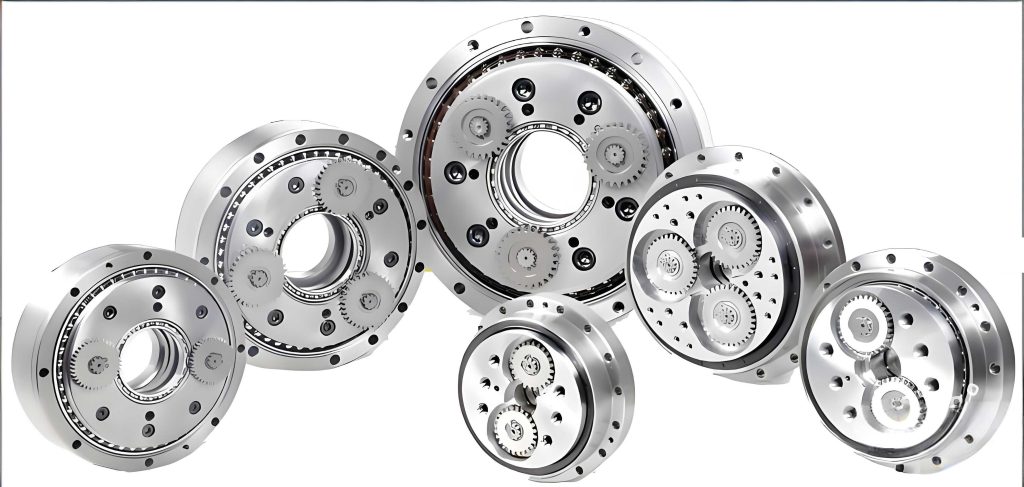
The significance of the RV reducer cannot be overstated. In a typical industrial robot, the cost of core components, including servo motors, controllers, and precision reducers, can exceed 70% of the total manufacturing cost. Among these, the RV reducer alone accounts for over 30%, underscoring its economic and technical importance. The RV reducer’s design, which often combines a cycloidal-pinion stage with a parallel planetary gear stage, offers advantages such as high reduction ratios, torsional stiffness, and backlash minimization. The fundamental transmission principle for the cycloidal stage can be expressed by the reduction ratio formula:
$$ i_c = \frac{Z_p}{Z_p – Z_c} $$
where \( Z_p \) represents the number of pins in the stationary ring and \( Z_c \) denotes the number of lobes on the cycloidal disc. For a complete RV reducer incorporating a first-stage planetary gear train, the total reduction ratio \( i_{total} \) becomes:
$$ i_{total} = (1 + \frac{Z_{s}}{Z_{r}}) \times \frac{Z_p}{Z_p – Z_c} $$
Here, \( Z_{s} \) and \( Z_{r} \) are the sun gear and ring gear teeth numbers in the planetary stage, respectively. Achieving and maintaining precision in these geometric relationships is paramount for the RV reducer’s performance.
My investigation into the development trajectory of the RV reducer reveals its origins in European ingenuity, followed by Japanese commercialization and perfection. The conceptual foundation for using cycloidal curves in precision transmission was laid in Germany in the 1920s. However, it was Japanese corporations in the 1980s that first synthesized the ‘RV transmission’ concept, effectively creating a 2K-V type planetary drive. This innovation marked a paradigm shift, leading to the dominance of Japanese firms in the global market for high-end RV reducers. The technological maturation was characterized by relentless optimization of tooth profiles, bearing configurations, and material science to enhance load capacity, efficiency, and longevity. In contrast, domestic research and development (R&D) on RV reducers in China began substantially later, primarily in the 1990s, focusing initially on understanding and reverse-engineering imported units. This late start created a technological gap that has proven difficult to close, despite concerted national efforts in recent years.
To systematically compare the technological landscape, I have compiled data on key performance indicators for RV reducers from leading international manufacturers and emerging Chinese producers. The following table summarizes the typical specifications across different series, highlighting the performance gap.
| Parameter / Manufacturer | International Leader (e.g., Nabtesco) | Established Japanese (e.g., Sumitomo) | Representative Chinese Makers |
|---|---|---|---|
| Reduction Ratio Range | 30 ~ 256 | 6 ~ 119 (single stage) | 30 ~ 256 |
| Rated Torque (Nm) | Up to 8,000+ | Up to 5,000+ | Up to 3,000 |
| Backlash (arcmin) | < 1′ | ~ 1′ | 1′ ~ 3′ |
| Torsional Stiffness (Nm/arcmin) | Very High | High | Moderate |
| Transmission Efficiency (%) | > 85% | > 90% (cycloidal stage) | 80% ~ 88% |
| Average Service Life (hours) | > 20,000 | > 15,000 | 8,000 ~ 15,000 |
| Key Technological Features | Proprietary tooth profile optimization, advanced bearing systems, integrated design | Multi-tooth engagement “TTS”齿形 (generalized), high shock load capacity | Improved仿形 design, localized manufacturing of components |
The table illustrates that while Chinese RV reducer products have successfully replicated the basic form factor and nominal specifications, critical nuances in precision, reliability, and longevity remain areas for improvement. The backlash, a crucial measure of positional accuracy for robots, is a telling metric. For high-precision tasks, a reducer must maintain minimal backlash under varying loads and over time. The relationship between transmitted torque \( T \) and elastic deformation \( \theta \) (contributing to lost motion) can be modeled as:
$$ \theta = \frac{T}{K_t} + \theta_0 $$
where \( K_t \) is the torsional stiffness and \( \theta_0 \) is the initial geometric backlash. Achieving a high \( K_t \) and a near-zero \( \theta_0 \) requires exceptional manufacturing consistency and structural design, areas where international leaders hold an edge.
Delving deeper into the technical nuances, the design and analysis of the cycloidal gear profile are central to RV reducer performance. The standard cycloidal tooth form generated by a rolling circle can be modified to improve load distribution and reduce friction. The parametric equations for a standard cycloidal profile are:
$$ x = (R_p – R_r)\cos\phi + a\cos\left(\frac{R_p – R_r}{R_r}\phi\right) $$
$$ y = (R_p – R_r)\sin\phi – a\sin\left(\frac{R_p – R_r}{R_r}\phi\right) $$
where \( R_p \) is the pitch radius of the pin circle, \( R_r \) is the generating roller radius, \( a \) is the eccentricity, and \( \phi \) is the rolling angle. In practice, manufacturers apply sophisticated profile modifications (修形) such as a positive or negative offset to create a “反弓” shape or use trapezoidal modifications. These modifications, often trade secrets, optimize the contact stress distribution. The contact stress \( \sigma_H \) between the cycloidal lobe and the pin, based on Hertzian theory, can be approximated by:
$$ \sigma_H \propto \sqrt{\frac{F_n E^*}{\rho^* L}} $$
Here, \( F_n \) is the normal load, \( E^* \) is the equivalent elastic modulus, \( \rho^* \) is the equivalent radius of curvature, and \( L \) is the contact length. Optimal profile modification minimizes \( \sigma_H \) across the meshing cycle, thereby enhancing the RV reducer’s fatigue life and reducing wear-induced backlash growth.
My assessment of the domestic Chinese RV reducer industry identifies a complex web of constraining factors that collectively hinder its ability to compete at the highest tier. These constraints are not merely technical but span systemic, industrial, and foundational domains.
Firstly, the ecosystem for advanced mechanical components in China, while rapidly improving, still faces gaps in upstream supply chains. The performance of an RV reducer is inextricably linked to the quality of its constituent materials and sub-components. Critical parts like the crankshaft (eccentric shaft), cycloidal gears, and precision bearings demand specialty steels with specific heat treatment processes to achieve the necessary core toughness and surface hardness. For instance, the required hardness for cycloidal gears often exceeds 60 HRC to resist pitting and wear. The material’s fatigue limit \( S_e’ \) must withstand millions of cycles under high contact stress. Many domestic suppliers struggle to consistently provide material batches with the required microstructural homogeneity and cleanliness, leading to variability in the final RV reducer’s performance and lifespan.
Secondly, the manufacturing and metrology infrastructure presents a bottleneck. Producing the eccentric shaft with sub-micron level runout or grinding the complex modified cycloidal profile requires ultra-precision machine tools. While Chinese manufacturers have begun developing and importing such equipment—like multi-axis form grinding machines—mastering the associated process technology (e.g., grinding wheel dressing, compensation for thermal deformation) lags. Furthermore, comprehensive testing and validation protocols are less mature. Key performance tests, such as dynamic transmission error (DTE) measurement, efficiency mapping under load, and accelerated life testing, require sophisticated rigs. The DTE, which is the deviation between the theoretical and actual output position, can be expressed as a function of input angle \( \theta_i \):
$$ DTE(\theta_i) = \theta_o(\theta_i) – \frac{\theta_i}{i_{total}} $$
where \( \theta_o \) is the measured output angle. Systematically analyzing and minimizing DTE requires integrating insights from manufacturing tolerances, assembly preloads, and elastodynamic behavior—a holistic engineering approach still being consolidated in many domestic enterprises focused on the RV reducer.
Thirdly, the innovation model has historically been skewed towards imitation and rapid commercialization rather than foundational R&D. While reverse-engineering is a valid learning tool, achieving parity and eventually superiority necessitates deep, original research into design theories. For example, dynamic modeling of the complete RV reducer system, considering time-varying meshing stiffness \( k_m(t) \), damping, and bearing nonlinearities, is essential for predicting noise, vibration, and harshness (NVH) characteristics. The equation of motion for a simplified torsional model can be written as:
$$ J\ddot{\theta} + c\dot{\theta} + k_m(t)\theta = T_{in}(t) – T_{load} $$
Developing and validating such models for virtual prototyping and optimization requires significant investment in both computational resources and physical experimentation, an area where long-term commitment is needed.
Fourthly, economic and market dynamics create a challenging environment. Established foreign RV reducer brands benefit from decades of refinement, volume production, and strong brand recognition among global robot OEMs. This allows them to command premium prices while potentially offering long-term supply agreements. For a Chinese robot manufacturer, the perceived risk of adopting a domestic RV reducer—potentially impacting the reliability of their entire robot system—often outweighs the cost savings, especially in high-end applications. This creates a vicious cycle where domestic RV reducer producers lack the volume and field feedback necessary for rapid iterative improvement.
Despite these challenges, the strategic importance of localizing RV reducer production has been recognized at the highest levels of Chinese industrial policy. A series of national initiatives, such as “Made in China 2025” and the “Robotics Industry Development Plan (2016-2020)”, have earmarked precision reducers as a critical breakthrough area. This has translated into increased funding for R&D projects, the establishment of national innovation centers, and incentives for industry-academia collaboration. Consequently, the past decade has witnessed tangible, albeit incremental, progress. Several Chinese companies have moved from producing prototypes to achieving small-batch production of RV reducers for robots carrying payloads from 6 kg to 300 kg. Their products are gradually being integrated into domestic robot models, providing invaluable real-world data.
Looking forward, my analysis suggests that a multi-pronged, sustained effort is required to elevate the Chinese RV reducer industry to a globally competitive level. The following table outlines a proposed framework for key focus areas and associated research objectives.
| Strategic Focus Area | Specific Research & Development Objectives | Potential Metrics for Success |
|---|---|---|
| Advanced Design & Analysis | Develop proprietary cycloidal and planetary gear tooth profile optimization algorithms focusing on load sharing, stress minimization, and NVH reduction. Create integrated digital twins for dynamic simulation and lifetime prediction. | Reduction in peak contact stress by 15-20%; Increase in calculated B10 life by 30%; Demonstrated reduction in DTE amplitude. |
| Material & Process Science | Develop specialized alloy steels and case-hardening/carburizing processes tailored for RV reducer components. Master precision grinding, honing, and superfinishing processes for gears and shafts. | Consistent achievement of target hardness profiles with <5% scatter; Surface roughness Ra < 0.1 µm on critical contact surfaces; Reduction in component process failure rate. |
| Precision Manufacturing & Assembly | Design and manufacture dedicated, intelligent production lines for key components. Implement robotic assembly with force-feedback and in-process measurement for controlled preload application. | Key dimension CpK > 1.67; Assembly cycle time reduction by 25%; Reduction in backlash scatter in final assembled RV reducer. |
| Testing & Validation | Establish comprehensive test standards and build advanced rigs for efficiency mapping, dynamic accuracy, overload testing, and accelerated lifetime testing under realistic spectrum loads. | Ability to predict field failure modes from lab tests; Publication of independently verified performance data matching international standards. |
| System Integration & Innovation | Explore novel RV reducer architectures (e.g., using double-enveloping principles, integrated sensors for condition monitoring). Research lightweight materials like high-strength composites for non-critical housings. | Patent filings on novel reducer designs; Development of a “smart” RV reducer with embedded diagnostics; Weight reduction of 10-15% for equivalent torque capacity. |
From a theoretical standpoint, several promising research directions could yield significant dividends. One is the precise control and compensation of backlash. The total backlash \( B_{total} \) in an RV reducer is an accumulation of errors from multiple sources:
$$ B_{total} = \sum_{j=1}^{n} \left( \frac{\partial B}{\partial e_j} \Delta e_j \right) + B_{assembly} $$
where \( \Delta e_j \) represents the manufacturing error of the j-th component (e.g., pin diameter, cycloid lobe profile error, bearing radial play) and \( B_{assembly} \) is the error induced during assembly. Conducting a comprehensive sensitivity analysis using methods like the Sobol index can identify the most critical tolerances, guiding more cost-effective manufacturing. Another avenue is the study of lubrication and thermal management. The efficiency \( \eta \) of an RV reducer is affected by churning losses, bearing friction, and gear mesh friction. Power loss \( P_{loss} \) can be modeled as:
$$ P_{loss} = P_{churn} + P_{bearing} + P_{mesh} = C_{churn} \omega^2 \rho \nu + \sum (f_b F_b \mu_b r_b \omega) + \int_{mesh} \mu_{mesh} v_{slide} dF_n $$
Optimizing lubricant viscosity, oil bath level, and cooling pathways can directly improve the RV reducer’s efficiency and thermal stability, reducing heat-induced geometric distortions.
Furthermore, the integration of modern data-driven approaches with traditional mechanical engineering holds great promise. Machine learning algorithms could be trained on vast datasets from manufacturing processes (e.g., grinding parameters, metrology results) and performance tests to predict the final quality and lifetime of an individual RV reducer unit, enabling predictive quality control and customized assembly.
In conclusion, my thorough examination of the RV reducer landscape in China reveals a sector at a pivotal juncture. The dependence on imported RV reducers constitutes a significant strategic vulnerability for the burgeoning Chinese robotics industry. While the technological gap with global leaders remains substantial, it is not insurmountable. The convergence of strong policy support, increasing R&D investment, and a growing pool of engineering talent is creating fertile ground for progress. The path forward requires a balanced strategy: continuing to learn from and benchmark against the best international RV reducer products while courageously investing in fundamental research, advanced manufacturing capabilities, and rigorous quality ecosystems. Success will not be measured merely by the production of functional RV reducers, but by achieving consistent world-class performance in precision, reliability, and durability. This will ultimately empower the domestic robotics industry, contribute to technological sovereignty, and solidify China’s position in the global advanced manufacturing landscape. The journey of the RV reducer, from a imported bottleneck to a domestically mastered key technology, epitomizes the broader challenges and opportunities in China’s high-end equipment manufacturing ascent.
To solidify the technical discussion, consider the holistic design optimization problem for an RV reducer. One might formulate it as a multi-objective optimization seeking to minimize backlash \( B \), weight \( W \), and cost \( C \), while maximizing torsional stiffness \( K_t \), efficiency \( \eta \), and service life \( L_s \), subject to constraints on torque capacity \( T_{rated} \), size envelope, and material limits. This can be expressed as:
$$ \text{Find } \mathbf{x} = [x_1, x_2, …, x_n] \text{ that } $$
$$ \text{Minimize: } f_1(\mathbf{x}) = B, f_2(\mathbf{x}) = W, f_3(\mathbf{x}) = C $$
$$ \text{Maximize: } f_4(\mathbf{x}) = K_t, f_5(\mathbf{x}) = \eta, f_6(\mathbf{x}) = L_s $$
$$ \text{Subject to: } g_1(\mathbf{x}) = T_{calc} – T_{rated} \ge 0, \quad g_2(\mathbf{x}) = D_{max} – D(\mathbf{x}) \ge 0, \quad … $$
where \( \mathbf{x} \) is the vector of design variables (e.g., module, number of teeth, profile modification coefficients, bearing types). Solving such complex, coupled problems requires sophisticated algorithms like NSGA-II and high-fidelity simulation models—a capability that will define the next generation of RV reducer development. As the industry matures, mastering this entire value chain from material science to digital design and predictive maintenance will be the hallmark of a truly leading RV reducer technology provider.