
In recent years, the field of robotics has witnessed a significant surge in interest towards bionic robots, particularly those inspired by biological locomotion. As a researcher deeply involved in this domain, I have observed that quadruped bionic robots represent a cutting-edge branch, leveraging the agility and adaptability of animals to perform complex or hazardous tasks. These robots excel in traversing uneven terrain, offering superior balance, flexibility, and environmental adaptability compared to wheeled or tracked systems. This makes them ideal for applications such as military logistics, disaster response, and entertainment. In this article, I will delve into the current research status and future trends of quadruped bionic robots, incorporating tables and formulas to provide a comprehensive overview. The goal is to synthesize key insights that can guide further advancements in this promising field.
The evolution of quadruped bionic robots dates back to the 1960s, but it has accelerated dramatically since the 2000s with breakthroughs in mechanics, control systems, and artificial intelligence. From my perspective, the core appeal of these bionic robots lies in their ability to mimic natural gaits, enabling efficient movement across diverse landscapes. This biomimicry not only enhances performance but also opens avenues for studying biological principles. As I explore the research landscape, I will highlight how technological innovations have propelled the development of these machines, emphasizing the repeated theme of bionic robot design as a driver of progress.
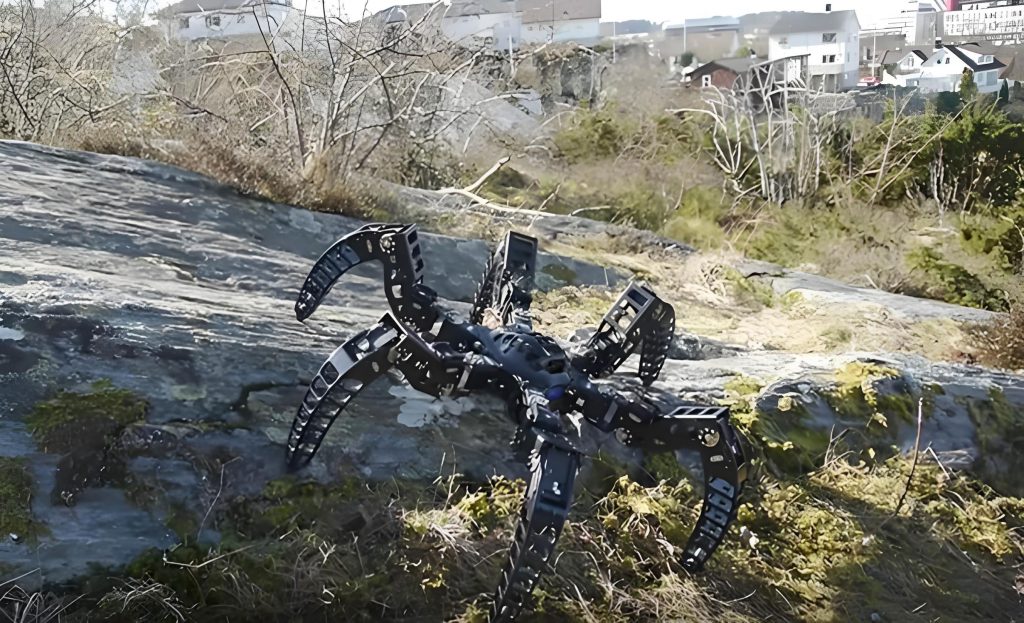
When examining the global research status, it is evident that several institutions have made remarkable strides in quadruped bionic robot development. In the United States, Boston Dynamics has been a pioneer, consistently releasing advanced models that push the boundaries of locomotion. For instance, their LS3 bionic robot, introduced in 2011, integrated vision tracking, terrain sensing, and GPS technologies to carry loads over rough terrain with impressive balance. This was followed by the Cheetah bionic robot in 2012, which achieved high-speed indoor running by mimicking feline leg flexion, and the WildCat in 2013, optimized for outdoor sprinting with efficient gait algorithms. More recently, the SpotMini bionic robot, launched in 2016, demonstrated compact design and agile movement, weighing only about 30 kg. These examples underscore the rapid iteration in bionic robot capabilities, driven by advances in materials, sensors, and software.
Beyond the United States, European contributions have also been significant. For example, the ANYmal bionic robot from ETH Zurich, debuted in 2016, features lightweight construction and multi-sensor integration, allowing autonomous patrols and even elevator use. This highlights the trend towards smarter, more autonomous bionic robots. To summarize these international efforts, I have compiled a table comparing key quadruped bionic robots based on parameters such as weight, speed, and unique features. This table illustrates the diversity and progression in bionic robot design.
| Bionic Robot Model | Year | Weight (kg) | Max Speed (m/s) | Key Features |
|---|---|---|---|---|
| Boston Dynamics LS3 | 2011 | ~150 | ~3 | Load-carrying, terrain perception |
| Boston Dynamics Cheetah | 2012 | ~32 | ~12.5 | High-speed indoor running, obstacle sensing |
| Boston Dynamics WildCat | 2013 | ~80 | ~10 | Outdoor sprinting, energy-efficient gaits |
| Boston Dynamics SpotMini | 2016 | ~30 | ~5 | Compact size, agile movement |
| ETH Zurich ANYmal | 2016 | ~30 | ~1.5 | Autonomous navigation, multi-sensor fusion |
In my analysis, the kinematics and dynamics of these bionic robots are crucial for understanding their performance. For instance, the motion of a quadruped bionic robot can be modeled using Lagrangian mechanics. The general equation of motion for a rigid-body bionic robot is given by:
$$ M(q)\ddot{q} + C(q, \dot{q})\dot{q} + G(q) = \tau $$
where \( M(q) \) is the mass matrix, \( C(q, \dot{q}) \) represents Coriolis and centrifugal forces, \( G(q) \) is the gravitational vector, and \( \tau \) denotes the joint torques. This formula underpins the control strategies for bionic robots, enabling stable gaits and adaptability. For a bionic robot mimicking animal locomotion, additional terms might be included to account for flexible elements or bio-inspired actuators.
Turning to domestic research, I have noted substantial progress in China, where academic and industrial teams are actively developing quadruped bionic robots. Early efforts included the JTUWM-III from Shanghai Jiao Tong University and multi-legged robots from Huazhong University of Science and Technology. More recently, notable examples include the “Chinese Big Dog” bionic robot released by China South Industries Group in 2015, designed for military logistics on rough terrain. In 2017, Unitree Robotics introduced the Laikago bionic robot, which boasts high power output and robust balance, rivaling international counterparts. Additionally, Zhejiang University’s “Jueying” bionic robot, launched in 2018, demonstrated advanced skills like climbing slopes and traversing snow. These developments reflect a growing commitment to advancing bionic robot technology within China.
To provide a clearer comparison, I have created a table summarizing key domestic quadruped bionic robots. This table highlights the rapid maturation of bionic robot research in China, with a focus on enhancing capabilities such as payload and terrain adaptation.
| Bionic Robot Model | Year | Weight (kg) | Key Features |
|---|---|---|---|
| Chinese Big Dog | 2015 | ~100 | Military transport, rugged terrain traversal |
| Unitree Laikago | 2017 | ~22 | High power, strong balance, compact design |
| ZJU Jueying | 2018 | ~40 | Slope climbing, snow navigation, dynamic stability |
From my perspective, the control algorithms for these bionic robots are equally important. For example, gait planning in a quadruped bionic robot often involves periodic foot placement patterns. A simplified model for a trotting gait can be expressed using phase equations. If we denote the phase of each leg as \( \phi_i \) for \( i = 1,2,3,4 \), the coordination might follow:
$$ \phi_1 = \phi_3 + \pi, \quad \phi_2 = \phi_4 + \pi $$
This ensures diagonal leg pairs move in sync, a common strategy for stable bionic robot locomotion. Moreover, impedance control is frequently employed to manage contact forces, given by:
$$ F = K_p (x_d – x) + K_d (\dot{x}_d – \dot{x}) $$
where \( F \) is the force, \( K_p \) and \( K_d \) are gain matrices, and \( x_d \) and \( x \) are desired and actual positions. Such formulas are integral to the responsive behavior of modern bionic robots.
Looking ahead, I believe the trends in quadruped bionic robot development will focus on several key areas. First, mechanical design is shifting from rigid structures to flexible components that mimic animal tendons and muscles. This biomimicry can improve energy efficiency and shock absorption. For instance, using series elastic actuators (SEAs) in a bionic robot allows for energy storage and release, modeled as:
$$ \tau = k (\theta_m – \theta_j) + b (\dot{\theta}_m – \dot{\theta}_j) $$
where \( \tau \) is the torque, \( k \) is stiffness, \( b \) is damping, and \( \theta_m \) and \( \theta_j \) are motor and joint angles. Incorporating such elements into bionic robots could revolutionize their mobility and durability.
Second, advancements in autonomy will drive the next generation of bionic robots. Enhanced perception through lidar, cameras, and inertial sensors will enable better obstacle avoidance and navigation. The SLAM (Simultaneous Localization and Mapping) algorithm, crucial for autonomous bionic robots, can be represented probabilistically as:
$$ p(x_t, m | z_{1:t}, u_{1:t}) $$
where \( x_t \) is the robot’s pose, \( m \) is the map, \( z_{1:t} \) are observations, and \( u_{1:t} \) are controls. Improving this for bionic robots will allow operation in unstructured environments.
Third, energy supply remains a critical challenge. Future bionic robots may integrate hybrid power systems or wireless charging. The energy consumption of a bionic robot during locomotion can be estimated using a cost of transport (COT) formula:
$$ \text{COT} = \frac{P}{mgv} $$
where \( P \) is power, \( m \) is mass, \( g \) is gravity, and \( v \) is velocity. Reducing COT through bio-inspired designs is a key goal for extending the mission duration of bionic robots.
Additionally, I anticipate that swarm robotics and AI integration will expand the applications of bionic robots. Cooperative bionic robots could perform tasks like search and rescue more efficiently. The coordination might be modeled using graph theory, where each bionic robot is a node with dynamics:
$$ \dot{x}_i = f(x_i) + \sum_{j \in N_i} K_{ij} (x_j – x_i) $$
for robot \( i \) with neighbors \( N_i \) and coupling gains \( K_{ij} \). This highlights the potential for interconnected bionic robot systems.
In conclusion, the field of quadruped bionic robots is rapidly evolving, with significant contributions from both international and domestic research. As I have outlined, current bionic robots demonstrate impressive capabilities in speed, balance, and autonomy, but future trends point towards softer mechanics, smarter control, and sustainable energy. The repeated emphasis on bionic robot innovation underscores its transformative potential across industries. By leveraging formulas for dynamics and control, along with comparative tables, we can better understand and guide the development of these remarkable machines. The journey of the bionic robot is far from over, and I am excited to see how continued research will unlock new frontiers in robotics.