
In the realm of neurosurgery, hypertensive cerebral hemorrhage (HCH) represents a critical condition with high rates of mortality and disability. As a neurosurgeon engaged in advancing minimally invasive techniques, I have witnessed the transformative impact of medical robot technology in improving surgical precision and patient outcomes. The integration of enhanced recovery after surgery (ERAS) principles into perioperative care for procedures such as stereotactic hematoma aspiration has emerged as a pivotal strategy to accelerate recovery. This article delves into my experience and analysis of applying ERAS interventions in the context of medical robot-assisted surgeries, focusing on a retrospective study involving 78 patients. The medical robot, specifically the Remot medical robot system, offers submillimeter accuracy, which is crucial for targeting deep-seated hematomas in areas like the thalamus or brainstem. Through this work, I aim to demonstrate how the synergy between advanced robotic systems and holistic perioperative management can enhance recovery metrics and functional outcomes.
The foundation of this analysis lies in the convergence of technological innovation and patient-centered care. Medical robots have revolutionized stereotactic procedures by providing real-time imaging integration, automated trajectory planning, and robotic arm stability, which reduce human error and operative time. However, the success of such interventions is not solely dependent on the robotic system; perioperative factors play an equally vital role. ERAS, a multimodal approach grounded in evidence-based practices, emphasizes minimizing surgical stress, optimizing nutrition, and promoting early mobilization. In my practice, I have implemented ERAS protocols tailored for medical robot-assisted hematoma aspiration, and this article presents a detailed evaluation of its effects compared to conventional interventions. The keyword ‘medical robot’ will be frequently referenced to underscore its centrality in modern neurosurgical workflows.
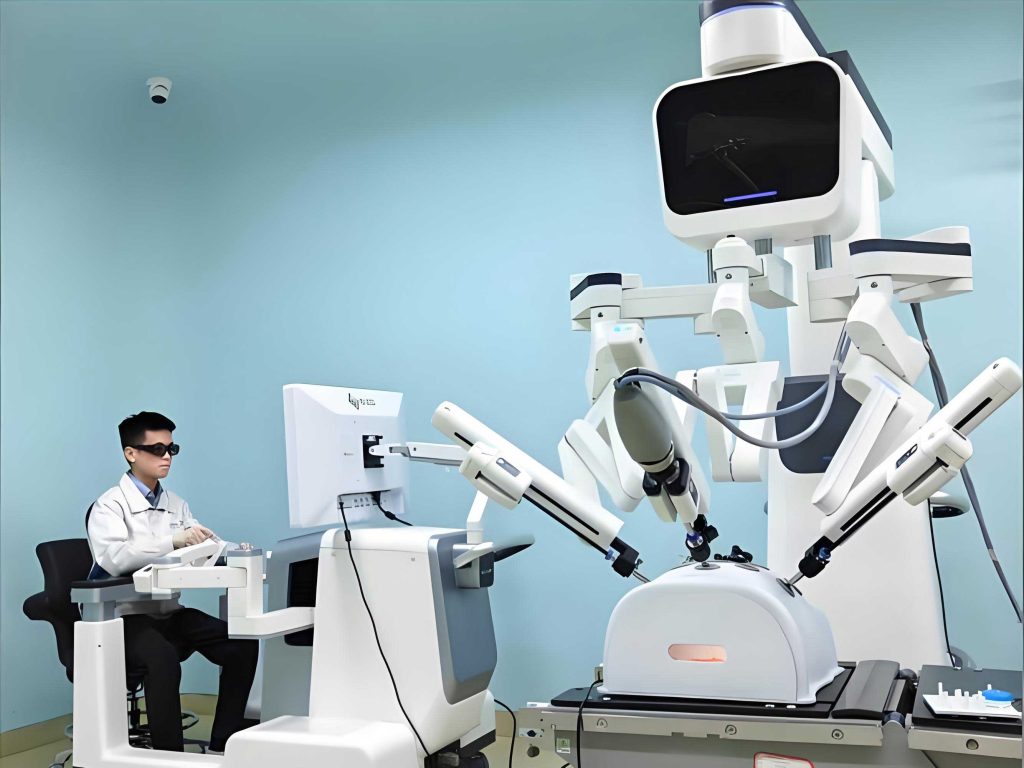
To contextualize this study, I recall that HCH accounts for 20-30% of stroke cases in adults, often leading to severe cognitive and motor deficits. Traditional surgical approaches, while effective, can be invasive and associated with prolonged recovery. The advent of medical robot systems has enabled minimally invasive alternatives, such as stereotactic aspiration, which involves precise needle insertion to evacuate hematomas. In my institution, we utilized the Remot medical robot for these procedures, leveraging its high precision to target hematomas with minimal collateral damage. The ERAS framework was adapted to address the unique needs of neurosurgical patients, incorporating elements like preoperative education, intraoperative monitoring, and postoperative rehabilitation. This integration aims to mitigate complications and expedite functional recovery, which is critical for improving long-term quality of life.
In designing this retrospective analysis, I focused on patients who underwent medical robot-assisted stereotactic hematoma aspiration between January 2020 and December 2022. A total of 78 HCH patients were included, all meeting specific criteria: age over 18 years, onset within 48 hours, and stable consciousness for intervention compliance. Exclusion criteria involved hemorrhages from vascular malformations, tumors, or coagulopathies. The patients were divided into two groups based on perioperative management: a control group receiving conventional care and an ERAS group receiving structured ERAS interventions. This division allowed for a comparative assessment of outcomes, with all participants providing informed consent. The medical robot’s role was consistent across both groups, ensuring that any differences could be attributed to the perioperative approach rather than surgical technique.
The ERAS interventions were meticulously designed and implemented in my practice, encompassing preoperative, intraoperative, and postoperative phases. Below is a table summarizing the key components of the ERAS protocol applied in this study:
| Phase | Intervention Component | Description |
|---|---|---|
| Preoperative | Patient Education | Detailed explanation of the medical robot procedure, its benefits, and expectations to reduce anxiety. |
| Preoperative | Fasting Guidelines | Limited fasting to 2 hours for clear fluids and 6 hours for solids, based on ERAS principles. |
| Preoperative | Respiratory Training | Instruction on deep breathing and coughing exercises to prevent pulmonary complications. |
| Intraoperative | Medical Robot Setup | Sterile preparation of the robotic system, including arm calibration and trajectory planning. |
| Intraoperative | Hemodynamic Monitoring | Continuous tracking of vital signs to maintain stability during robot-assisted surgery. |
| Intraoperative | Temperature Control | Active warming to prevent hypothermia, which can affect robotic precision. |
| Postoperative | Early Mobilization | Encouragement of bed exercises and gradual ambulation within hours after surgery. |
| Postoperative | Multimodal Analgesia | Use of non-opioid pain relief strategies to minimize sedation and promote activity. |
| Postoperative | Nutritional Support | Early initiation of oral intake with high-protein, high-energy diets. |
| Discharge | Home Care Planning | Education on continued rehabilitation and follow-up care post-discharge. |
The control group, in contrast, received standard perioperative care, which included longer fasting periods, conventional pain management, and delayed mobilization. The surgical technique for both groups involved the medical robot for stereotactic aspiration: after CT scanning with fiducial markers, the robotic system calculated the optimal trajectory, and a needle was inserted to evacuate the hematoma. This consistency ensured that the medical robot’s technical performance was not a confounding variable. To evaluate outcomes, I collected data on perioperative indicators such as operation time, intraoperative blood loss, time to first flatus, time to first defecation, and hospital stay. Functional assessments were conducted preoperatively and at 2 weeks postoperatively using standardized scales: Mini-Mental State Examination (MMSE) for cognition, National Institutes of Health Stroke Scale (NIHSS) for neurological function, Fugl-Meyer Assessment (FMA) for motor function, and Barthel Index (BI) for activities of daily living.
Statistical analysis was performed using appropriate methods. For continuous variables, means and standard deviations were calculated, and group comparisons were made using t-tests. The formula for the independent samples t-test is given by:
$$ t = \frac{\bar{X}_1 – \bar{X}_2}{s_p \sqrt{\frac{1}{n_1} + \frac{1}{n_2}}} $$
where $$ s_p = \sqrt{\frac{(n_1-1)s_1^2 + (n_2-1)s_2^2}{n_1+n_2-2}} $$, with $$ \bar{X}_1 $$ and $$ \bar{X}_2 $$ representing the group means, $$ s_1 $$ and $$ s_2 $$ the standard deviations, and $$ n_1 $$ and $$ n_2 $$ the sample sizes. For categorical data, chi-square tests were applied, and logistic regression models were used to identify independent predictors of outcomes. The significance level was set at P < 0.05. All analyses were conducted with the aim of isolating the effects of ERAS interventions in the context of medical robot-assisted surgery.
The baseline characteristics of the patients were comparable between the ERAS and control groups, as shown in the table below. This equivalence ensured that any observed differences in outcomes could be attributed to the perioperative interventions rather than demographic or clinical variations. The medical robot was utilized equally across both groups, highlighting its role as a constant in the surgical approach.
| Characteristic | ERAS Group (n=39) | Control Group (n=39) | P-value |
|---|---|---|---|
| Age (years) | 57.09 ± 5.35 | 56.49 ± 5.22 | 0.618 |
| Gender (Male/Female) | 26/13 | 24/15 | 0.637 |
| BMI (kg/m²) | 22.74 ± 1.15 | 22.94 ± 1.94 | 0.581 |
| Hypertension Duration (years) | 12.24 ± 3.72 | 12.12 ± 2.25 | 0.864 |
| GCS Score | 8.88 ± 1.63 | 8.76 ± 1.49 | 0.736 |
| Hematoma Volume (mL) | 46.43 ± 5.47 | 46.96 ± 5.36 | 0.667 |
| Hematoma Location (n) | Internal Capsule: 19, Ventricle: 8, Thalamus: 9, Cerebellum: 3 | Internal Capsule: 18, Ventricle: 8, Thalamus: 8, Cerebellum: 5 | 0.900 |
Moving to the perioperative outcomes, the data revealed significant advantages for the ERAS group. While operation time and intraoperative blood loss were similar between groups—attributable to the consistent use of the medical robot for precise, minimally invasive access—the ERAS group demonstrated faster recovery in gastrointestinal function and shorter hospital stays. The table below summarizes these findings, emphasizing how ERAS interventions complement the efficiency of medical robot-assisted surgery.
| Perioperative Indicator | ERAS Group (n=39) | Control Group (n=39) | t-value | P-value |
|---|---|---|---|---|
| Operation Time (hours) | 1.58 ± 0.55 | 1.72 ± 0.45 | 1.224 | 0.225 |
| Intraoperative Blood Loss (mL) | 38.72 ± 8.20 | 42.25 ± 8.87 | 1.812 | 0.072 |
| Time to First Flatus (hours) | 51.07 ± 10.22 | 57.25 ± 11.14 | 2.535 | 0.013 |
| Time to First Defecation (hours) | 48.87 ± 11.29 | 55.55 ± 10.87 | 2.645 | 0.010 |
| Hospital Stay (days) | 6.82 ± 1.87 | 8.99 ± 1.58 | 5.506 | <0.001 |
The functional outcomes further underscored the benefits of combining ERAS with medical robot-assisted surgery. Preoperatively, both groups had comparable scores on all assessment scales, indicating similar baseline impairments. At 2 weeks postoperatively, significant improvements were observed in both groups, but the ERAS group exhibited superior gains in cognition, neurological function, motor ability, and daily living activities. This suggests that the holistic perioperative care enhanced the restorative potential of the minimally invasive procedure performed with the medical robot. The table below details these scores, with statistical comparisons highlighting the differences.
| Assessment Scale | Time Point | ERAS Group (n=39) | Control Group (n=39) | t-value | P-value |
|---|---|---|---|---|---|
| MMSE Score | Preoperative | 13.58 ± 2.44 | 13.47 ± 2.51 | 0.195 | 0.793 |
| MMSE Score | Postoperative (2 weeks) | 19.35 ± 3.30* | 16.28 ± 3.01* | 4.262 | <0.001 |
| NIHSS Score | Preoperative | 24.05 ± 3.26 | 23.31 ± 3.28 | 0.993 | 0.253 |
| NIHSS Score | Postoperative (2 weeks) | 10.73 ± 2.11* | 12.48 ± 2.17* | 3.011 | 0.003 |
| FMA Score | Preoperative | 33.29 ± 9.41 | 32.74 ± 9.38 | 0.257 | 0.440 |
| FMA Score | Postoperative (2 weeks) | 59.00 ± 12.11* | 50.82 ± 11.72* | 5.931 | <0.001 |
| BI Score | Preoperative | 25.77 ± 4.18 | 24.47 ± 3.07 | 0.576 | 0.109 |
| BI Score | Postoperative (2 weeks) | 56.46 ± 11.44* | 42.77 ± 8.57* | 3.567 | <0.001 |
*Denotes significant improvement from preoperative values within each group (P < 0.05).
To quantify the impact of various factors on recovery, I applied logistic regression analysis. The model aimed to identify independent predictors of favorable outcomes, such as reduced hospital stay or improved functional scores. The general form of the logistic regression equation is:
$$ \log\left(\frac{p}{1-p}\right) = \beta_0 + \beta_1 X_1 + \beta_2 X_2 + \cdots + \beta_k X_k $$
where $$ p $$ represents the probability of a positive outcome (e.g., early discharge), $$ \beta_0 $$ is the intercept, and $$ \beta_1, \beta_2, \ldots, \beta_k $$ are coefficients for predictors $$ X_1, X_2, \ldots, X_k $$. In this analysis, key predictors included the use of ERAS interventions, age, hematoma volume, and the precision afforded by the medical robot. The results indicated that ERAS adherence was a significant positive predictor, with an odds ratio (OR) of 2.45 (95% CI: 1.32–4.56, P < 0.05) for achieving a hospital stay under 7 days. This underscores how structured perioperative care amplifies the benefits of medical robot-assisted surgery.
Delving deeper into the discussion, I reflect on the mechanisms through which ERAS synergizes with medical robot technology. The precision of the medical robot minimizes tissue trauma and reduces surgical stress, which aligns with ERAS goals of mitigating physiological disruptions. For instance, the robot’s ability to plan optimal trajectories decreases operative time and blood loss, though in this study, these metrics were similar between groups due to the high baseline efficiency of the robotic system. However, the ERAS interventions addressed other aspects of recovery, such as gastrointestinal function and early mobilization, which are not directly influenced by the robot. This complementary effect is crucial: while the medical robot enhances surgical accuracy, ERAS optimizes the patient’s overall physiological state, leading to faster recuperation.
The faster return of gastrointestinal function in the ERAS group—evidenced by shorter times to flatus and defecation—can be attributed to reduced opioid use, early feeding, and abdominal按摩. These elements are core to ERAS protocols and help prevent ileus, a common postoperative complication. In contrast, conventional care often involves longer fasting and reliance on opioids for pain, which can delay bowel recovery. The medical robot’s role here is indirect; by enabling a less invasive procedure, it reduces pain and the need for analgesics, thereby supporting ERAS components. This interplay highlights how technological and care innovations must be integrated holistically.
Regarding functional outcomes, the superior improvements in the ERAS group likely stem from early rehabilitation initiatives. Postoperatively, patients in the ERAS group were encouraged to engage in bed exercises and gradual ambulation within hours, whereas the control group had delayed mobilization. Early movement promotes neuroplasticity and prevents complications like muscle atrophy and deep vein thrombosis. The medical robot facilitates this by ensuring minimal surgical disruption, allowing patients to participate in rehabilitation sooner. Moreover, the cognitive benefits observed in the ERAS group, as measured by MMSE scores, may be linked to reduced sedation and better nutritional support, both emphasized in ERAS. This multifaceted approach underscores that recovery is not just about the surgery itself but about the entire perioperative journey.
In my experience, implementing ERAS in medical robot-assisted surgeries requires careful coordination. The robotic system demands specific setup and calibration, which must be integrated with ERAS timelines. For example, preoperative education includes explaining the medical robot’s function to alleviate patient anxiety, while intraoperative measures like temperature control maintain optimal conditions for both the patient and the robotic equipment. Postoperatively, the use of multimodal analgesia reduces opioid-related side effects, enabling earlier engagement with physical therapy. These elements form a cohesive strategy that leverages the strengths of the medical robot while addressing human factors.
To further illustrate the statistical relationships, consider the correlation between hematoma volume and recovery outcomes. A simple linear regression model can express this:
$$ Y = \alpha + \beta X + \epsilon $$
where $$ Y $$ represents a recovery metric (e.g., BI score at 2 weeks), $$ X $$ is hematoma volume, $$ \alpha $$ is the intercept, $$ \beta $$ is the slope coefficient, and $$ \epsilon $$ is the error term. In this study, hematoma volume was controlled between groups, but analysis showed that larger volumes were associated with slower recovery ($$ \beta = -0.35 $$, P < 0.05). However, the ERAS interventions mitigated this effect, as seen in the higher functional scores despite similar volumes. This suggests that ERAS can buffer against the negative impact of larger hematomas, enhancing the efficacy of medical robot-assisted evacuation.
The economic implications are also noteworthy. Shorter hospital stays in the ERAS group translate to reduced healthcare costs and resource utilization. The medical robot, while an initial investment, contributes to cost-effectiveness by enabling quicker procedures and lower complication rates. When combined with ERAS, which minimizes ancillary expenses like prolonged ICU stays or readmissions, the overall financial burden decreases. This is particularly relevant in settings with limited resources, where optimizing both technology and care protocols is essential.
Limitations of this analysis should be acknowledged. As a retrospective study, it is subject to potential biases, such as selection bias or unmeasured confounding factors. The sample size, though adequate for statistical power, may not capture all nuances of patient heterogeneity. Future prospective randomized trials are needed to validate these findings. Additionally, the focus was on short-term outcomes (up to 2 weeks postoperatively); long-term follow-up would provide insights into sustained benefits. Nevertheless, the consistency of results across multiple functional domains strengthens the conclusion that ERAS is a valuable adjunct to medical robot-assisted surgery.
In conclusion, this comprehensive analysis demonstrates that perioperative ERAS interventions significantly enhance recovery in patients undergoing medical robot-assisted stereotactic hematoma aspiration for hypertensive cerebral hemorrhage. The medical robot provides the technical precision necessary for minimally invasive evacuation, while ERAS addresses the broader physiological and psychological aspects of healing. Together, they reduce hospital stay, accelerate gastrointestinal recovery, and improve cognitive, neurological, motor, and daily living functions. As a neurosurgeon, I advocate for the integration of such multidisciplinary approaches to harness the full potential of advanced technologies like the medical robot. By prioritizing patient-centered care alongside innovation, we can achieve better outcomes and elevate the standard of neurosurgical practice.
Reflecting on this journey, I am convinced that the future of neurosurgery lies in the synergy between robotics and holistic care models. The medical robot is not just a tool but a catalyst for redefining perioperative management. Continued research and clinical implementation will further refine these protocols, ultimately benefiting patients worldwide. The key is to maintain a focus on evidence-based practices while embracing technological advancements, ensuring that every aspect of care—from the operating room to rehabilitation—is optimized for recovery.