
As the automotive industry completes its transformation from a traditional means of transportation into a mobile intelligent terminal, embodied intelligence—the technological wave that gives artificial intelligence a physical body—is becoming deeply coupled with the automotive sector. Research by China EV100 shows that the core technology stacks of smart vehicles and embodied robots overlap by more than 70 percent. Behind this key figure lies the shared origin and symbiotic development of three major technology systems: perception, decision-making, and execution. The two tracks are shifting from separate evolution to integrated coexistence.
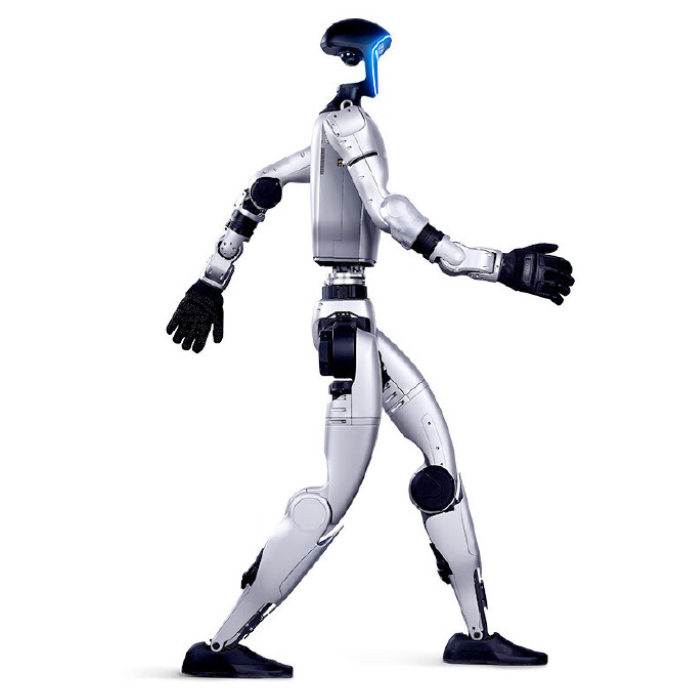
This trend is being accelerated by industrial practice. At the Aggregated Intelligent Industry Development Conference, jointly hosted by the Aggregated Intelligent Industry Innovation Center and Hubei Science and Technology Investment, Zhang Yongwei, chairman of the China EV100 Research Institute, said: “From automobiles to embodied intelligence, both theoretical understanding and industrial practice are proving that the integration of the two is an important trend. For the automotive industry, we have done a good job on four wheels. The next focus is to do a good job without wheels.”
From shared technology origins to supply chain interoperability, from open scenarios to global layout, automakers’ cross-border move into embodied intelligence has evolved from forward-looking exploration by a few companies into a strategic wave sweeping the entire industry. Embodied intelligence is no longer a distant concept. It is becoming a practical extension of the smart vehicle revolution.
- Shared Technology Stacks Enable Cross-Domain Reuse
A smart vehicle is essentially a wheeled embodied intelligence agent, and its technical architecture shares the same lineage as an embodied intelligent robot. In the perception layer, LiDAR, millimeter-wave radar, and cameras serve as the sensory organs. In the decision-making layer, end-to-end large models and behavior planning form the brain. In the execution layer, steer-by-wire chassis and thermal management systems act as the limbs and circulatory system. The two industrial systems differ only in hardware form; their underlying technical logic is highly unified.
Zhu Guibo, a researcher at the Wuhan Institute of Artificial Intelligence, told reporters: “Today’s car has become a mobile intelligent agent facing the physical world and continuously iterating and evolving.” After large models are deployed on vehicles, automobiles complete their transformation from transportation tools to intelligent agents. Embodied intelligence is precisely the extension of this trend.
XPeng Motors is one of the earlier automakers in China to cross into embodied intelligence. Its humanoid robot IRON shares AI infrastructure, chip platforms, and some model capabilities with its automotive business. The physical AI foundation model can be reused across forms. He Xiaopeng, chairman of XPeng Motors, said when announcing that the robot business had completed its first round of financing of more than USD 900 million: “We have already stood at a historic turning point. XPeng Robotics is officially facing the eve of mass production and commercialization.”
Beyond mature algorithm systems, automakers also sit on a gold mine of massive real-world scenario data. Zhang Zhenlin, chief engineer of intelligent technology at Dongfeng Motor Group Co., Ltd.’s R&D General Institute, added a key perspective from the data angle: “There is a saying that the biggest advantage of automakers doing robots is lying on a ‘data gold mine.’ The embodied intelligence industry emphasizes real scenarios, and automakers have a large number of factories, parks, and 4S stores, with very rich application scenarios and potential data sources.”
Zhao Zhelun, co-founder and product president of Vita Dynamics (Beijing) Technology Co., Ltd., expressed a similar judgment: the automotive industry is the mother ecosystem of the embodied intelligence industry. From algorithms to data closed loops to OTA (over-the-air) iteration, this industrial migration is expanding toward more complex scenarios and more open task spaces.
Shared technology origins solve the question of “whether it can be done,” while sustained profit pressure answers the question of “why it must be done.” Cui Dongshu, head of the Passenger Car Market Information Joint Committee of the China Automobile Dealers Association, analyzed that the domestic auto market has entered stock competition. The continuous price war in new energy vehicles compresses whole-vehicle profits, and automakers urgently need to open a second growth curve. Humanoid robots are a blue ocean track that Goldman Sachs predicts will exceed USD 100 billion in global market size by 2035. Automakers are entering intensively, and cross-border development has become the norm.
The logic is straightforward. Embodied intelligence offers automakers a way to reuse accumulated capabilities in perception, decision-making, execution, and data. It also offers a new growth narrative at a time when the core automotive business faces margin pressure. The overlap is not limited to software and algorithms. It extends to hardware, manufacturing, and supply chains, creating a foundation for scale.
In the perception layer, the same sensors that allow a vehicle to understand its surroundings can allow a robot to understand a workshop, a warehouse, or a home. In the decision layer, the same large-model reasoning that helps a vehicle plan a route can help a robot plan a sequence of assembly tasks. In the execution layer, the same motion control and thermal management principles that keep a vehicle stable and efficient can keep a robot joint precise and reliable. This is why embodied intelligence is not a separate industry built from scratch. It is a new expression of capabilities that the automotive industry has already industrialized.
For automakers, the strategic question is no longer whether to enter embodied intelligence, but how quickly and effectively to do so. The companies that can transfer technology, data, and supply chain advantages into embodied intelligence products will be better positioned for the next phase of competition. The companies that treat embodied intelligence as a distant side project may find themselves behind when the market accelerates.
- Supply Chain Interoperability Builds Scale Advantage
Not only are technologies shared, but the complete smart vehicle supply chain also lays a solid foundation for the large-scale implementation of embodied intelligence. Zhang Yongwei told reporters that the supply chains of smart vehicles and embodied intelligence are moving from independent operation to cross-reuse. The integration trend is most obvious in four areas: motors, thermal management, chips, and materials.
| Supply Chain Domain | Automotive Foundation | Embodied Intelligence Extension | Integration Logic |
|---|---|---|---|
| Motors | Vehicle motors | Joint motors for embodied robots | Same origin; production lines can be directly reused; power density and response speed requirements differ by scenario |
| Thermal Management | Electric vehicle thermal management | Heat dissipation under high-load robot operation | Same technical lineage; robots face thermal challenges similar to those of electric vehicles |
| Chips | Automotive-grade chips | Embodied intelligence-grade chips | Semiconductor giants such as Infineon have listed both as two core product lines |
| Materials | New automotive materials | Lightweight, durable materials for embodied intelligence | Two-way flow; improved automotive materials enter embodied intelligence; extreme requirements for lightweight and durability provide reverse validation for automotive material innovation |
In the motor field, vehicle motors and embodied joint motors share the same origin. Production lines can be directly reused, with differences only in power density and response speed requirements across scenarios. In thermal management, the heat dissipation problem of robots under high-load operation is in the same lineage as electric vehicle thermal management technology. In chips, semiconductor giants such as Infineon have already placed automotive-grade and embodied intelligence-grade chips as two core product lines. In materials, a “two-way journey” is emerging: new materials from the smart vehicle field are improved and then enter the embodied intelligence field in large quantities, while the extreme pursuit of lightweight and durability in embodied intelligence provides reverse validation for smart vehicle material innovation.
The role of smart vehicle supply chain companies is also undergoing profound changes. Ningbo Xusheng Group Co., Ltd. revealed a clear strategic layout in its performance briefing: smart vehicle components are the basic plate, energy storage is the second growth curve, and embodied intelligence is a key cultivation direction. More smart vehicle parts companies are positioning themselves in similar ways. They do not need to build production lines and process systems from scratch; they only need to take one more step based on their original technical capabilities.
Zhang Yongwei said that companies keep one eye on automobiles and one eye on embodied intelligence, and technology is constantly transforming between the two. China’s automotive production capacity ranks first in the world, and the spillover effect of this industrial chain is continuously released in the field of embodied intelligence. The scale advantage has already formed, but shortcomings cannot be avoided.
Jin Bing, a member of the Expert Committee of the National Low-Altitude Economy Industry-Education Integration Community, told reporters: “China’s embodied intelligence industry has obvious advantages in complete machine mass production and scenario application, but it still needs to work hard in high-end components, simulation ecology, and extreme environment validation. The way to break through lies in exchanging scenarios for technology and mass production for cost reduction.”
He further stated that the supply chains of the two tracks—smart vehicles and embodied intelligence—are moving toward integration. Cross-border research and development by automakers has become normal, and factories and 4S stores are also opening as test grounds for embodied robots. The automotive industry’s huge supply chain system, rich application scenarios, and sustained research and development investment are becoming important support for filling shortcomings.
Specifically, on the one hand, the real scenarios and large-scale demand of automotive factories force upstream component companies to accelerate technological iteration, using market demand to pull core components toward independent controllability. On the other hand, supply chain companies actively extend into the embodied intelligence field. Through technology migration and production line reuse, they rely on the scale effect of the smart vehicle industry’s tens of millions of annual production to rapidly amortize the cost of core components, allowing high-end components to move from “usable” to “affordable.”
This cost-reduction pathway is critical for embodied intelligence. Without scale, high-end components remain expensive. Without affordable components, embodied intelligence cannot move from laboratories to factories, warehouses, stores, and homes. The automotive supply chain provides a ready-made scale engine. The more embodied intelligence borrows from automotive manufacturing, the faster it can cross the gap between prototypes and products.
Scale also improves reliability. Automotive supply chains are built around strict quality standards, traceability, and safety. These disciplines are directly relevant to embodied intelligence, especially in industrial settings where a robot failure can stop a production line. By leveraging automotive-grade processes, embodied intelligence companies can improve product consistency and customer trust. That trust is essential for moving from pilot projects to large-scale deployment.
- Scenario Data Turns Embodied Intelligence into a Working System
Relying on a huge supply chain foundation and continuous efforts to fill shortcomings, China’s scale advantage in embodied intelligence continues to expand. According to an industry report released at the 2026 World Robot Conference, in the first half of this year, China’s humanoid robot shipments exceeded 40,000 units, accounting for 97 percent of the global total.
| Market Signal | Figure | Source Cited in the Article |
|---|---|---|
| Overlap between smart vehicle and embodied robot core technology stacks | More than 70 percent | China EV100 research |
| Global humanoid robot market forecast by 2035 | More than USD 100 billion | Goldman Sachs forecast cited in the article |
| China humanoid robot shipments in the first half of 2026 | More than 40,000 units | 2026 World Robot Conference industry report |
| China’s share of global humanoid robot shipments | 97 percent | Same industry report |
| XPeng robot business first-round financing | More than USD 900 million | Announcement by He Xiaopeng |
Zhang Yongwei said that the automotive industry first develops domestically and then goes international, but embodied intelligence should be “born international.” If companies first compete domestically for three to five years and then go overseas, they may miss global pricing power and standard-setting voice. Only by directly facing the global market and forcing technological upgrading through fiercer international competition can they truly fill shortcomings and move from a “manufacturing giant” to a “manufacturing power.”
The confidence behind this judgment comes from the rich application scenarios provided by the automotive industry. No matter how complete the supply chain is, it must ultimately return to scenarios for testing. Zhang Zhenlin said: “What really matters is not ‘having scenarios,’ but being able to convert scenarios into continuous data production capacity. Many robot companies are still building scenarios in laboratories and collecting data through remote control. The cost is high, the scale is small, and the data is not real. Our idea is to let robots directly enter the workshop to work, naturally generating data during operations, and especially recording ‘why failures happen.’ This kind of high-quality data is the scarcest thing for training a general brain.”
Industrial implementation must be down-to-earth and gradual. “Robots must start from specific scenarios one by one—first sorting, handling, and inspection, then gradually expanding the boundaries of capability. Use scenarios to define form, and use real operations to drive iteration,” Zhang Zhenlin said.
Fu Ao, co-founder and business vice president of Mech-Mind (Xiong’an) Robotics Technology Co., Ltd., provided a case that is a vivid footnote to this path. The company combines “eye-brain-hand” components with different forms of robots to complete real operations in multiple automotive industry chain workshops, including die-casting, stamping, welding, and battery workshops. These operations range from unloading and framing, repair welding positioning, cell assembly, to quality inspection. Among them, the innovative robot application in the repair welding positioning link of the welding workshop solves practical problems in flexible production.
This scenario-first approach is particularly important for embodied intelligence. In a laboratory, a robot may perform well under controlled conditions. In a real workshop, lighting changes, material differences, vibration, temperature, and human-robot collaboration create complexity that cannot be fully simulated. The automotive factory provides a demanding but repeatable environment. It also provides a clear return on investment: if a robot can perform a task reliably, the factory can deploy it at scale. That deployment generates more data, which improves the model, which improves performance, which enables more deployment. This is the data flywheel that embodied intelligence needs.
When scenarios polish excellent products, globalization follows naturally. Jin Bing described the future picture from a more macro perspective: robots, unmanned vehicles, drones, and unmanned ships, all scheduled by one large model, sharing communication and positioning, and reusing software and hardware modules. A land-sea-air integrated unmanned system is accelerating. Embodied intelligence is not only a technology moat for automakers but also a strategic construction of an integrated ecosystem for unmanned equipment across domains.
- From Four Wheels to Humanoid Forms: A Strategic Window
Standing at the first year of embodied intelligence mass production, this leap from “four wheels” to “humanoid” has just begun. Seizing the window period of change and seizing the commanding heights of global competition is not only a choice for automakers but also a strategic opportunity for Chinese manufacturing in a new round of global industrial competition.
The automotive industry’s journey into embodied intelligence is not a sudden pivot. It is a natural extension of capabilities built over decades. The industry has developed strong abilities in complex system integration, safety-critical design, cost control, and large-scale manufacturing. These capabilities are directly relevant to embodied intelligence. A humanoid robot must perceive its environment, make decisions in real time, execute precise movements, manage heat, consume energy efficiently, and operate reliably for years. These are exactly the challenges that modern smart vehicles have been solving.
At the same time, embodied intelligence pushes the automotive industry to rethink its boundaries. A vehicle is no longer only a vehicle. It is a mobile intelligent agent, a data collection platform, and a node in a broader physical AI network. The same foundation model that helps a car navigate a city may help a robot navigate a factory. The same chip that processes sensor data in a vehicle may process sensor data in a robot. The same thermal management system that keeps a battery cool may keep a robot joint within safe operating temperatures. This cross-domain reuse is the core of the embodied intelligence opportunity.
However, the transition also requires new capabilities. High-end components, simulation ecosystems, and extreme environment validation remain areas where more work is needed. The article cites Jin Bing’s view that China’s embodied intelligence industry has clear advantages in complete machine mass production and scenario application, but it must strengthen these weaker areas. The proposed solution is to exchange scenarios for technology and mass production for cost reduction. In practice, this means using real demand from automotive factories and other scenarios to pull upstream innovation, while using large-scale production to lower the cost of core components.
The supply chain integration already underway shows how this can work. Motor production lines can be reused. Thermal management expertise can be transferred. Chipmakers can develop parallel product lines. Material innovations can flow in both directions. Each of these integrations reduces the cost and risk of developing embodied intelligence. Each also creates new demand for automotive suppliers, giving them a second growth curve. The result is a mutually reinforcing relationship between the two industries.
Globalization adds another dimension. Zhang Yongwei’s argument that embodied intelligence should be “born international” reflects a lesson from other technology sectors. Domestic competition can be intense, but waiting too long to enter global markets can mean losing the chance to shape standards and capture premium segments. By facing global competition early, companies can accelerate learning, improve products, and build international brand recognition. The automotive industry’s global experience in manufacturing, quality control, and after-sales service provides a useful foundation.
The scenario advantage is equally important for globalization. Factories, parks, and 4S stores in China offer diverse environments for testing and deployment. These scenarios are not only domestic assets. They can become reference cases for global customers. A robot that works reliably in a Chinese automotive welding workshop has a credible story in any manufacturing market. A robot that handles battery cell assembly with precision has a credible story in the global electric vehicle supply chain. Embodied intelligence products that are validated in demanding real-world scenarios are more likely to succeed internationally.
The data flywheel connects scenario, product, and globalization. Real operations produce data. Data trains better models. Better models enable more capable robots. More capable robots can enter more scenarios. More scenarios produce more data. This cycle is already visible in the automotive industry, where over-the-air updates and fleet data improve vehicles over time. Embodied intelligence can adopt the same model. The difference is that embodied intelligence operates in the physical world, where mistakes can be costly. That makes high-quality data even more valuable, especially data that records not only successful actions but also the reasons for failure.
As the first year of embodied intelligence mass production begins, the competitive landscape is still forming. Automakers that move early can build advantages in technology reuse, supply chain integration, scenario data, and global partnerships. Suppliers that extend into embodied intelligence can diversify revenue and deepen relationships with customers. Cities and industrial clusters that support collaboration between automotive and robotics companies can attract investment and talent. The strategic opportunity is broad, but the window is not unlimited.
The convergence of automotive and embodied intelligence is therefore more than a technology trend. It is an industrial transformation. It changes how companies think about their core capabilities. It changes how supply chains are organized. It changes how products are developed, tested, and deployed. It changes how nations compete in advanced manufacturing. The automotive industry, with its scale, supply chain depth, and real-world scenarios, is positioned to play a central role. Embodied intelligence, with its ability to give AI a physical body, is positioned to extend that role into new forms and new markets.
From shared technology stacks to supply chain interoperability, from scenario data to global strategy, the pieces are coming together. The road from four wheels to humanoid forms is not a straight line. It requires patient engineering, continuous iteration, and close collaboration between automakers, robot companies, component suppliers, research institutions, and policymakers. But the direction is clear. The automotive industry and embodied intelligence are beginning a joint run, and the race has just started.
For the automotive industry, embodied intelligence is both a mirror and a bridge. It mirrors the industry’s existing strengths: perception, planning, control, thermal management, chips, materials, and manufacturing. It bridges the industry toward new markets: humanoid robots, unmanned systems, intelligent logistics, and integrated physical AI ecosystems. The companies that understand this dual nature will be best prepared to compete. The suppliers that see the crossover will be best prepared to grow. The economies that support the crossover will be best prepared to lead.
Embodied intelligence also raises the bar for collaboration. No single company can master every component, every model, every scenario, and every market. The automotive industry’s experience with tiered supply chains, joint ventures, and platform sharing offers a useful model. Robot companies, AI model developers, chipmakers, sensor suppliers, and end users must work together to define interfaces, share data safely, and validate performance in real conditions. The faster this collaboration happens, the faster embodied intelligence can move from promising demonstrations to reliable products.
In the end, the joint run between the automotive industry and embodied intelligence is a story of convergence. It is a story of technologies that were developed for one purpose finding new purposes. It is a story of supply chains that were built for vehicles adapting to robots. It is a story of data that was collected on roads and in factories training brains for physical machines. It is a story of global competition that rewards speed, scale, and standards. And it is a story that is only beginning, at the very moment embodied intelligence enters mass production and the automotive industry looks beyond the four wheels it has mastered.