
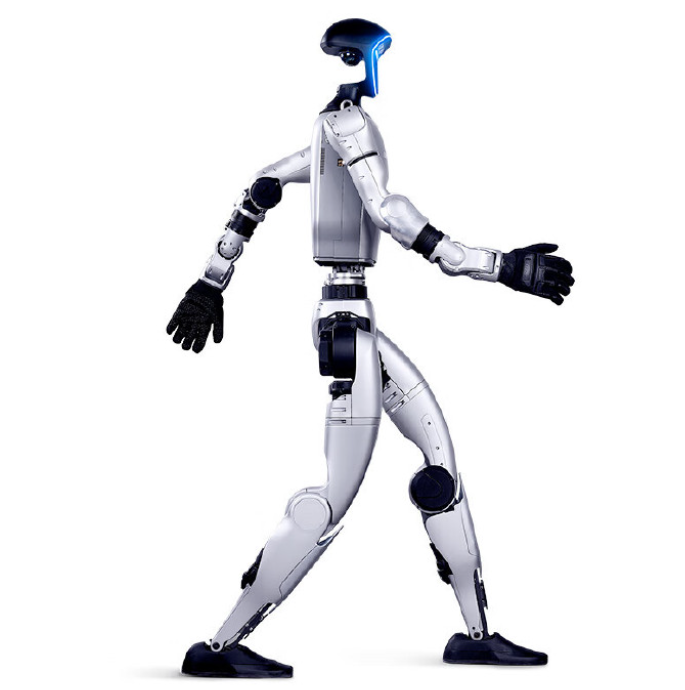
At the Aggregated Intelligent Industry Development Conference (2026), held in Wuhan Optics Valley and jointly hosted by the Aggregated Intelligent Industry Innovation Center and Hubei Science and Technology Investment, industry leaders converged on a central conclusion: the automotive supply chain and the embodied intelligence sector should no longer be viewed as separate industrial tracks. Instead, they are increasingly forming one integrated ecosystem, where technology, scenarios, components, manufacturing capacity, and supply chain resources flow across boundaries and reinforce one another.
Zhang Yongwei, chairman of the Chebai Research Institute, offered a precise framing of the strategic choice now facing both industries. For automotive companies, abandoning the embodied intelligence track may mean losing an excellent opportunity to extend the industrial chain. For embodied intelligence companies, failing to integrate with the automotive industrial chain may slow their pace of industrialization. The two sectors, he said, should follow an integrated development model. That judgment captured the core trend of the current intelligent industry transformation and set the tone for the conference discussions.
The conference focused on three major tracks: smart vehicles, embodied intelligence, and the low-altitude economy. Participants agreed that deep homology in technology, application scenarios, and supply chains is giving mature automotive industrial capabilities a natural path into embodied intelligence. This migration is not simply a diversification exercise. It is a practical route to reduce the high cost of humanoid robot industrialization, accelerate commercial deployment, and help the broader intelligent industry seize the strategic window for mass production.
1. Technology and Scenario Homology Strengthen the Foundation for Cross-Sector Integration
The 2026 Government Work Report first proposed “creating new forms of intelligent economy,” using “Artificial Intelligence Plus” as a牵引 to accelerate the promotion of next-generation intelligent terminals and intelligent agents. That policy direction has provided a clear signal for the iterative upgrading of the intelligent industry and for cultivating new quality productivity. Within this framework, the aggregated intelligent industry is emerging as a new industrial system driven by artificial intelligence and centered on smart vehicles, embodied intelligence, and the low-altitude economy as core terminal carriers. It is not a peripheral application field. It is a core support track for the intelligent economy to deliver concrete results, and it is now entering a golden development period.
Zhang Yongwei noted that automobiles and embodied intelligence are technologically homologous. At the industrial chain level, important signs of change have already appeared. A single component can now support both a vehicle and an embodied robot. This trend is visible in motors, thermal management systems, chips, and basic materials. In other words, the automotive supply chain is not being asked to abandon its existing strengths. It is being asked to recognize that many of those strengths are directly transferable to embodied intelligence.
Jin Bing, former first-level inspector and deputy director of the Policy and Regulations Department of the State Post Bureau, provided a quantitative anchor for this convergence. According to statistics cited at the conference, the technology stack overlap between smart vehicles and embodied robots exceeds 70 percent. The relationship is not one-way. It is a two-way empowerment and two-way feedback loop. In particular, the perception layer, decision layer, execution layer, and software layer technologies of intelligent driving are all being applied in the field of embodied robots. This means the complete technical system accumulated through decades of automotive mass production iteration does not need to be rebuilt from zero. It can be rapidly adapted to the research and development needs of humanoid robots and all-domain unmanned equipment, providing a technological shortcut for the rapid industrialization of embodied intelligence.
Deng Kun, vice president of application engineering at Black Sesame Technologies, emphasized the depth of this adaptability. Software, hardware, algorithms, models, sensors, and even supply chain resources from the smart vehicle field can be seamlessly migrated to the embodied intelligence industry. The fit between the two industries is very high. That high degree of fit matters because embodied intelligence requires not only innovation at the algorithm level but also reliable hardware, real-time computing, sensor fusion, thermal management, and manufacturing discipline. These are precisely the areas where the automotive industry has accumulated dense experience.
Industrial practice is already providing evidence for this integration logic. SAIC, Dongfeng, Chery, XPeng, and BYD are among the整车 enterprises that have leveraged their own intelligent driving, vehicle electronic control, and manufacturing capabilities to launch humanoid robot products. These robots are being deployed first in their own factory production lines for operational verification. This approach allows automotive companies to test embodied intelligence in controlled industrial environments while using their existing manufacturing and quality systems. It also creates a feedback loop: factory scenarios generate data, data improves algorithms, algorithms improve robot performance, and improved robot performance creates new possibilities for factory automation.
Traditional automotive first-tier suppliers are following a similar path. Tuopu Group, Junsheng Electronics, Huayang Group, and other suppliers have transformed technologies and production lines originally intended for complete vehicles—motors, joint modules, sensors, thermal management, and related systems—into supporting supply for humanoid robots. In doing so, they are becoming a主力 force in the embodied intelligence hardware supply chain. This is not a marginal shift. It is a structural migration of industrial capability from one intelligent terminal category to another.
| Automotive Capability Area | Existing Automotive Strength | Embodied Intelligence Application | Conference Reference |
|---|---|---|---|
| Motors and actuators | Mature motor design, control, and mass production | Robot joints, dexterous hands, and motion modules | Zhang Yongwei; supplier migration examples |
| Thermal management | Reliable thermal control for vehicles and electronics | Thermal stability for embodied robots and onboard computing | Zhang Yongwei; supplier migration examples |
| Chips and computing | Automotive-grade chips, real-time processing, functional safety experience | Embodied-specific compute, perception, decision, and control | Zhang Yongwei; Jin Bing; Deng Kun |
| Basic materials | Lightweight, durable, and cost-controlled materials | Structural components and durable robot platforms | Zhang Yongwei |
| Sensors | Camera, radar, lidar, and fusion sensor systems | Robot perception and environmental understanding | Jin Bing; Deng Kun; supplier migration examples |
| Software and algorithms | Perception, decision, execution, and software stacks | Robot autonomy, interaction, and task execution | Jin Bing; Deng Kun |
| Manufacturing and quality systems | Mass production discipline, reliability testing, cost control | Scalable embodied intelligence hardware production | Conference consensus; supplier examples |
The significance of this homology is not limited to component substitution. It changes the economics of innovation. When automotive suppliers and automakers can reuse validated technology stacks, they reduce the cost of experimentation. When embodied intelligence companies can access automotive-grade supply chains, they reduce the cost of scaling. When both sides share scenarios, they reduce the time required to move from prototype to deployment. In this sense, technology and scenario homology are not merely favorable conditions. They are the foundation of an integrated industrial model for embodied intelligence.
2. Cross-Domain Supply Chain Reuse Helps Break Mass-Production Cost Barriers
If technology and scenario homology provide the possibility of industrial fusion, the mature and complete automotive supply chain provides the practical means to overcome the largest cost obstacle facing embodied intelligence industrialization. The conference repeatedly returned to one core cost-reduction path: the “one-to-many” reuse model of industrial chain components. A component, a module, or a manufacturing process originally developed for vehicles can often serve multiple embodied intelligence products. That reuse model is central to the integrated development of the two tracks, and it is where much of the commercial value lies.
Chen Yidong, deputy general manager of Zhaowei Machinery and general manager of Zhaowei Dexterous Hand, offered concrete operating experience from a company that has crossed from automotive components into embodied intelligence. Zhaowei Machinery has deep roots in the automotive field. Leveraging mature core technologies in micro motors, transmission, and control, the company successfully entered the core track of humanoid robot dexterous hands. At the same time, it migrated mature automotive sensing and reliability technologies into the robotics field, substantially reducing research and development costs and trial-and-error costs. This is a clear example of how automotive supply chain capabilities can be repurposed rather than rebuilt.
You Zheng, deputy general manager of Dongfeng Motor Group, framed integration as an objective law of industrial evolution rather than a discretionary choice. Aggregation is not optional for enterprises, he said. It is the objective pattern of industrial development. The industry can jointly develop one underlying technology that empowers multiple types of carriers. One common foundation can give rise to countless scenarios. To release the maximum efficiency of new quality productivity, companies must break down the walls between tracks. That statement reflects a broader realization: the boundaries between smart vehicles, embodied intelligence, and low-altitude economy are becoming less rigid as they share computing platforms, sensors, power systems, materials, and software architectures.
At the same time, industry executives cautioned against oversimplifying the migration. Yu Fei, robot industry technical general manager at Kingfa Science and Technology, noted that applying the automotive supply chain and mature automotive practices to embodied intelligence can only ensure that the general research and development direction does not go wrong. To truly do embodied intelligence well, many detailed tasks remain. These include adapting components to new duty cycles, ensuring safety in human-robot interaction, developing application-specific algorithms, validating reliability in unstructured environments, and building service networks. In other words, supply chain reuse is a powerful accelerator, but it is not a complete substitute for domain-specific engineering.
| Company or Supplier Type | Automotive Base | Embodied Intelligence Move | Reported Focus |
|---|---|---|---|
| SAIC, Dongfeng, Chery, XPeng, BYD | Intelligent driving, vehicle electronic control, manufacturing | Humanoid robot products deployed first in own factory lines | Operational verification and internal scenario validation |
| Tuopu Group, Junsheng Electronics, Huayang Group | Motors, joint modules, sensors, thermal management | Transformed production and technology for humanoid robot supply | Embodied intelligence hardware supply chain |
| Zhaowei Machinery | Micro motors, transmission, control, sensing, reliability | Entered humanoid robot dexterous hand track | Lower R&D and trial-and-error costs |
| Black Sesame Technologies | Software, hardware, algorithms, models, sensors, supply chain | Seamless migration to embodied intelligence | High adaptability between smart vehicles and embodied intelligence |
The cost implications are substantial. Embodied intelligence, especially humanoid robotics, has faced a familiar challenge: advanced prototypes can be built, but mass production remains expensive. Automotive supply chains are designed for scale, repeatability, quality control, and cost reduction. When those capabilities are directed toward embodied intelligence, the sector gains access to proven manufacturing discipline. It also gains access to a supplier base that already understands how to deliver complex electromechanical systems in high volumes. For embodied intelligence companies, this can shorten the path from demonstration to commercial deployment.
However, the one-to-many reuse model also requires new coordination. Automotive components are often designed around vehicle-specific requirements such as vibration profiles, temperature ranges, duty cycles, and safety standards. Embodied robots may require different torque densities, degrees of freedom, response times, and interaction safety. The reuse model therefore works best when suppliers and embodied intelligence developers collaborate early. Instead of treating the automotive supply chain as a catalog of off-the-shelf parts, both sides can co-design modules that serve multiple carriers from the beginning. That is the deeper meaning of integrated development: not simply transferring parts, but jointly defining platforms, interfaces, and standards that allow embodied intelligence to benefit from automotive scale while meeting its own performance requirements.
3. Addressing Shortcomings Through Collaboration to Seize the Integration Window
Despite the dual benefits of technology interconnection and cost optimization, conference participants agreed that integration still faces significant shortcomings and barriers. These cannot be ignored if the industry is to capture the current strategic opportunity. The mass-production window is opening, but it will not remain open indefinitely. The ability to move from isolated pilots to scaled ecosystems depends on whether the industry can solve both technical and institutional bottlenecks.
Jin Bing noted that China’s embodied intelligence industry is already globally leading in complete machine mass production and scenario implementation. That is a strong starting point. However, technical barriers remain in several critical areas. These include high-end precision RV reducers, ultra-high-density tactile electronic skin, embodied-specific high-end computing chips, and underlying simulation engines. In addition, the industry faces fragmented interface protocols, insufficient general interaction algorithms, and an incomplete standards system. These issues constrain large-scale development. They also increase integration costs, because different robot platforms, components, and software systems may not easily connect with one another.
To address these pain points, multiple participants called for a comprehensive collaborative approach. The industry should adhere to a development model in which technology is the foundation, industry is the main body, and integration is the direction. On one hand, concentrated efforts should focus on core shortcomings, filling gaps in underlying technologies and high-end components. On the other hand, top-level institutional design should be accelerated. Unified general interfaces and data standards for all-domain unmanned equipment are needed to break down industry barriers. Without such standards, the migration of automotive supply chain capabilities into embodied intelligence will remain fragmented and slower than necessary.
- Core technology attack: Focus resources on high-end precision reducers, tactile electronic skin, embodied-specific high-end computing chips, and simulation engines.
- Interface and data standards: Establish unified general interfaces and data standards for all-domain unmanned equipment to reduce integration friction.
- General interaction algorithms: Improve algorithms that allow embodied intelligence systems to interact safely and effectively across scenarios.
- Supply chain coordination: Encourage automotive suppliers and embodied intelligence developers to co-design reusable modules and platforms.
- Scenario validation: Use factory lines, logistics, and other controlled environments to validate embodied intelligence before broader deployment.
These priorities reflect a consensus that the integration of automotive supply chains and embodied intelligence cannot be left to market forces alone. It requires coordination among enterprises, research institutions, standard-setting bodies, and regional industrial clusters. The conference itself, held in Wuhan Optics Valley, demonstrated how regional innovation hubs can serve as convening platforms for smart vehicles, embodied intelligence, and the low-altitude economy. By bringing together companies from different but related tracks, such platforms can help identify common technical needs, reduce duplication, and accelerate the formation of shared supply chains.
4. Integrated Development Reshapes Industrial Boundaries and Business Models
The migration of automotive supply chains toward embodied intelligence is not a one-time transfer of technology. It is a structural reshaping of industrial boundaries. Automotive companies are discovering that their capabilities in intelligent driving, electronic control, thermal management, sensors, and manufacturing can be applied to robots. Embodied intelligence companies are discovering that they do not need to build every component and process from scratch. Suppliers are discovering that their addressable market can expand from vehicles to robots and other intelligent terminals. The result is a more interconnected industrial landscape in which the same underlying technology base can support multiple carriers.
For automakers, the strategic implications are clear. Participation in embodied intelligence can extend the value chain beyond vehicles. It can create new revenue streams, deepen relationships with suppliers, and generate additional demand for computing platforms, sensors, and power systems. Factory deployment offers a natural first market, because automakers control the environment and can integrate robots into existing production processes. Over time, the learning gained in factories can be transferred to other domains, including logistics, service, and low-altitude economy applications. This is why Zhang Yongwei warned that abandoning the embodied intelligence track could cause automotive companies to lose an excellent opportunity for industrial chain extension.
For automotive suppliers, the opportunity is equally significant. Companies such as Tuopu Group, Junsheng Electronics, Huayang Group, and Zhaowei Machinery have already demonstrated that automotive-grade motors, joint modules, sensors, thermal management systems, and micro transmission technologies can be adapted for humanoid robots. These suppliers are not simply selling parts. They are becoming platform partners in the embodied intelligence hardware ecosystem. Their existing quality systems, testing capabilities, and manufacturing scale give them an advantage in cost and reliability. As embodied intelligence moves toward mass production, those advantages become more valuable.
For embodied intelligence innovators, integration with the automotive supply chain offers a practical route to industrialization. The technology stack overlap of more than 70 percent between smart vehicles and embodied robots means that many software and hardware layers can be reused. Perception, decision-making, execution, and software technologies from intelligent driving can be applied to robots. Sensors, computing platforms, and supply chain resources can be migrated. This reduces the burden of building every layer internally and allows embodied intelligence companies to focus on differentiation in areas such as dexterous manipulation, human-robot interaction, and application-specific intelligence. At the same time, it exposes them to automotive-grade requirements for reliability, safety, and cost, which are essential for scaling.
For policymakers and standards bodies, the task is to remove friction from this integration. Fragmented interface protocols, insufficient general interaction algorithms, and incomplete standards slow down adoption. Unified interfaces and data standards for all-domain unmanned equipment would allow components and software to interoperate more easily. Support for core technology research in high-end reducers, tactile electronic skin, embodied-specific computing chips, and simulation engines would reduce dependence on bottlenecks. Such measures would not replace market competition. They would create a more efficient environment in which competition can focus on performance, cost, and application value rather than on incompatible standards.
For regional industrial clusters, the conference location itself is instructive. Wuhan Optics Valley brought together participants from smart vehicles, embodied intelligence, and the low-altitude economy. That kind of cross-sector gathering helps build trust, align roadmaps, and identify shared needs. Regional clusters can support pilot production lines, testbeds, and demonstration scenarios. They can also attract suppliers that serve multiple intelligent terminal categories. In this way, local industrial policy can reinforce the national trend toward integrated development.
5. The Mass-Production Window and the Road Ahead
The conference consensus was clear: the automotive industrial chain and the embodied intelligence industry are moving toward integration, and that integration is mutually beneficial. The automotive side brings technology stacks, supply chain depth, manufacturing discipline, quality systems, and cost control. The embodied intelligence side brings new demand, new application scenarios, new interaction requirements, and a new frontier for intelligent systems. When these strengths are combined, the result is not simply an extension of the automotive industry. It is the emergence of a broader aggregated intelligent industry in which smart vehicles, embodied intelligence, and the low-altitude economy share foundations and reinforce one another.
This integrated model directly addresses the high-cost pain point that has slowed humanoid robot industrialization. By reusing components, modules, software, and manufacturing processes, embodied intelligence companies can reduce research and development costs and trial-and-error costs. By accessing automotive-grade supply chains, they can improve reliability and scale. By deploying robots first in automotive factories and related controlled environments, they can validate performance and generate data. Each of these steps strengthens the case for mass production and accelerates the transition from prototypes to commercially viable products.
Yet the road ahead is not automatic. Technical barriers remain in high-end precision RV reducers, ultra-high-density tactile electronic skin, embodied-specific high-end computing chips, and underlying simulation engines. Interface protocols are fragmented. General interaction algorithms are not yet sufficient. Standards are incomplete. These shortcomings require coordinated action. The development model must keep technology as the foundation, industry as the main body, and integration as the direction. Core shortcomings need concentrated attack. Top-level design needs to move faster. Unified interfaces and data standards for all-domain unmanned equipment need to be established. Only then can the full value of cross-sector migration be realized.
For companies across the automotive and embodied intelligence ecosystems, the strategic window is now. Automakers that treat embodied intelligence as a core extension of their intelligent vehicle capabilities may gain early advantages in factory automation, supply chain influence, and new terminal markets. Suppliers that adapt their automotive technologies for embodied intelligence may find new growth in a market that demands precision, reliability, and scale. Embodied intelligence innovators that integrate with automotive supply chains may industrialize faster and at lower cost. Regions that build cross-sector innovation platforms may attract talent, investment, and pilot projects that strengthen their industrial base.
The broader significance is that embodied intelligence is no longer an isolated frontier. It is becoming part of a larger intelligent industry system. The same motors, thermal management systems, chips, materials, sensors, software, and manufacturing capabilities that support smart vehicles can support embodied robots. The same scenario logic that connects vehicles to factories, logistics, and urban infrastructure can connect robots to those environments. The same supply chain that made automotive mass production possible can help make embodied intelligence mass production possible. This is why the conference participants described integration as an objective law rather than an optional strategy.
As the industry moves forward, the most important task is to convert consensus into execution. That means joint technology development, shared platforms, reusable modules, unified standards, and real-world validation. It means recognizing that the boundaries between smart vehicles, embodied intelligence, and the low-altitude economy are becoming more permeable. It means treating the automotive supply chain not as a legacy asset but as a living foundation for the next generation of intelligent terminals. If these steps are taken, the integrated development of automotive supply chains and embodied intelligence can unlock cost reduction, efficiency improvement, and new opportunities across the entire intelligent economy.