
In a rapidly evolving technological landscape, the Beijing Humanoid Robot Innovation Center, commonly referred to as Beijing Humanoid, has been making significant strides in the field of embodied intelligence and embodied robots. Recent developments include the collaboration with Shenzhen UBTECH Robotics Corp. to open the software development kit for the universal embodied intelligence platform “Huisi Kaiwu,” symbolizing a pivotal advancement in fostering an open-source ecosystem for embodied intelligence. This initiative is complemented by the introduction of the open-source embodied world model WoW, designed to enhance the learning capabilities of embodied robots across various domains. These efforts underscore a broader strategy to build a comprehensive innovation system from the ground up, supporting the industry in creating highly functional embodied robots.
-
Open Source Platform and SDK Launch
The recent announcement by Beijing Humanoid and UBTECH regarding the opening of the SDK for the “Huisi Kaiwu” platform marks a critical milestone in the embodied intelligence sector. This platform serves as a foundational tool for developers and researchers working on embodied robots, enabling them to access and modify code for specific applications. By embracing an open-source approach, Beijing Humanoid aims to accelerate the development and deployment of embodied intelligence solutions, reducing barriers to entry and fostering collaboration across the global community. The SDK provides a suite of tools that facilitate the integration of embodied intelligence into various robotic systems, thereby enhancing their adaptability and performance in real-world scenarios.
According to representatives from Beijing Humanoid, this open-source strategy is part of a larger effort to construct an innovation system that spans from underlying architectures to application layers. The goal is to assist the industry in developing what they term as the “most usable” embodied robots. To achieve this, the team has developed specialized models based on the “Huisi Kaiwu” platform, tailored for practical scenarios such as material handling. These models have been trained on extensive datasets involving various specifications of containers, equipping embodied robots with robust generalization capabilities for identification and grasping tasks. This means that when deployed in new factories, embodied robots utilizing these models can quickly adapt and commence operations, significantly improving the responsiveness of production lines.
The emphasis on embodied intelligence through open-source platforms like “Huisi Kaiwu” not only promotes technological advancement but also encourages a collaborative environment where innovations can be shared and refined. This approach is expected to drive down costs and increase the accessibility of embodied robots, making them more viable for small and medium-sized enterprises. As the embodied intelligence ecosystem grows, such initiatives could lead to standardized protocols and interoperability among different robotic systems, further enhancing the utility and adoption of embodied robots in diverse industries.
-
Introduction of the Embodied World Model WoW
Following the platform launch, Beijing Humanoid introduced the open-source embodied world model WoW, which represents a significant leap in the capabilities of embodied intelligence. This model is designed to provide embodied robots with a comprehensive understanding of their environment, allowing them to learn and master skills more efficiently. By making WoW open-source, Beijing Humanoid enables researchers and developers worldwide to contribute to and benefit from its advancements, potentially accelerating the pace of innovation in embodied intelligence. The model leverages advanced algorithms to simulate real-world conditions, facilitating rapid skill acquisition for embodied robots in tasks ranging from simple object manipulation to complex decision-making processes.
Che Zhengping, the head of embodied intelligence at Beijing Humanoid, elaborated on the underlying architecture, noting that the center has established a full-chain embodied intelligence data system covering simulation and physical machines. This system utilizes digital twin and virtual-real integration collection schemes to provide high-quality training support for different embodied robot platforms and scenario-specific tasks. The embodied world model WoW integrates seamlessly with this data system, enhancing the training efficiency and effectiveness of embodied robots. This holistic approach ensures that embodied intelligence can be applied across various domains, from industrial automation to service-oriented applications, thereby expanding the potential uses of embodied robots.
The open-source nature of WoW encourages widespread adoption and customization, allowing organizations to tailor the model to their specific needs. For instance, in educational settings, embodied robots equipped with WoW could be used to teach complex concepts through interactive simulations, while in healthcare, they might assist in rehabilitation exercises by adapting to patient movements. This versatility highlights the transformative potential of embodied intelligence in shaping future technologies. As more entities contribute to the model’s development, it is anticipated that WoW will evolve into a robust framework for embodied robot learning, driving innovations that could redefine human-robot interactions.
-
Commercial Deployment and Real-World Applications
Beijing Humanoid is not only focusing on technological innovations but also actively pushing for the commercial deployment of embodied intelligence and embodied robots. Since September 2025, the center’s “Embodied Tiangang 2.0” and “Tianyi 2.0” robots have been operational in the Foton Cummins Engine Factory, where they autonomously perform tasks such as container retrieval and transportation on unmanned production lines. This implementation demonstrates the practical benefits of embodied intelligence in enhancing operational efficiency and reducing human labor in industrial settings. The embodied robots’ ability to handle varied container sizes and weights, thanks to their trained models, showcases the adaptability and reliability of embodied intelligence in dynamic environments.
Additionally, Beijing Humanoid’s “Embodied Tiangang Ultra” robot has been deployed in the Li-Ning Sports Science Laboratory for running shoe testing. By accurately simulating human running postures and collecting data, this embodied robot addresses limitations posed by individual differences in traditional testing methods. This application underscores the value of embodied intelligence in research and development, where precise and consistent data collection is crucial. The use of embodied robots in such scenarios not only improves accuracy but also reduces the time and cost associated with product testing, highlighting the commercial viability of embodied intelligence solutions.
Other companies are also making headway in the commercialization of embodied robots. For example, UBTECH has achieved batch applications of its Walker S model in industrial scenes, while Songyan Power saw sales of its new-generation humanoid robots exceed 200 units within three hours of launch. Moreover, Accelerated Evolution Robotics has reported shipments of over 700 units this year, with global market deliveries indicating a growing demand for embodied intelligence technologies. These developments reflect a broader trend where leading companies are driving down the terminal prices of embodied robots and shifting from isolated technological breakthroughs to competitive ecosystem strategies centered on specific scenarios.
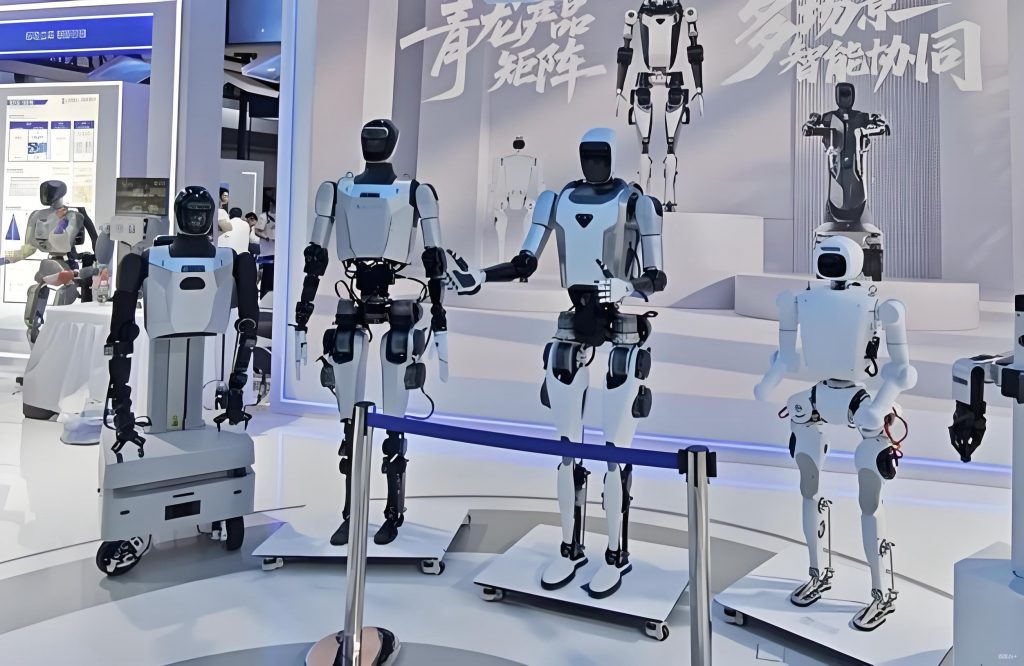
The integration of embodied intelligence into commercial operations is becoming increasingly prevalent, with industries such as logistics, automotive manufacturing, and consumer electronics emerging as key battlegrounds for embodied robot applications. The ability of embodied robots to perform repetitive and precision tasks makes them ideal for these sectors, where efficiency and accuracy are paramount. As more companies adopt embodied intelligence, we can expect to see further innovations in robot design and functionality, ultimately leading to more sophisticated and cost-effective embodied robots that can operate in a wider range of environments.
Company Commercial Progress in Embodied Intelligence Beijing Humanoid Deployment in Foton Cummins Engine Factory and Li-Ning Laboratory for autonomous tasks and testing UBTECH Batch application of Walker S in industrial scenes Songyan Power Sales of new-generation humanoid robots surpassing 200 units shortly after launch Accelerated Evolution Robotics Shipments exceeding 700 units with global market deliveries This table summarizes the recent commercial advancements by key players in the embodied intelligence and embodied robot sector, illustrating the rapid growth and diversification of applications. The data highlights how embodied robots are being integrated into various industries, from manufacturing to sports science, demonstrating the expanding scope of embodied intelligence. As these technologies mature, we can anticipate even broader adoption, with embodied robots becoming commonplace in everyday life, from homes to public spaces.
-
Industry Trends and Expert Insights on Embodied Intelligence
The embodied intelligence industry is experiencing accelerated development, driven by trends such as the rise of open-source ecosystems, the prioritization of industrial scenes for scaling, and the increasing importance of integrated software-hardware capabilities. According to Bai Siwei, Secretary-General of the China Internet of Things Industry Association, the competition in the embodied robot sector is intensifying, with open-source ecosystems becoming a key battleground. The shift from closed research and development models to open-source approaches involving algorithms, models, and development tools is now a core strategy for leading companies to attract ecosystem partners. This trend is particularly evident in the embodied intelligence domain, where collaboration and shared innovation can lead to faster technological iterations and more robust solutions.
Wang Feiyue, a researcher at the Chinese Academy of Sciences Institute of Automation, emphasized that open source is a critical catalyst for the industrialization of embodied intelligence. He described Beijing Humanoid’s dual open-source strategy of “platform + model” as providing the industry with an “operating system + brain” infrastructure, which is likely to attract more developers to participate in innovation and form a positive cycle of technological iteration. This perspective underscores the transformative potential of open-source initiatives in embodied intelligence, as they lower entry barriers and encourage a collective effort to address complex challenges in robot development and deployment.
Wei Guohong, a member of the China Robotics CR Education and Training Standards Committee, noted that Beijing Humanoid’s open and open-source strategy will not only accelerate technological iteration but also reshape the industry’s competitive landscape, promoting the transition of embodied robots from “laboratories” to “production lines” and “life scenes.” This shift is facilitated by the growing emphasis on soft-hardware integration, where companies are moving beyond mere hardware performance comparisons to compete based on a combination of algorithms, data, and scenarios. For instance, Beijing Humanoid’s synergy between “Embodied Tiangang” hardware and “Huisi Kaiwu” software demonstrates how integrated approaches can achieve synergistic effects, enhancing the overall performance and applicability of embodied robots.
Industrial scenes are leading the way in the规模化 of embodied robots, as standardized requirements and clear return on investment make it easier to promote commercialization compared to service-oriented scenes. Sectors like logistics, automotive manufacturing, and consumer electronics are becoming focal points for embodied intelligence applications, where embodied robots can handle tasks such as assembly, inspection, and material handling with high precision and efficiency. This trend is supported by the development of more advanced embodied intelligence models that enable robots to learn and adapt to new environments quickly, reducing deployment times and costs.
As the industry evolves, the focus on embodied intelligence is expected to drive further innovations in robot autonomy and interaction capabilities. Experts predict that embodied robots will become more intuitive and responsive, thanks to advancements in machine learning and sensor technologies. This could lead to new applications in areas like healthcare, where embodied robots might assist in surgeries or patient care, and in education, where they could serve as interactive tutors. The ongoing development of embodied intelligence will likely result in more personalized and context-aware embodied robots, enhancing their utility and acceptance in society.
-
Future Outlook and Global Implications
Looking ahead, the future of embodied intelligence and embodied robots appears promising, with potential impacts on global economies and societal structures. The open-source initiatives led by Beijing Humanoid and other companies are set to democratize access to advanced robotic technologies, enabling smaller firms and developing regions to leverage embodied intelligence for economic growth. As embodied robots become more affordable and capable, they could address labor shortages in aging populations and improve productivity in various sectors, from agriculture to services. This global diffusion of embodied intelligence may also spur international collaborations, as countries work together to establish standards and ethical guidelines for the use of embodied robots.
In terms of technological advancements, we can expect continued progress in the areas of embodied intelligence algorithms, sensor fusion, and energy efficiency. Research into more sophisticated embodied world models, like WoW, will likely enhance the cognitive abilities of embodied robots, allowing them to understand and navigate complex environments with greater autonomy. This could lead to breakthroughs in human-robot collaboration, where embodied robots work alongside humans in seamless partnerships, amplifying human capabilities and enabling new forms of creativity and problem-solving.
The commercialization of embodied intelligence is projected to expand beyond industrial applications into consumer markets, with embodied robots becoming common in households for tasks like cleaning, companionship, and security. As these technologies mature, issues related to privacy, security, and job displacement will need to be addressed through thoughtful policies and public discourse. However, the overall trajectory suggests that embodied intelligence will play a central role in the fourth industrial revolution, transforming how we live, work, and interact with machines.
In conclusion, the efforts by Beijing Humanoid and its partners are paving the way for a more open and innovative ecosystem for embodied intelligence. By fostering collaboration through open-source platforms and models, they are accelerating the development and deployment of embodied robots that are smarter, more adaptable, and more accessible. As the industry continues to evolve, the focus on embodied intelligence will likely yield significant benefits, driving economic growth and improving quality of life worldwide. The journey of embodied robots from niche applications to mainstream adoption is well underway, and the future holds exciting possibilities for this transformative technology.
The rapid advancements in embodied intelligence and embodied robots underscore a pivotal moment in robotics history. With companies like Beijing Humanoid leading the charge through open-source initiatives and real-world deployments, the potential for embodied robots to revolutionize industries and daily life is immense. As the ecosystem grows, continued investment in research, development, and collaboration will be essential to unlock the full potential of embodied intelligence, ensuring that these technologies benefit society as a whole. The ongoing evolution of embodied robots promises to bring about a new era of automation and intelligence, shaping the future in ways we are only beginning to imagine.