
In a significant move within the humanoid robotics sector, the Beijing Humanoid Robot Innovation Center (Beijing Humanoid) has been actively advancing its initiatives to foster an open and collaborative environment for embodied intelligence. Recently, Beijing Humanoid, in partnership with Shenzhen Ubtech Technology Co., Ltd. (Ubtech), officially opened the universal embodied intelligence platform “Huisi Kaiwu” SDK (Software Development Kit), signaling a pivotal step forward in building an ecosystem centered on open-source principles for embodied intelligence. This development is complemented by the launch of the open-source embodied world model WoW, which, upon being made available to the industry, is poised to enable a broader range of embodied robots to rapidly acquire and master diverse skills. These efforts underscore Beijing Humanoid’s commitment to creating a robust foundation for the widespread adoption of embodied intelligence technologies.
The opening of the “Huisi Kaiwu” SDK represents a strategic shift towards democratizing access to advanced tools for developing embodied intelligence systems. By providing developers with a comprehensive software kit, Beijing Humanoid aims to lower barriers to entry and accelerate innovation in the field of embodied robots. This platform integrates various functionalities that facilitate the design, testing, and deployment of intelligent robotic systems, emphasizing the core tenets of openness and collaboration. The subsequent introduction of the WoW model further enhances this initiative by offering a scalable framework for training embodied robots across multiple domains, thereby reducing the time and resources required for skill acquisition. This dual approach of platform and model开源 is expected to drive significant advancements in the capabilities of embodied intelligence, making it easier for organizations to implement sophisticated robotic solutions.
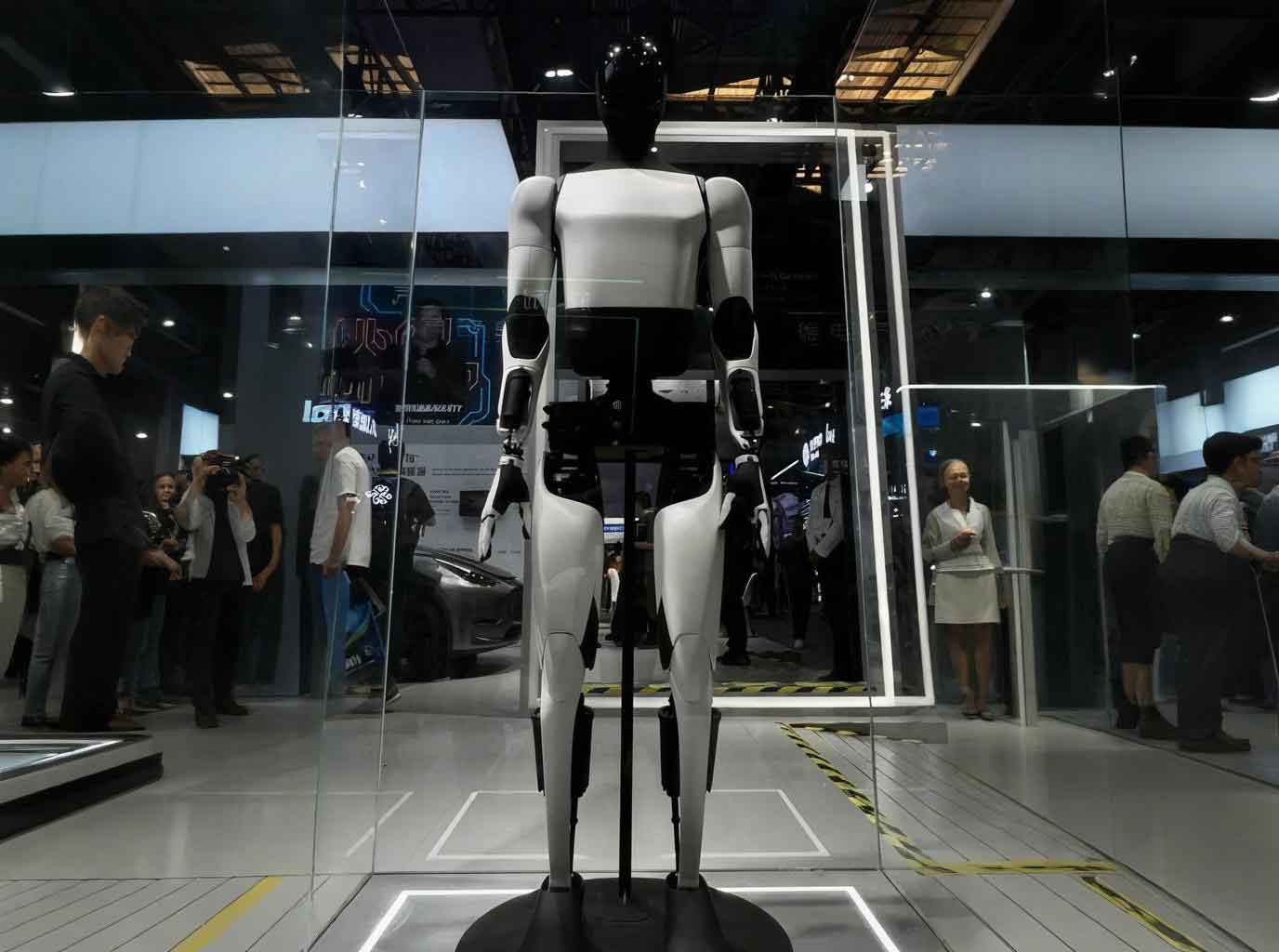
According to a representative from Beijing Humanoid, the center is focused on constructing an open-source innovation system that spans from the underlying infrastructure to the application layer, with the goal of developing “the most user-friendly” robots. To address practical application scenarios such as material handling, the Beijing Humanoid team has developed specialized models based on the “Huisi Kaiwu” platform. These models have undergone extensive training with a vast array of different-sized boxes, endowing the embodied robots with robust generalization capabilities for recognition tasks. As a result, robots equipped with this model can intelligently handle the grasping of various types of boxes, enabling them to quickly adapt to new factory environments and commence operations with minimal setup time. This adaptability significantly enhances the rapid response capabilities of production lines, showcasing the practical benefits of embodied intelligence in industrial settings.
Che Zhengping, the head of embodied intelligence at Beijing Humanoid, elaborated on the technical foundations of these initiatives. He stated that through the embodied intelligence platform and the embodied world model, Beijing Humanoid has established a comprehensive data system for embodied intelligence that covers the entire pipeline from simulation to real-world machines. This system leverages digital twin technologies and virtual-real fusion collection methods to provide high-quality training support for a wide range of robot embodiments and task scenarios. By integrating these elements, Beijing Humanoid aims to create a seamless environment where embodied robots can be trained and deployed efficiently, thereby pushing the boundaries of what is possible with embodied intelligence. This approach not only improves the performance of individual robots but also contributes to the broader ecosystem by enabling more reliable and scalable solutions.
The emphasis on open-source strategies has been widely endorsed by experts in the field. Wang Yuefei, a researcher at the Chinese Academy of Sciences Institute of Automation, highlighted the importance of开源 as a key catalyst for the industrialization of embodied intelligence. He remarked that Beijing Humanoid’s dual strategy of “platform + model”开源 effectively provides the industry with fundamental infrastructure akin to an “operating system + brain,” which is likely to attract more developers to participate in innovation and foster a positive cycle of technological iteration. This perspective is shared by Wei Guohong, a member of the China Robot CR Education and Training Standards Committee, who noted that Beijing Humanoid’s open-source and open strategy will not only accelerate technological advancements but also reshape the competitive landscape of the industry. He emphasized that this approach is crucial for transitioning humanoid robots from laboratory environments to real-world production lines and everyday life scenarios, thereby expanding the reach of embodied intelligence.
In parallel with these technological开源 efforts, Beijing Humanoid is making strides in commercializing its embodied intelligence solutions. Since September 2025, Beijing Humanoid’s “Jushen Tiangong 2.0” and “Tianyi 2.0” robots have been deployed at the Foton Cummins Engine Factory, where they autonomously perform tasks such as box retrieval and placement on unmanned production lines. This implementation demonstrates the practical applicability of embodied robots in industrial contexts, where they can operate efficiently without human intervention. Additionally, Beijing Humanoid’s “Jushen Tiangong Ultra” robot has been utilized in the Li-Ning Sports Science Laboratory for running shoe testing. By accurately simulating human running postures to collect data, this embodied robot addresses limitations posed by individual variations in traditional testing methods, thereby enhancing the reliability and efficiency of product development processes. These examples illustrate how embodied intelligence is being leveraged to solve real-world challenges across different sectors.
Other companies in the industry are also advancing their commercialization efforts for embodied robots. Ubtech has achieved batch applications of its Walker S robot in industrial scenarios, demonstrating the scalability of embodied intelligence solutions. Songyan Power saw its new generation of humanoid robots sell over 200 units within three hours of launch, indicating strong market demand. Meanwhile, Accelerated Evolution Robotics has delivered more than 700 units globally this year, achieving international market penetration and accelerating the construction of a full-chain ecosystem from technology to application. Overall, leading enterprises are driving down the terminal prices of humanoid robots and shifting from “single-point technological breakthroughs” to “scenario-based ecological competition,” reflecting a broader trend towards integrated and affordable embodied intelligence solutions.
Bi Siwei, Secretary-General of the China Internet of Things Industry Association, provided insights into the industry’s development trajectory. He observed that the humanoid robot sector is experiencing accelerated growth, with开源 ecosystems becoming a competitive hotspot. The transition from algorithm models to development tools in a full-stack open-source manner is replacing closed research and development models, emerging as a core strategy for leading companies to attract ecosystem partners. Industrial scenarios are率先 achieving规模化, as standardized requirements and clear return on investment in these settings make it easier to promote the commercialization of robots compared to service scenarios. Key battlegrounds include logistics, automotive manufacturing, and 3C electronics. Moreover, soft-hard integration capabilities are becoming decisive for future success, with competition shifting from单纯的硬件性能比拼 to comprehensive contests involving “algorithms + data + scenarios.” For instance, Beijing Humanoid’s synergy between “Jushen Tiangong” (hardware) and “Huisi Kaiwu” (software) achieves a “1+1>2” effect, highlighting the importance of integrated approaches in advancing embodied intelligence.
The ongoing initiatives by Beijing Humanoid and other industry players underscore the transformative potential of embodied intelligence in reshaping various sectors. By fostering an open ecosystem, these efforts are not only accelerating technological innovation but also enabling more accessible and efficient solutions for embodied robots. The integration of advanced platforms like “Huisi Kaiwu” and models like WoW is setting new standards for how embodied intelligence can be developed and deployed, ultimately driving progress towards more intelligent and autonomous systems. As the industry continues to evolve, the focus on collaboration and open-source principles is expected to play a critical role in unlocking the full potential of embodied robots, making them an integral part of modern industrial and daily life applications.
In conclusion, the recent developments from Beijing Humanoid highlight a concerted push towards building a sustainable and open ecosystem for embodied intelligence. Through strategic partnerships,开源 releases, and practical commercial deployments, the center is paving the way for broader adoption of embodied robots. The emphasis on keywords such as embodied intelligence and embodied robots throughout these initiatives reflects a deep commitment to advancing this field. As experts and industry leaders continue to endorse these approaches, the future of embodied intelligence looks promising, with potential applications expanding across industries and driving economic growth. The ongoing efforts to balance technological innovation with commercial viability will be crucial in ensuring that embodied robots become a mainstream technology, benefiting society as a whole.
The advancements in embodied intelligence are not limited to single entities but are part of a larger movement towards collaborative innovation. By sharing resources and knowledge through open-source platforms, companies like Beijing Humanoid are enabling a diverse range of stakeholders to contribute to the development of embodied robots. This collective effort is essential for addressing complex challenges and achieving breakthroughs that would be difficult to accomplish in isolation. As more organizations join this ecosystem, the pace of innovation is likely to accelerate, leading to more sophisticated and capable embodied intelligence systems. This, in turn, will open up new opportunities for applications in areas such as healthcare, education, and entertainment, further demonstrating the versatility and impact of embodied robots.
Furthermore, the commercial success stories from companies like Ubtech, Songyan Power, and Accelerated Evolution Robotics illustrate the growing market acceptance of embodied intelligence. The ability to deploy these robots in real-world settings and achieve tangible benefits is a strong indicator of the technology’s maturity. As prices continue to decrease and capabilities improve, embodied robots are becoming more accessible to a wider range of users, from large corporations to small businesses. This democratization of technology is a key driver of the embodied intelligence revolution, enabling more organizations to leverage these tools for efficiency gains and innovation. The focus on industrial applications, in particular, is helping to build a solid foundation for future growth, as these environments often provide clear metrics for success and rapid feedback for improvement.
Looking ahead, the continued evolution of embodied intelligence will depend on sustained investment in research and development, as well as a commitment to open collaboration. Beijing Humanoid’s approach of combining hardware and software innovations serves as a model for how to achieve this balance. By developing integrated solutions that address both the technical and practical aspects of embodied robots, the center is helping to bridge the gap between laboratory research and real-world deployment. This holistic perspective is essential for ensuring that embodied intelligence technologies can meet the diverse needs of users and adapt to changing market conditions. As the industry moves forward, it will be important to maintain this focus on integration and accessibility to maximize the benefits of embodied robots for society.
In summary, the efforts by Beijing Humanoid to accelerate the construction of an open ecosystem for embodied intelligence are yielding significant results. Through the opening of the “Huisi Kaiwu” SDK, the launch of the WoW model, and successful commercial deployments, the center is demonstrating the practical value of embodied intelligence in enhancing productivity and innovation. The support from experts and the broader industry underscores the importance of these initiatives in driving the future of robotics. As embodied robots become more prevalent, their impact on various sectors will continue to grow, making them a key component of the next wave of technological advancement. The ongoing commitment to open-source principles and collaborative development will be vital in ensuring that this potential is fully realized, leading to a future where embodied intelligence is seamlessly integrated into everyday life.