
In the serene evenings of early autumn, at a nursing home in Nanshan District, Shenzhen, the gentle strains of music accompany a “cyber elderly companion” humanoid robot as it guides seniors through Tai Chi exercises. Simultaneously, over 2,000 kilometers away on the streets of Qingdao, a humanoid robot adorned in armor captivates audiences with live demonstrations. These scenes epitomize the fervent activity within China’s robotics sector, where enterprises are aggressively capitalizing on burgeoning opportunities. The first half of 2025 witnessed a remarkable surge, with the robotics industry’s operating revenue climbing by 27.8% year-on-year. Production figures soared, reaching 370,000 units for industrial robots and a staggering 8.824 million units for service robots, reflecting growth rates of 35.6% and 25.5%, respectively. Propelled by policy initiatives and capital investments, the humanoid robot domain is experiencing an unprecedented boom, yet it grapples with underlying challenges that threaten sustainable progress.
- Policy Backing and Capital Surge Fuel a Development Frenzy
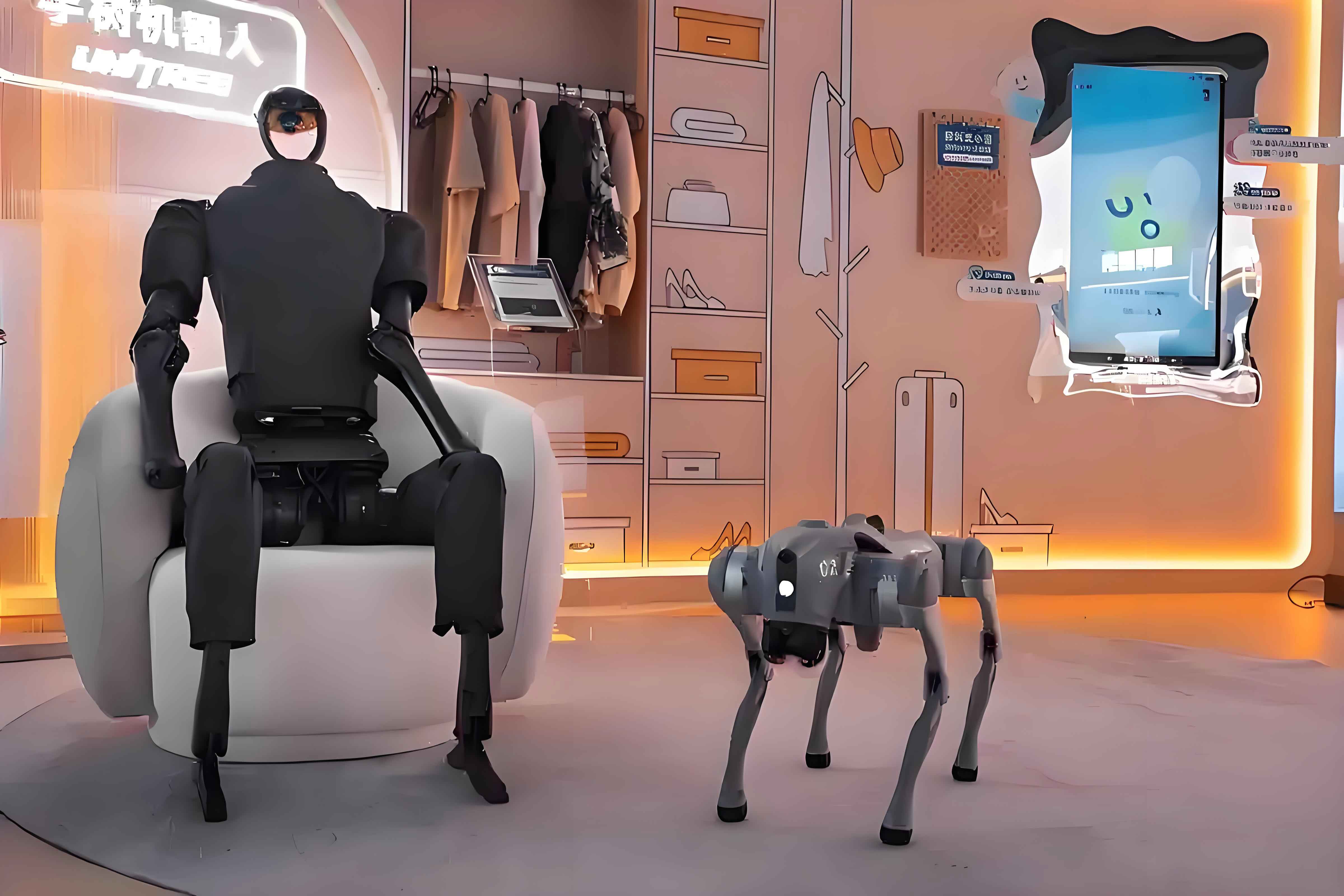
Recent months have showcased the allure of humanoid robots at major global events like the 2025 World Robot Conference and the 2025 World Humanoid Robot Games. Innovations abound: the world’s first self-charging humanoid robot addresses the industry’s persistent issue of short battery life; industrial humanoid robots autonomously identify objects in grimy, dusty settings; and service robots not only pop popcorn but also collaborate in groups for tasks such as hotel room deliveries. This momentum is underpinned by a series of policy measures, including the 2023 “Guiding Opinions on the Innovative Development of Humanoid Robots” and the “Robot+ Application Action Implementation Plan,” with “embodied intelligence” making its debut in this year’s government work report. As the quintessential form of embodied intelligence, humanoid robots are rapidly evolving in China.
Local governments have swiftly aligned with national strategies. Beijing, Shanghai, Zhejiang, and Shandong, among others, have rolled out policies positioning embodied intelligence and humanoid robots as pivotal drivers for high-quality economic growth and industrial upgrading. Internet giants are equally proactive in securing their stakes. JD.com invested in six embodied intelligence firms within three months; Tencent has backed companies like Zhiyuan Robot and Yushu Technology; and Meituan has invested in over ten related enterprises. The capital market is exuberant, with data indicating 144 financing deals in China’s embodied intelligence sector during the first half of 2025, totaling 19.5 billion yuan and averaging 135 million yuan per deal.
The proliferation of robotics firms is staggering. According to Qichacha data, as of August 25, China hosts 1,292,398 robotics-related enterprises, including 953,640 intelligent robotics companies. In just six months, 114,931 new intelligent robotics firms emerged, with 9,957 added in the past 15 days. “We have already provided financial services to nearly 30 robotics companies,” revealed Li Zixun, Vice President of Innovation Finance at Shanghai Science and Technology Innovation Bank. Investigations indicate that beyond the high-profile startups, some mid-to-lower-tier teams are relocating to third- and fourth-tier cities to access local policy subsidies for sustenance. “Project valuations are skyrocketing, and everyone is optimistic about the industry’s future prospects,” noted a investment promotion officer from a city in Jiangsu. Wu Yixian, a professional investor from Nanjing, Jiangsu, observed, “Recently, the humanoid robot sector has demonstrated an unparalleled ability to attract capital, performing exceptionally well in the capital market.” Xu Xiaolan, Chairman of the China Electronics Society, emphasized at the 2025 World Robot Conference forum that the humanoid robot industry and its applications are exhibiting robust potential, entering an acceleration phase marked by “technological breakthroughs, capital influx, and scenario implementation.” This synergy of technology and capital is propelling humanoid robots from laboratories to stages, factories, retail spaces, and households. Zhang Hui, a seasoned media analyst, remarked, “Researchers, entrepreneurs, investors, and observers are collectively catalyzing this trillion-yuan track, endowing it with the infinite possibility of projecting AI from virtual spaces into the real world. A cohort of great humanoid robot companies will emerge.”
- The Tripartite Challenge of Technology, Talent, and Standards Restraining Industry Advancement
Beneath the capital exuberance and market optimism, the humanoid robot industry faces a rigorous test. A humanoid robot comprises three core components: the “brain,” “cerebellum,” and the body. The “brain,” centered on AI large model technology, handles environmental perception and intelligent decision-making, while the “cerebellum” focuses on real-time motion monitoring to ensure precision and fluidity. “Only through seamless collaboration can the body be directed to perform complex tasks,” explained Wei Jiewen, Marketing Director of Suzhou Apache Robot Technology Co., Ltd., a supplier of embodied intelligence “brains” and “cerebellums.” To advance breakthroughs in key technologies like the “brain, cerebellum, and limbs,” the Ministry of Industry and Information Technology issued the “Guiding Opinions on the Innovative Development of Humanoid Robots” in October 2023. Under policy guidance, the localization rate of core components for humanoid robots in China now exceeds 70%, but high-end chips and core algorithm platforms remain vulnerable to fluctuations in the international supply chain.
“The core lies in chips, the difficulty in large models, the challenge in algorithms, and the key in components,” stated Wang Jihong, Executive Vice President of the China Mechatronics Technology Application Association and a professor-level senior engineer. At the August 2025 China Embodied Intelligent Robot Industry Conference and Exhibition in Shanghai, two humanoid robots from Shenzhen Elephant Antai Technology Co., Ltd. drew significant attention. “They can engage in services like greeting and dancing, guiding more customers into stores,” said Business Director Li Jianbo. “However, their actions are pre-set and lack real-time decision-making capabilities in authentic scenarios.” Thanks to rapid technological advances, humanoid robots are permeating daily life—from clumsily handing out popcorn to preparing claypot rice according to procedures, and from playing chess and soccer to assembling precision components. Yet, a research report by Guojin Securities Co., Ltd. points out that the智能化水平 of domestic humanoid robot enterprises generally remains low; when task chains lengthen, robots often misjudge object attributes or repeat ineffective actions, leading to comical scenarios.
Yushu Technology’s G1 combat humanoid robot shows improved stability and anti-interference capabilities compared to its predecessor, with faster punches, greater force, and smoother movements. However, industry insiders note that this humanoid robot still requires manual remote control, essentially pushing the limits of its physical performance. “Only by continuously enhancing the autonomous learning capabilities of humanoid robots can they adapt to more scenarios,” asserted Bai Yiming, a test engineer at Ningbo Junpu Artificial Intelligence and Humanoid Robot Research Institute Co., Ltd. Lu Cewu, Vice Dean of the School of Artificial Intelligence at Shanghai Jiao Tong University, emphasized in a speech at the 2025 World Robot Conference that “extracting fundamental models for operating in ever-changing environments, while transforming the world and executing tasks subconsciously like humans, necessitates two aspects: generalization, where seen and unseen objects can be understood, and robustness, the system’s ability to resist failures and interference.” Dr. Xu Xuecheng, Technical Director of the Zhejiang Humanoid Robot Innovation Center, analogized, “It’s about finding ways to overcome ‘rejection reactions,’ enabling humanoid robots to learn by analogy.”
Investigations reveal that humanoid robots commonly face endurance issues, with battery life lasting only 2 to 4 hours. “High intelligence often corresponds to high energy consumption; large models or GPU chip configurations are power-hungry,” noted Tu Hangzhou, a staff member at Boaonike Robot (Ningbo) Co., Ltd. He added that greater flexibility in robot movements increases energy consumption, potentially causing battery overheating or system crashes. Short battery life stems from multiple factors. Batteries used in new energy vehicles are typically too large for humanoid robots. Zhang Yiwei, a cell engineer at a Jiangsu battery company, explained, “The mainstream battery types in the industry are ternary lithium batteries and lithium iron phosphate batteries. While the former has higher energy density and longer endurance than the latter, it is prone to thermal runaway, fires, or even explosions.” Lu Hanchen, Director of the Gaogong Robot Industry Research Institute, commented, “Currently, battery endurance is not a priority concern for humanoid robot manufacturers.”
Technological bottlenecks have spurred demand for specialized talent. Recent urgent talent catalogs released by various regions highlight roles like robotics R&D directors and system operators as key recruitment focuses. The talent shortfall in the humanoid robot industry stems from a systemic disconnect between traditional education systems and the needs of emerging industries. Shi Jingxin, a retired employee from the Institute of Robotics and Mechatronics at the German Aerospace Center, after surveying numerous Chinese universities, found that many faculty involved in humanoid robot research lack practical industry knowledge. “They excel at writing papers but are disconnected from practice, making it difficult to cultivate graduates proficient in technology, algorithms, and hands-on skills,” Shi noted. He also attributed the talent gap to curricula lagging behind rapid technological iterations in robotics.
Currently, a wave of automotive companies跨界 venturing into humanoid robot manufacturing is sweeping globally. In China, at least 19 automakers have entered the fray, sparking debates over industry standards. “Should we adhere to automotive industry standards or industrial robot standards? Do medical robots require medical licenses? These are all questions,” queried Cheng Yukun, Sales Manager at Jizhilian Robot (Suzhou) Co., Ltd. The diversity of humanoid robots in China means each company collects its own data, leading to significant wastage. Hou Linshen, Sales Supervisor at Shanghai Zaike Intelligent Technology Co., Ltd., stated, “Company A’s data isn’t shared with Company B, and Company B’s models can’t be used on Company C’s bodies. There’s an urgent need to pool resources through standardization.” Additionally, high production costs and a lack of essential application scenarios continue to hamper the healthy development of China’s humanoid robot industry.
- Collaborative Efforts Across Government, Industry, Academia, Research, and Application to Overcome Development Bottlenecks
The multifaceted challenges confronting the humanoid robot industry demand systematic solutions. Regarding the investment fervor, Wu Yixian advocates for enhanced national planning and guidance to prevent urban redundancy, fostering distinctive clusters with unique specialties. He suggests that government funds lead investments without taking controlling stakes, using convertible bonds that convert to equity only after firms meet mass-production benchmarks, thereby curting herd behavior. Liu Zheng, Product Director of Zhejiang Lingqiao Intelligent Technology Co., Ltd., advises aligning investment directions with local industrial strengths, targeting cutting-edge technologies and weak links. Xu Duo, Office Deputy Director and Membership Director of the Shanghai Robotics Industry Association, recommends promoting data sharing and encouraging SMEs to purchase mature product suites from established firms, using application scenarios to develop distinctive uses.
To address the shortage of advanced AI models and sufficient training data, Beijing’s Yizhuang district recently launched the “Embodied Intelligence Social Experiment Plan,” opening nearly 1,000 real-world data collection points. Xu Bin, General Manager of the National-Local Joint Humanoid Robot Innovation Center, asserts that open source and openness are vital for technological progress and industrial prosperity. Tu Hangzhou further proposes establishing “data factories” where individuals wear human-machine interaction devices to capture data, efficiently training humanoid robots. Zong Linlin, Automotive Business Director at Flexiv Robotics Technology Co., Ltd., concurs, suggesting combining AI to create adaptive humanoid robots that perform complex tasks with hand-eye coordination akin to humans.
For pain points like short battery life, Hong Feng, Mechanical Engineer at Ningbo Junpu Artificial Intelligence and Humanoid Robot Research Institute Co., Ltd., recommends equipping humanoid robots with removable batteries for quick swaps and recharging, alongside structural and algorithmic improvements to optimize energy management and reduce consumption. “It’s also essential to guide the industry in breakthroughs like battery endurance, heat dissipation efficiency, and motor load capacity,” Hong added. Academician Ouyang Minggao of the Chinese Academy of Sciences has highlighted that humanoid robot batteries must balance energy density, cost, and safety. He identified 2025 as a watershed year for technical routes, noting that semi-solid-state batteries could lead the market if costs fall below $150 per kilowatt-hour.
Shanghai’s recently issued “Implementation Plan for the Development of the Embodied Intelligence Industry” offers substantial financial support for key technology攻关. Wei Jiewen advises focusing on modular solutions that can be seamlessly integrated across different enterprises’ humanoid robots. “In the future, we hope they can handle unknown environments like true living organisms,” he expressed. A Zhaopin report shows that from January to May this year, job postings for humanoid robot algorithm engineers and mechanical structure design engineers surged by 479% and 239% year-on-year, respectively, indicating explosive growth.
To tackle talent shortages, multiple regions have established robotics innovation centers for collaborative training. Liu Zheng suggests “guiding vocational students to participate in data collection, cultivating applied talents, enriching the industrial chain while boosting employment.” Shi Jingxin believes that further挖掘 application scenarios in healthcare, rehabilitation, and others can leverage market forces to channel talent toward application ends. Dr. Qiang Hongbing, a robotics specialty teacher at Jiangsu University of Technology’s Mechanical College, recommends “encouraging universities to establish interdisciplinary robotics programs, building an ‘industry-academia-research-application’ innovation ecosystem,” and “emphasizing career enlightenment and planning for youth to deliver cross-disciplinary,复合型 talents to the industry in the next 5 to 10 years.”
The recently concluded 2025 World Humanoid Robot Games showcased advanced capabilities of humanoid robots, yet issues of generality, safety, and technical standardization remain unresolved. Wang Peng, Associate Researcher at the Beijing Academy of Social Sciences, argues that unified standards can construct a technical language and evaluation system, provide quantitative bases for multi-scenario applications, and shift technological iteration from “parameter competitions” to scenario-driven demands. Cheng Hong, Director of the Ministry of Education’s Engineering Research Center for Human-Machine Intelligence Technology and Systems and Director of the University of Electronic Science and Technology of China’s Robot Research Center, advises that “China should持续 increase R&D investment in emerging fields like embodied intelligence and human-robot collaboration, promote cross-industry, cross-scenario data sharing and coordination, and provide strong support for the technological R&D and hierarchical classification standard formulation of humanoid robots.” He adds, “Domestic leading enterprises should actively participate in international standard-setting, strive for discourse power, and foster international trade and cooperation through mutual recognition systems for product standards.” Ren Rongwei, Standards Responsible Person at the Beijing Humanoid Robot Innovation Center, anticipates that with the implementation of grading standards, humanoid robots may突破 “demonstrative intelligence” toward genuine “general intelligence.”
In this landscape, internal competition offers no way out; breakthroughs are crucial. “This is a relay race—capital has run the first leg, and technology, scenarios, and policy must follow,” Cheng Hong remarked. The journey is long, but China’s robotics industry is poised to carve a prominent position on the global科技 map.
Reporter’s Notes: Opening the Door to the Future
The year 2025 is regarded as the inaugural year for mass production of humanoid robots. On a recent afternoon in a Shanghai automotive manufacturing plant, several silver-gray figures moved along production lines—humanoid robots undergoing training for tasks like bolt tightening and material handling. After over a year of internships, 500 industrial-grade humanoid robots are set to be formally deployed in batches. The “Top Ten Potential Application Scenarios for Humanoid Robots” report released by the China Electronics Society illustrates a future where humanoid robots are utilized across industries, including industrial manufacturing, elderly care, agricultural production, as well as high-risk roles like power plant operations and petrochemical pipeline inspections, and various emergency scenarios. The future is unfolding, incessantly evolving.
Visits to multiple humanoid robot enterprises in the Yangtze River Delta reveal that leading players are shifting toward “scenario深耕.” Some R&D teams have stationed themselves in factories for months, solely to refine a single motion trajectory, such as “bending to pick up and place parts.” The accumulation of training data through “small, quick steps” targets specific goals of cost reduction and efficiency gains. Each minor advancement is cause for excitement. This encapsulates the humanoid robot industry—though in its “infancy,” it brims with promise. From prototype humanoid robots performing “carp leaps” in labs to industrial versions executing precision operations, the industry is突破 critical thresholds at a super-linear pace, accelerating its sprint from “0 to 1” on the path to mass production.
However, the journey is not without obstacles. The humanoid robot industry faces numerous challenges in its early development stages, yet these are inherent to any disruptive technology’s evolution. Just as computers transformed from room-sized behemoths to today’s pocket-sized devices, technological progress and规模化 applications will inevitably mature humanoid robots. Given time, they are destined to grow into giants that reshape the world. Within the industry, 2025 to 2027 is seen as both a period for攻克 technological bottlenecks and validating scenario compatibility, as well as a critical phase for policy support. It requires multi-stakeholder collaboration to tangibly assist this industry, which carries humanity’s vision of “intelligent companions,” in truly “running” into factories, hospitals, and homes. After all, genuine “acceleration” is not merely about speed but about ecological resonance—when key technologies, rigid demands, and institutional provisions synchronize, China’s humanoid robots can stride confidently onto the world stage.