
The convergence of robotics, artificial intelligence, and cognitive science has propelled humanoid robots and the paradigm of embodied intelligence to the forefront of technological innovation. An embodied AI robot represents a fundamental shift from traditional, disembodied artificial intelligence. It posits that intelligence is not merely a computational process occurring in isolation but emerges from the dynamic interaction between an agent’s physical body, its sensors and actuators, and the environment in which it is situated. This perspective is crucial for developing machines that can operate effectively, safely, and intuitively in human-centric spaces. A humanoid robot, with its anthropomorphic form factor, is the quintessential platform for exploring and deploying embodied AI, as its morphology is inherently designed for compatibility with human tools, infrastructure, and social cues.
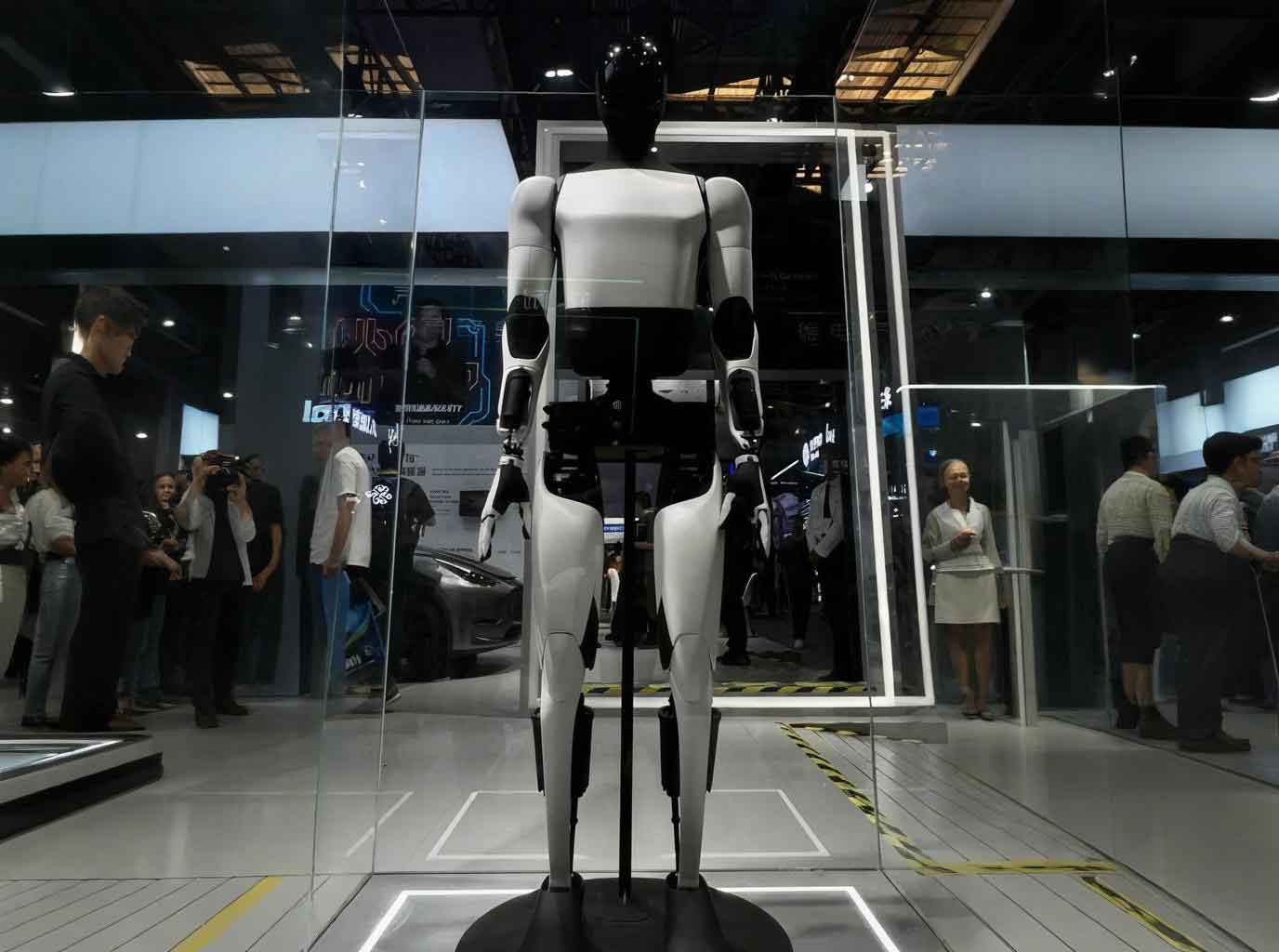
The evolution of the embodied AI robot is driven by parallel advances in multiple disciplines. Breakthroughs in high-torque density actuators, lightweight composite materials, and sophisticated sensor arrays provide the physical “body.” Simultaneously, progress in machine learning—particularly deep reinforcement learning, computer vision, and large language models—provides the “mind” capable of learning from and adapting to physical experiences. This synthesis aims to create machines that do not just execute pre-programmed tasks but can understand context, learn from failure, and perform complex manipulation and locomotion with a degree of autonomy and grace approaching biological systems.
To systematically map the intellectual landscape and trajectory of this dynamic field, we conducted a comprehensive bibliometric analysis. This approach allows us to move beyond anecdotal observation to quantitatively identify core research themes, influential actors, collaborative networks, and emerging frontiers. The findings not only chart the remarkable growth of the embodied AI robot domain but also reveal critical structural fragilities—most notably, a pervasive lack of standardization—that threaten to impede cohesive progress and responsible deployment.
Research Methodology and Data Corpus
Our analysis is grounded in a structured, data-driven methodology to ensure reproducibility and objectivity. The core data was extracted from the Web of Science (WoS) Core Collection, a premier database for high-impact scientific literature.
| Parameter | Specification |
|---|---|
| Database | Web of Science Core Collection (Science Citation Index Expanded) |
| Search Query | TS=(“humanoid robot*” OR “humanoid robotics” OR “human-like robot*” OR “embodied intelligence”) |
| Time Span | January 1, 2015 – May 3, 2025 |
| Document Types | Article, Review, Proceedings Paper |
| Initial Yield | 2,686 publications |
The search query was designed to capture the dual pillars of the field: the physical platform (“humanoid robot”) and the governing intelligence framework (“embodied intelligence”). The resultant corpus of 2,686 publications forms the basis for all subsequent analysis.
For processing and visualization, we employed two specialized software tools: CiteSpace (version 6.3.R1) and VOSviewer (version 1.6.20). CiteSpace excels at temporal analysis and detecting emerging trends and pivotal publications through algorithms for burst detection and betweenness centrality. VOSviewer is particularly adept at constructing and visualizing networks based on co-authorship, co-citation, and keyword co-occurrence, creating intuitive maps of the scholarly landscape. The analysis was conducted at multiple levels: publication trends, geographical and institutional distribution, author collaboration networks, and thematic evolution through keyword analysis.
Bibliometric Landscape: Growth, Networks, and Focus
The quantitative analysis of the publication data reveals a field in a state of robust and sustained expansion, marked by distinct geographical and institutional concentrations.
Publication Growth Trajectory
The annual publication count serves as a clear barometer of research activity. From 2015 to 2025, the number of publications on humanoid robots and embodied intelligence has shown a significant upward trend. While year-to-year fluctuations occur, the period from 2020 onwards has been characterized by consistently high output, with annual publications stabilizing above 280. This plateau of high productivity indicates the field’s transition from a niche interdisciplinary area to a mature and consistently funded domain of global research interest. The sustained investment reflects a broad consensus on the strategic importance of the embodied AI robot for future industries and societal applications.
Geographical and Institutional Dominance
The research effort is highly concentrated, both geographically and institutionally. Analysis of country-level contributions reveals a striking dominance by a few key nations.
| Rank | Country/Region | Number of Publications | Percentage of Corpus (%) |
|---|---|---|---|
| 1 | China | 701 | 26.1 |
| 2 | Japan | 358 | 13.3 |
| 3 | United States | 317 | 11.8 |
| 4 | Germany | 176 | 6.6 |
| 5 | South Korea | 158 | 5.9 |
| 6 | Italy | 144 | 5.4 |
| 7 | United Kingdom | 131 | 4.9 |
| 8 | France | 125 | 4.7 |
| 9 | Spain | 91 | 3.4 |
| 10 | Canada | 78 | 2.9 |
This table underscores a significant geographical disparity. The top three nations—China, Japan, and the USA—collectively account for over 50% of the total publication output. This concentration suggests a correlation between national research investment, industrial policy, and scholarly output in this high-tech domain. The network maps of international collaboration further illustrate this point, showing strong intra-regional links (e.g., within the EU) but relatively sparse collaboration between the leading Asian and North American research clusters, indicating potential for more global synergy.
The institutional landscape exhibits a pronounced “head effect.” A small number of organizations produce a disproportionately large share of the research.
| Rank | Institution | Country | Publications |
|---|---|---|---|
| 1 | Istituto Italiano di Tecnologia (IIT) | Italy | 189 |
| 2 | Centre National de la Recherche Scientifique (CNRS) | France | 156 |
| 3 | Chinese Academy of Sciences (CAS) | China | 146 |
| 4 | National Institute of Advanced Industrial Science & Technology (AIST) | Japan | 99 |
| 5 | University of Osaka | Japan | 87 |
| 6 | University of Tokyo | Japan | 83 |
| 7 | Beijing Institute of Technology | China | 82 |
| 8 | Harbin Institute of Technology | China | 80 |
| 9 | Helmholtz Association | Germany | 71 |
| 10 | Technical University of Munich | Germany | 70 |
The top 10 institutions alone are associated with nearly 40% of the publications. This concentration highlights the resource-intensive nature of embodied AI robot research, requiring significant investment in hardware, software, and specialized human capital. While collaboration networks exist, they often form around these leading hubs, with weaker interconnections between different global clusters. This can lead to duplication of effort and fragmentation of technical approaches.
Thematic Evolution and Research Foci
Keyword co-occurrence and cluster analysis provide a window into the intellectual structure of the field. The most frequent and bursty keywords illuminate the core technical challenges and evolving priorities for the embodied AI robot community.
The research is inherently multidisciplinary. The primary Web of Science categories assigned to the publications are Robotics (44.7%), Engineering (31.3%), Computer Science (30.9%), Automation & Control Systems (12.0%), and Materials Science (10.0%). This distribution confirms that advancing the embodied AI robot is not a singular engineering challenge but a systems integration problem spanning mechanical design, control theory, computing, and material science.
Keyword analysis reveals three tightly interwoven thematic clusters that define the current research agenda:
- Motion and Control (“The Cerebellum”): This cluster encompasses the fundamental challenge of dynamic movement and physical interaction. Keywords like “motion control,” “bipedal locomotion,” “dynamics,” “stability,” “trajectory optimization,” “impedance control,” and “force control” are dominant. The core mathematical problem here is often framed as solving complex, under-actuated, nonlinear dynamics in real-time. A simplified representation of the control objective for a walking embodied AI robot can be given by a quadratic program common in Model Predictive Control (MPC):
$$ \min_{\mathbf{u}} \sum_{k=0}^{N-1} \left( \| \mathbf{x}_k – \mathbf{x}_k^{ref} \|_{\mathbf{Q}}^2 + \| \mathbf{u}_k \|_{\mathbf{R}}^2 \right) $$
subject to: $$ \mathbf{x}_{k+1} = f(\mathbf{x}_k, \mathbf{u}_k), \quad \mathbf{u}_{min} \leq \mathbf{u}_k \leq \mathbf{u}_{max}, \quad \mathbf{C}(\mathbf{x}_k, \mathbf{u}_k) \leq 0 $$
where $\mathbf{x}$ is the state vector (positions, velocities), $\mathbf{u}$ is the control input (joint torques), $f$ is the nonlinear dynamics model, and $\mathbf{C}$ represents constraints (e.g., friction cone, torque limits). - Perception and Learning (“The Cortex”): This cluster focuses on enabling the embodied AI robot to understand and learn from its environment. Bursting keywords include “deep learning,” “reinforcement learning,” “human-robot interaction,” “gesture recognition,” “scene understanding,” “multi-modal perception,” and “sim2real.” The integration of large foundation models (LLMs, VLMs) is a current frontier, aiming to provide high-level semantic reasoning and task planning. The learning process for an embodied agent often follows a Partially Observable Markov Decision Process (POMDP) framework, where the agent must maintain a belief state $b_t$ over the true state $s_t$:
$$ b_t(s) = P(s_t = s | o_t, a_{t-1}, b_{t-1}) $$
The policy $\pi(a_t | b_t)$ is then optimized, often via deep reinforcement learning, to maximize expected cumulative reward. - Hardware and Embodiment (“The Physical Body”): This cluster addresses the material reality of the robot. Keywords include “sensors,” “actuators,” “compliant joint,” “tactile sensing,” “lightweight design,” and “energy efficiency.” The performance ceiling of any embodied AI robot is ultimately set by its physical capabilities—the bandwidth of its sensors, the power density of its actuators, and the strength-to-weight ratio of its structure.
The strongest keyword bursts in recent years are “artificial intelligence,” “deep learning,” “trajectory optimization,” and “anthropomorphism.” This signals a clear trend: the field’s center of gravity is shifting from purely mechanical and control-based solutions towards AI-driven, adaptive, and more naturally interactive systems. The goal is to create an embodied AI robot that not only moves effectively but also perceives, learns, and interacts in a human-like manner.
Technological Drivers and Future Trajectories
The observed bibliometric trends are not spontaneous but are propelled by specific, concurrent technological revolutions that are reshaping the possibilities for embodied AI.
1. The Ascendancy of AI and Foundational Models: The most transformative driver is the rapid advancement in artificial intelligence, particularly deep learning and the rise of large-scale pre-trained models. These models provide the “cognitive” substrate for the embodied AI robot. Vision-Language-Action (VLA) models are being fine-tuned to translate high-level natural language commands (“tidy up the living room”) into sequences of feasible low-level actions and motion primitives. This enables a form of commonsense reasoning and situational awareness previously unattainable. The learning process can be conceptualized as fine-tuning a pre-trained model parameterized by $\Theta$ on an embodied dataset $\mathcal{D}_{emb}$:
$$ \Theta^* = \arg \min_{\Theta} \mathbb{E}_{(o, l, a) \sim \mathcal{D}_{emb}} \left[ \mathcal{L}( \pi_{\Theta}(o, l), a ) \right] $$
where $o$ is an observation, $l$ is a language instruction, $a$ is an action, and $\pi_{\Theta}$ is the embodied policy.
2. Advances in Simulation-to-Reality (Sim2Real) Transfer: Training an embodied AI robot in the physical world is slow, expensive, and hazardous. High-fidelity physics simulators (e.g., Isaac Gym, MuJoCo) have become indispensable. They allow for massively parallel training of control policies using reinforcement learning in a safe, accelerated digital environment. The core research challenge is closing the “reality gap” through domain randomization and adaptive techniques, ensuring skills learned in simulation function robustly on real hardware.
3. Material and Actuation Breakthroughs: Progress in hardware is equally critical. The development of high-torque density motors, harmonic drives, and compliant actuators (series elastic actuators, hydraulic systems) provides the physical strength and subtlety needed for dynamic motion and safe interaction. Similarly, advancements in sensor technology—particularly dense tactile skins, event-based vision sensors, and advanced LiDAR—are giving the embodied AI robot a richer and more responsive perception of its environment.
The trajectory points towards increasingly autonomous, general-purpose embodied AI robots. The future research vector will likely focus on multi-task and lifelong learning (a single robot mastering diverse skills), human-robot collaborative intelligence (seamless teamwork), and meta-learning (rapid adaptation to novel tasks and environments with minimal data).
Systemic Challenges: The Standardization Gap
Despite the vibrant growth and technological promise, our bibliometric and qualitative analysis exposes profound systemic challenges that threaten to Balkanize the field and hinder the reliable deployment of embodied AI robots. The most critical of these is the near-total absence of comprehensive, widely accepted standards and benchmarking frameworks.
The problem manifests in several interconnected dimensions:
1. Fragmented Research and Development: Without standardized interfaces, performance metrics, and testing protocols, research outcomes become siloed and non-comparable. One research group’s “successful” bipedal gait or manipulation policy is often evaluated on custom hardware in a unique laboratory setup using proprietary metrics. This fragmentation, which can be modeled as a lack of alignment in a high-dimensional research space, severely impedes reproducibility, incremental progress, and the aggregation of knowledge. It increases the barrier to entry for new research groups and stifles collaborative innovation.
2. The Benchmarking Void: Unlike fields such as computer vision (with ImageNet, COCO) or natural language processing (with GLUE, SuperGLUE), the embodied AI robot domain lacks a canonical suite of benchmarks. What constitutes a “useful” or “intelligent” physical action? How do we measure the robustness, efficiency, and safety of a policy across a diverse set of tasks? The absence of these benchmarks makes it difficult to track progress objectively, identify state-of-the-art techniques, and direct research efforts towards the most pressing challenges. The need is for a multi-dimensional metric space. For a given task $\mathcal{T}$, the performance $P$ of an embodied AI robot could be a vector:
$$ \mathbf{P}_{\mathcal{T}} = [S, R, E, A, C] $$
where $S$ is success rate, $R$ is robustness to perturbations, $E$ is energy efficiency, $A$ is autonomy (minimal human interventions), and $C$ is compliance with safety protocols.
3. Safety, Ethics, and Deployment Risks: This is the most consequential dimension of the standardization gap. As embodied AI robots move from labs into homes, workplaces, and public spaces, the lack of safety standards creates unacceptable risk. Key unanswered questions include:
- Physical Safety: What are the maximum permissible impact forces for a robot operating near humans? How must it detect and respond to unexpected contact?
- Functional Safety: How do we verify and validate the decision-making processes of a neural-network-based controller to ensure reliable fail-safe behaviors?
- Ethical and Operational Guidelines: What are the protocols for privacy (data collected by robot sensors), accountability (liability in case of failure), and acceptable behavior in social contexts?
The current regulatory vacuum is a major impediment to commercialization and public trust.
The Imperative for Standardization and the Role of Testing Institutions
Addressing the standardization gap is not merely an administrative task; it is a foundational requirement for the healthy evolution of the embodied AI robot ecosystem. A robust framework of standards, benchmarks, and certification processes will act as a force multiplier, accelerating responsible innovation.
The Positive Impact of Standardization:
- Accelerates R&D Convergence: Common interfaces (e.g., for perception modules, control APIs) and communication protocols allow researchers to build on each other’s work, plugging new algorithms into standardized robot platforms or simulation environments.
- Enables Objective Benchmarking: Standardized test suites (like the DARPA Robotics Challenge tasks, but more comprehensive) allow for fair comparison of different approaches, driving competition and progress towards well-defined goals.
- Facilitates Commercialization and Regulation: Clear safety and performance standards provide a pathway for product certification, giving manufacturers clear targets and giving regulators the tools needed to ensure public safety. This builds market confidence.
- Promotes Ethical Deployment: Standards can encode ethical principles—such as transparency, fairness, and privacy-by-design—into the technical requirements for deployable systems.
The Pivotal Role of Independent Testing and Metrology Institutions: The development and stewardship of this new standard ecosystem cannot be left to industry consortiums alone. Independent, third-party testing institutions must play a central role as neutral arbiters and capability enablers. Their functions should evolve to include:
| Role | Description | Key Activities |
|---|---|---|
| Standards Co-Developer | Act as a bridge between academic research, industry practice, and regulatory bodies to formulate practical, science-based standards. | Convening working groups, drafting technical specifications, conducting validation studies. |
| Reference Testing & Certification Body | Provide authoritative, unbiased evaluation of embodied AI robot systems against agreed-upon standards. | Operating standardized testbeds (physical and simulated), issuing performance and safety certificates, publishing benchmark results. |
| Advanced Metrology and Evaluation Service | Develop and offer specialized measurement services for novel robot capabilities beyond traditional industrial metrics. | Measuring dynamic stability, social interaction quality, learning efficiency, multi-modal perception accuracy. |
| Risk Assessment and Forensics Hub | Analyze failure modes, assess emerging risks, and provide forensic analysis for incidents. | Safety-critical scenario testing, red-teaming AI policies, investigating real-world failures to inform standard updates. |
These institutions would need to develop or access state-of-the-art proving grounds—facilities that replicate complex real-world environments (homes, construction sites, hospitals) for integrated system testing. They would also need expertise in evaluating “black-box” AI components, requiring new methodologies in explainable AI and assurance cases for learning-based systems.
A proposed framework for a systemic evaluation of an embodied AI robot could involve a layered test protocol:
- Unit-Level Testing: Verify individual components (actuator torque-speed curves, sensor calibration, module APIs).
- Subsystem Integration Testing: Evaluate perception-action loops, locomotion stability on standardized terrains, basic manipulation skills.
- Task-Level Benchmarking: Assess performance on a curated set of tasks (e.g., “unload a dishwasher,” “assist a person from a chair”), measuring the performance vector $\mathbf{P}_{\mathcal{T}}$.
- Robustness and Stress Testing: Expose the system to adversarial conditions: sensor noise, physical obstructions, ambiguous commands, system degradation.
- Safety and Compliance Certification: Formal verification against safety standards (e.g., derived from ISO 10218, ISO/TS 15066, and new embodied AI-specific norms).
Conclusion
The field of humanoid robotics and embodied intelligence stands at a pivotal juncture. Bibliometric evidence confirms its status as a rapidly expanding, multidisciplinary frontier, driven by synergies between advanced mechanics, perception, and artificial intelligence. The trajectory points towards increasingly capable, adaptive, and general-purpose embodied AI robots with transformative potential across society.
However, this promising future is contingent upon overcoming a critical vulnerability: the lack of a coherent standards and evaluation infrastructure. The current state of fragmented research, incompatible platforms, and undefined safety protocols poses a significant risk to progress, collaboration, and responsible deployment. The community’s focus must now expand beyond purely technological breakthroughs to include the systemic engineering of its own foundation.
The establishment of comprehensive standards—encompassing interoperability, performance benchmarking, safety, and ethics—is an urgent priority. Independent testing institutions are uniquely positioned to catalyze this process, serving as neutral hubs for development, certification, and risk assessment. By building this essential infrastructure, we can transform the embodied AI robot domain from a collection of brilliant but isolated experiments into a cohesive, accountable, and accelerating engineering discipline, ensuring its benefits are realized safely and equitably for all.